

Free resources
Emotions and self understanding
Recognise what you feel. Understand what you need.
Emotions and self understanding resources
-
 Preview
Learn
Preview
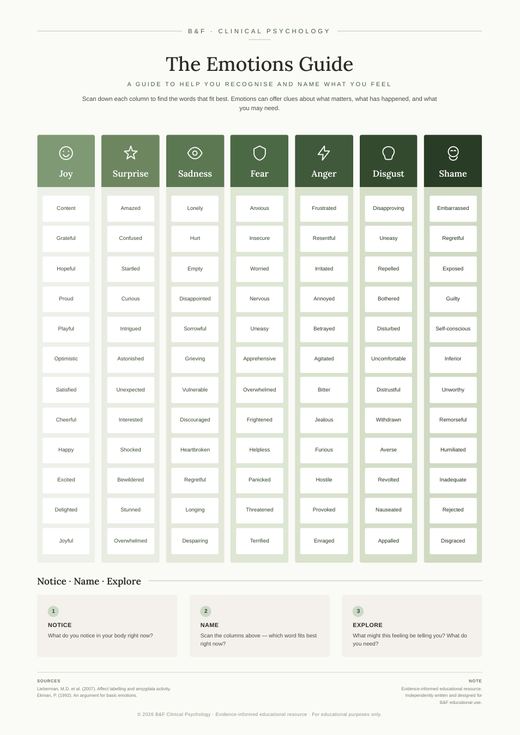
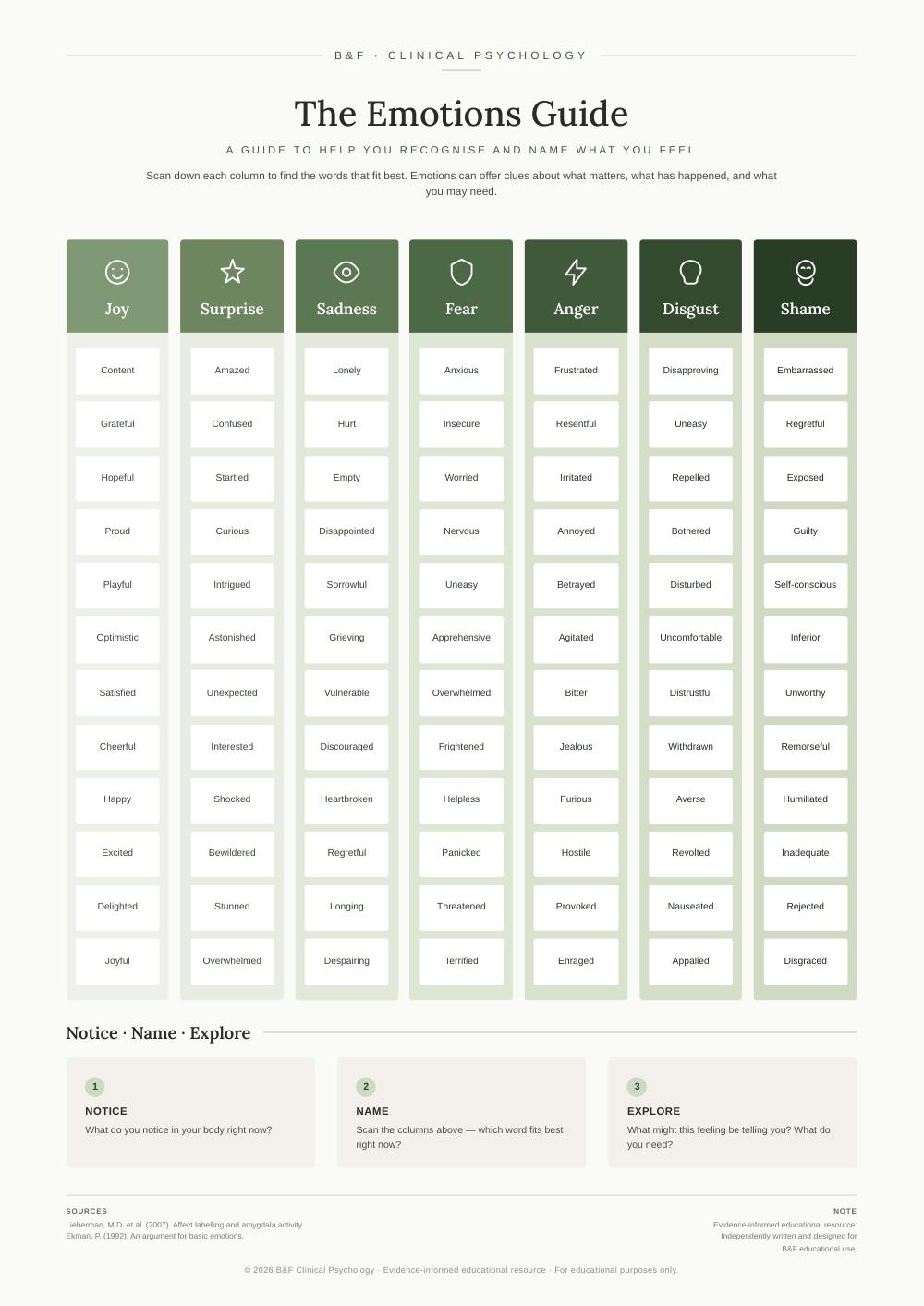
LearnThe emotions guide
A vocabulary of feelings, arranged so you can scan for the word that fits.
-
 Preview
Learn
Preview
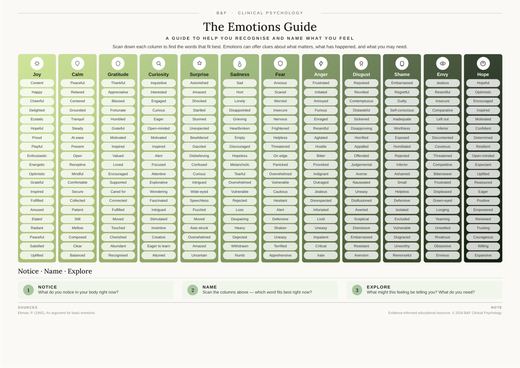
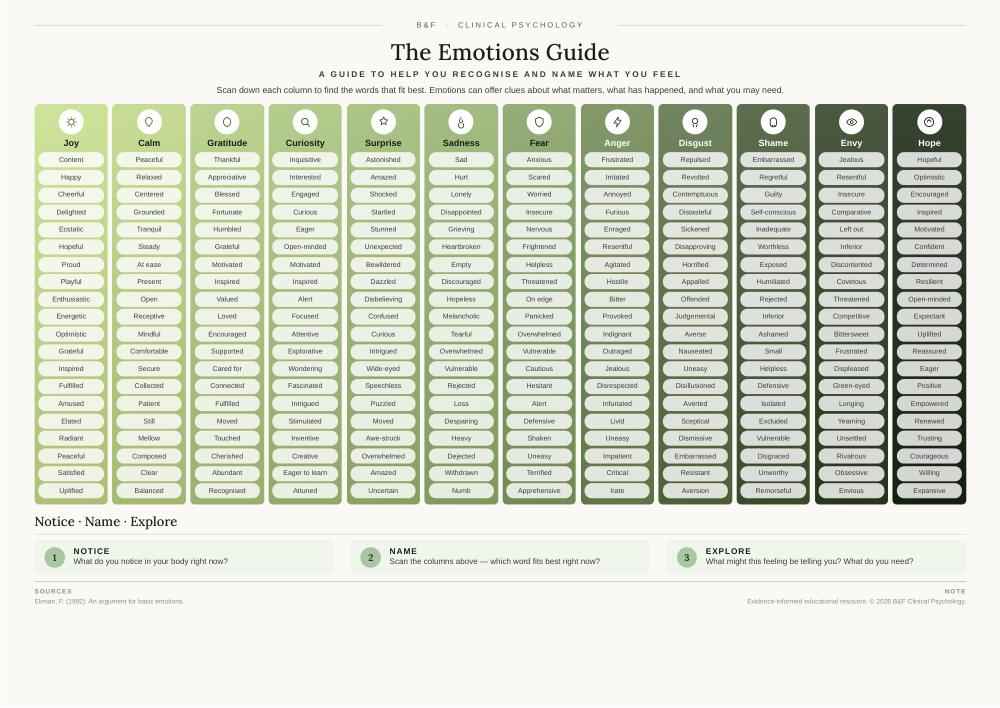
LearnThe emotions guide, extended
The fuller version of the guide, with more words for each family of feeling.
-
 Preview
Learn
Preview
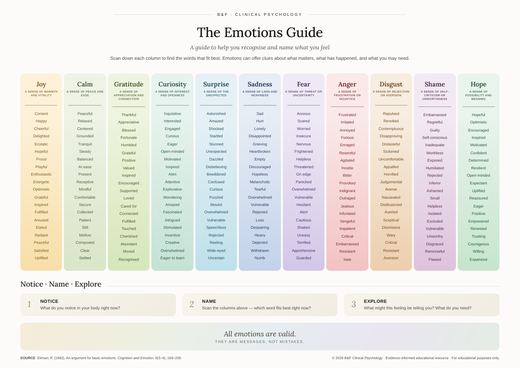
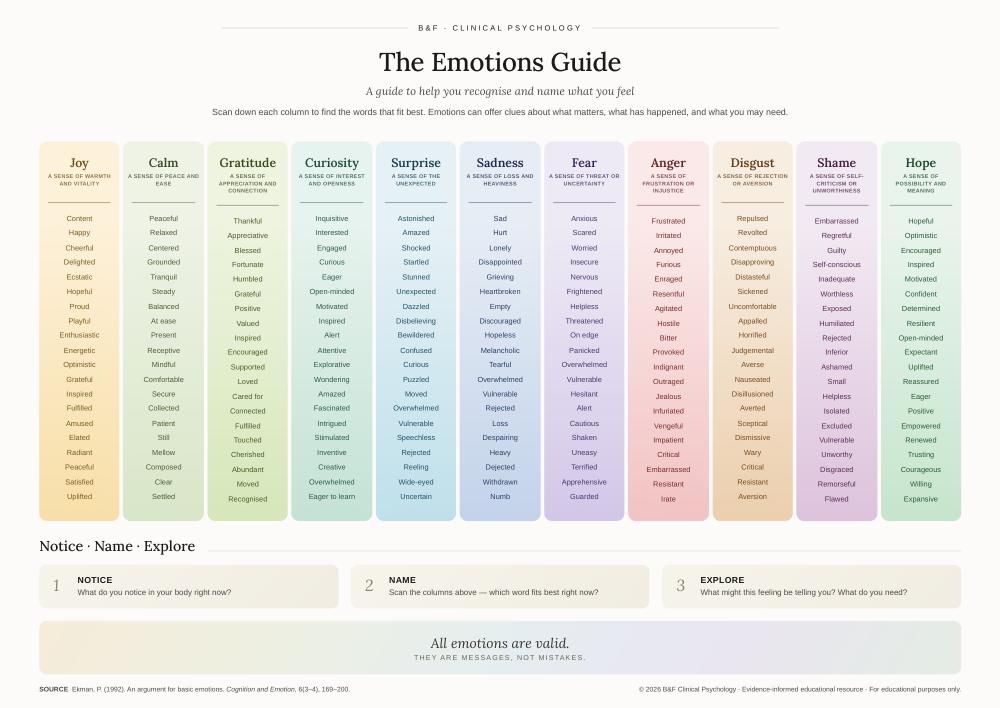
LearnThe emotions guide, in colour
A third layout of the feelings vocabulary, with the same columns to scan.
-
 Preview
Learn
Preview
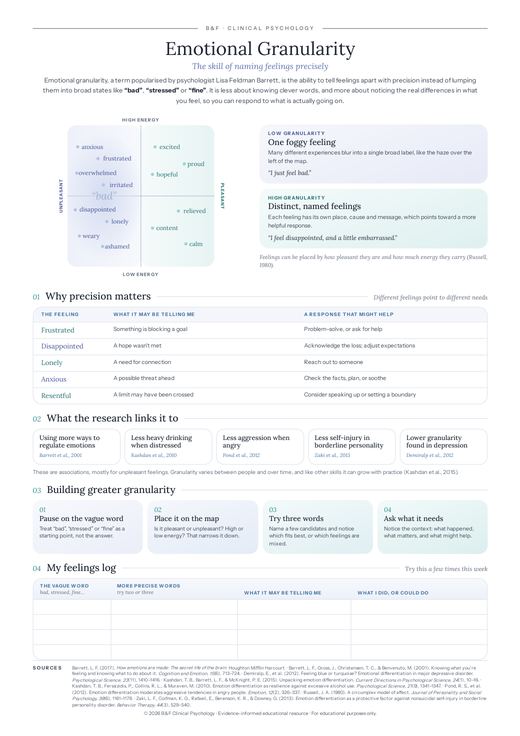
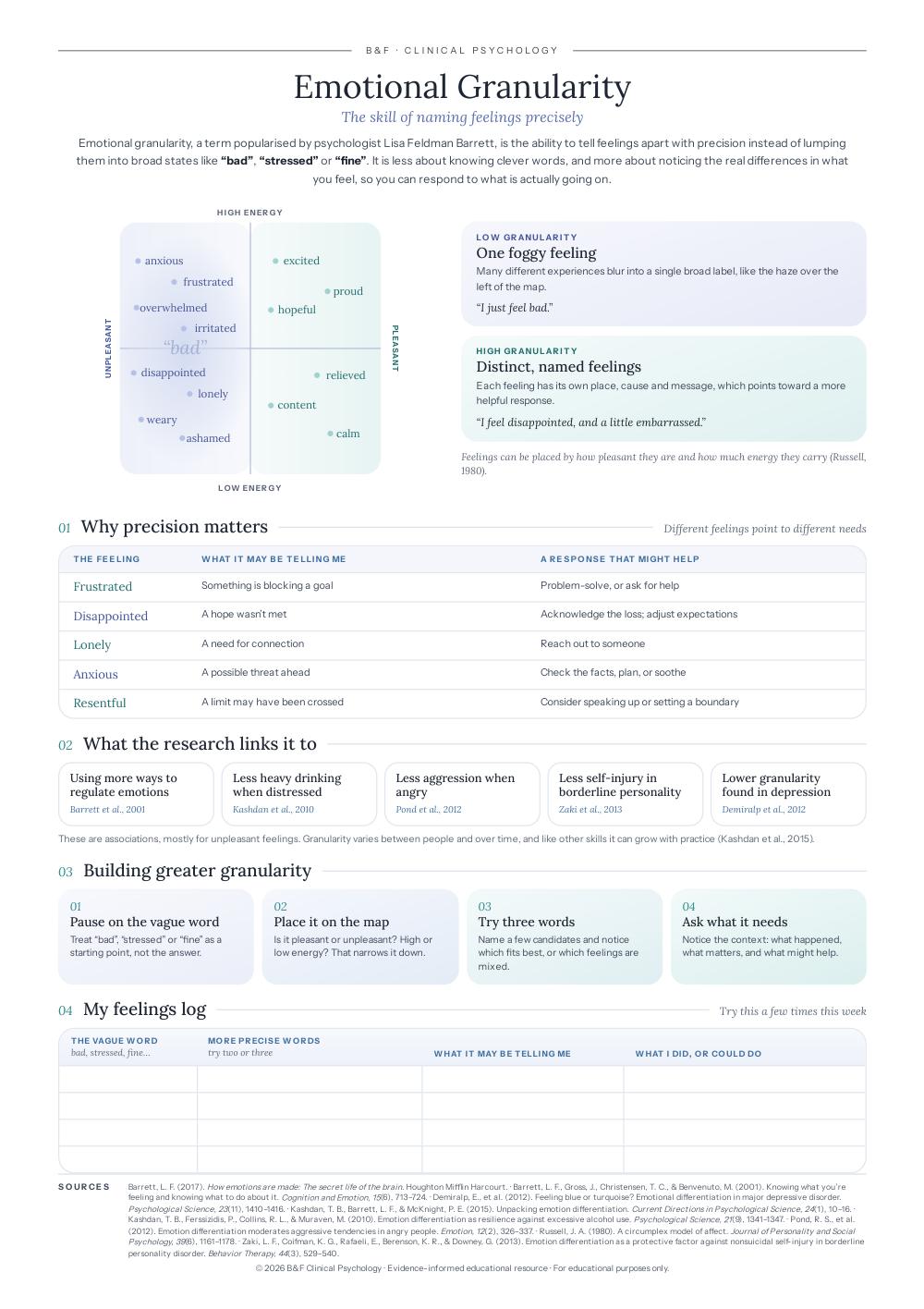
LearnEmotional granularity
The skill of naming feelings precisely, and why it changes how they are felt.
-
 Preview
Learn
Preview
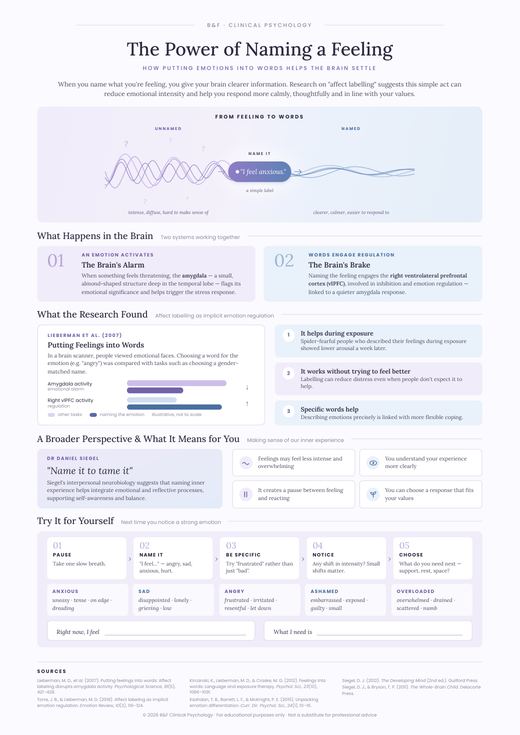
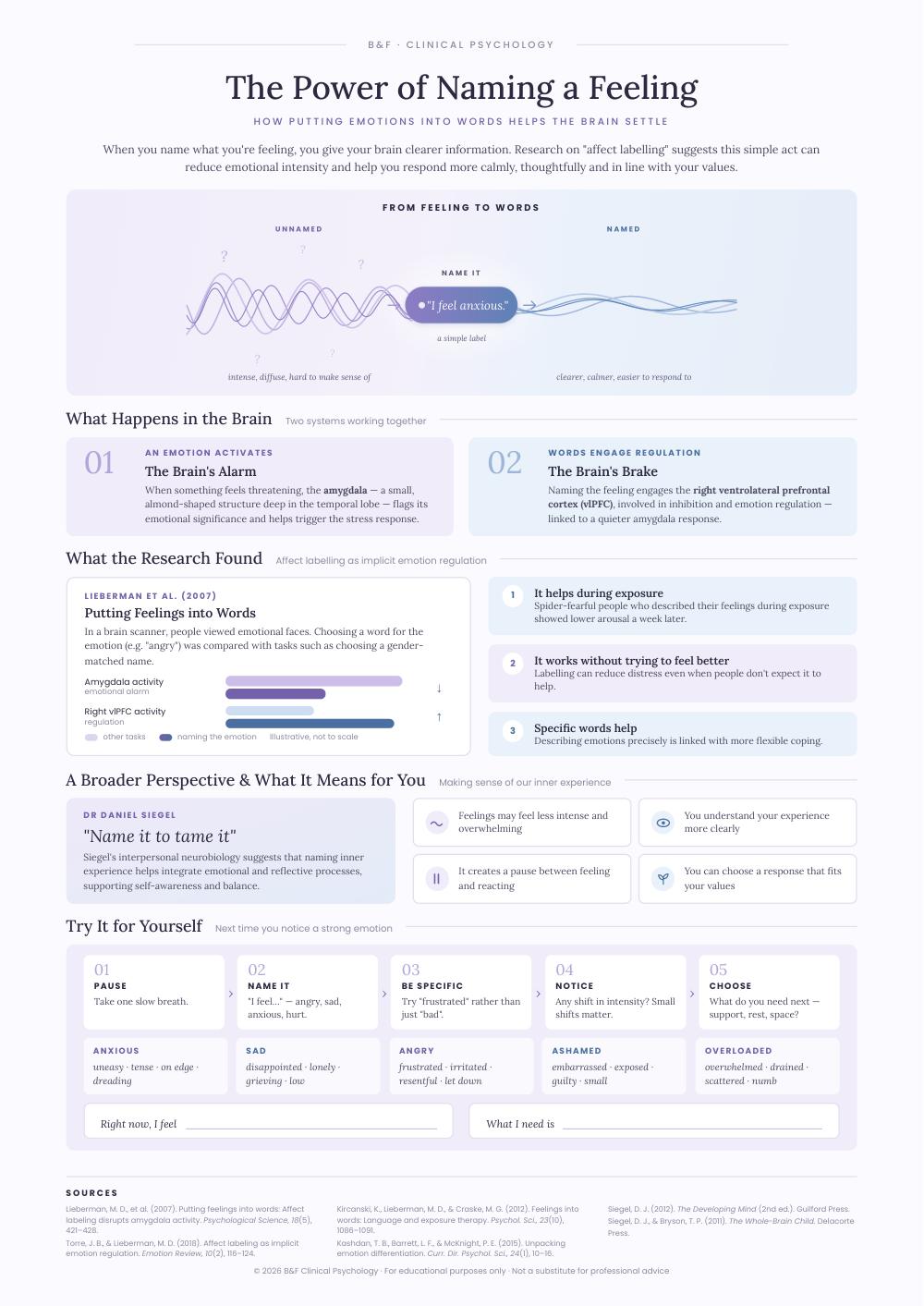
LearnThe power of naming a feeling
How putting emotions into words, known as affect labelling, can help the brain settle.
-
 Preview
Learn
Preview
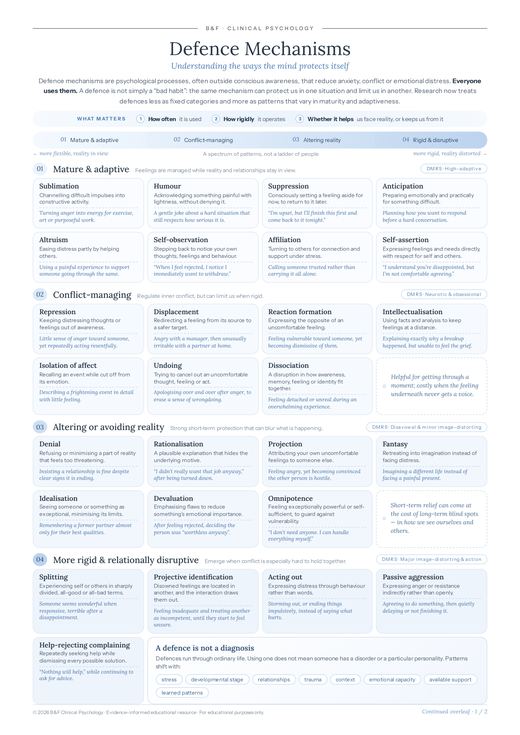
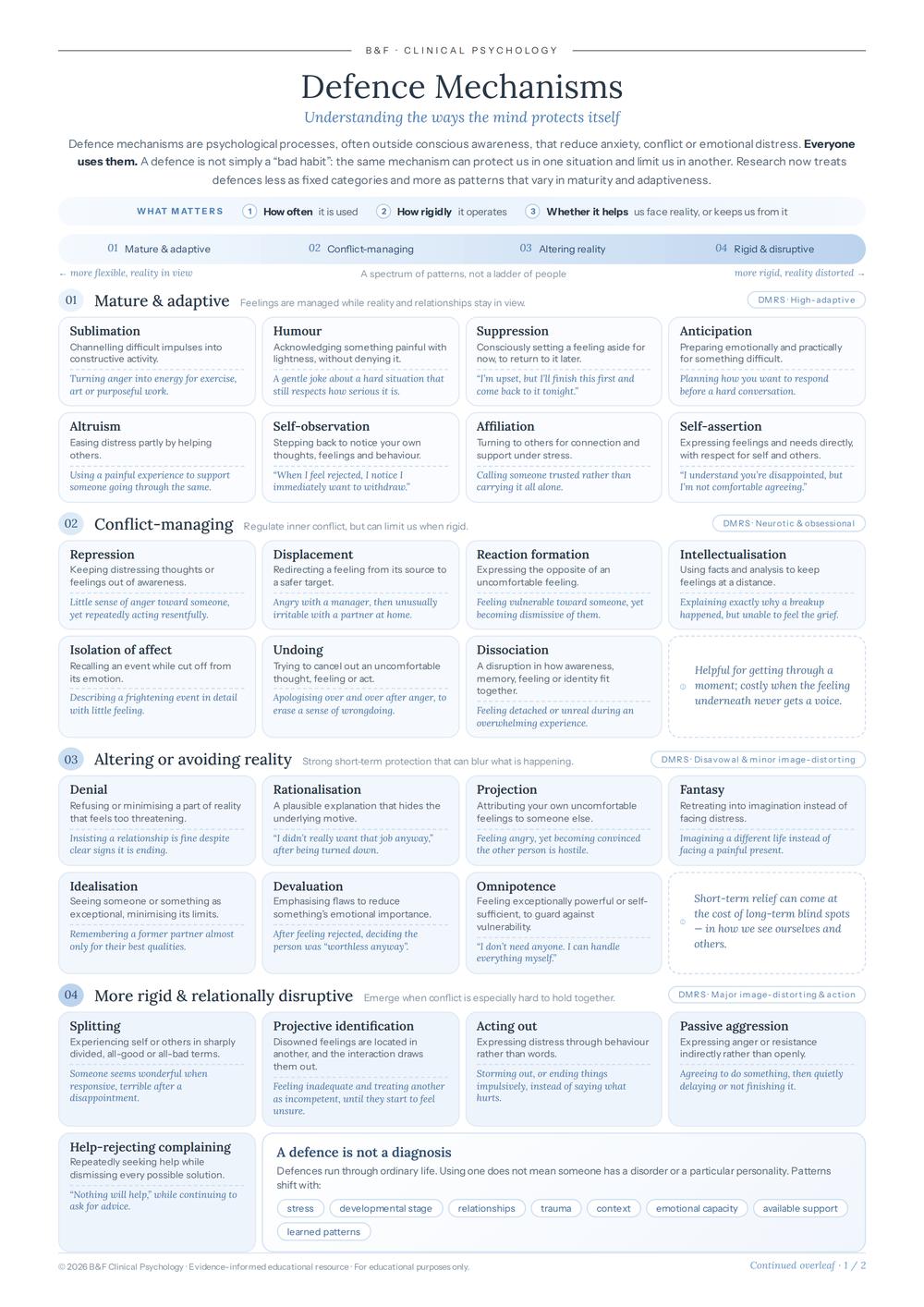
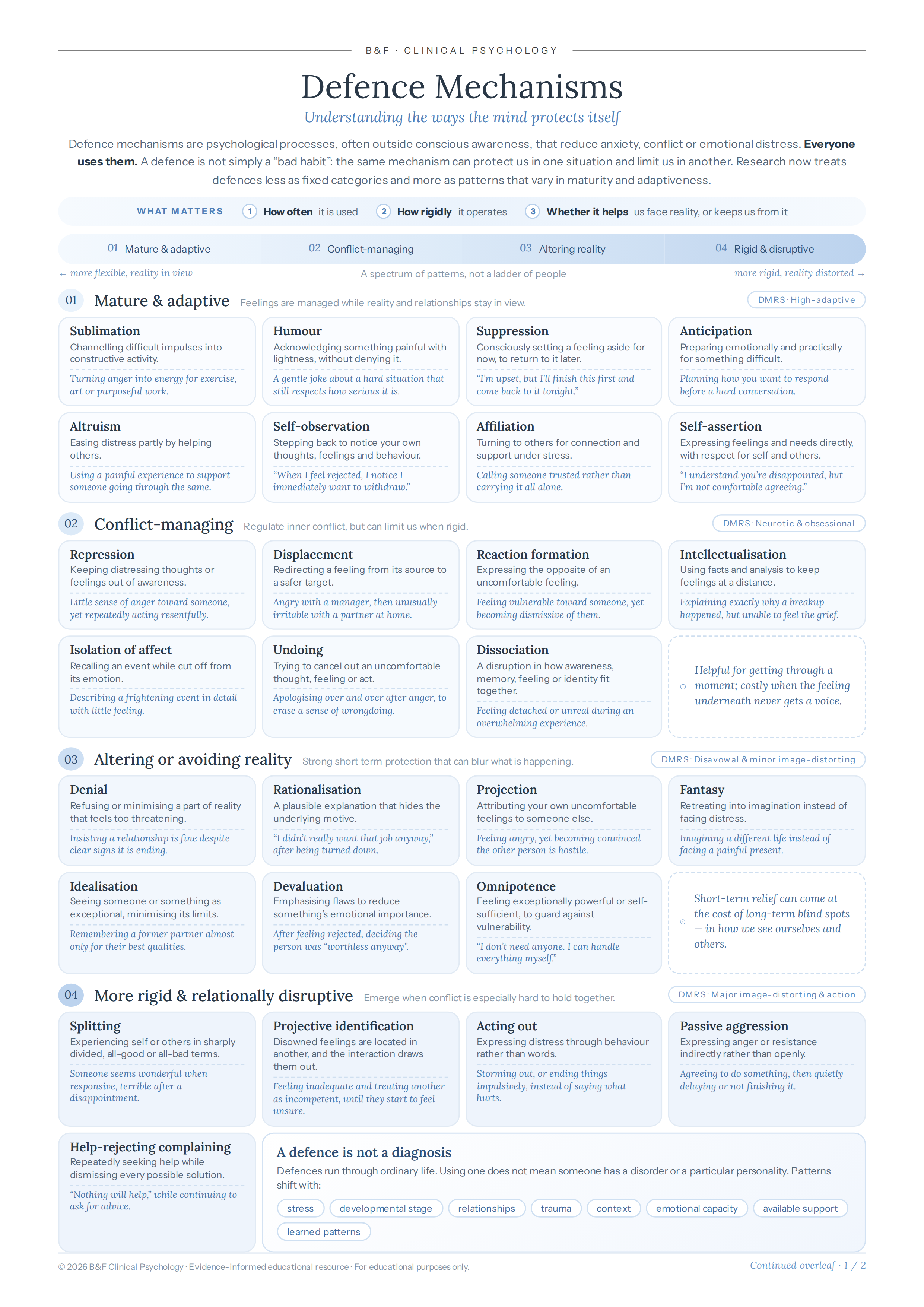
LearnDefence mechanisms (1)
Ways the mind protects itself, grouped from the most flexible to the most distorting.
-
 Preview
Learn
Preview
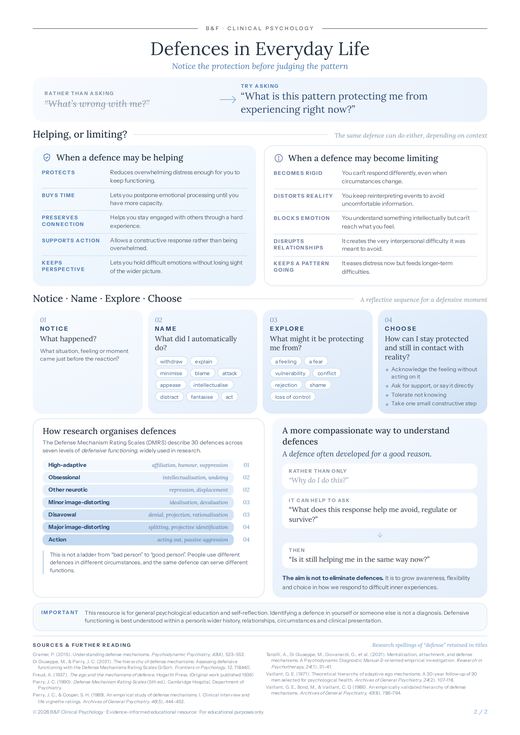
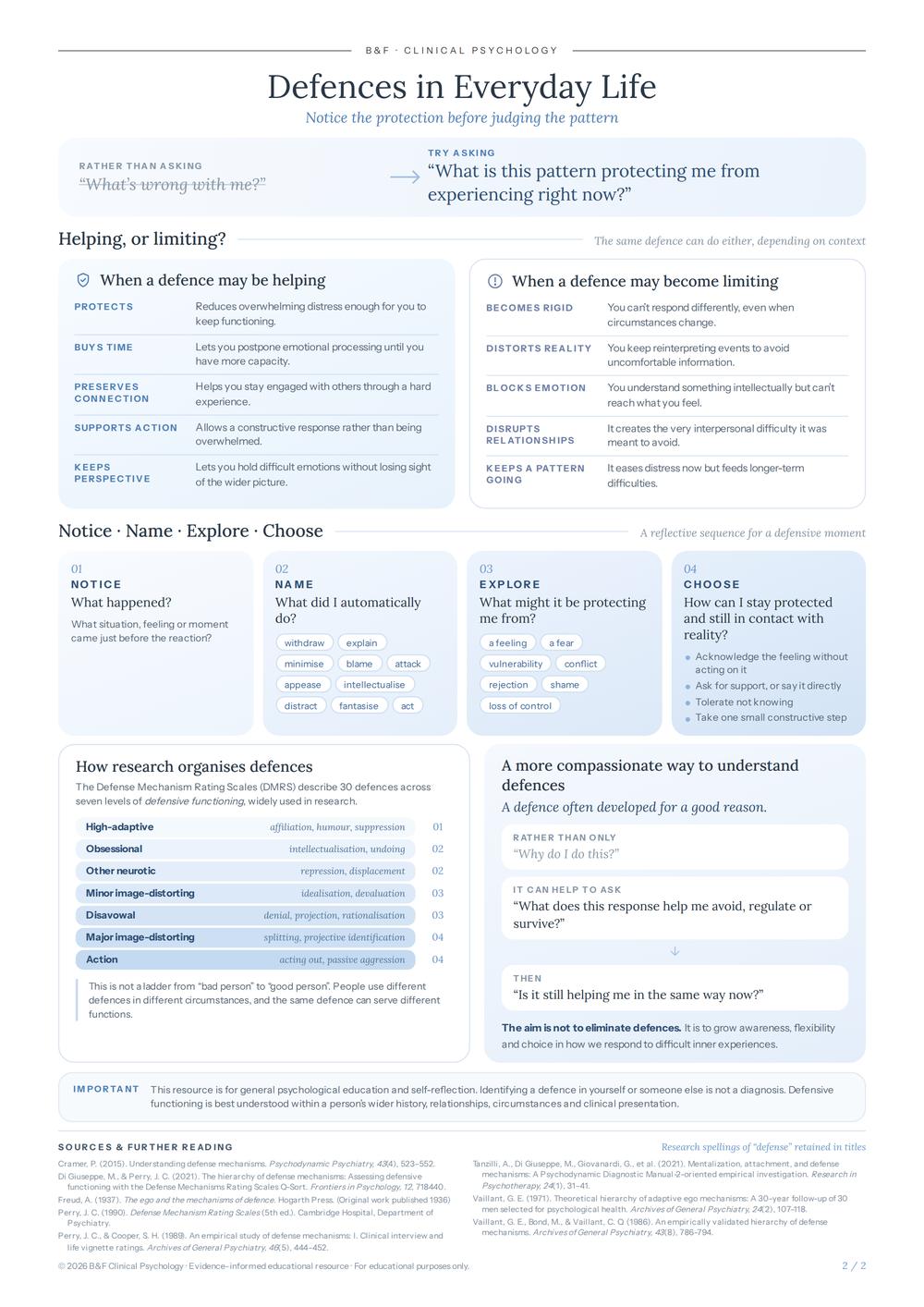
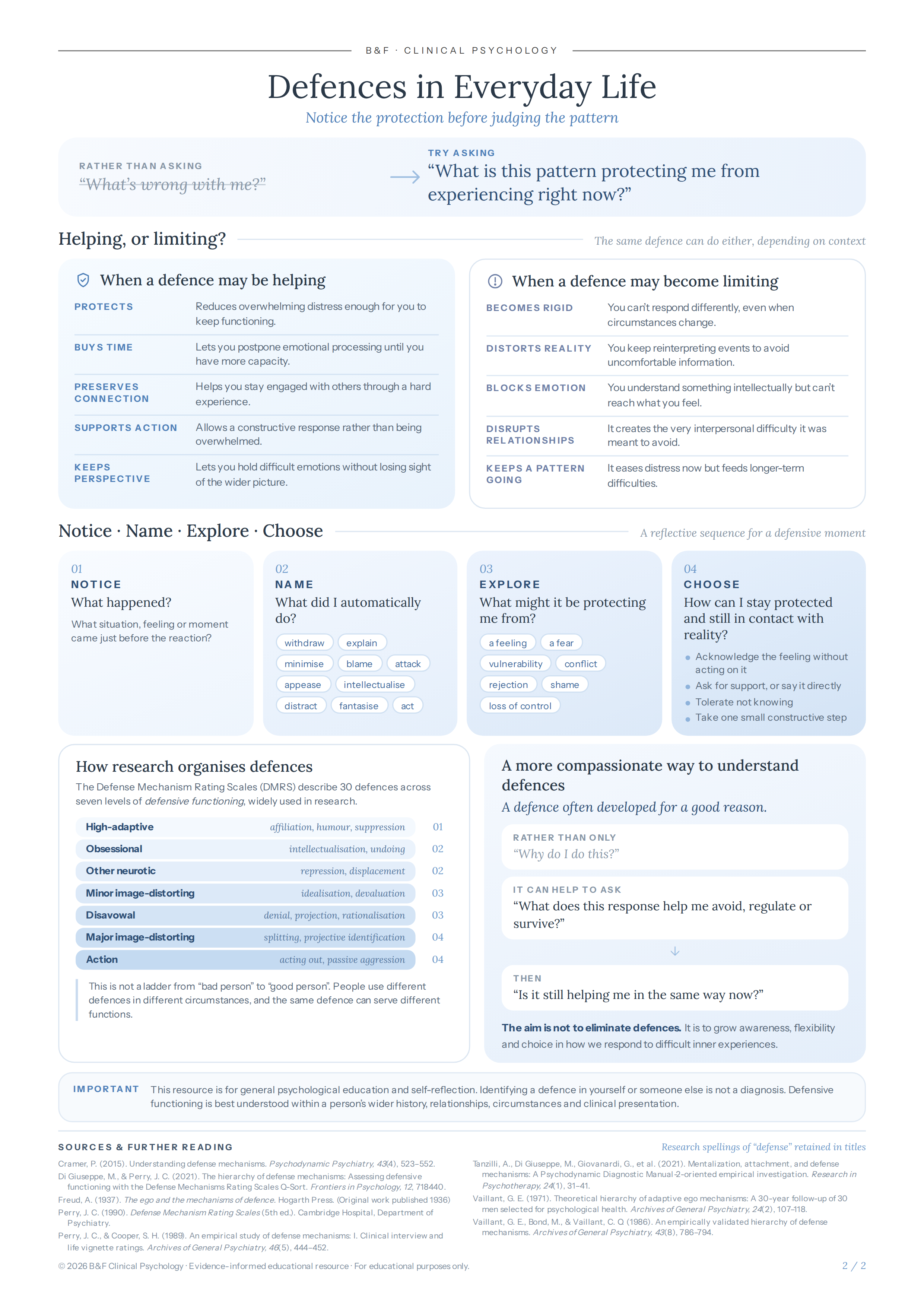
LearnDefence mechanisms (2)
Defences in everyday life: when a defence helps, when it limits, and a kinder way to understand it.
-
 Preview
Learn
Preview
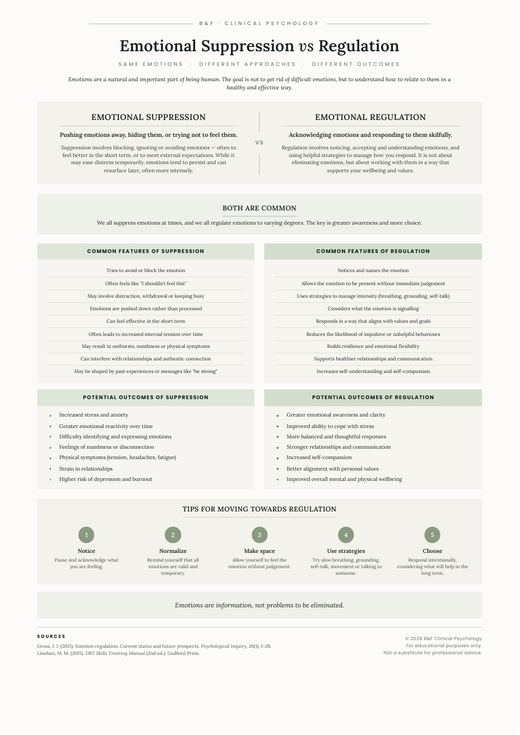
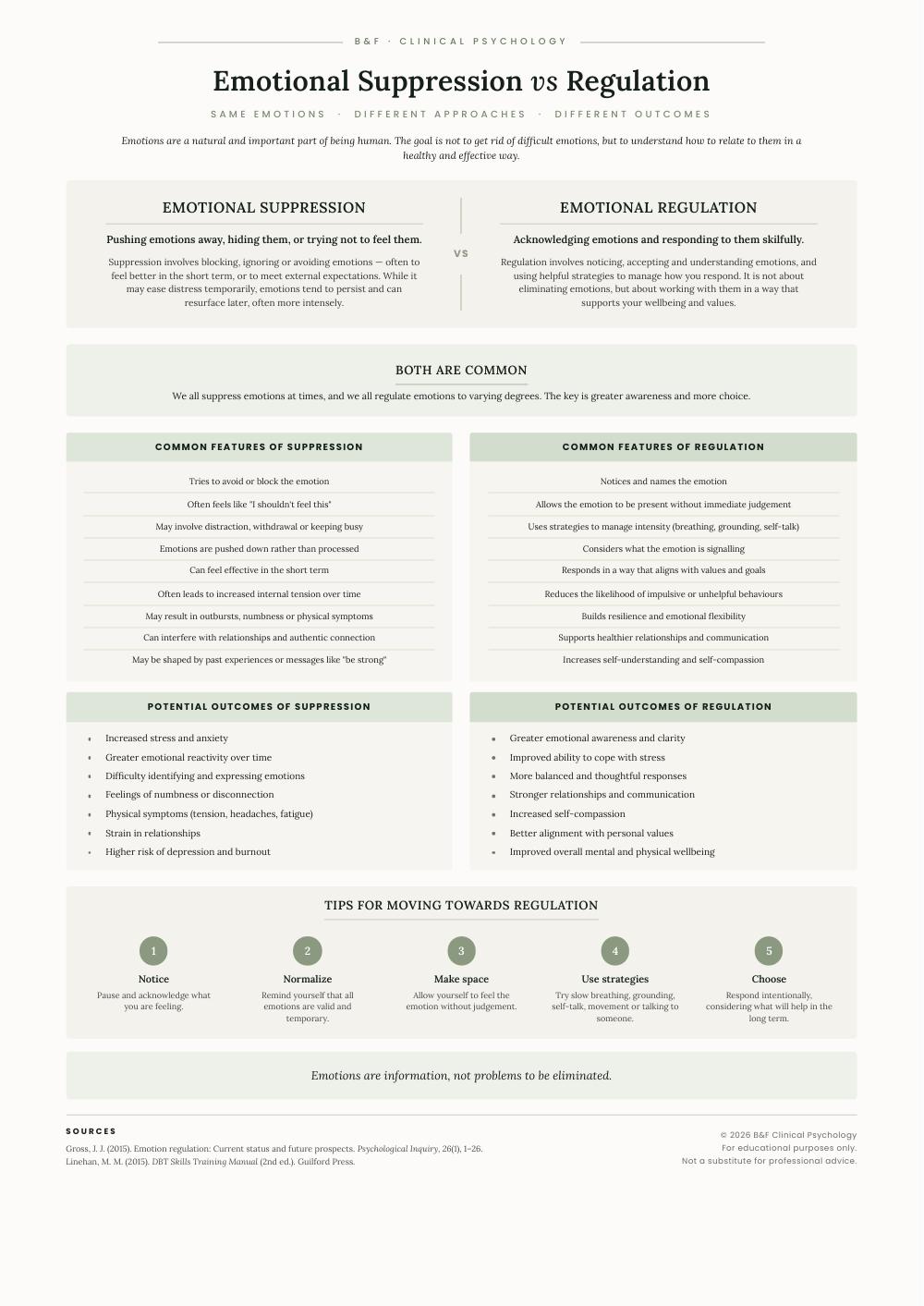
LearnEmotional suppression vs regulation
Pushing a feeling down and working with it look similar from outside. They end very differently.
-
 Preview
Practice
Preview
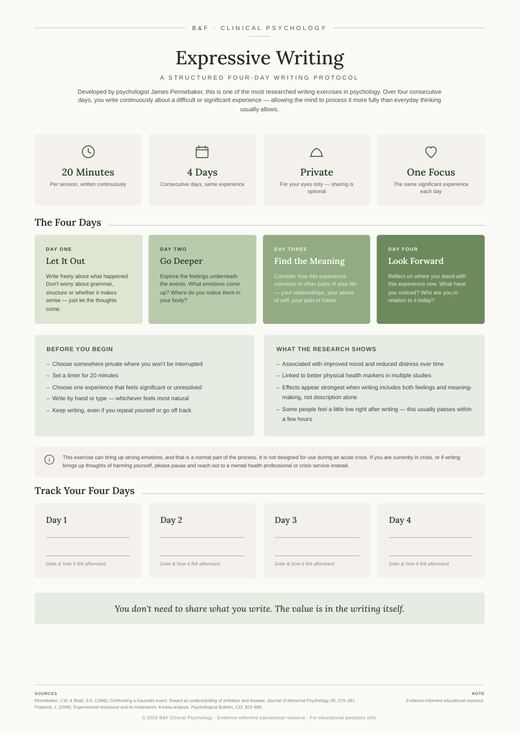
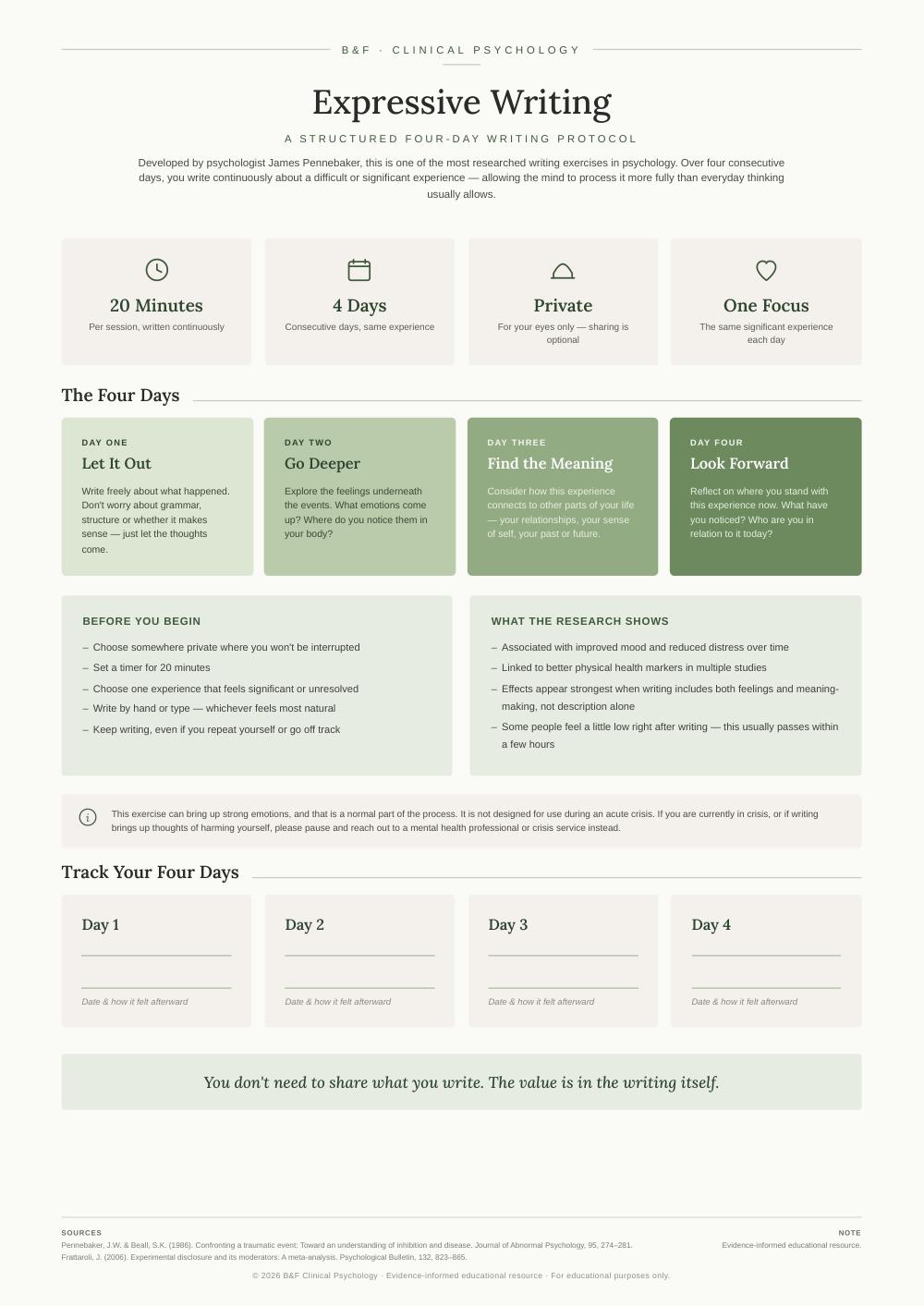
PracticeExpressive writing
Pennebaker's four-day writing protocol, one of the most researched exercises in psychology.
-
 Preview
Practice
Preview
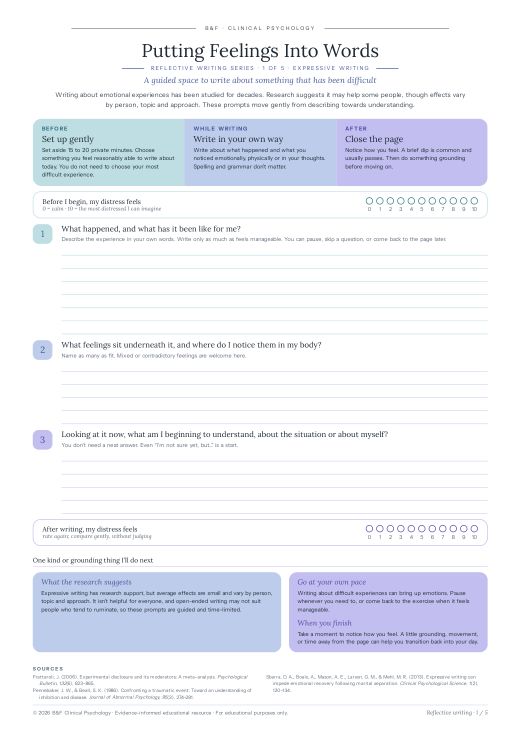
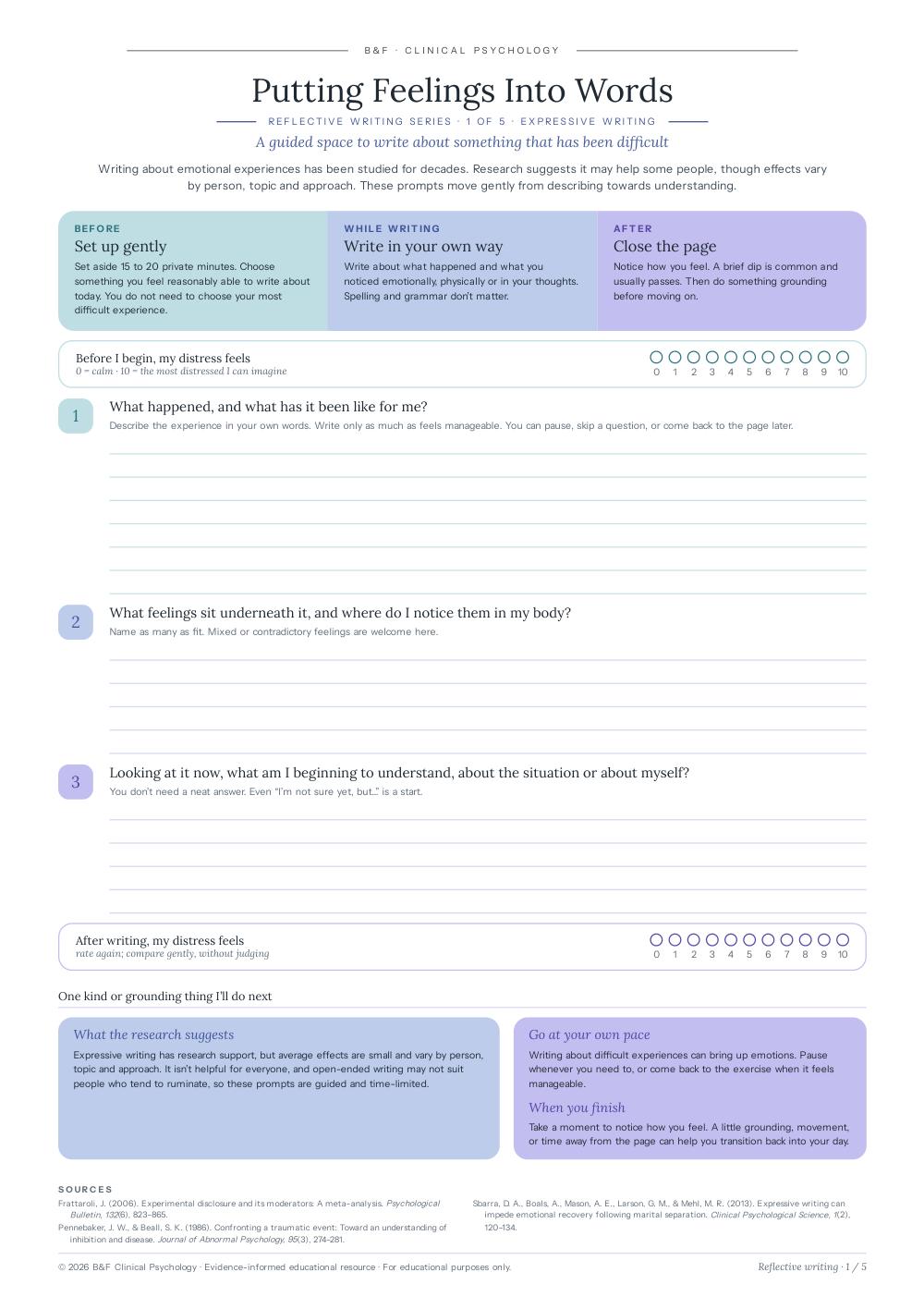
PracticePutting feelings into words
Reflective writing, 1 of 5. A guided space to write about something that has been difficult.
-
 Preview
Practice
Preview
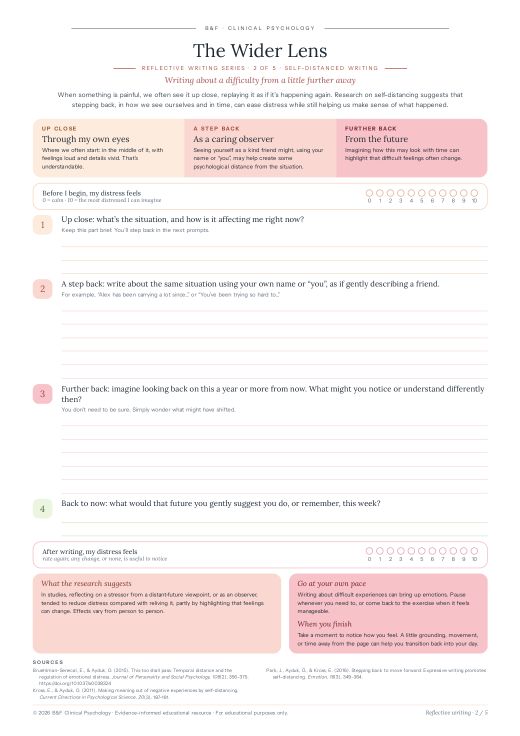
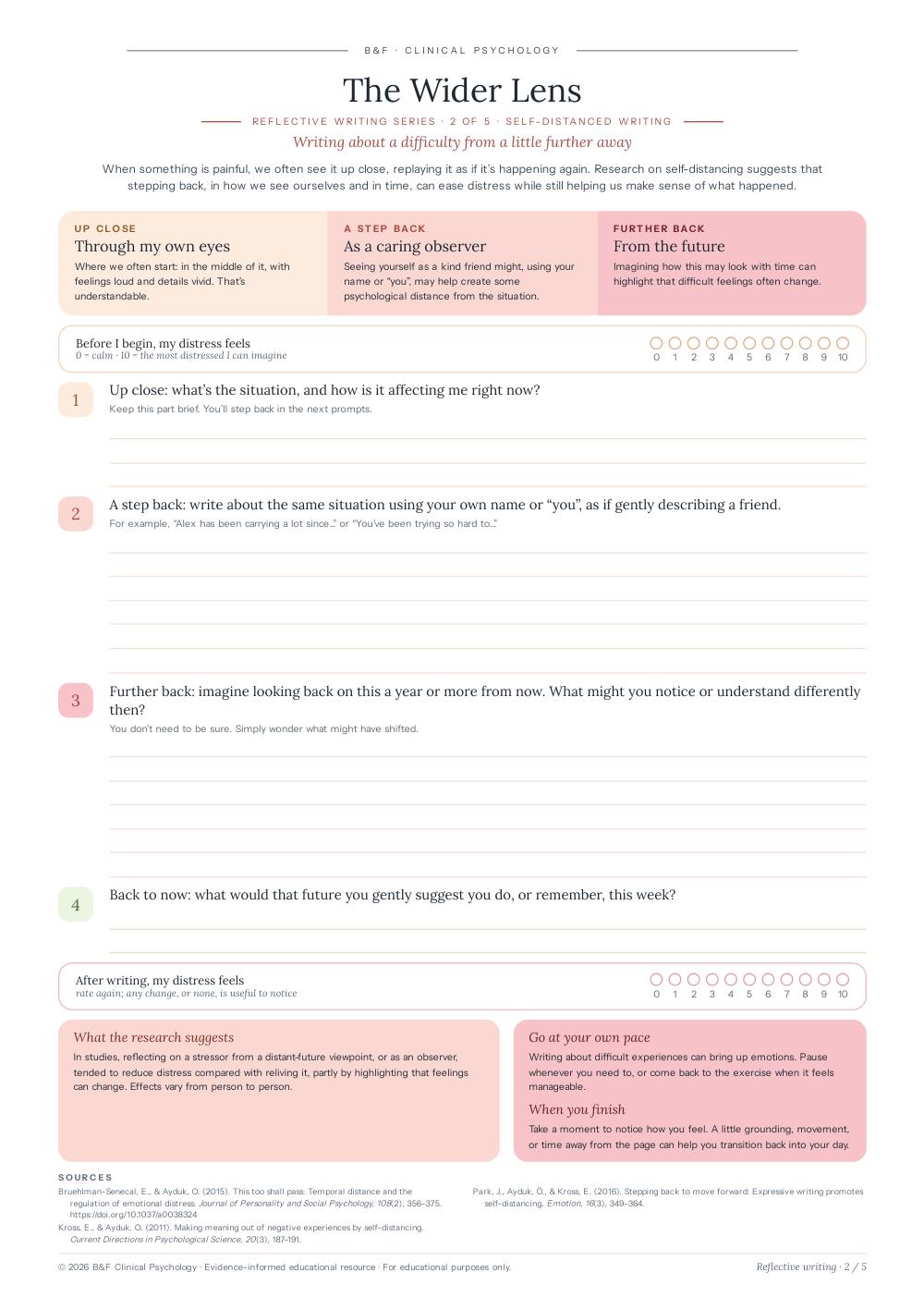
PracticeThe wider lens
Reflective writing, 2 of 5. Writing about a difficulty from a little further away.
-
 Preview
Practice
Preview
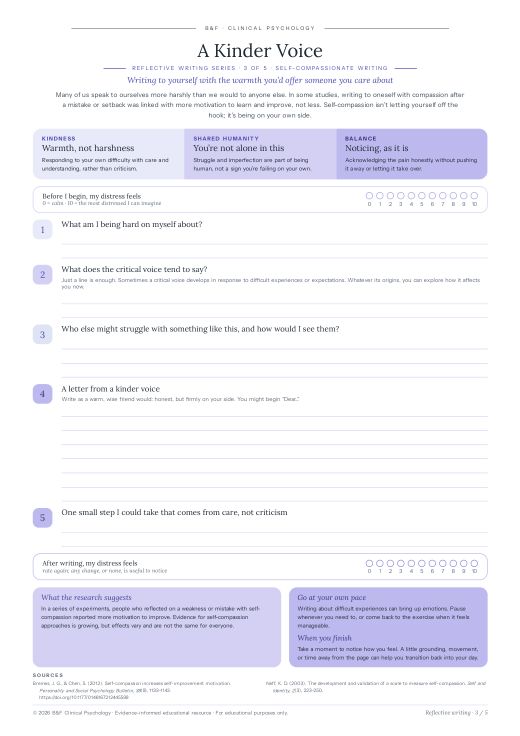
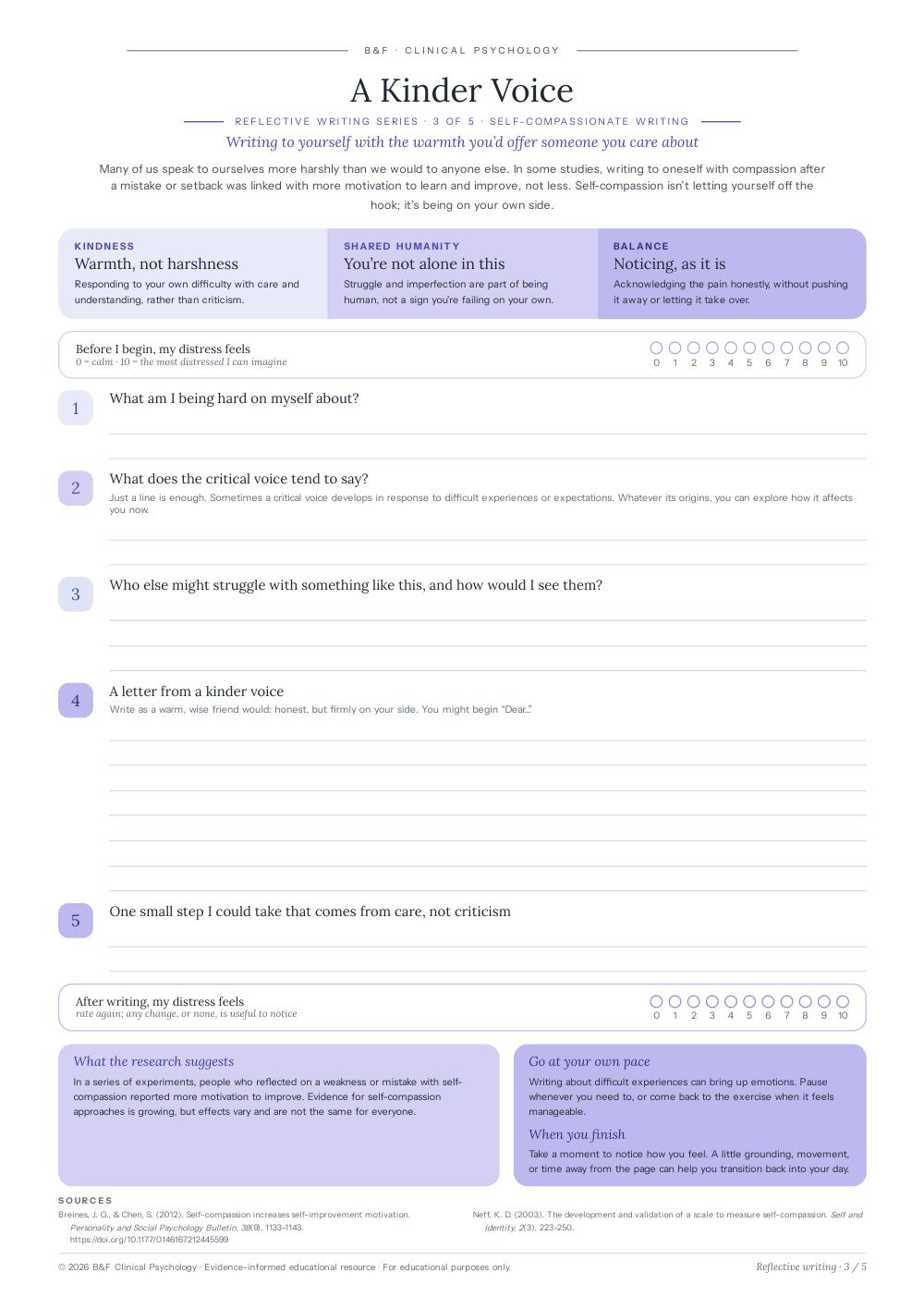
PracticeA kinder voice
Reflective writing, 3 of 5. Writing to yourself with the warmth you'd offer someone you care about.
-
 Preview
Practice
Preview
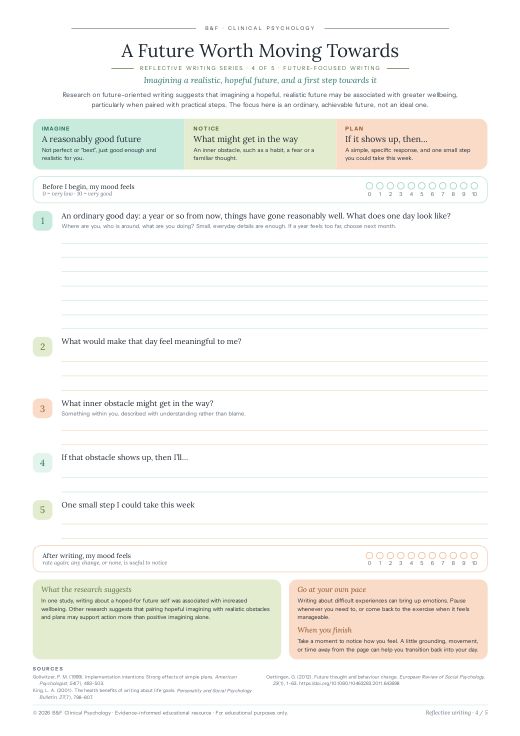
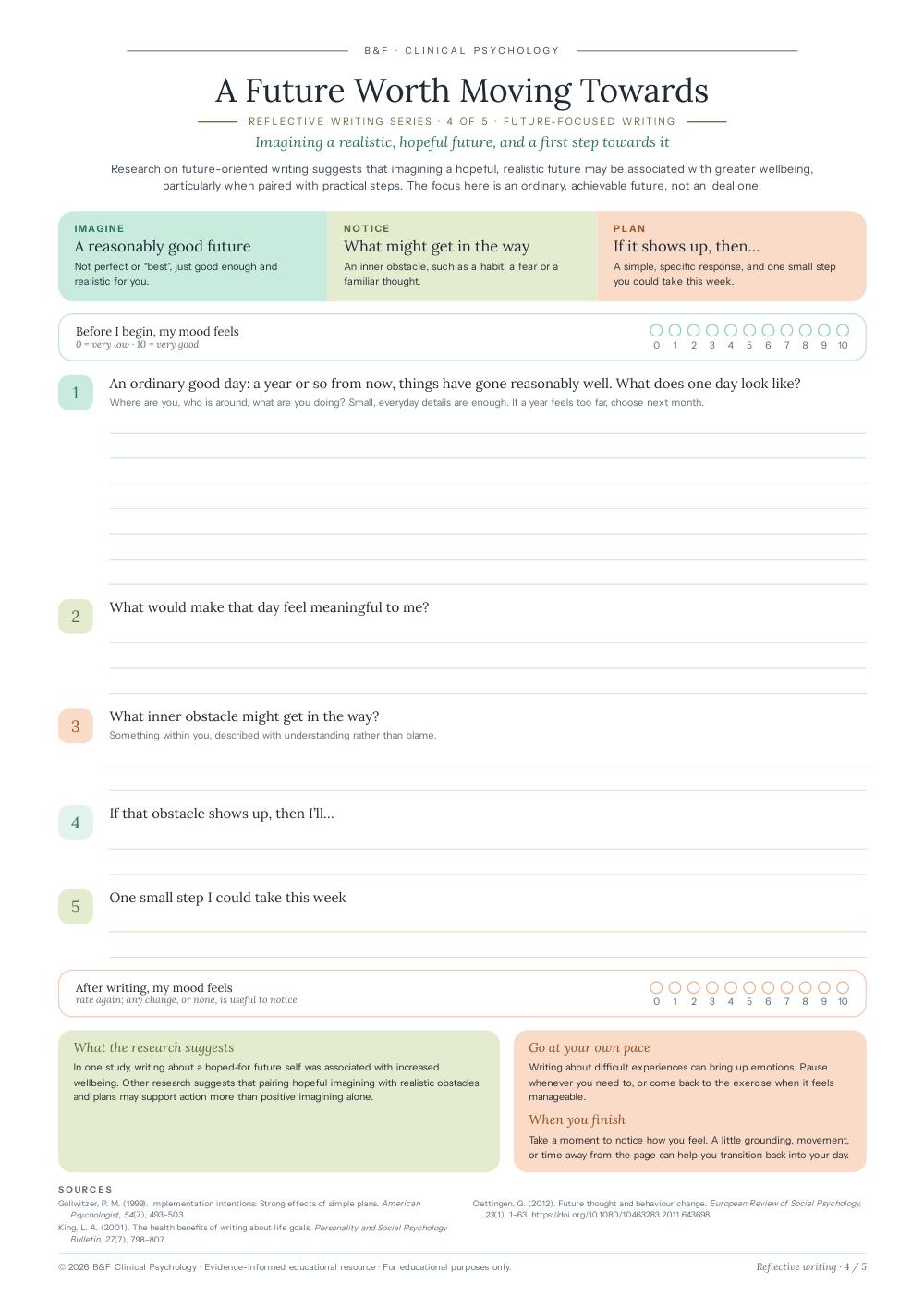
PracticeA future worth moving towards
Reflective writing, 4 of 5. Imagining a realistic, hopeful future, and a first step towards it.
-
 Preview
Practice
Preview
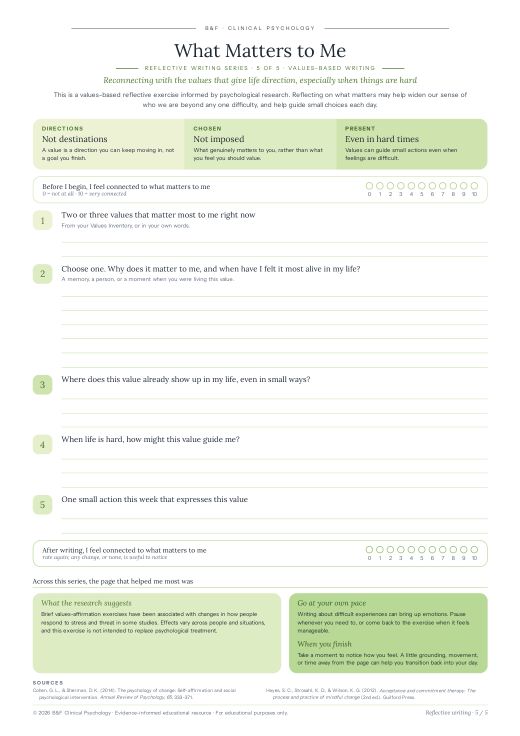
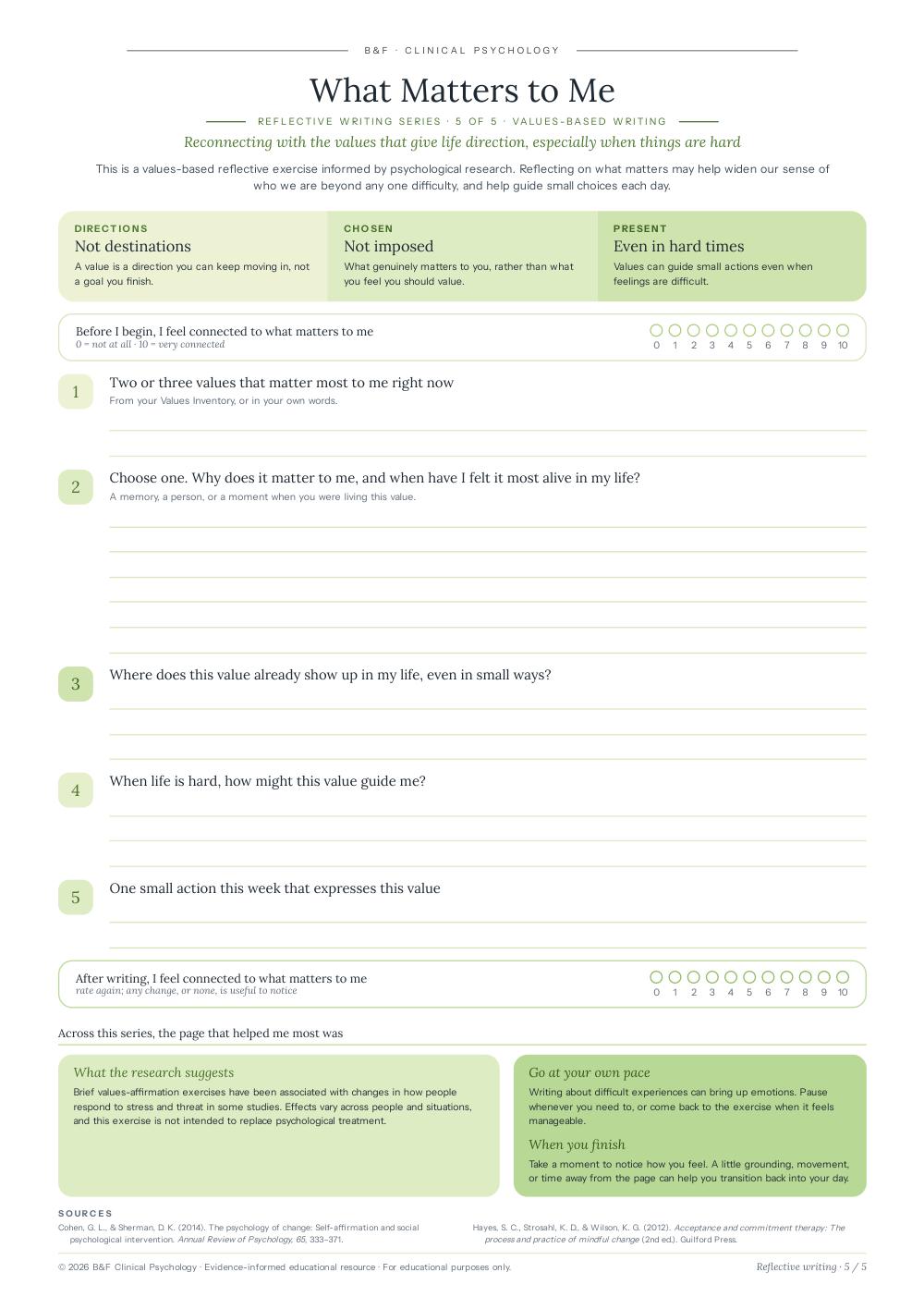
PracticeWhat matters to me
Reflective writing, 5 of 5. Reconnecting with the values that give life direction, especially when things are hard.
-
 Preview
Practice
Preview
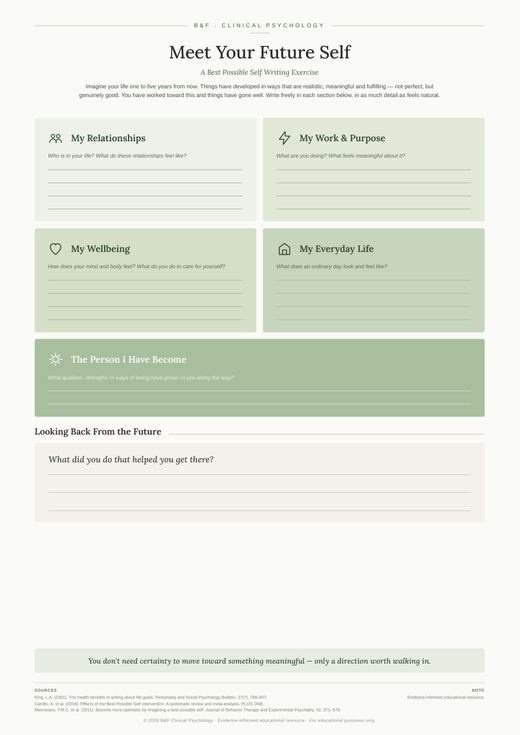
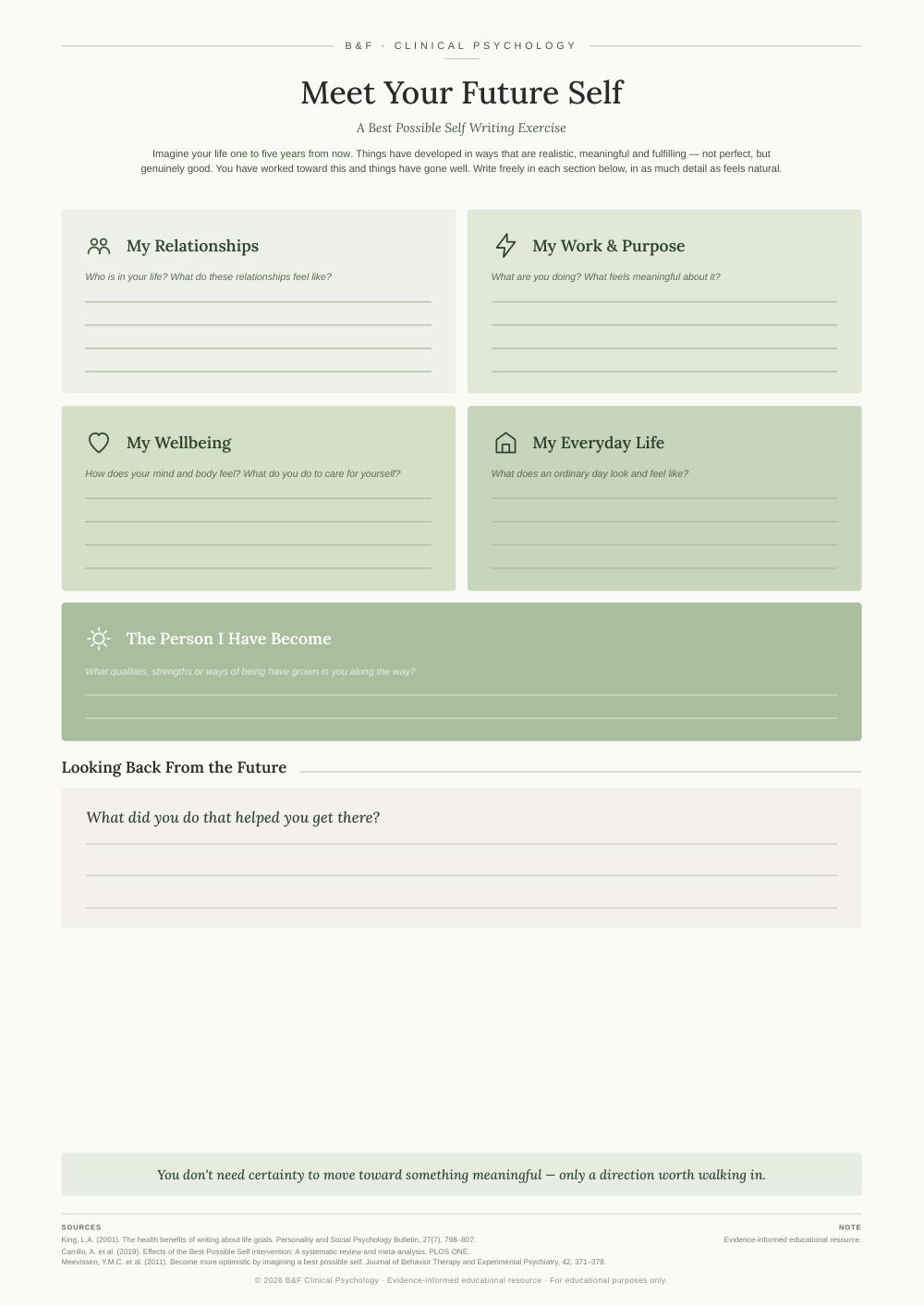
PracticeMeet your future self
A best-possible-self writing exercise: your life, one to five years on, gone genuinely well.
-
 Preview
Reflect
Preview
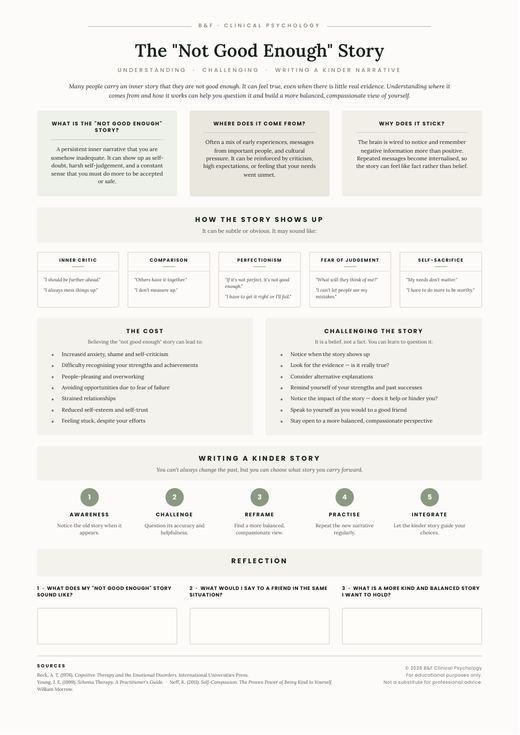
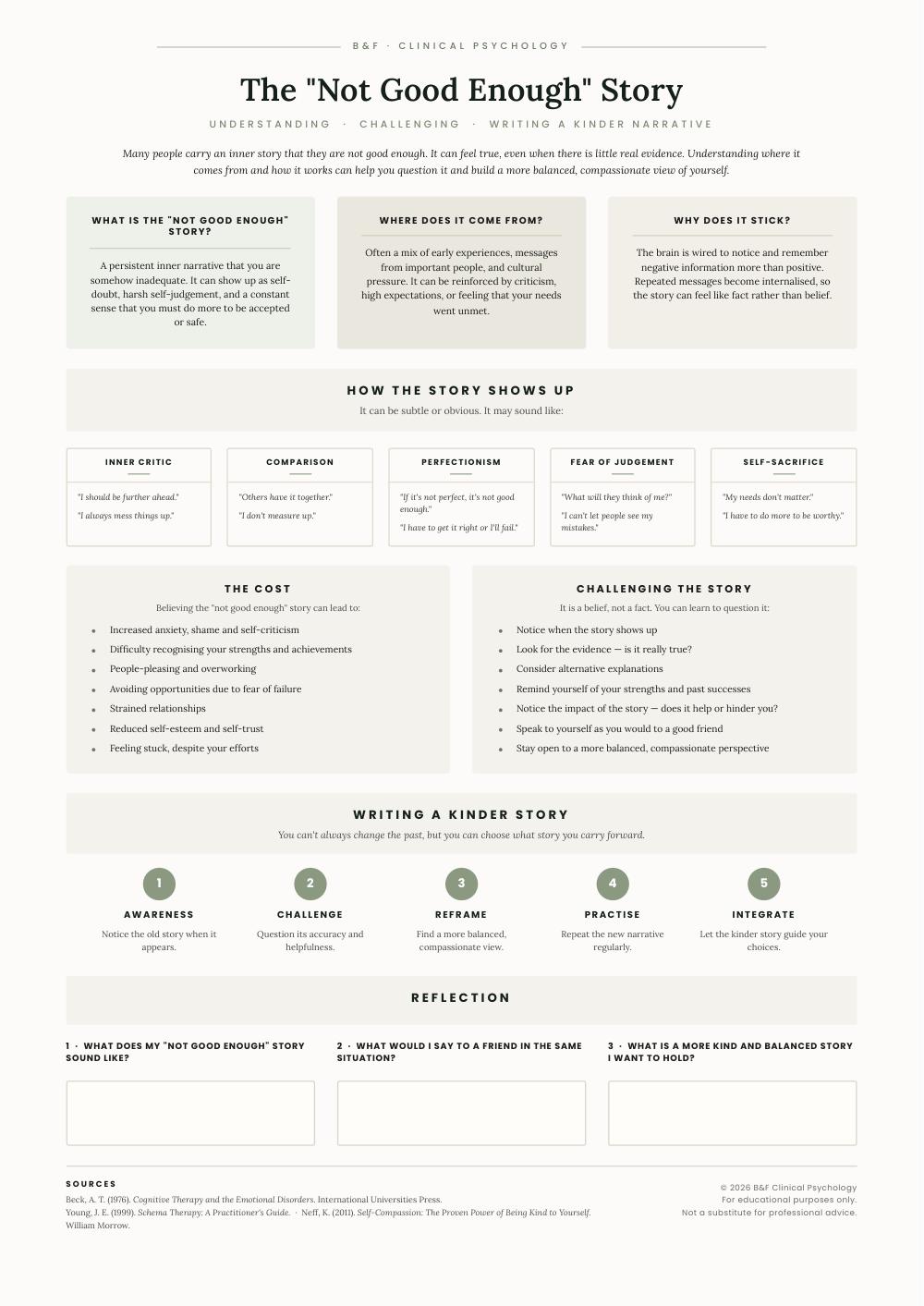
ReflectThe “not good enough” story
Where the story comes from, how to question it, and how to write a kinder one.
-
 Preview
Practice
Preview
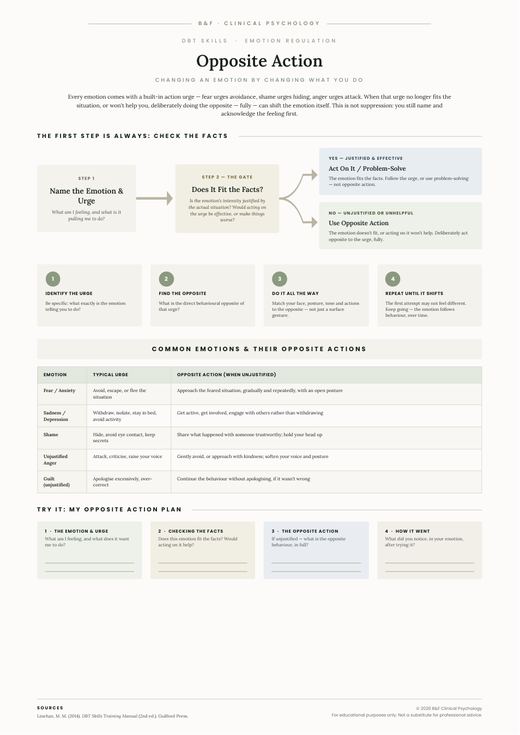
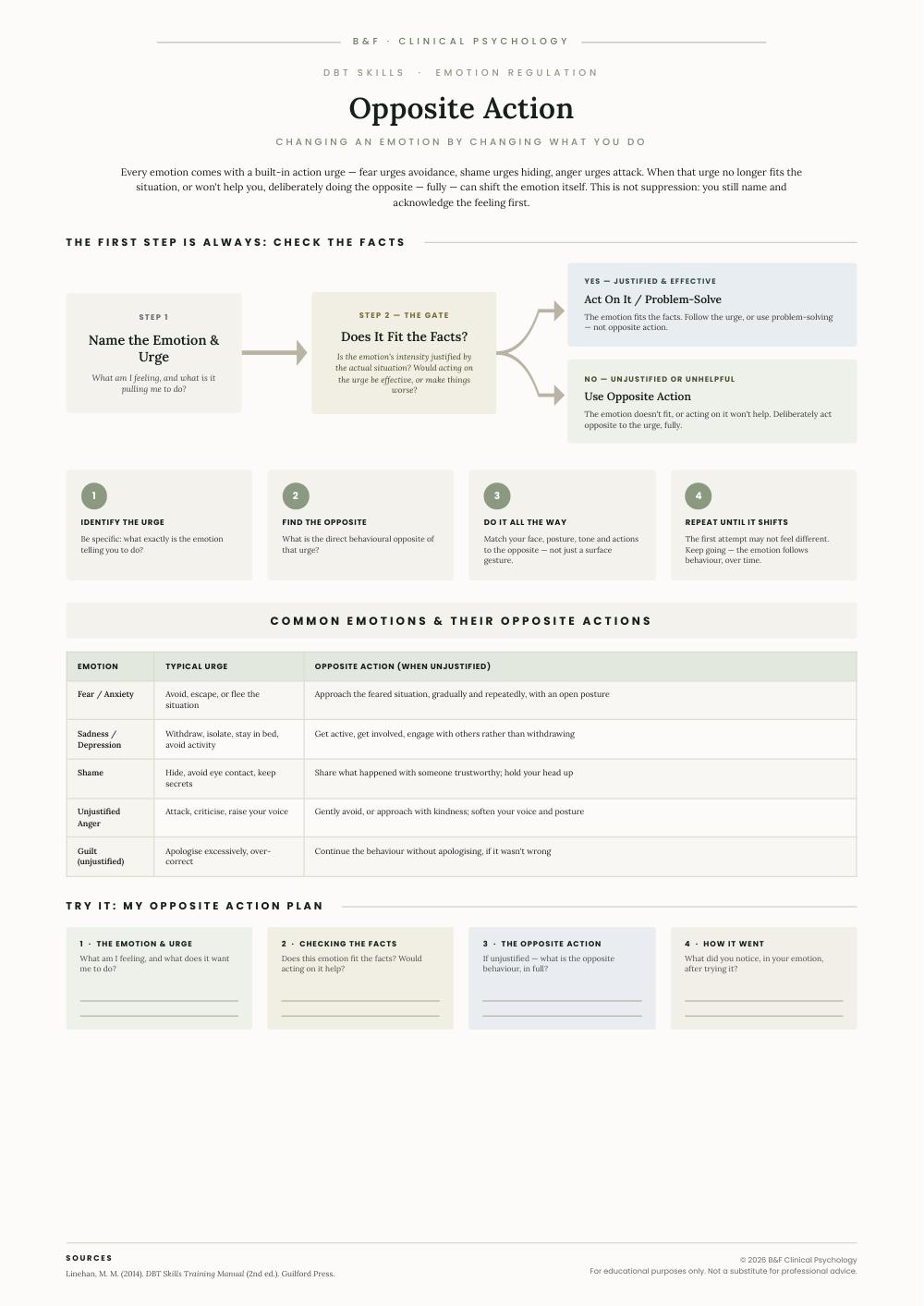
PracticeOpposite action
A DBT skill: every emotion carries an urge, and acting against the urge can change the emotion.
-
 Preview
Reflect
Preview
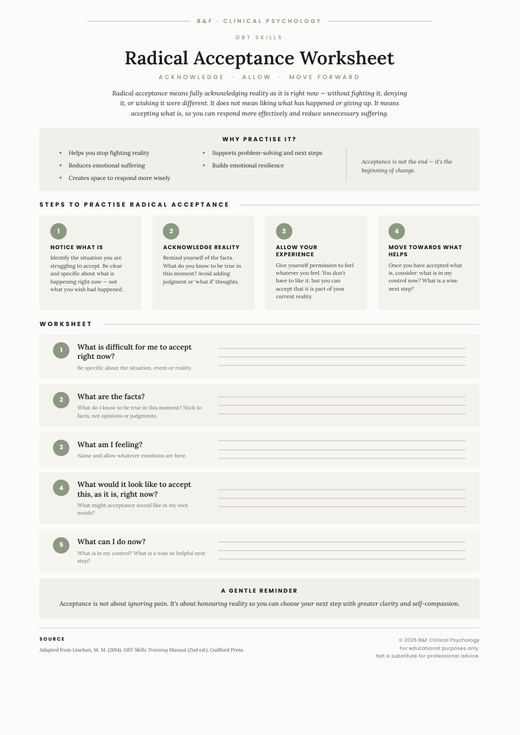
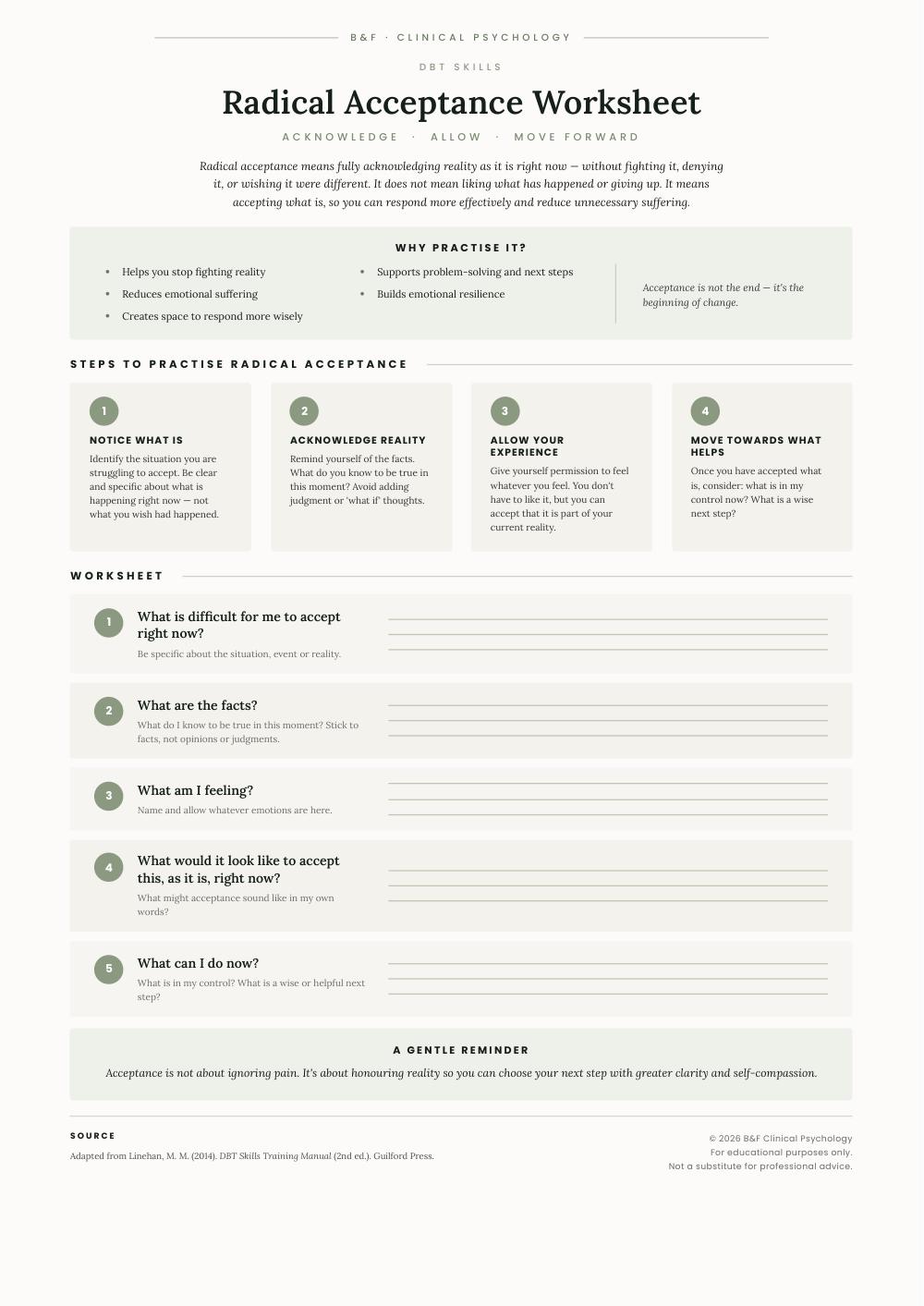
ReflectRadical acceptance worksheet
Acknowledge what is, without fighting it, as the first step to moving forward.
-
 Preview
Learn
Preview
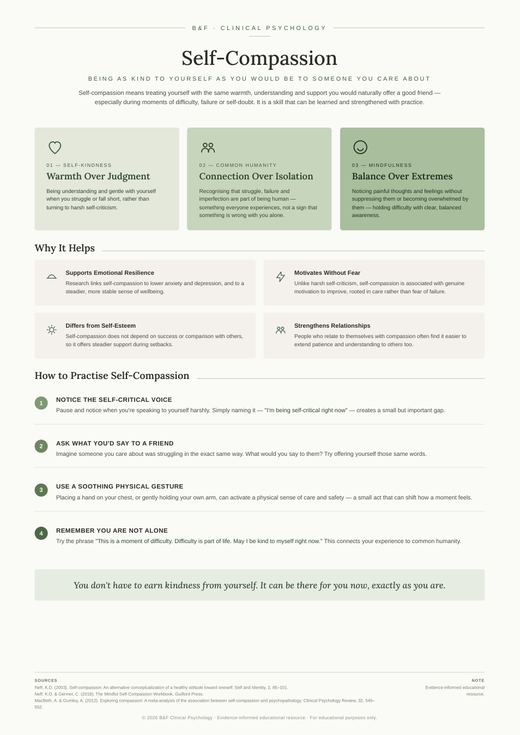
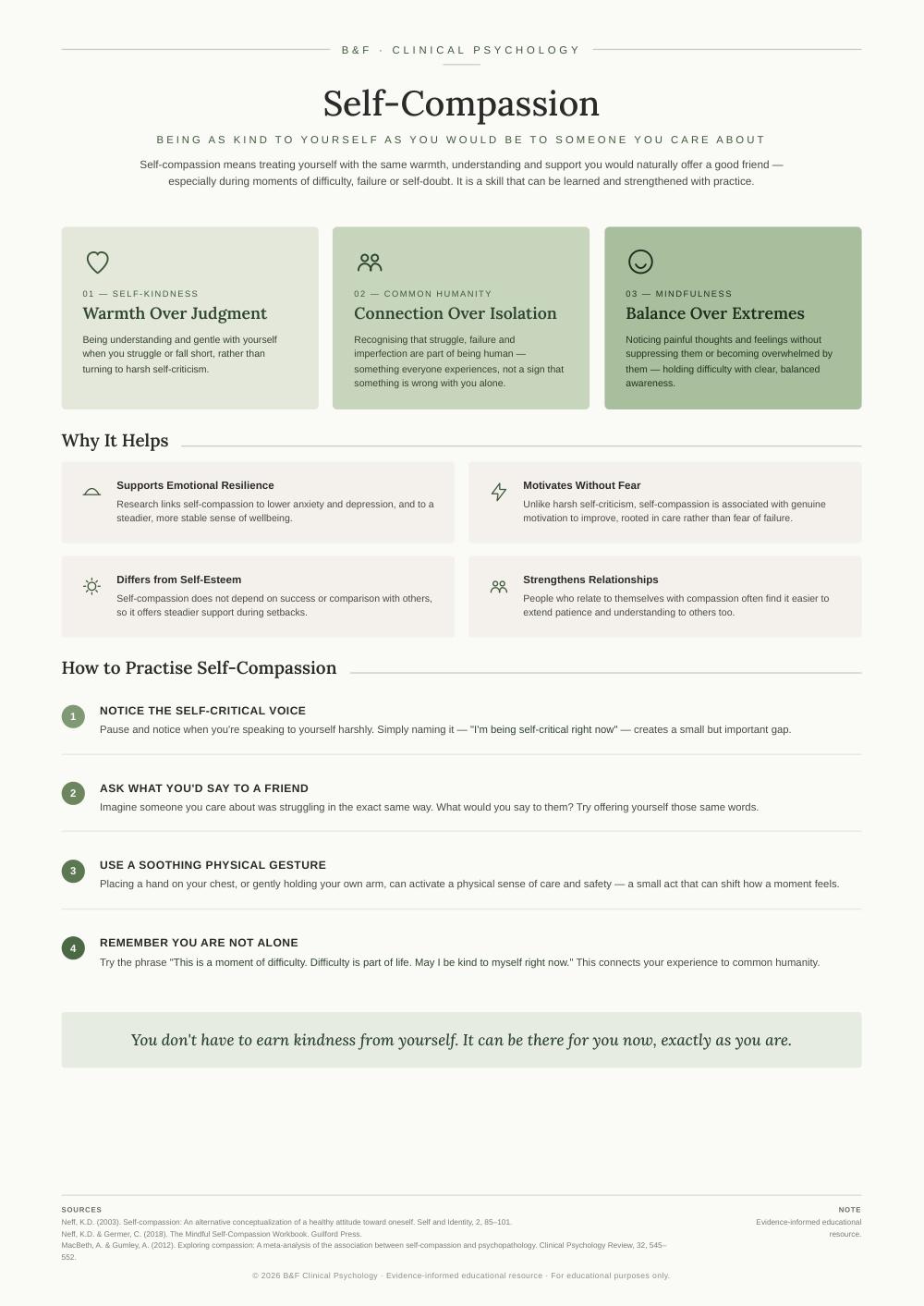
LearnSelf-compassion
Treating yourself with the warmth you would offer someone you care about, and why it works.
-
 Preview
Learn
Preview
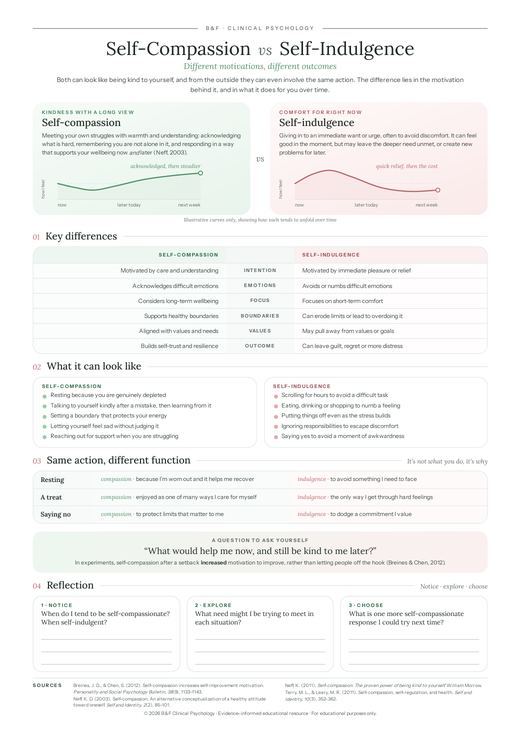
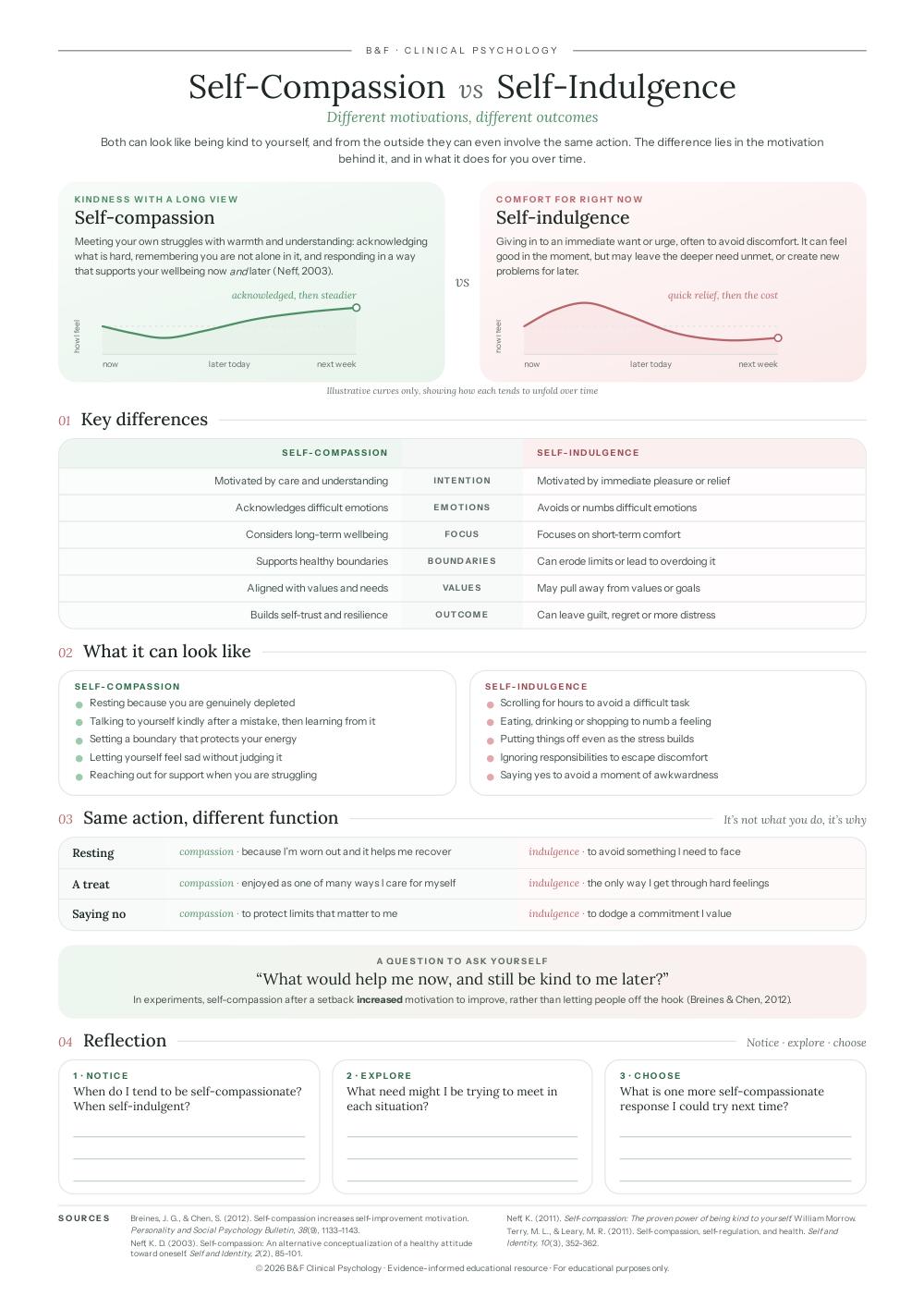
LearnSelf-compassion vs self-indulgence
Both can look like kindness to yourself. The difference lies in the motivation, and in what it does over time.
-
 Preview
Learn
Preview
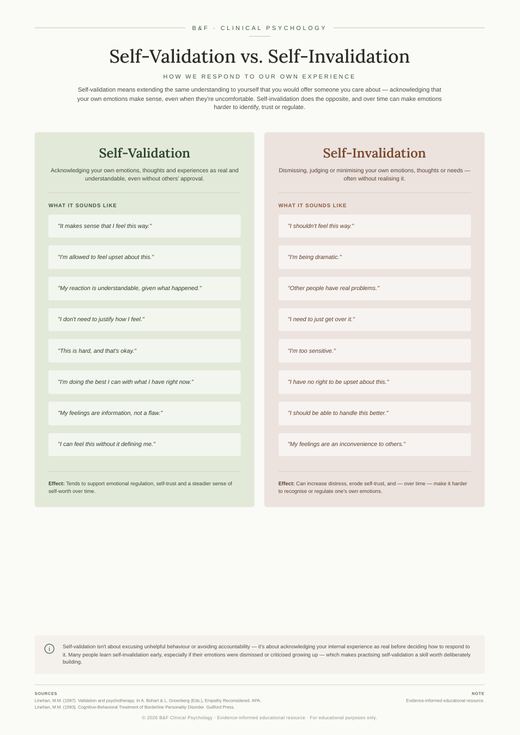
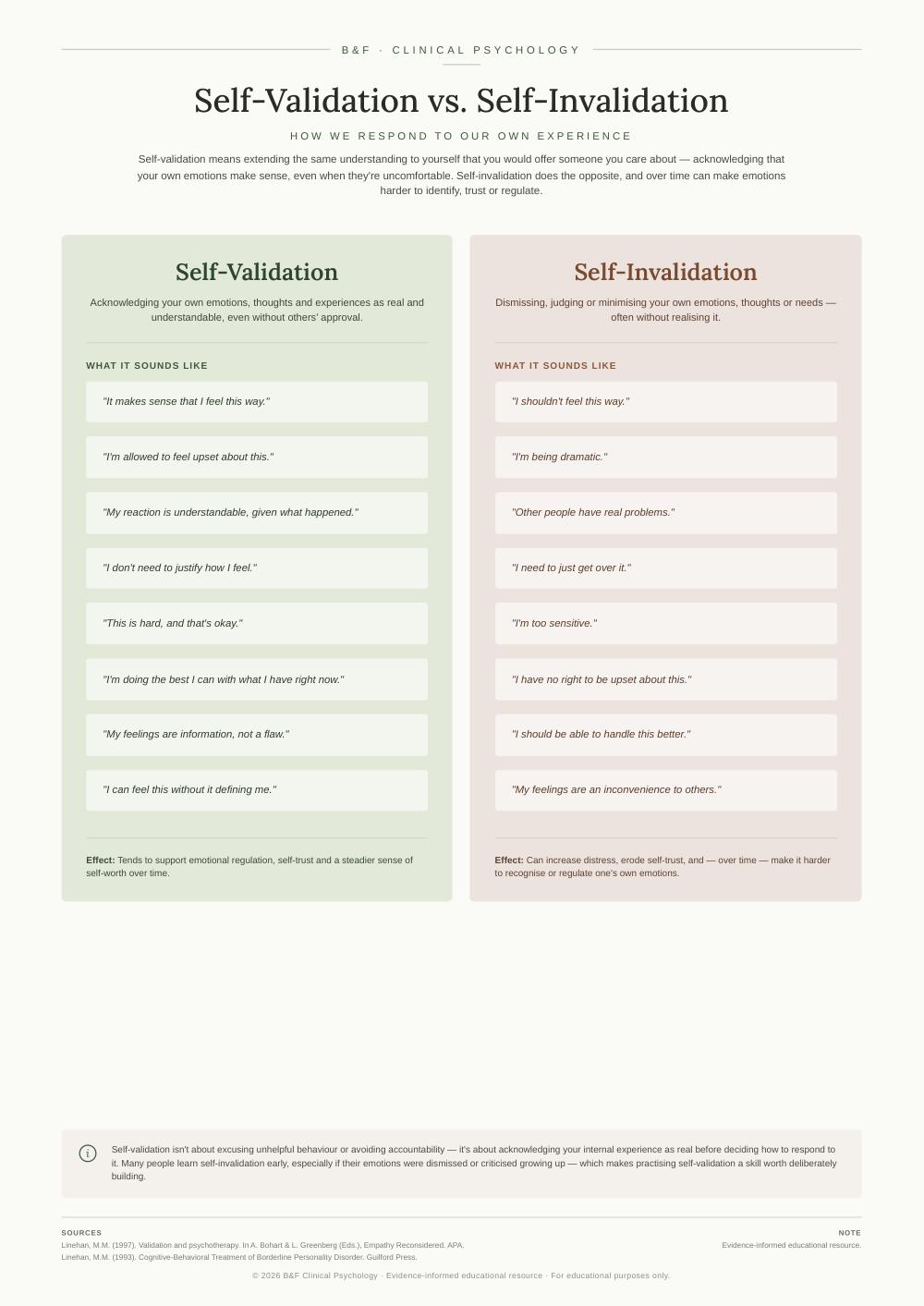
LearnSelf-validation vs self-invalidation
How you respond to your own experience shapes it. The two responses, side by side.
-
 Preview
Reflect
Preview
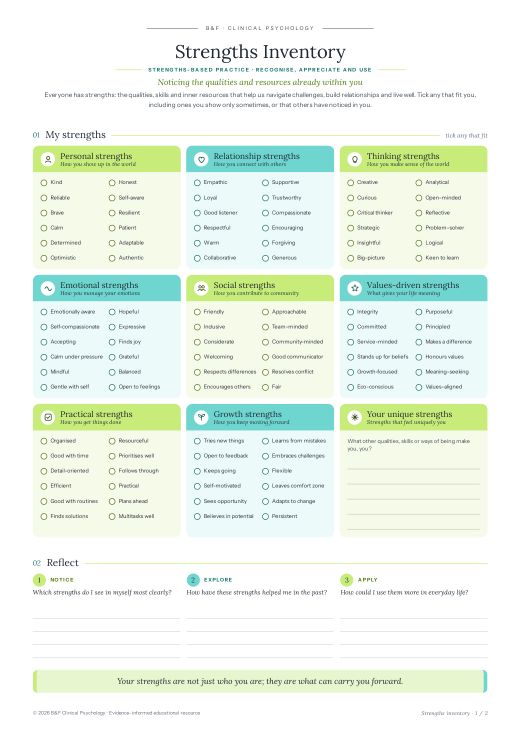
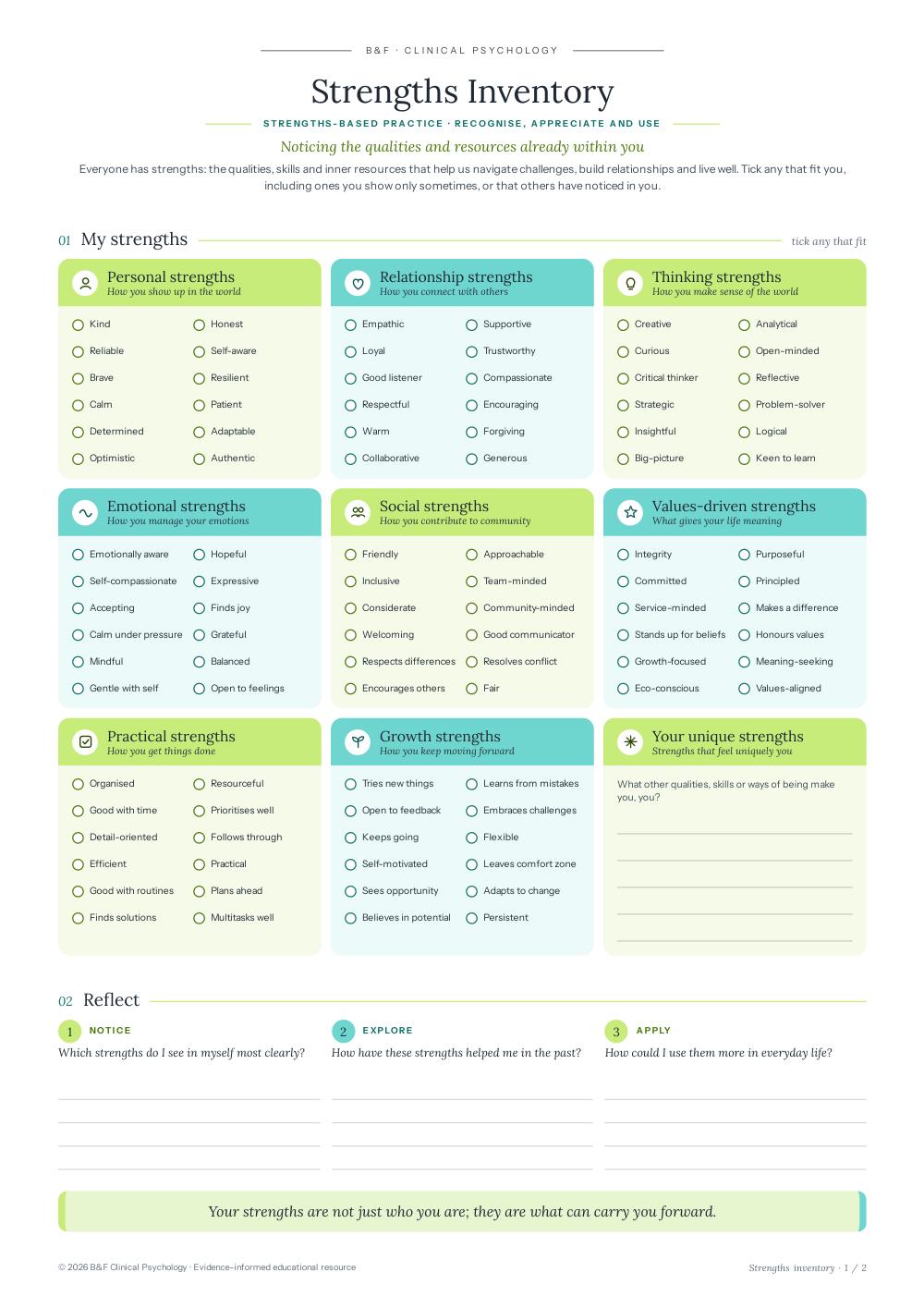
ReflectIdentify & work with my strengths
Noticing the qualities and resources already within you, and putting them to use.
-
 Preview
Practice
Preview
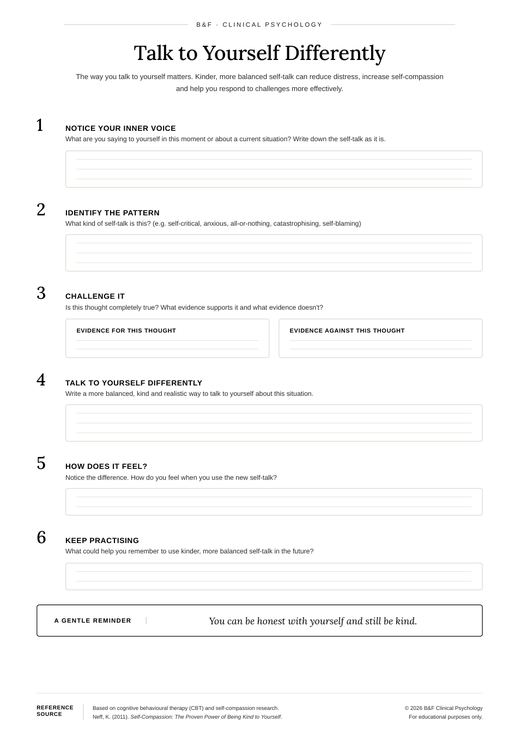
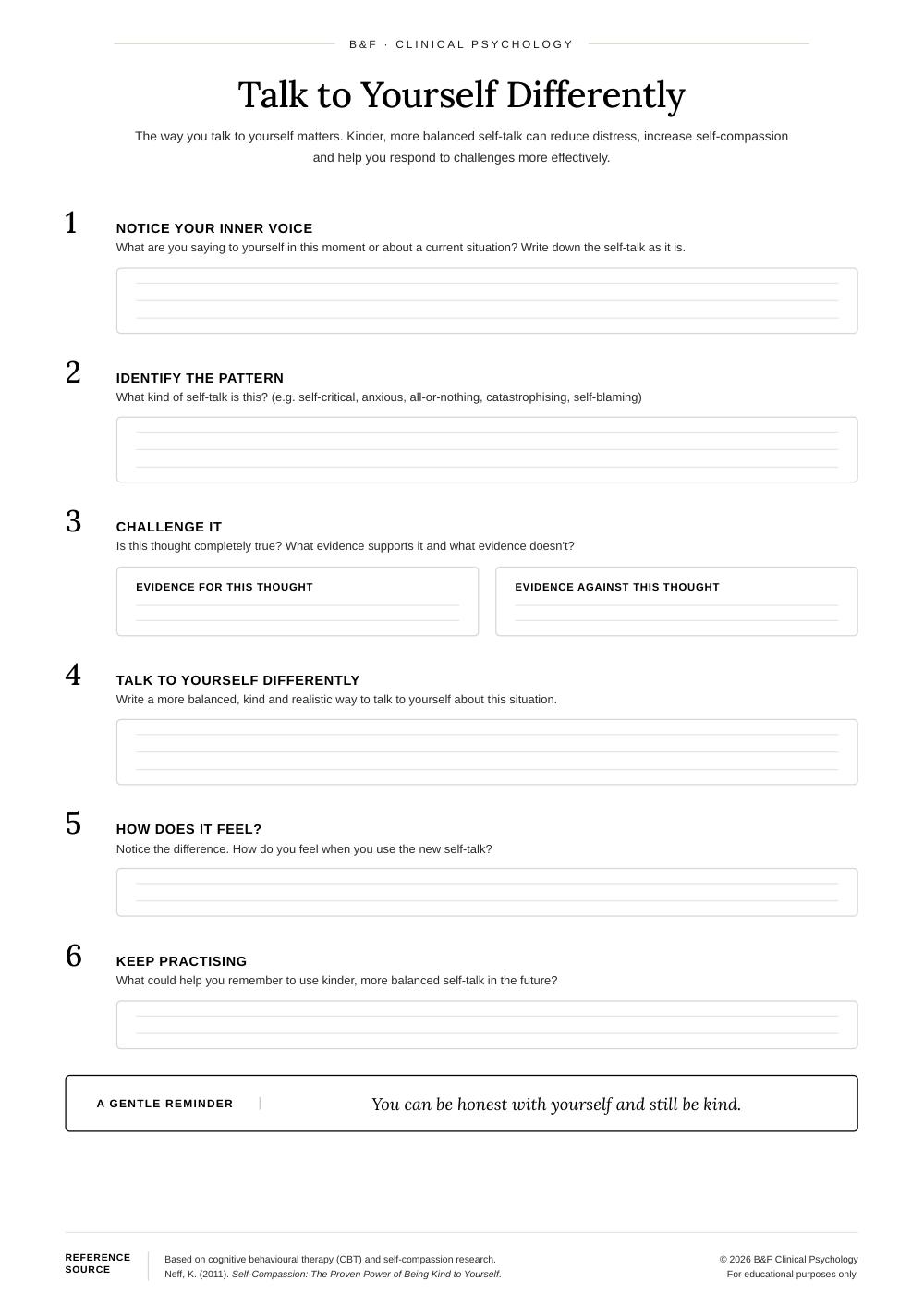
PracticeTalk to yourself differently
Steps for noticing harsh self-talk and replacing it with something more balanced.
-
 Preview
Reflect
Preview
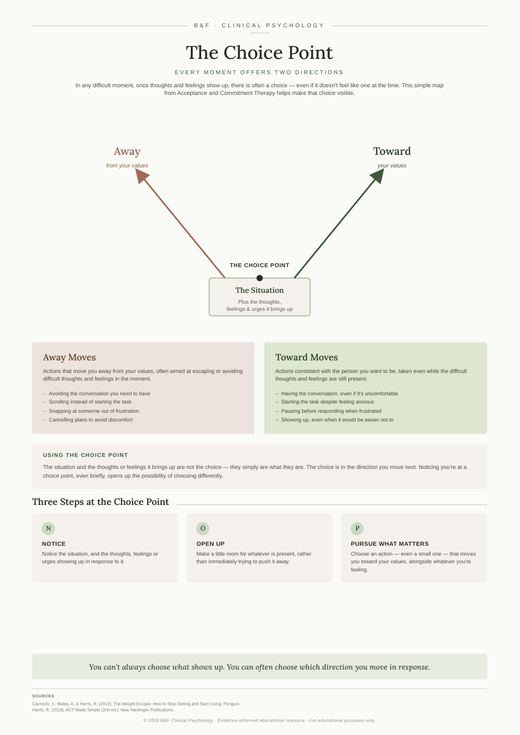
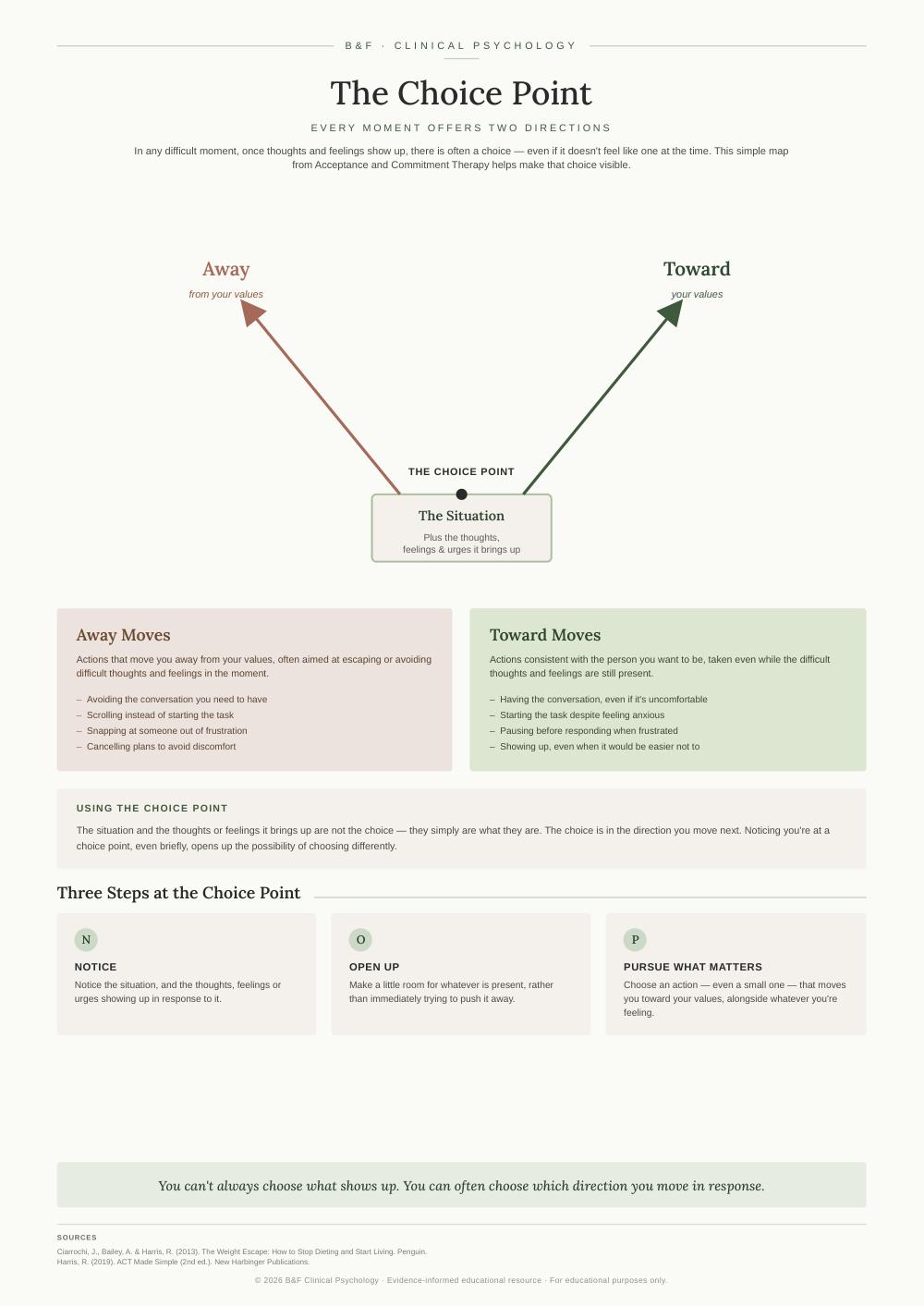
ReflectThe choice point
In a hard moment there are two directions. This sheet helps you see them, and choose.
-
 Preview
Learn
Preview
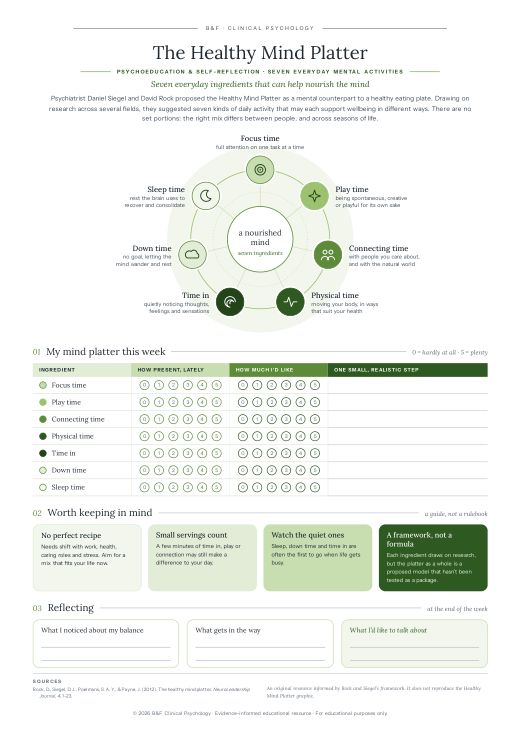
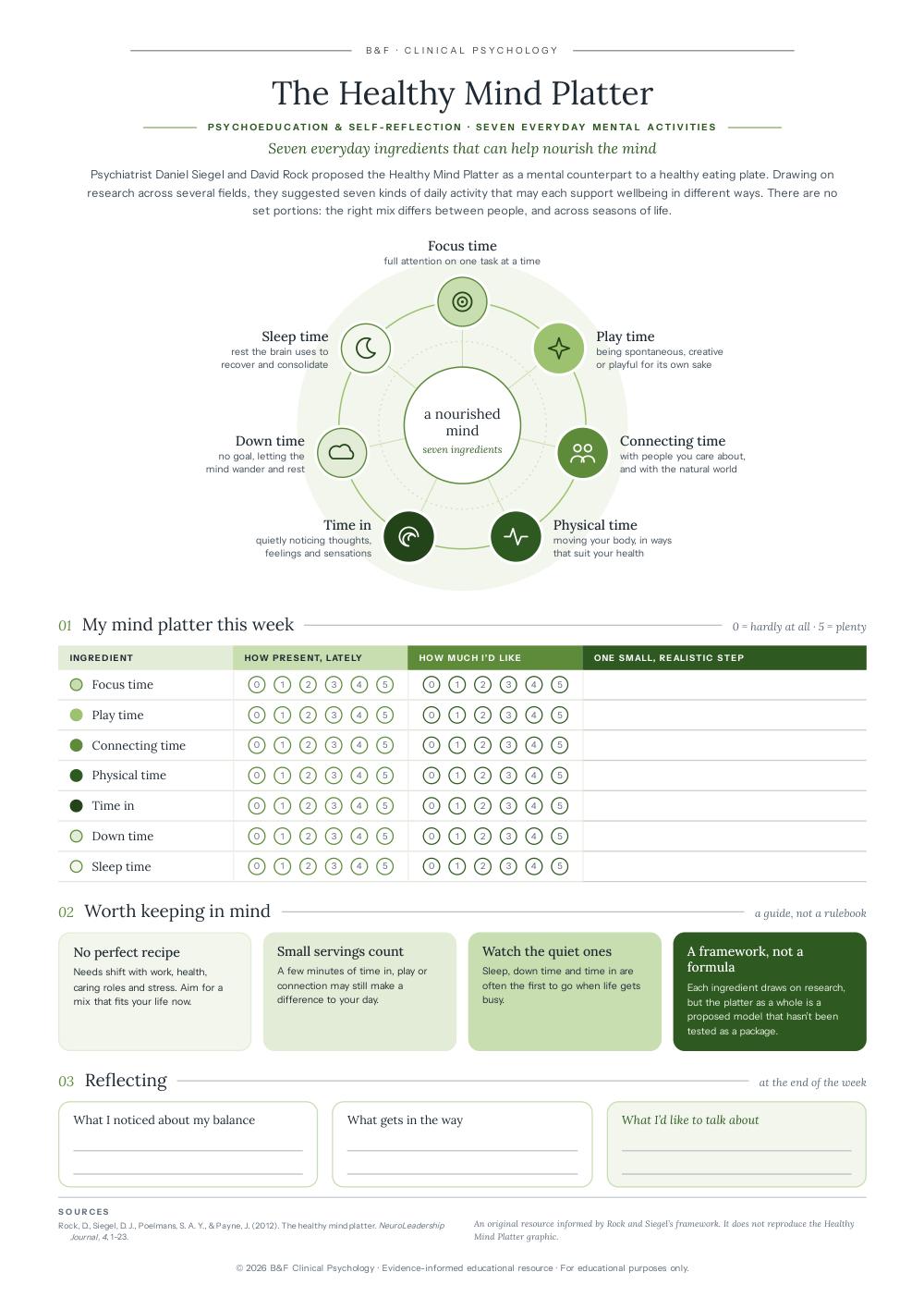
LearnThe healthy mind platter
Dan Siegel's seven daily servings for a well-nourished mind, with a week to fill in.
-
 Preview
Reflect
Preview
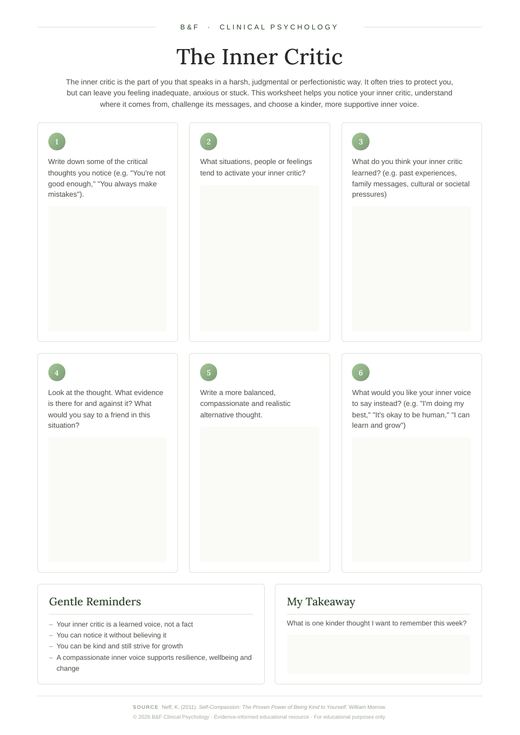
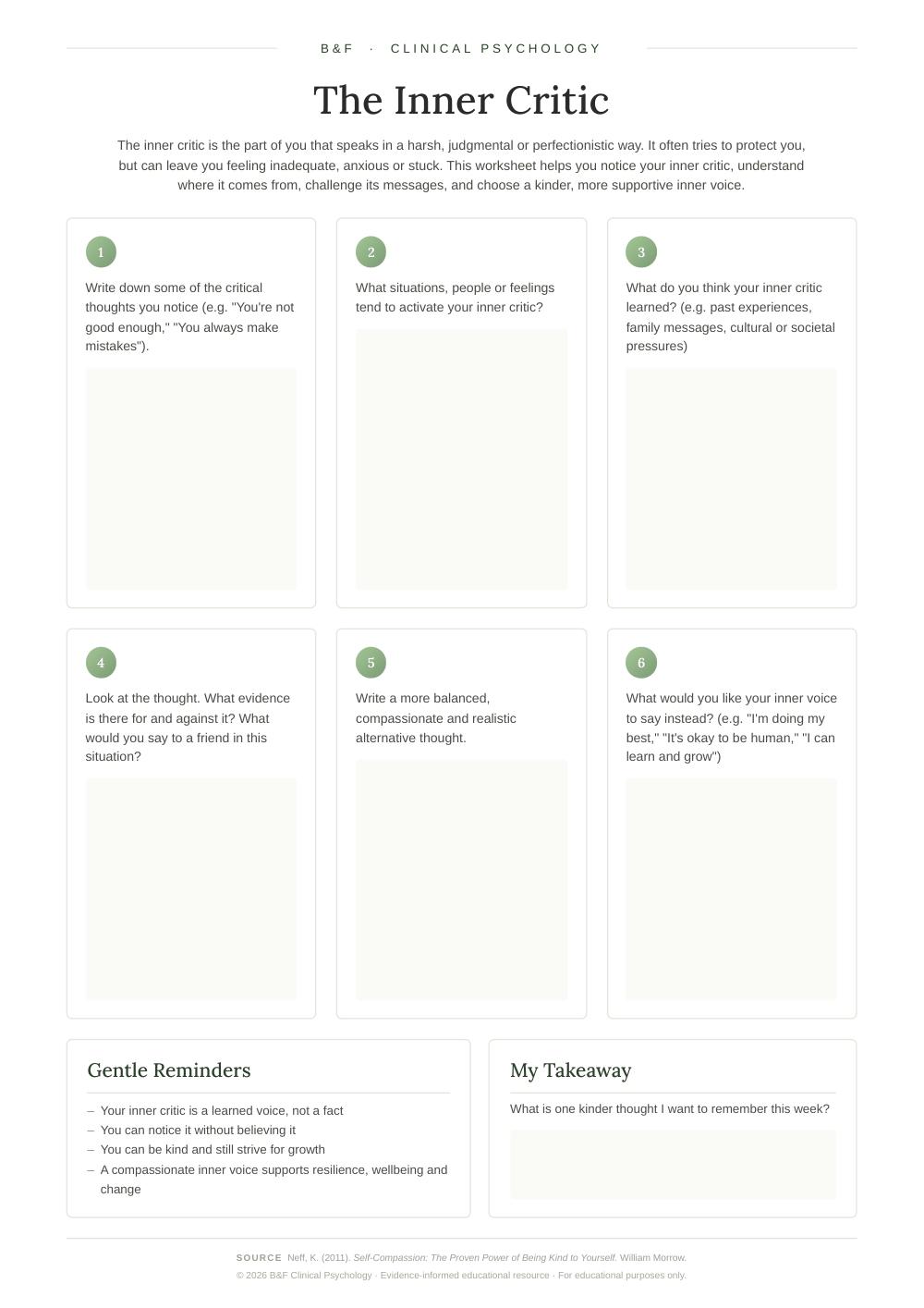
ReflectThe inner critic: worksheet
Get to know the voice that judges you, what it is trying to do, and how to answer it.
-
 Preview
Learn
Preview
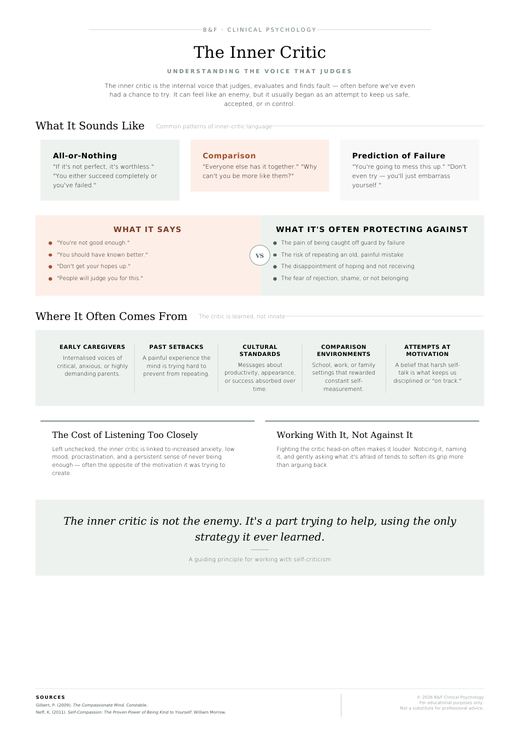
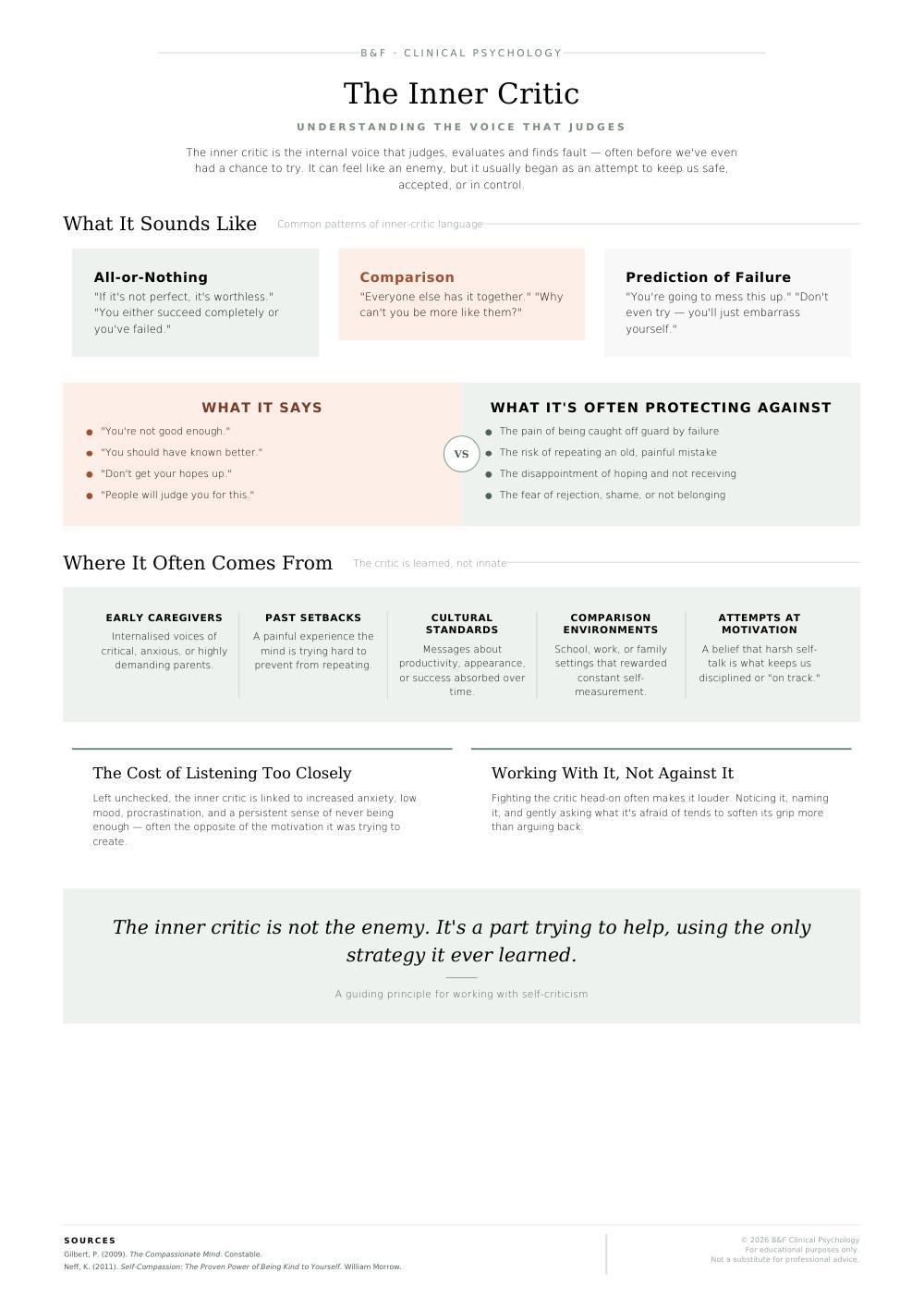
LearnThe inner critic
Understanding the voice that finds fault, often before you have had a chance to try.
-
 Preview
Learn
Preview
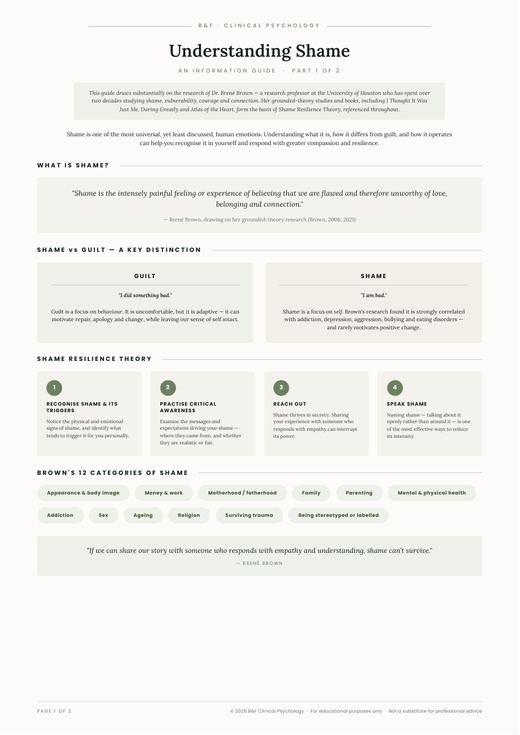
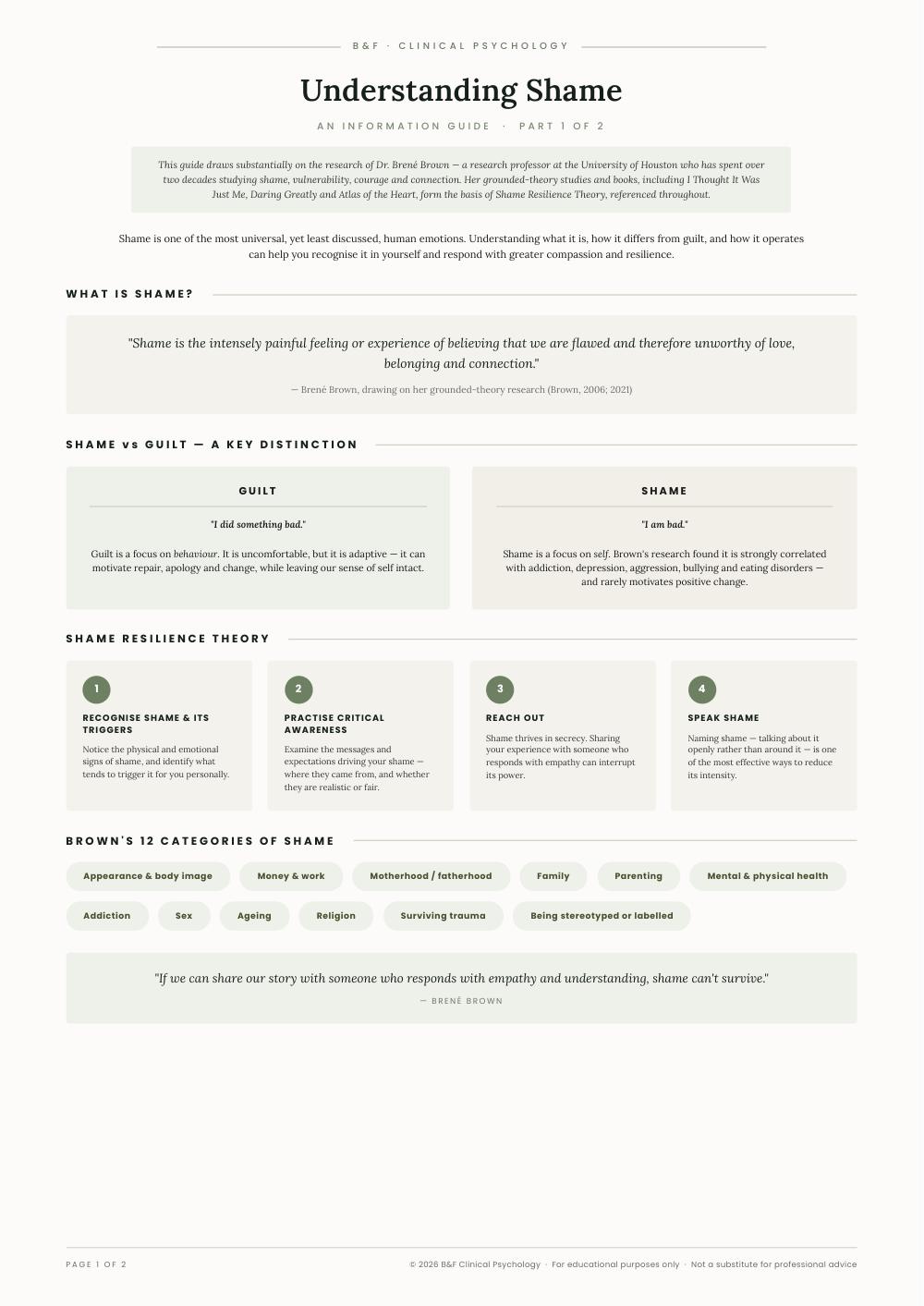
LearnUnderstanding shame
A two-part guide drawing on Brené Brown's research into shame, and what loosens its grip.
-
 Preview
Learn
Preview
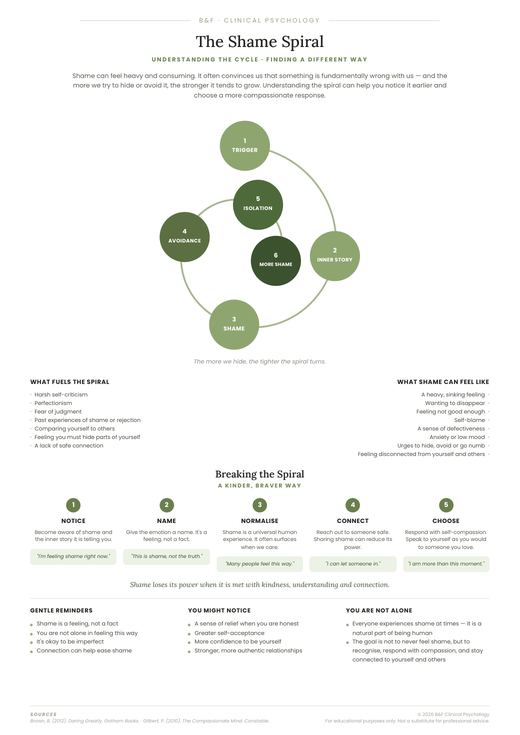
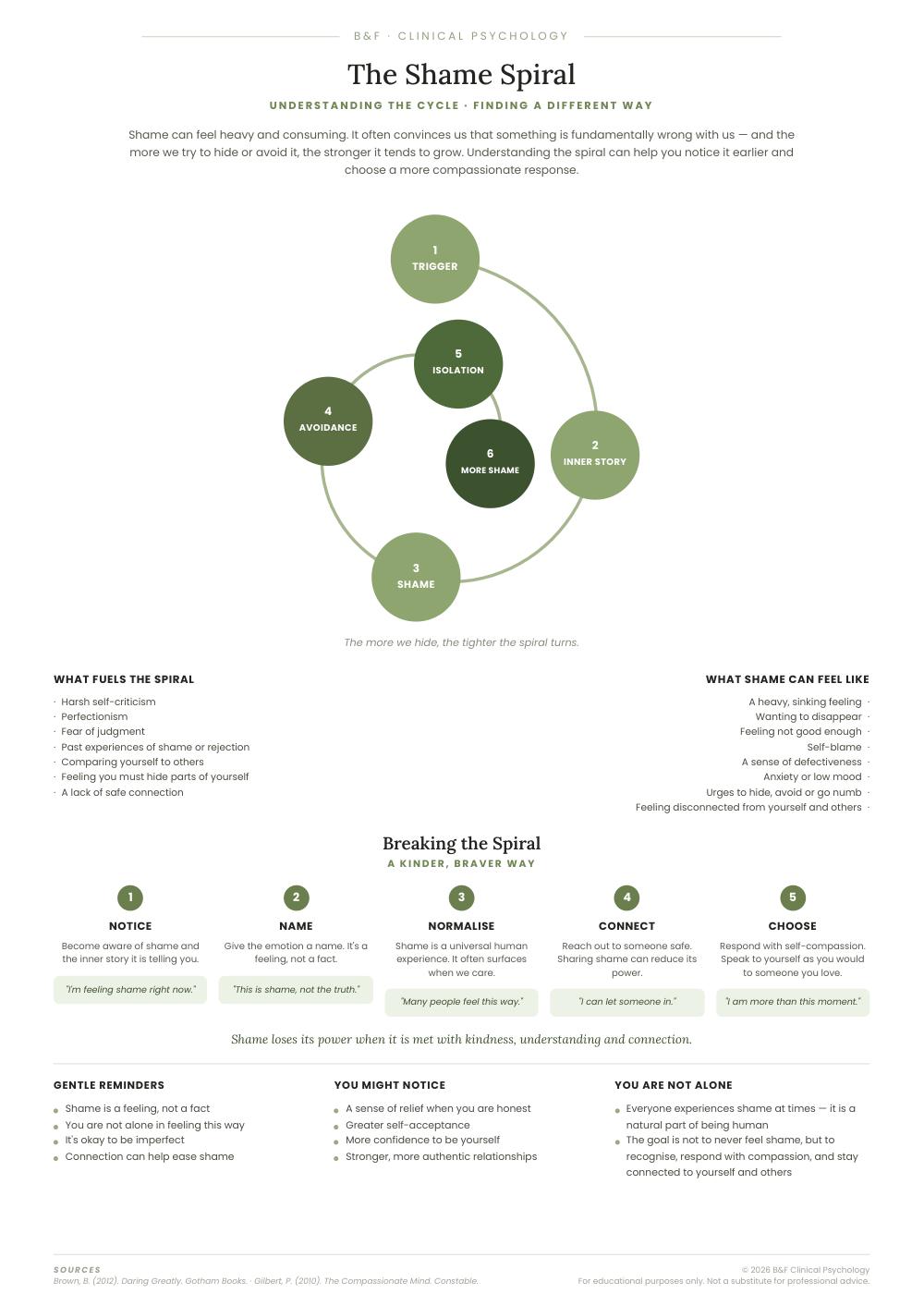
LearnThe shame spiral
How shame grows through hiding and avoidance, and where a more compassionate response can interrupt it.
-
 Preview
Learn
Preview
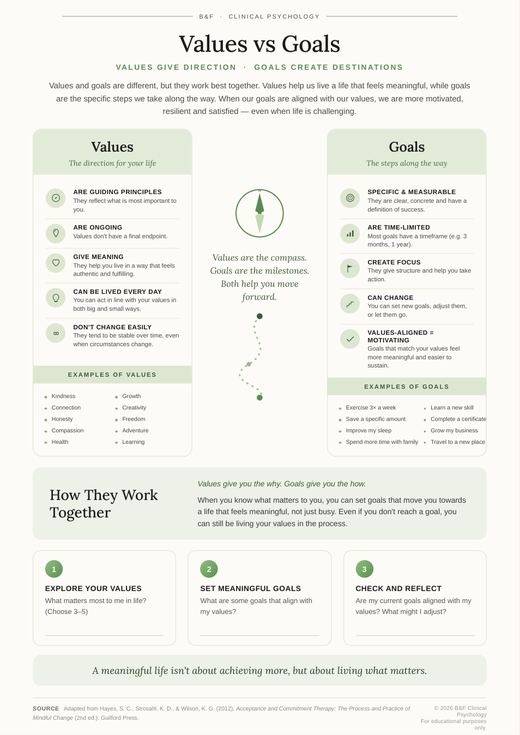
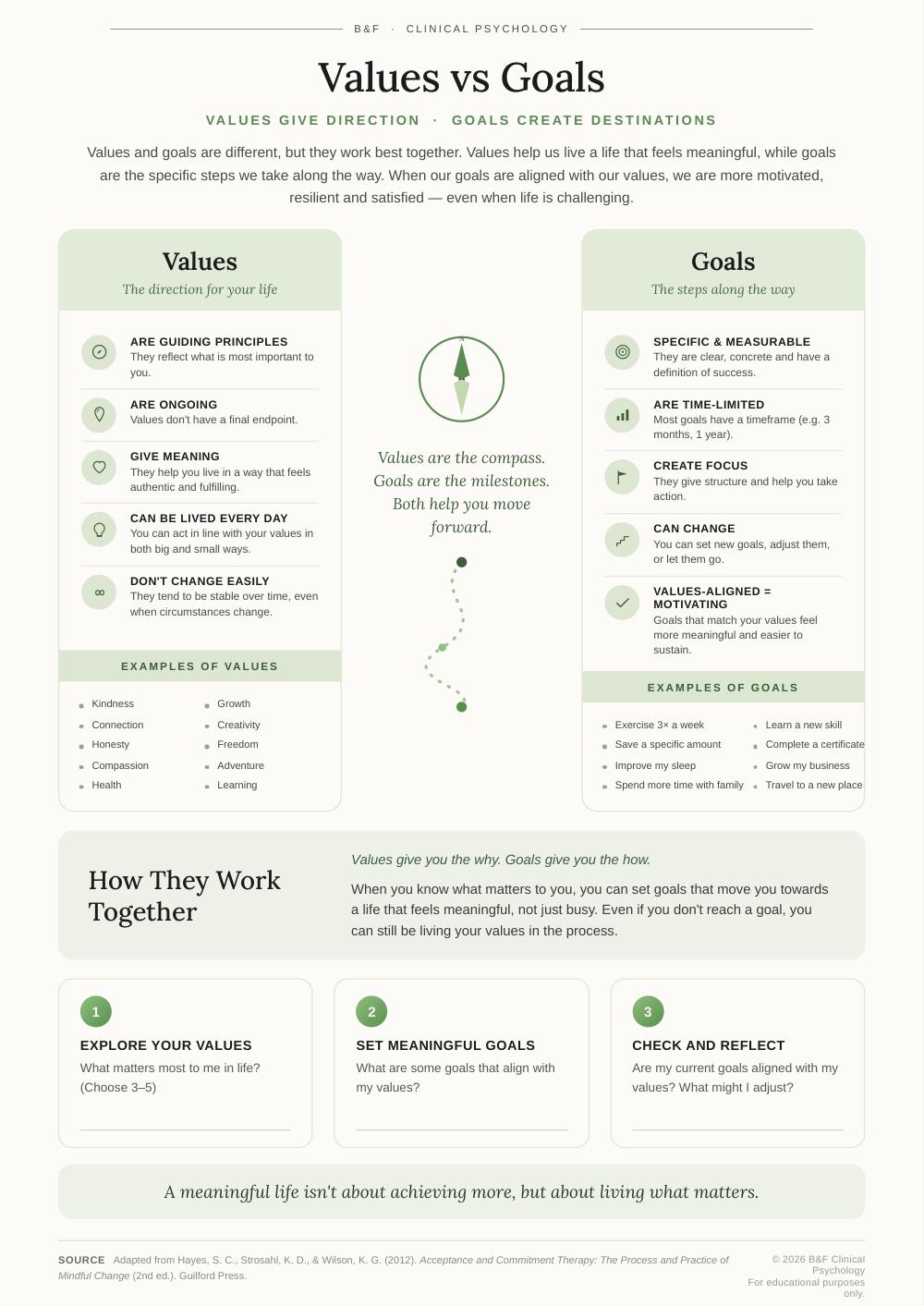
LearnValues vs goals
Values give direction, goals mark destinations. Why you need both, and how they differ.
-
 Preview
Reflect
Preview
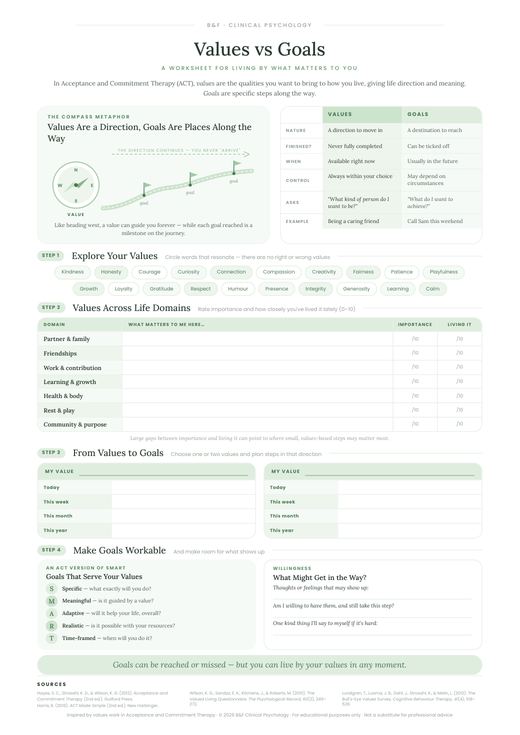
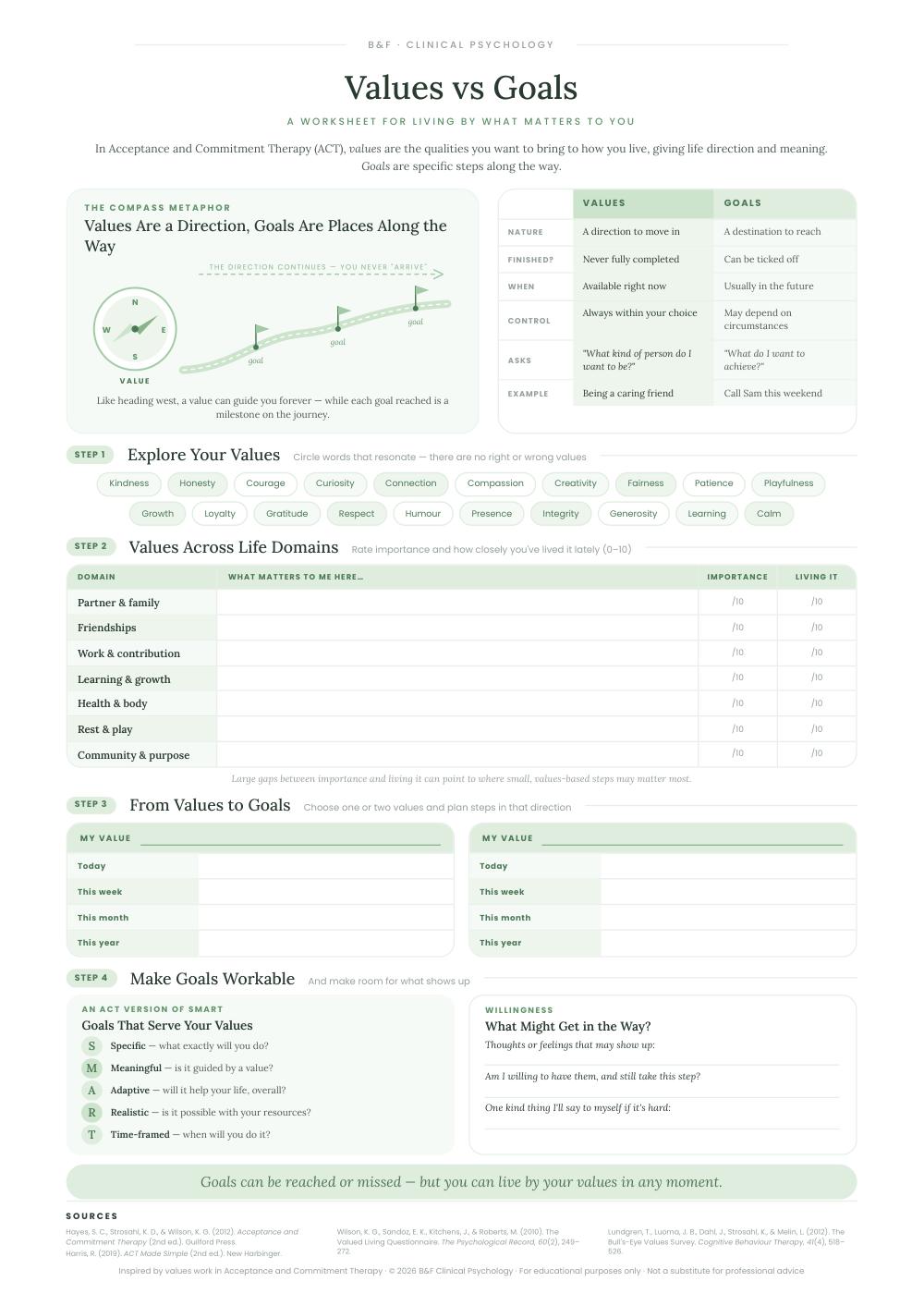
ReflectValues vs goals: worksheet
Map your own values against the goals you are chasing, and see where they line up.
-
 Preview
Reflect
Preview
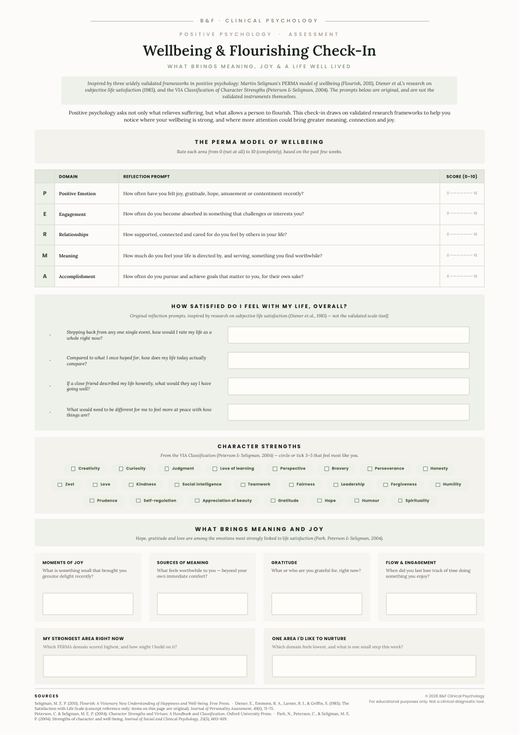
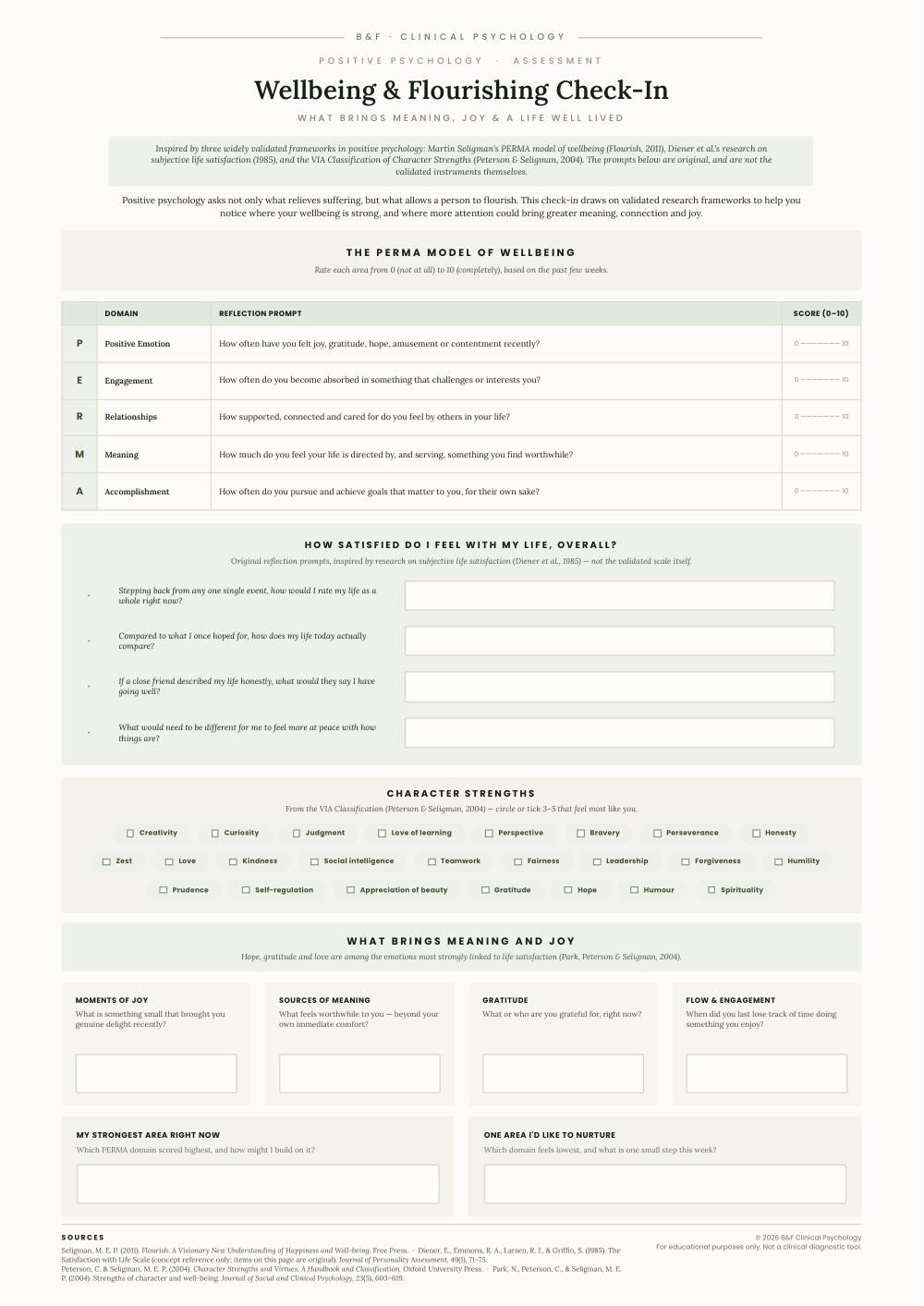
ReflectWellbeing and flourishing check-in
A positive-psychology check-in on meaning, joy and what a life well lived means to you.
-
 Preview
Learn
Preview
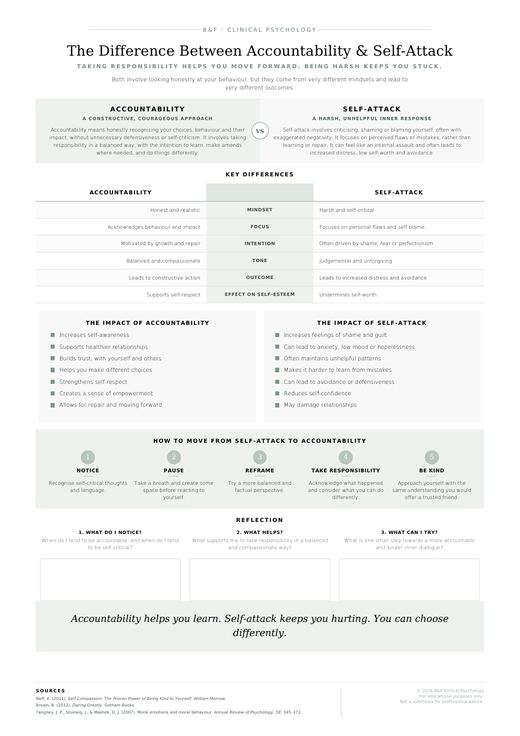
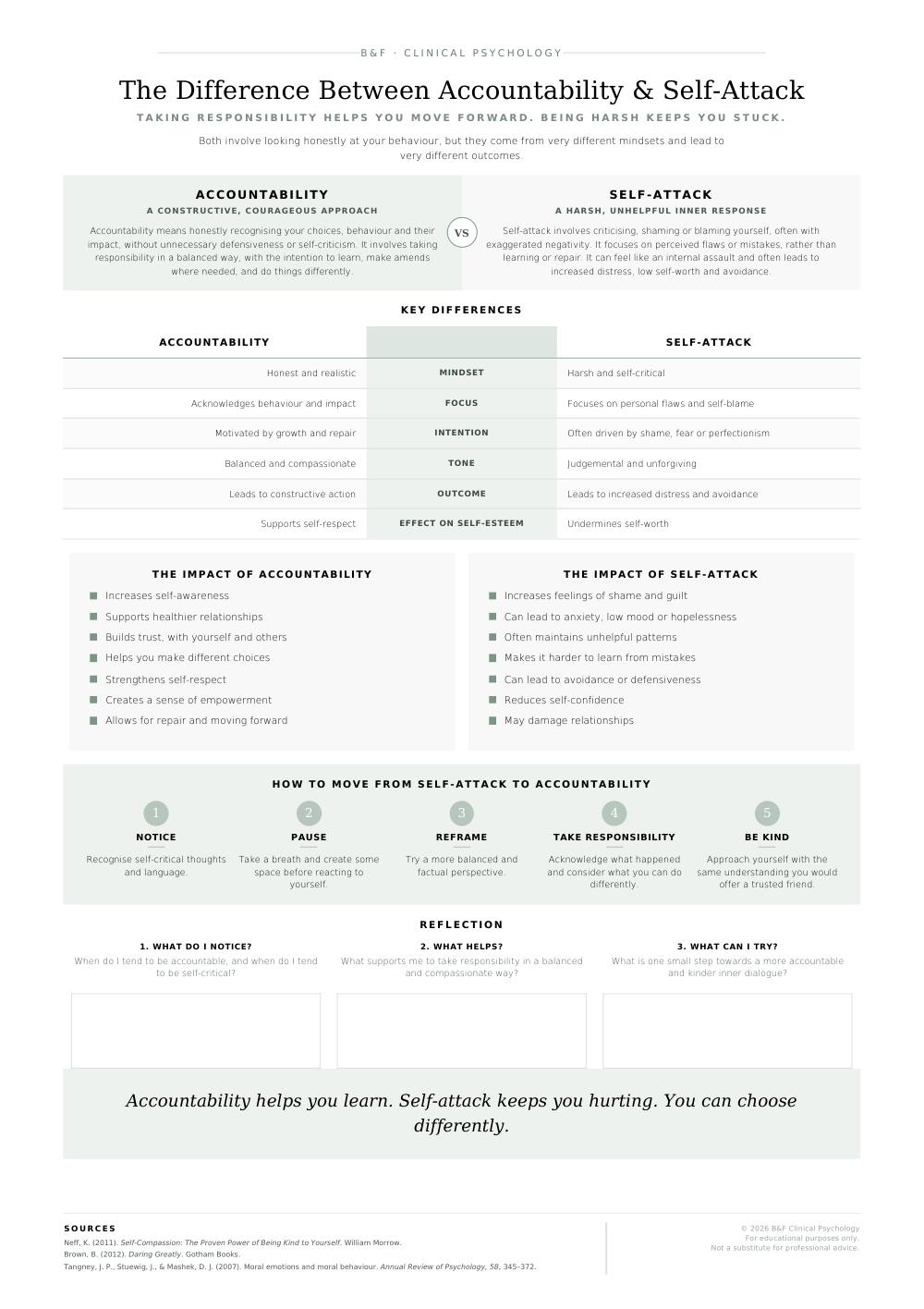
LearnAccountability vs self-attack
Taking responsibility moves you forward. Being harsh keeps you stuck. Telling them apart.
-
 Preview
Learn
Preview
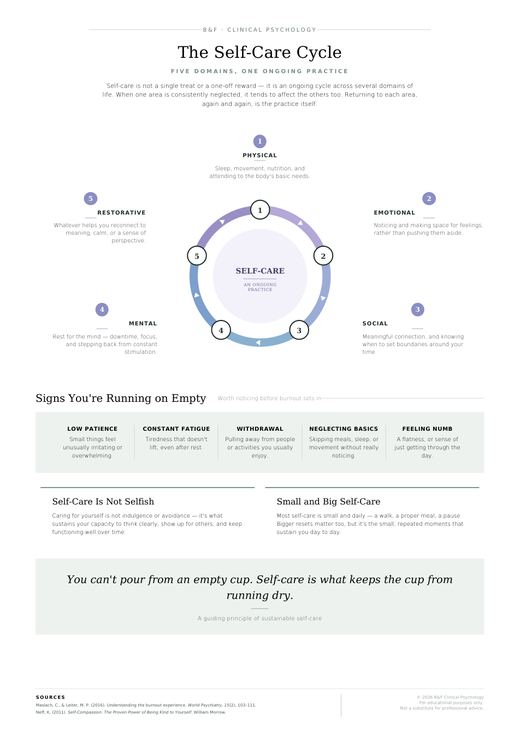
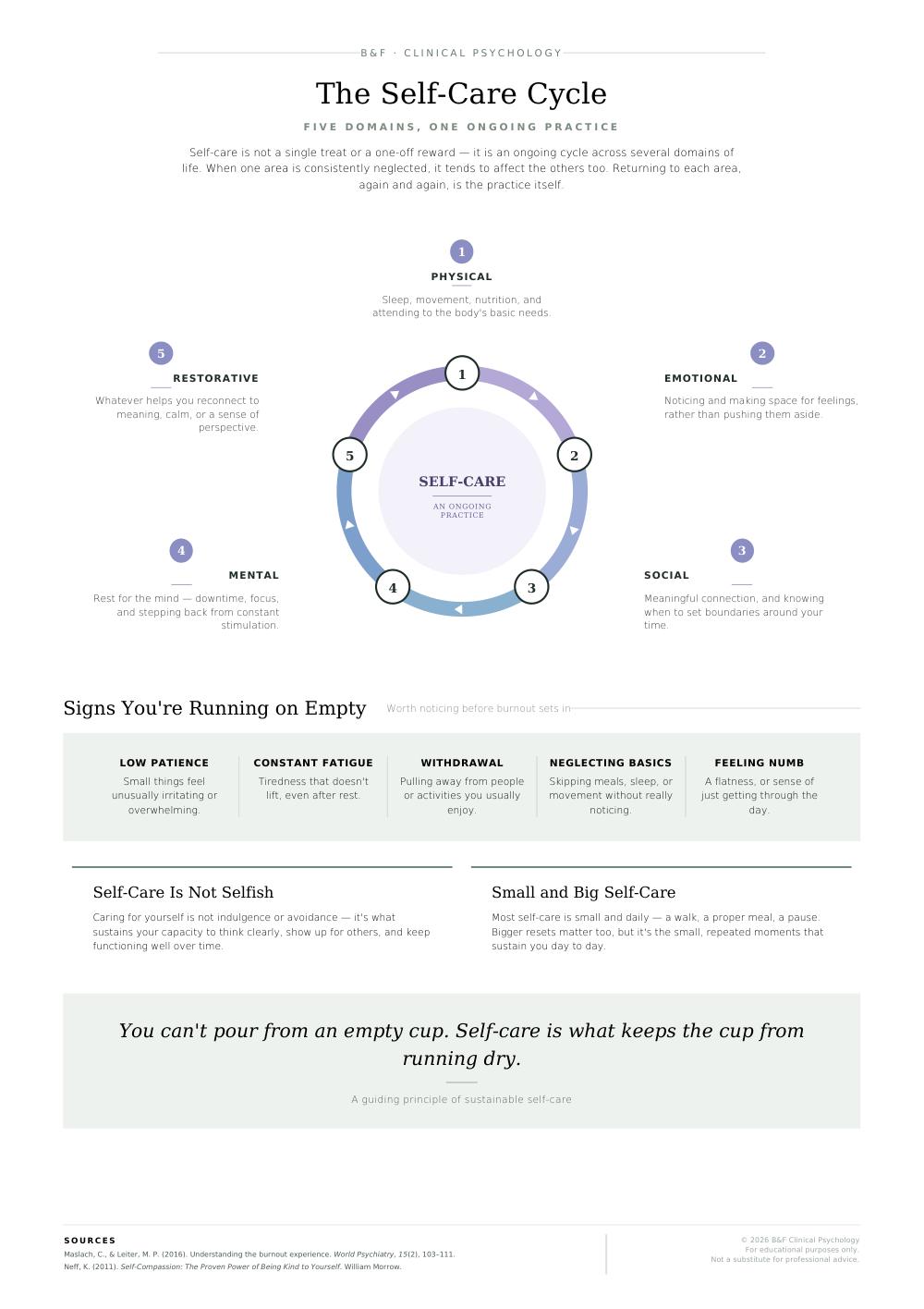
LearnThe self-care cycle
Five domains of self-care as an ongoing practice, not a one-off treat.
-
 Preview
Learn
Preview
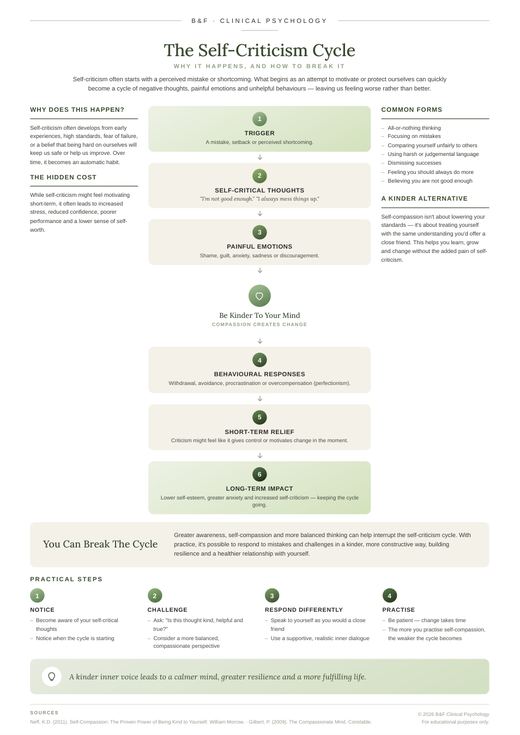
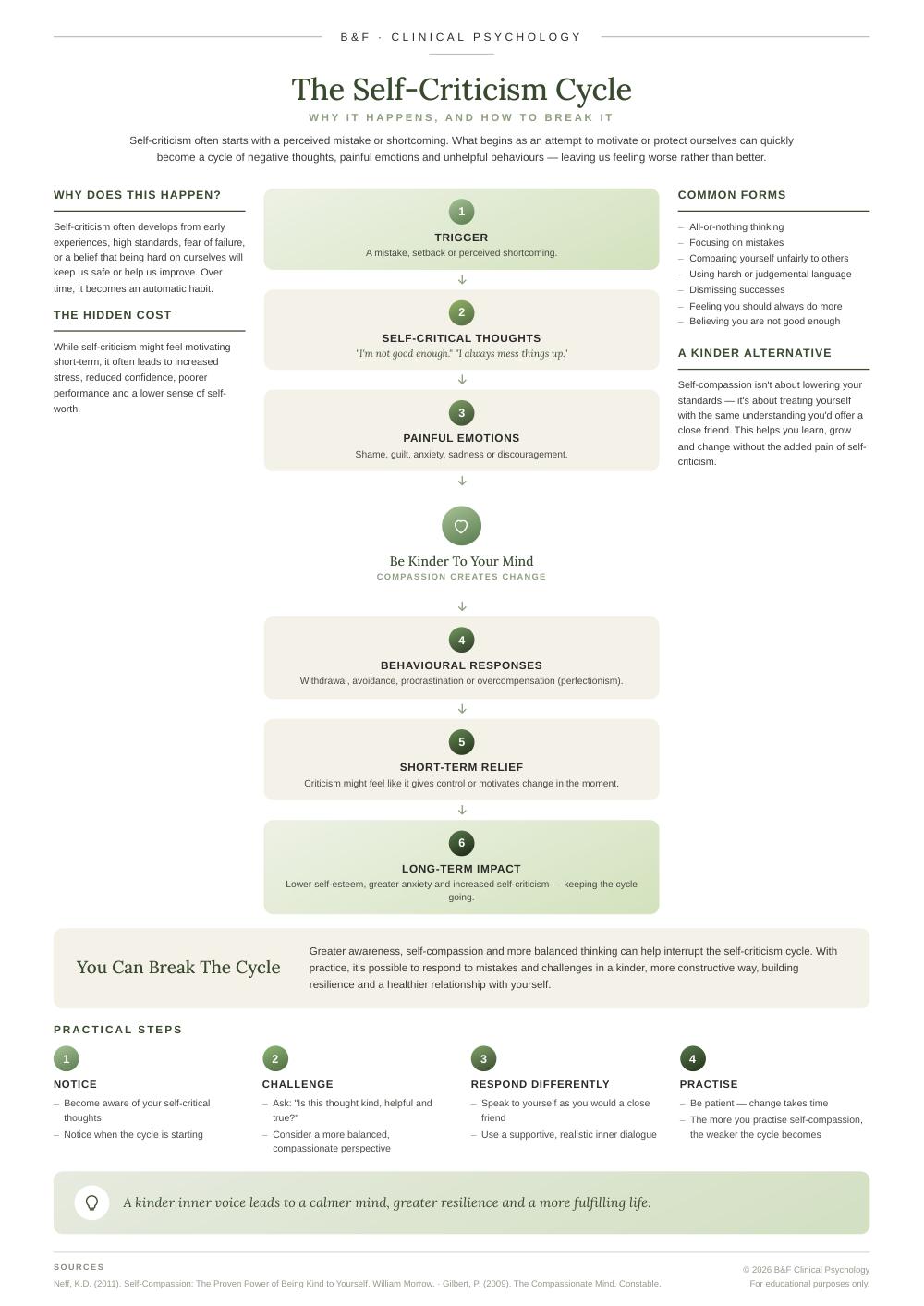
LearnThe self-criticism cycle
Why a perceived mistake so often turns into a spiral, and where to break it.
-
 Preview
Reflect
Preview
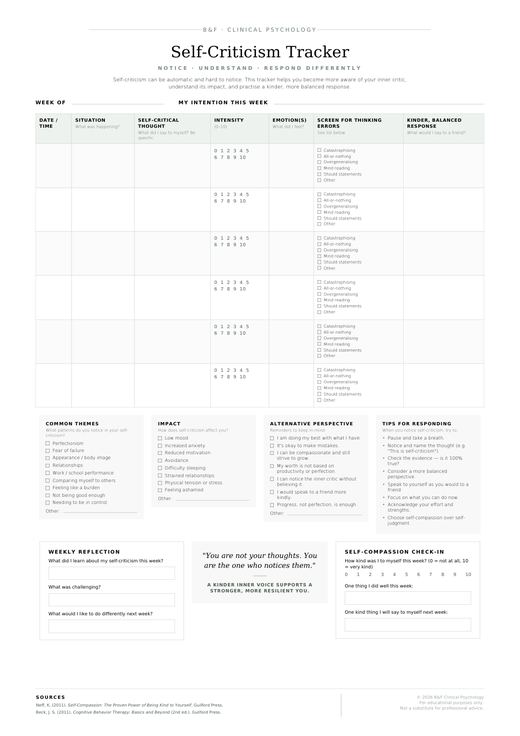
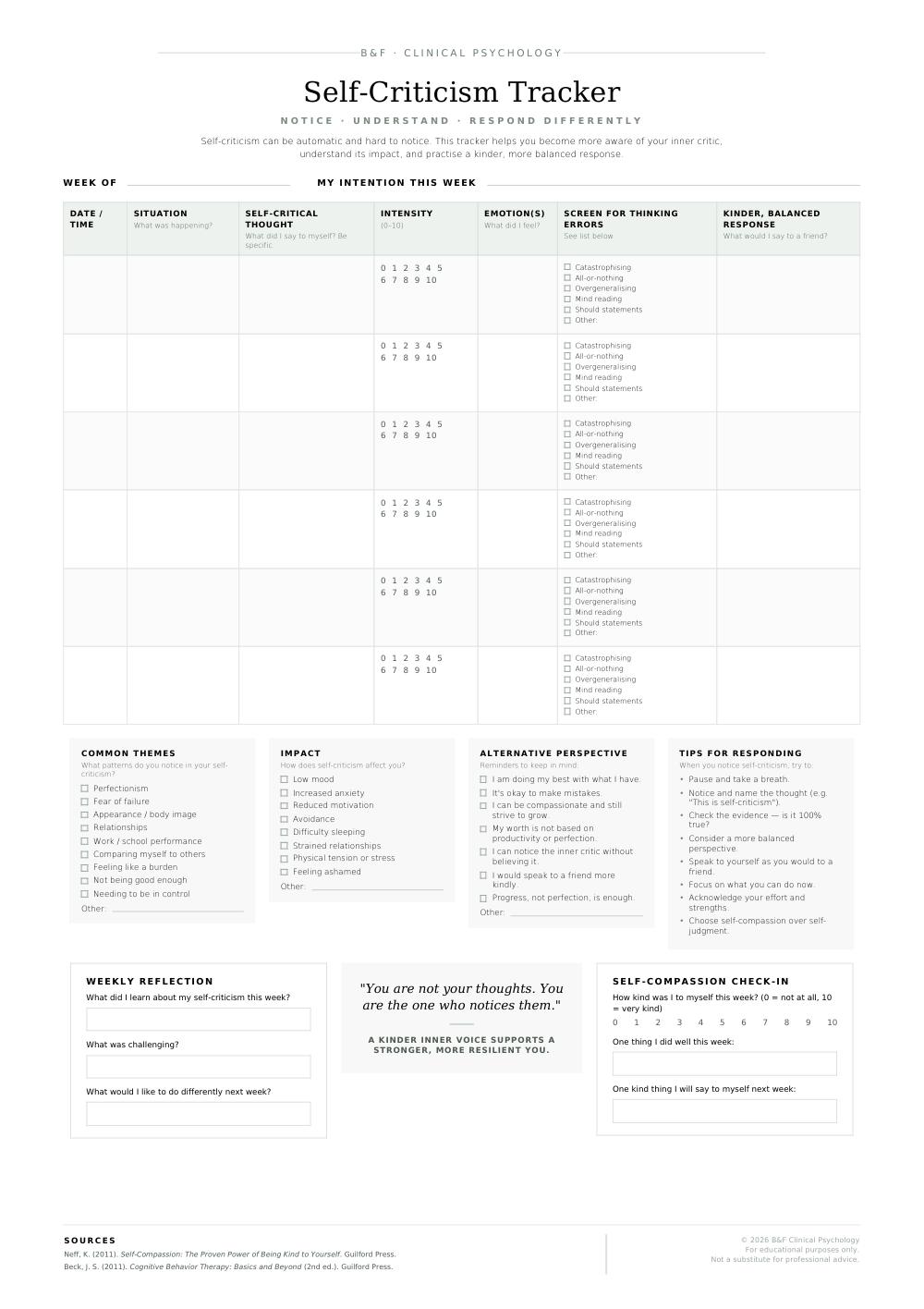
ReflectSelf-criticism tracker
Catch self-criticism as it happens, understand what sets it off, and respond differently.
-
 Preview
Learn
Preview
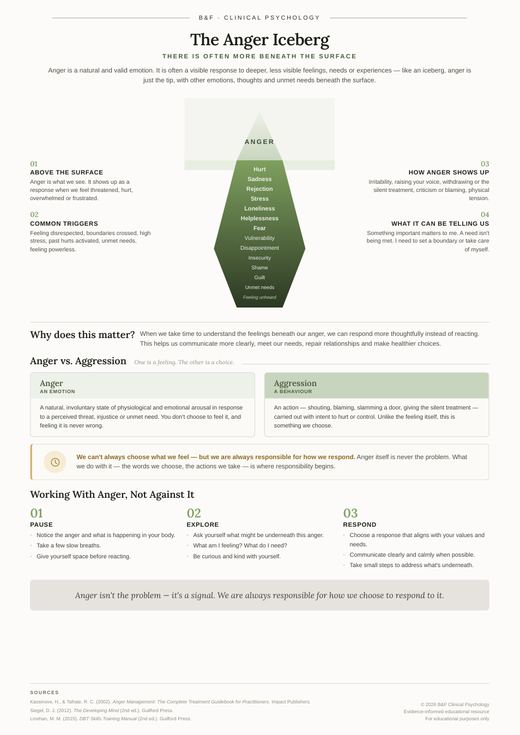
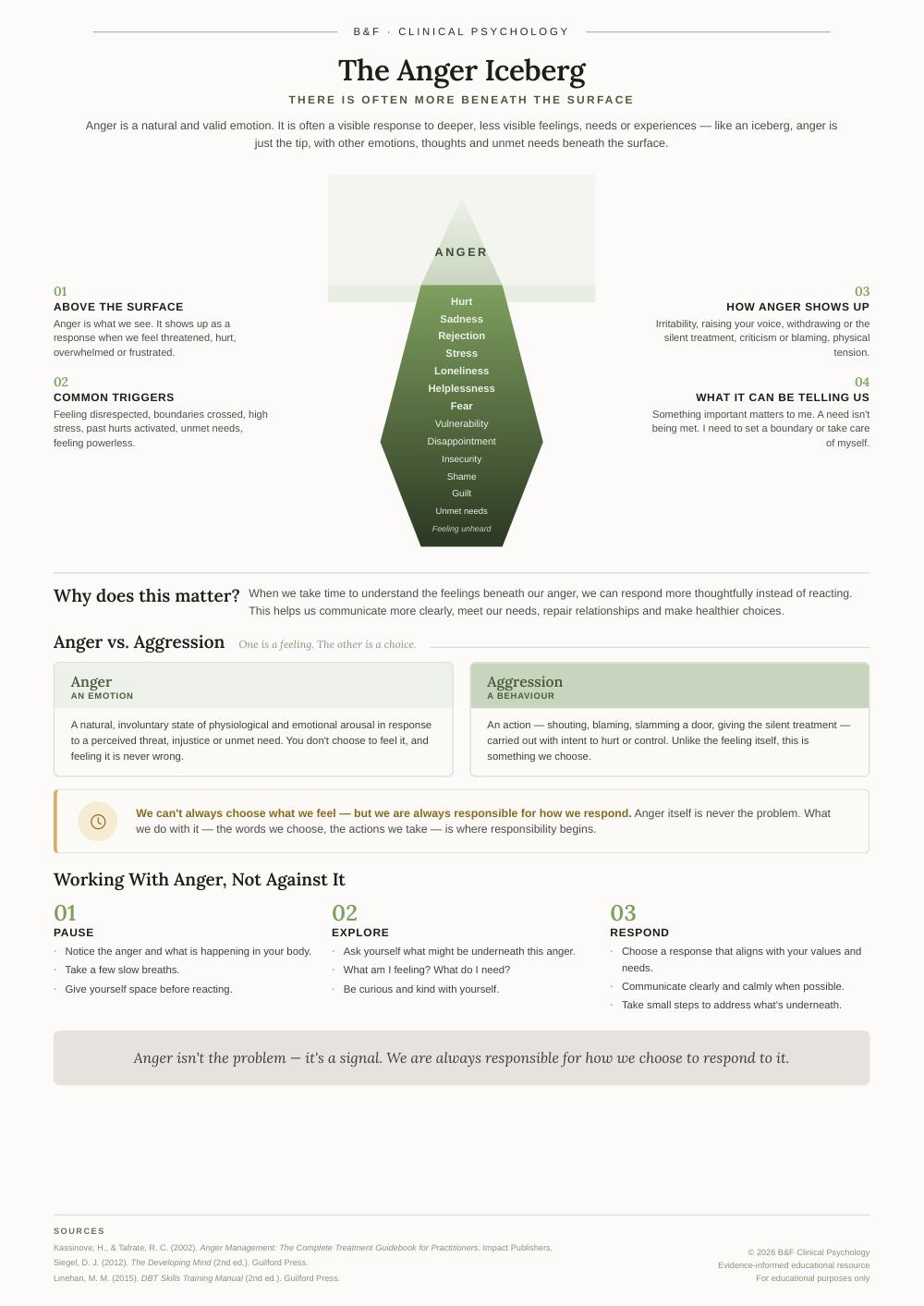
LearnThe anger iceberg
Anger is the part above the surface. What usually sits beneath it.
-
 Preview
Learn
Preview
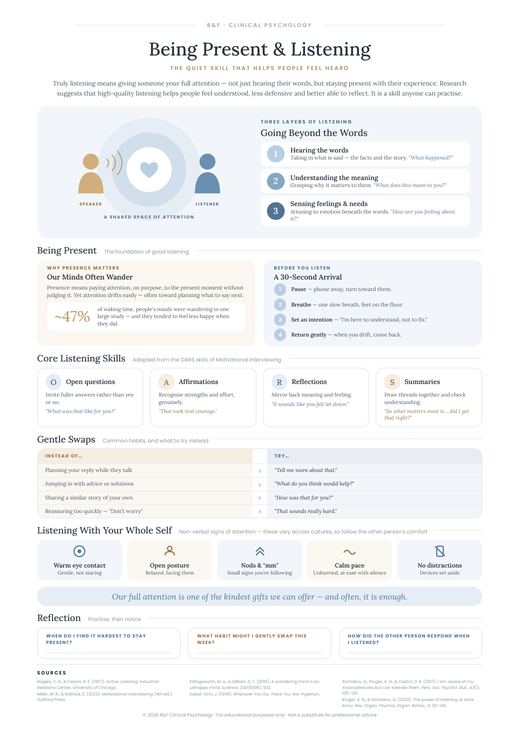
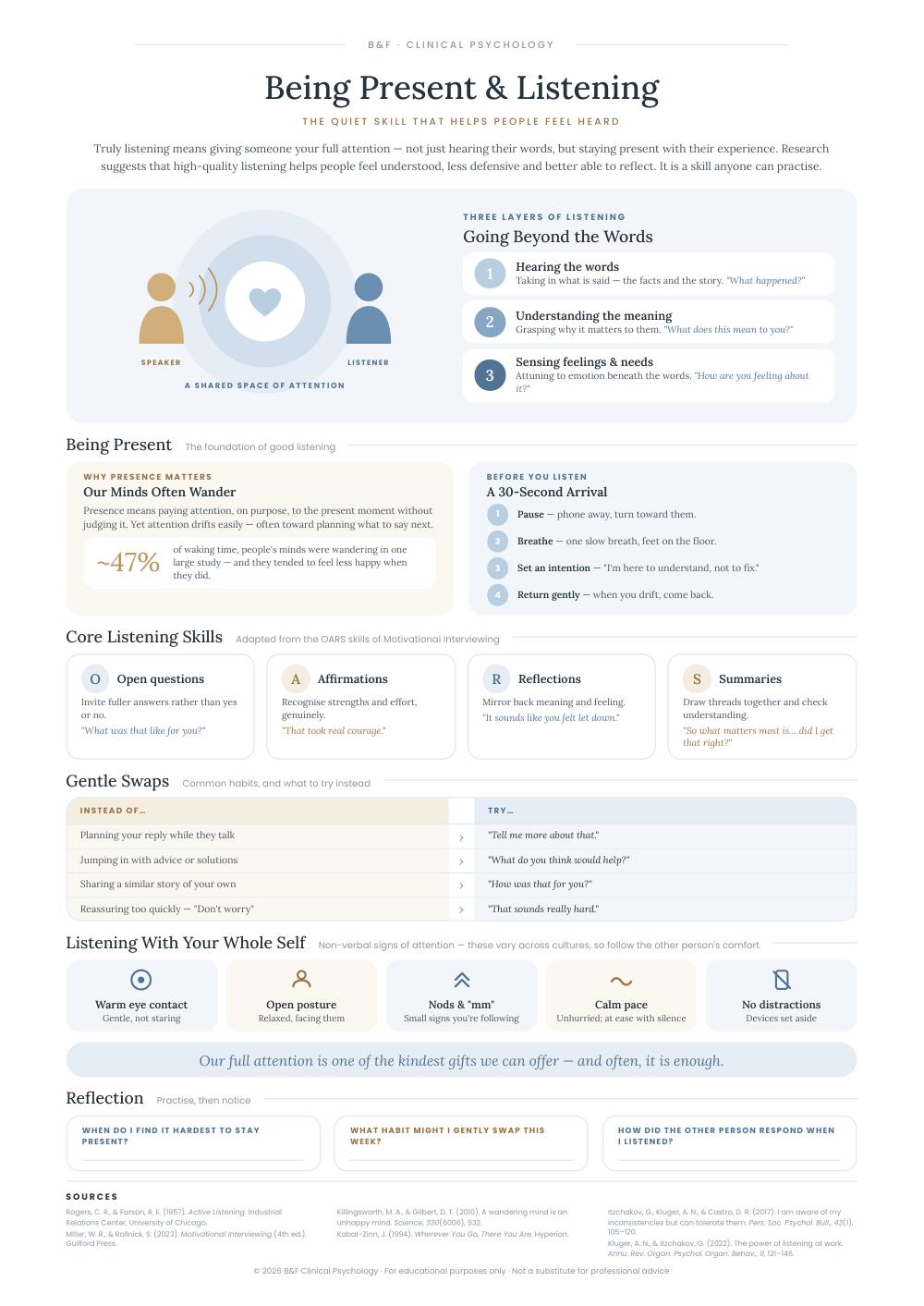
LearnBeing present and listening
The quiet skill that helps people feel heard: three layers of listening.
-
 Preview
Learn
Preview
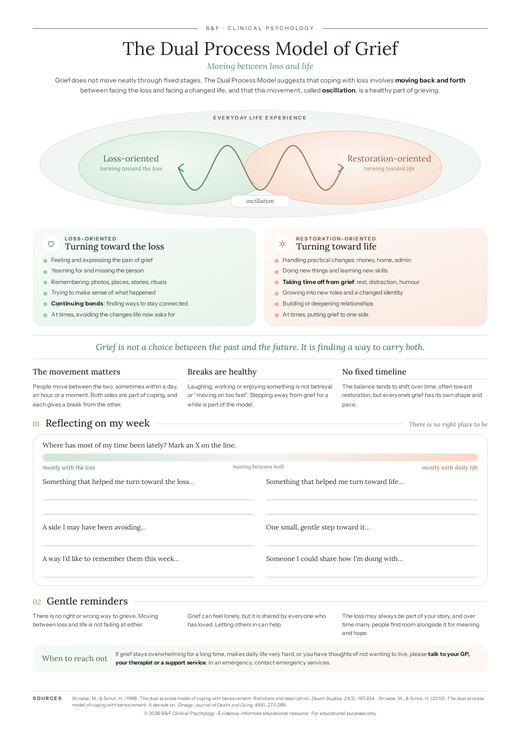
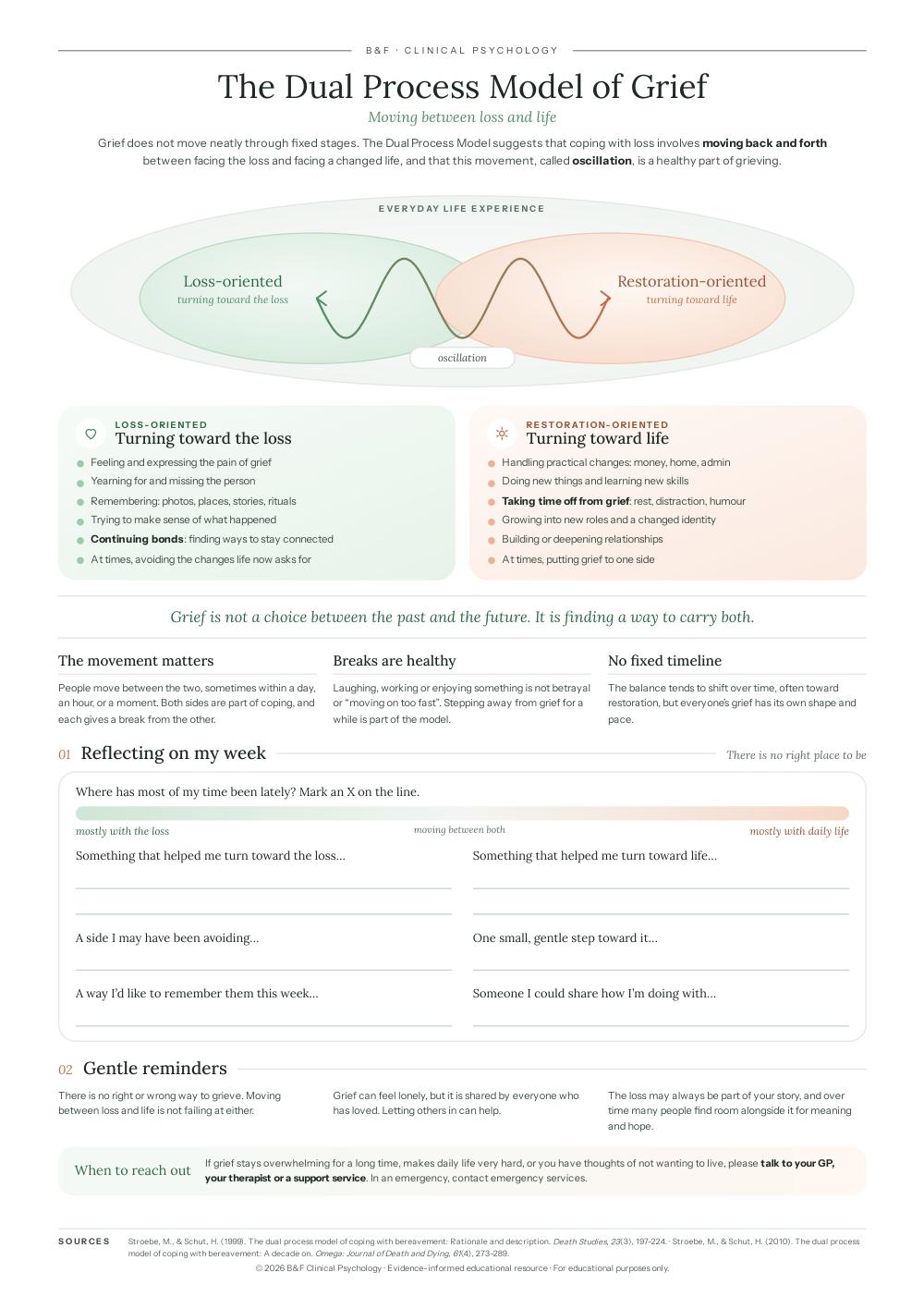
LearnThe dual process model of grief
Coping with loss means moving between facing the loss and facing a changed life, and that is healthy.
-
 Preview
Reflect
Preview
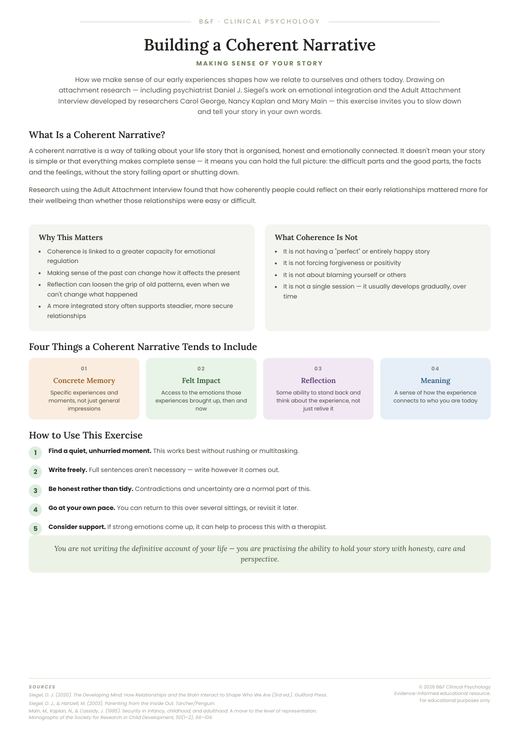
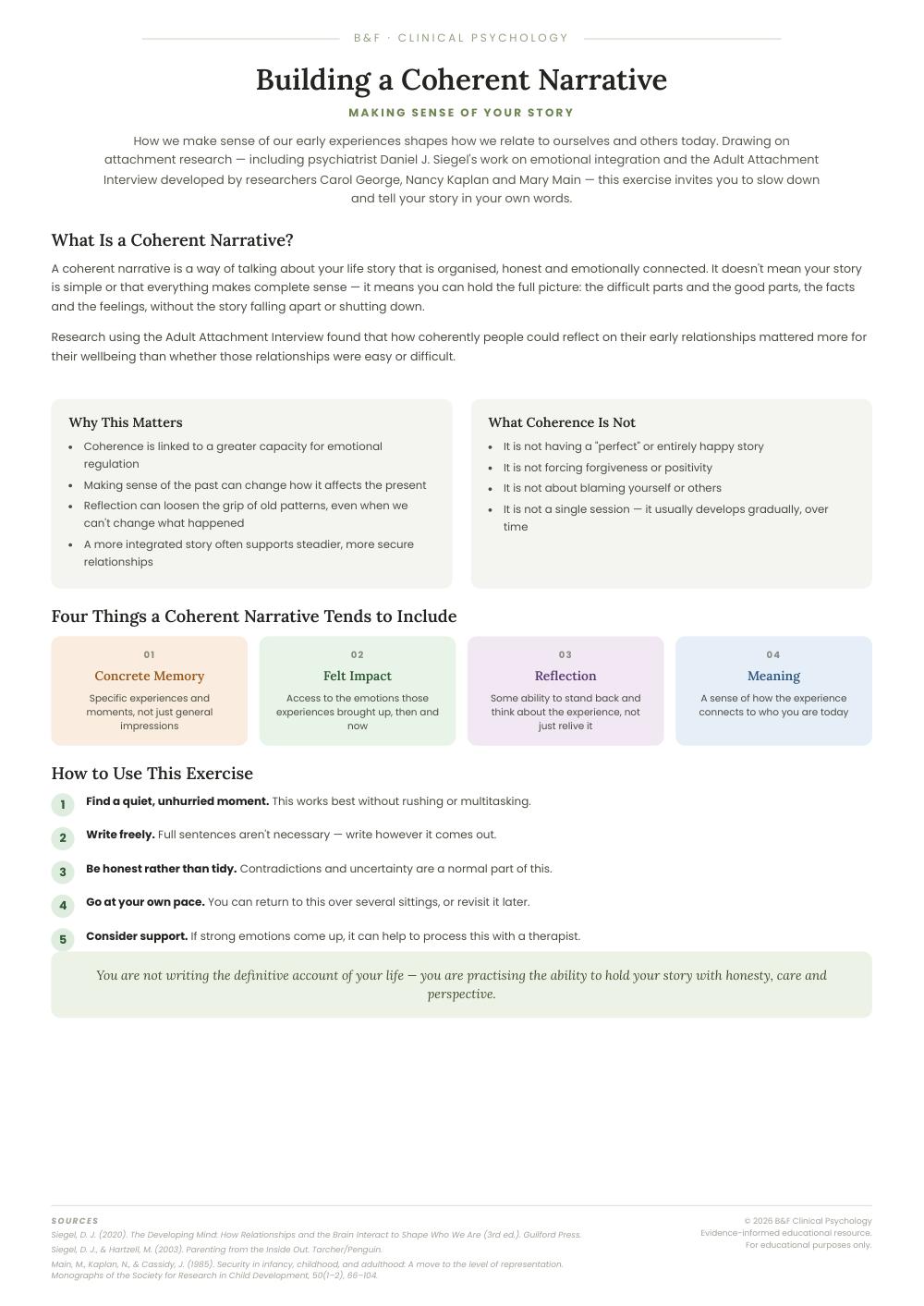
ReflectBuilding a coherent narrative
Drawing on attachment research, an exercise for telling your own story in a way that holds the full picture.
These resources are for general education and self-reflection, not a substitute for individual psychological assessment or therapy. If you are in crisis, feel unsafe, or may harm yourself or someone else, please contact emergency services or go to the nearest emergency department.