

Free resources
Mood, motivation and behaviour
Small actions that move first. Feelings tend to follow.
Mood, motivation and behaviour resources
-
 Preview
Practice
Preview
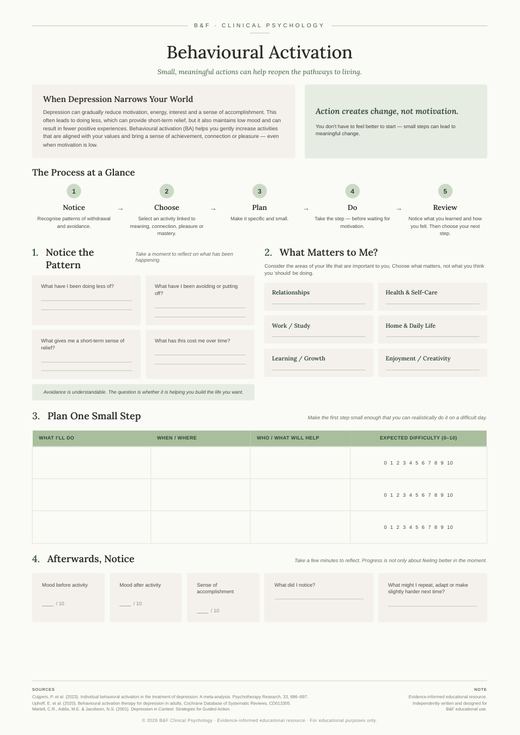
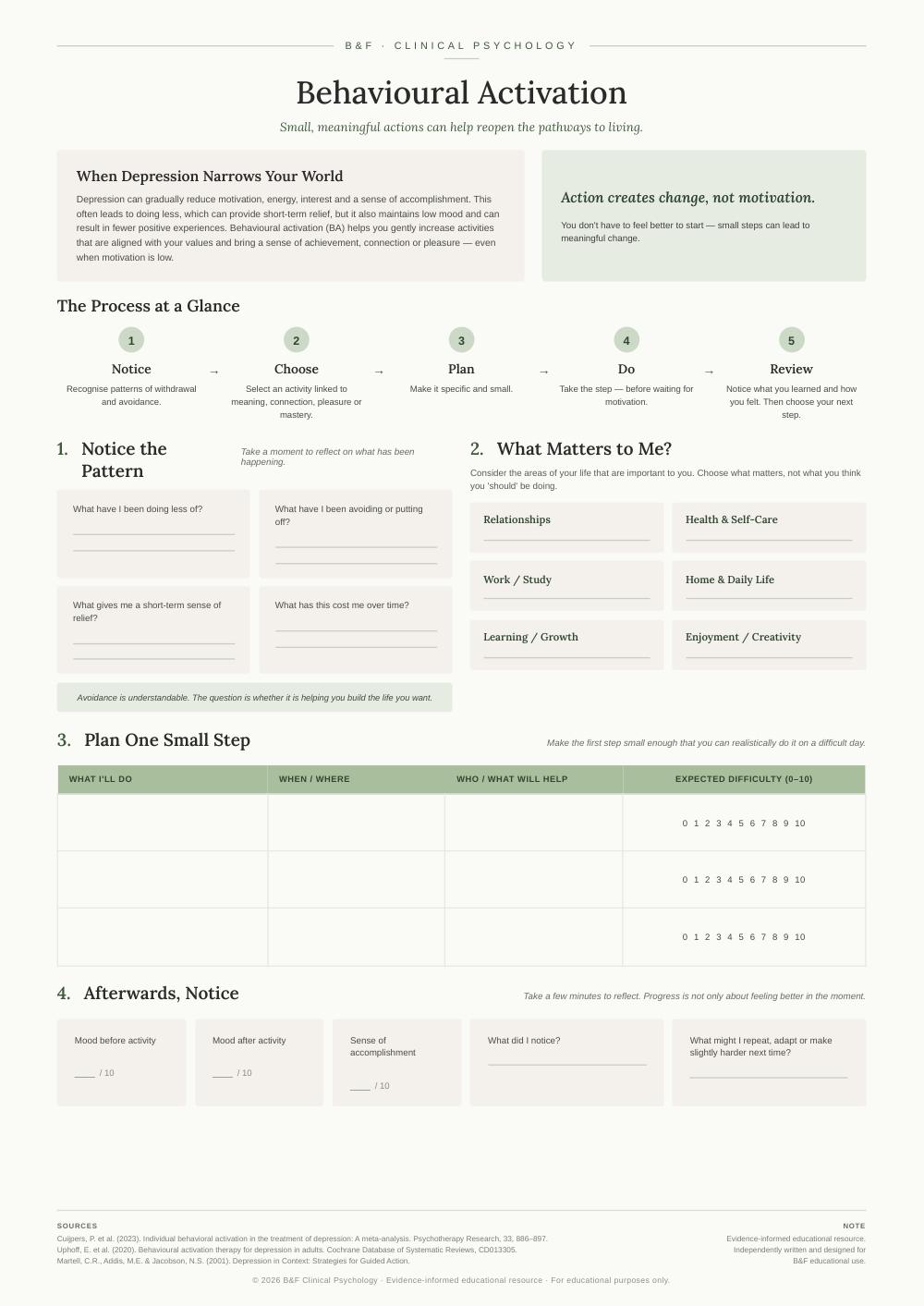
PracticeBehavioural activation
When depression narrows your world, small meaningful actions reopen it.
-
 Preview
Learn
Preview
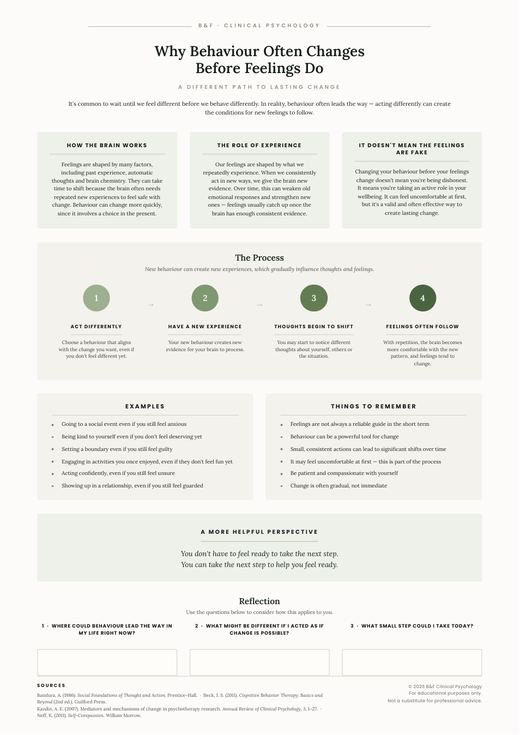
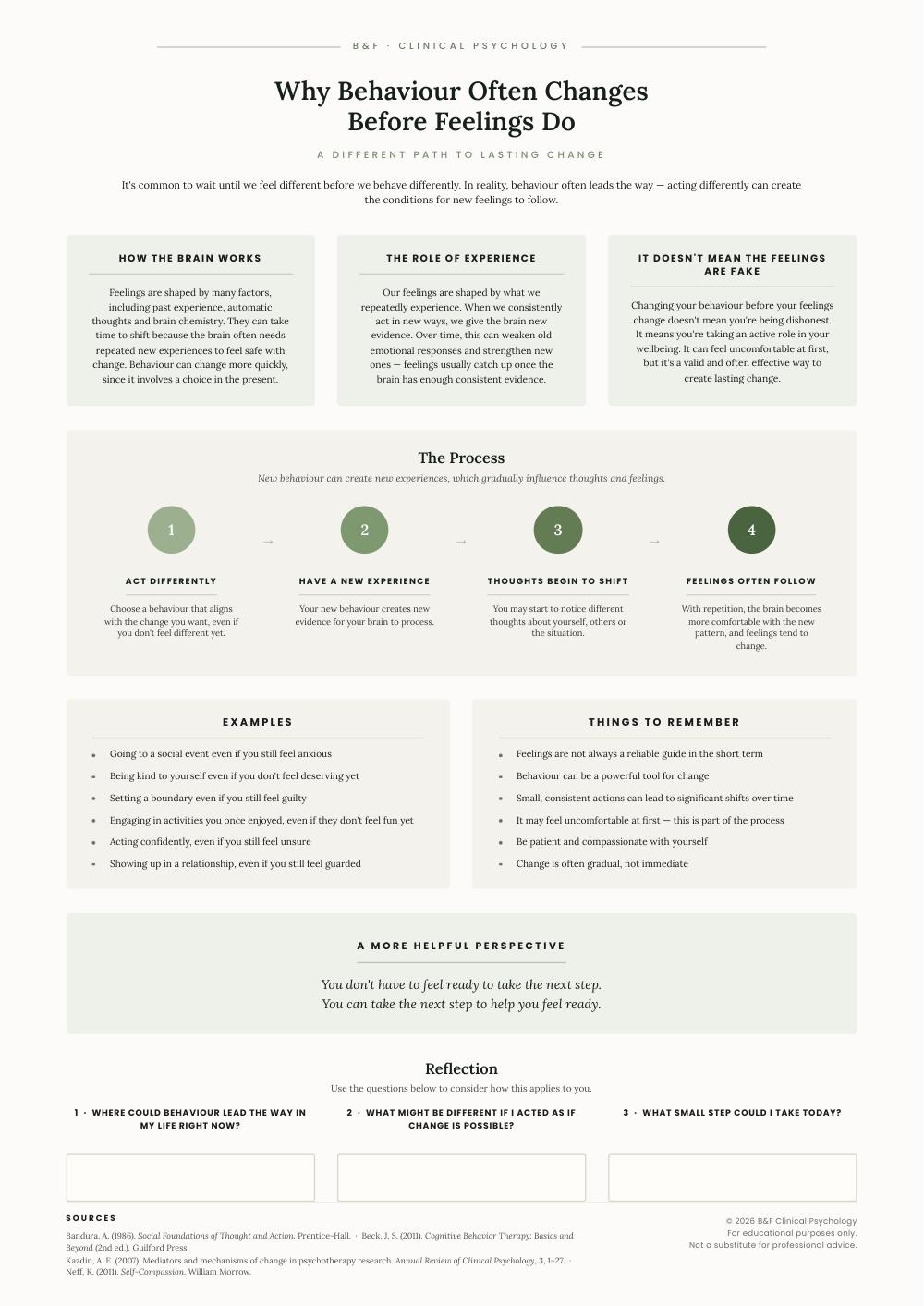
LearnWhy behaviour often changes before feelings do
Waiting to feel different before acting differently usually has it backwards.
-
 Preview
Practice
Preview
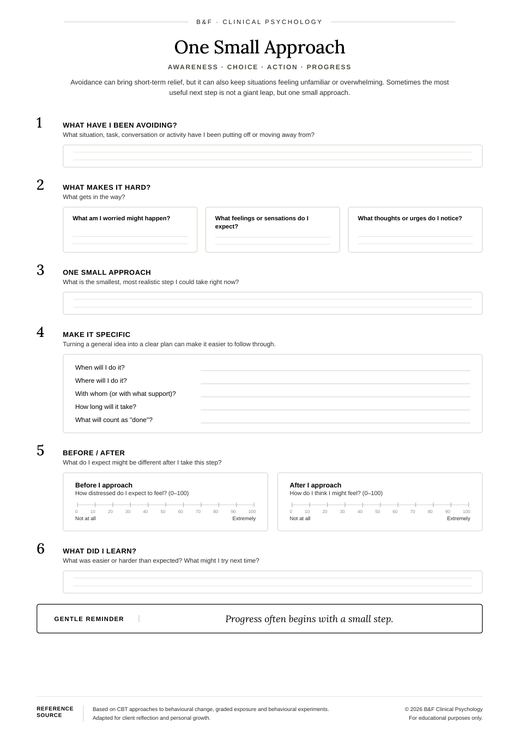
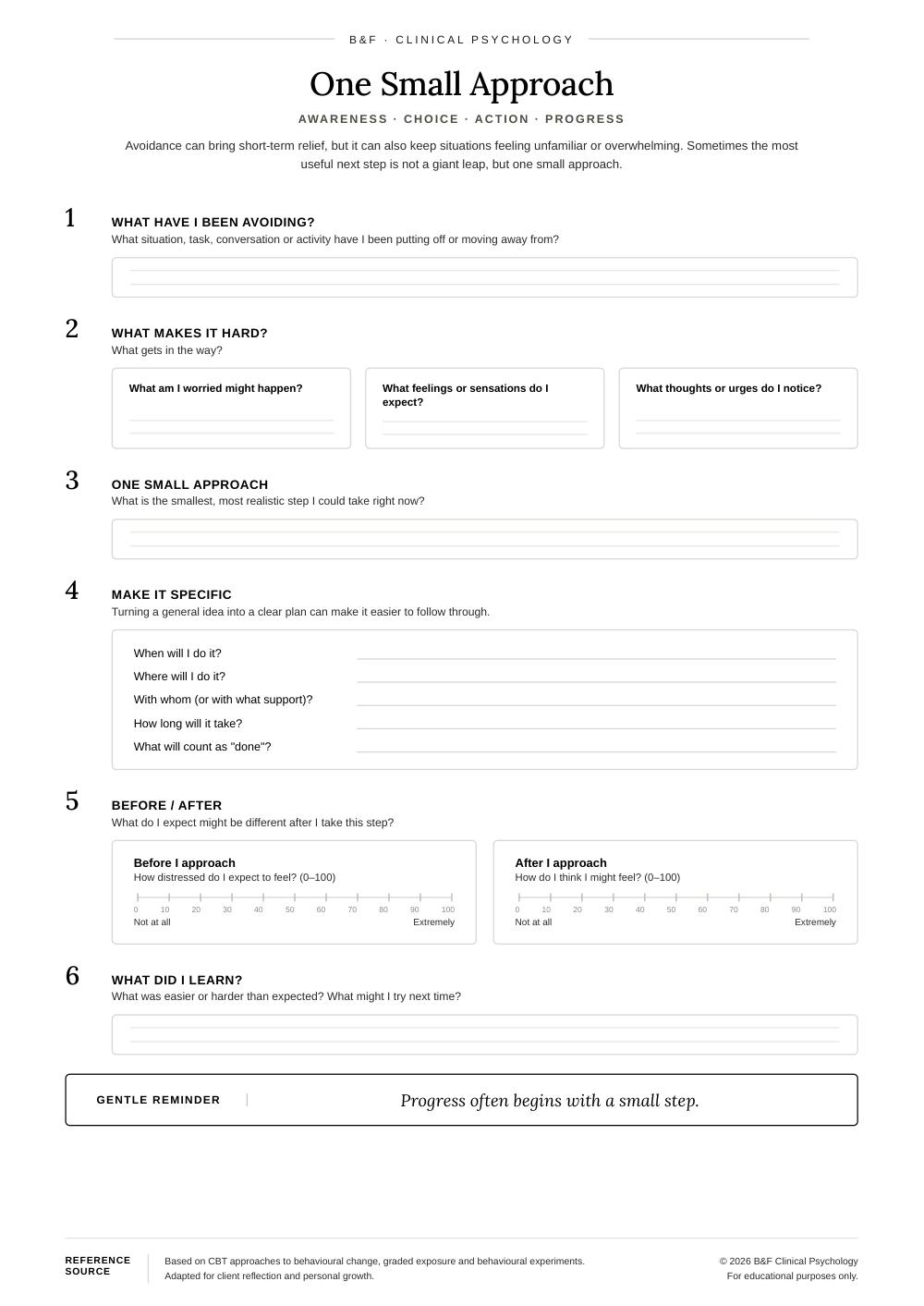
PracticeOne small approach
Awareness, choice, action, progress: the next useful step when avoidance has set in.
-
 Preview
Learn
Preview
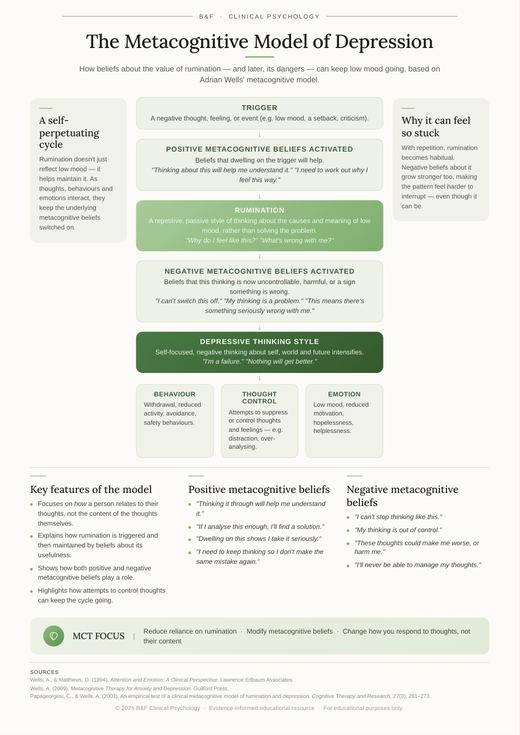
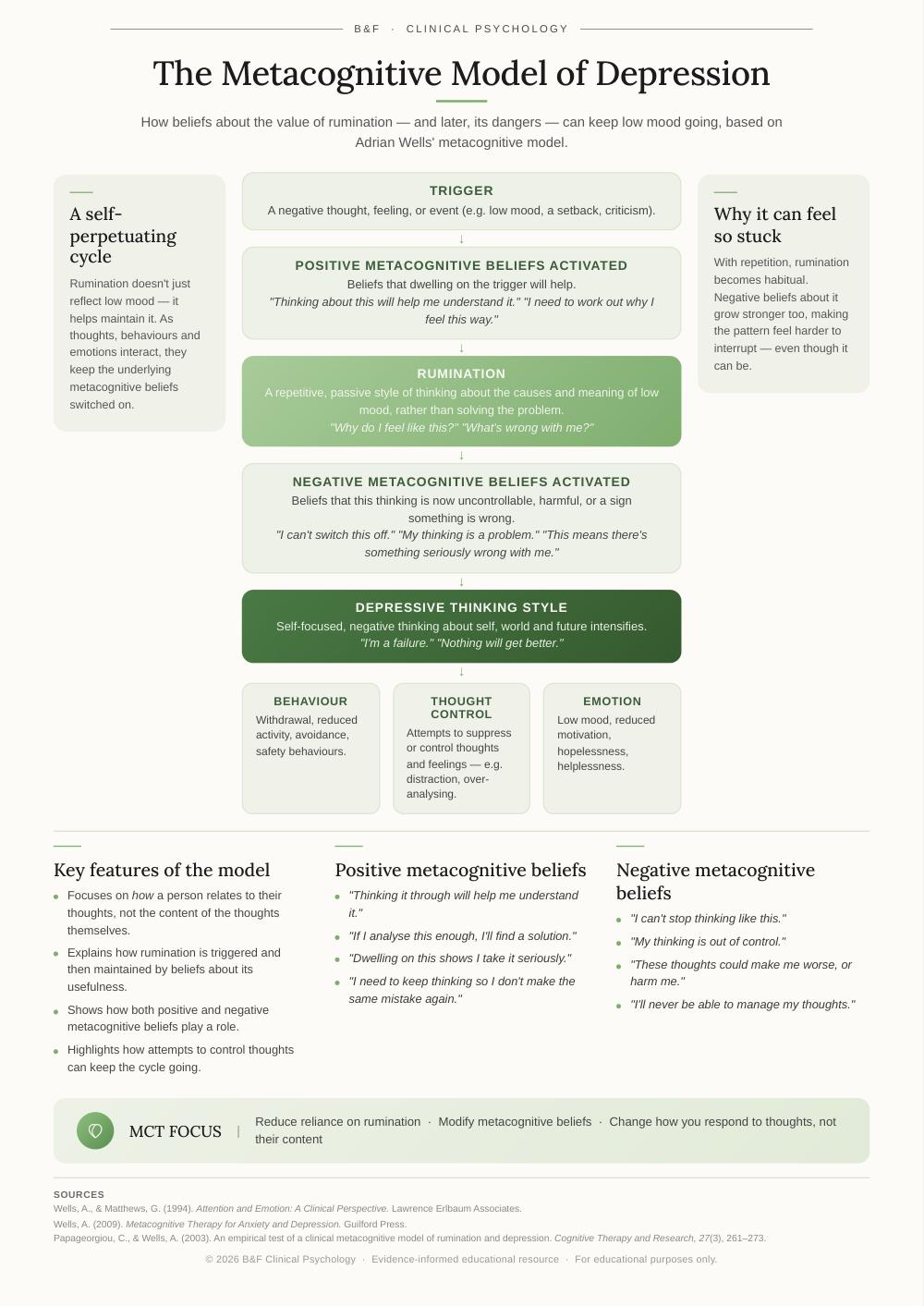
LearnThe metacognitive model of depression
How beliefs about rumination keep low mood going, from Adrian Wells' model.
-
 Preview
Learn
Preview
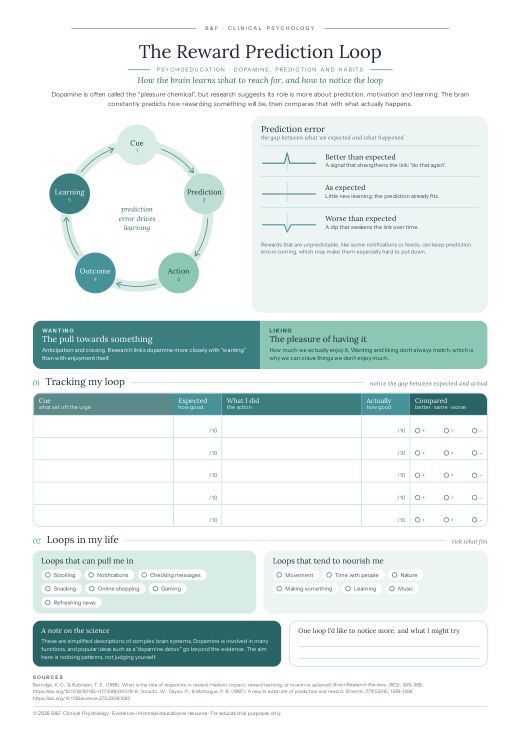
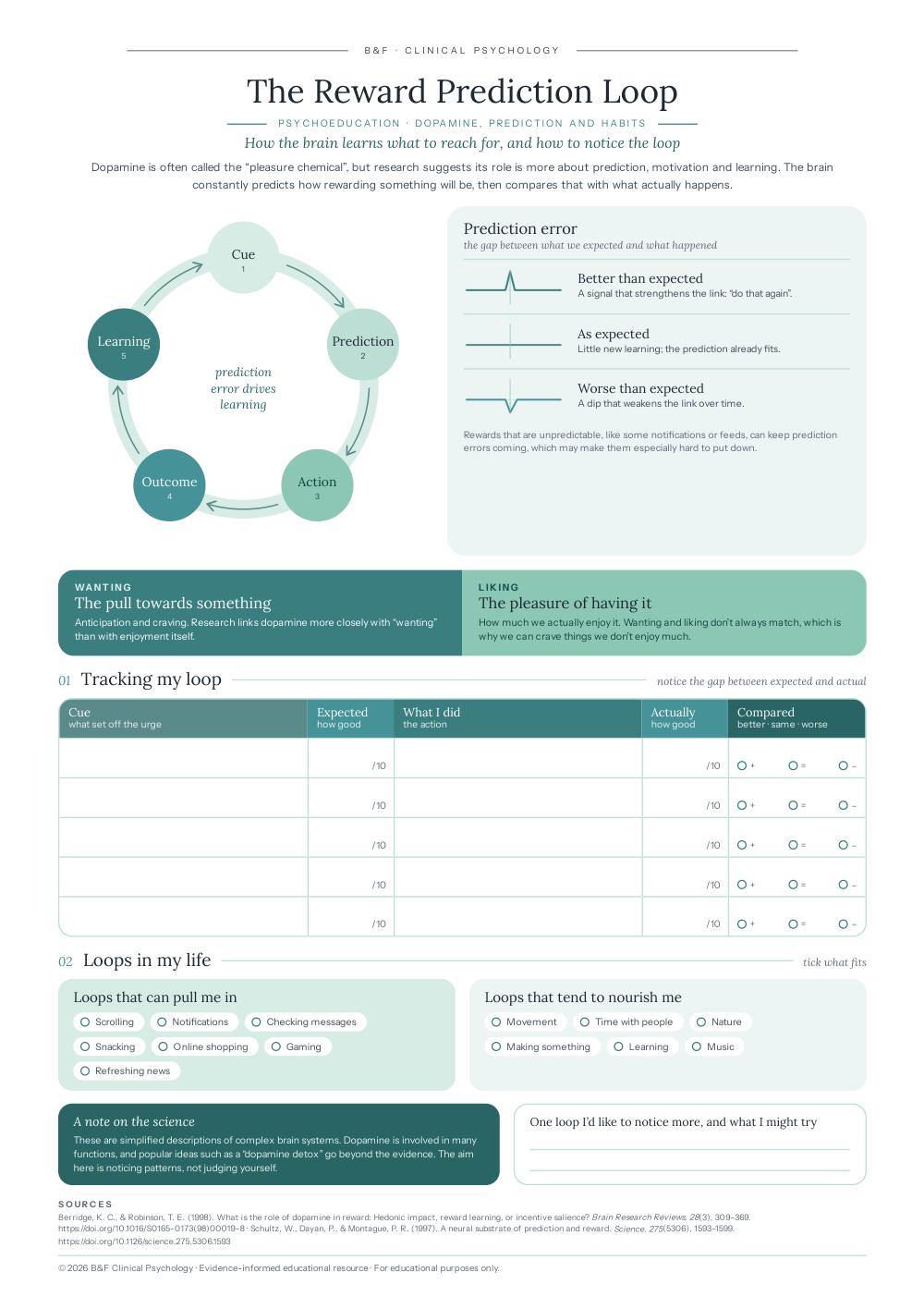
LearnThe reward prediction loop
How the brain learns what to reach for, and how to notice the loop.
-
 Preview
Practice
Preview
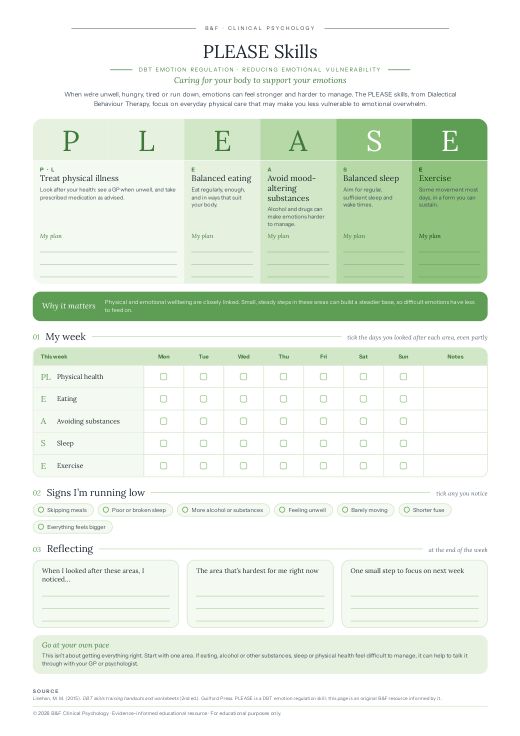
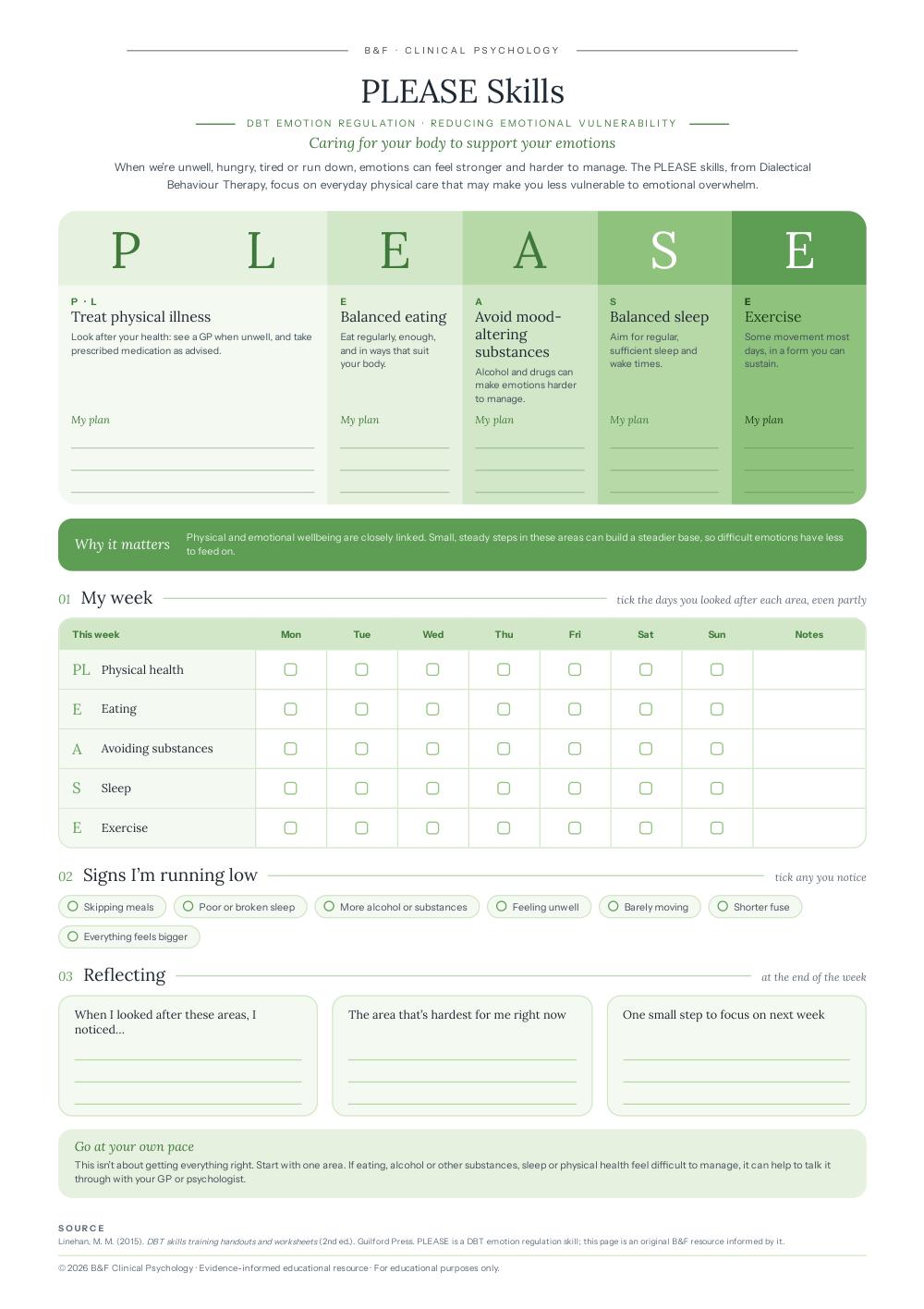
PracticePLEASE skills
Caring for your body to support your emotions, from Dialectical Behaviour Therapy.
-
 Preview
Reflect
Preview
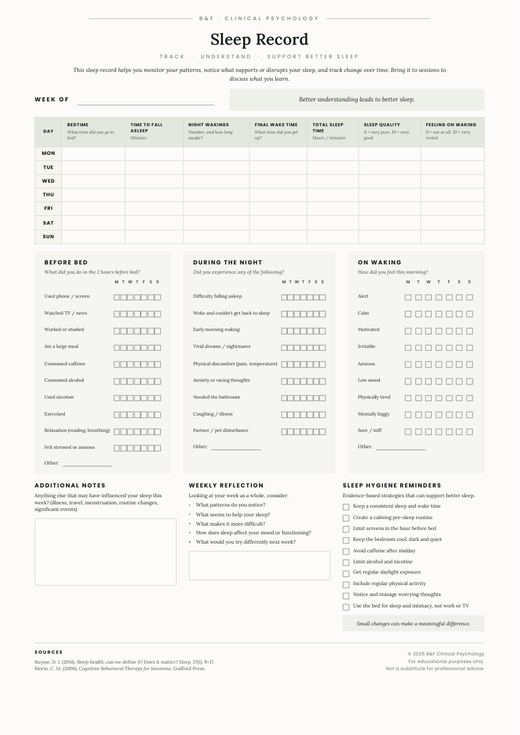
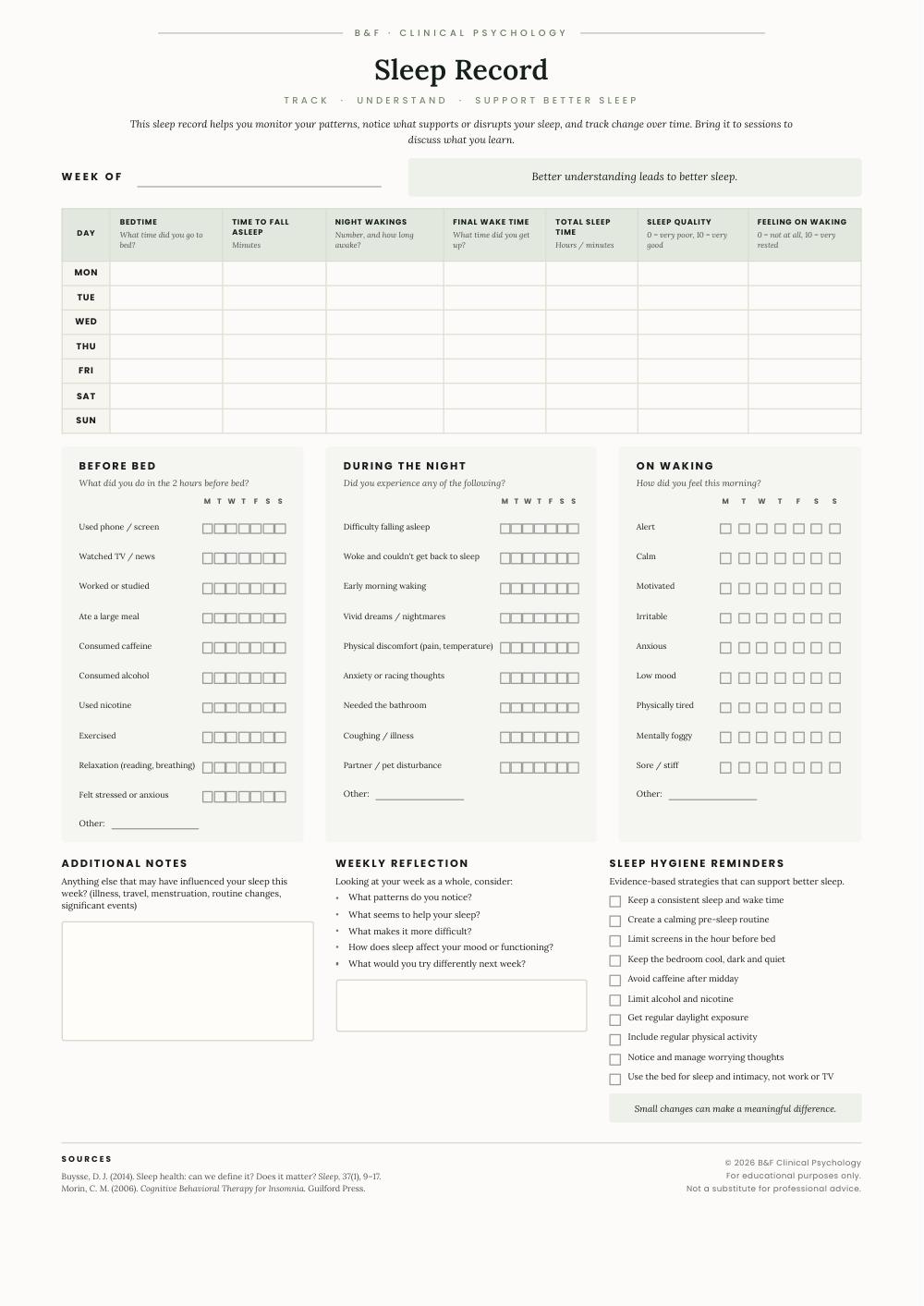
ReflectSleep record
Track your sleep, notice what supports or disrupts it, and bring the pattern to a session.
-
 Preview
Reflect
Preview
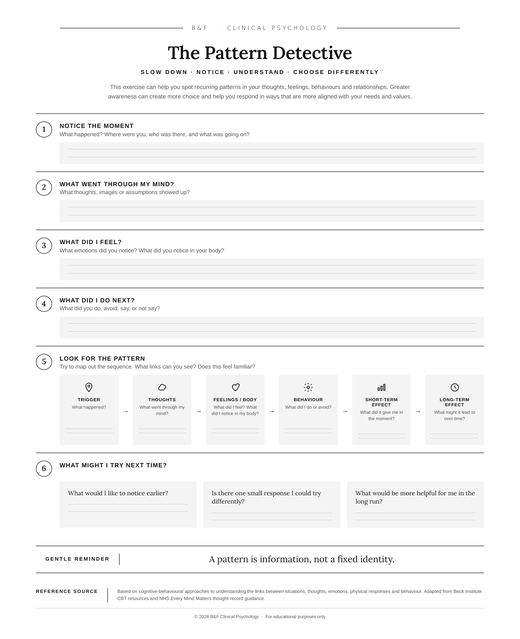
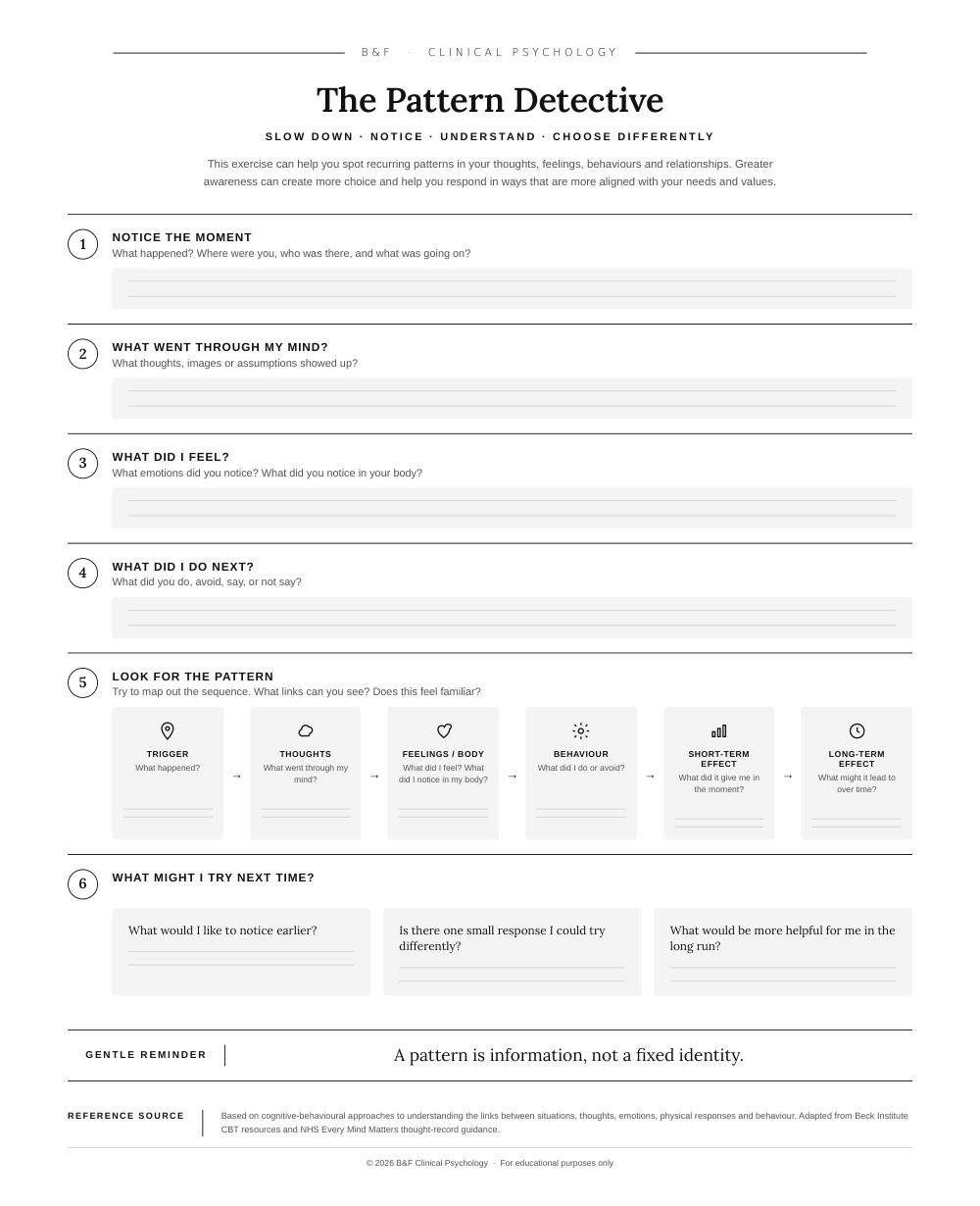
ReflectThe pattern detective
Slow down and spot the recurring patterns in your thoughts, feelings and relationships.
-
 Preview
Learn
Preview
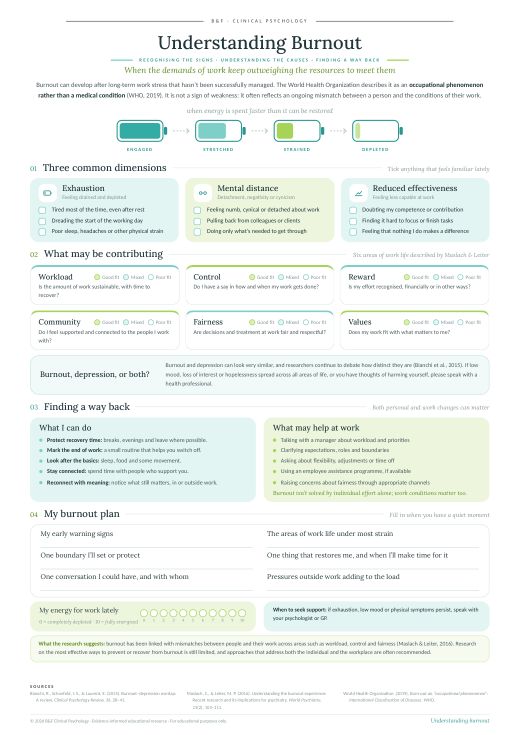
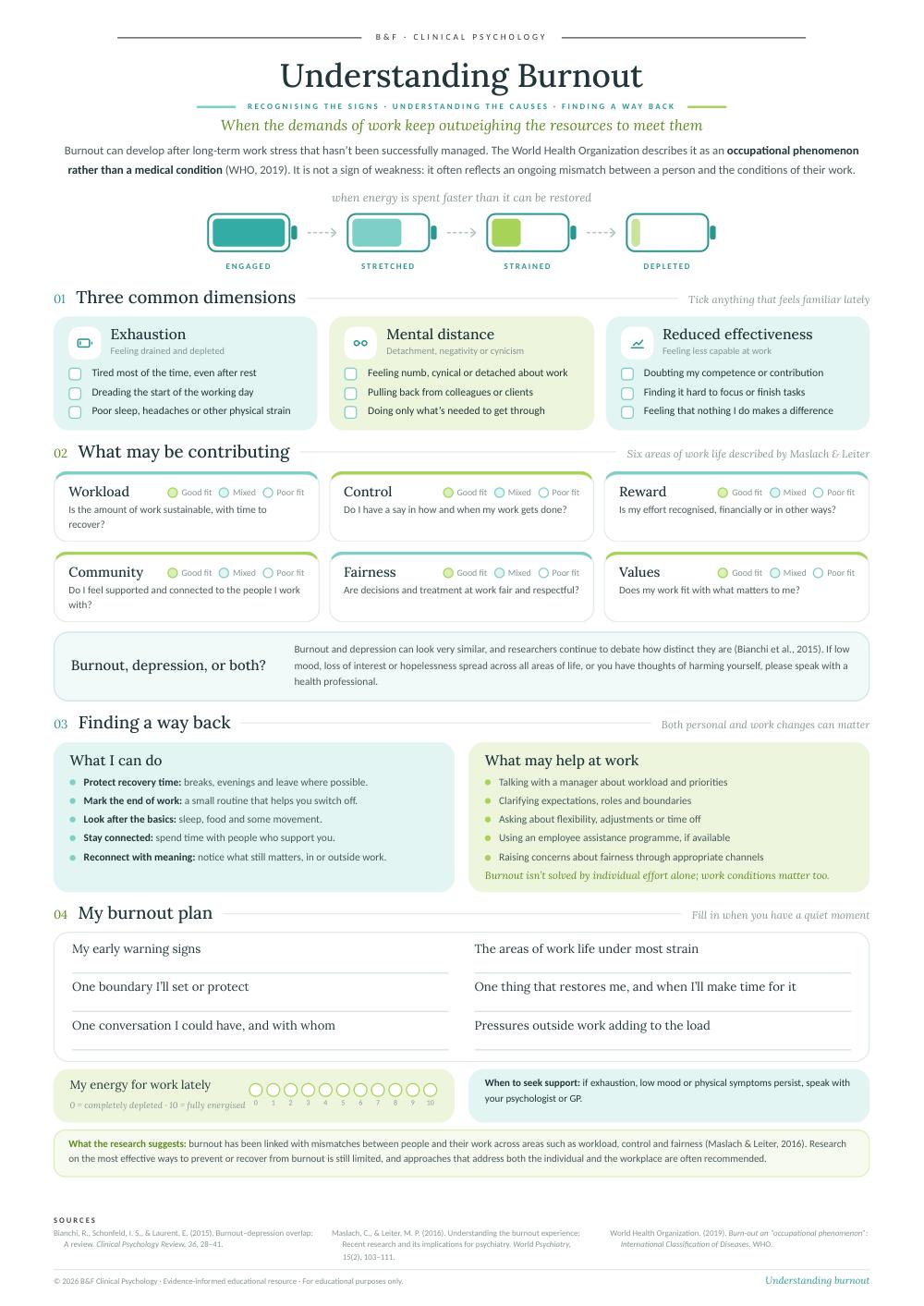
LearnUnderstanding burnout
When the demands of work keep outweighing the resources to meet them: the signs, the causes and a way back.
-
 Preview
Learn
Preview
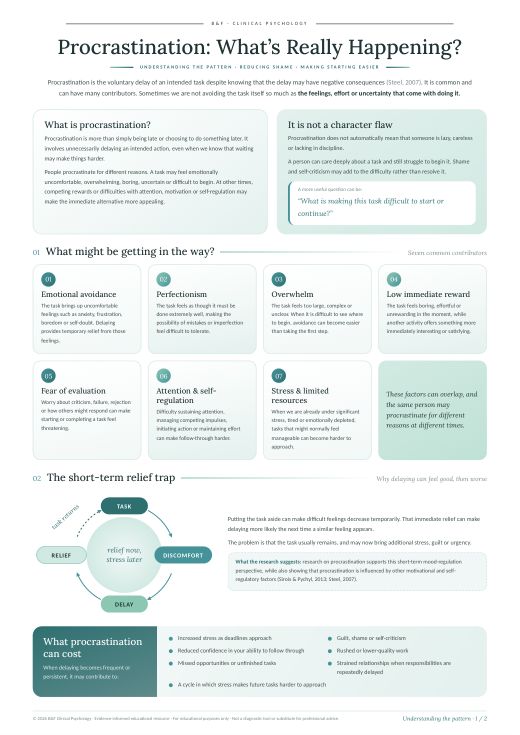
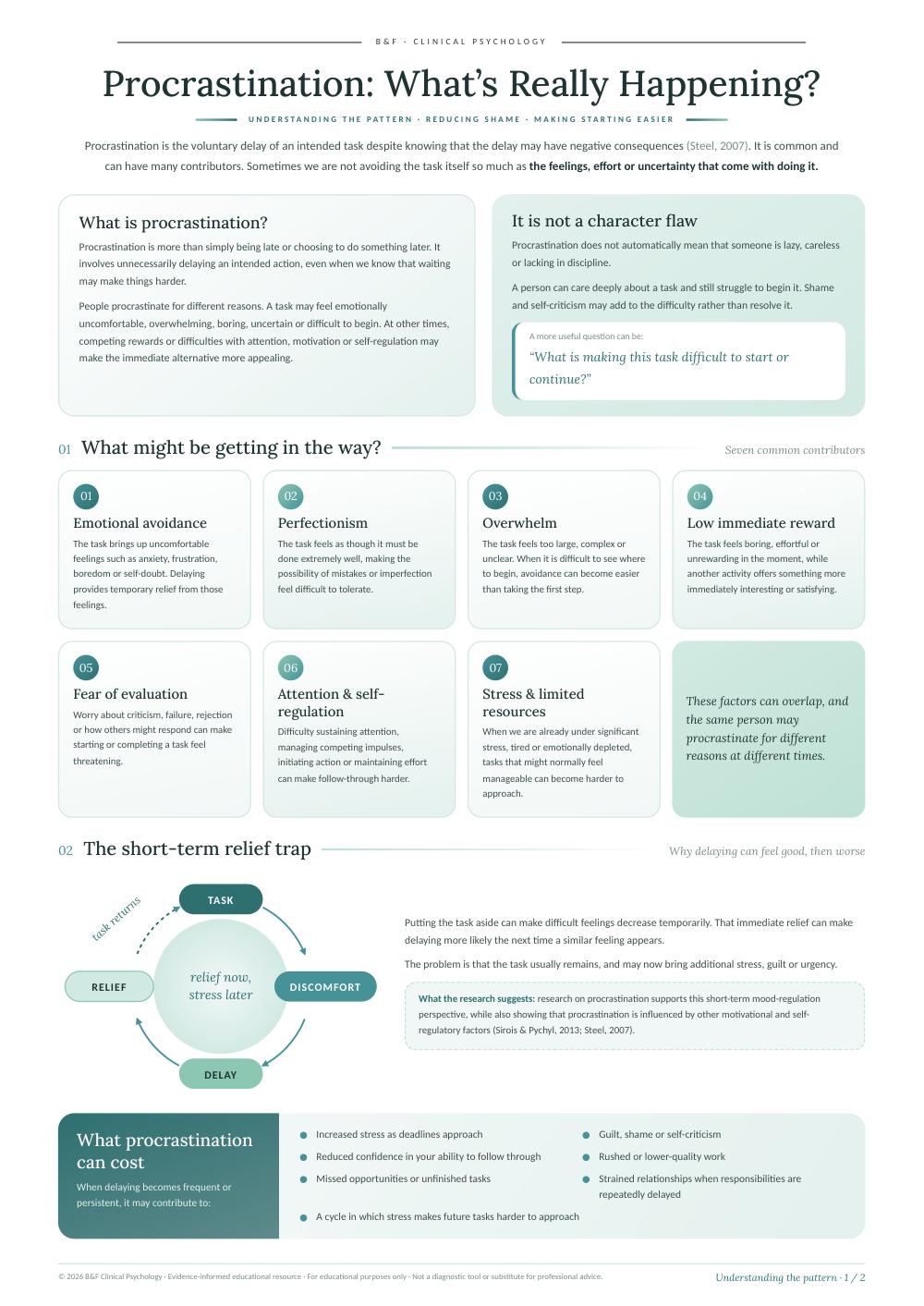
LearnProcrastination: what's really happening?
Understanding the pattern, easing the shame, and making starting easier.
-
 Preview
Learn
Preview
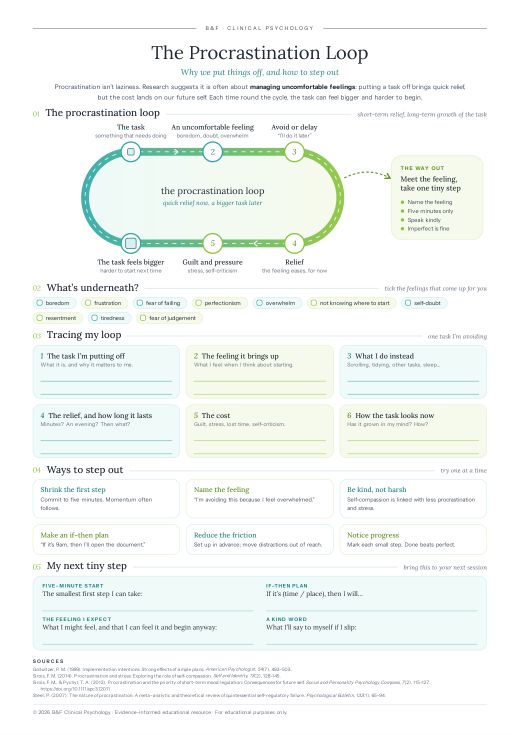
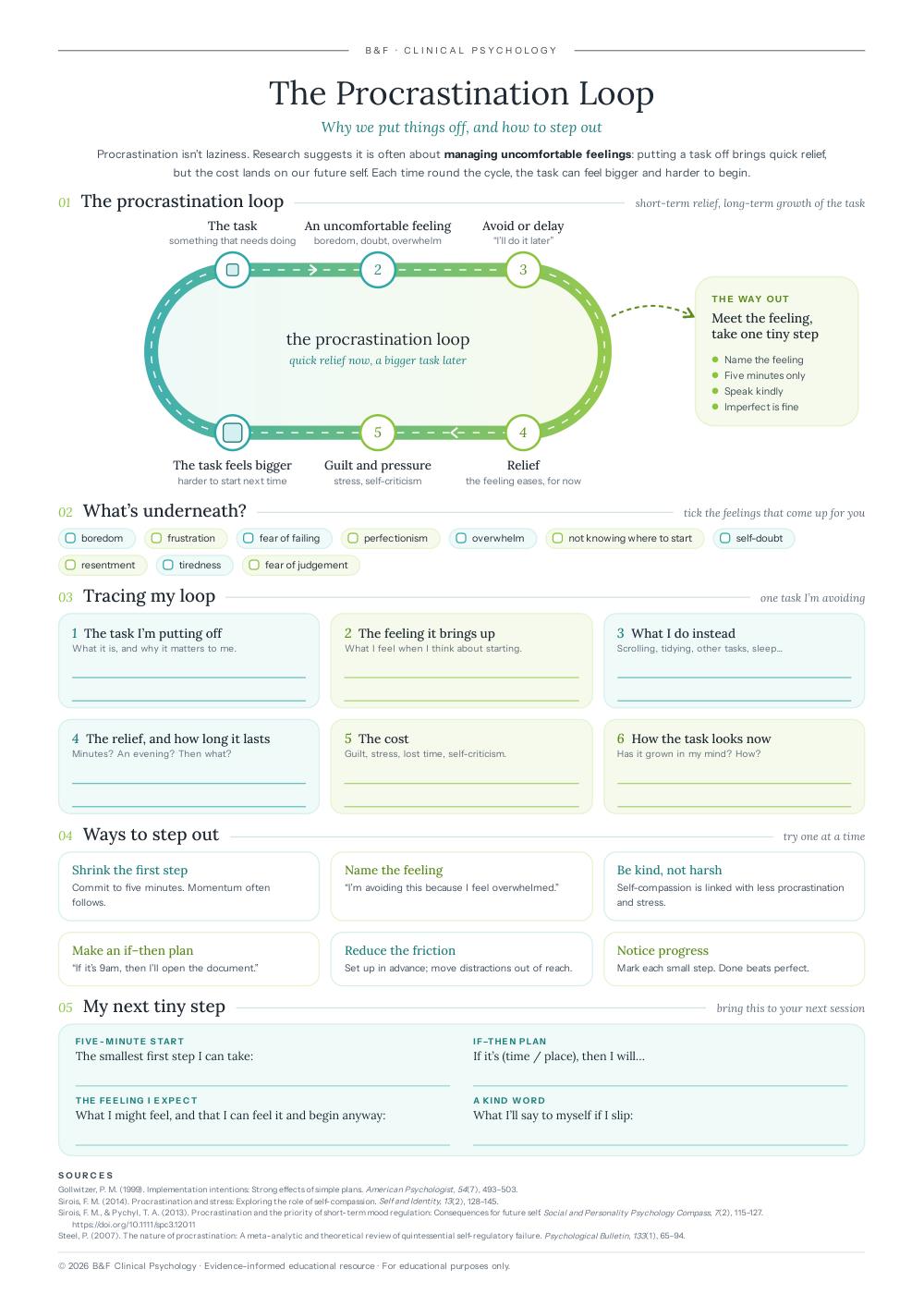
LearnThe procrastination loop
Why we put things off, and how to step out of the loop.
-
 Preview
Learn
Preview
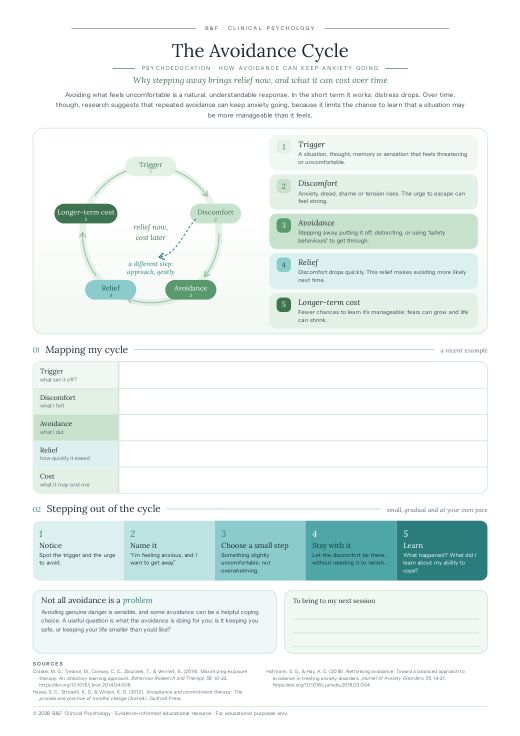
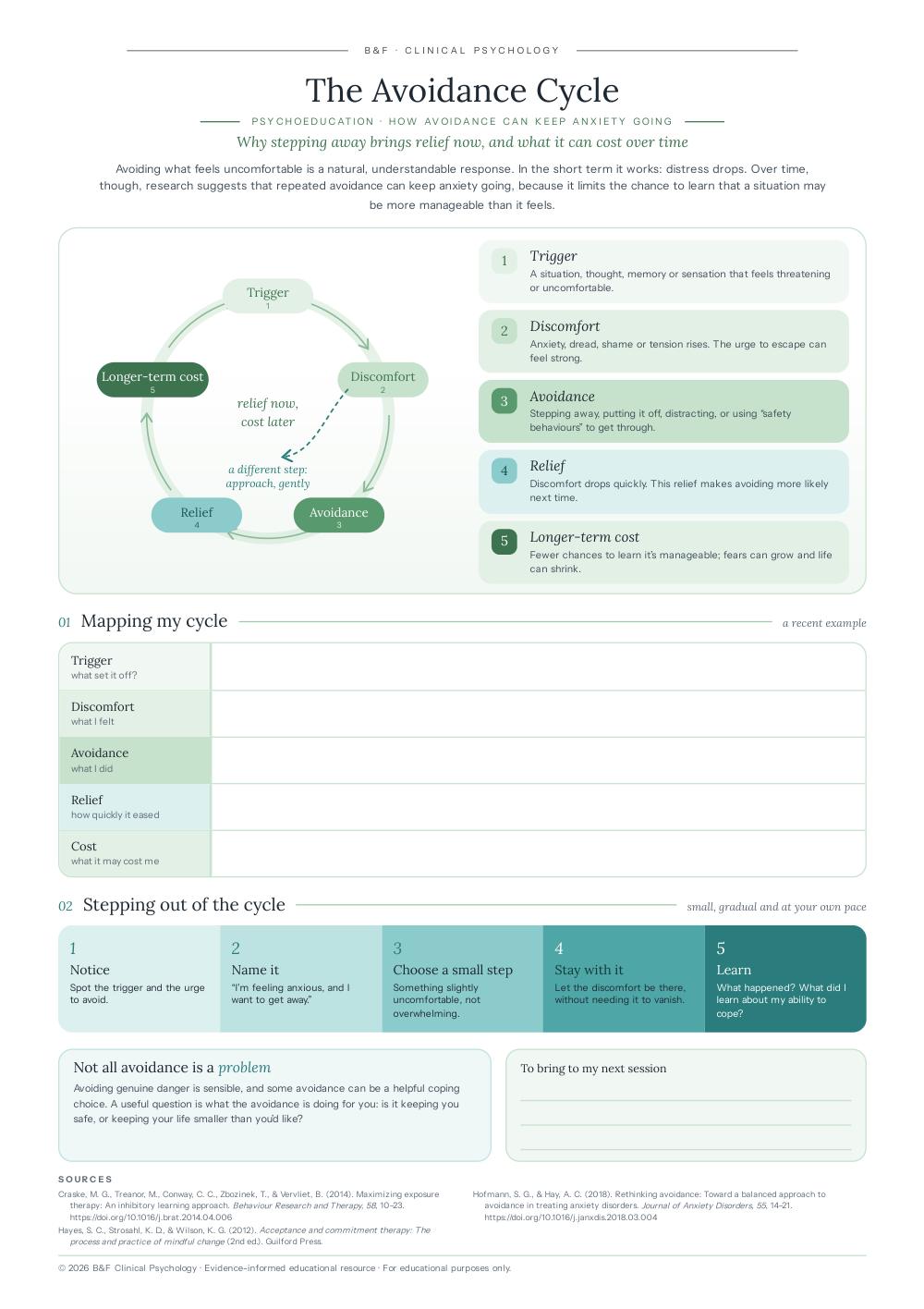
LearnThe avoidance cycle
Why stepping away brings relief now, and what it can cost over time.
-
 Preview
Reflect
Preview
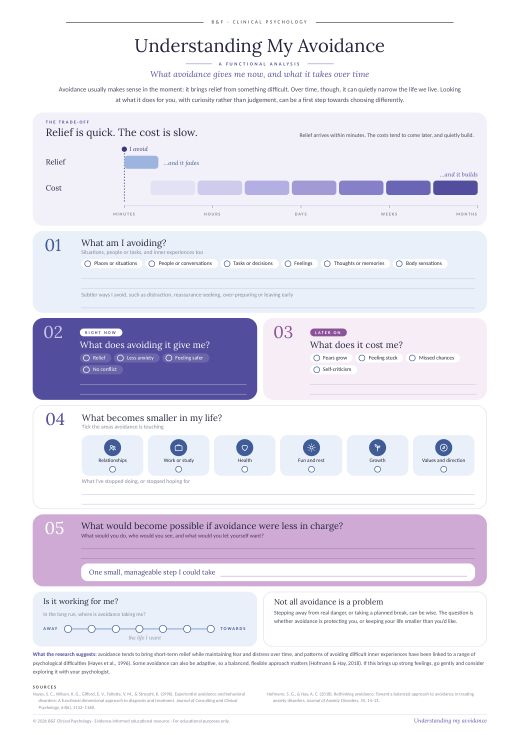
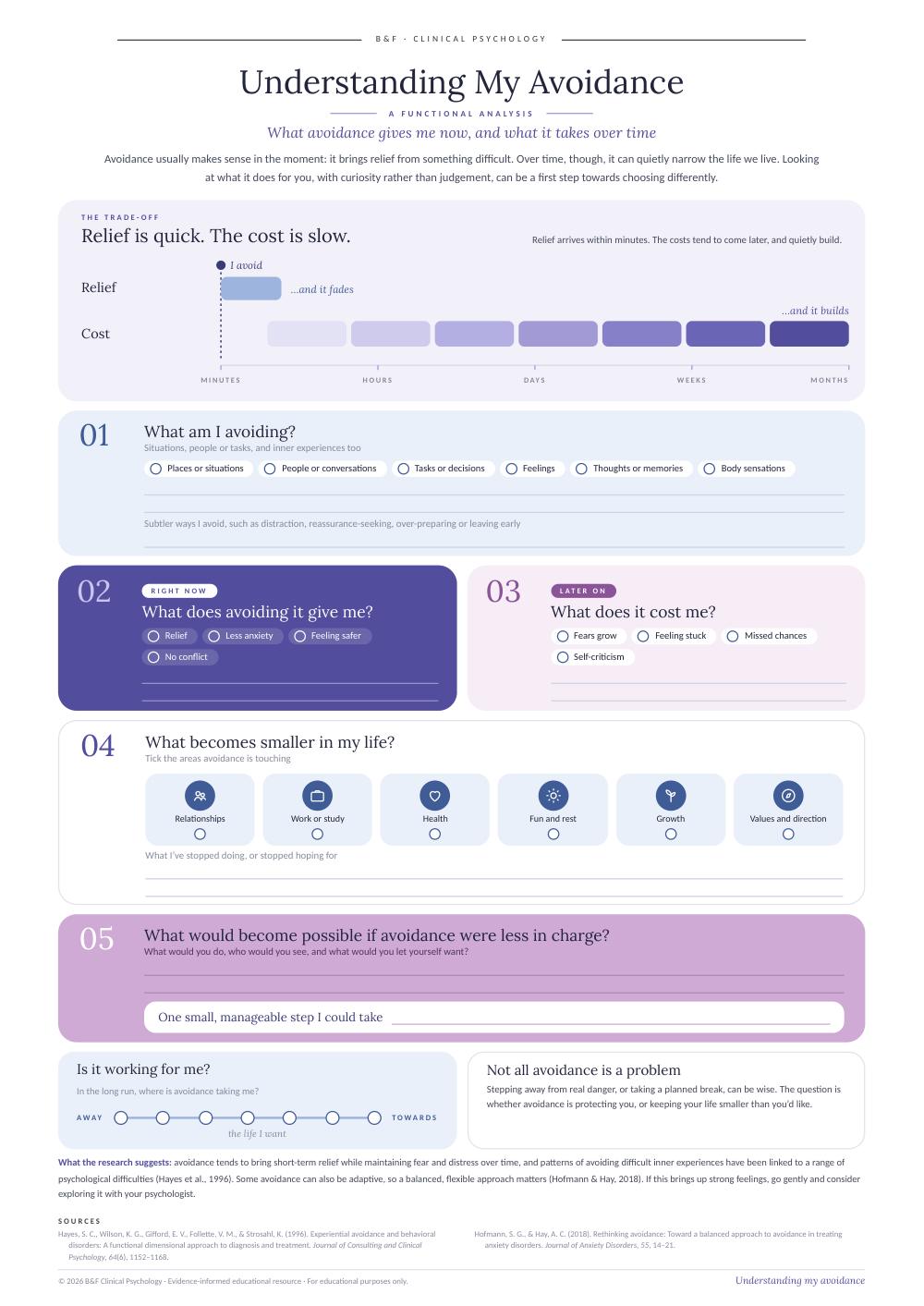
ReflectUnderstanding my avoidance
What avoidance gives me now, and what it takes over time.
-
 Preview
Reflect
Preview
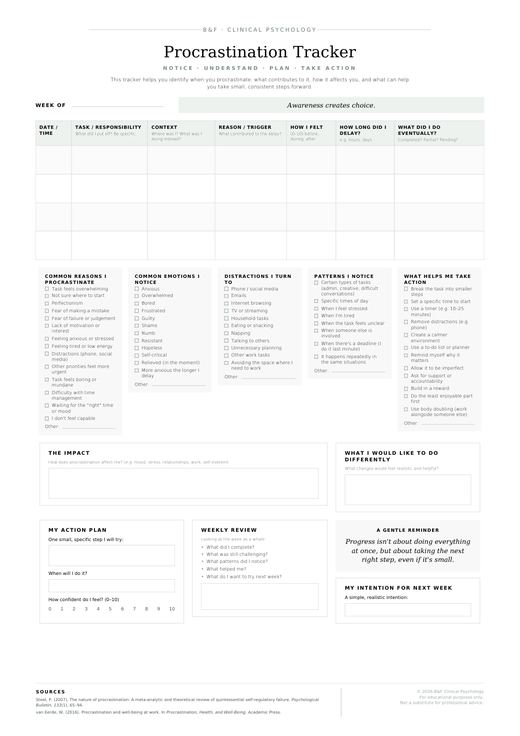
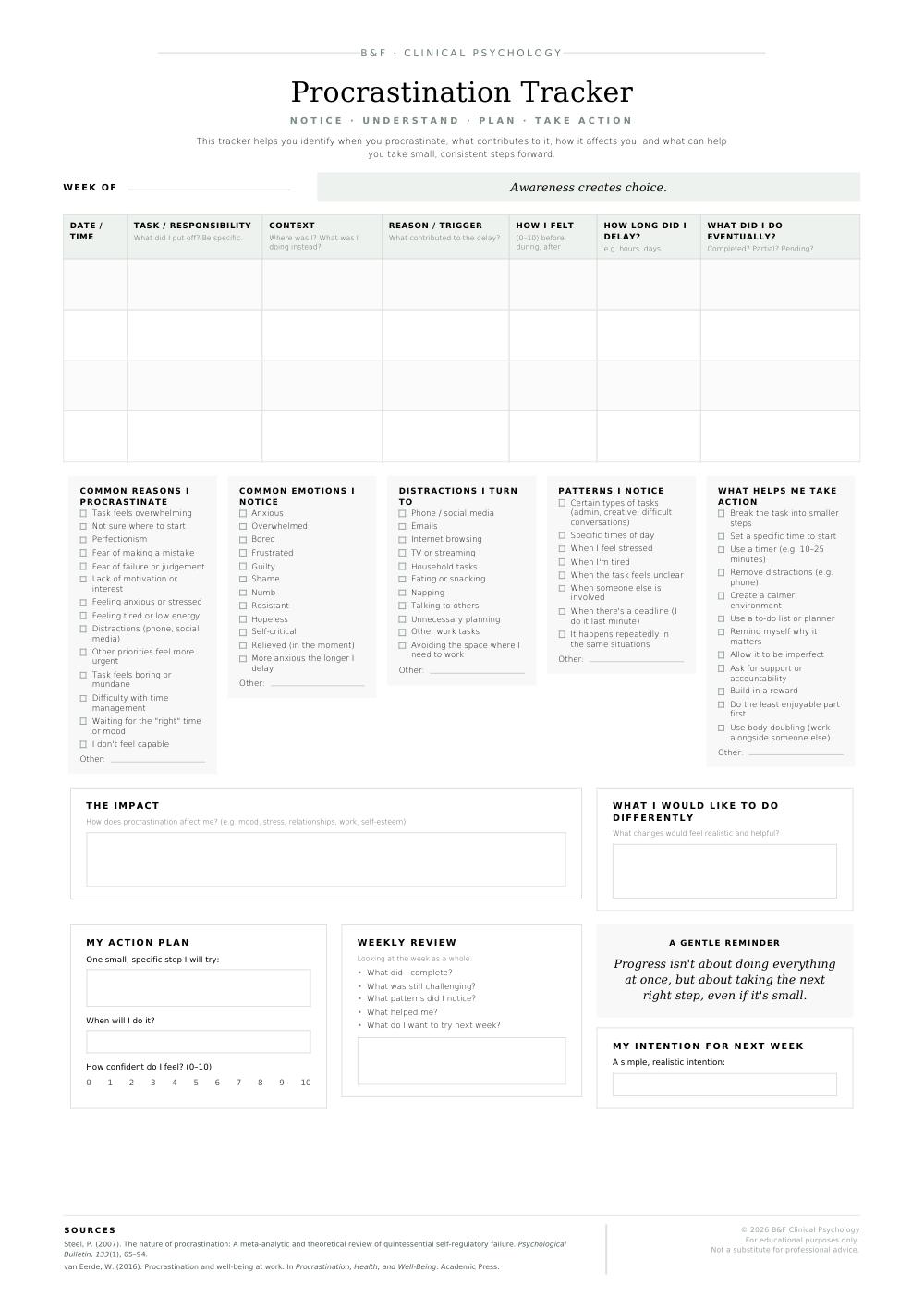
ReflectProcrastination tracker
When you put things off, what feeds it, what it costs you, and what helps you start.
-
 Preview
Reflect
Preview
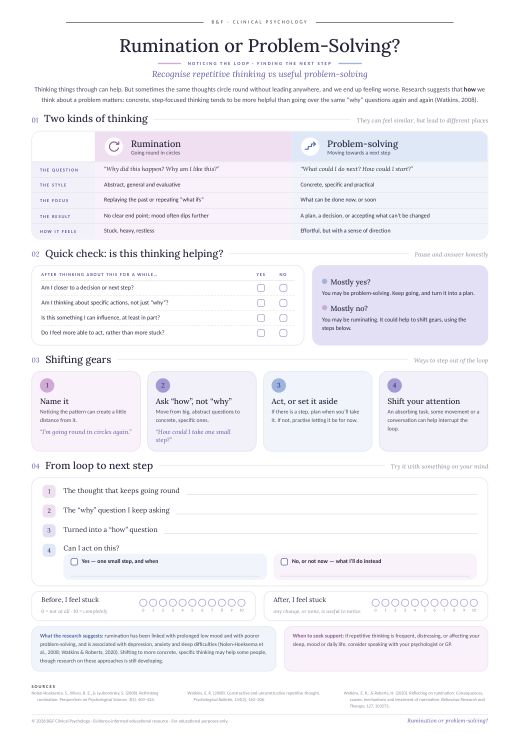
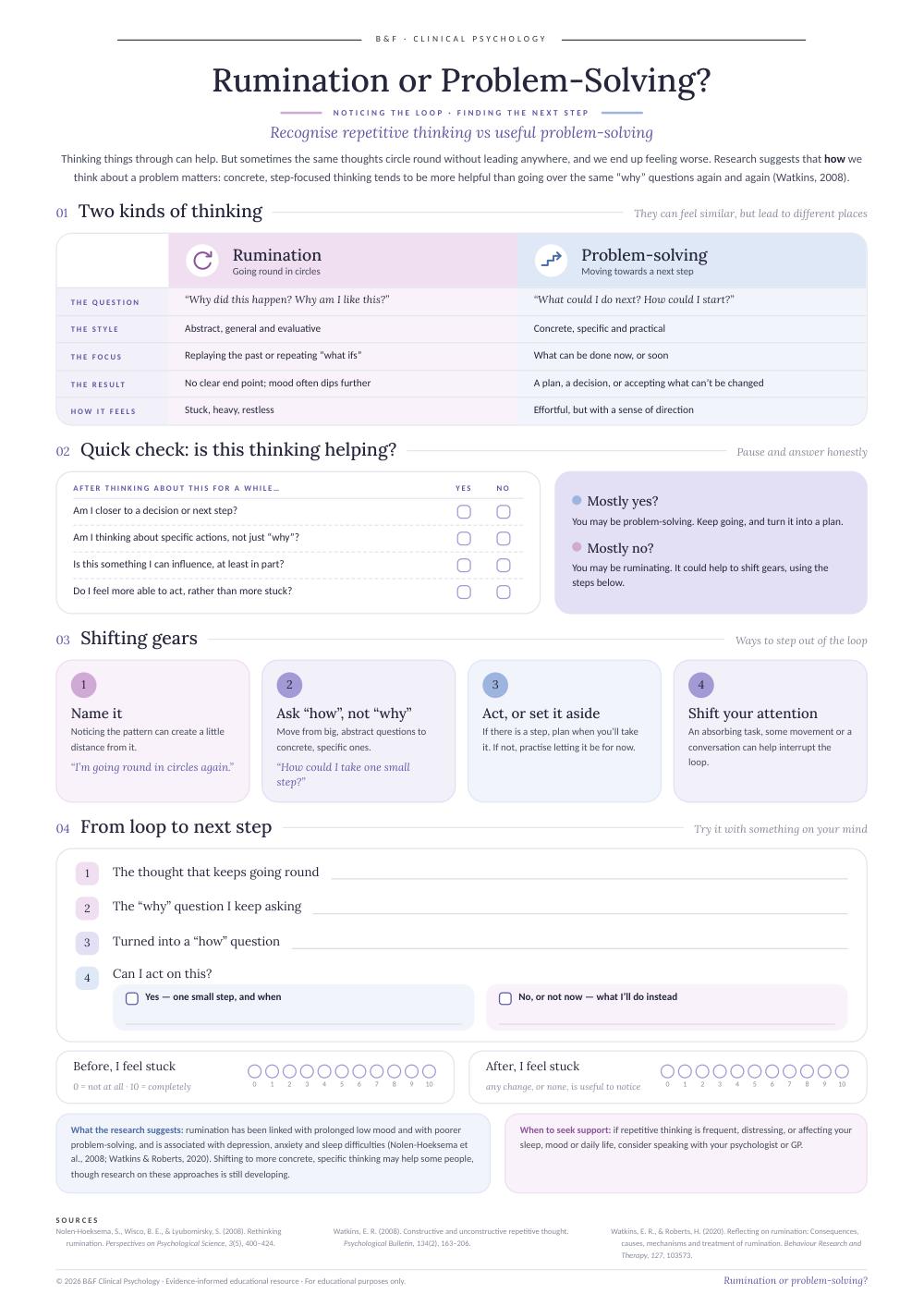
ReflectRumination or problem-solving?
Tell repetitive thinking apart from useful problem-solving, and find the next step.
-
 Preview
Reflect
Preview
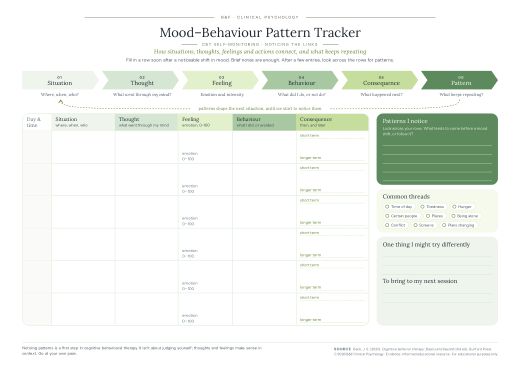
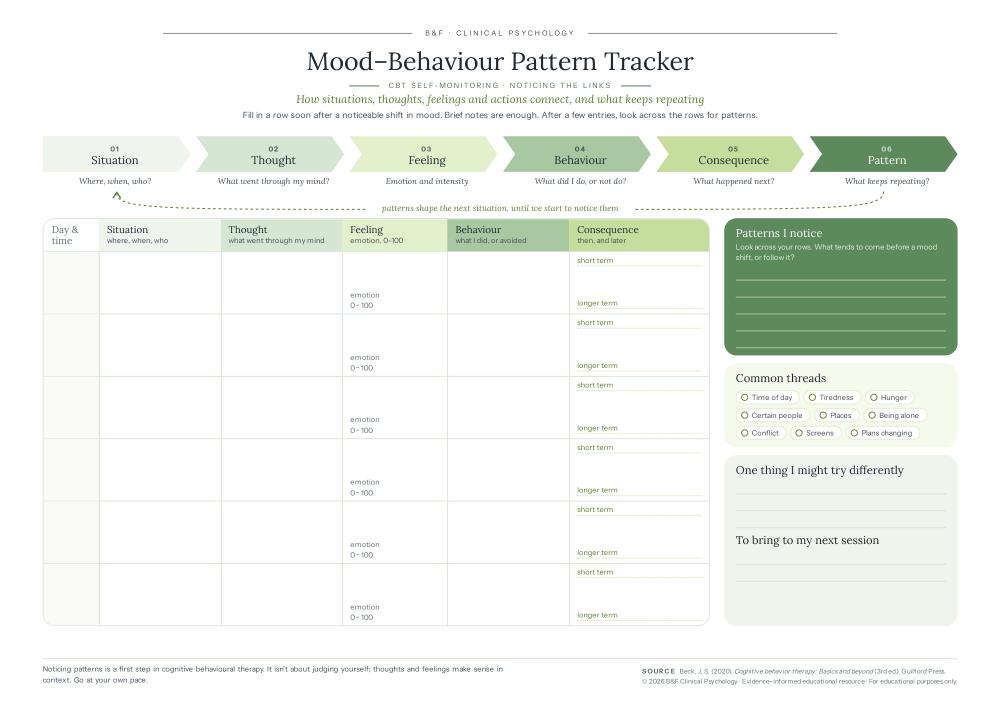
ReflectMood-behaviour pattern tracker
How situations, thoughts, feelings and actions connect, and what keeps repeating.
-
 Preview
Practice
Preview
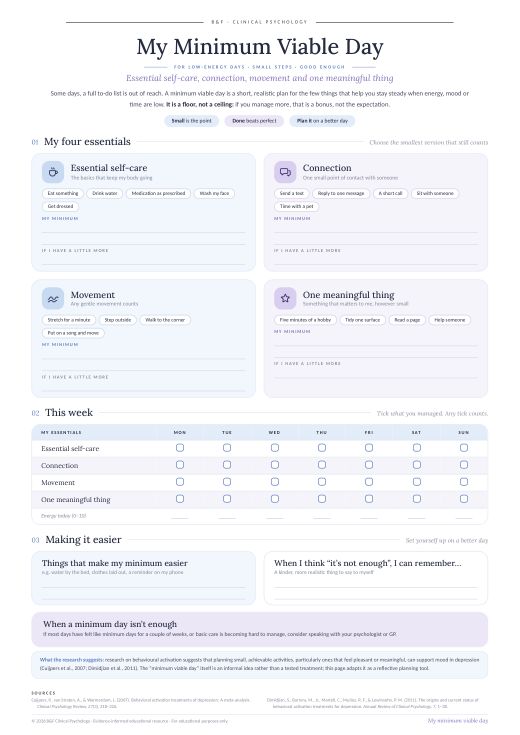
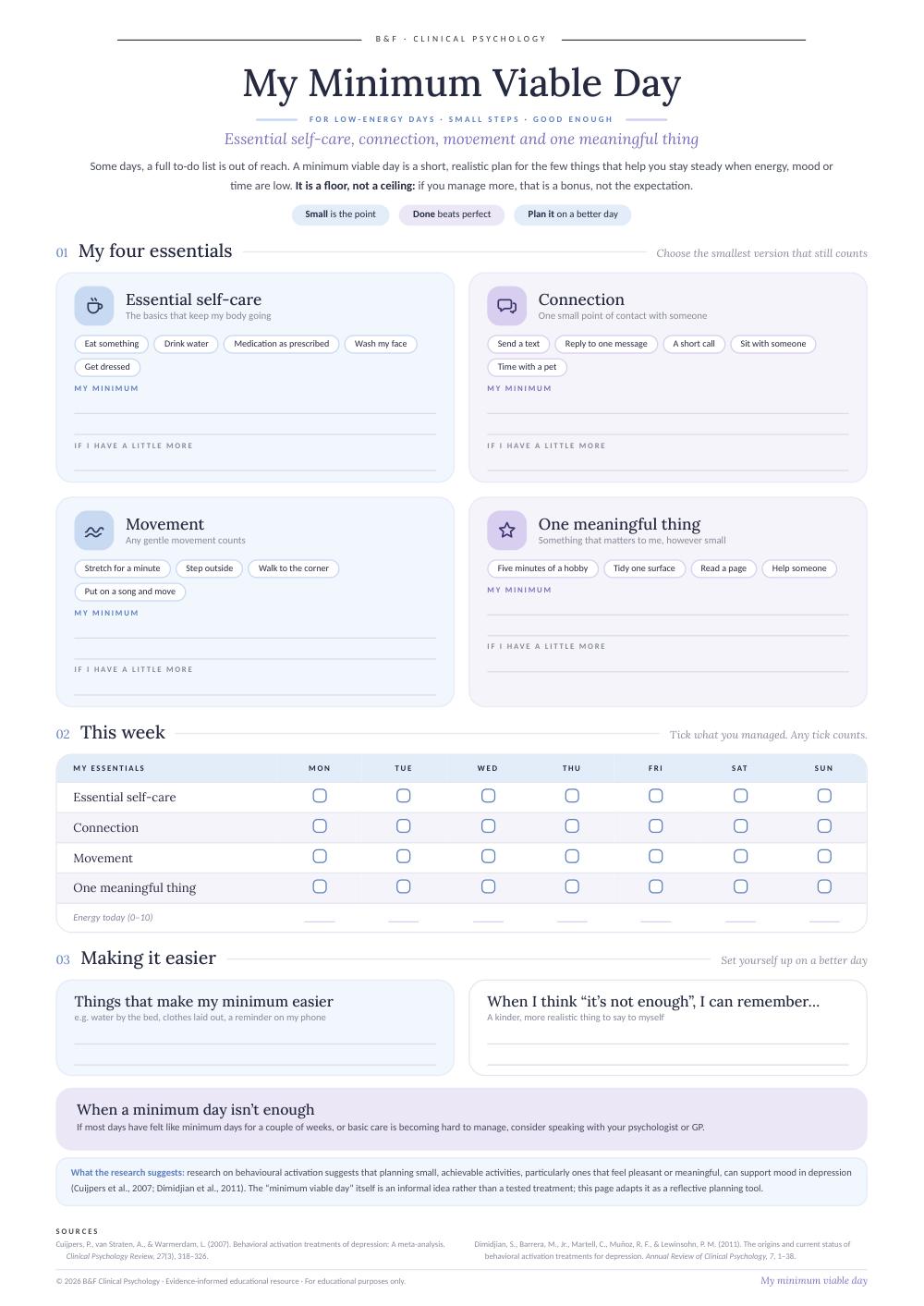
PracticeMy minimum viable day
A short, realistic plan for low-energy days: the few things that help most.
-
 Preview
Practice
Preview
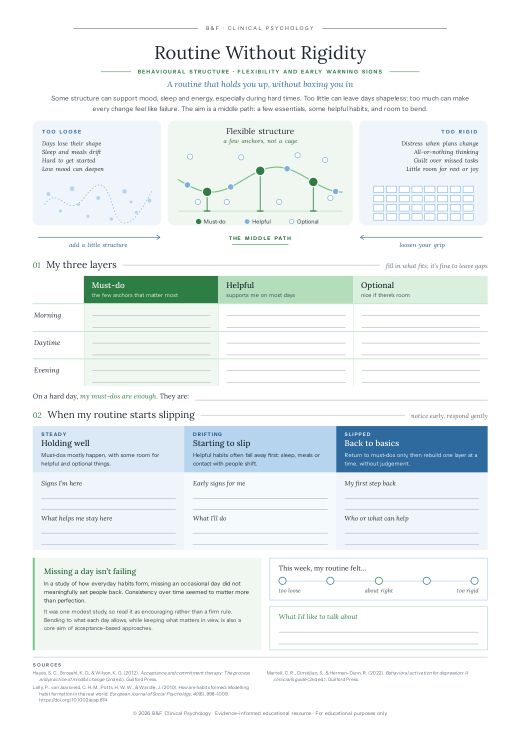
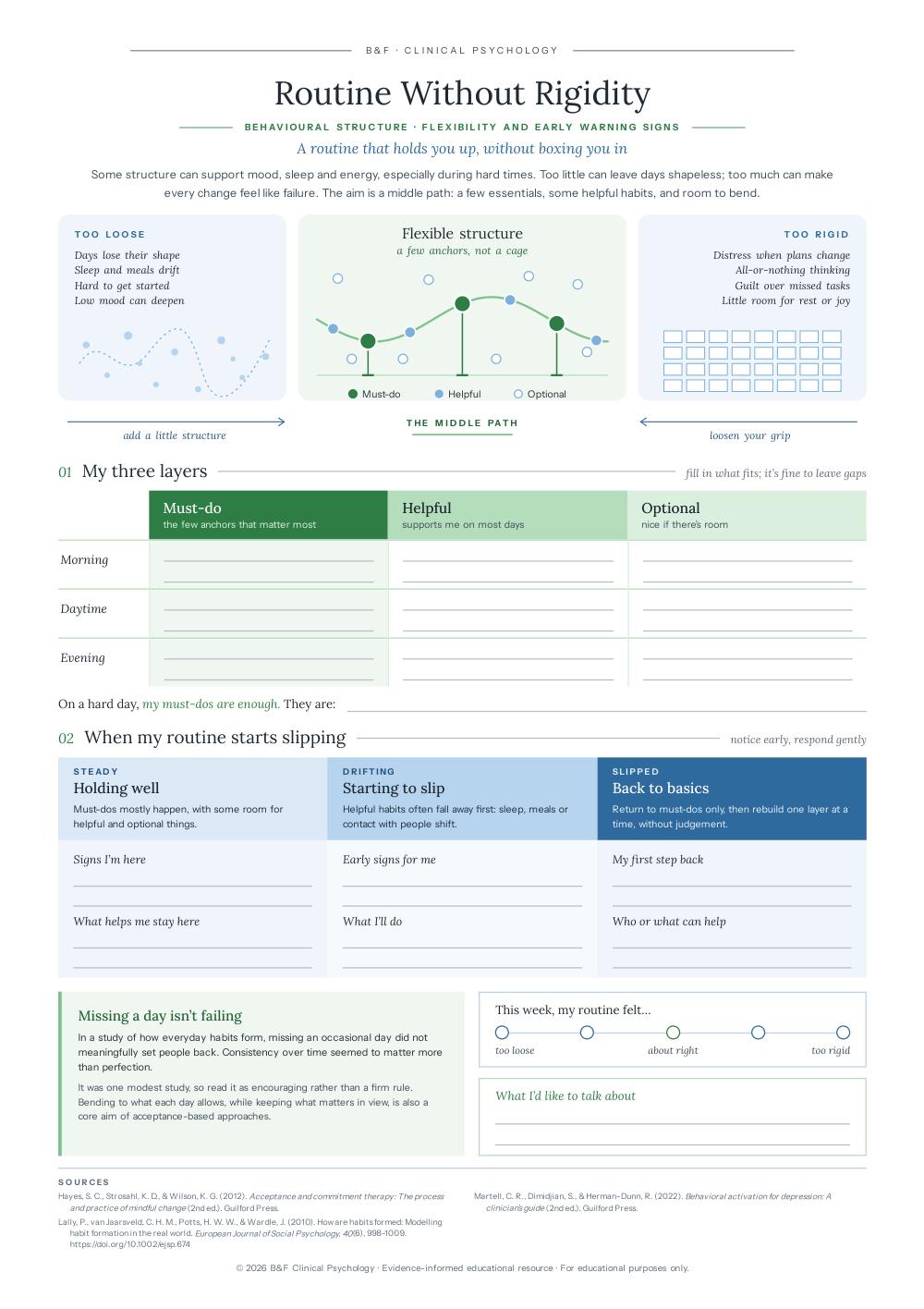
PracticeRoutine without rigidity
A routine that holds you up without boxing you in.
-
 Preview
Reflect
Preview
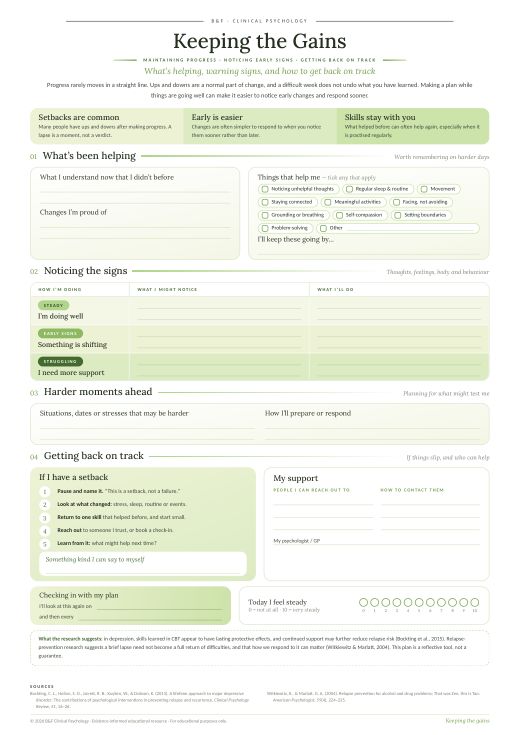
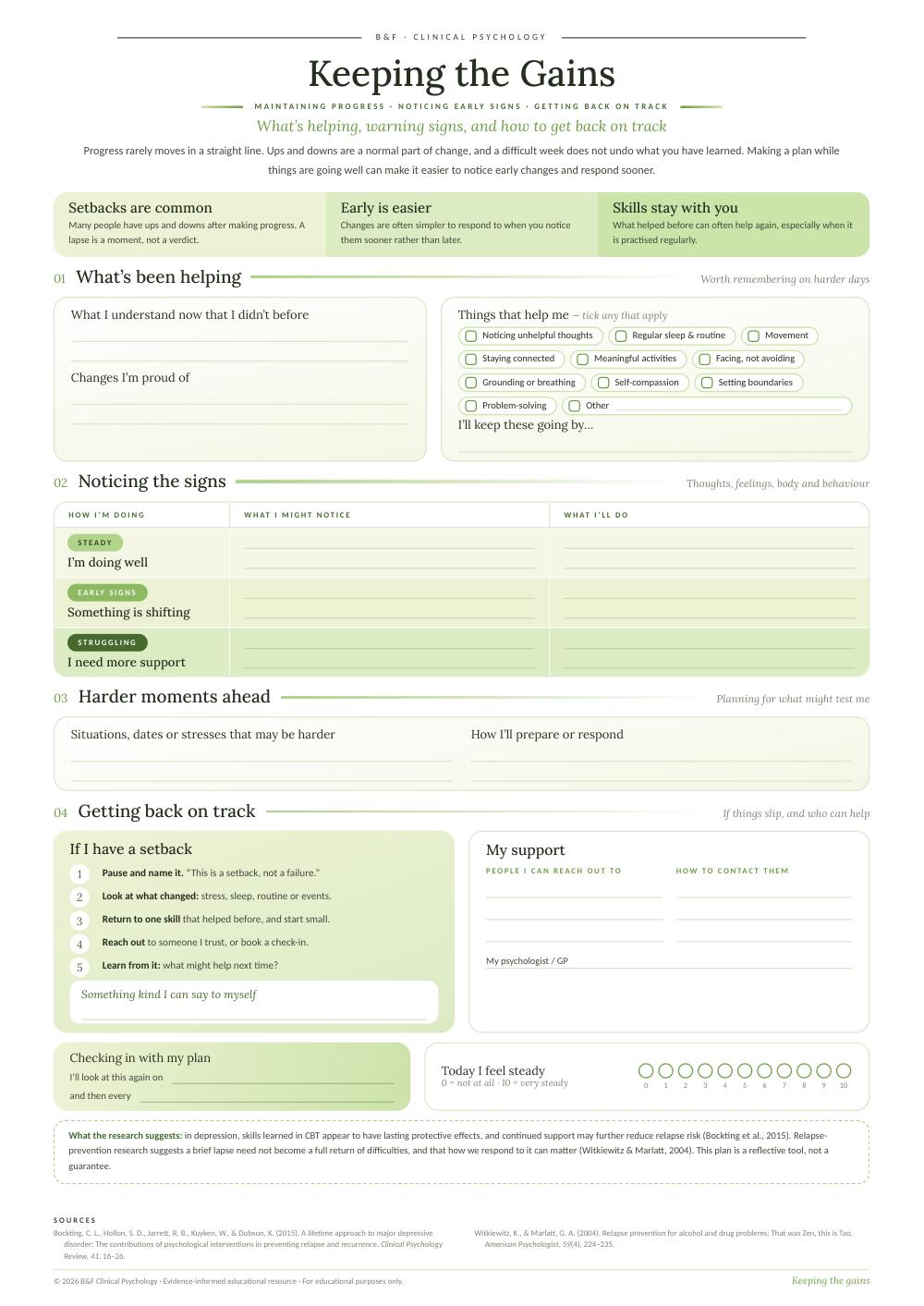
ReflectKeeping the gains
What's helping, the early warning signs, and how to get back on track.
These resources are for general education and self-reflection, not a substitute for individual psychological assessment or therapy. If you are in crisis, feel unsafe, or may harm yourself or someone else, please contact emergency services or go to the nearest emergency department.