

Free resources
Nervous system regulation
Steady the body, and the mind settles with it.
Nervous system regulation resources
-
 Preview
Learn
Preview
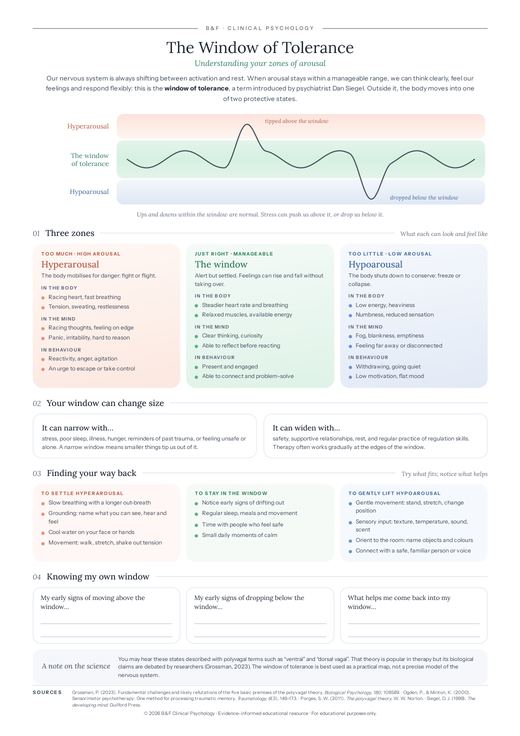
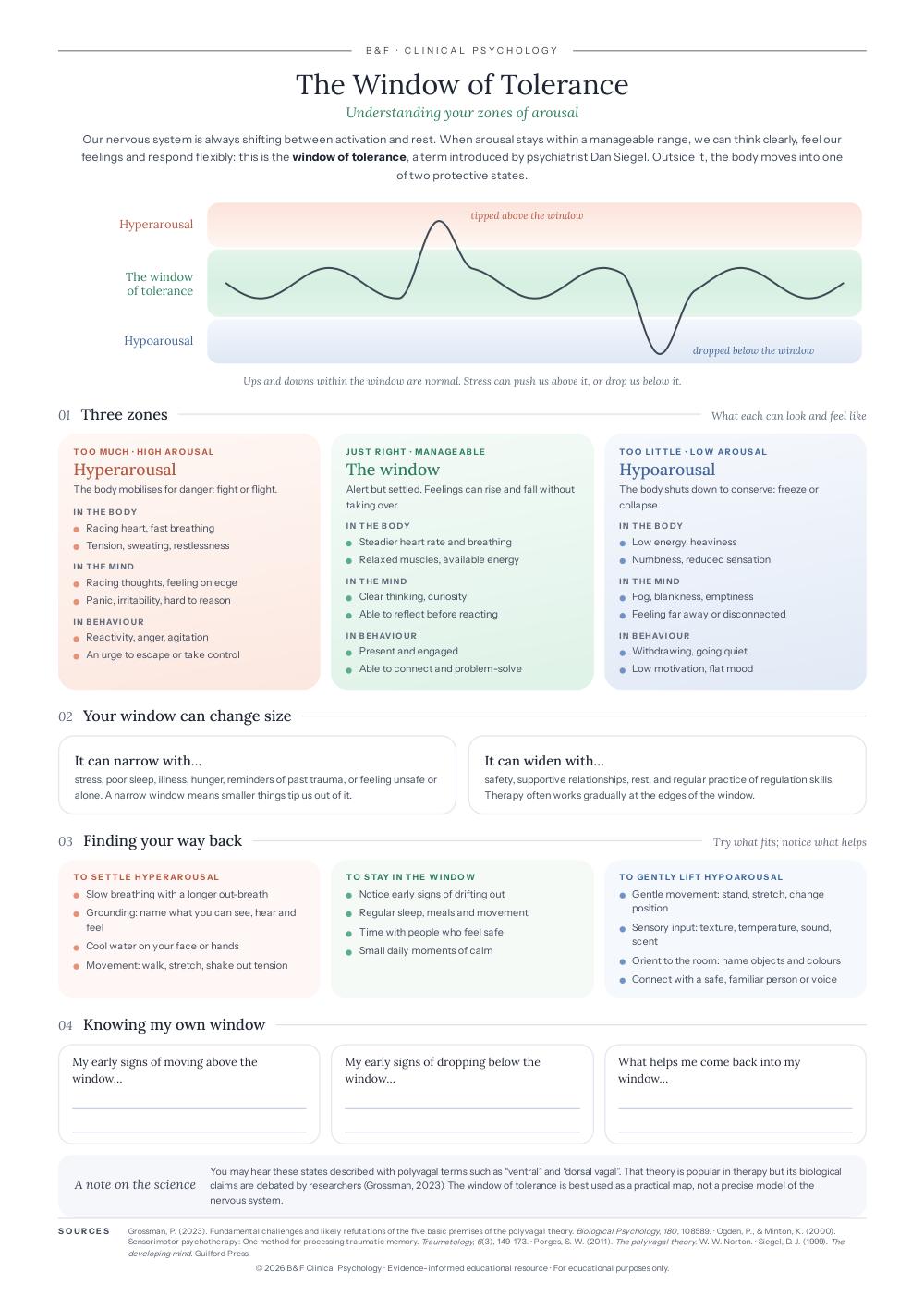
LearnThe window of tolerance
Your nervous system's zones of arousal, and what it feels like to be inside or outside them.
-
 Preview
Reflect
Preview
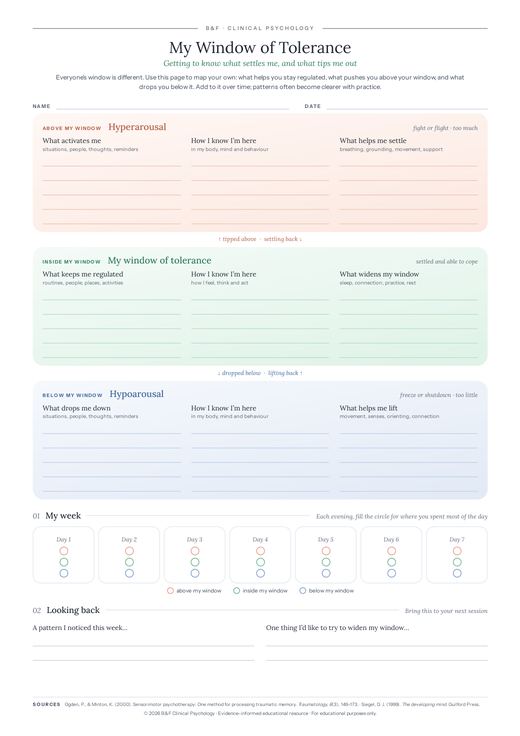
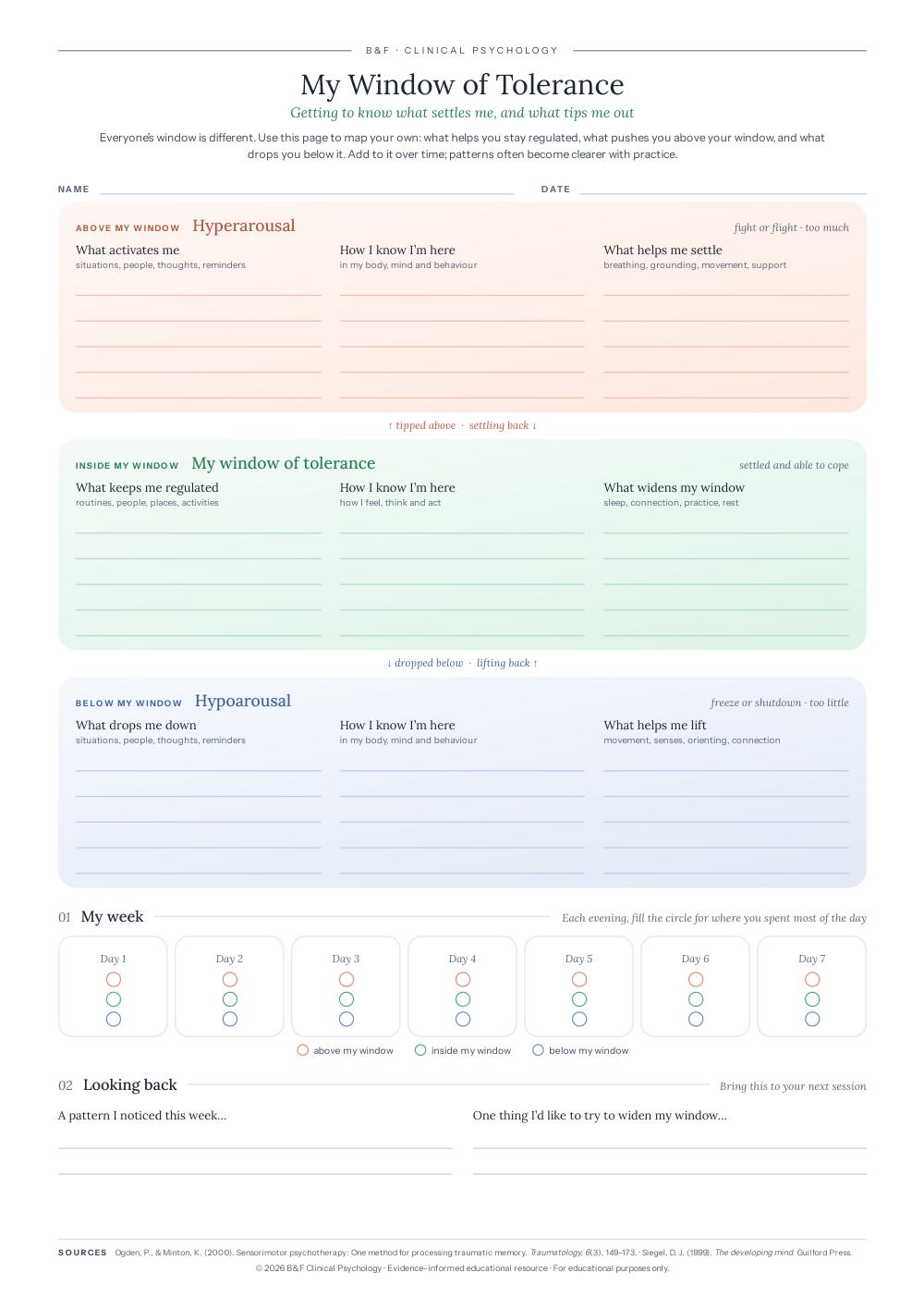
ReflectMy window of tolerance
Map how hyperarousal, your window and hypoarousal show up for you personally.
-
 Preview
Reflect
Preview
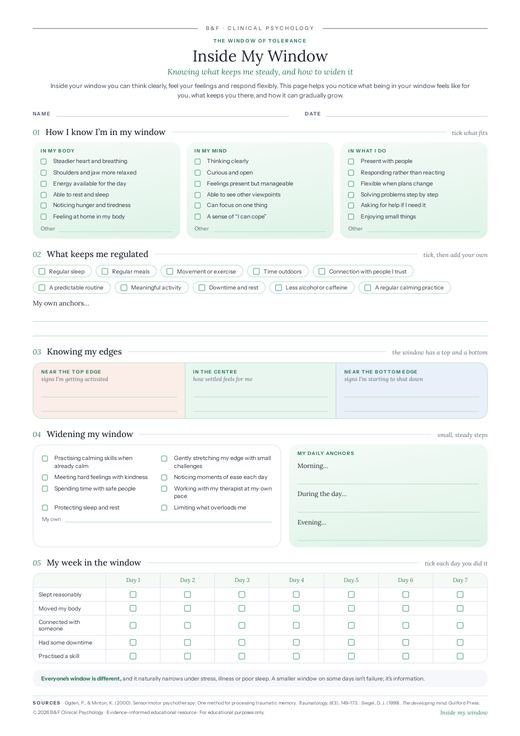
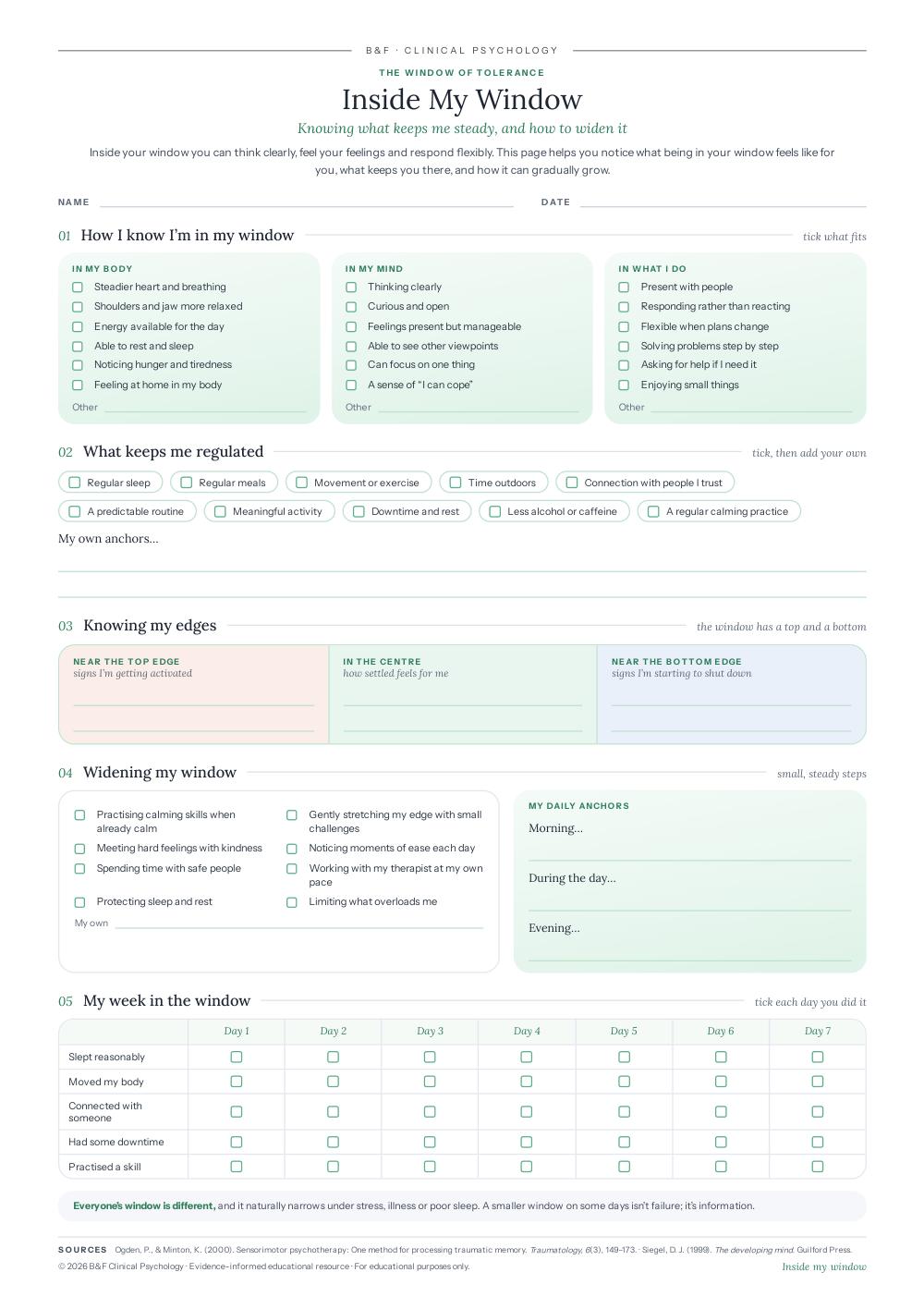
ReflectInside my window
Notice what being in your window feels like, what keeps you there, and how it can grow.
-
 Preview
Reflect
Preview
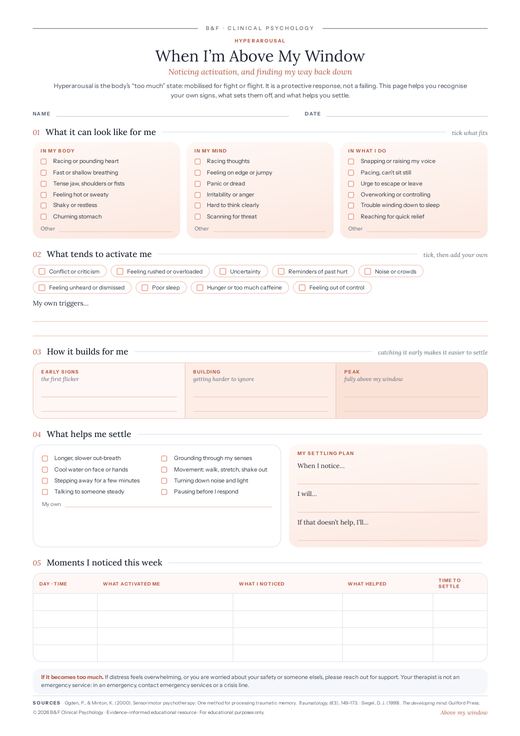
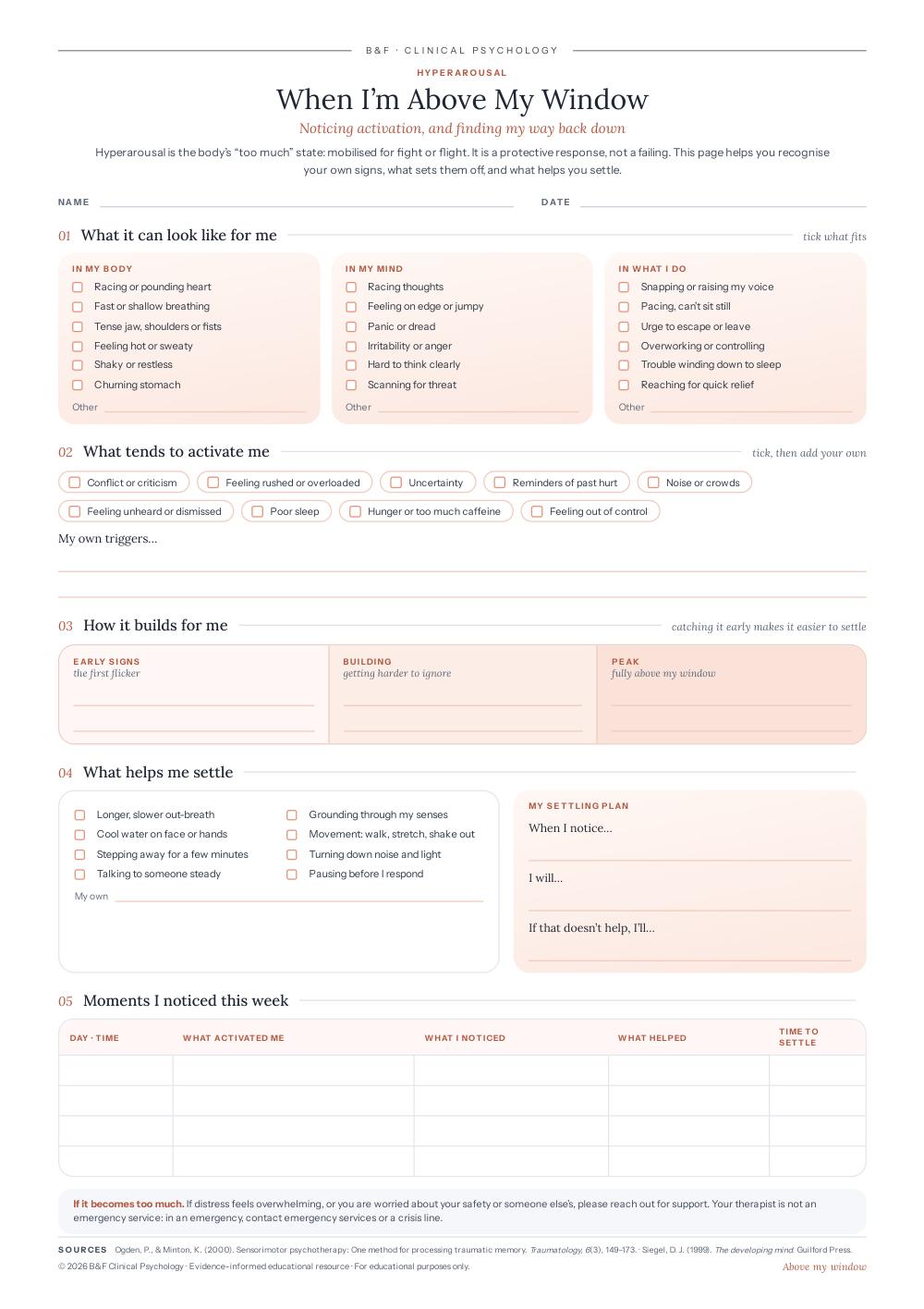
ReflectWhen I'm above my window: hyperarousal
Recognise your own signs of hyperarousal, what sets them off, and what helps you settle.
-
 Preview
Reflect
Preview
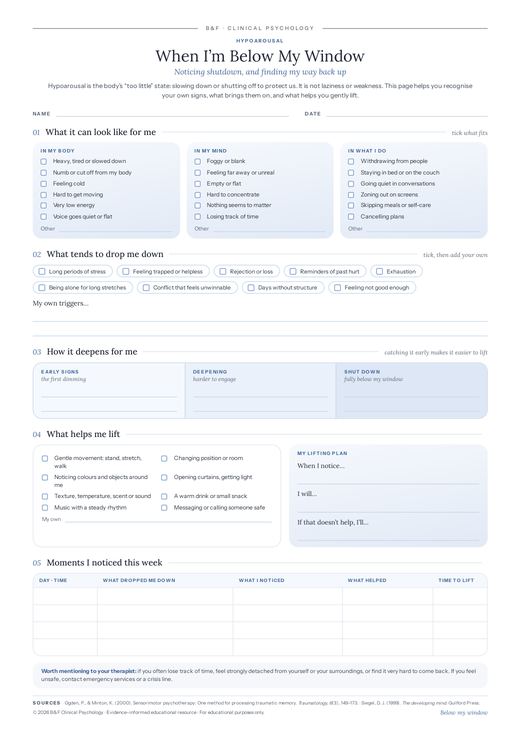
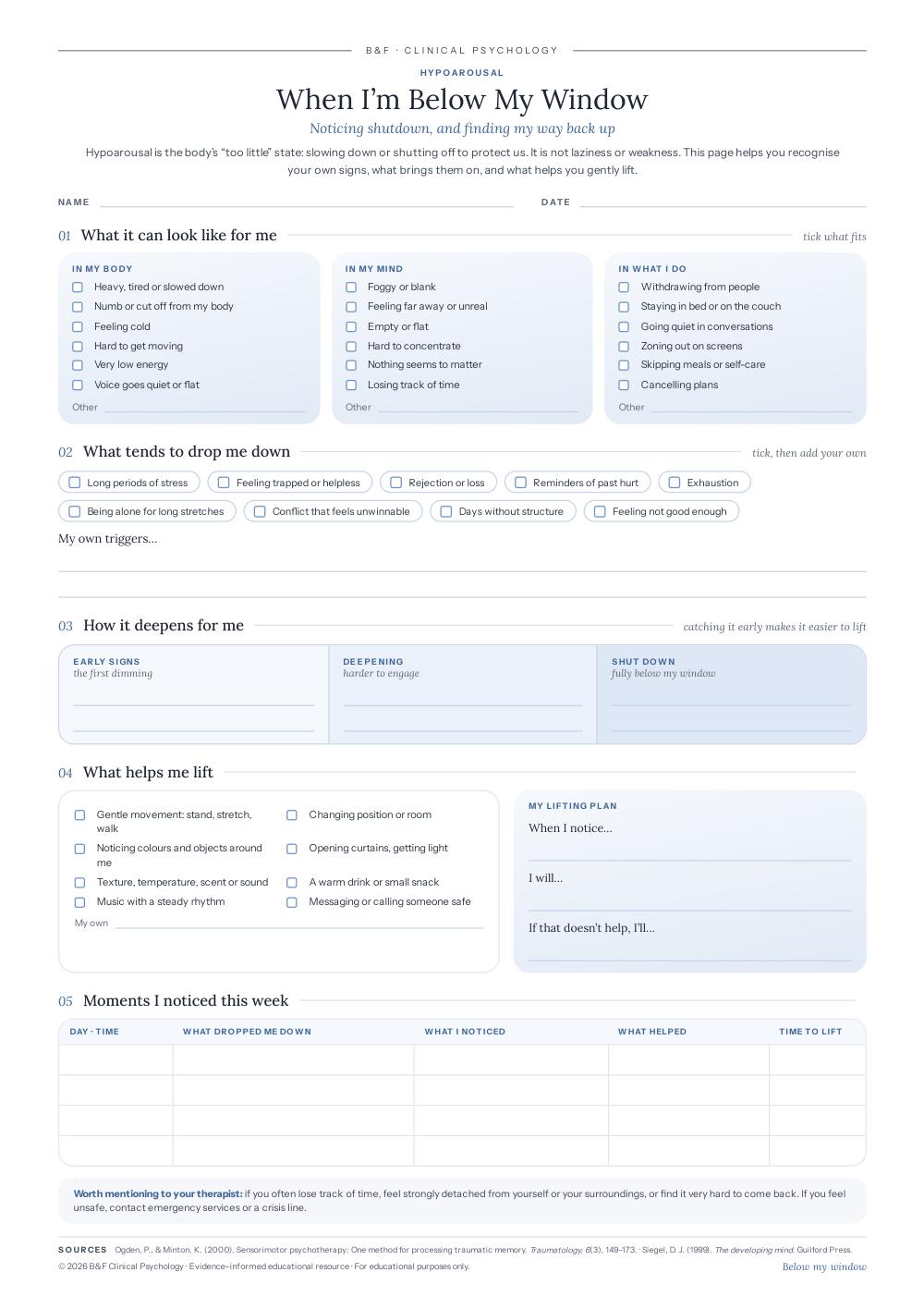
ReflectWhen I'm below my window: hypoarousal
Recognise your own signs of shutdown, what brings them on, and what helps you gently lift.
-
 Preview
Learn
Preview
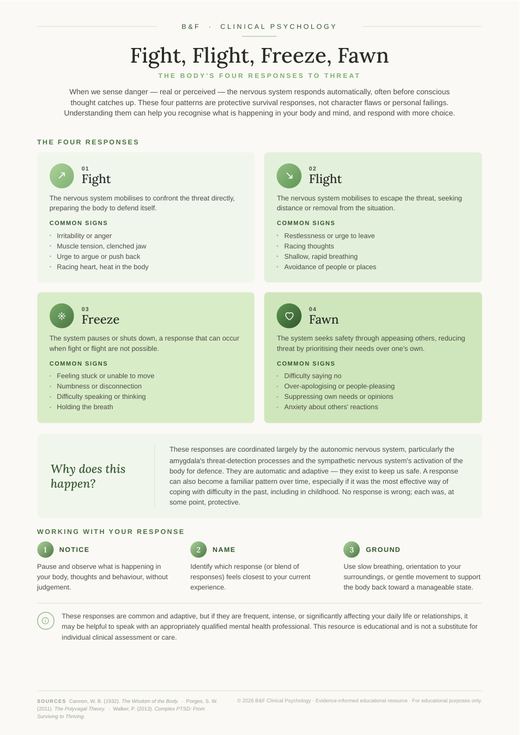
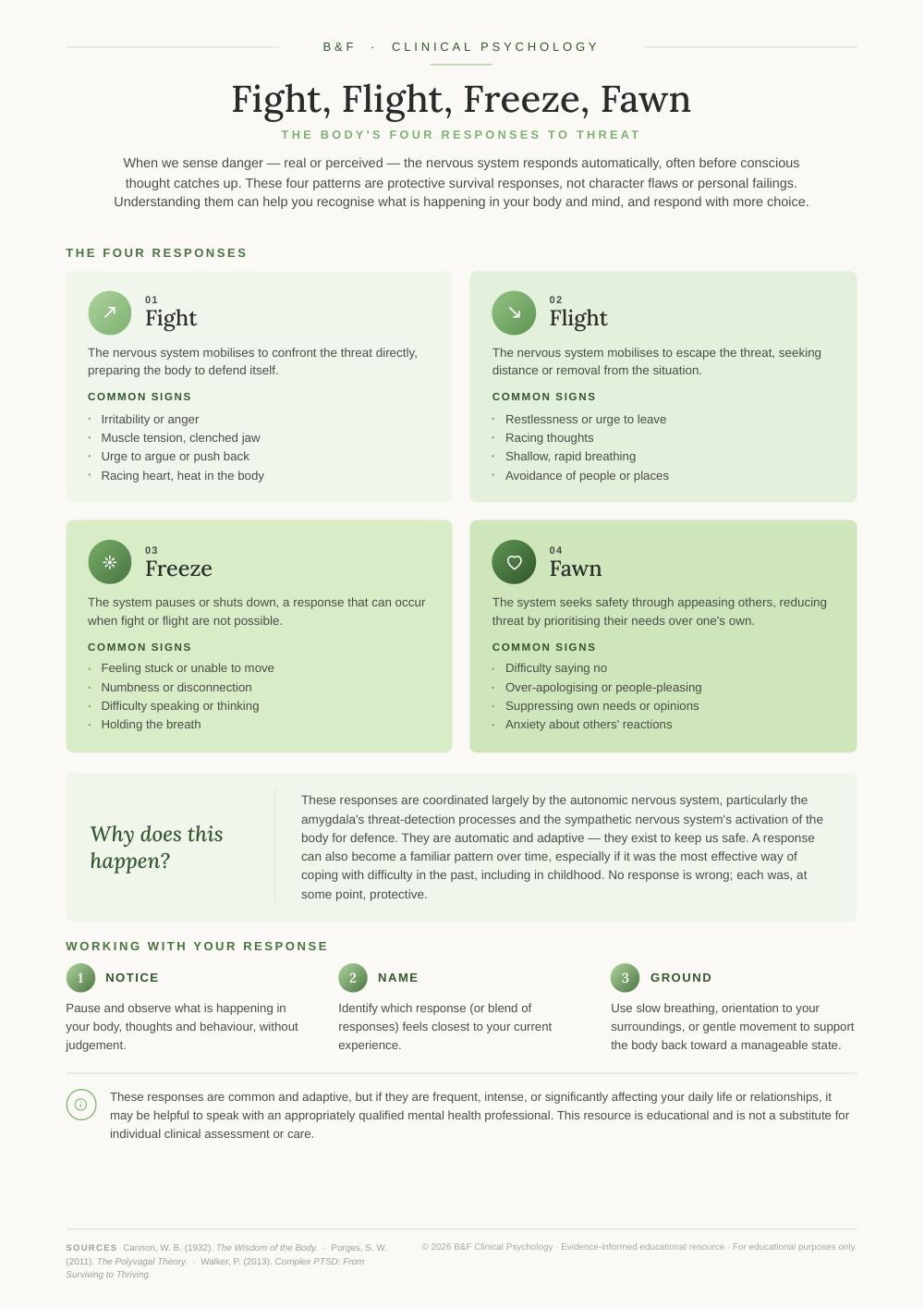
LearnFight, flight, freeze, fawn
The body's four responses to threat, which arrive before conscious thought does.
-
 Preview
Learn
Preview
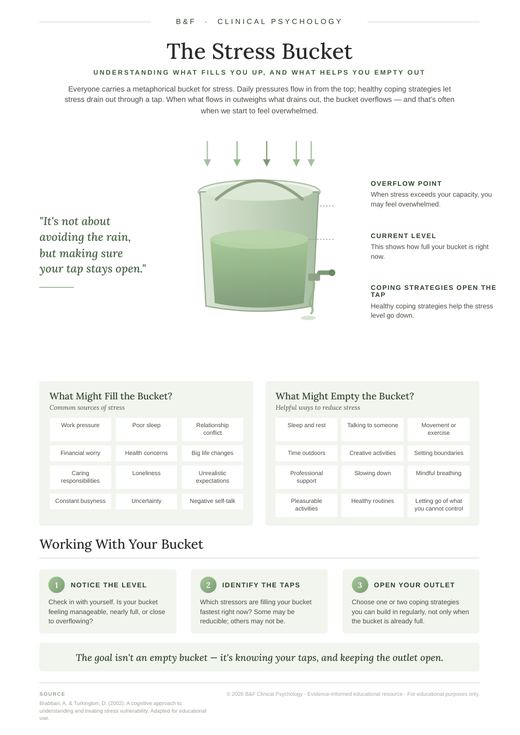
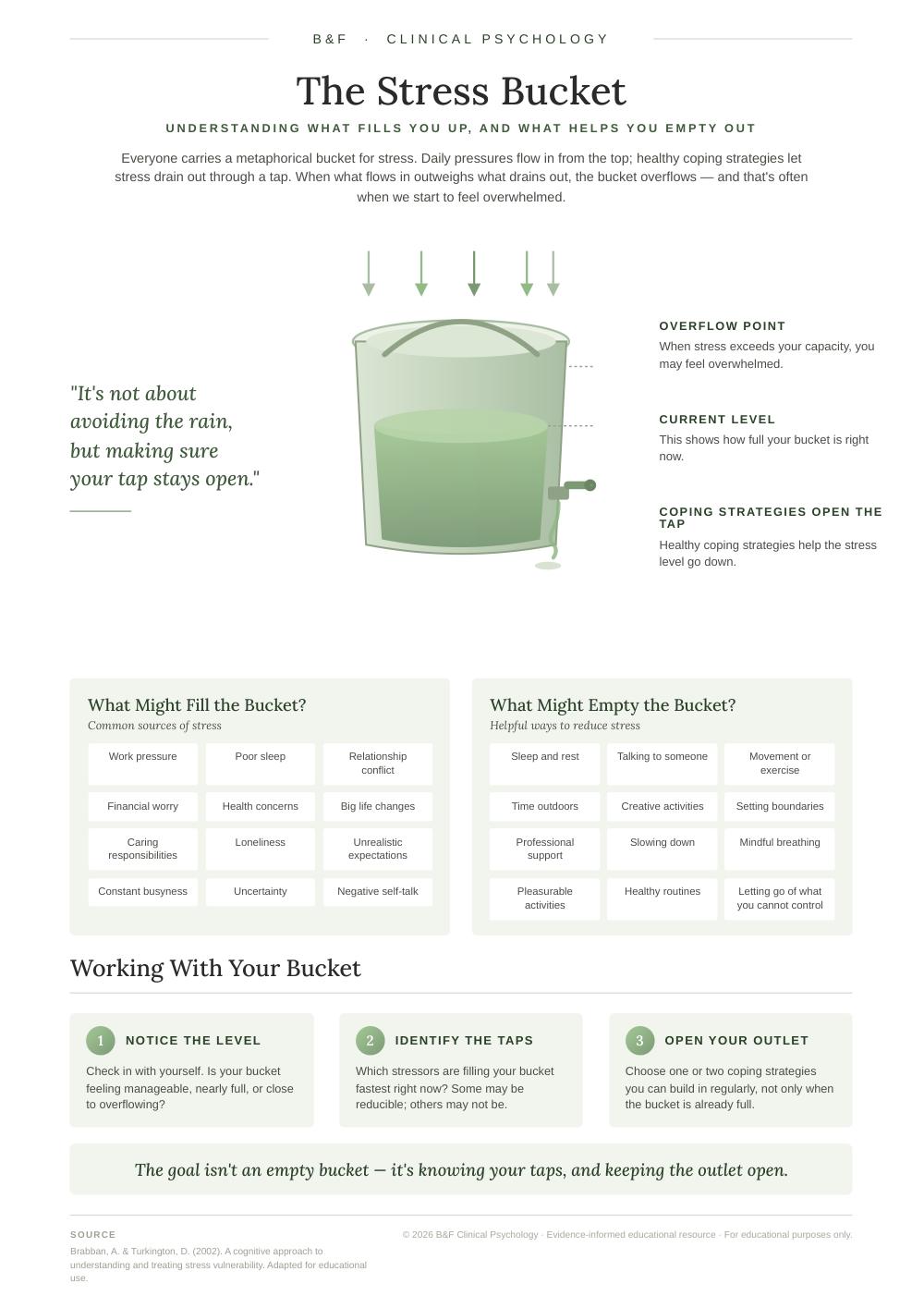
LearnThe stress bucket
What fills you up, what helps you empty out, and what happens when the tap stays open.
-
 Preview
Practice
Preview
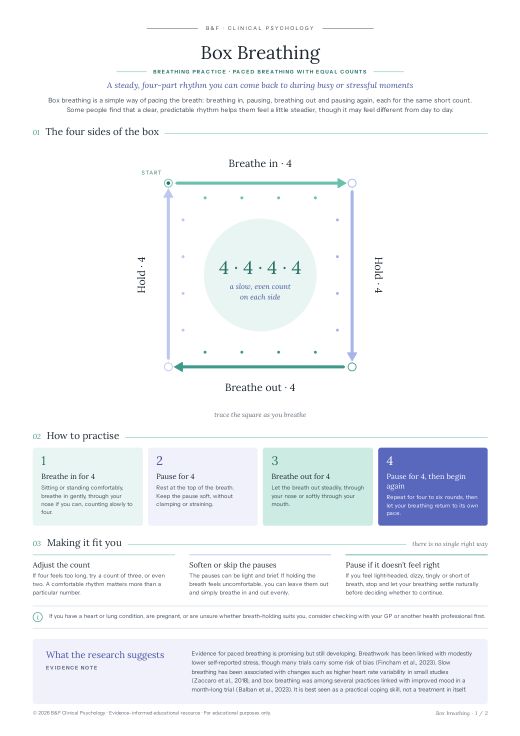
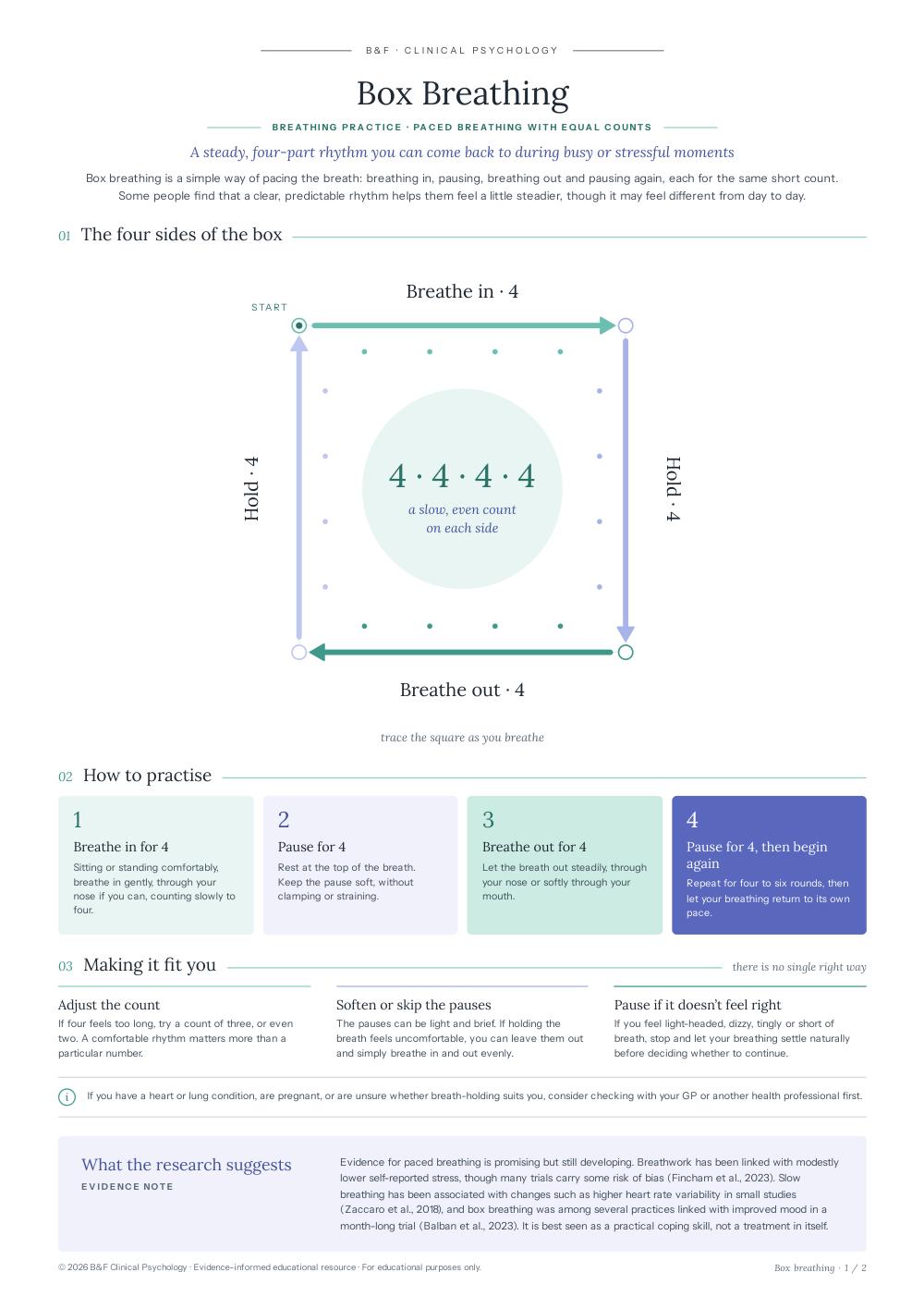
PracticeBox breathing
A steady four-part rhythm for the breath, to come back to in busy or stressful moments.
-
 Preview
Practice
Preview
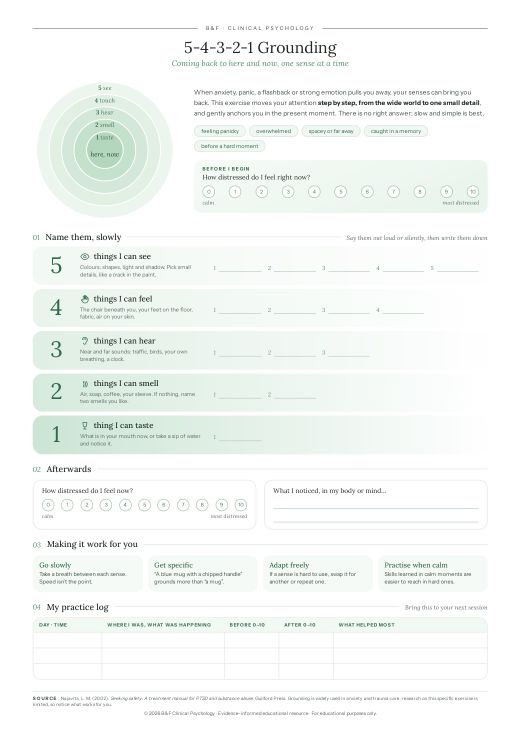
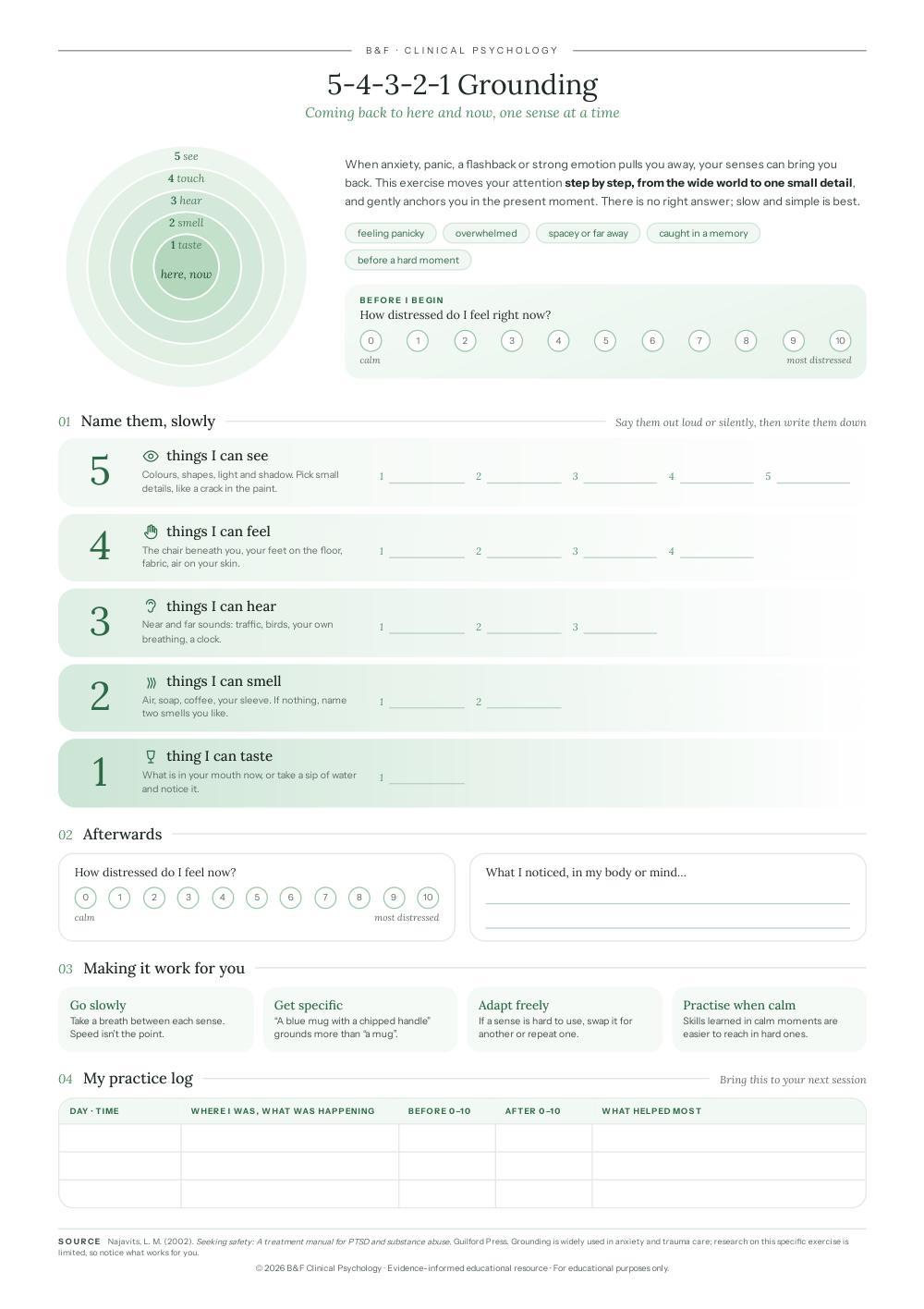
Practice5-4-3-2-1 grounding
Coming back to here and now, one sense at a time, when anxiety or a strong feeling pulls you away.
-
 Preview
Practice
Preview
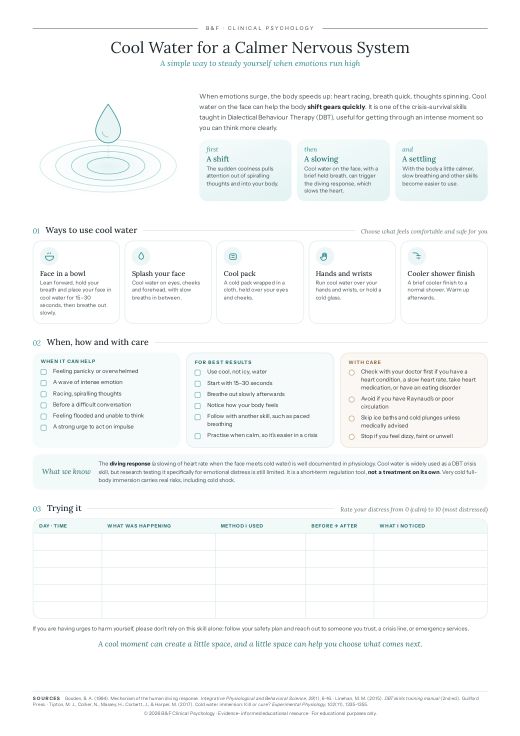
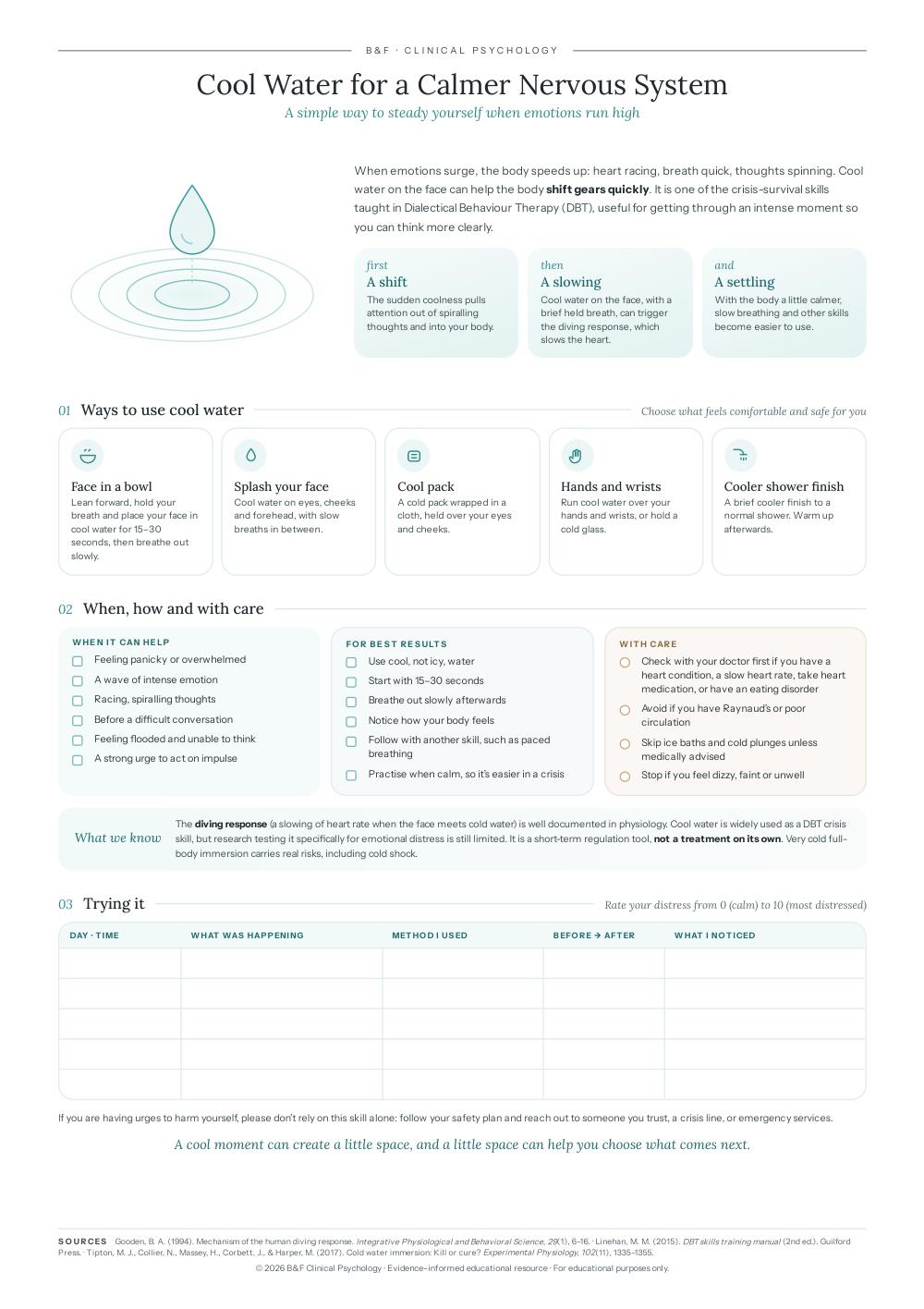
PracticeCool water for a calmer nervous system
Cool water on the face to help the body shift gears quickly when emotions run high.
-
 Preview
Practice
Preview
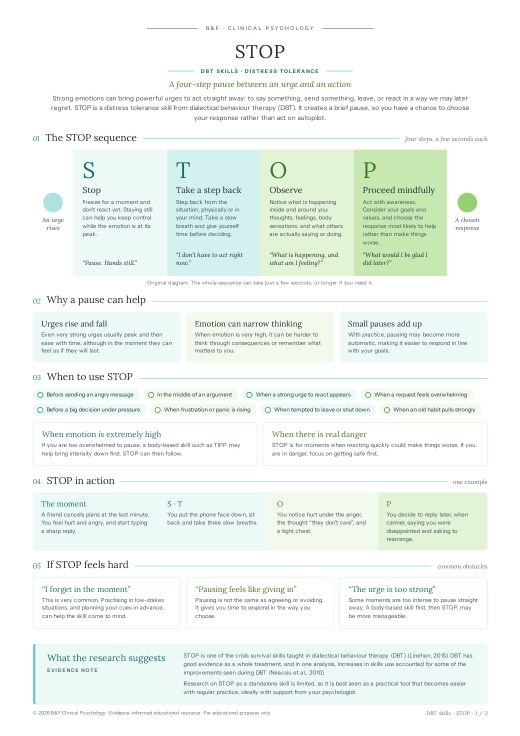
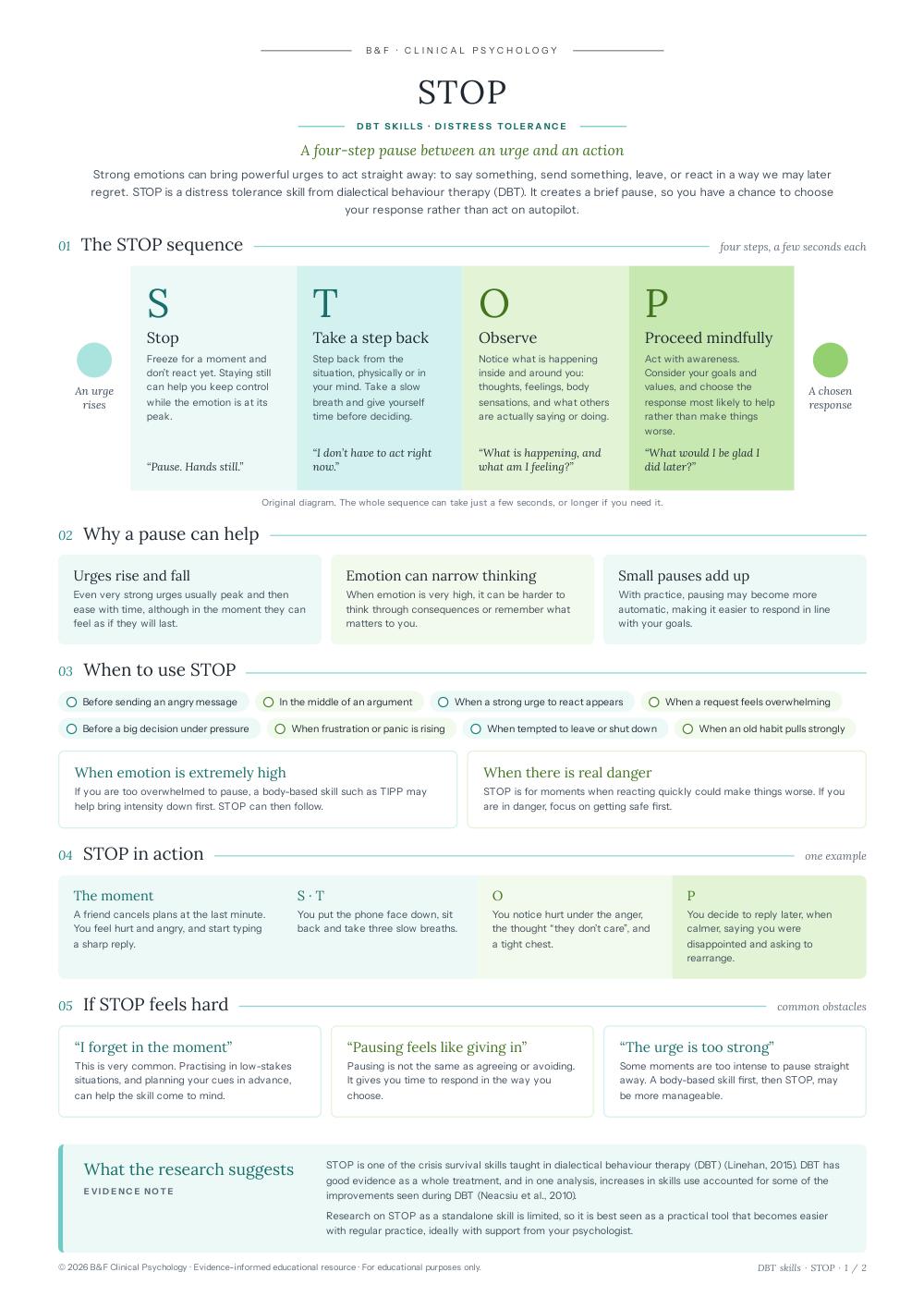
PracticeSTOP skill
A DBT distress-tolerance skill: a four-step pause between the trigger and the reaction.
-
 Preview
Practice
Preview
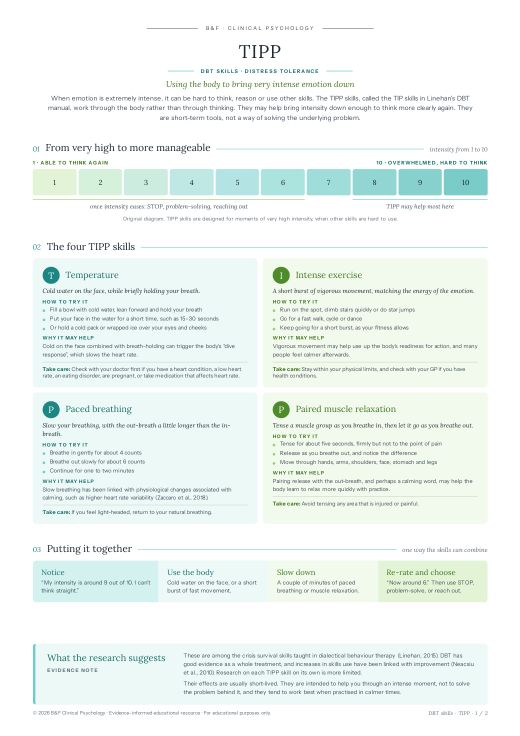
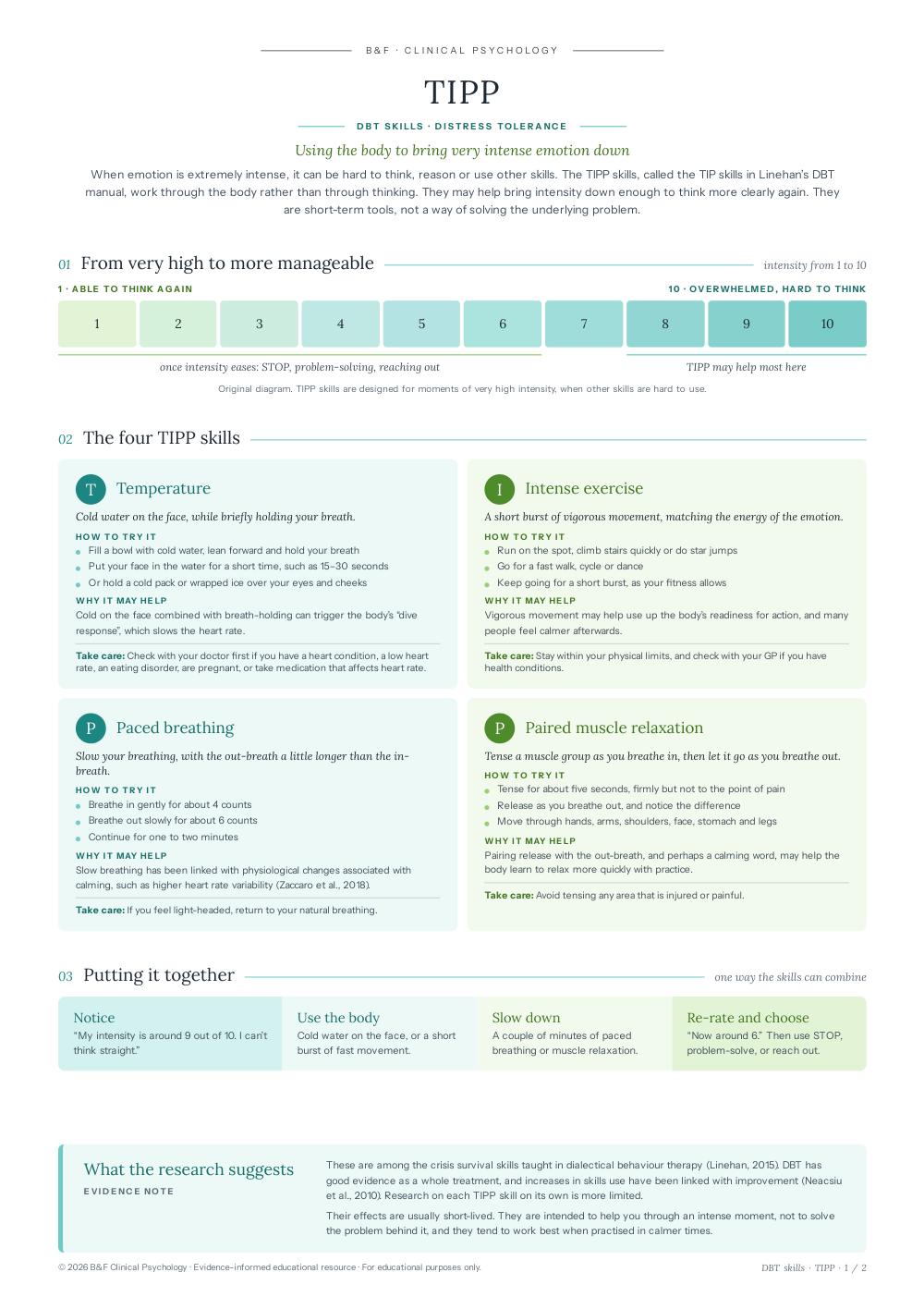
PracticeTIPP skill
A crisis-survival skill that works fast by changing body chemistry directly.
-
 Preview
Practice
Preview
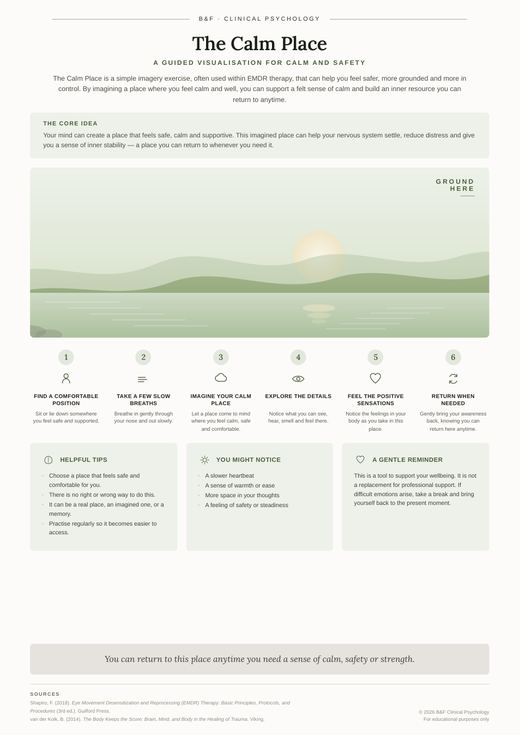
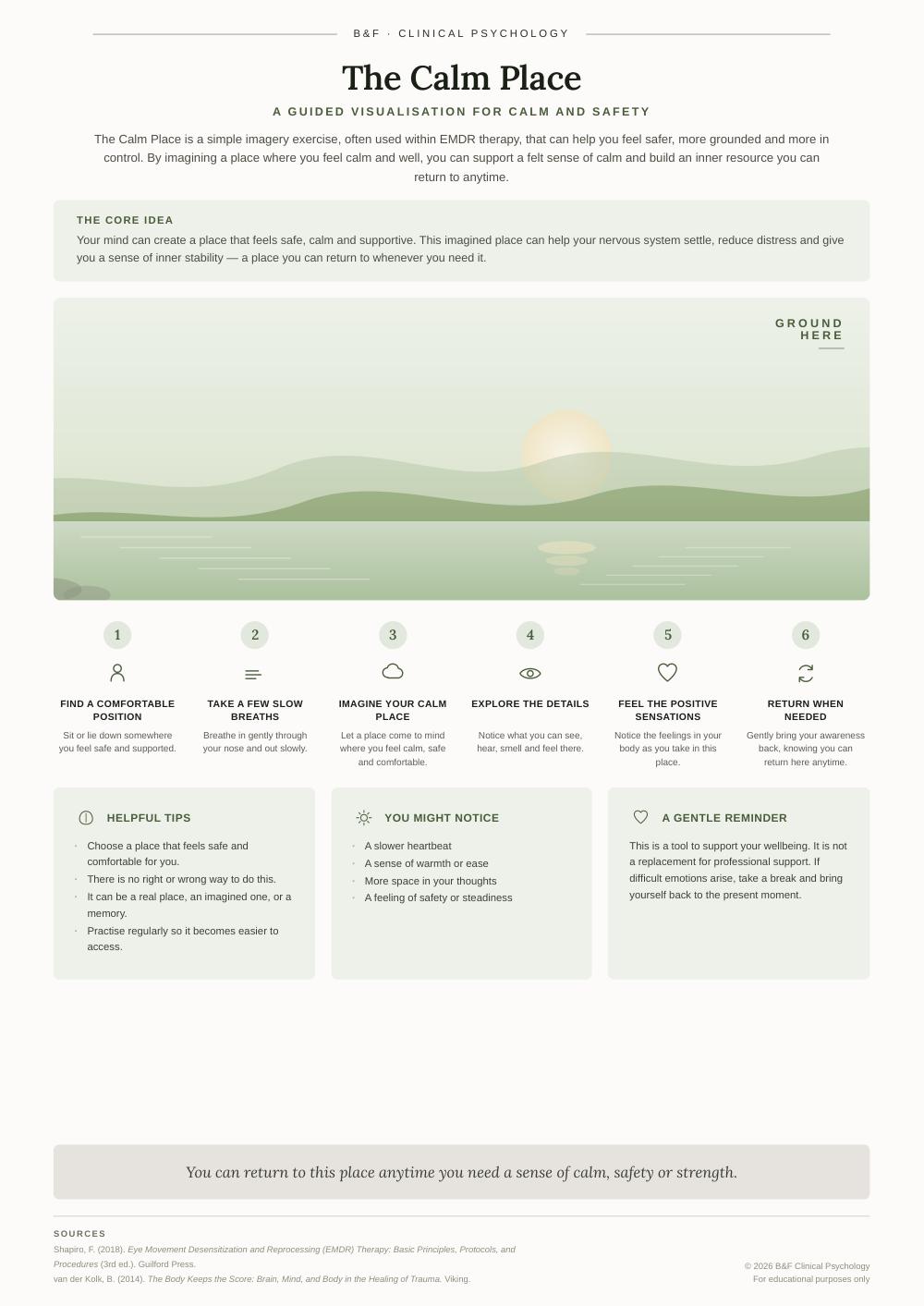
PracticeThe calm place
A guided visualisation, often used in EMDR, for feeling safer and more grounded.
-
 Preview
Practice
Preview
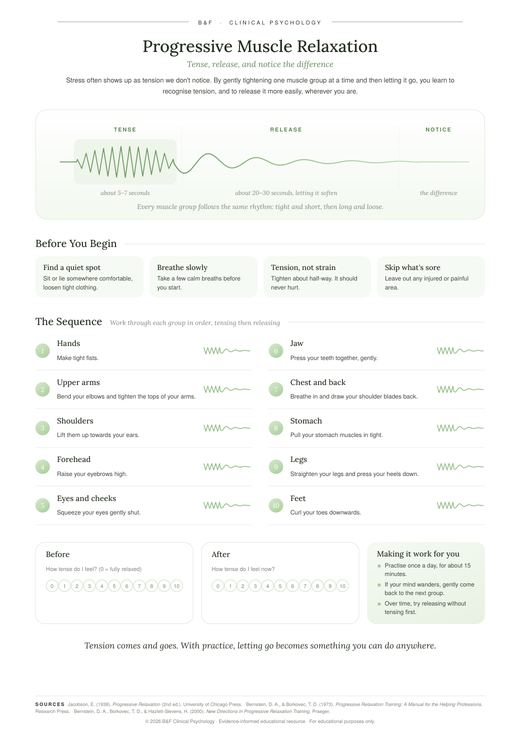
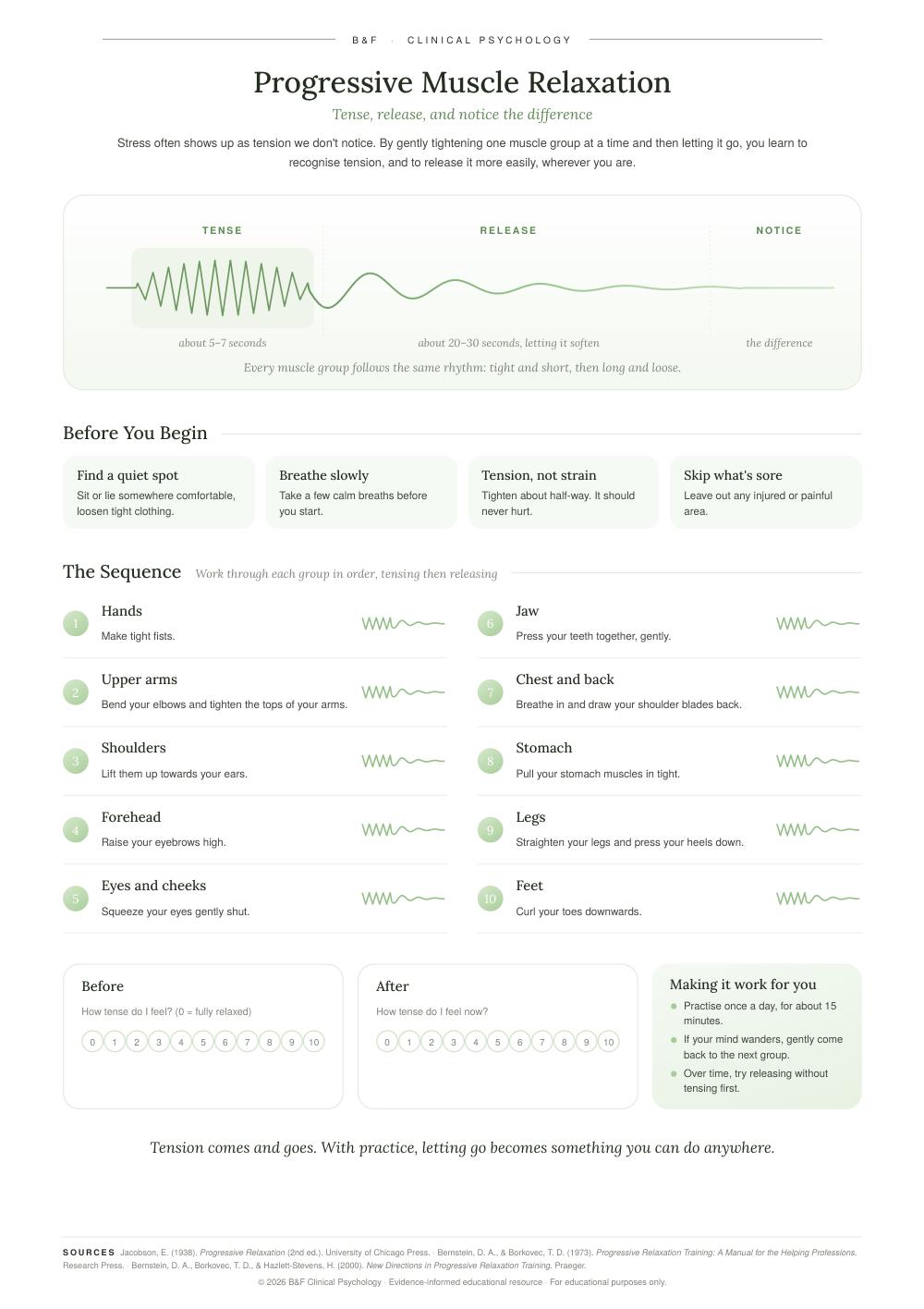
PracticeProgressive muscle relaxation
Tense, release and notice: learn to recognise muscle tension and let it go, one group at a time.
-
 Preview
Practice
Preview
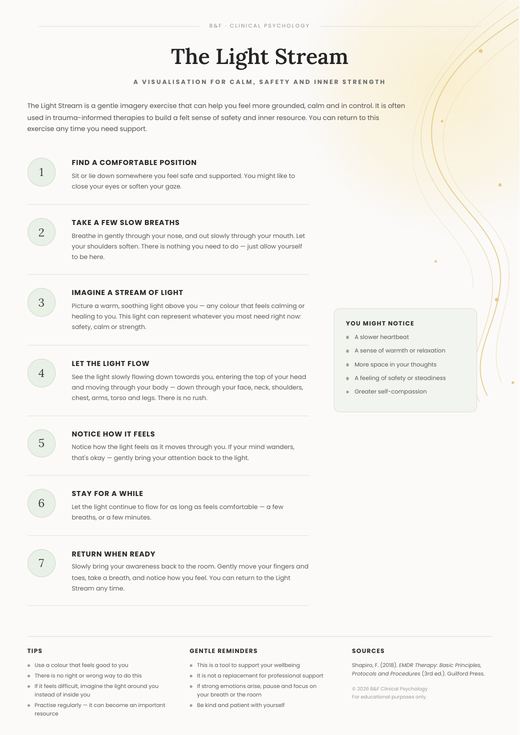
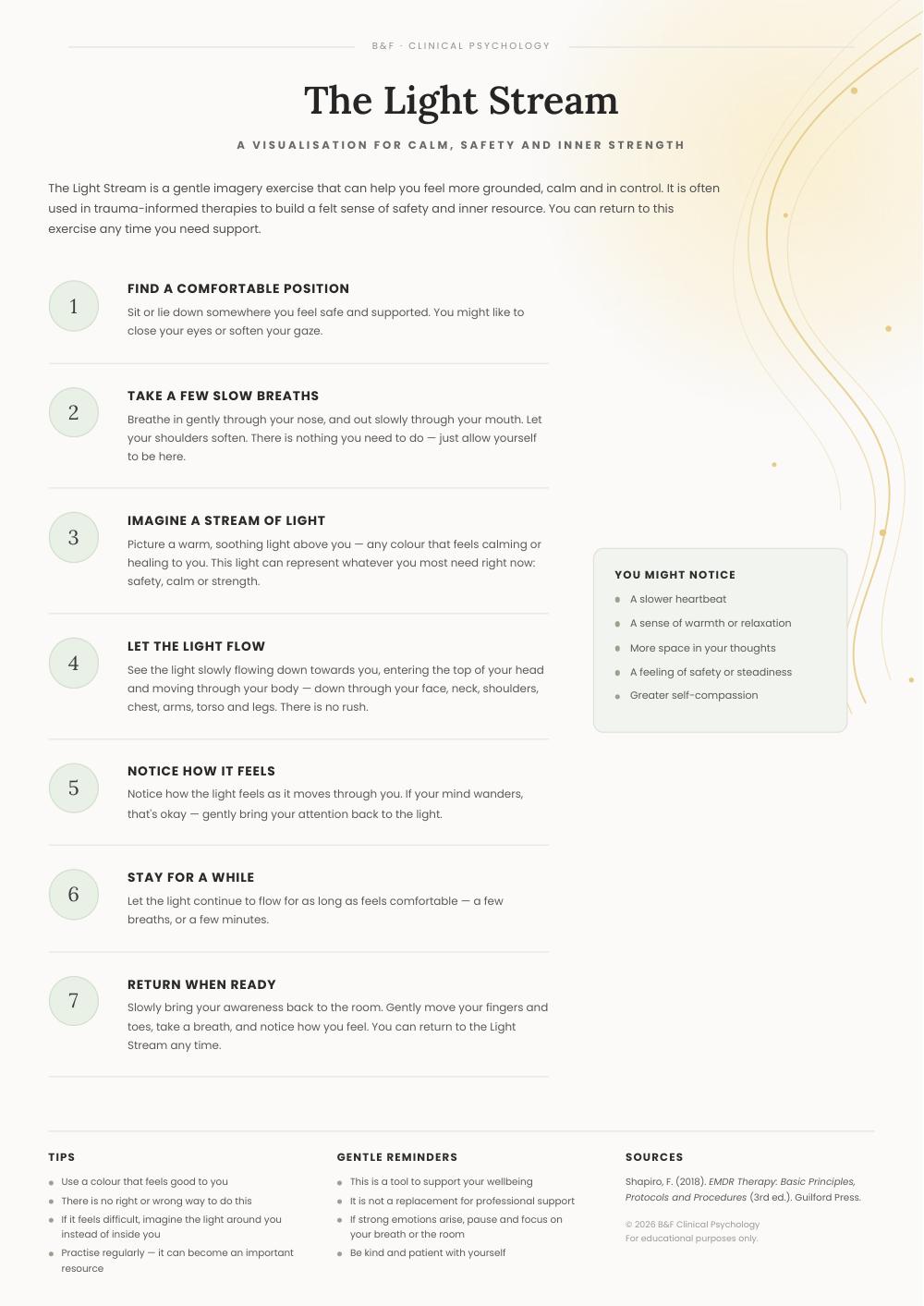
PracticeThe light stream
A gentle visualisation, often used in trauma-informed therapy, for calm, safety and inner strength.
These resources are for general education and self-reflection, not a substitute for individual psychological assessment or therapy. If you are in crisis, feel unsafe, or may harm yourself or someone else, please contact emergency services or go to the nearest emergency department.