

Free resources
Relationships and boundaries
Say what you need. Stay connected. Stay yourself.
Relationships and boundaries resources
-
 Preview
Learn
Preview
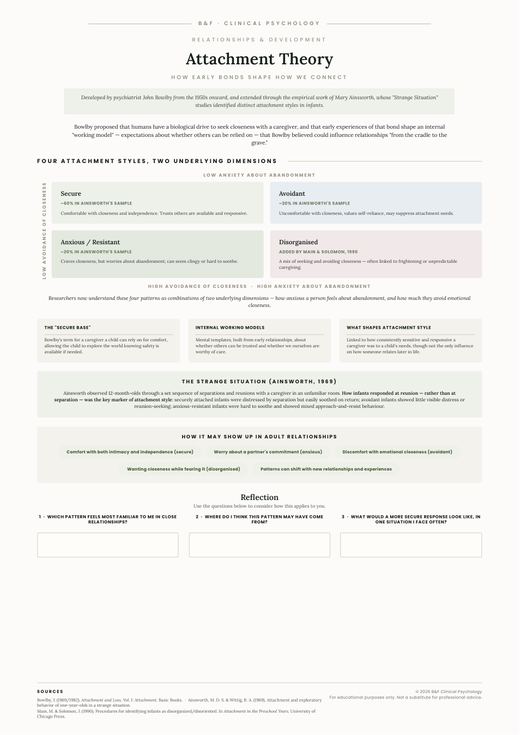
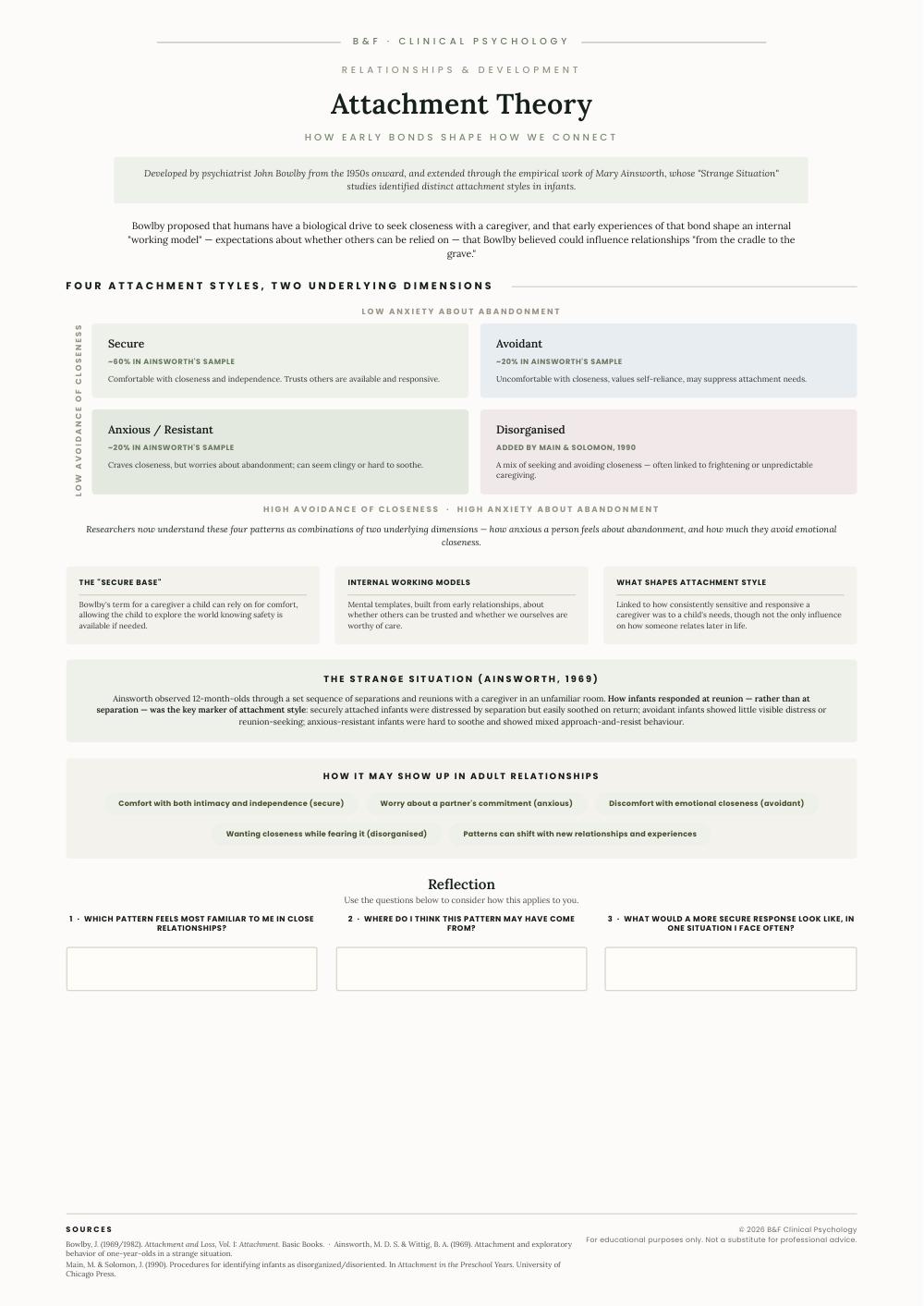
LearnAttachment theory
How early bonds shape the way we connect as adults, from Bowlby onward.
-
 Preview
Learn
Preview
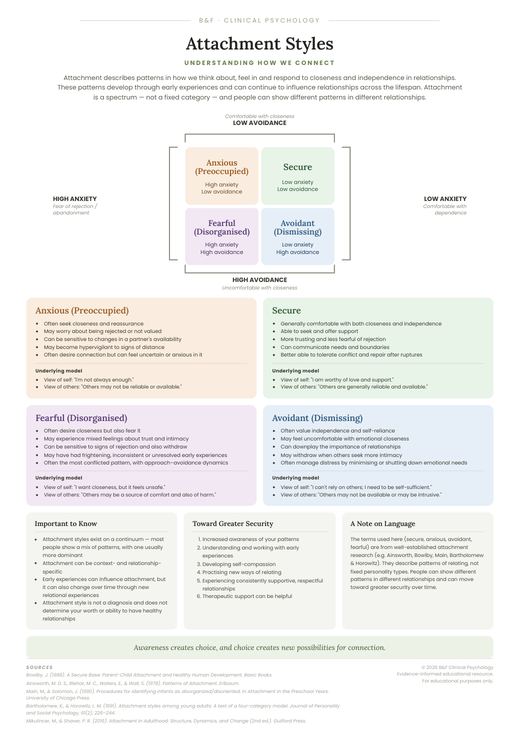
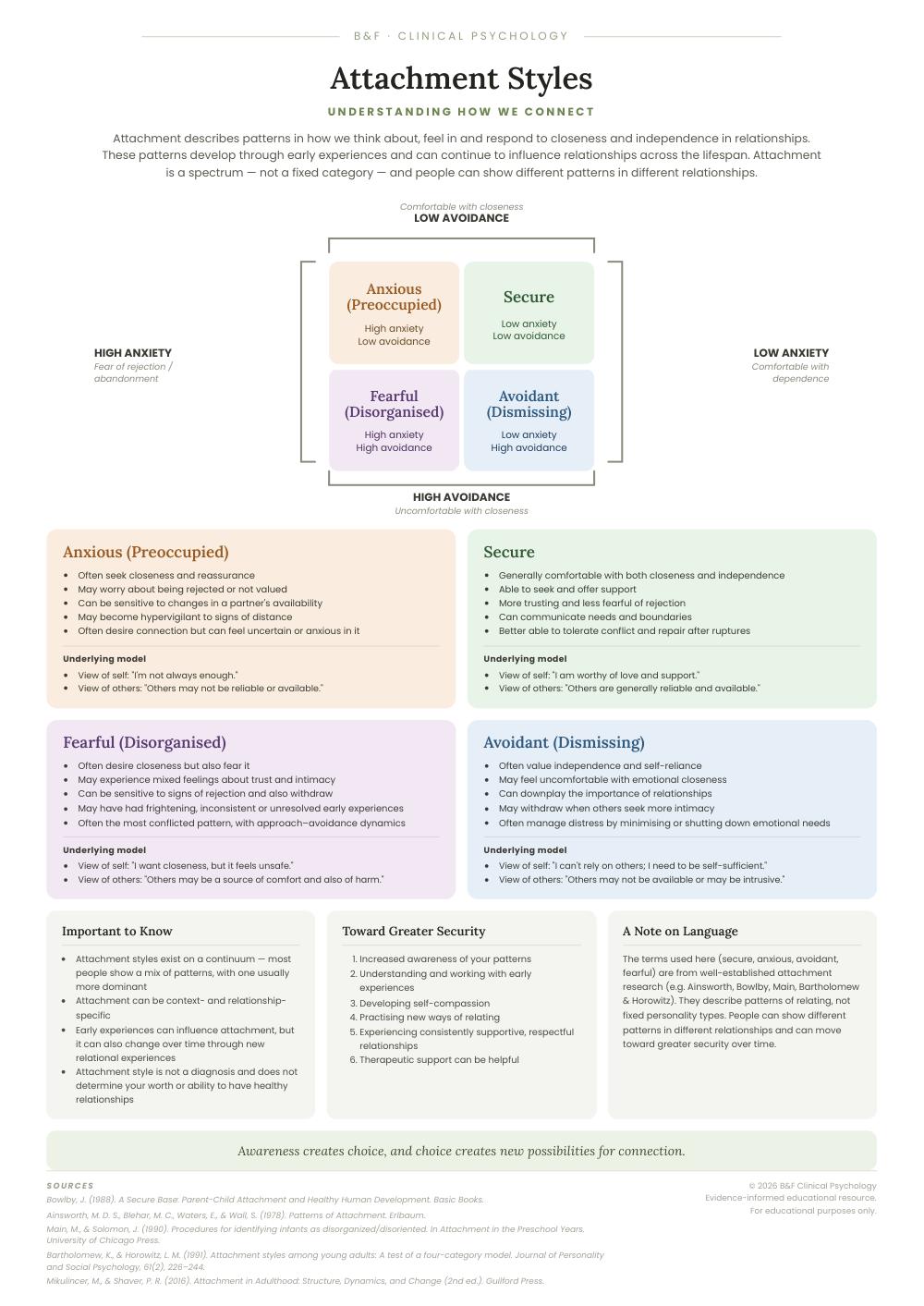
LearnAttachment styles
Patterns in how we connect, and why attachment is a spectrum rather than a fixed category.
-
 Preview
Learn
Preview
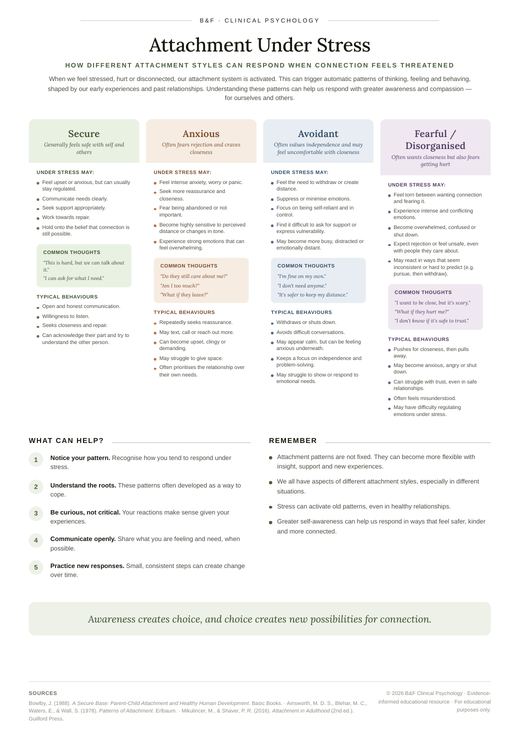
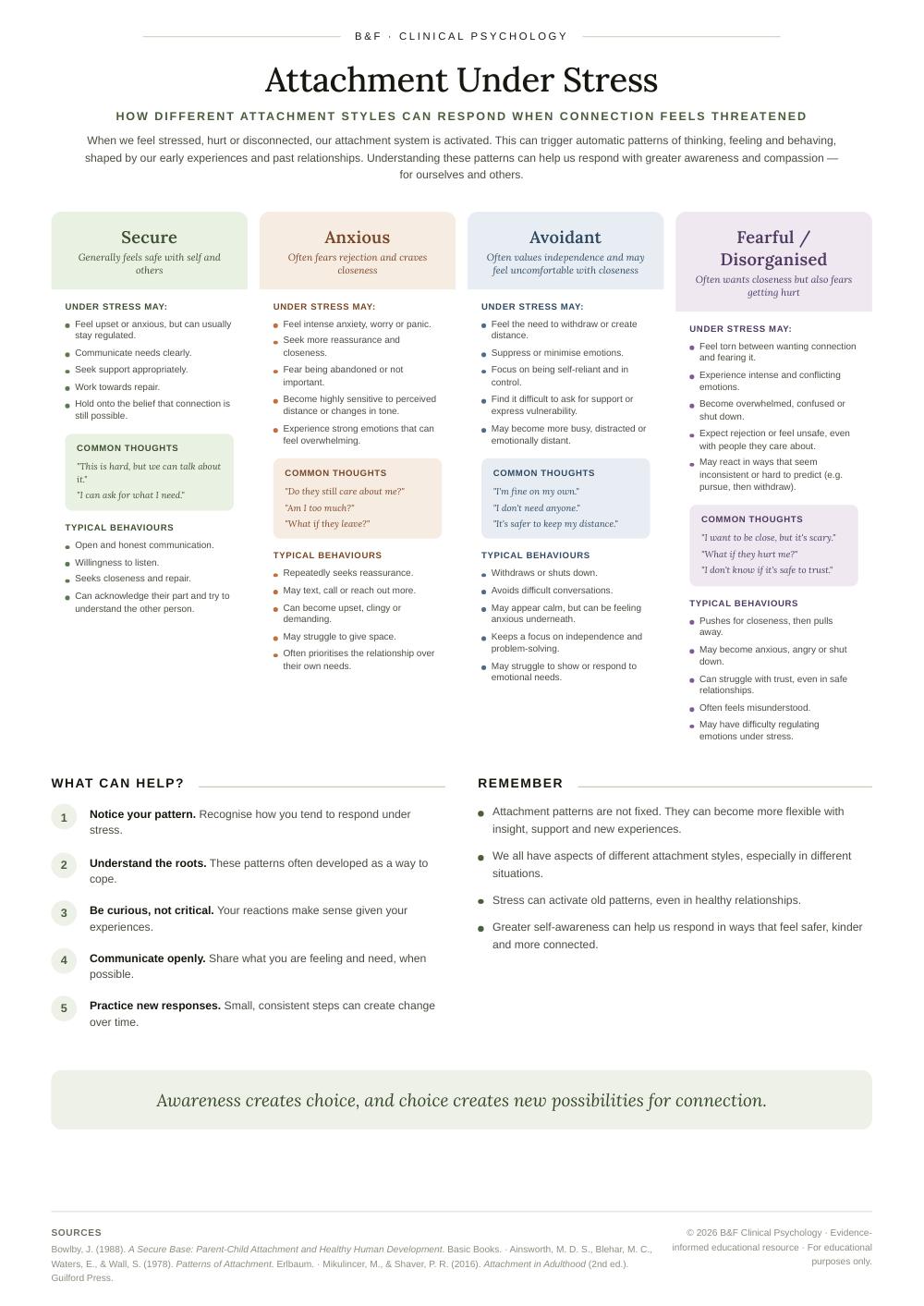
LearnAttachment under stress
How different attachment styles can respond when connection feels threatened.
-
 Preview
Learn
Preview
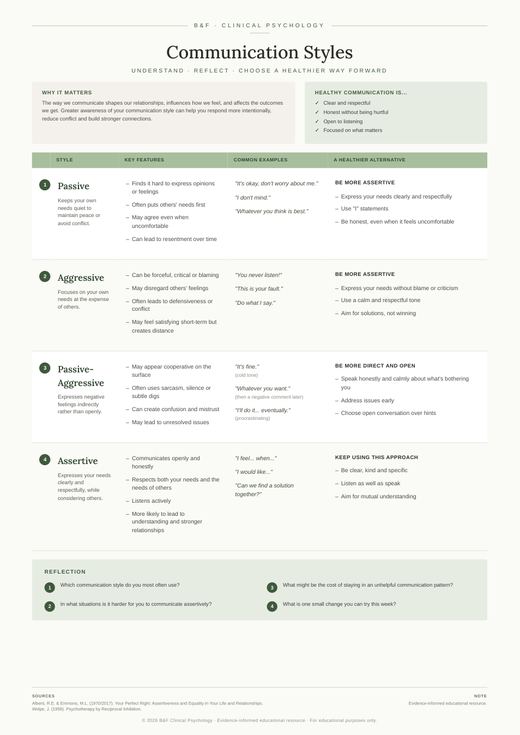
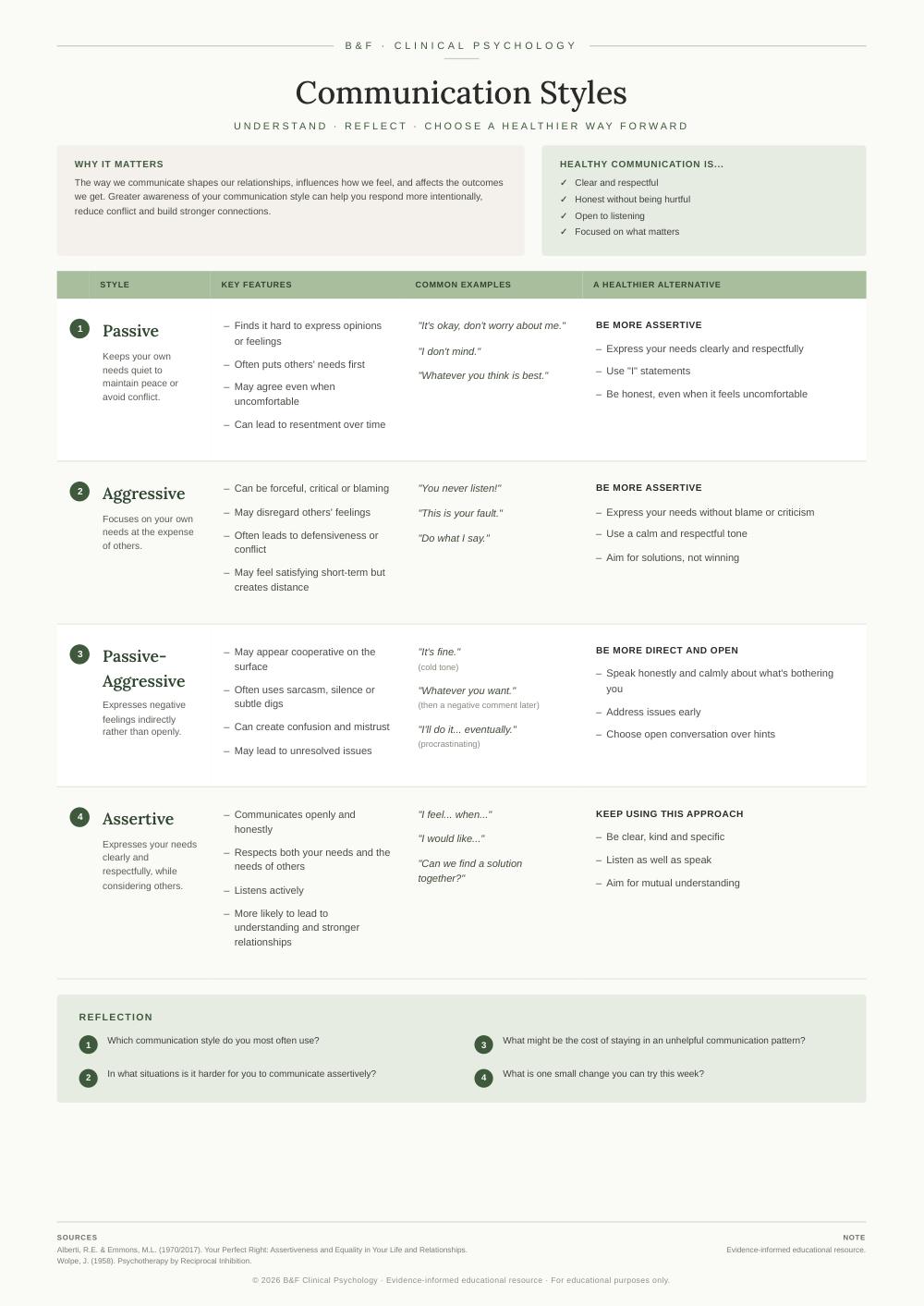
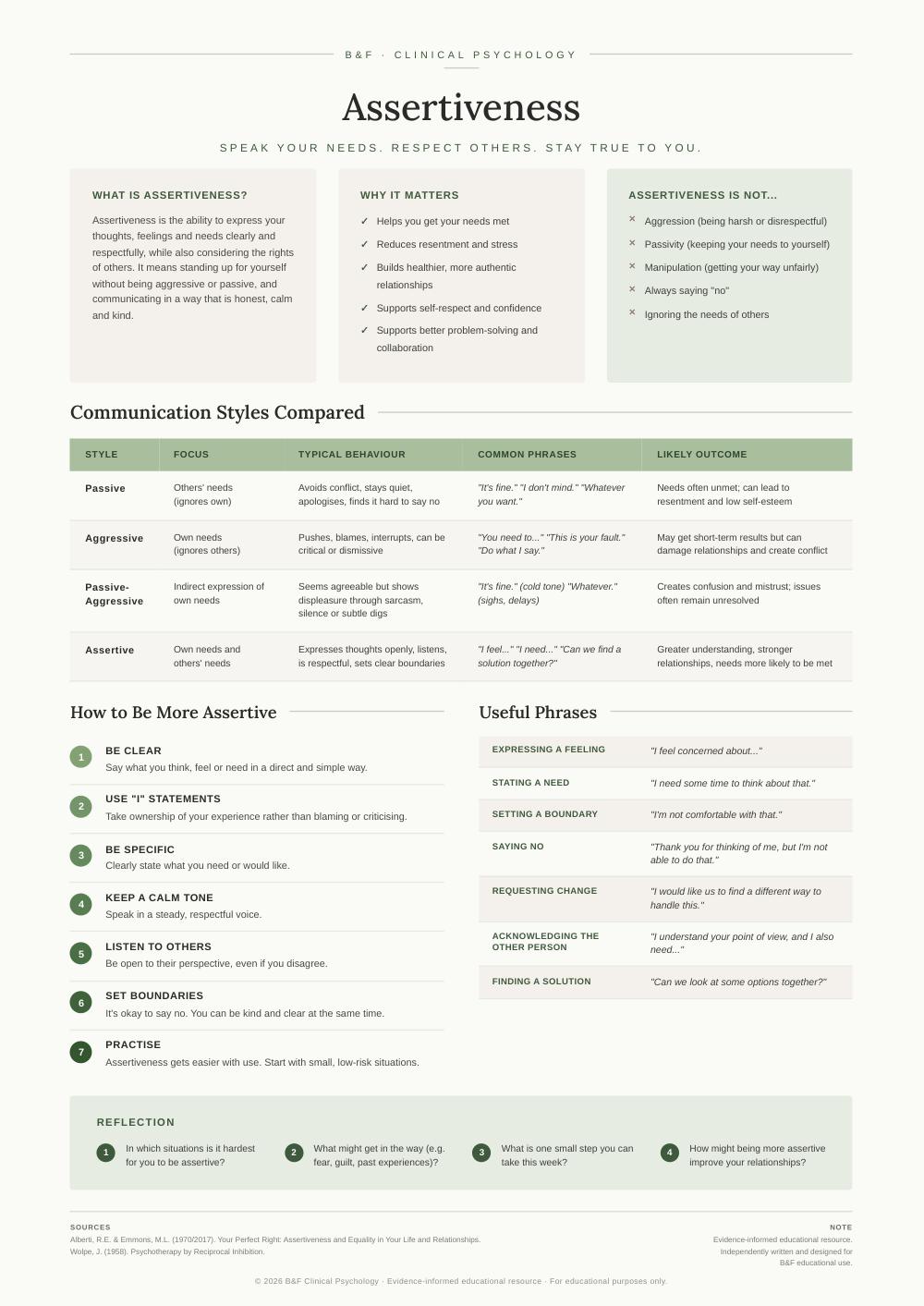
LearnCommunication styles
Passive, aggressive, passive-aggressive and assertive: recognise yours and choose better.
-
 Preview
Reflect
Preview
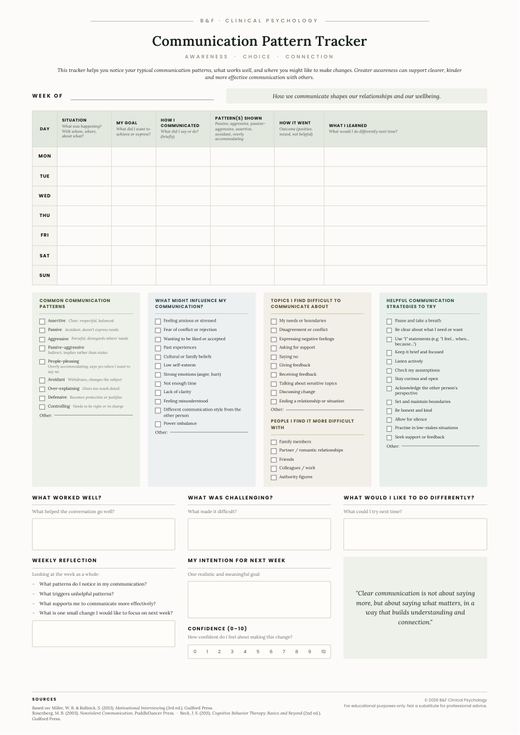
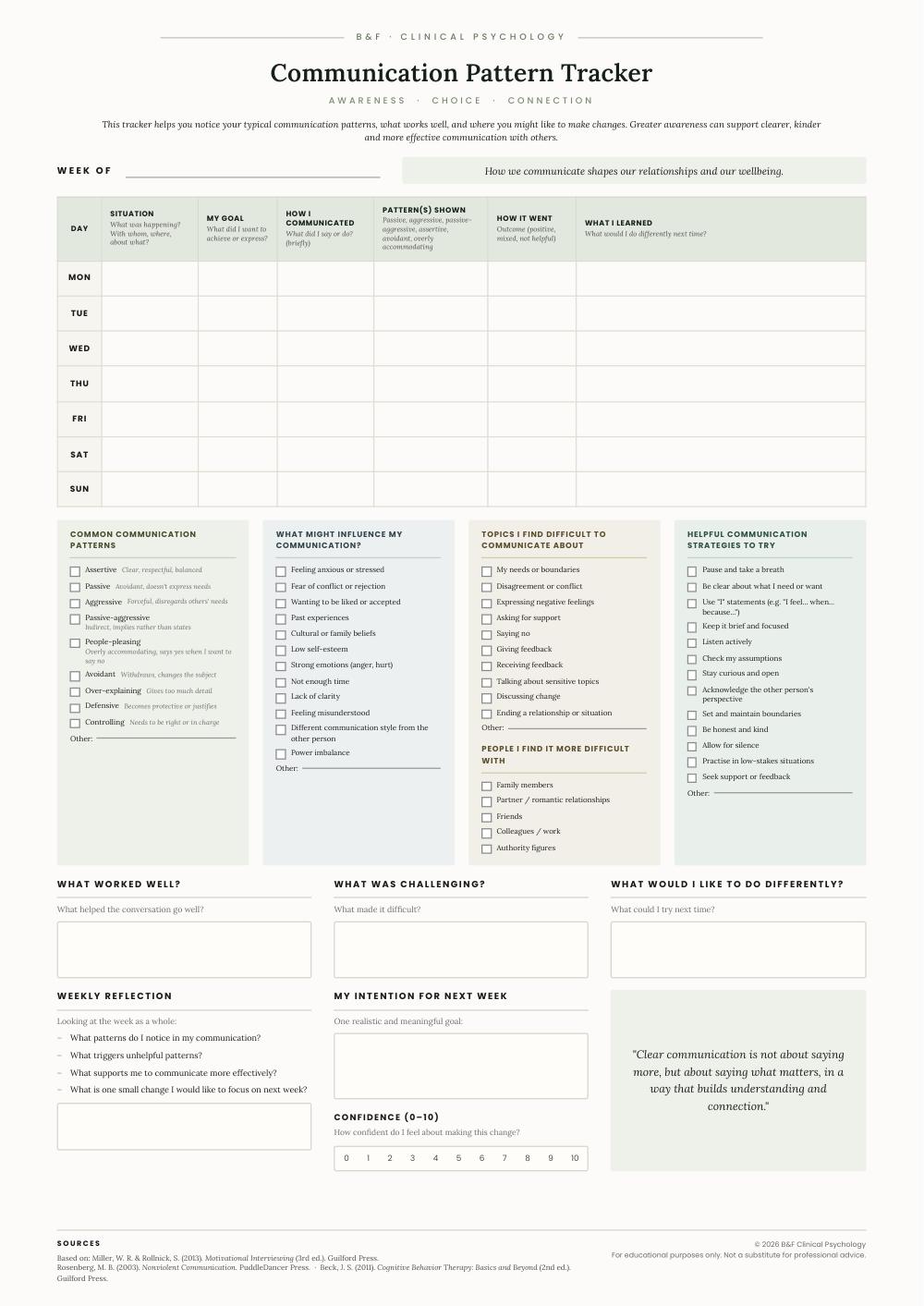
ReflectCommunication pattern tracker
Notice your typical patterns, what works, and where you would like to change.
-
 Preview
Learn
Preview
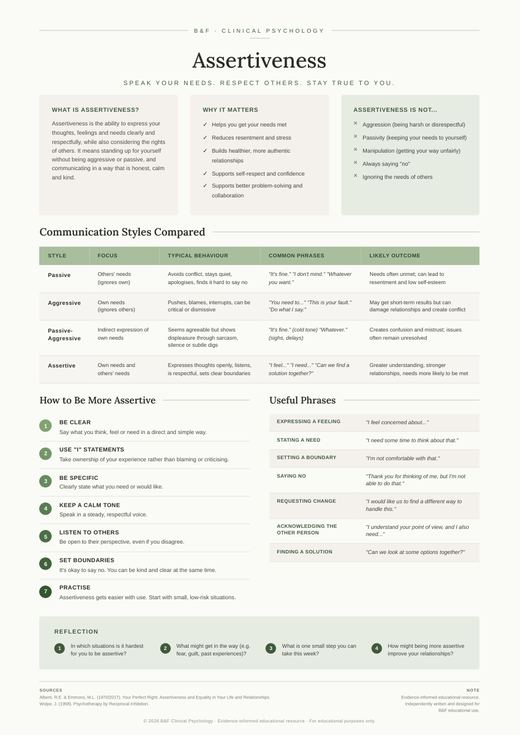
LearnAssertiveness
Speak your needs, respect others, and stay true to yourself. What it is and how it sounds.
-
 Preview
Practice
Preview
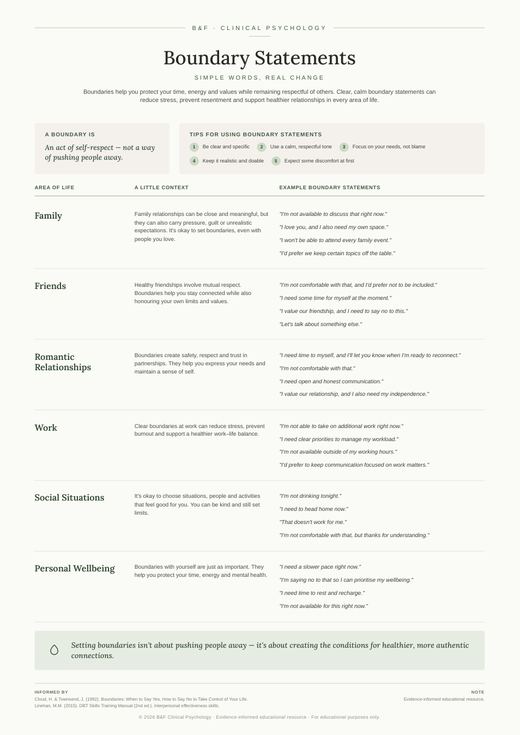
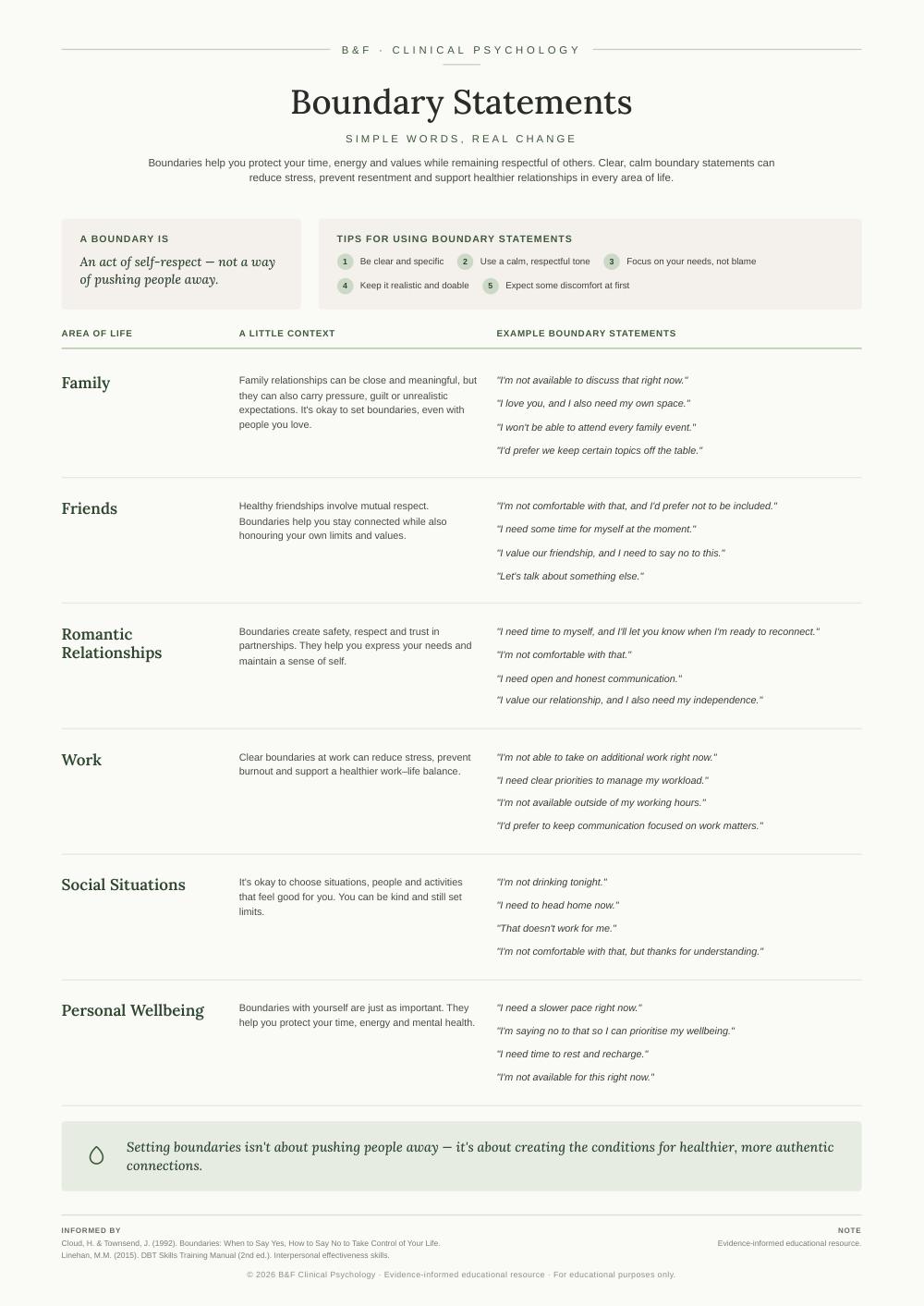
PracticeBoundary statements
Simple, calm words for protecting your time, energy and values.
-
 Preview
Reflect
Preview
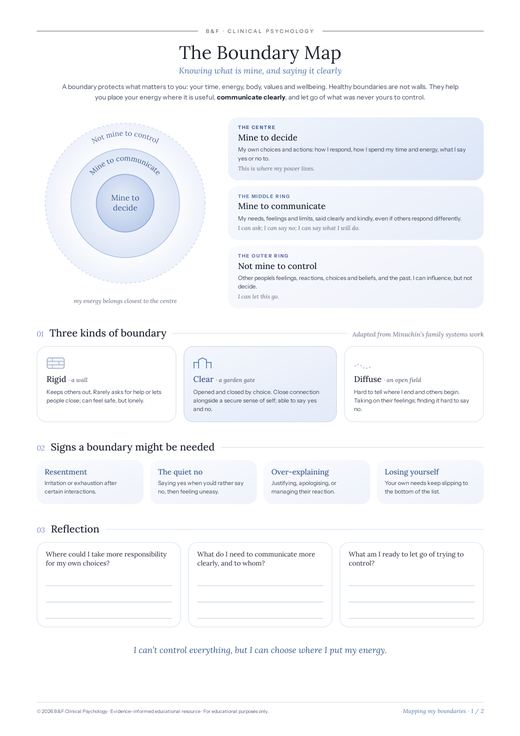
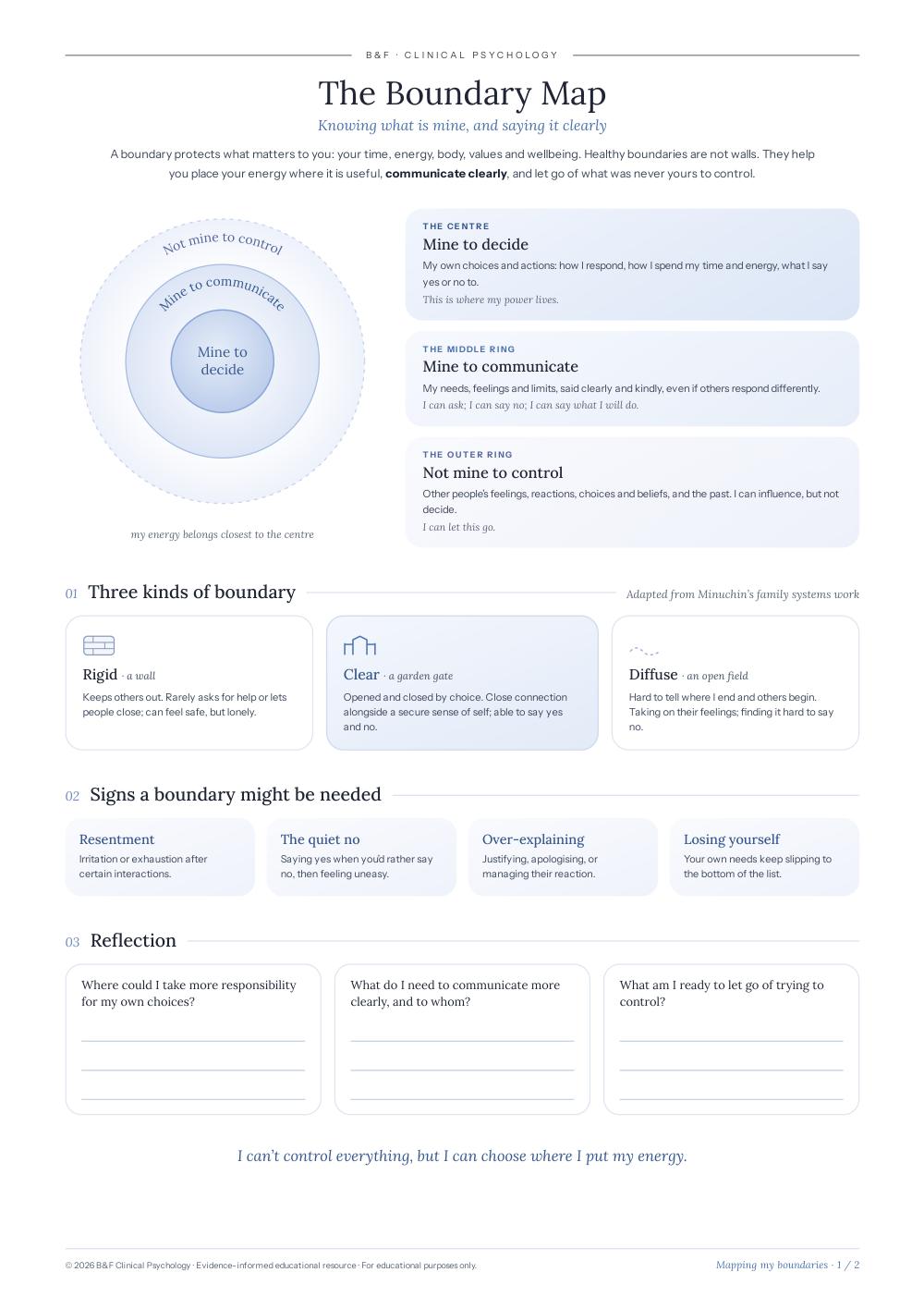
ReflectThe boundary map
Knowing what is yours to decide, what is not, and saying it clearly.
-
 Preview
Reflect
Preview
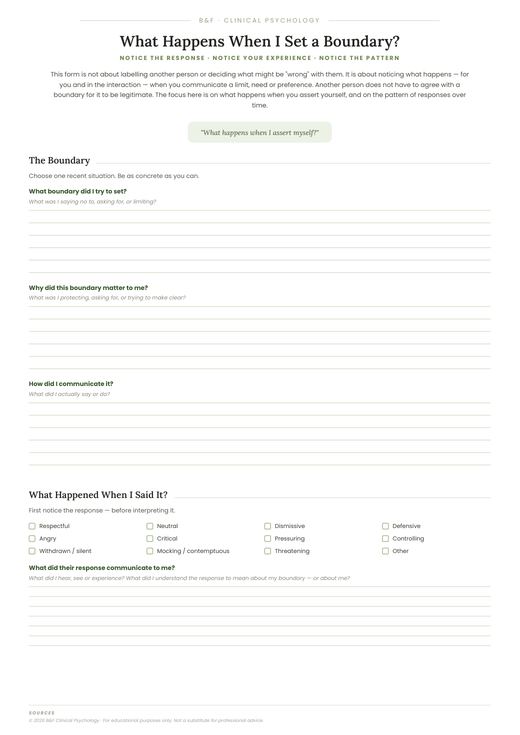
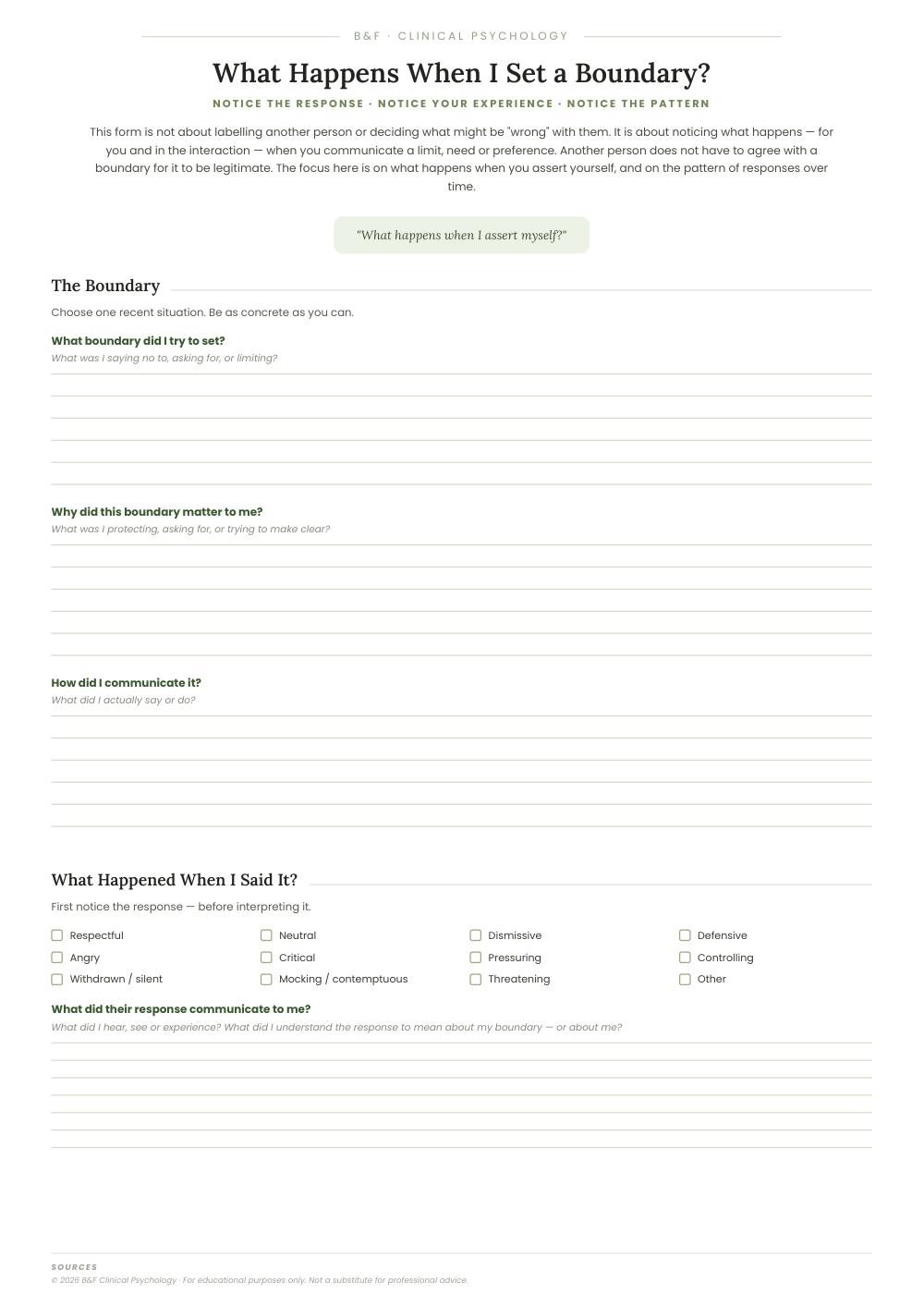
ReflectWhat happens when I set a boundary?
Notice the response, your own experience and the pattern over time when you communicate a limit.
-
 Preview
Learn
Preview
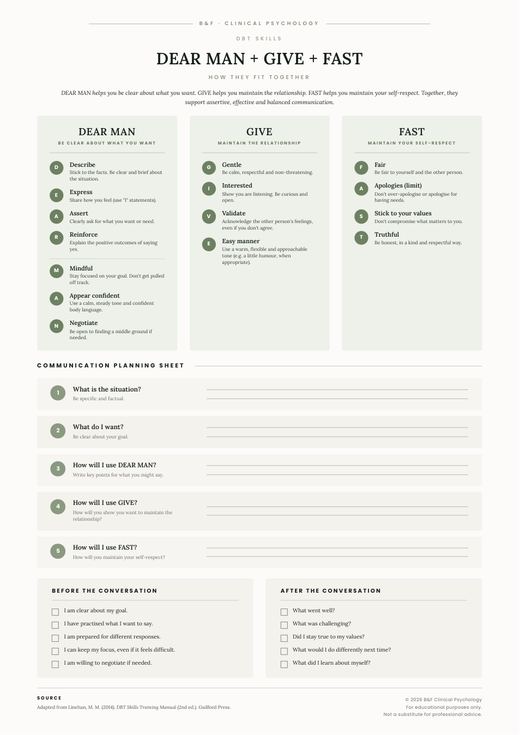
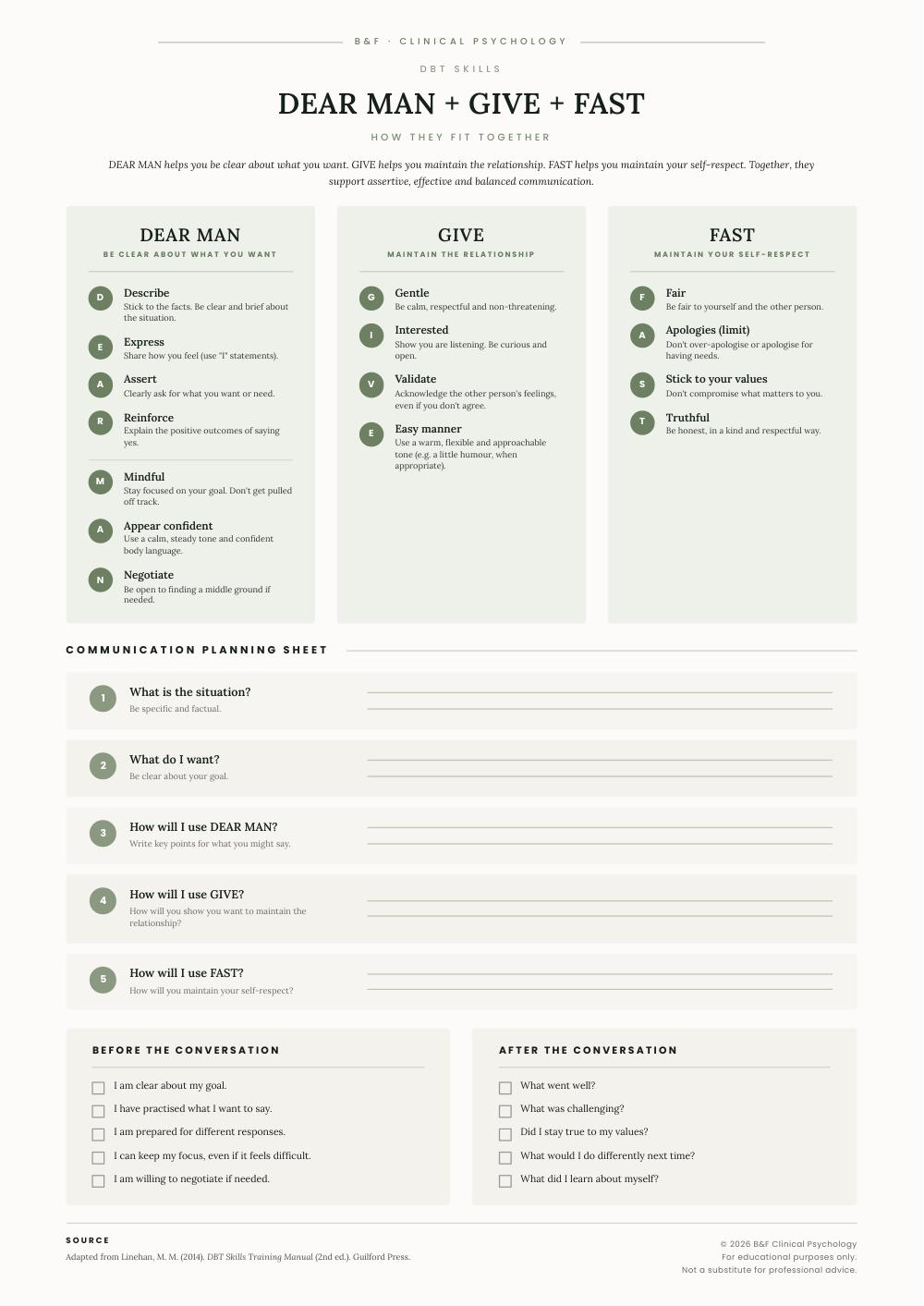
LearnDEAR MAN, GIVE, FAST
Three DBT skills and how they fit: be clear, keep the relationship, keep your self-respect.
-
 Preview
Reflect
Preview
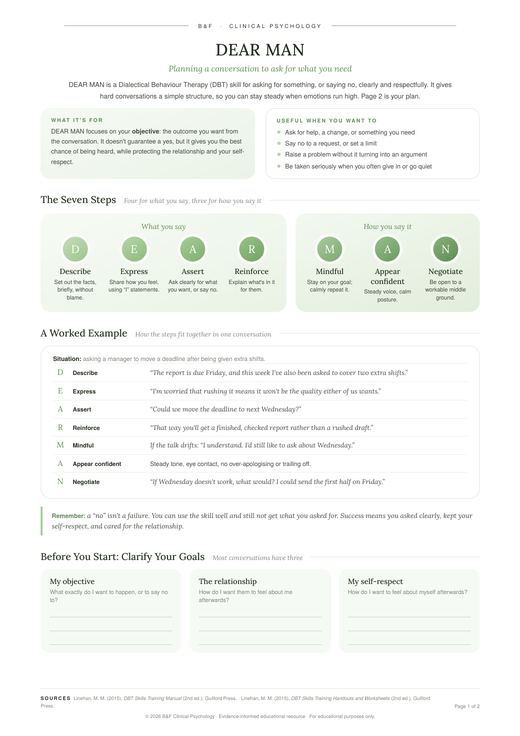
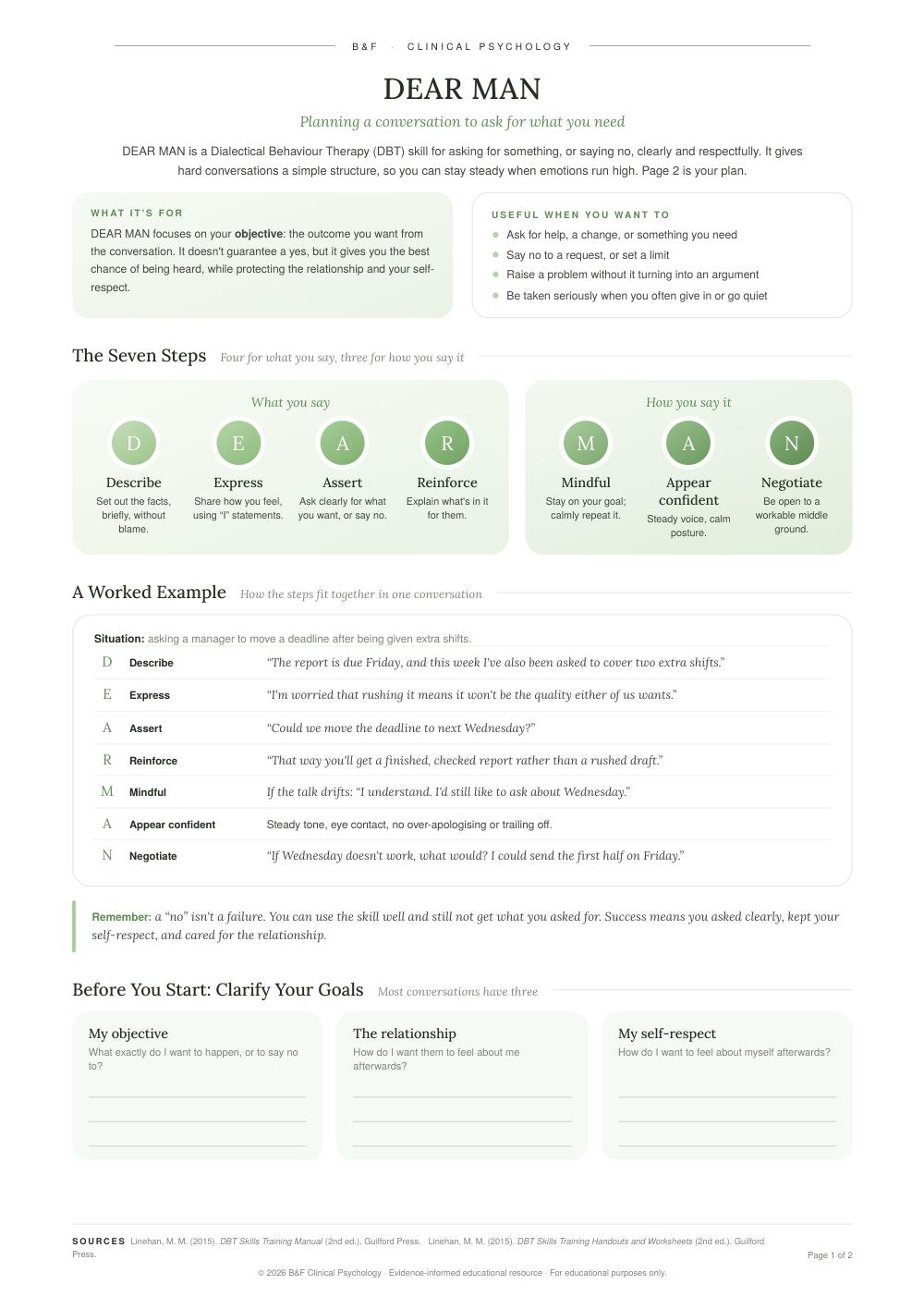
ReflectDEAR MAN planning sheet
The DBT skill for asking for what you need, with a page for planning the conversation.
-
 Preview
Reflect
Preview
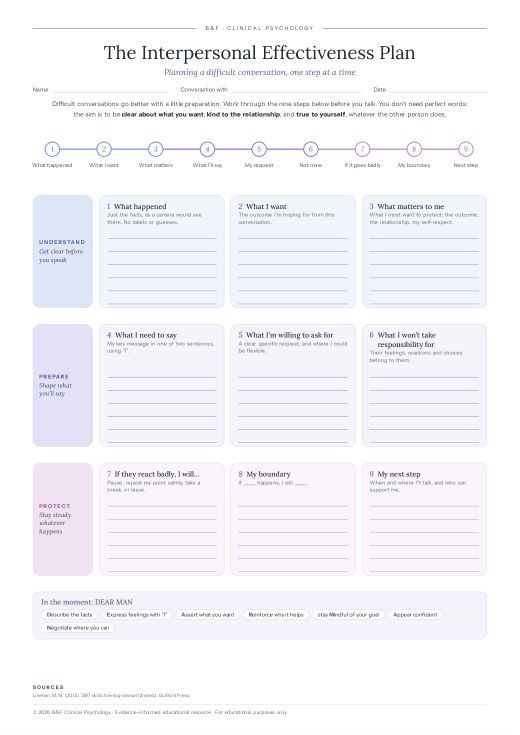
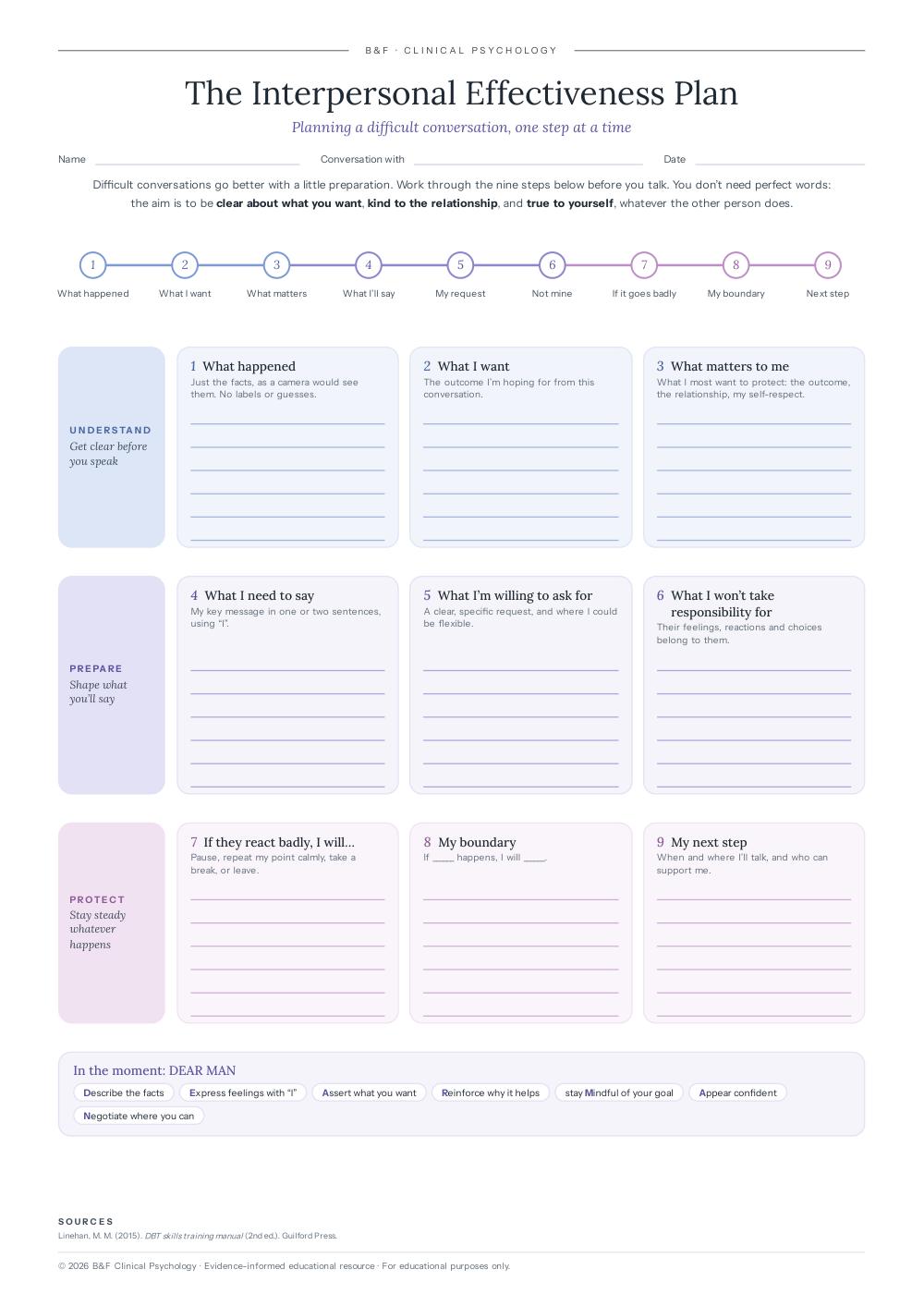
ReflectInterpersonal effectiveness plan
Planning a difficult conversation, one step at a time.
-
 Preview
Learn
Preview
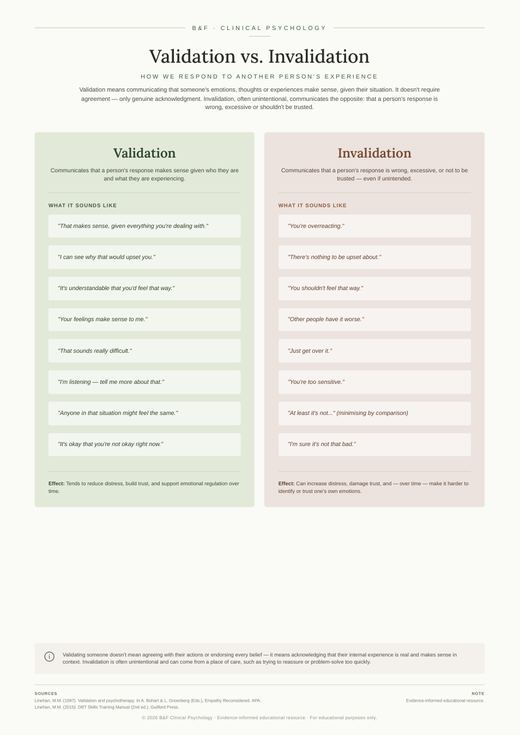
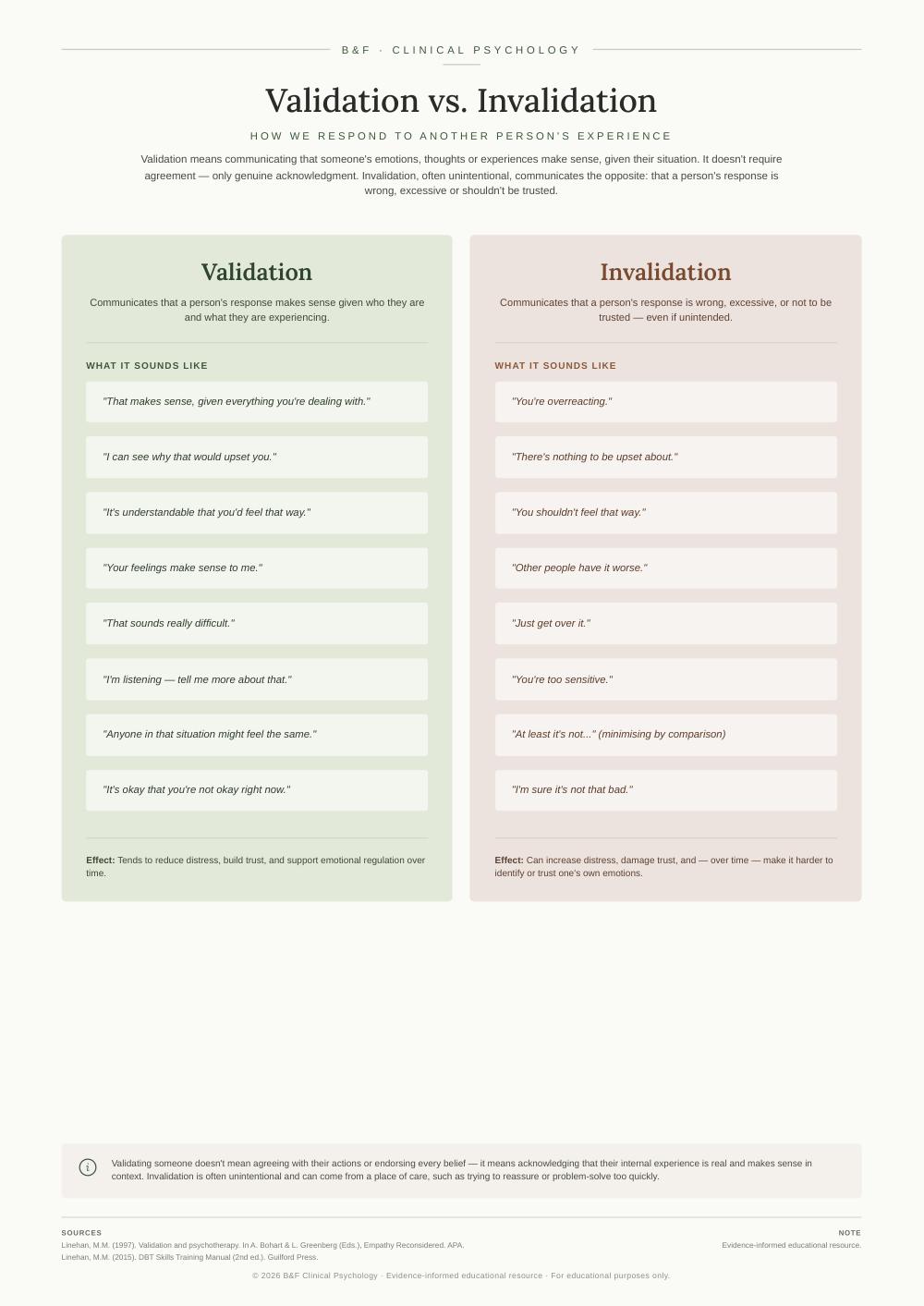
LearnValidation vs invalidation
Communicating that someone's experience makes sense, and what it sounds like when we don't.
-
 Preview
Learn
Preview
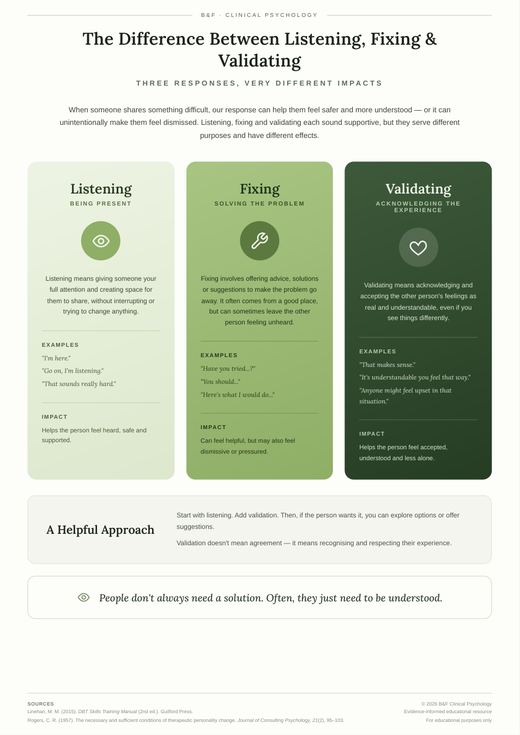
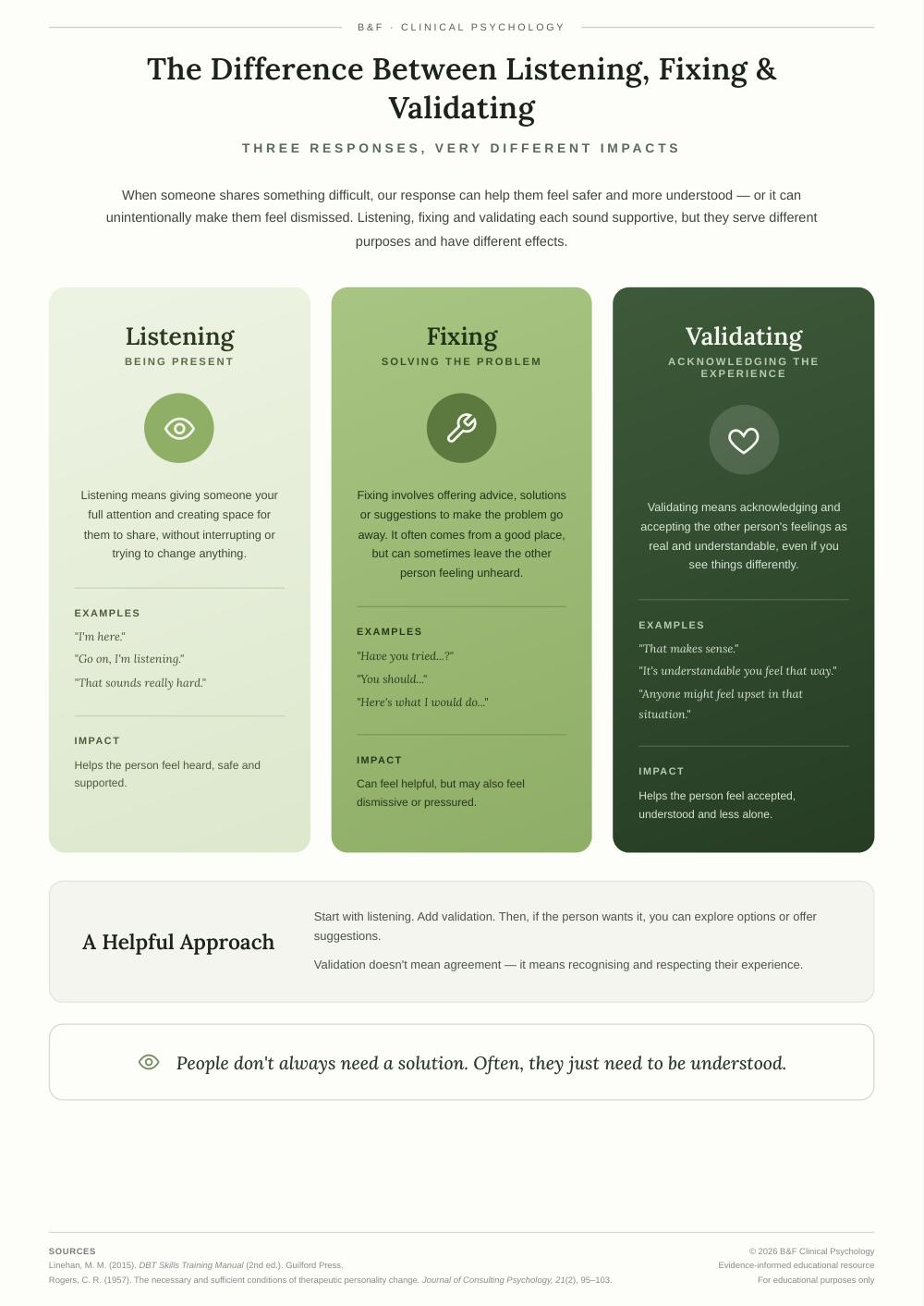
LearnListening, fixing and validating
Three responses to someone in difficulty, with very different effects.
-
 Preview
Learn
Preview
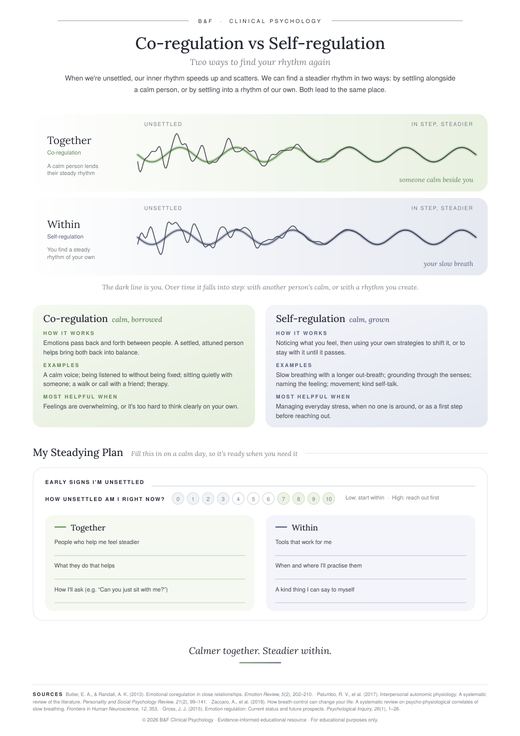
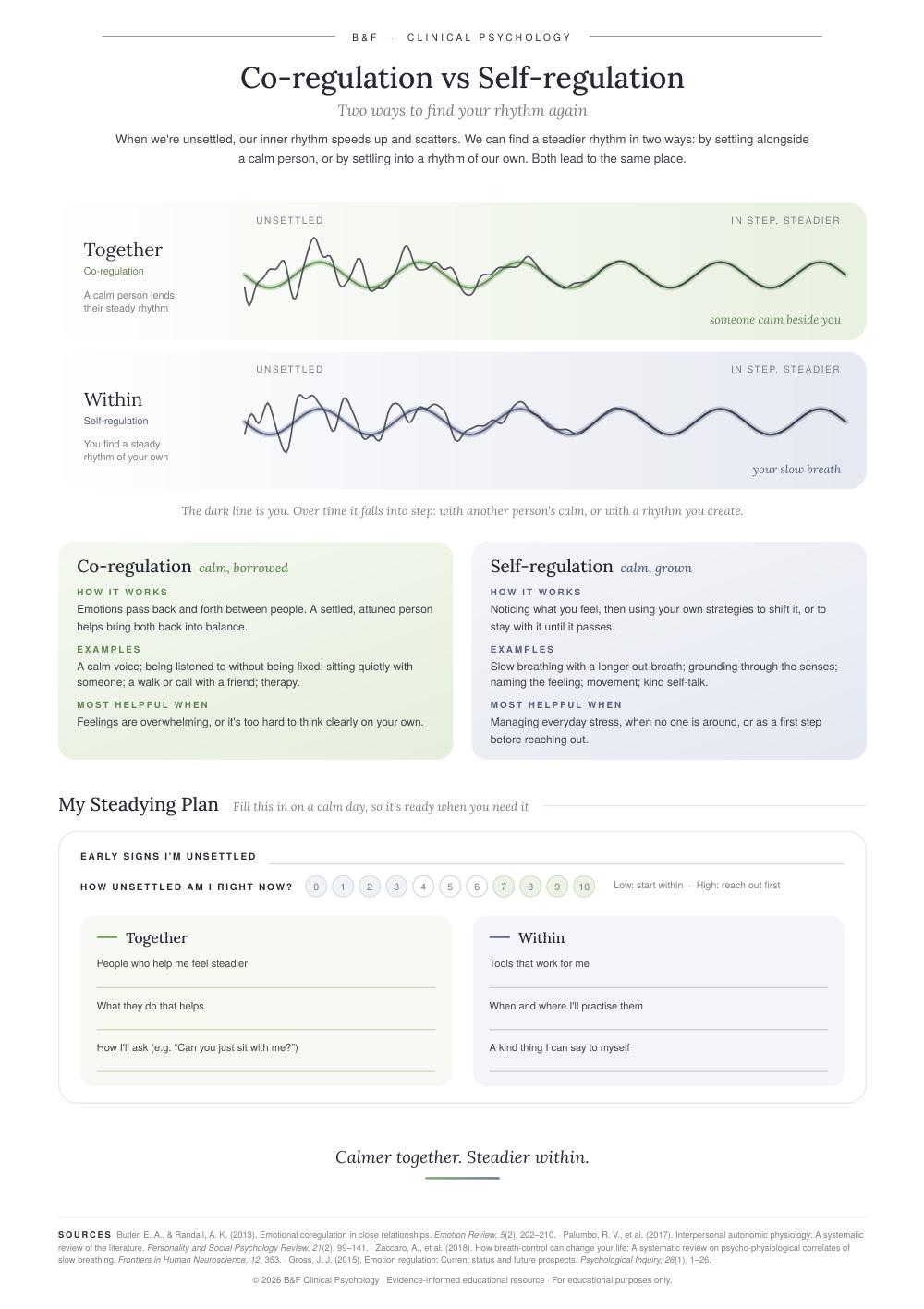
LearnCo-regulation vs self-regulation
Calming with someone else's help and calming on your own: two paths, one goal.
-
 Preview
Learn
Preview
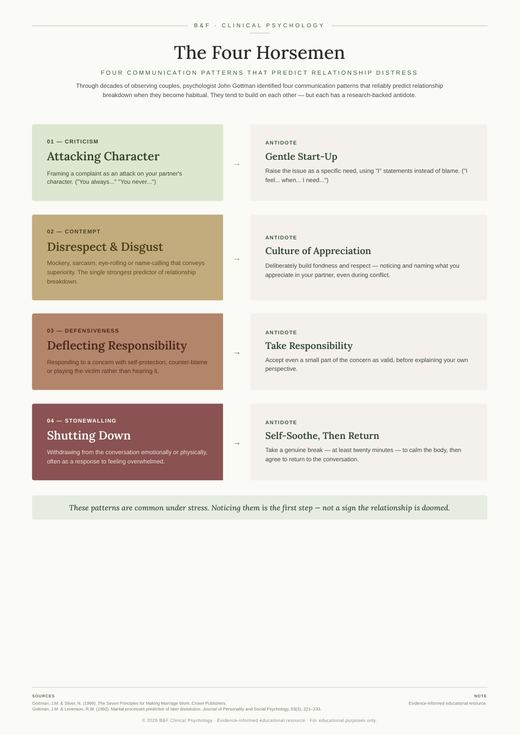
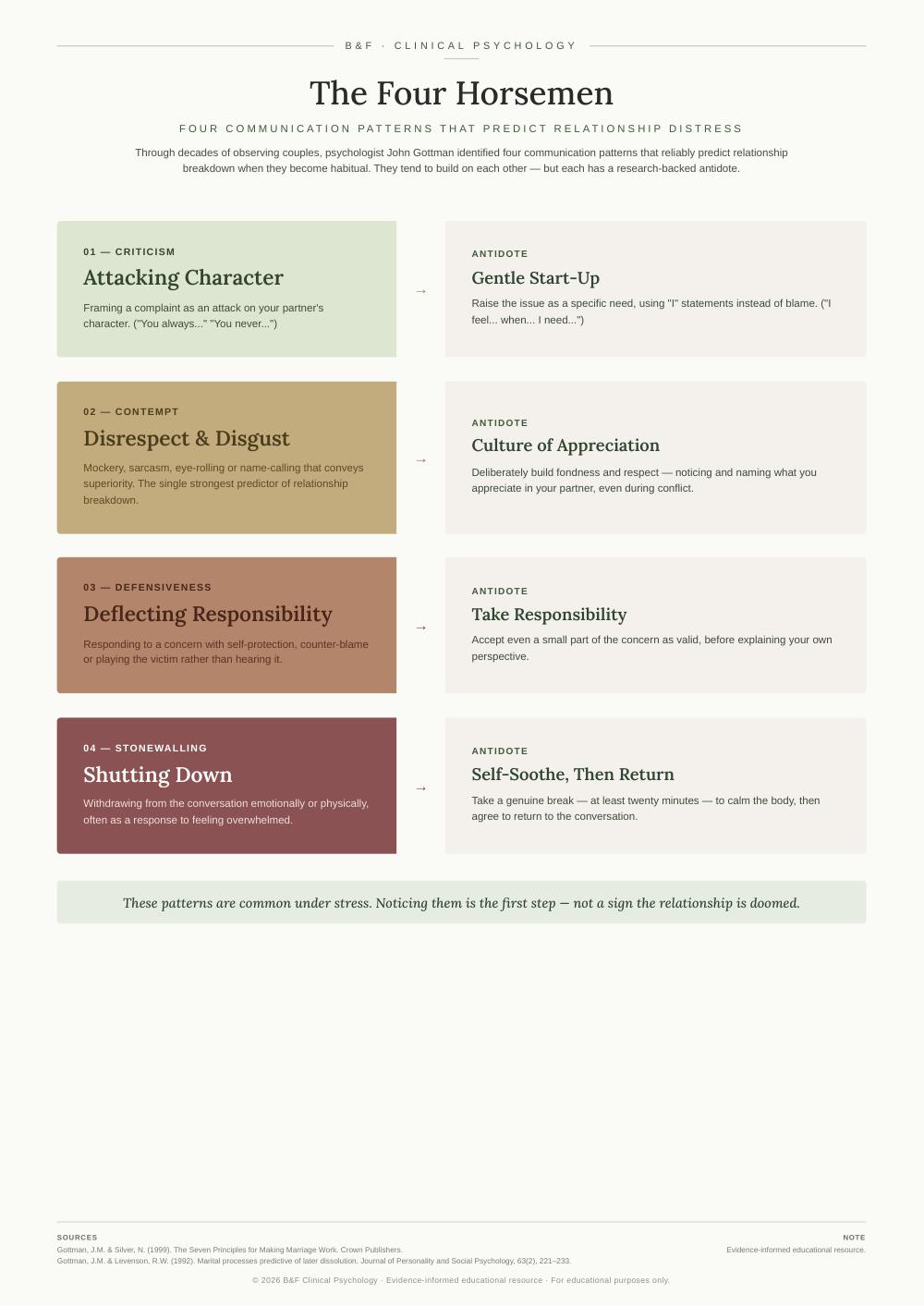
LearnThe four horsemen
Gottman's four communication patterns that predict relationship distress.
-
 Preview
Learn
Preview
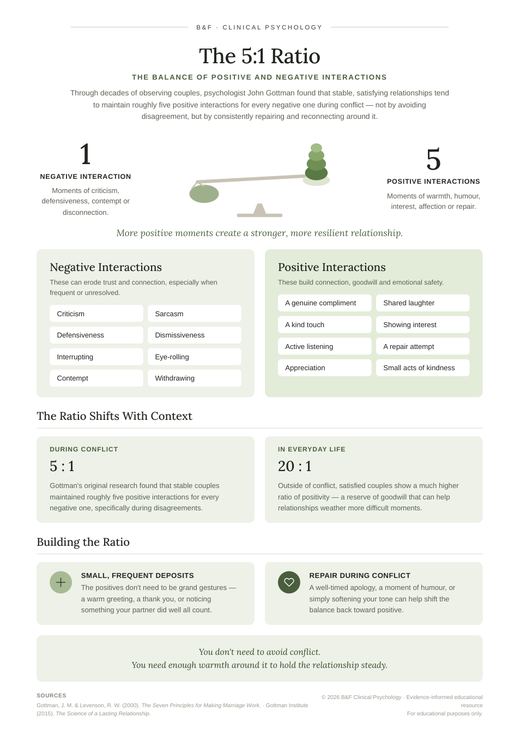
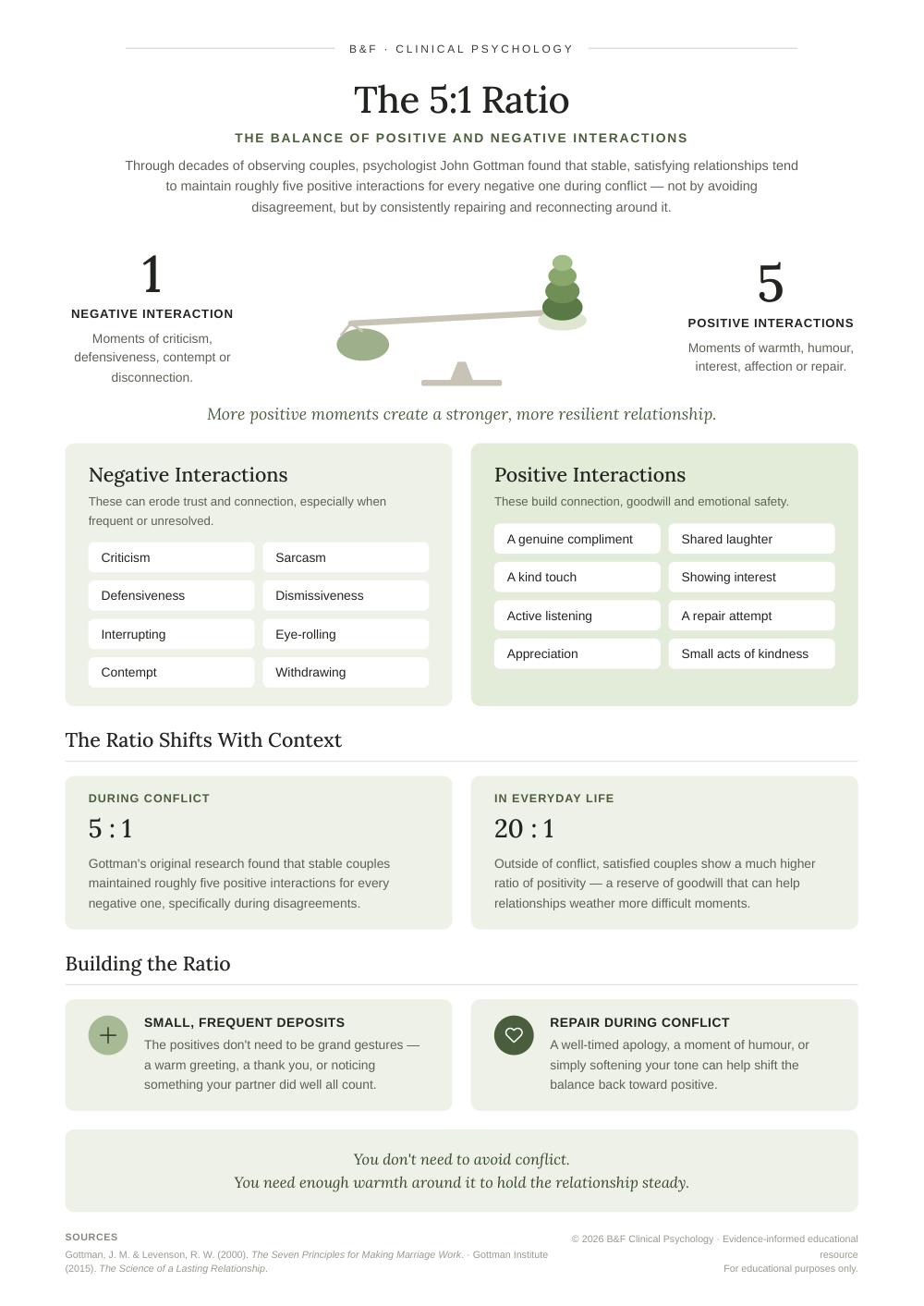
LearnThe 5:1 ratio
Stable relationships keep about five positive interactions for every negative one.
-
 Preview
Learn
Preview
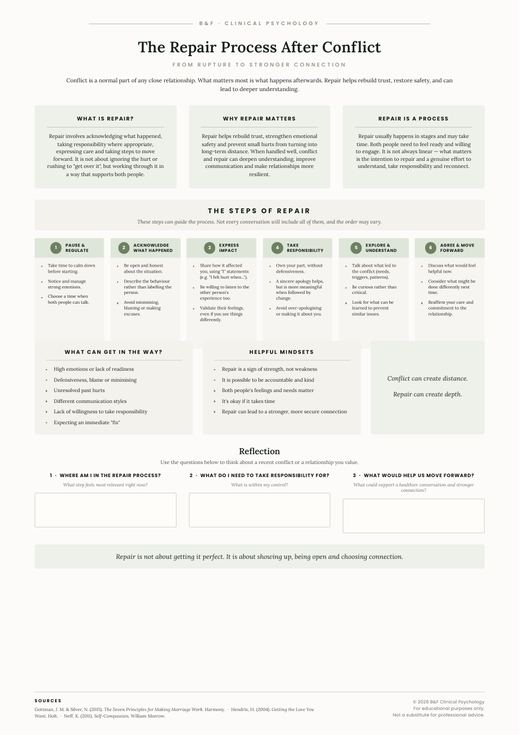
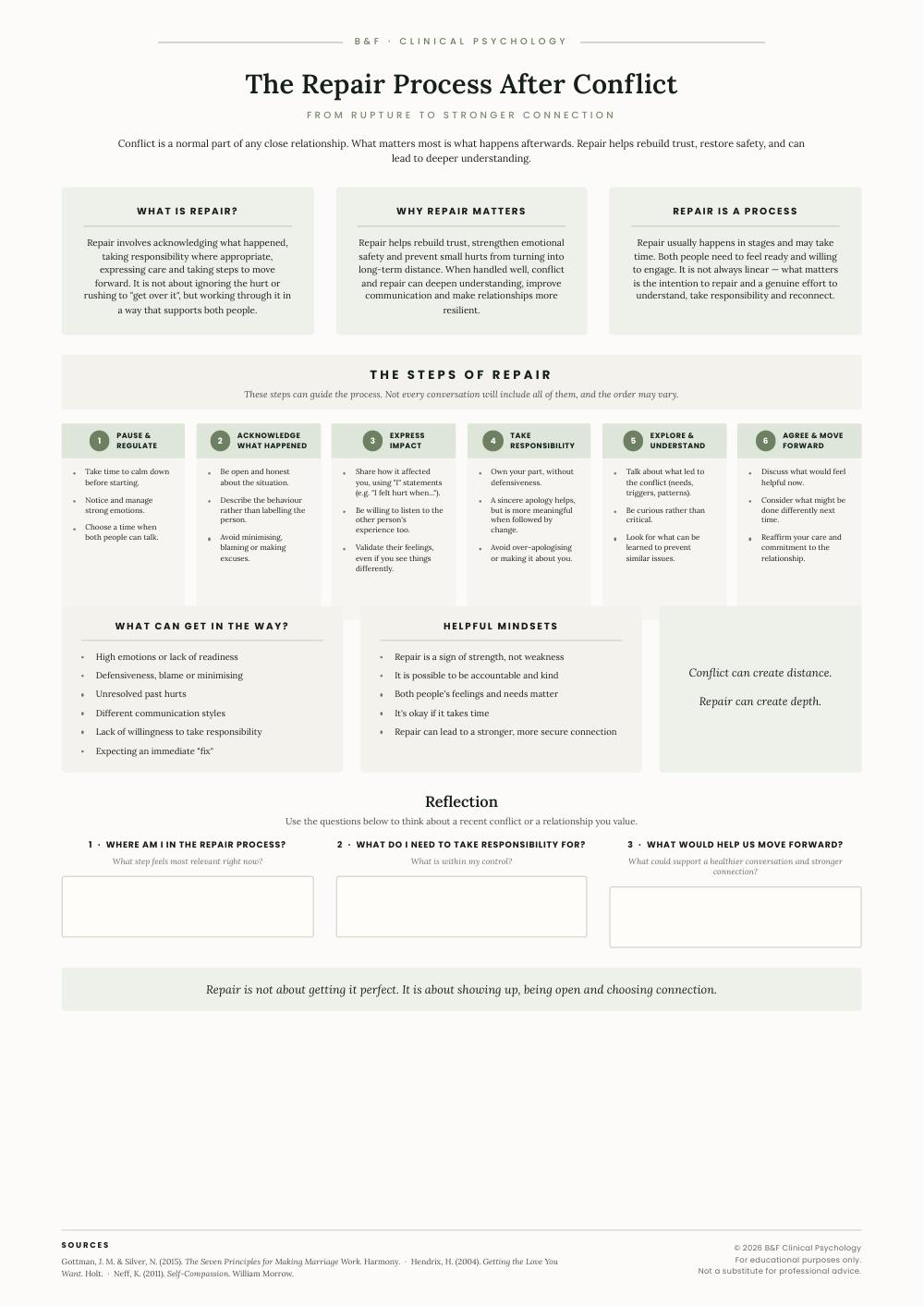
LearnThe repair process after conflict
Conflict is normal. What happens afterwards is what matters.
-
 Preview
Reflect
Preview
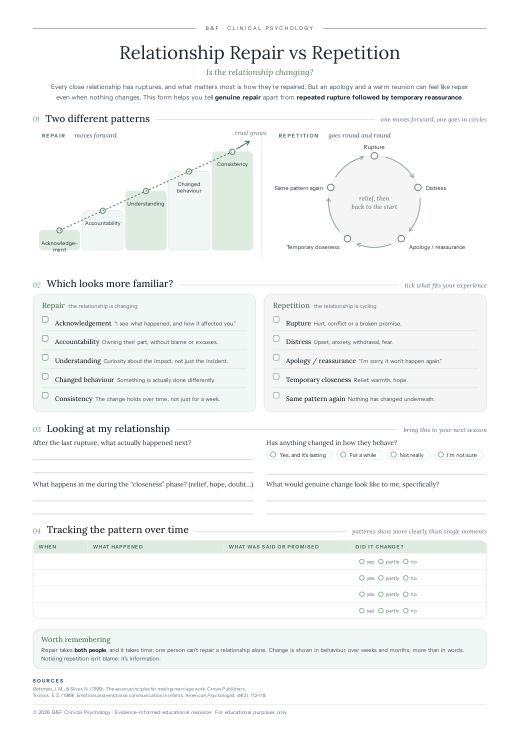
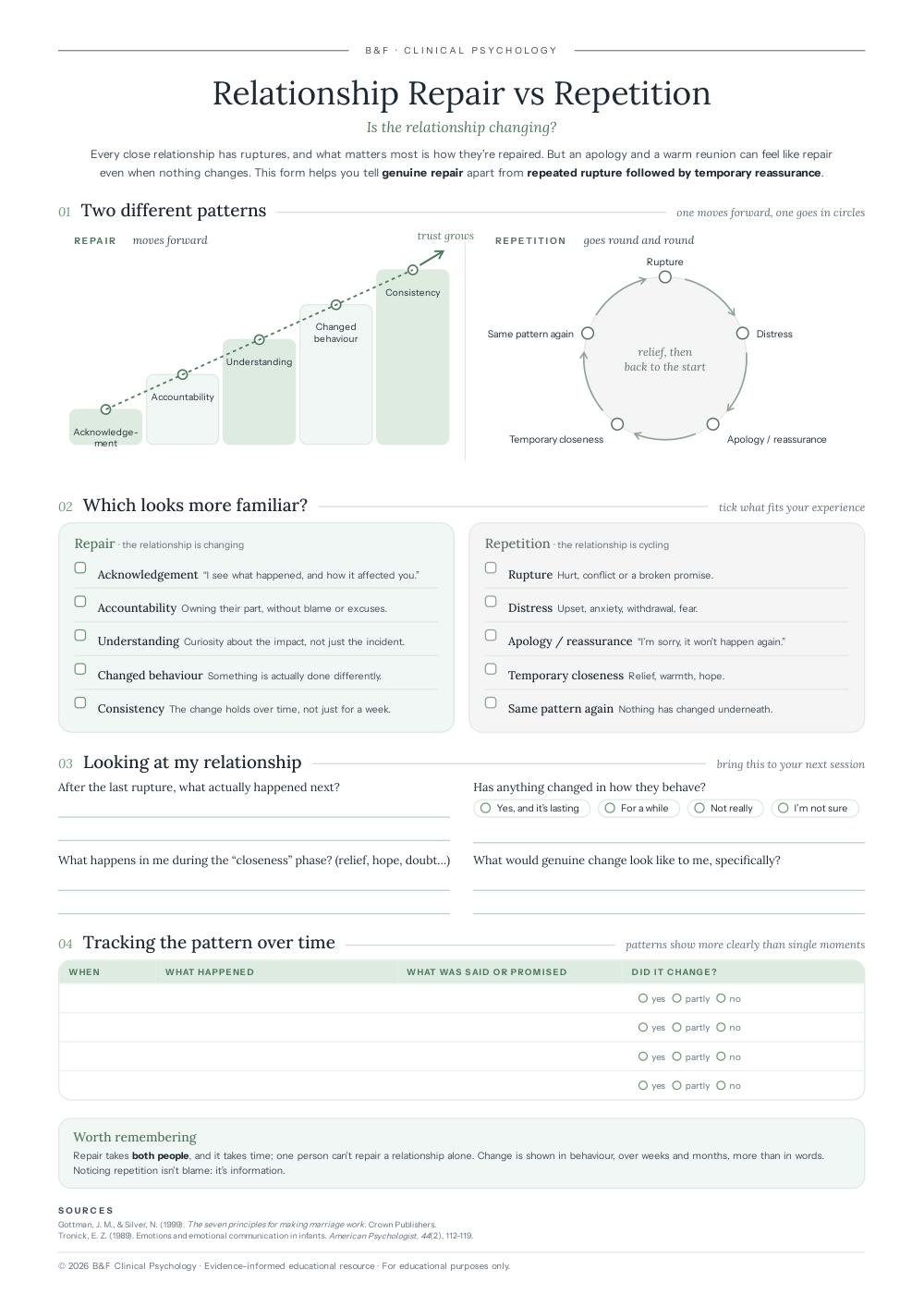
ReflectRelationship repair vs repetition
Is the relationship changing? Telling genuine repair apart from the same cycle again.
-
 Preview
Reflect
Preview
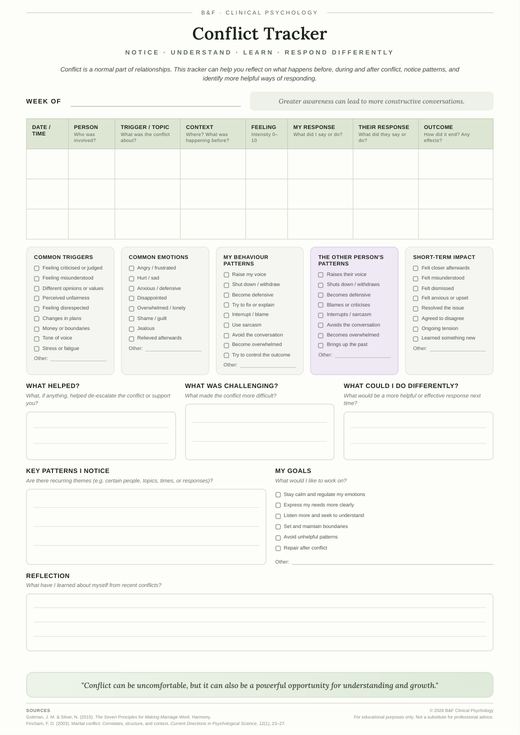
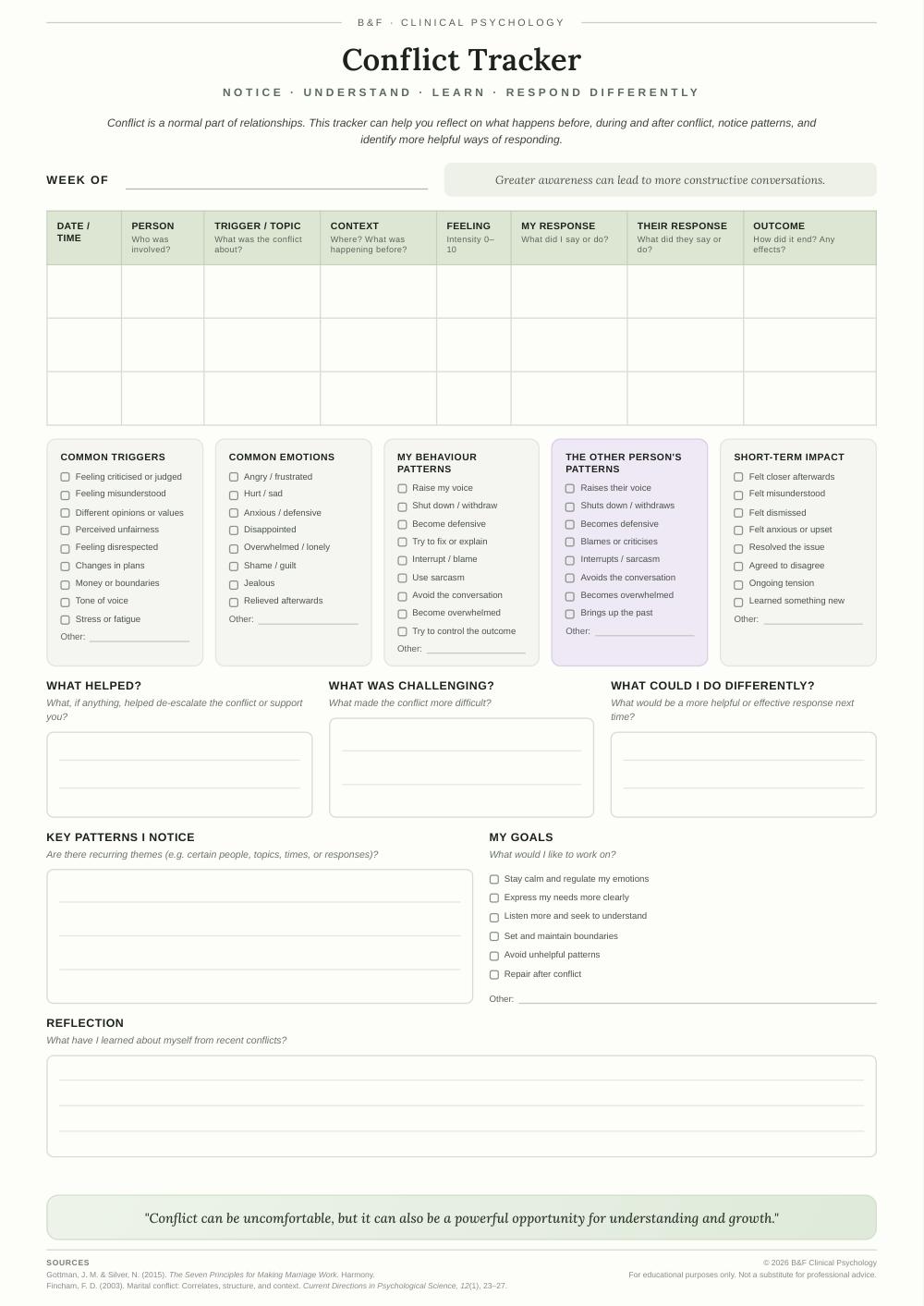
ReflectConflict tracker
Reflect on what happens before, during and after conflict, and find more helpful ways to respond.
-
 Preview
Learn
Preview
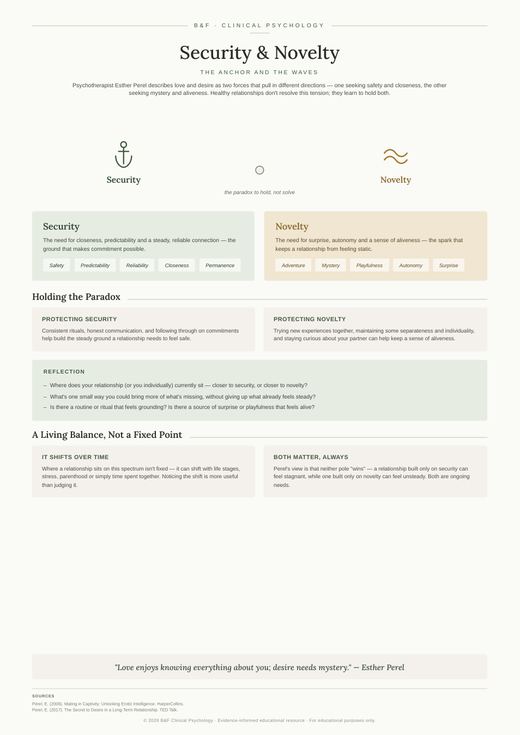
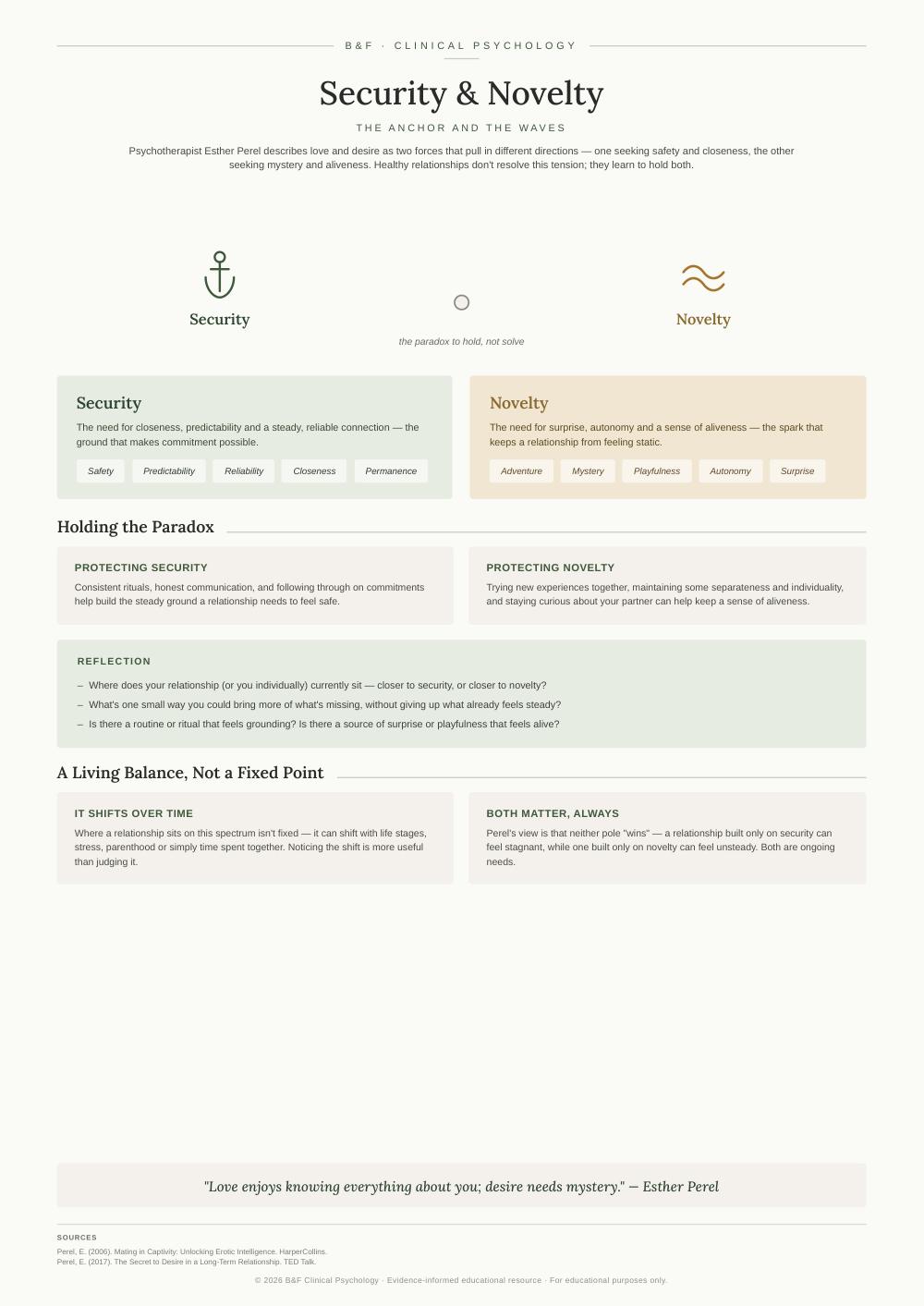
LearnSecurity and novelty
Esther Perel on love and desire: the anchor and the waves.
-
 Preview
Learn
Preview
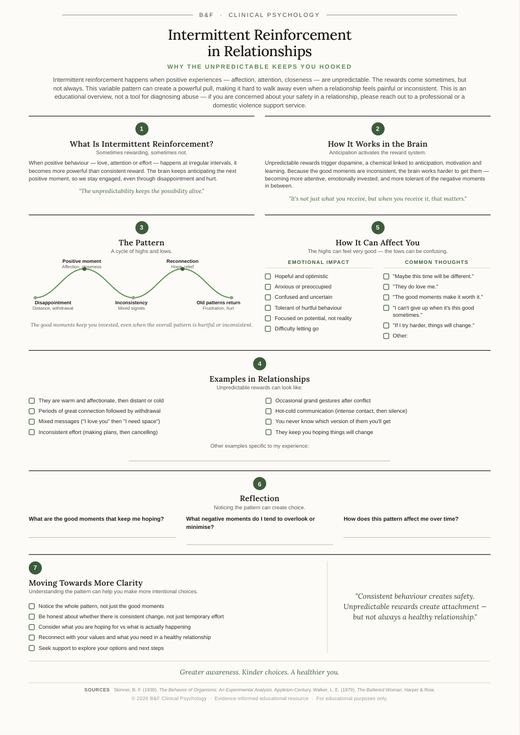
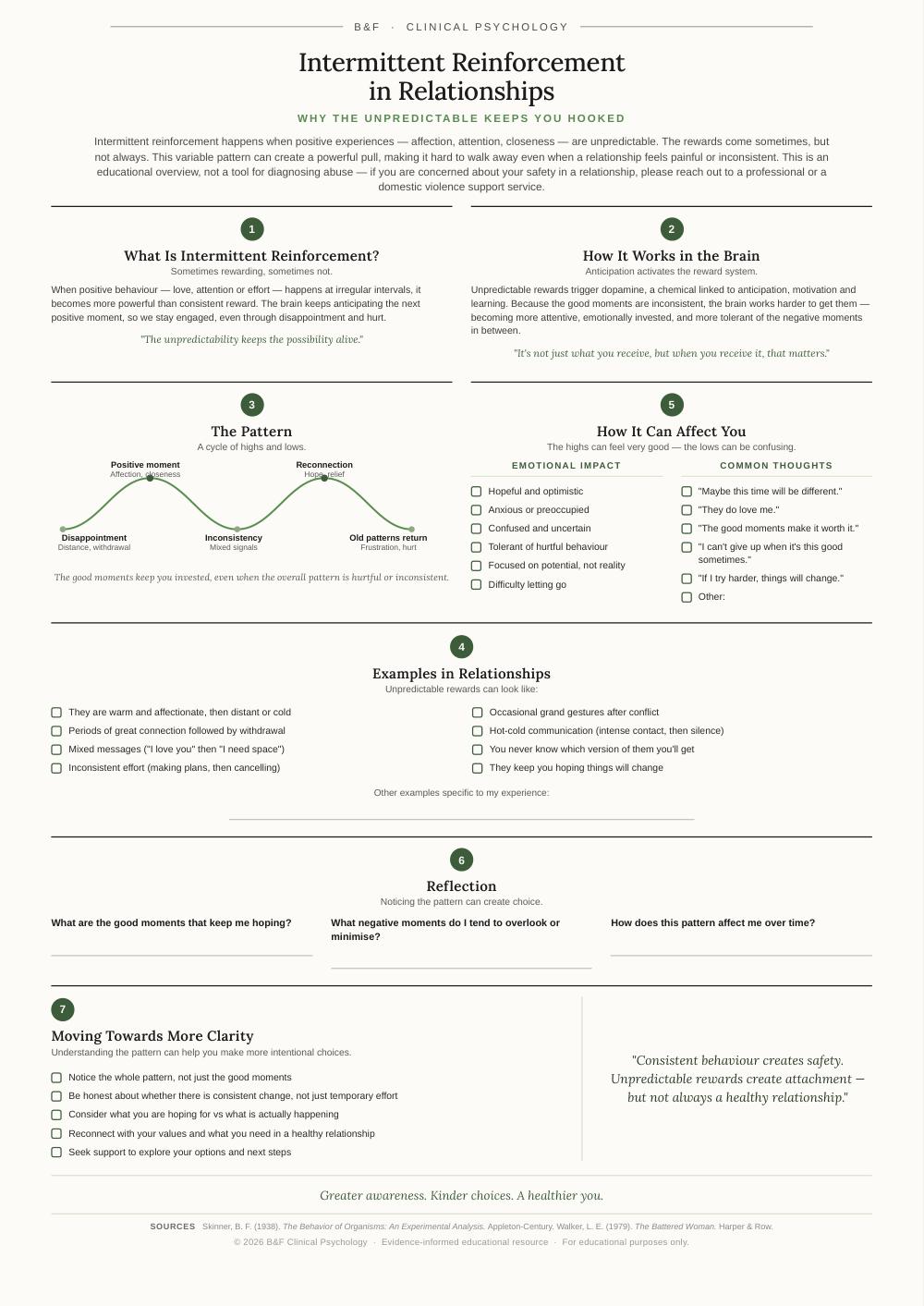
LearnIntermittent reinforcement in relationships
Why unpredictable affection keeps you hooked harder than steady affection does.
-
 Preview
Learn
Preview
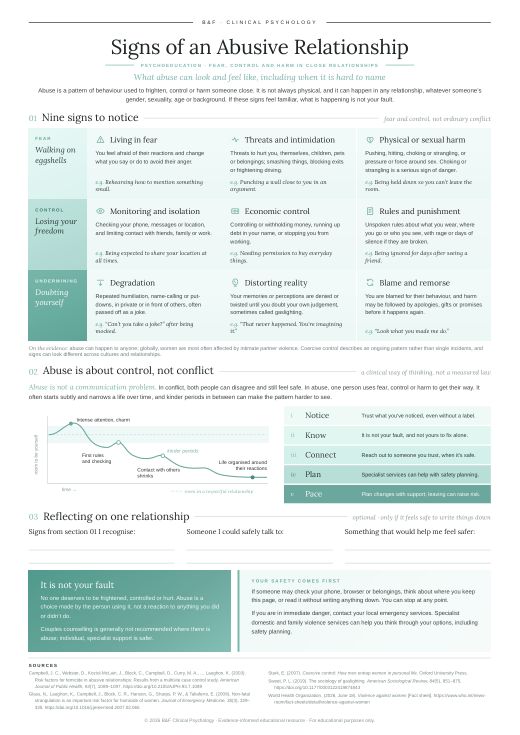
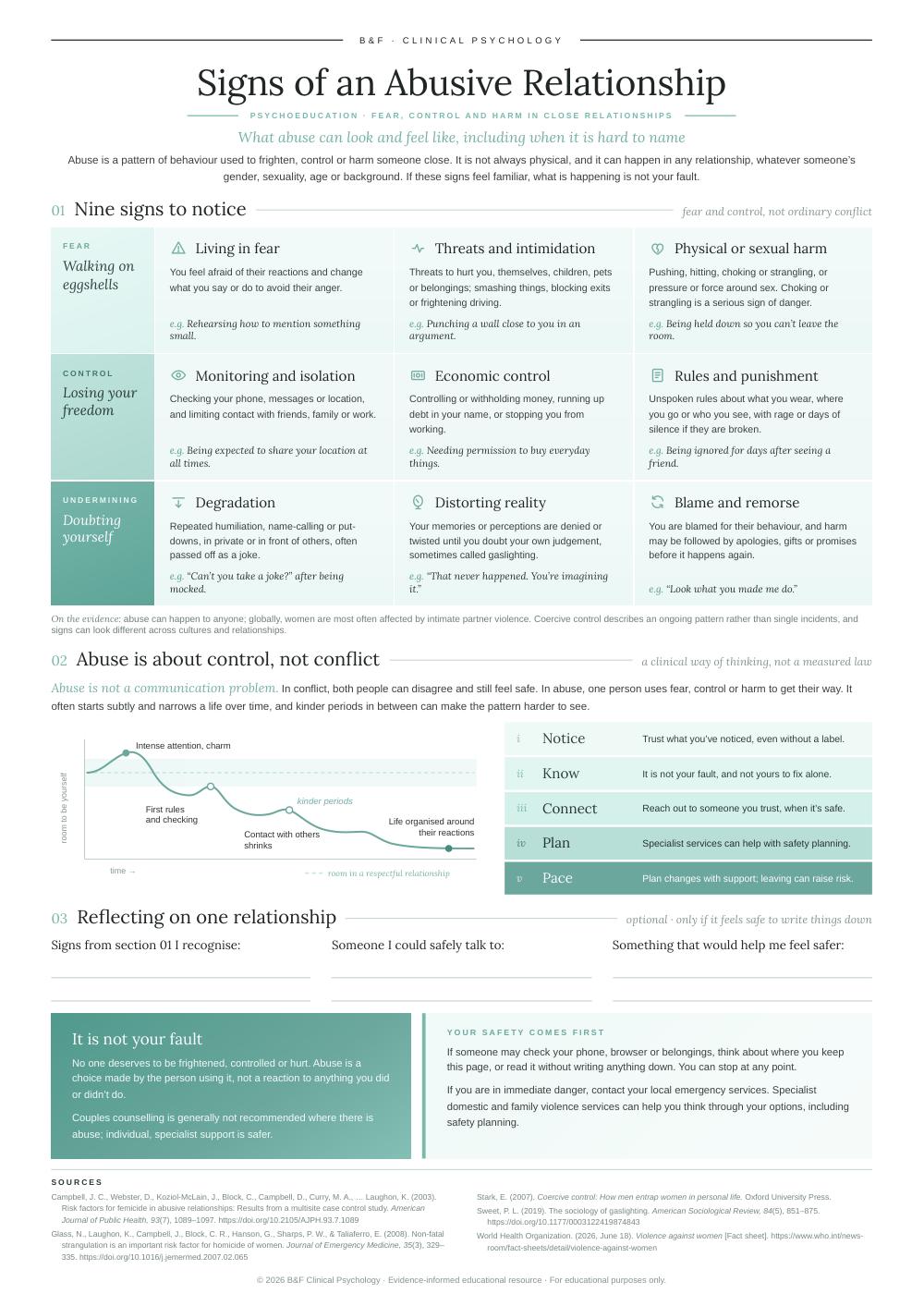
LearnSigns of an abusive relationship
What abuse can look and feel like, including when it is hard to name.
-
 Preview
Reflect
Preview
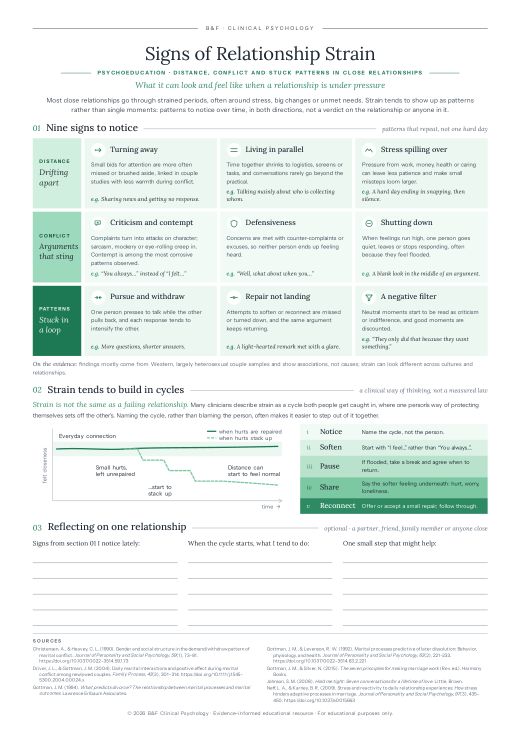
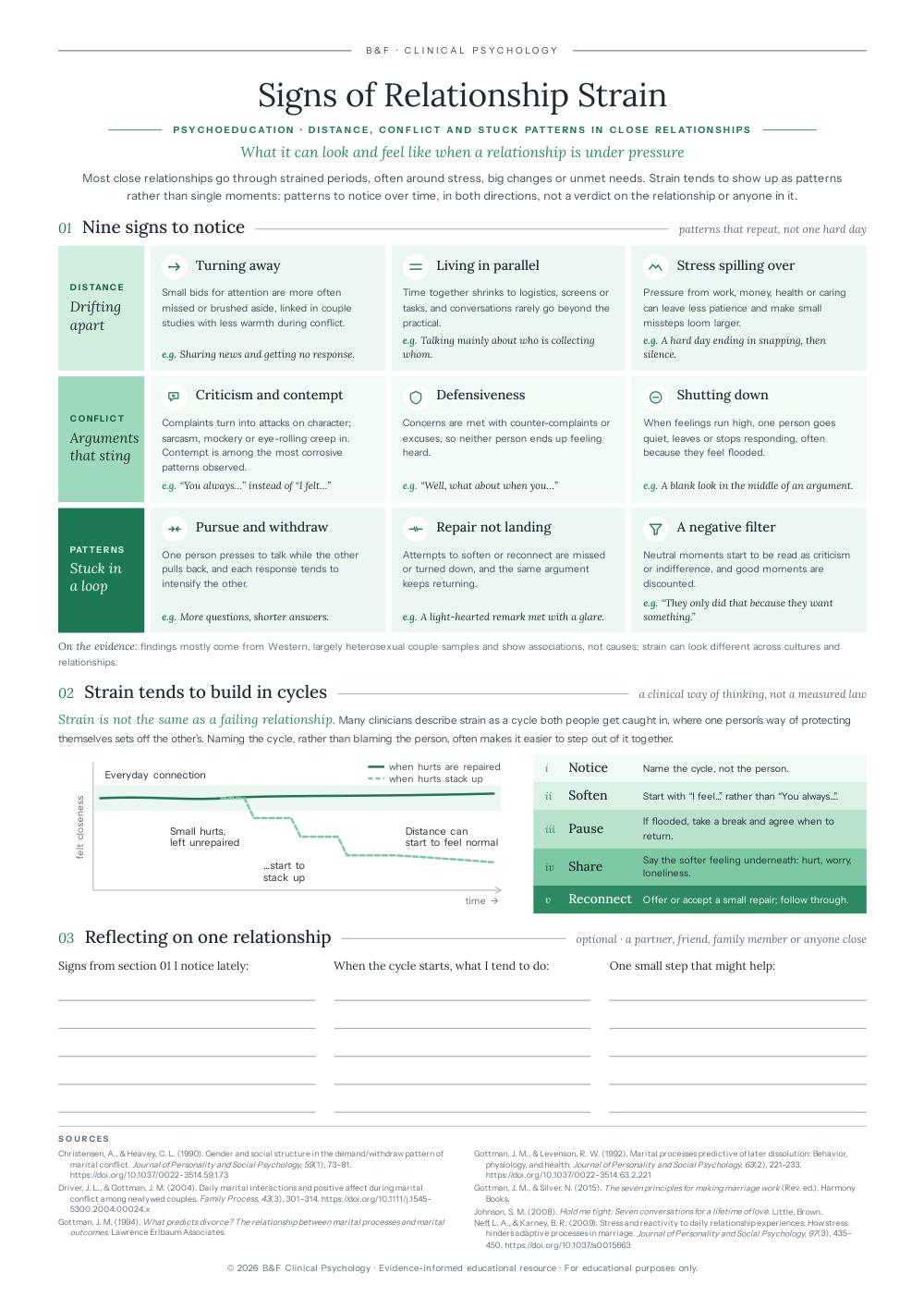
ReflectSigns of relationship strain
What it can look and feel like when a relationship is under pressure.
-
 Preview
Reflect
Preview
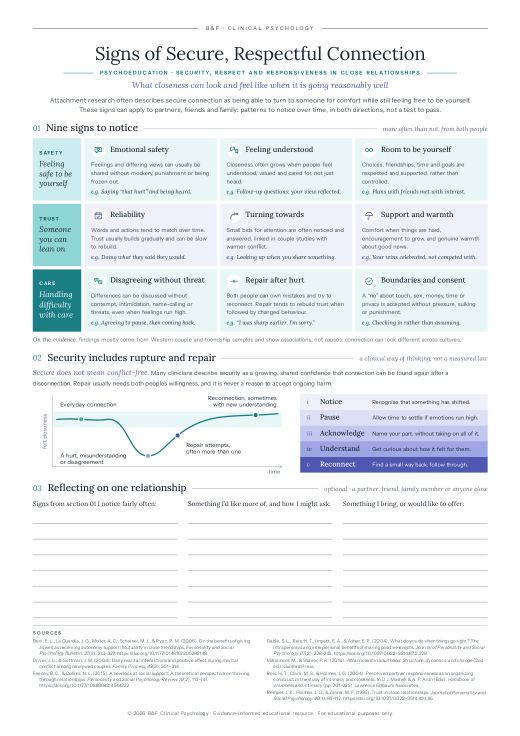
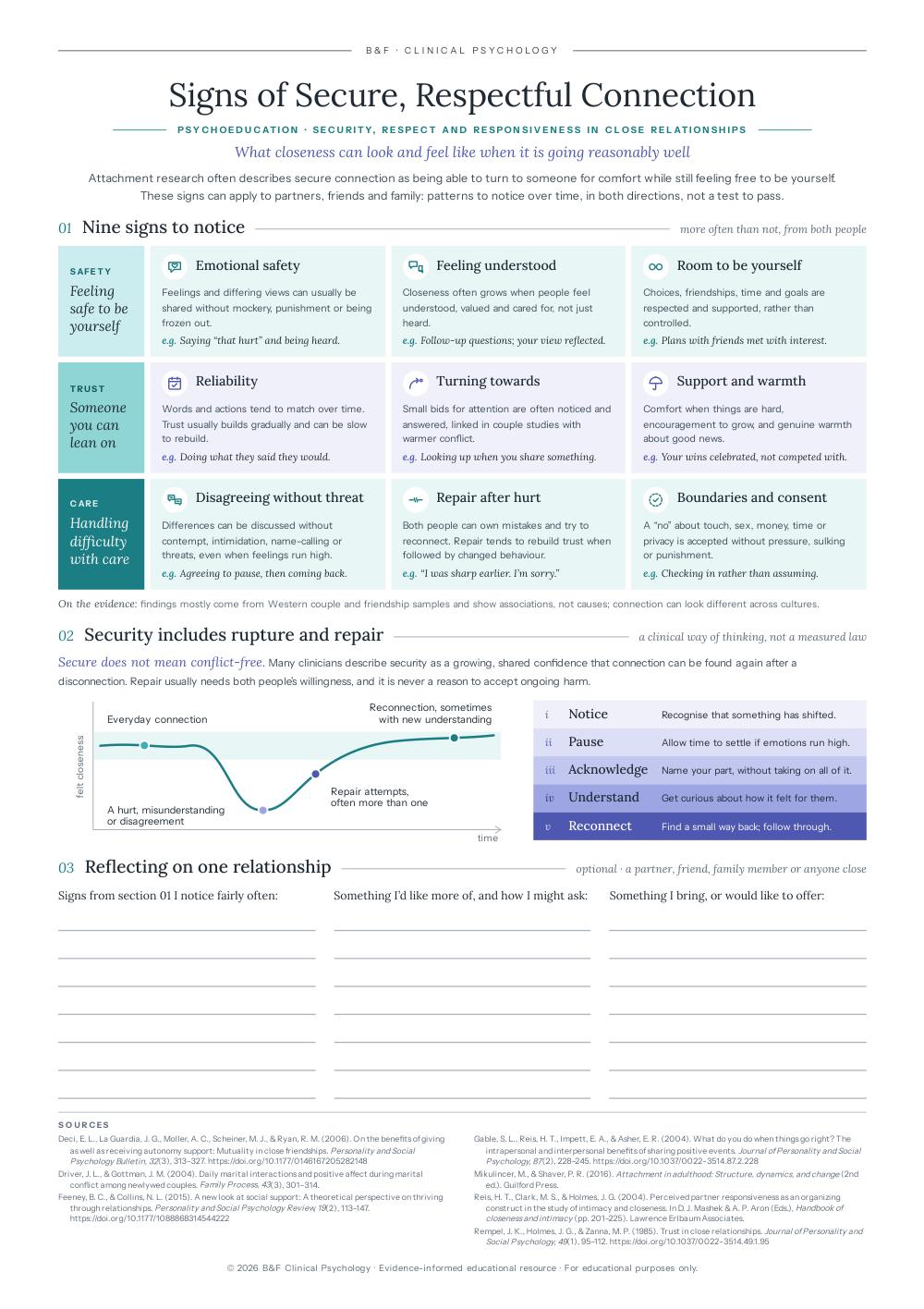
ReflectSigns of secure, respectful connection
What safety, trust and closeness often look and feel like over time.
-
 Preview
Learn
Preview
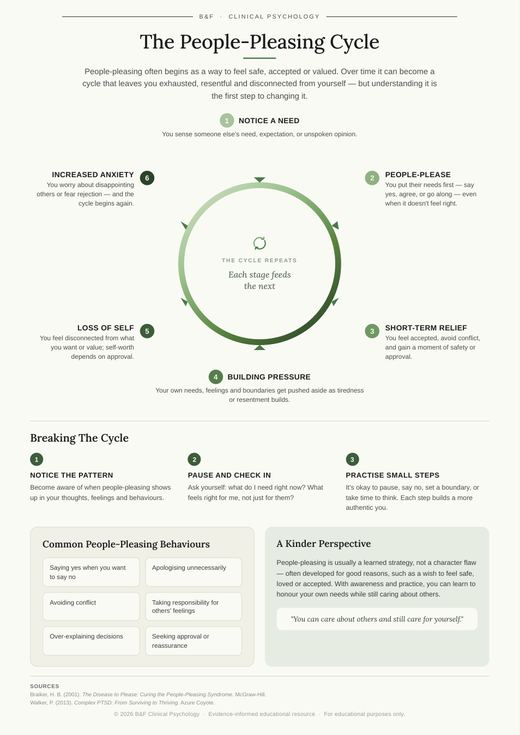
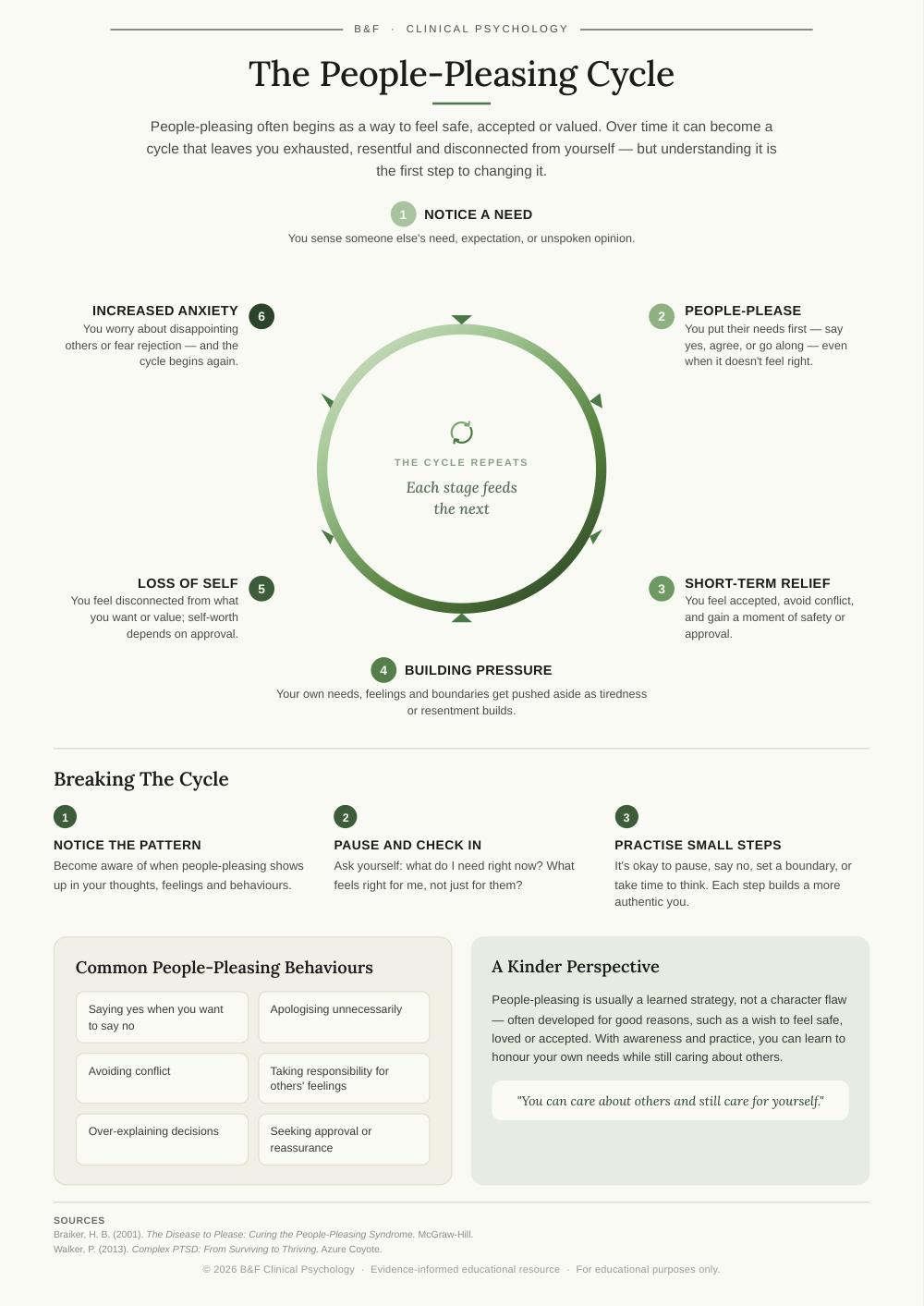
LearnThe people-pleasing cycle
It starts as a way to feel safe. How it turns into exhaustion and resentment.
-
 Preview
Reflect
Preview
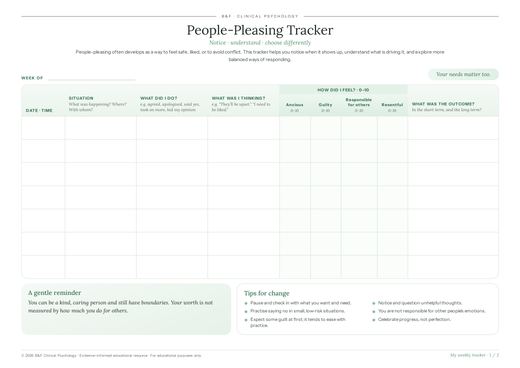
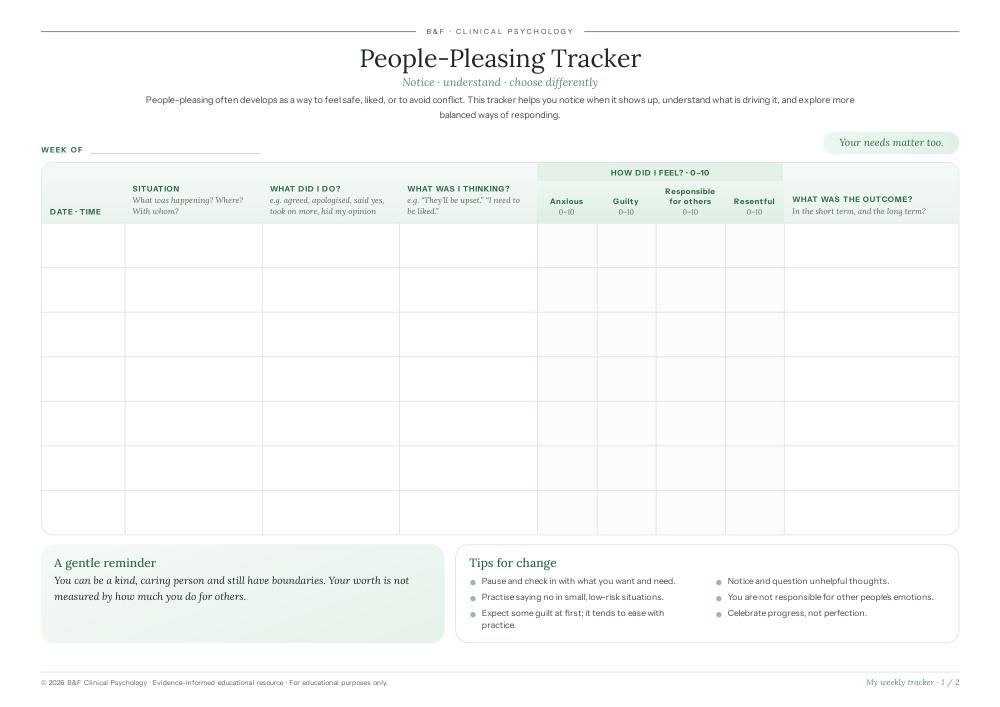
ReflectPeople-pleasing tracker
Notice when people-pleasing shows up, understand what drives it, and try more balanced responses.
-
 Preview
Learn
Preview
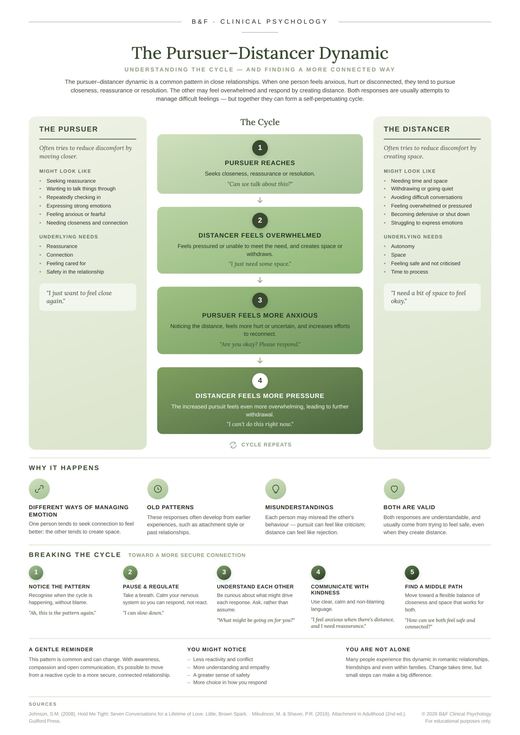
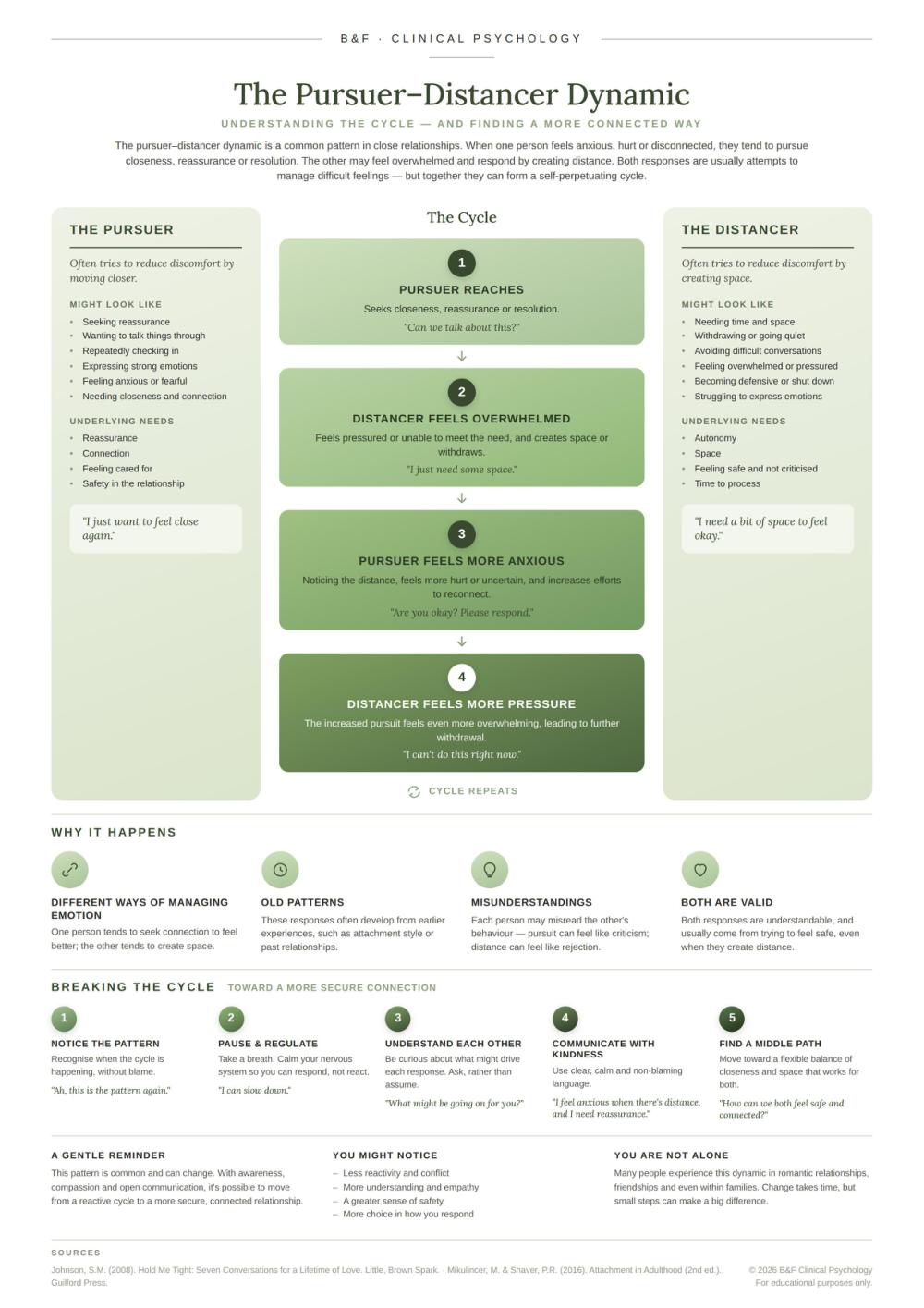
LearnThe pursuer-distancer dynamic
One reaches, the other retreats, and both feel unseen. The pattern in one picture.
-
 Preview
Learn
Preview
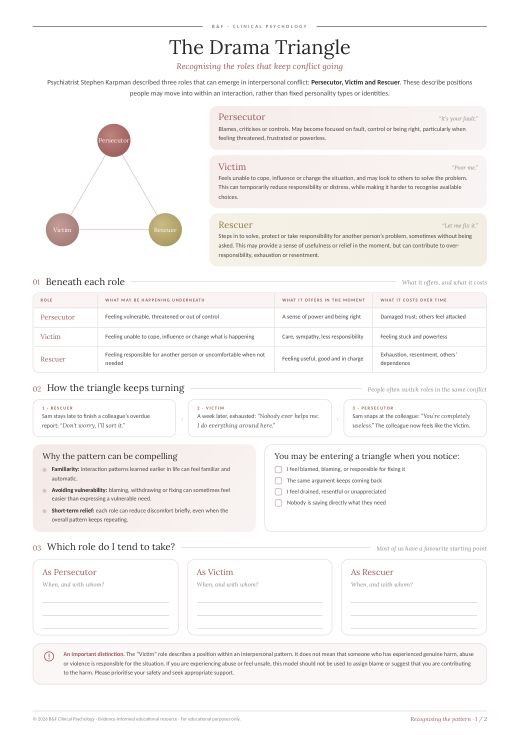
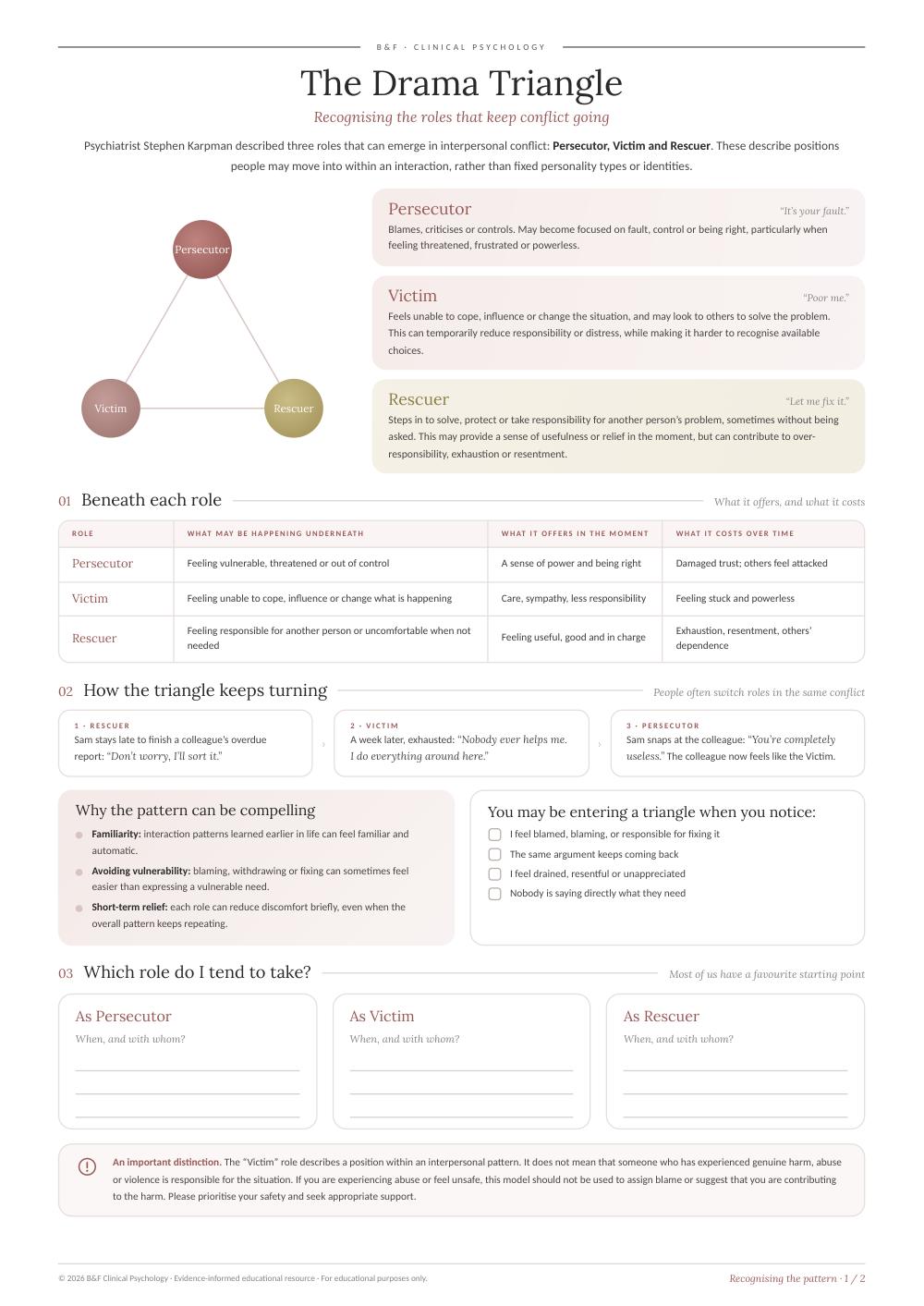
LearnThe drama triangle
Persecutor, victim and rescuer: recognising the roles that keep conflict going.
-
 Preview
Learn
Preview
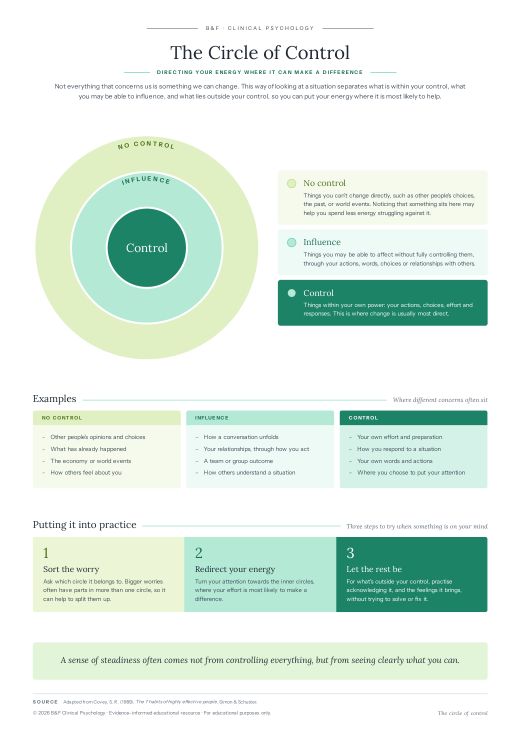
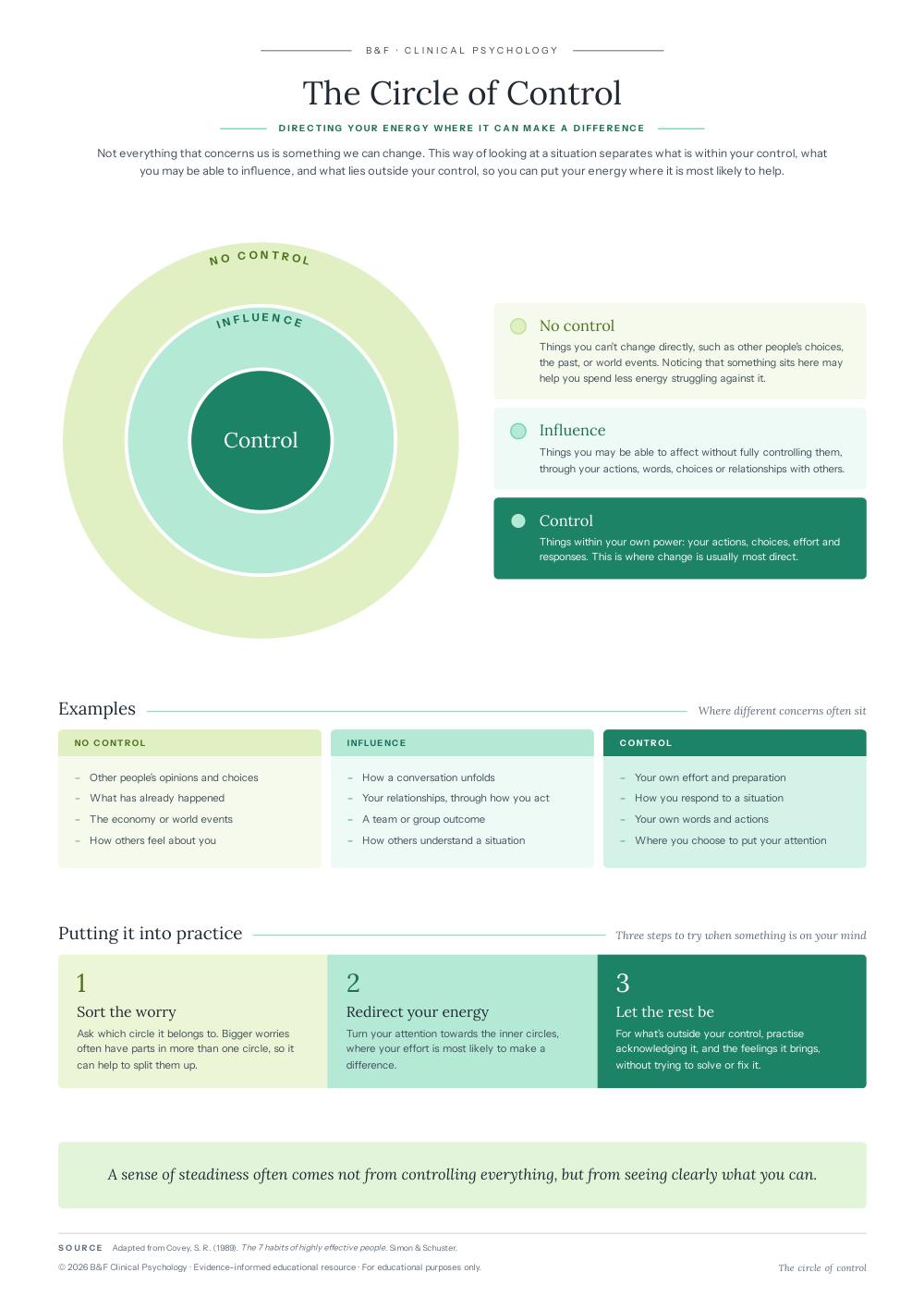
LearnThe circle of control
Directing your energy where it can make a difference: what you control, influence, and can't.
-
 Preview
Learn
Preview
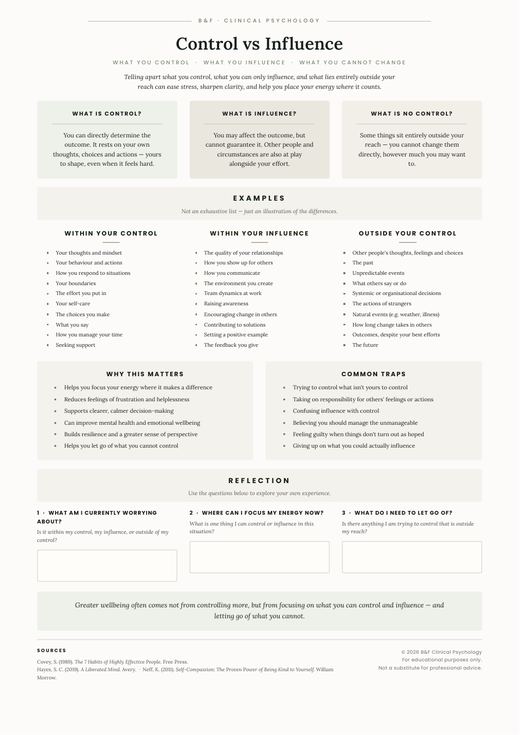
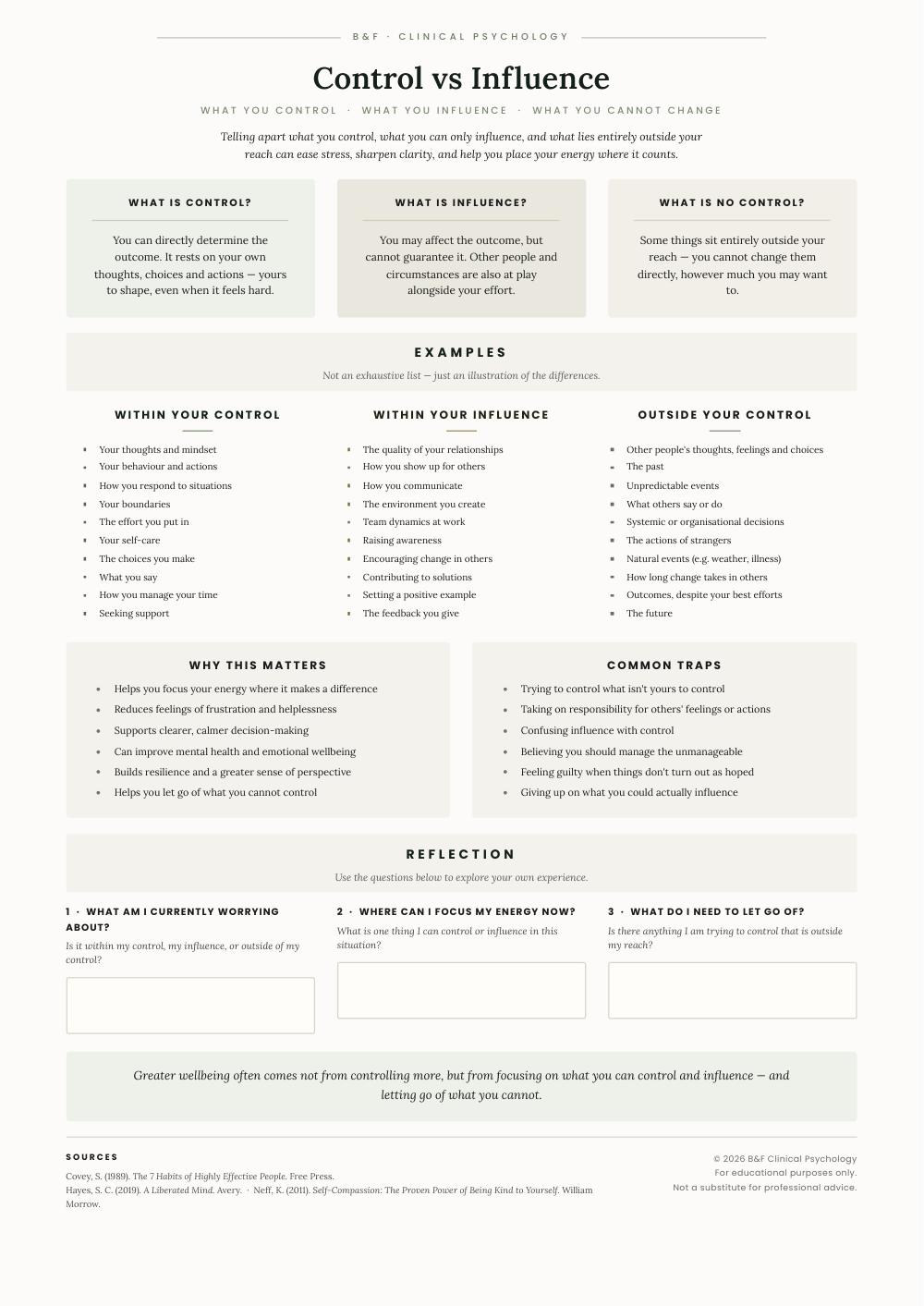
LearnControl vs influence
What you control, what you can only influence, and what lies outside both.
-
 Preview
Reflect
Preview
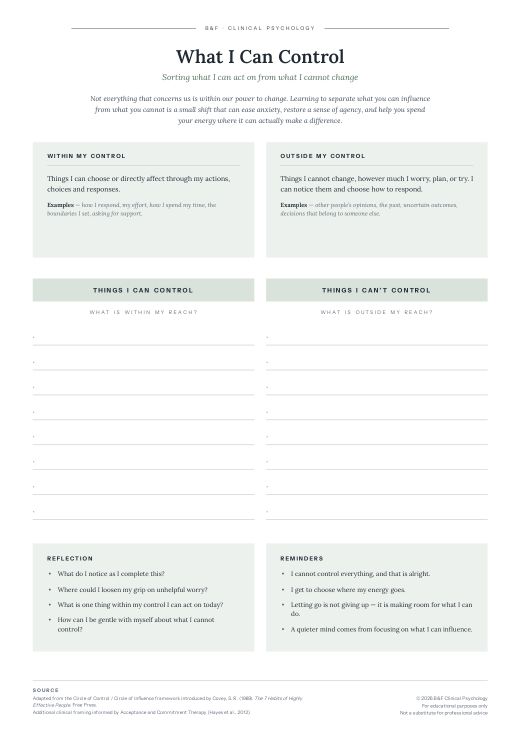
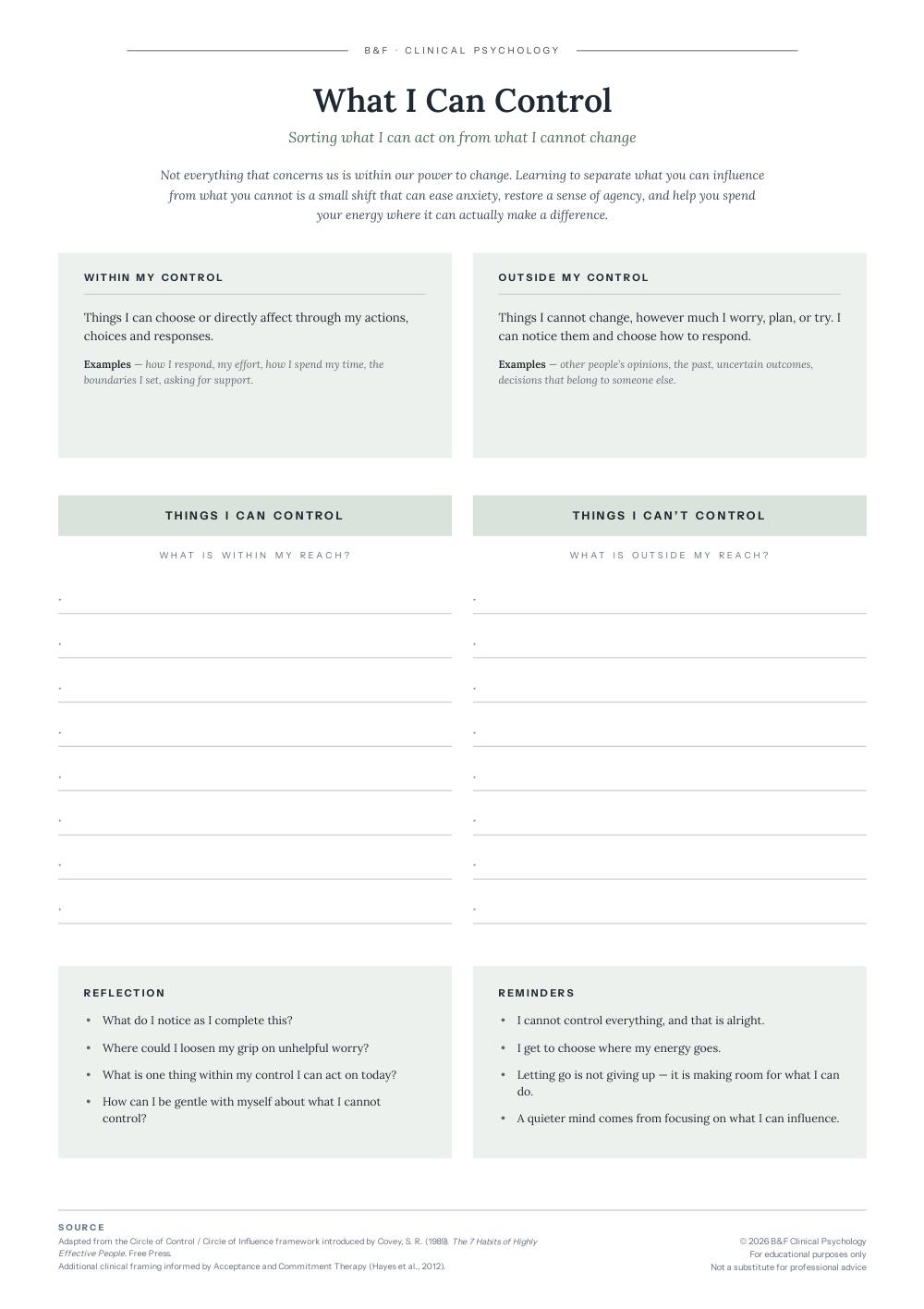
ReflectWhat I can control
Sorting what I can act on from what I cannot change.
-
 Preview
Learn
Preview
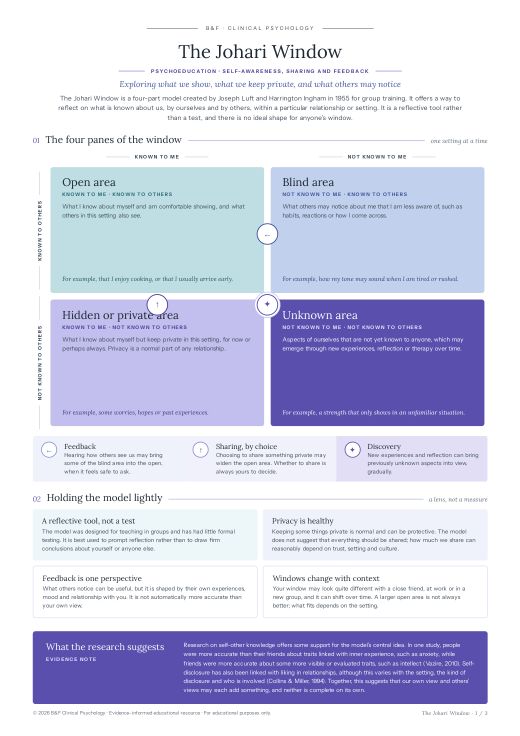
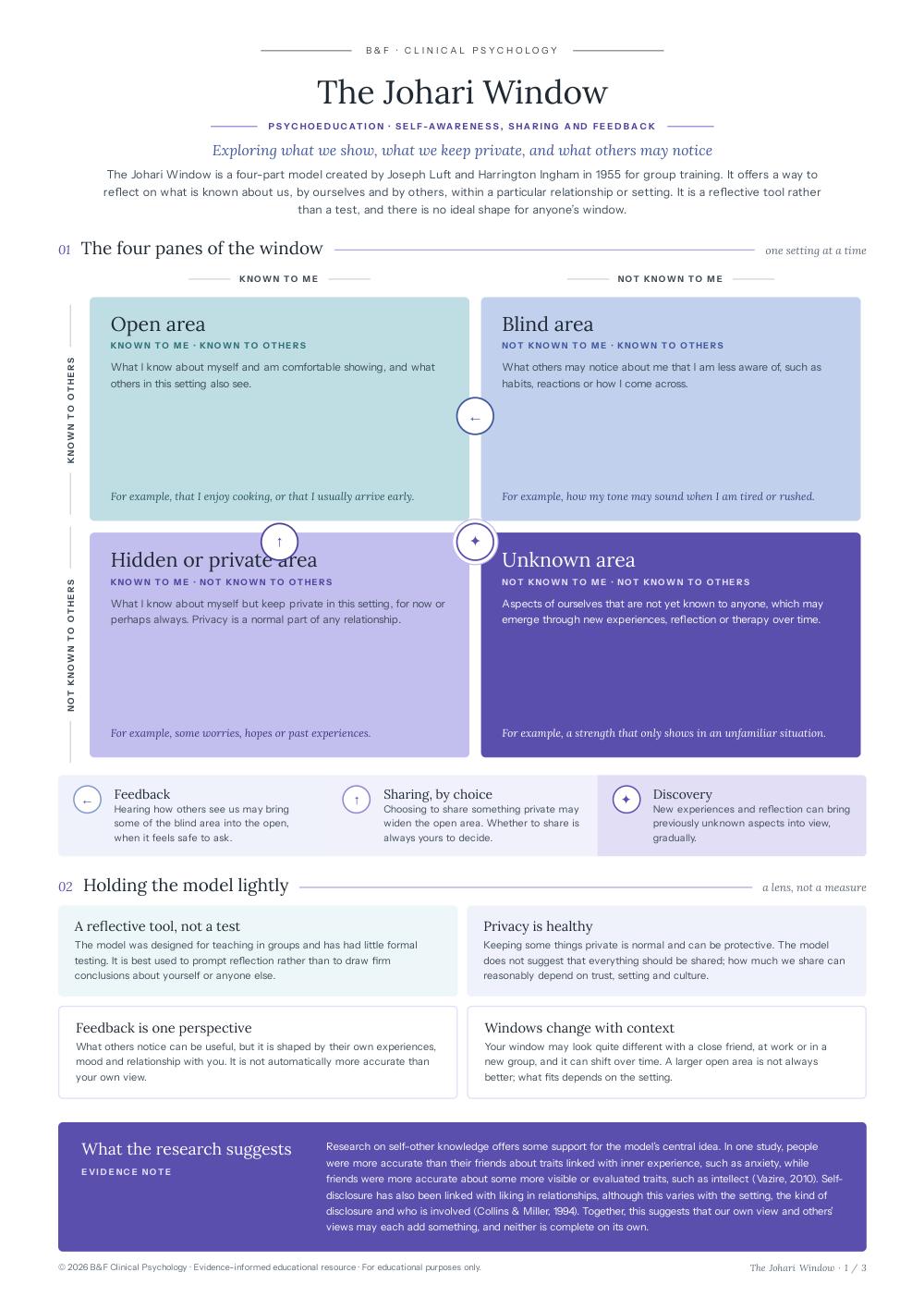
LearnThe Johari window
What we show, what we keep private, and what others may notice.
-
 Preview
Reflect
Preview
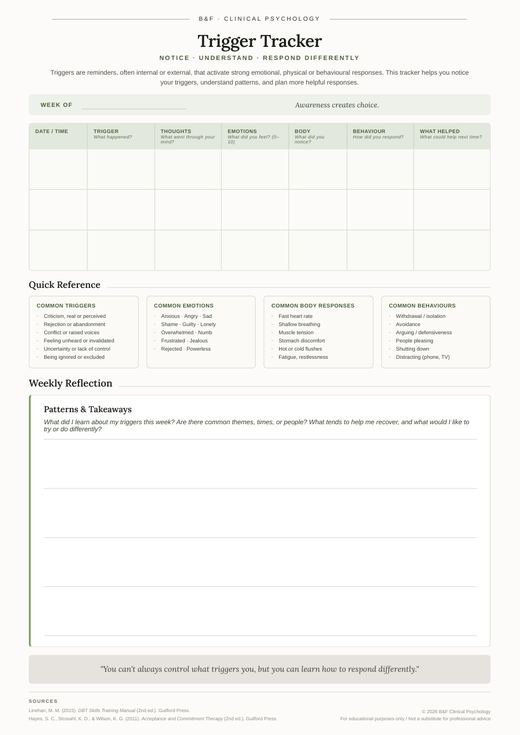
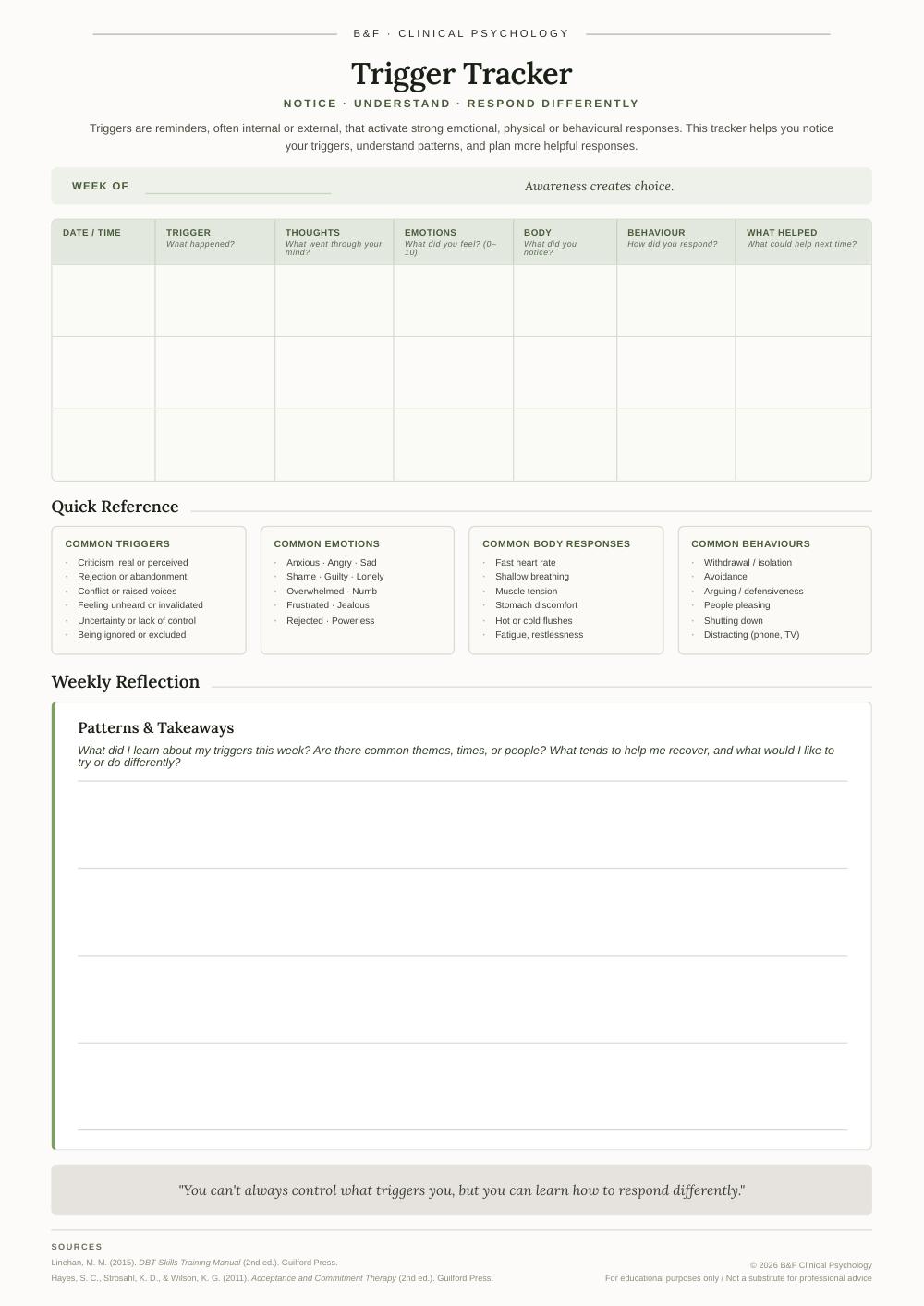
ReflectTrigger tracker
Notice what sets off a strong reaction, understand it, and plan a different response.
-
 Preview
Reflect
Preview
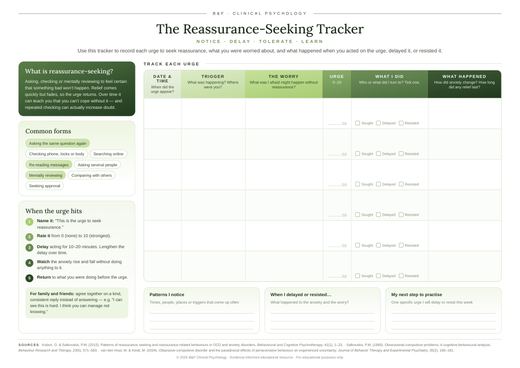
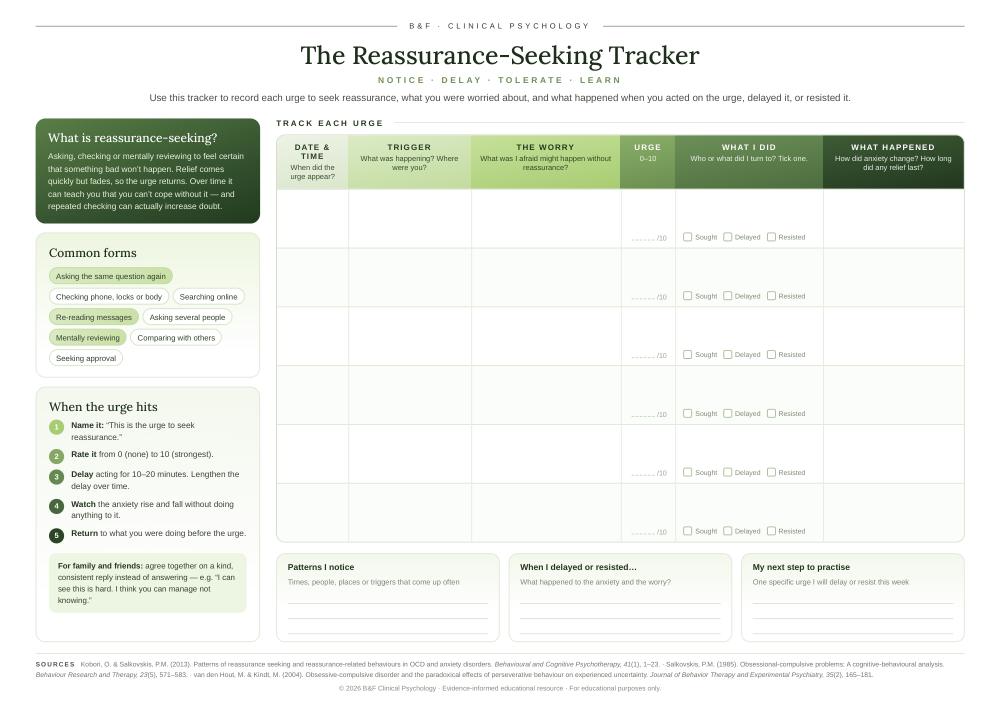
ReflectReassurance-seeking tracker
Record each urge to seek reassurance, and what happened when you acted on it, delayed it or resisted it.
-
 Preview
Reflect
Preview
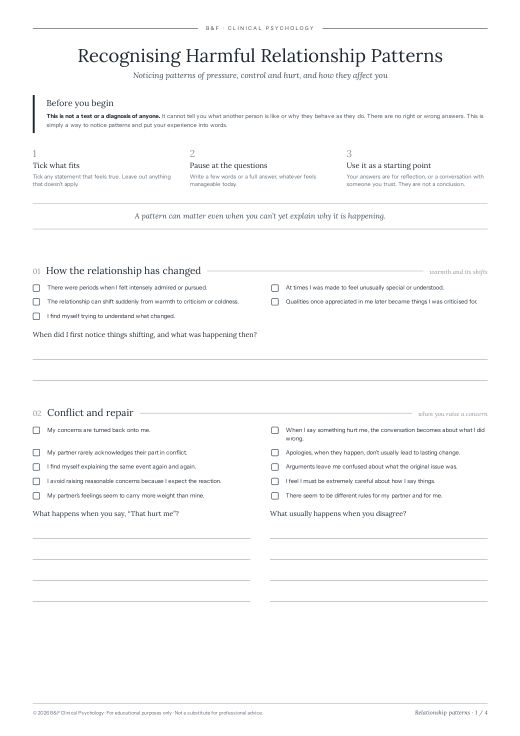
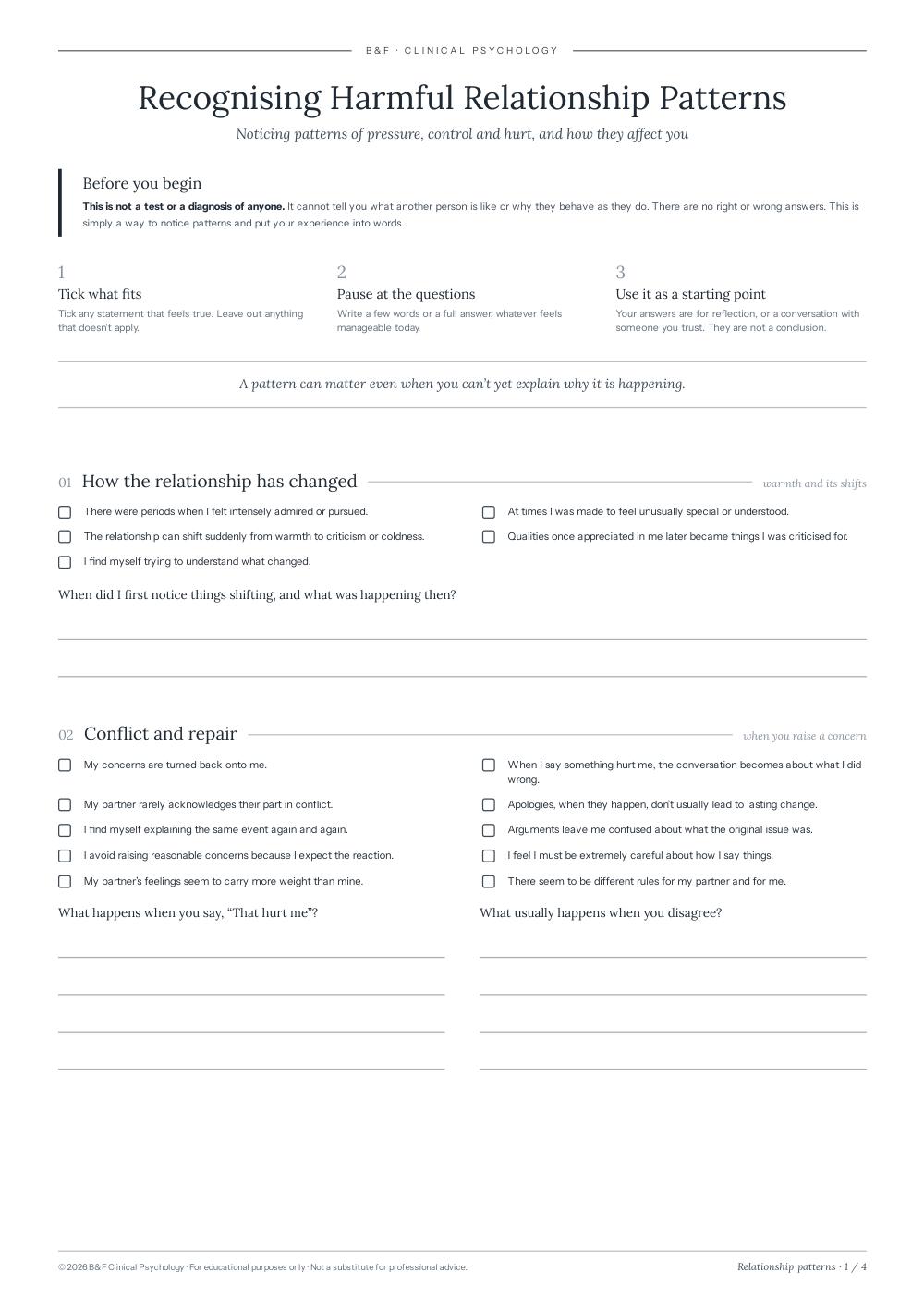
ReflectRecognising harmful relationship patterns
Noticing patterns of pressure, control and hurt, and how they affect you. Not a test or a diagnosis.
-
 Preview
Learn
Preview
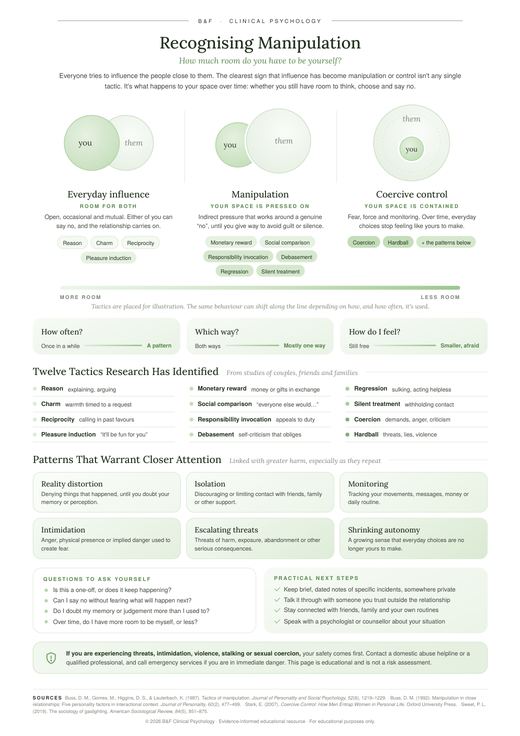
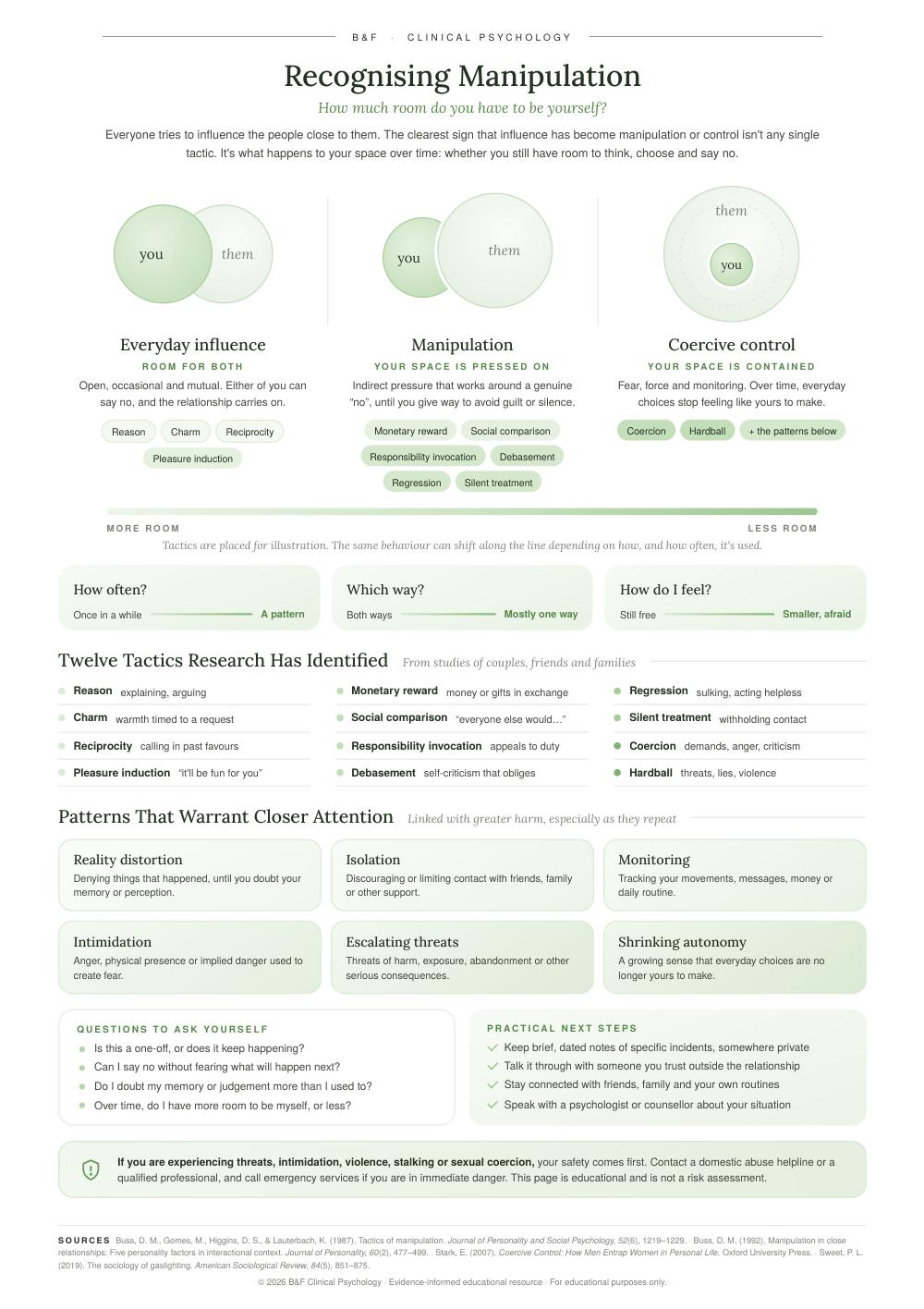
LearnRecognising manipulation
When influence becomes control: what happens to your room to think, choose and say no.
-
 Preview
Learn
Preview
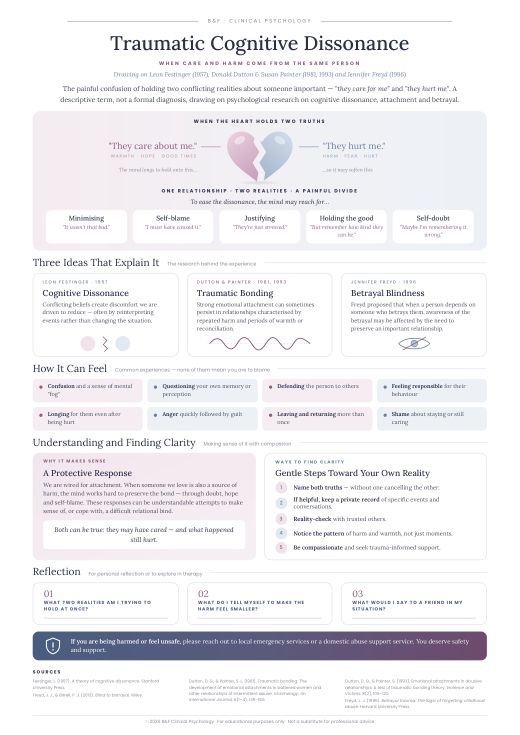
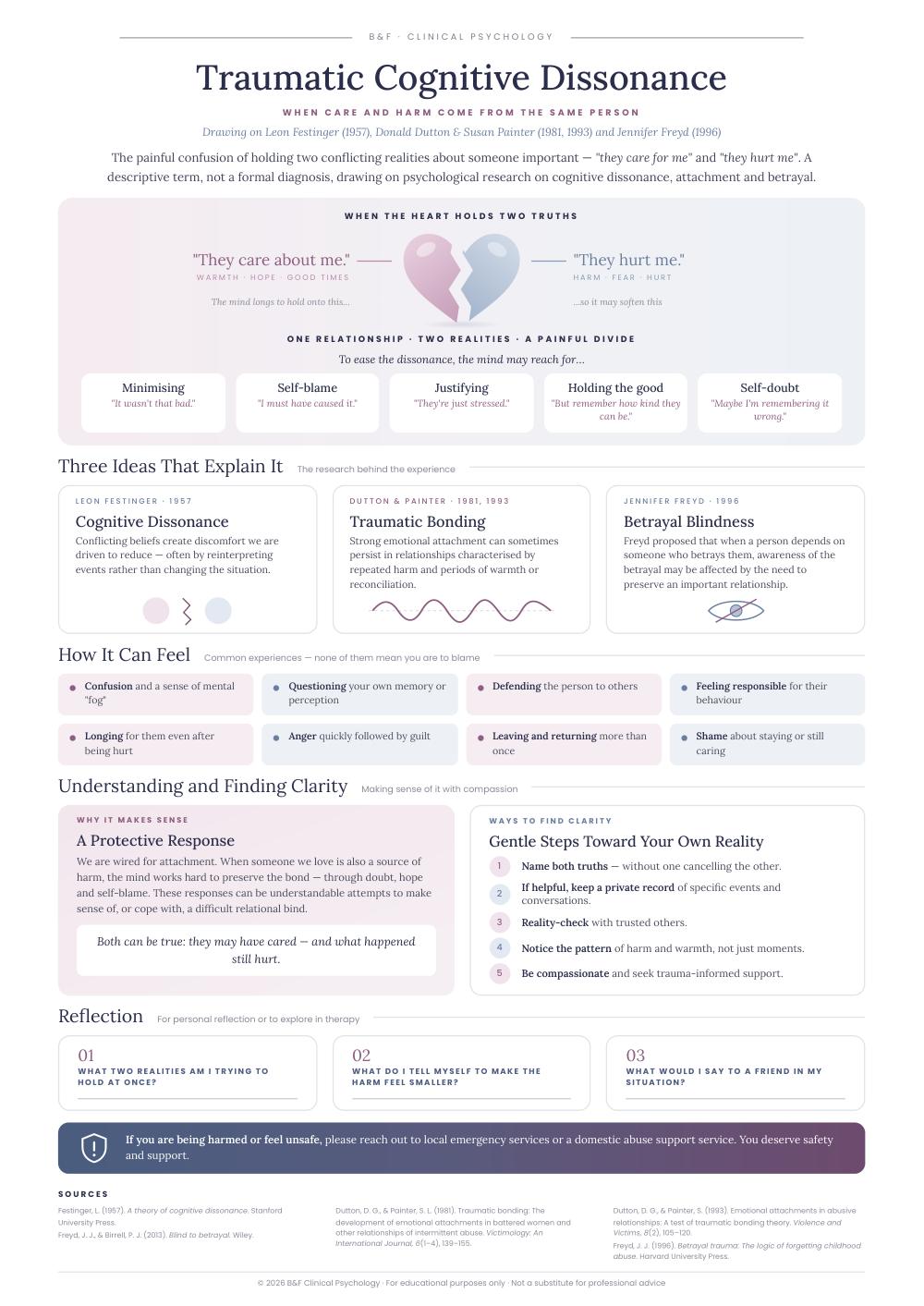
LearnTraumatic cognitive dissonance
The painful confusion of care and harm coming from the same person.
-
 Preview
Reflect
Preview
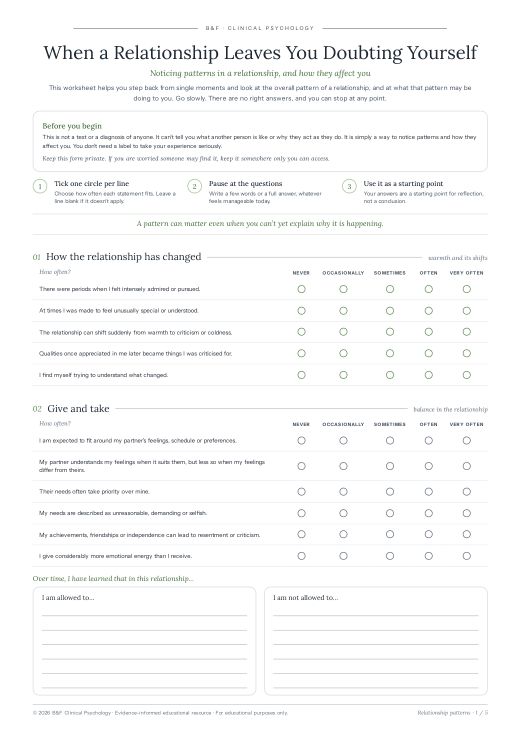
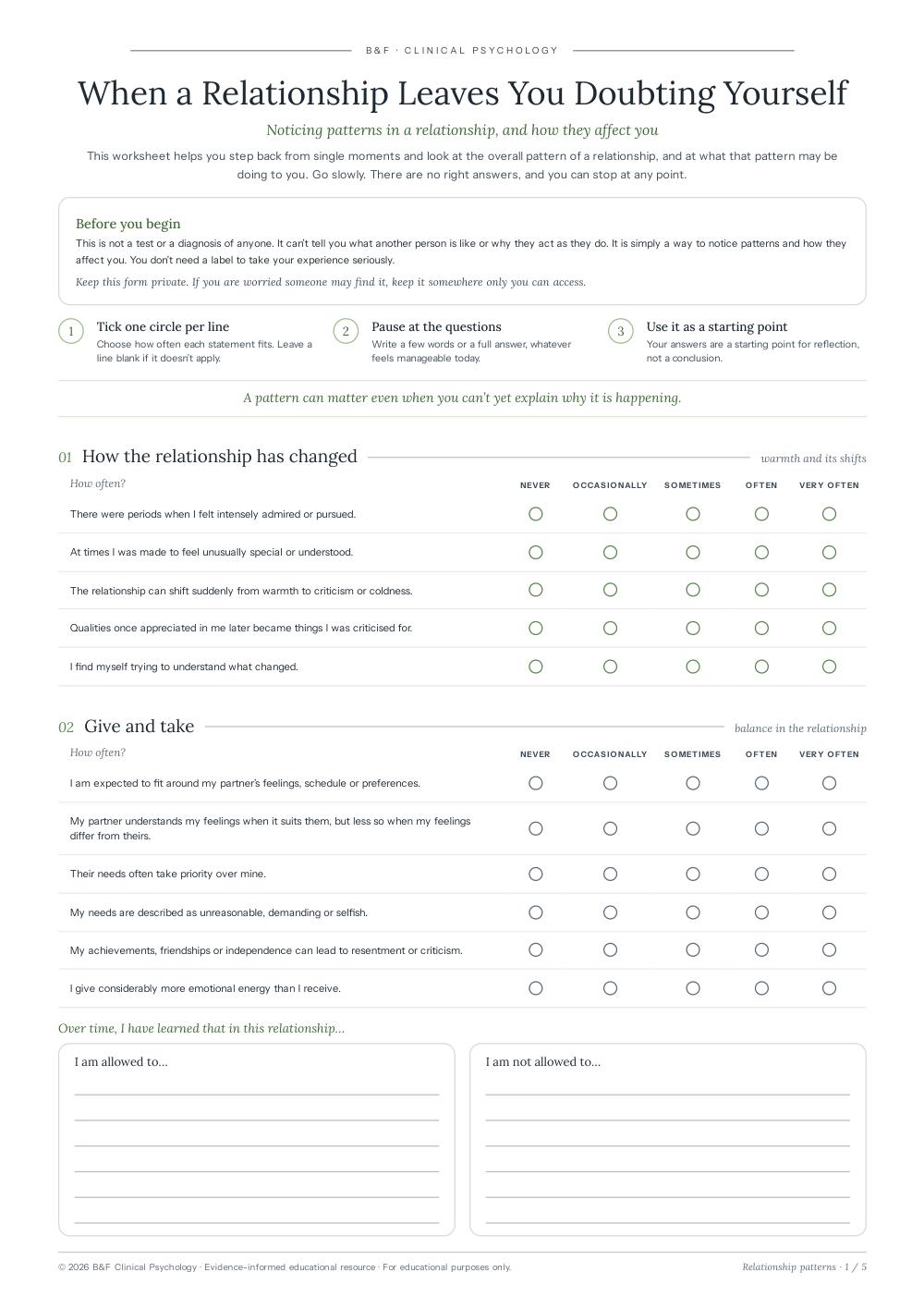
ReflectWhen a relationship leaves you doubting yourself
Step back from single moments to look at the overall pattern of a relationship, and what it may be doing to you.
-
 Preview
Reflect
Preview
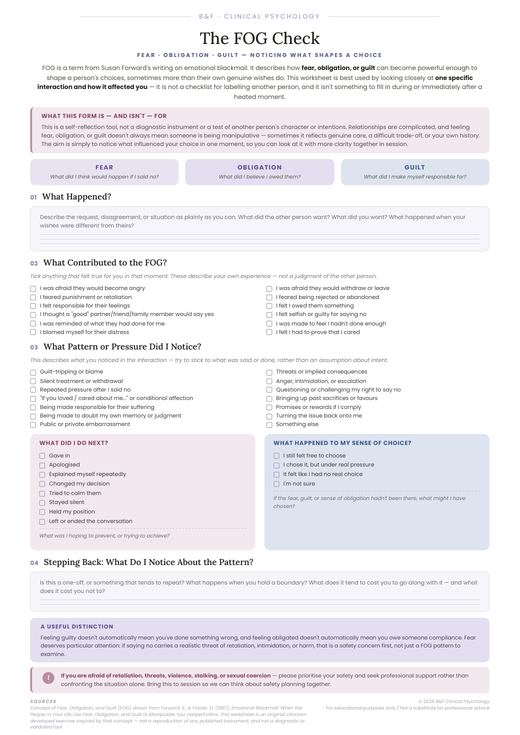
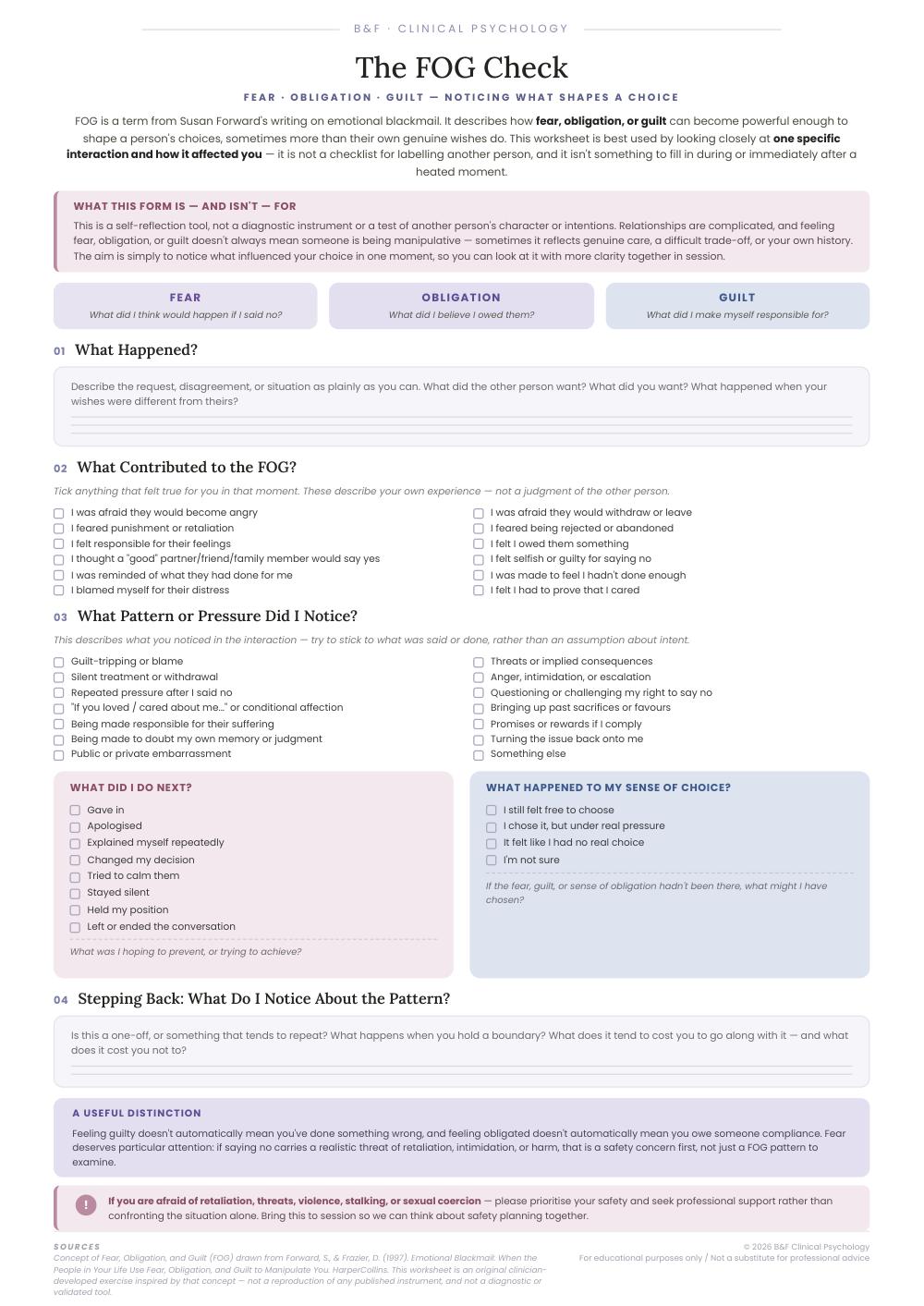
ReflectThe FOG check
Fear, obligation and guilt: looking closely at one interaction and what shaped your choice.
These resources are for general education and self-reflection, not a substitute for individual psychological assessment or therapy. If you are in crisis, feel unsafe, or may harm yourself or someone else, please contact emergency services or go to the nearest emergency department.