

Free resources
Trauma, brain and body
Understanding how trauma can affect the whole system.
Trauma, brain and body resources
-
 Preview
Learn
Preview
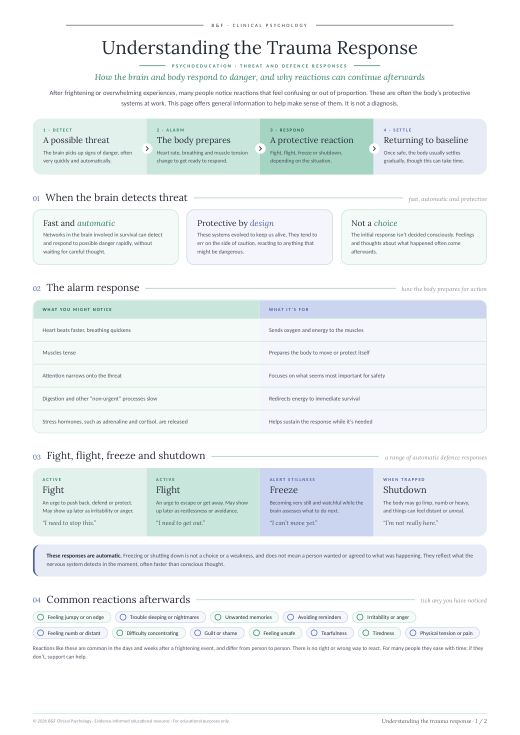
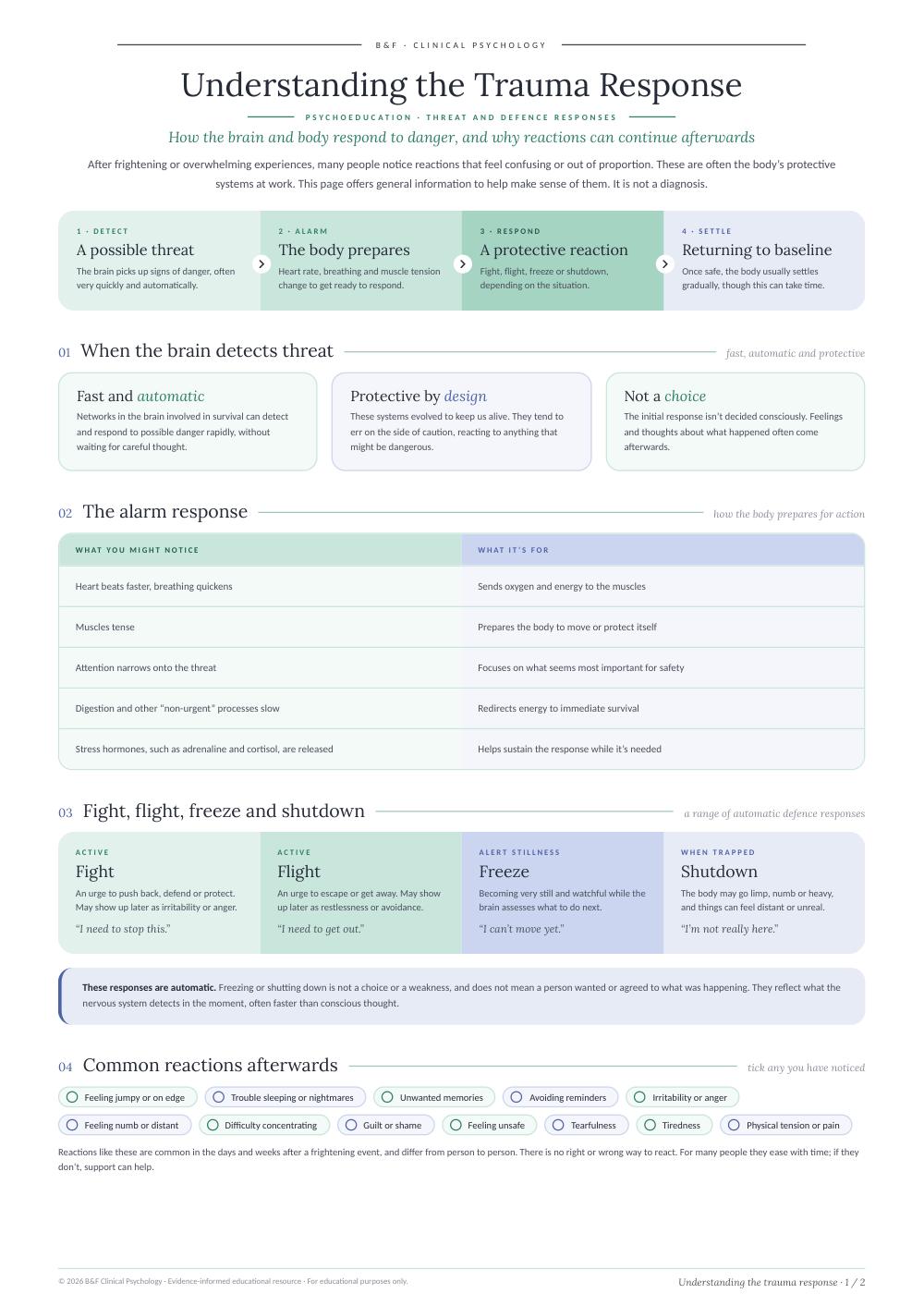
LearnUnderstanding the trauma response
How the brain and body respond to danger, and why reactions can continue afterwards.
-
 Preview
Learn
Preview
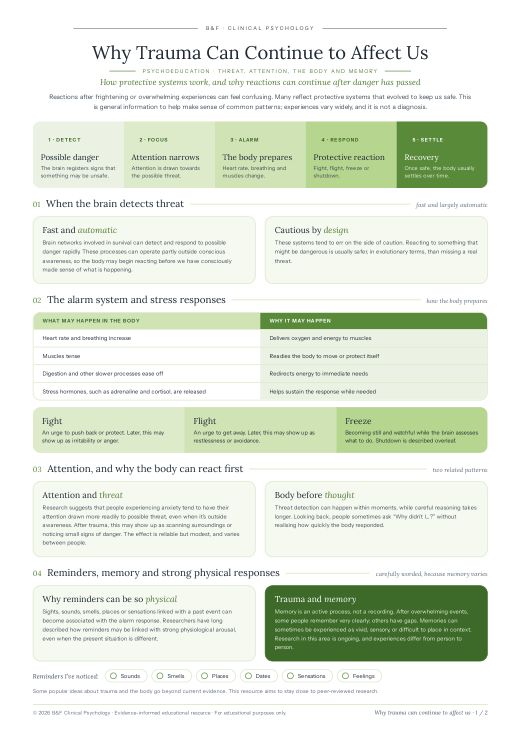
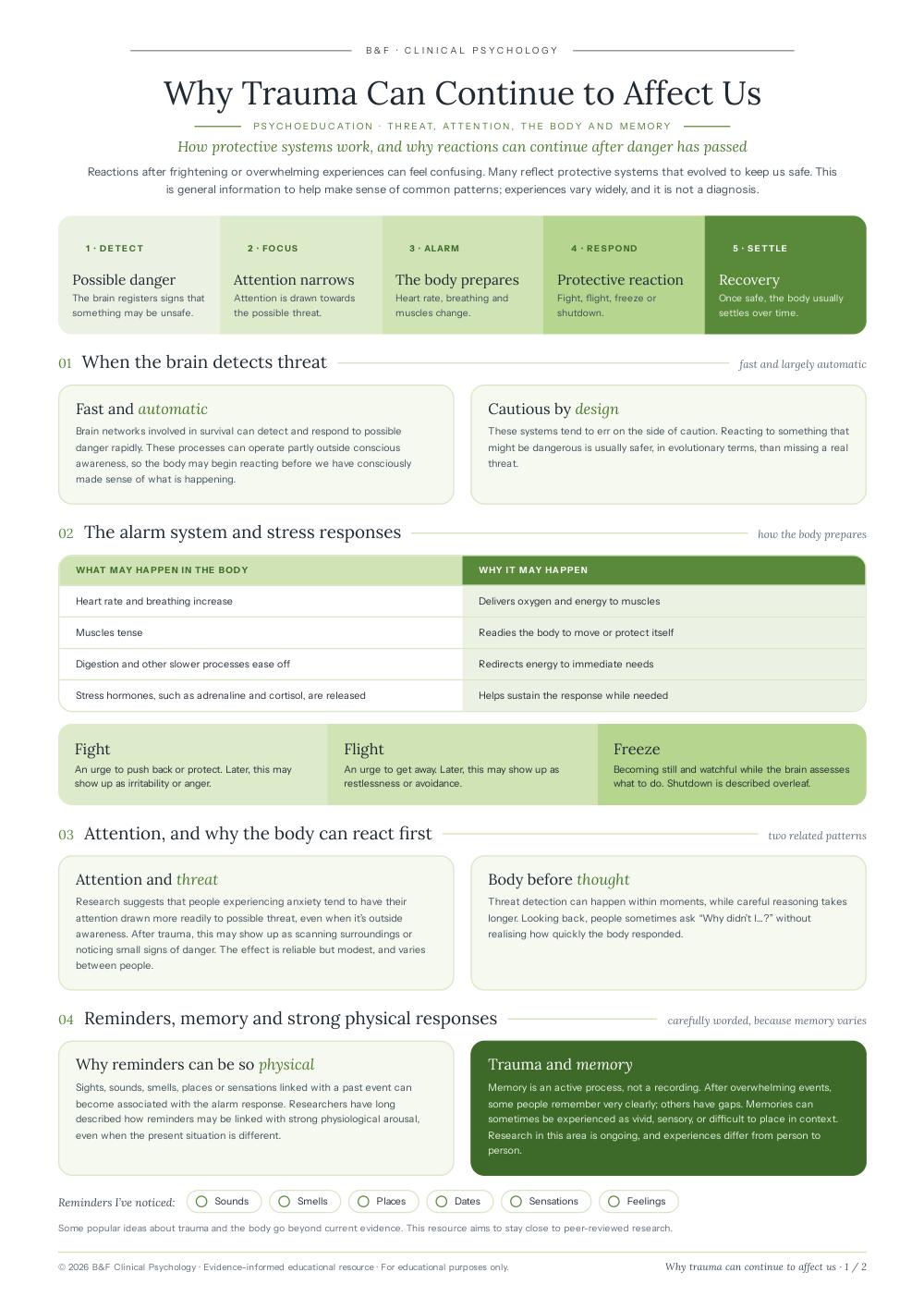
LearnWhy trauma can continue to affect us
How protective systems work, and why reactions can outlast the danger.
-
 Preview
Learn
Preview
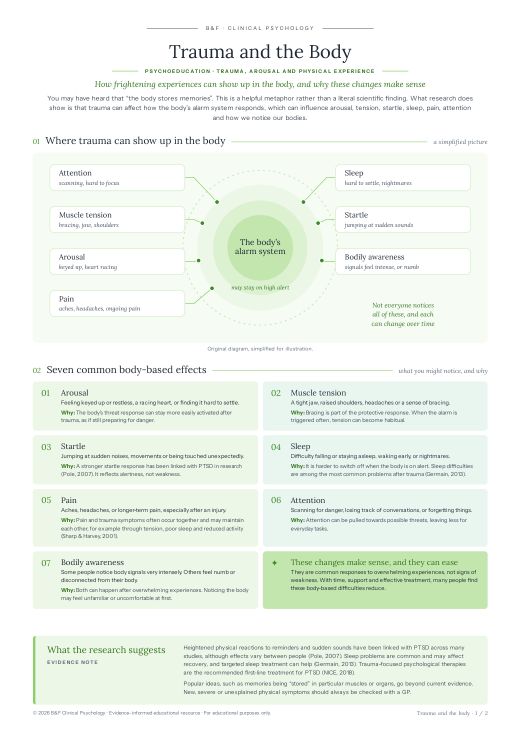
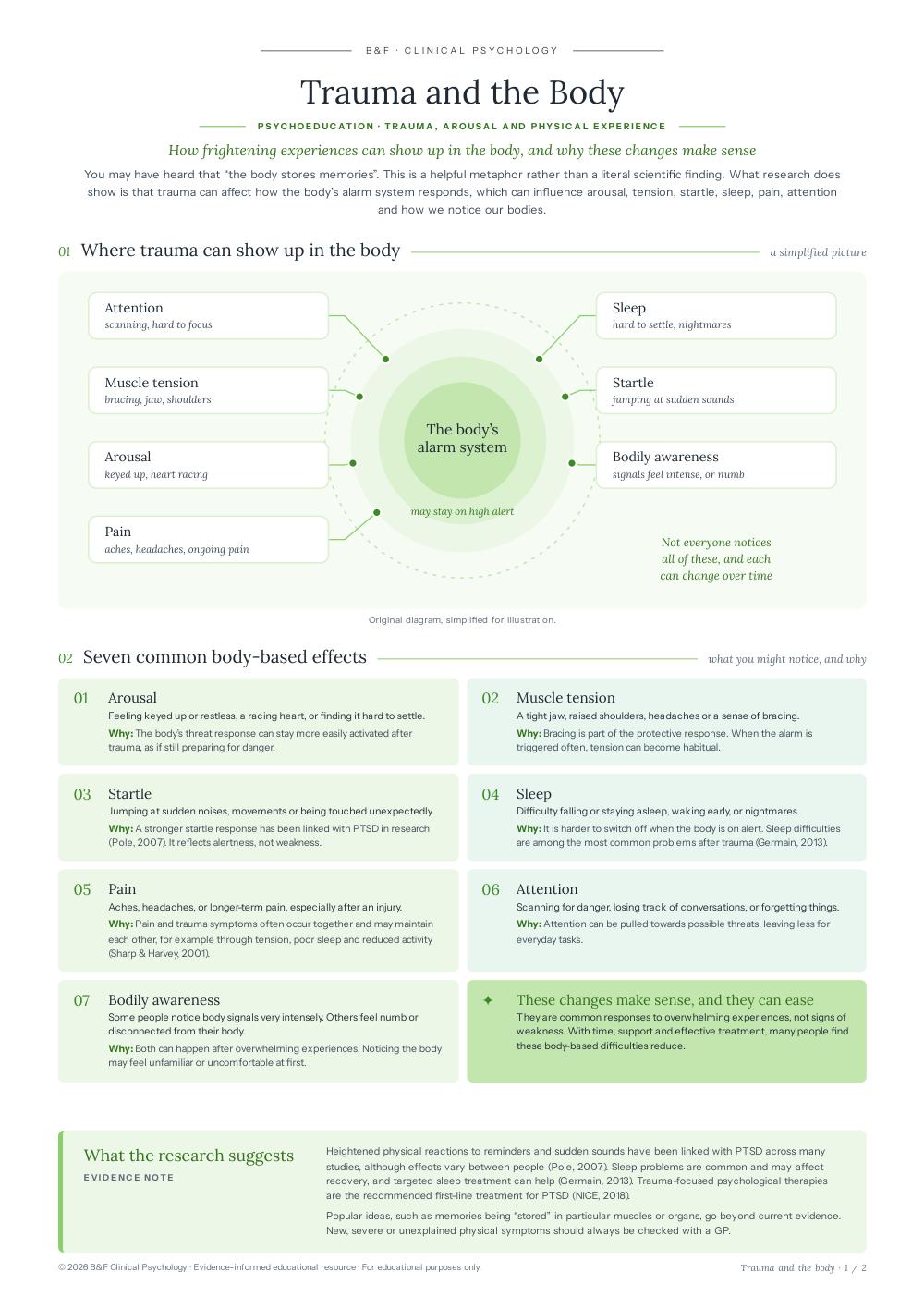
LearnTrauma and the body
How frightening experiences can show up in the body, and why these changes make sense.
-
 Preview
Learn
Preview
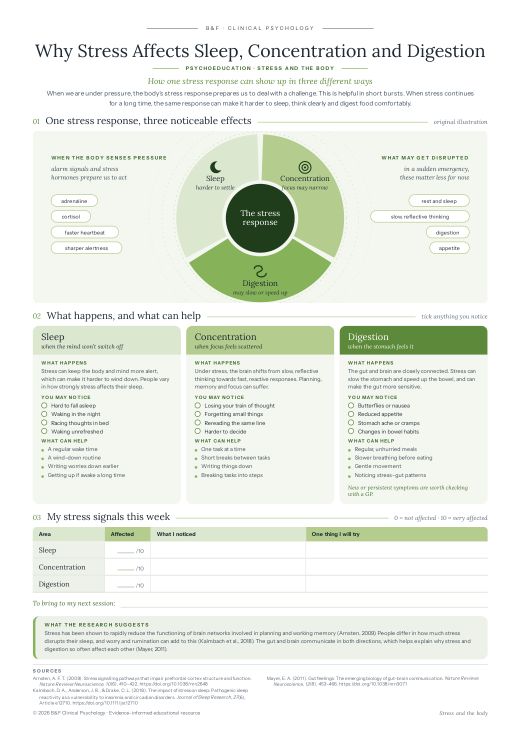
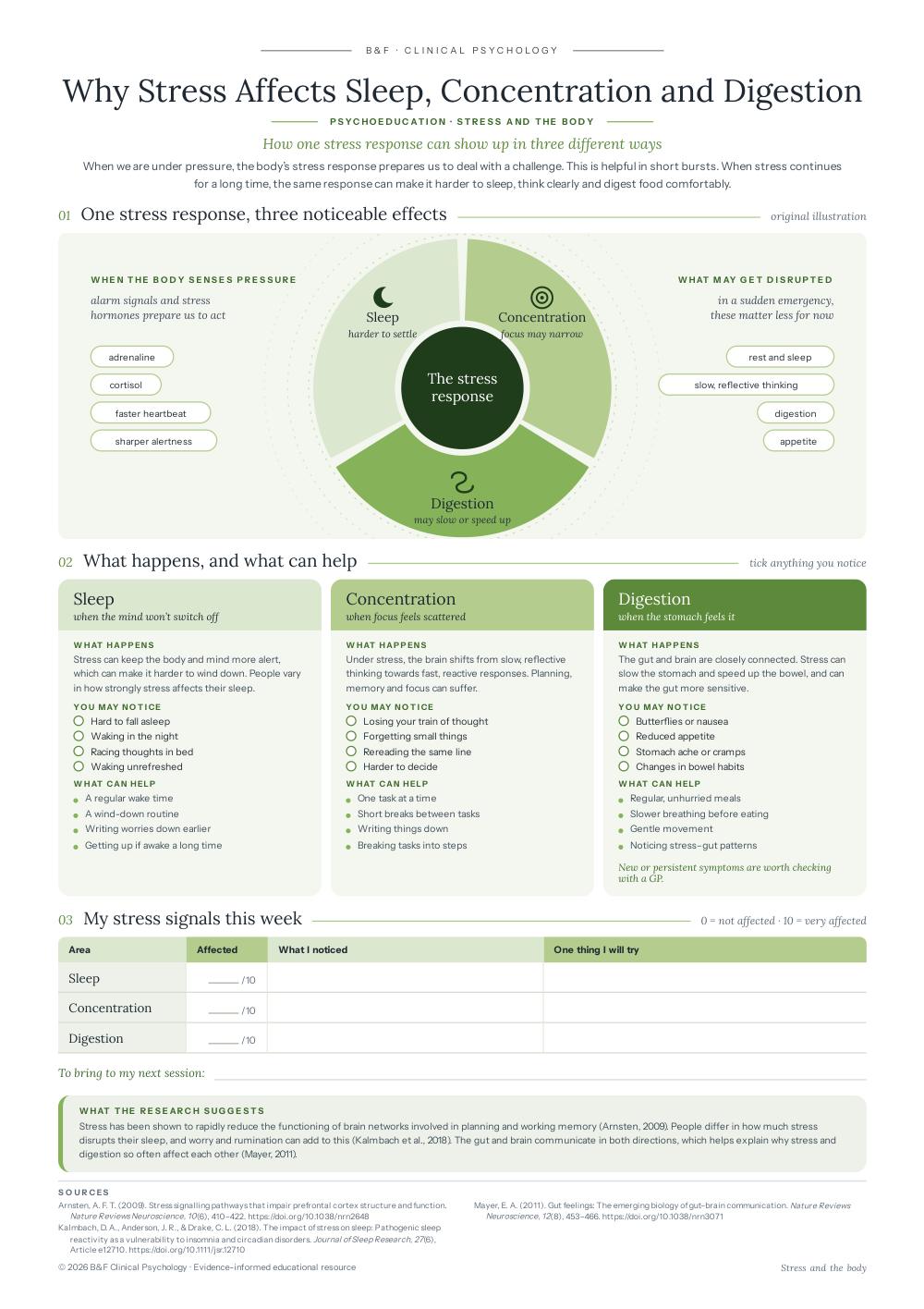
LearnWhy stress affects sleep, concentration and digestion
How one stress response can show up in three different ways.
-
 Preview
Learn
Preview
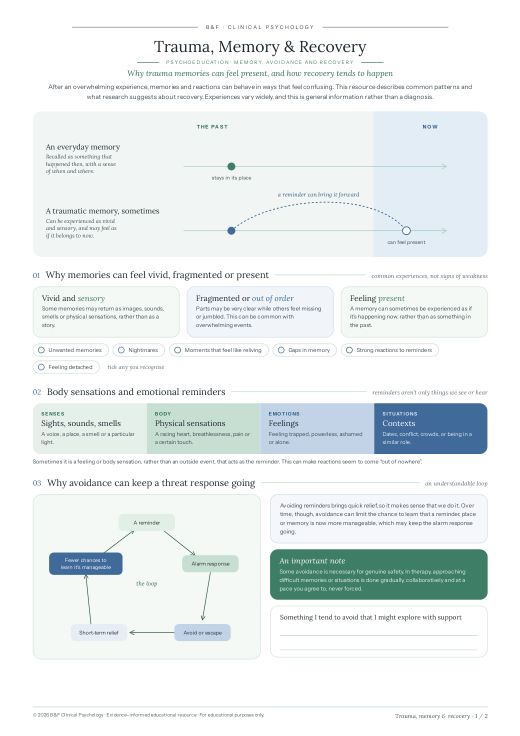
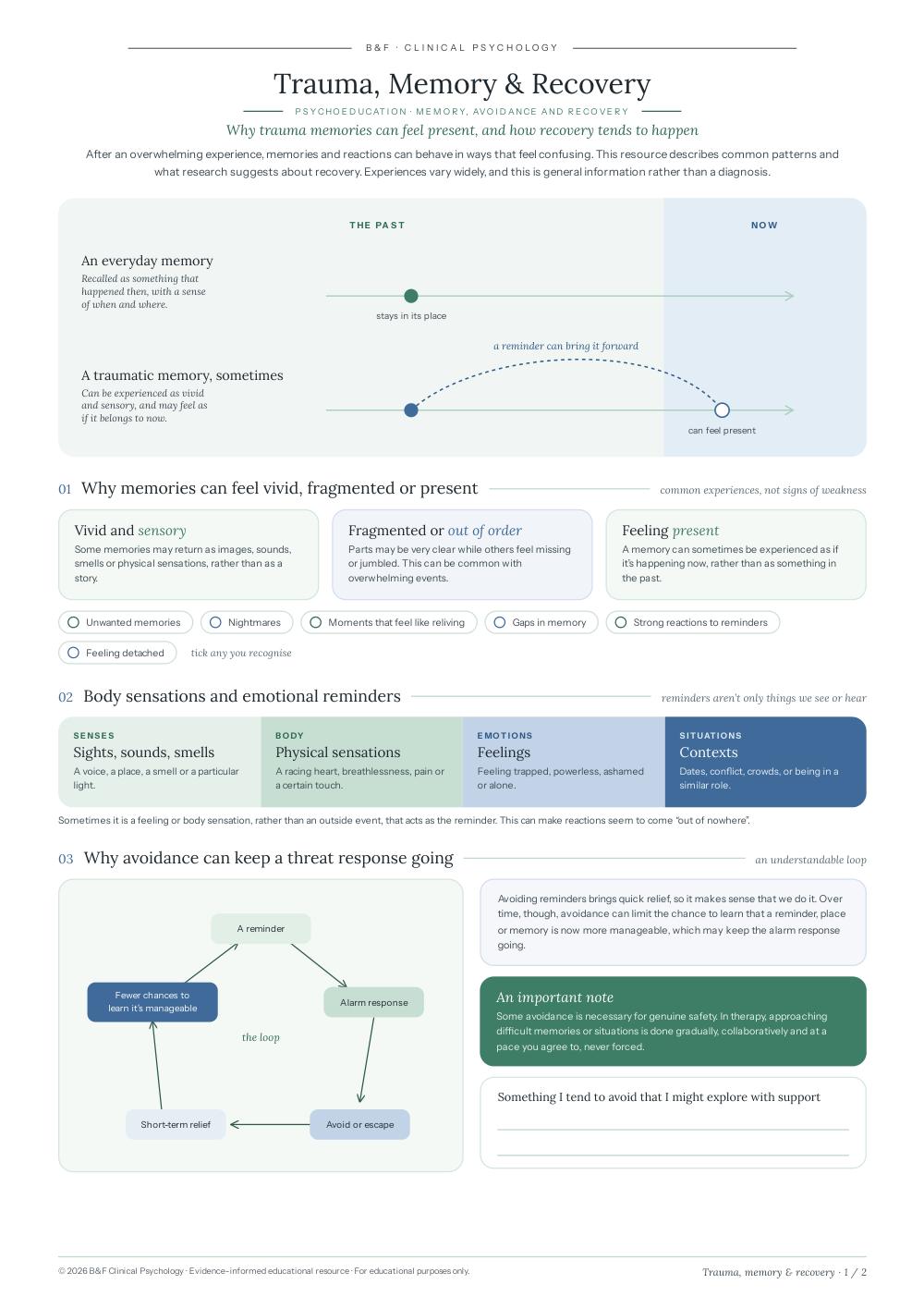
LearnTrauma, memory and recovery
Why trauma memories can feel present, and how recovery tends to happen.
-
 Preview
Learn
Preview
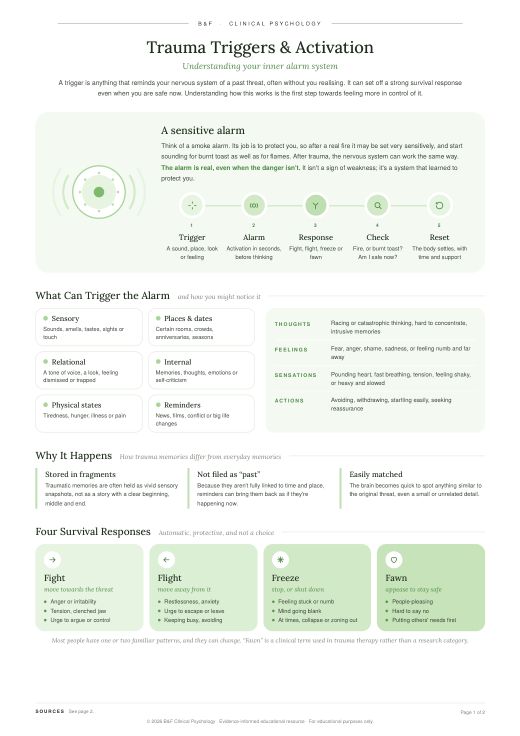
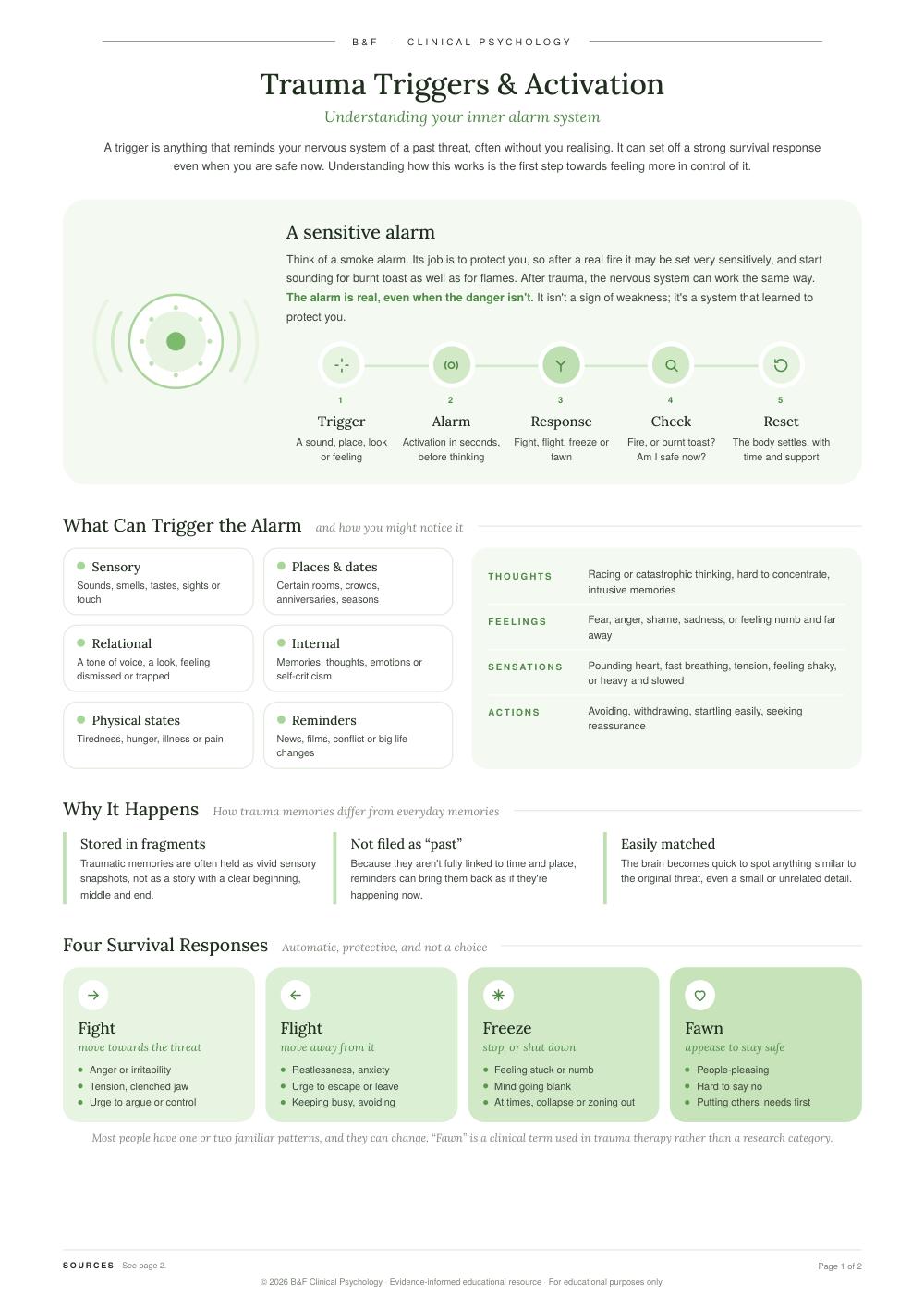
LearnTrauma triggers and activation
Understanding your inner alarm system, and why it can fire when you are safe now.
-
 Preview
Learn
Preview
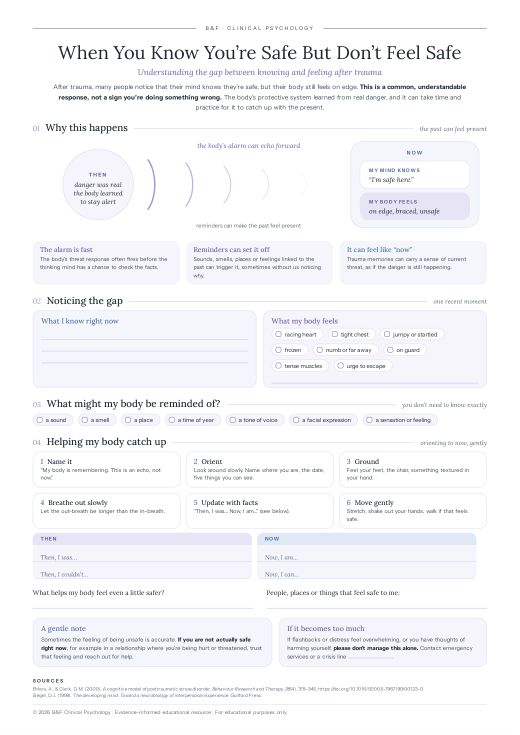
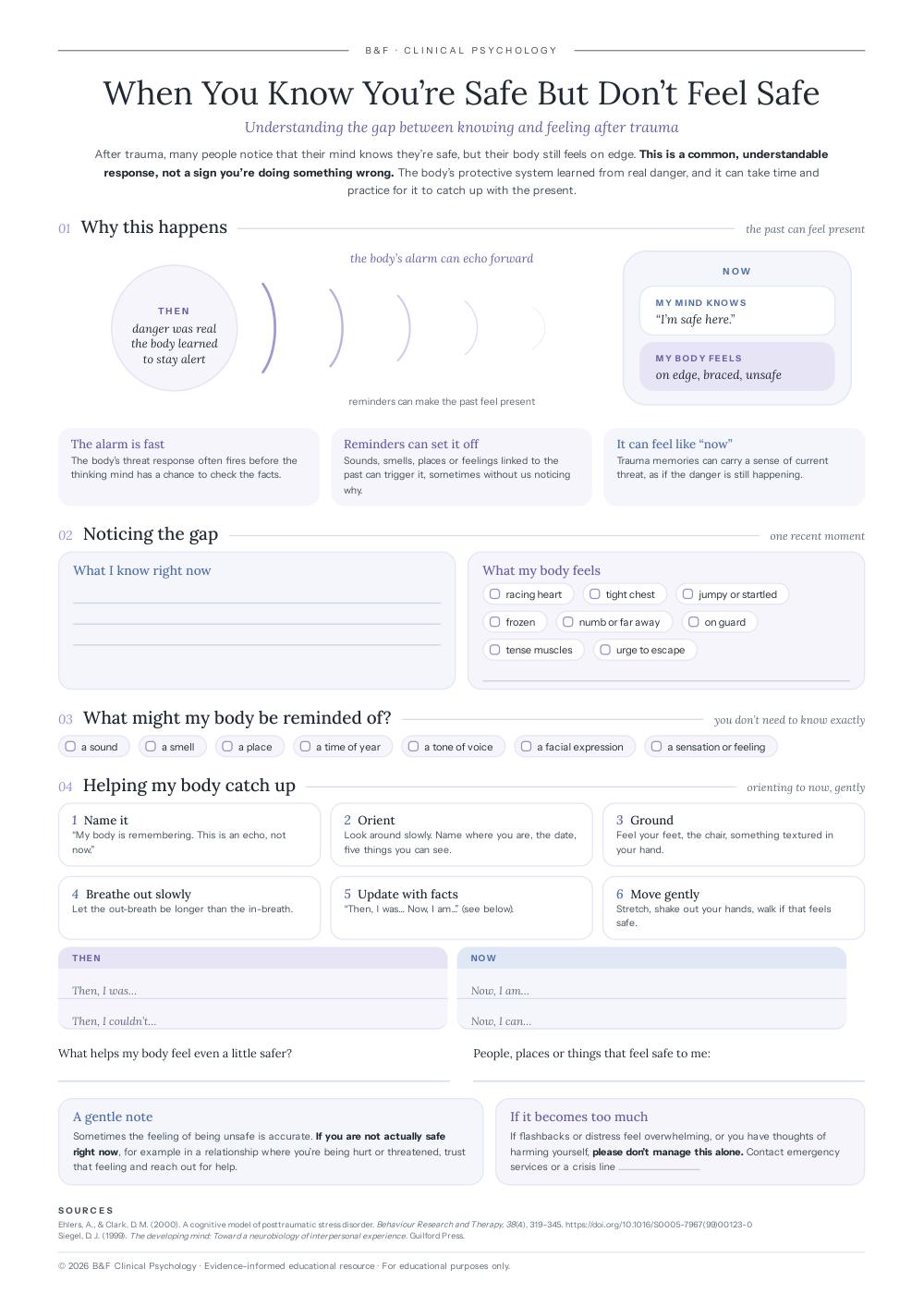
LearnWhen you know you're safe but don't feel safe
The gap between knowing and feeling after trauma, and why it is so common.
-
 Preview
Learn
Preview
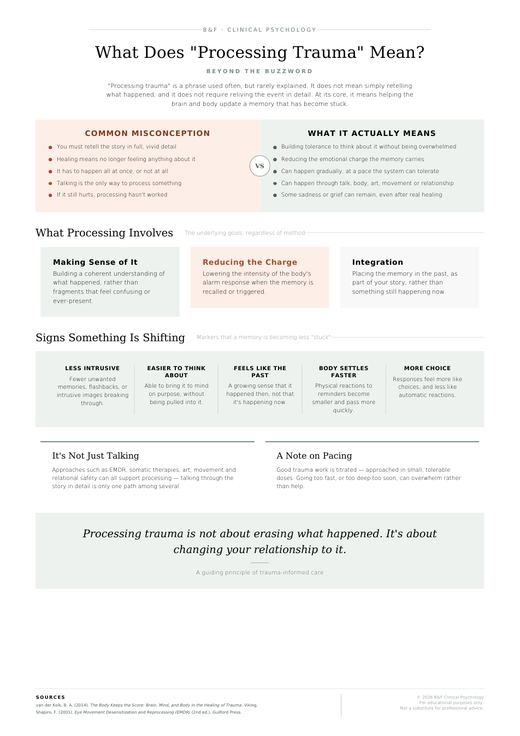
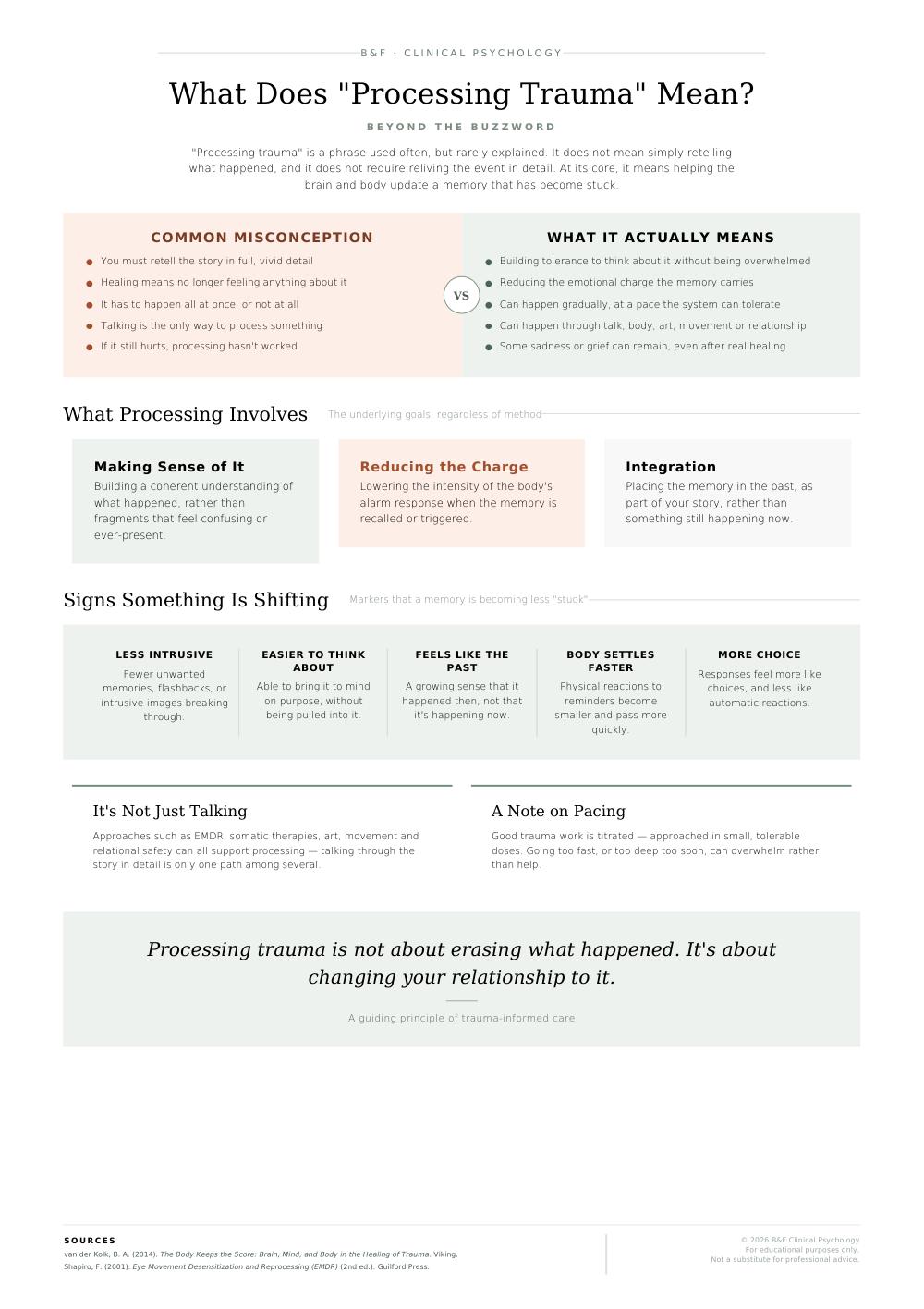
LearnWhat does “processing trauma” mean?
Beyond the buzzword: what processing is, and what it is not.
-
 Preview
Reflect
Preview
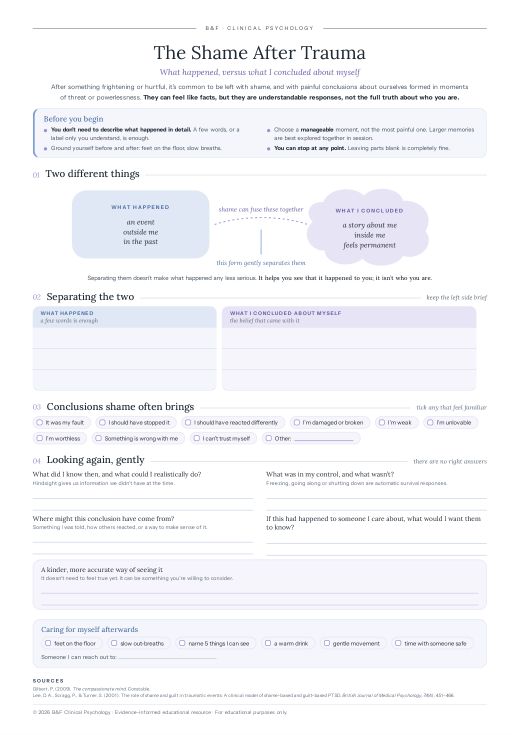
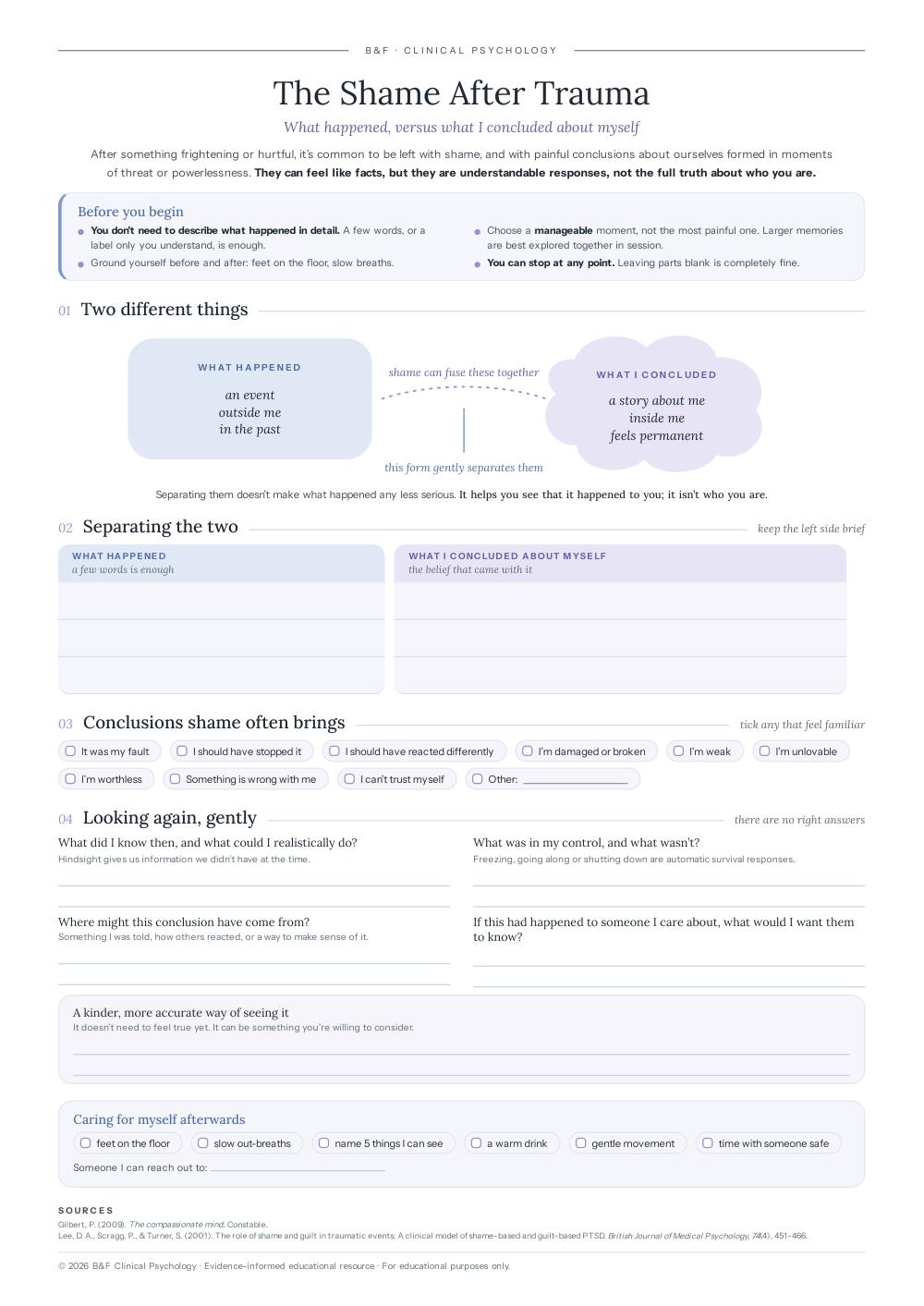
ReflectThe shame after trauma
What happened, versus what I concluded about myself.
-
 Preview
Reflect
Preview
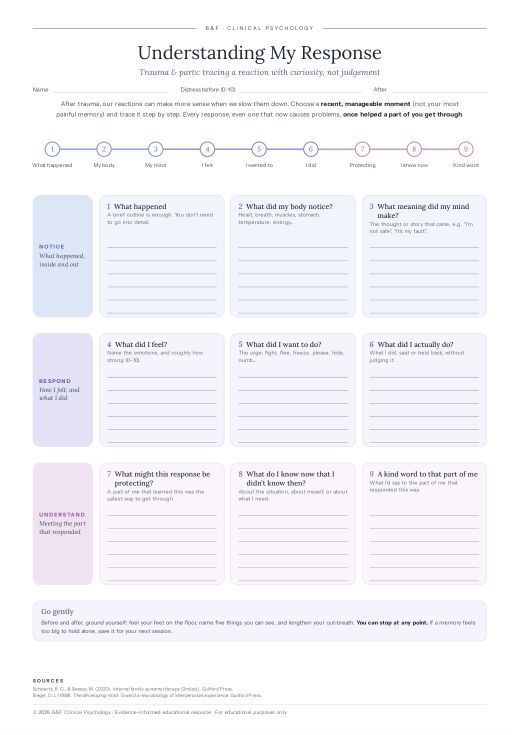
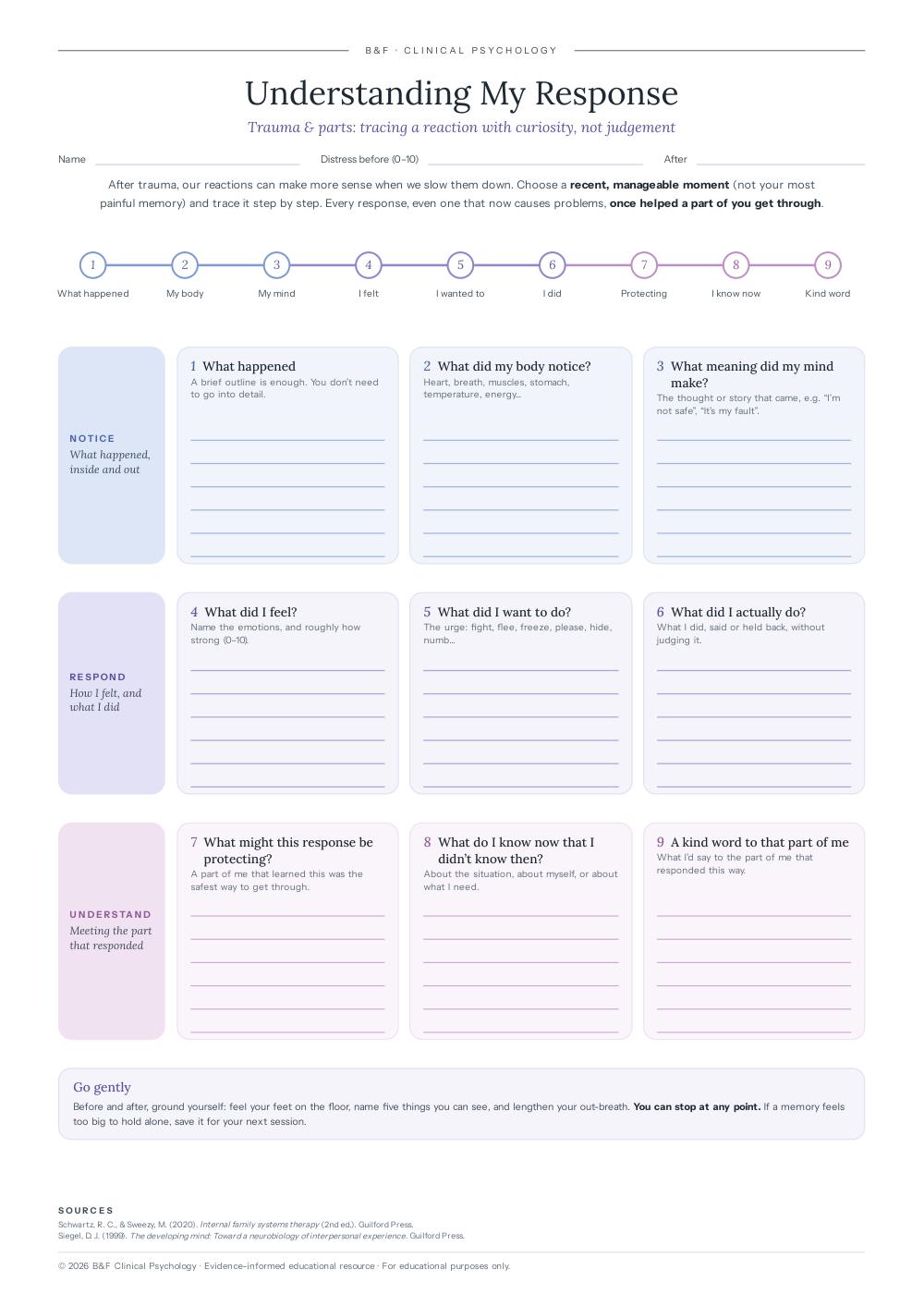
ReflectUnderstanding my response
Tracing a reaction after trauma with curiosity, not judgement.
-
 Preview
Reflect
Preview
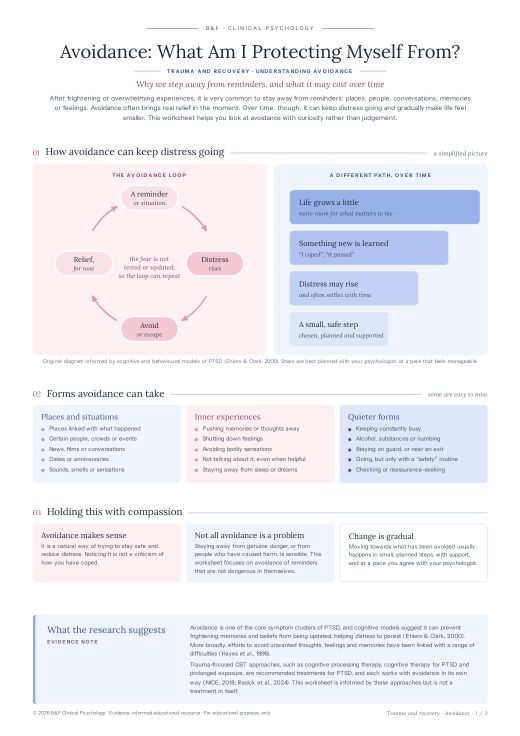
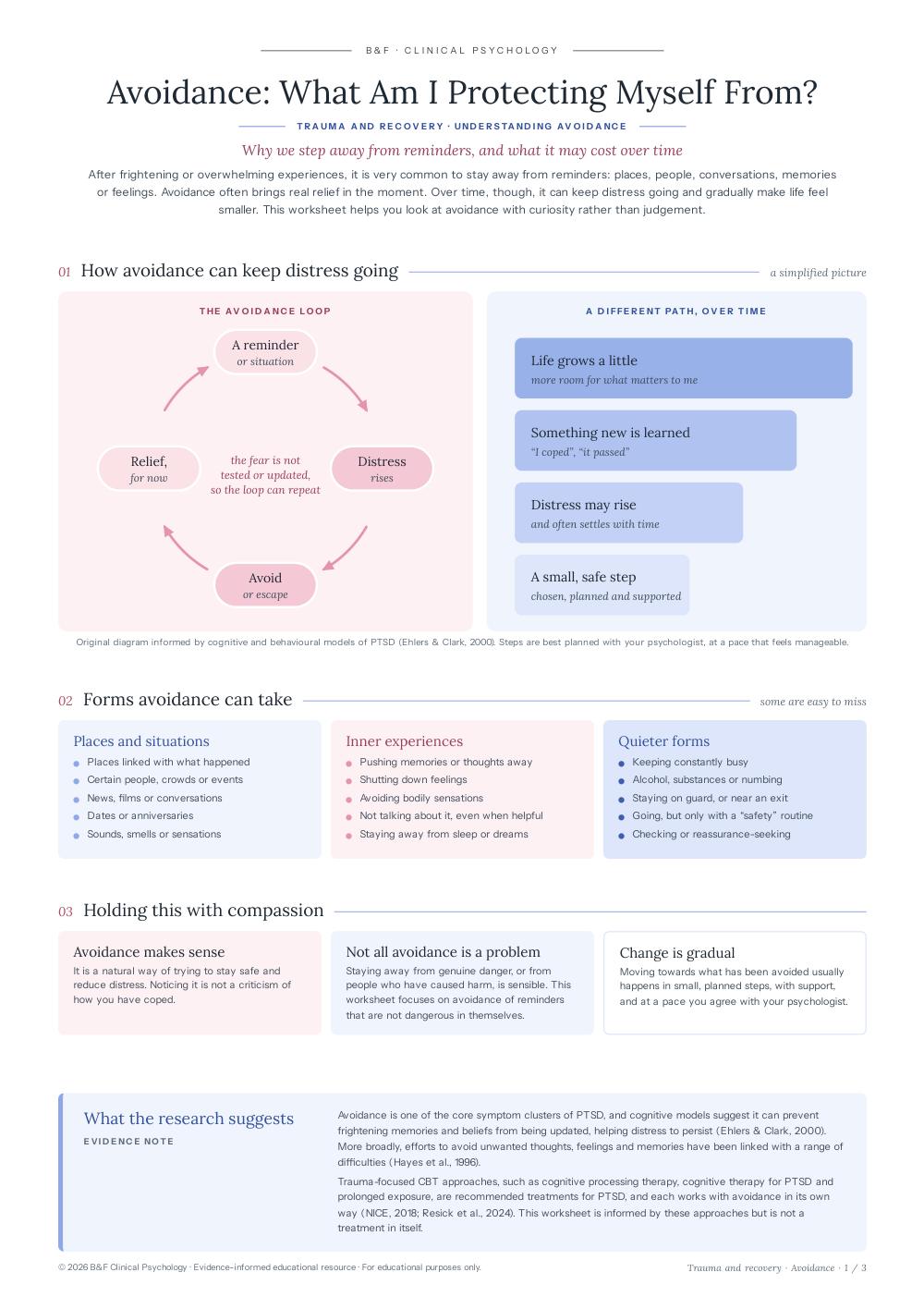
ReflectAvoidance: what am I protecting myself from?
Why we step away from reminders, and what it may cost over time.
-
 Preview
Practice
Preview
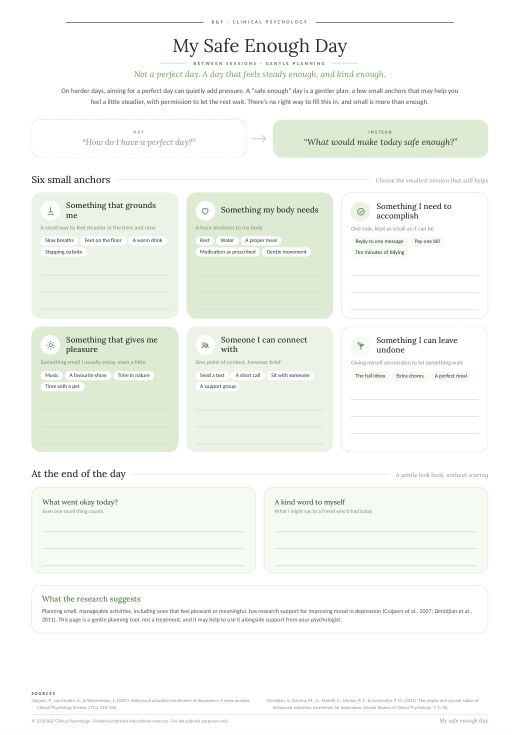
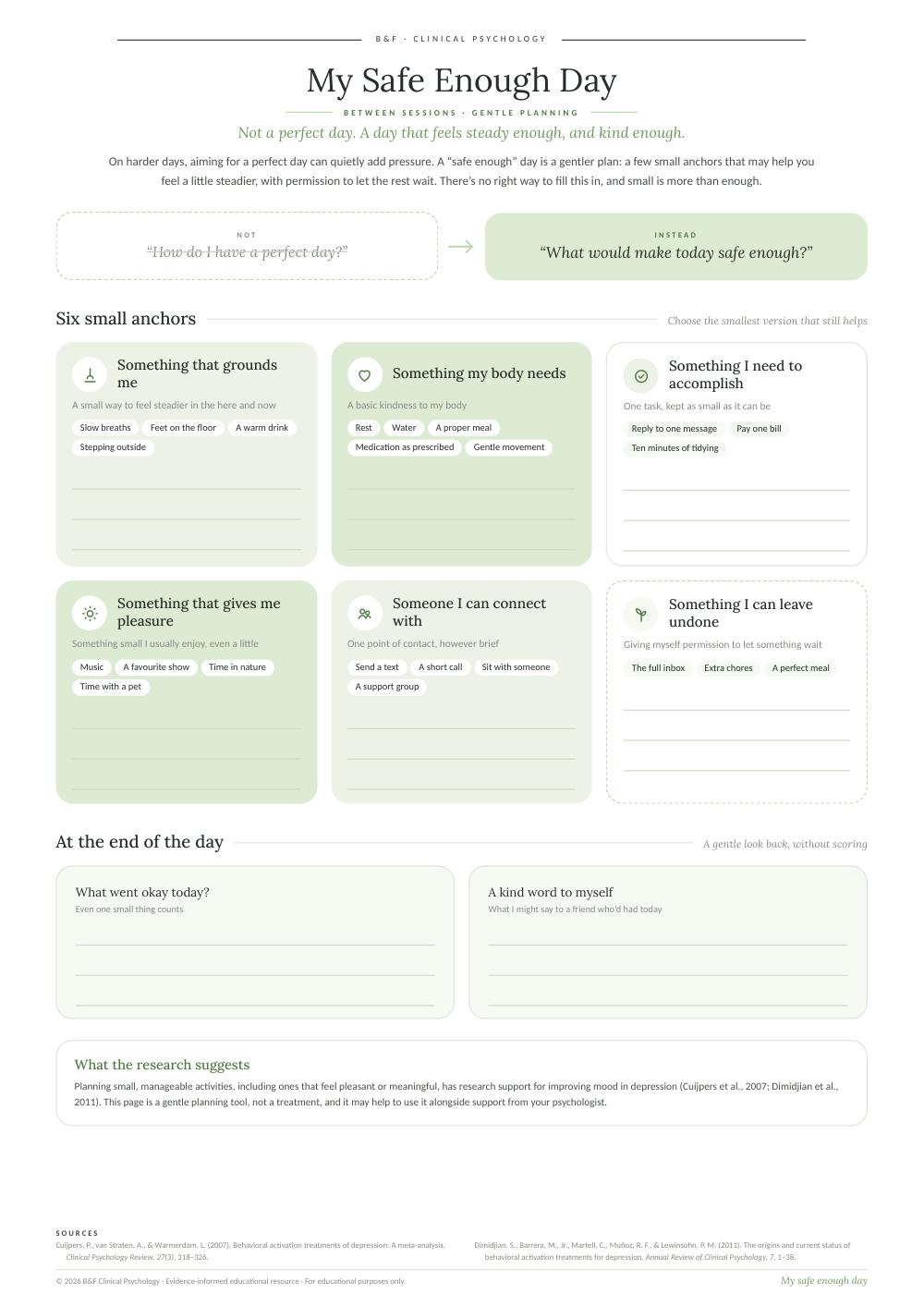
PracticeMy safe enough day
Not a perfect day: a few small anchors for a day that feels steady and kind enough.
-
 Preview
Practice
Preview
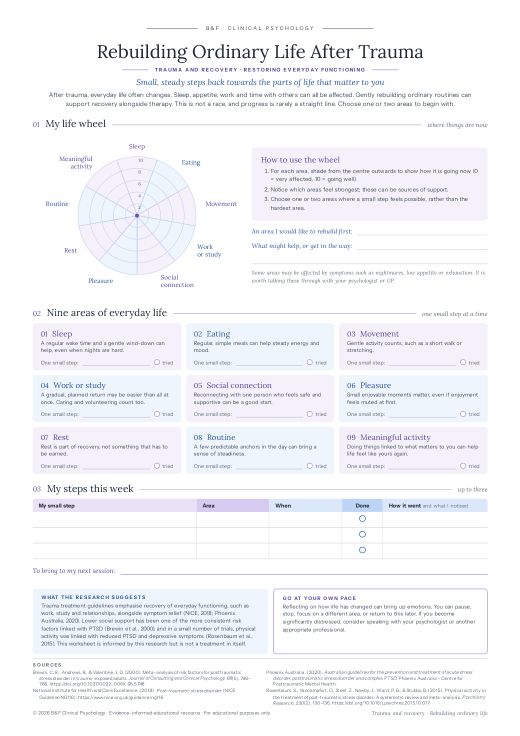
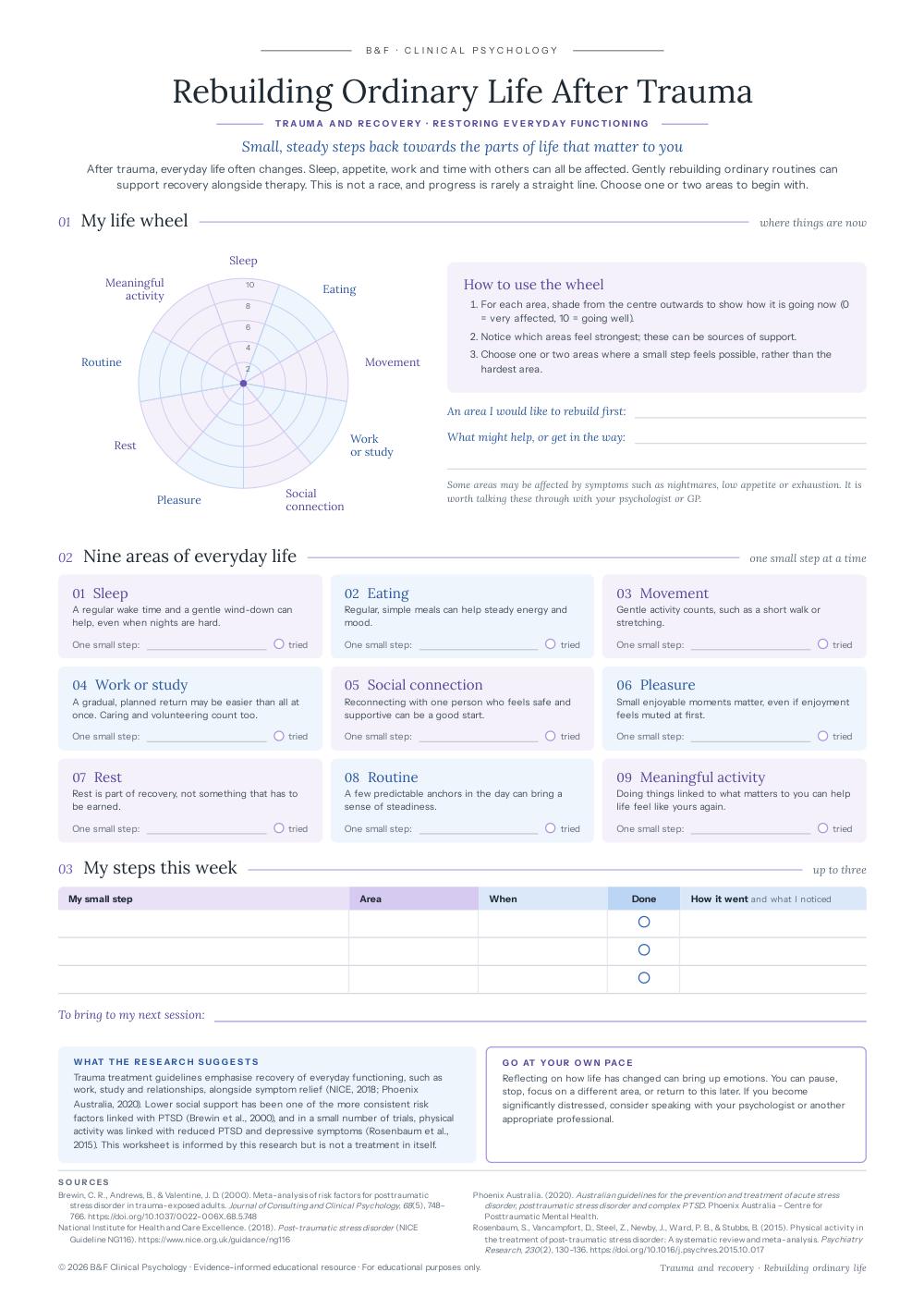
PracticeRebuilding ordinary life after trauma
Small, steady steps back towards the parts of life that matter to you.
-
 Preview
Learn
Preview
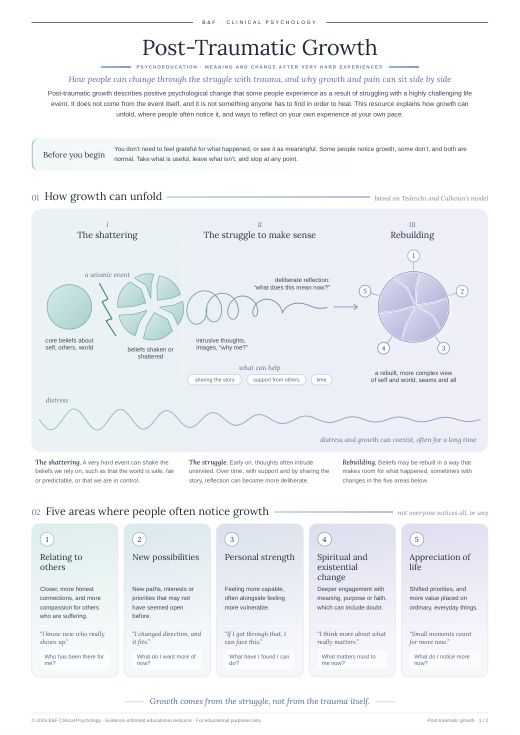
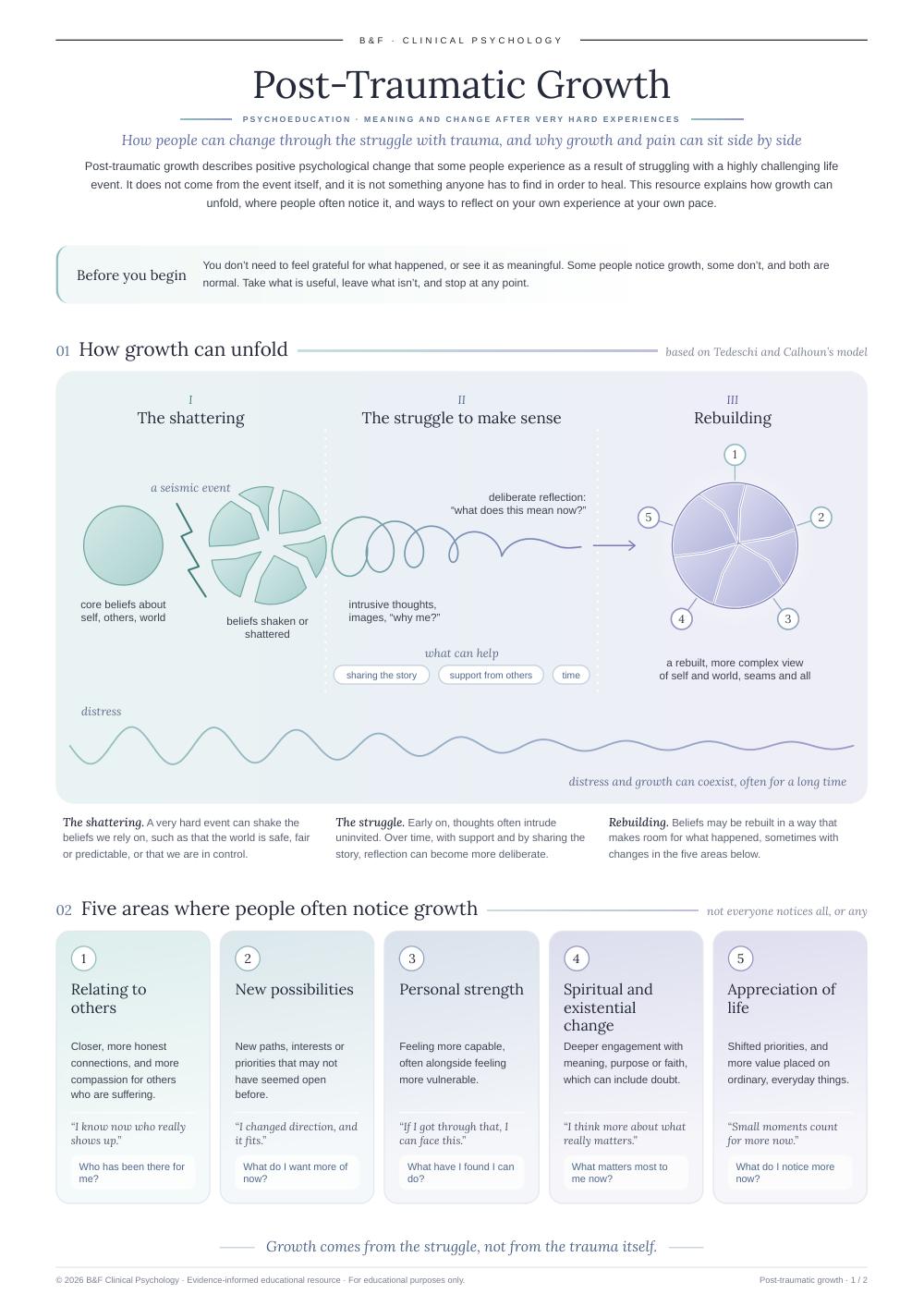
LearnPost-traumatic growth
Tedeschi and Calhoun's finding that deep adversity can also bring positive change.
These resources are for general education and self-reflection, not a substitute for individual psychological assessment or therapy. If you are in crisis, feel unsafe, or may harm yourself or someone else, please contact emergency services or go to the nearest emergency department.