

Free resources
Psychology: people and concepts
The thinkers and ideas behind the work.
Influential people 25
-
 Preview
Learn
Preview
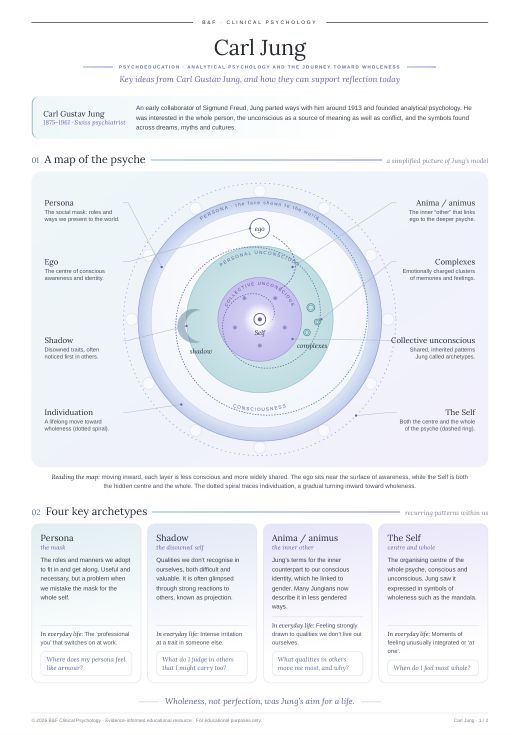
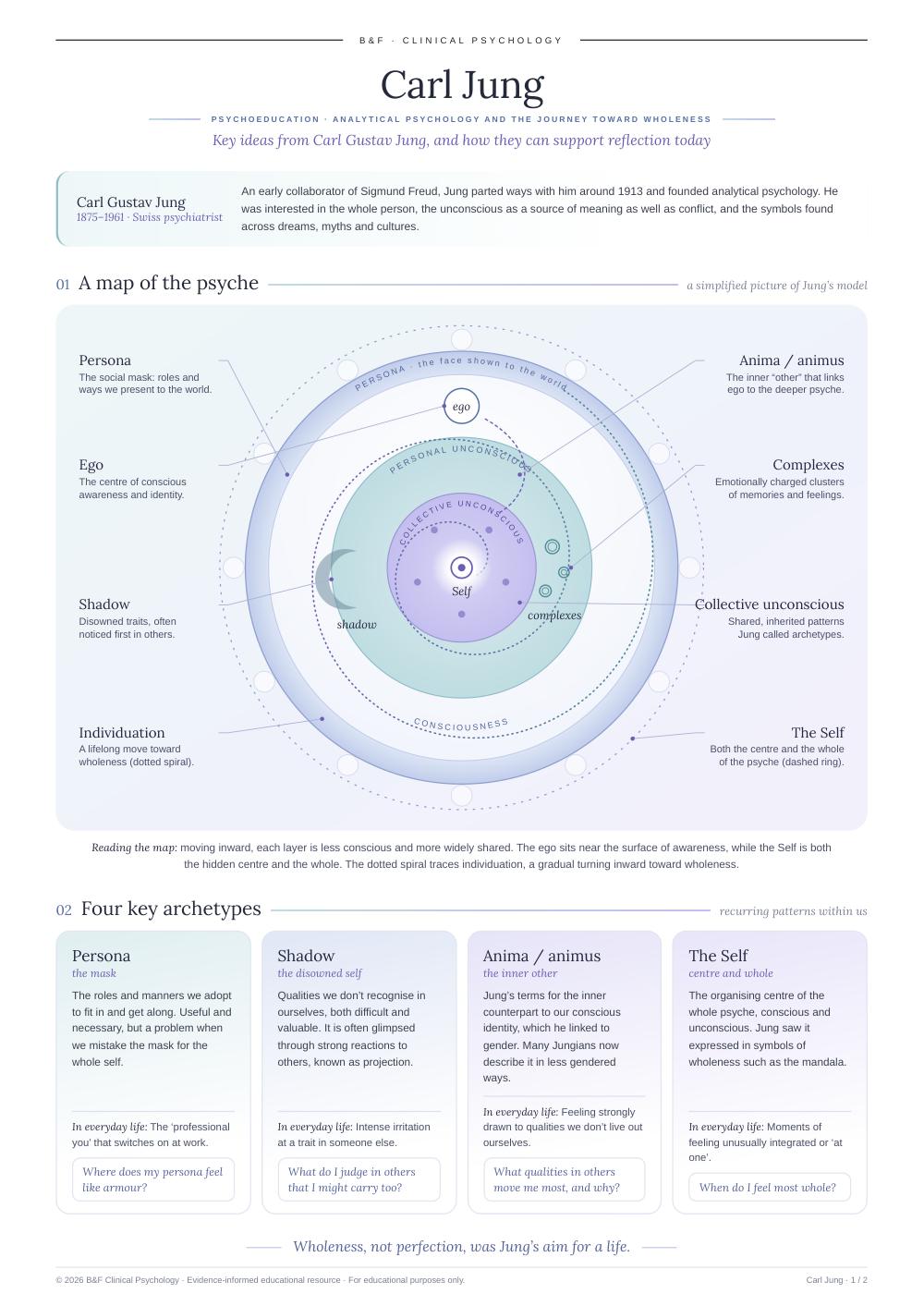
LearnCarl Jung: a map of the psyche
Analytical psychology and the journey towards wholeness.
-
 Preview
Learn
Preview
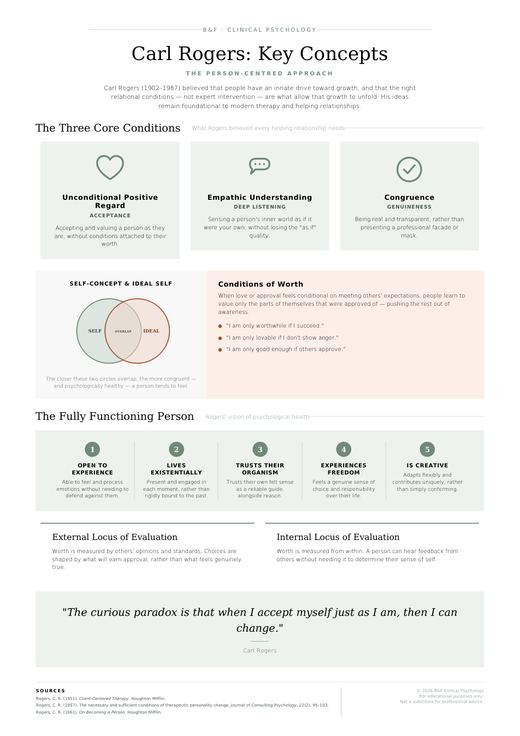
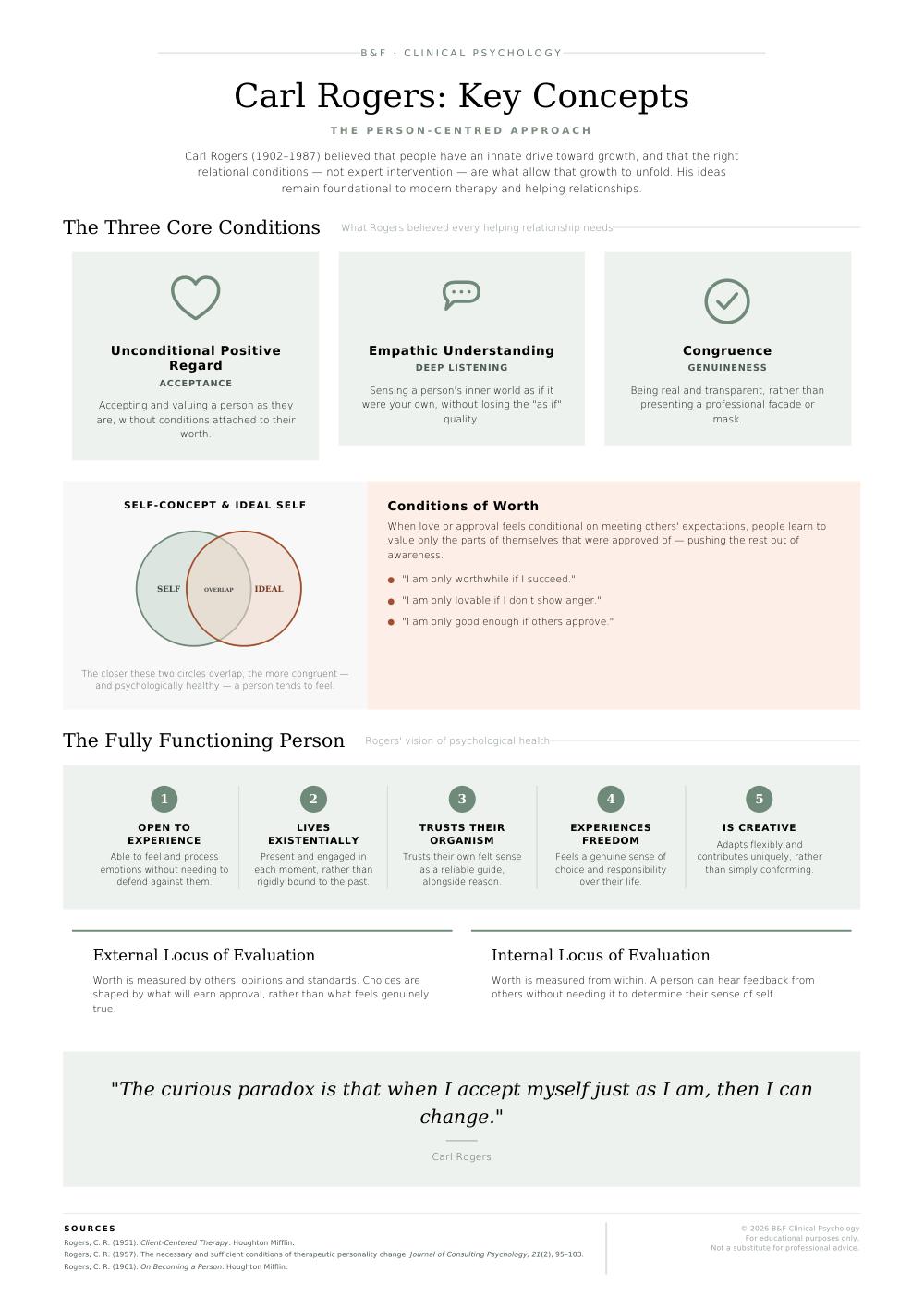
LearnCarl Rogers: key concepts
The person-centred approach: the relational conditions that let people grow.
-
 Preview
Learn
Preview
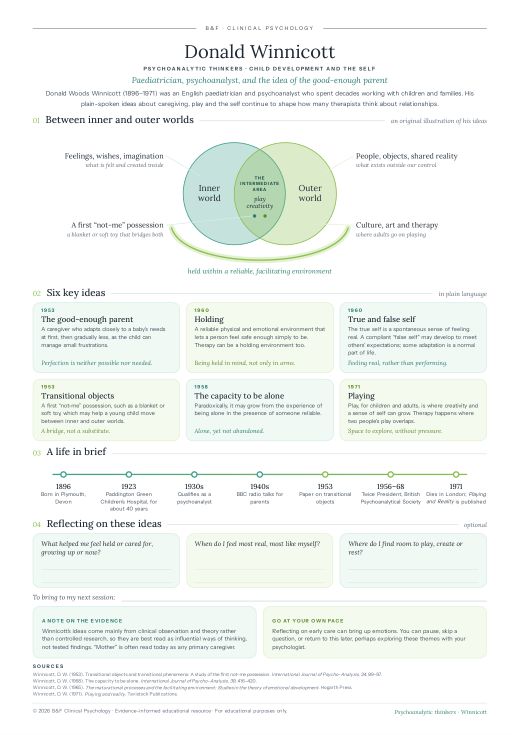
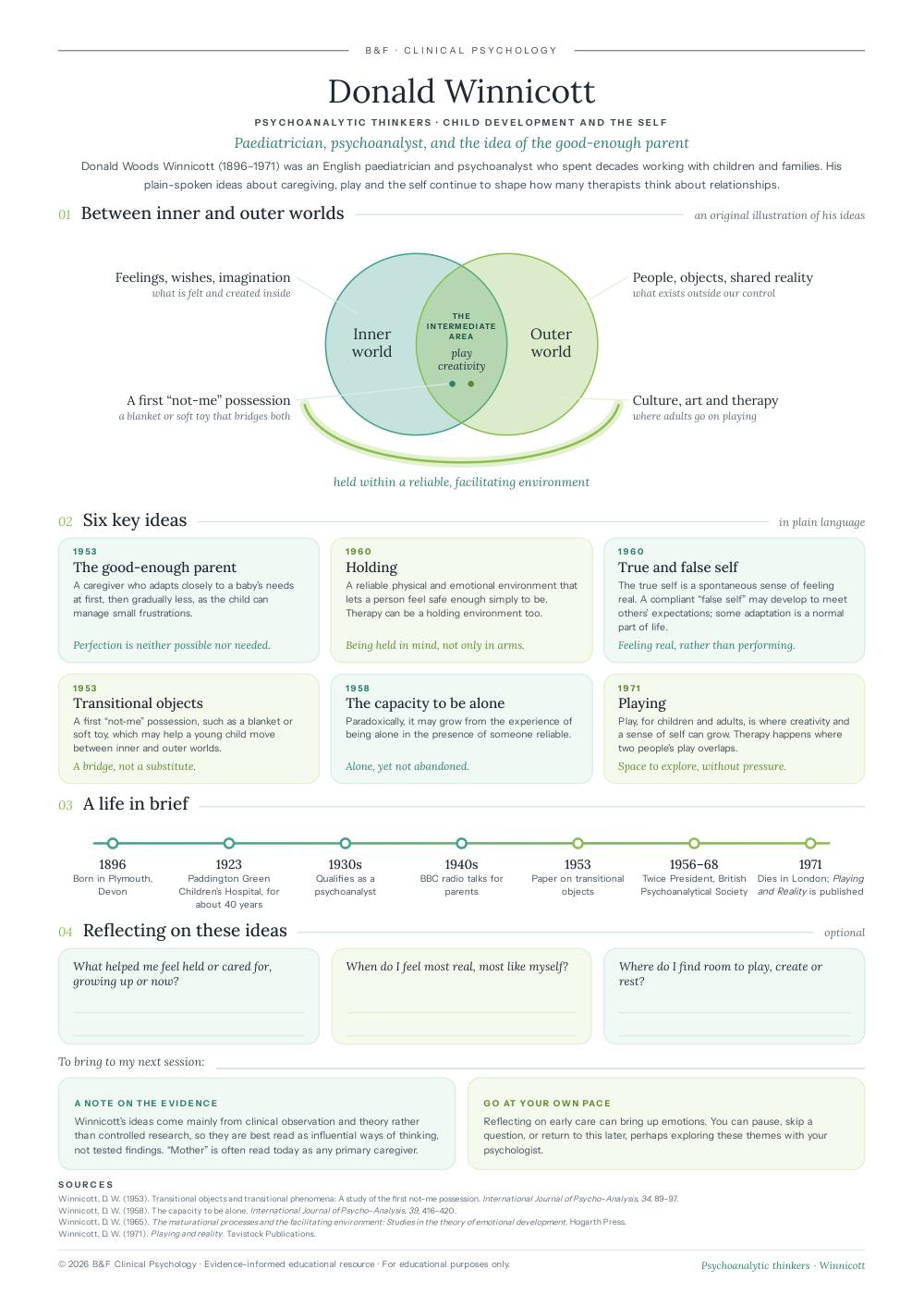
LearnDonald Winnicott: the space between
The paediatrician and psychoanalyst who said there is no such thing as a baby, only a baby with someone caring for them.
-
 Preview
Learn
Preview
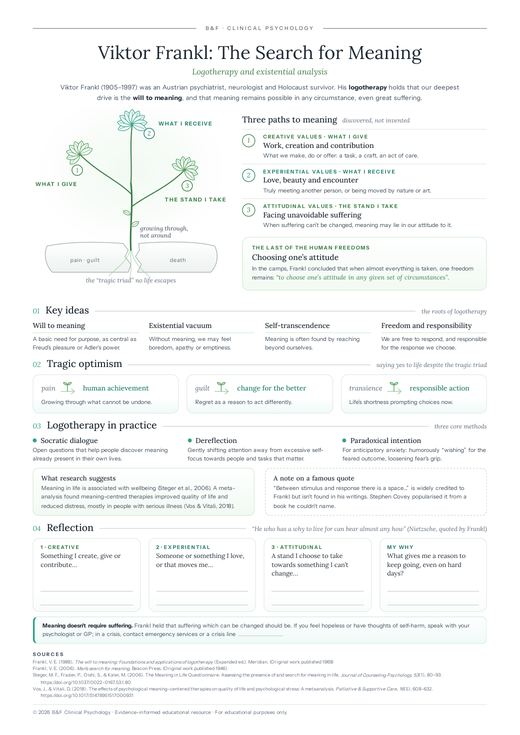
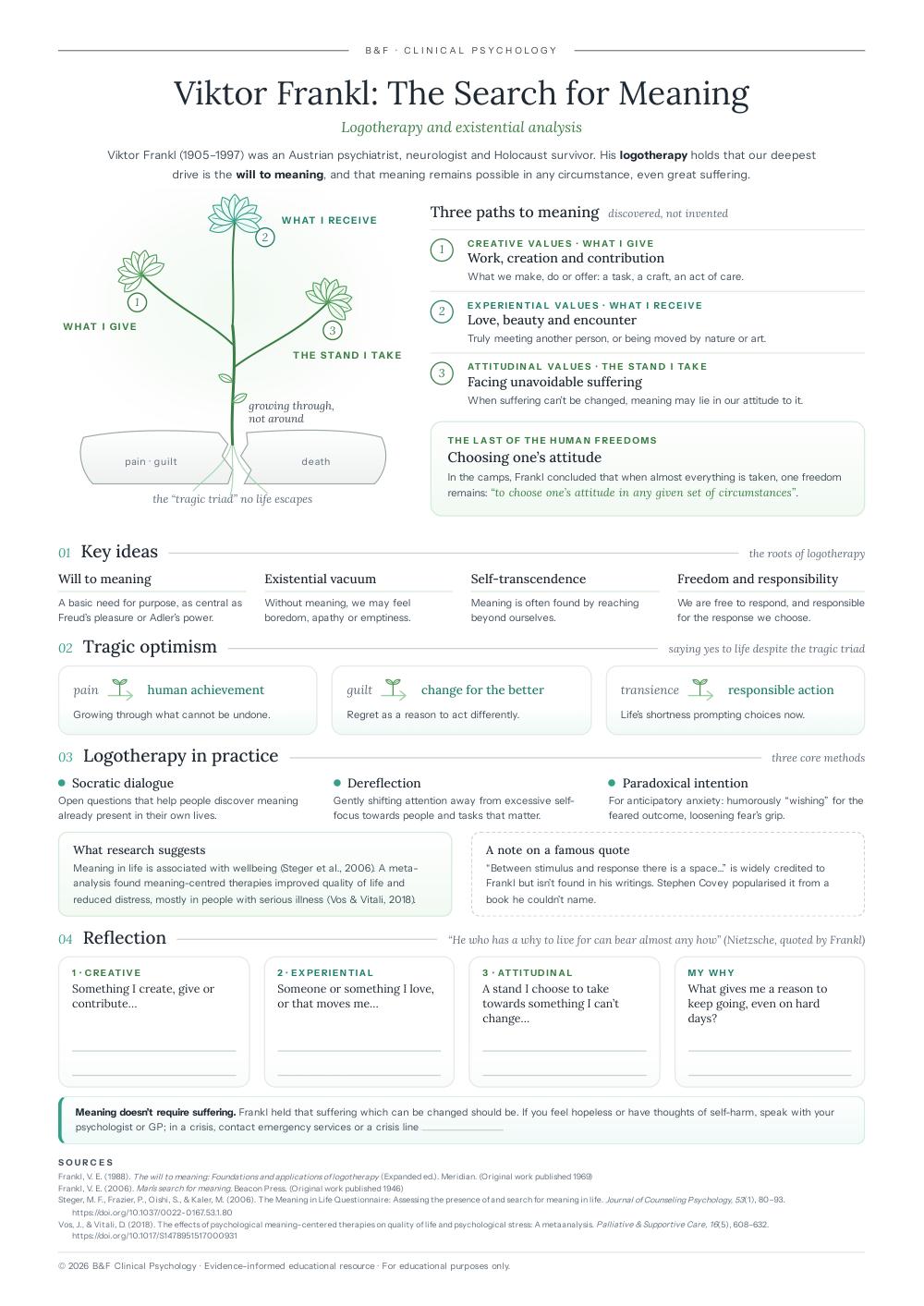
LearnViktor Frankl: the search for meaning
Logotherapy, and the case that the primary human drive is meaning, not pleasure.
-
 Preview
Learn
Preview
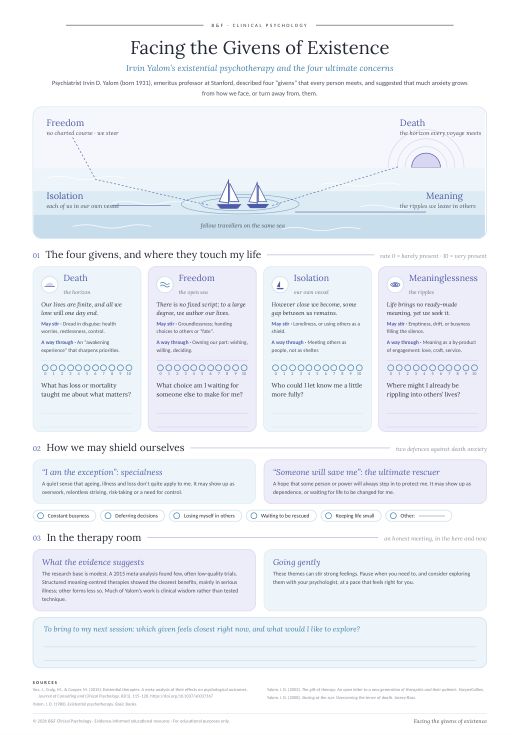
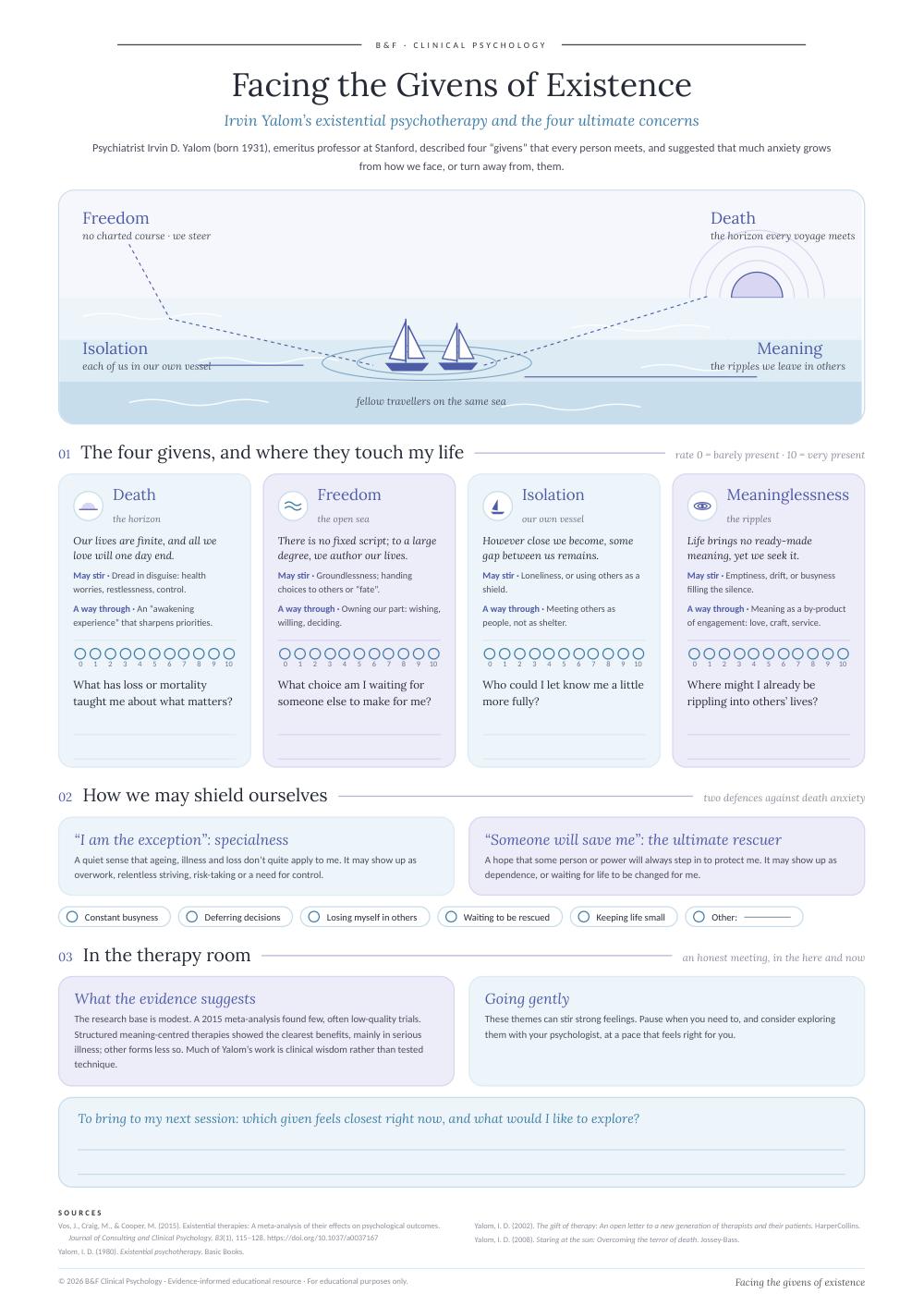
LearnIrvin Yalom: facing the givens of existence
Facing the givens of existence: the four ultimate concerns every person meets.
-
 Preview
Learn
Preview
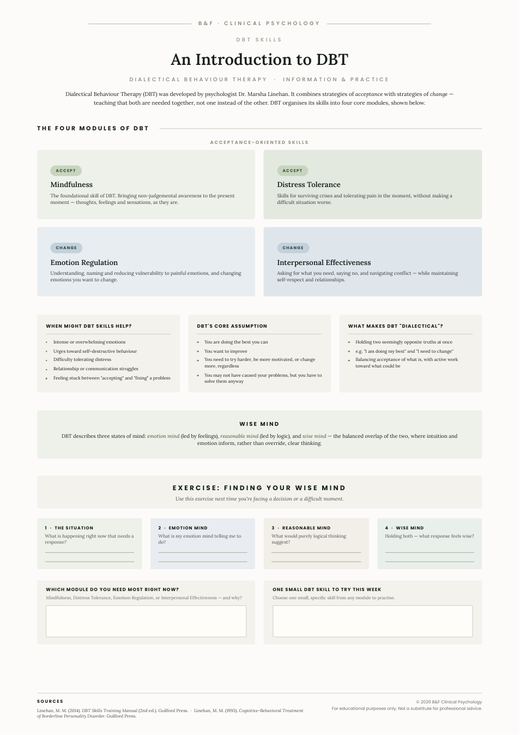
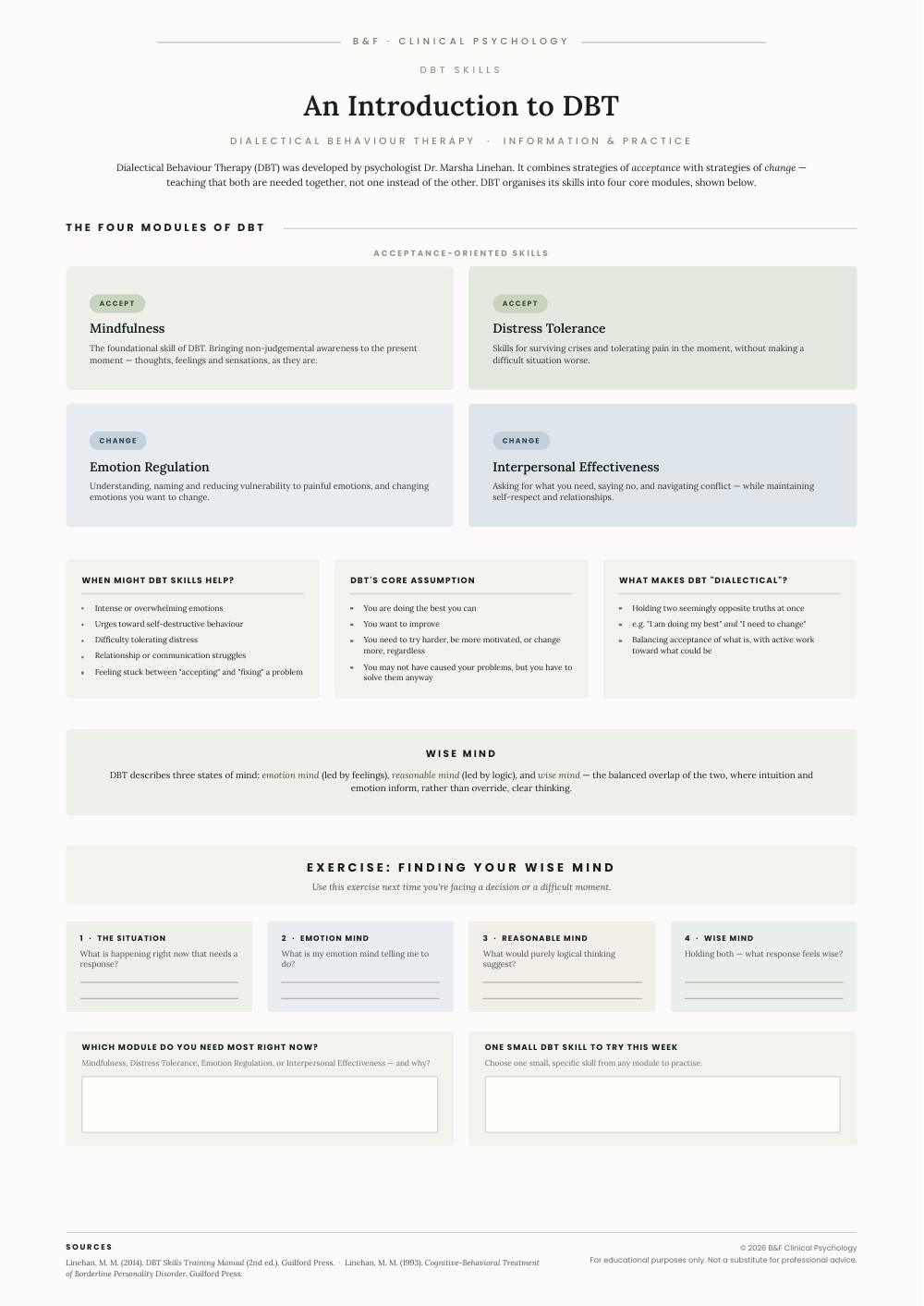
LearnMarsha Linehan: an introduction to DBT
Where dialectical behaviour therapy came from, and the skills it teaches.
-
 Preview
Learn
Preview
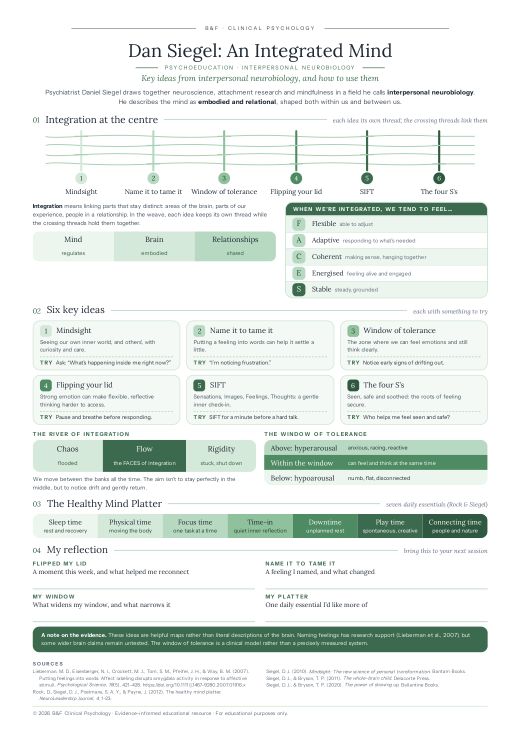
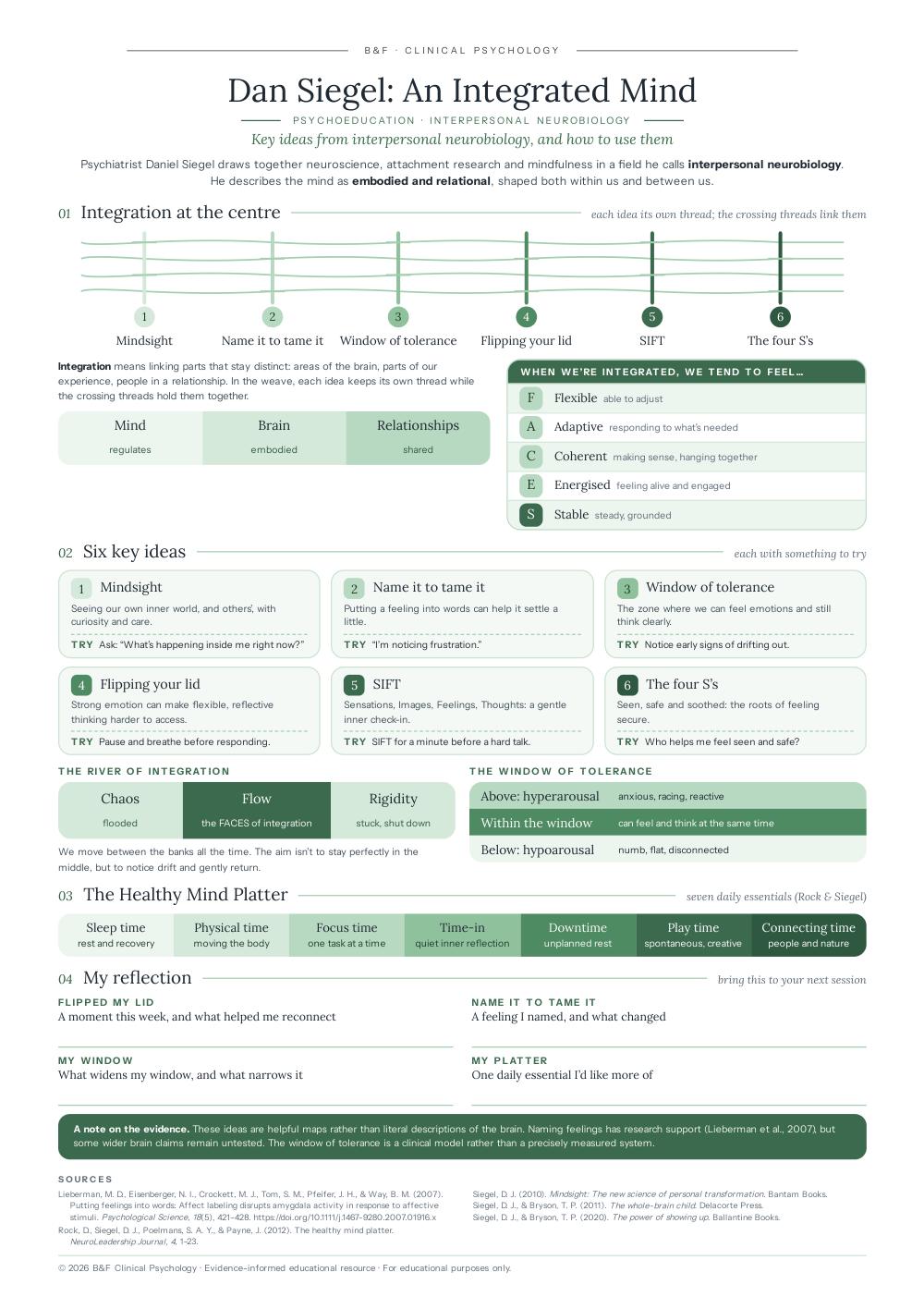
LearnDan Siegel: an integrated mind
Key ideas from interpersonal neurobiology, and how to use them.
-
 Preview
Learn
Preview
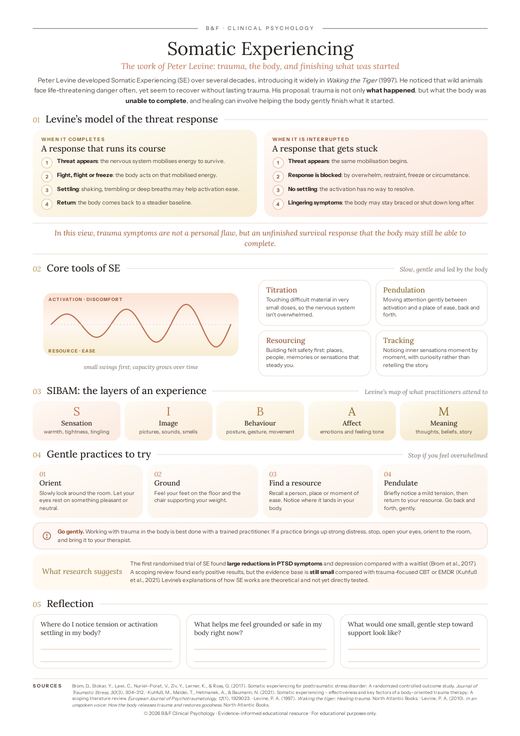
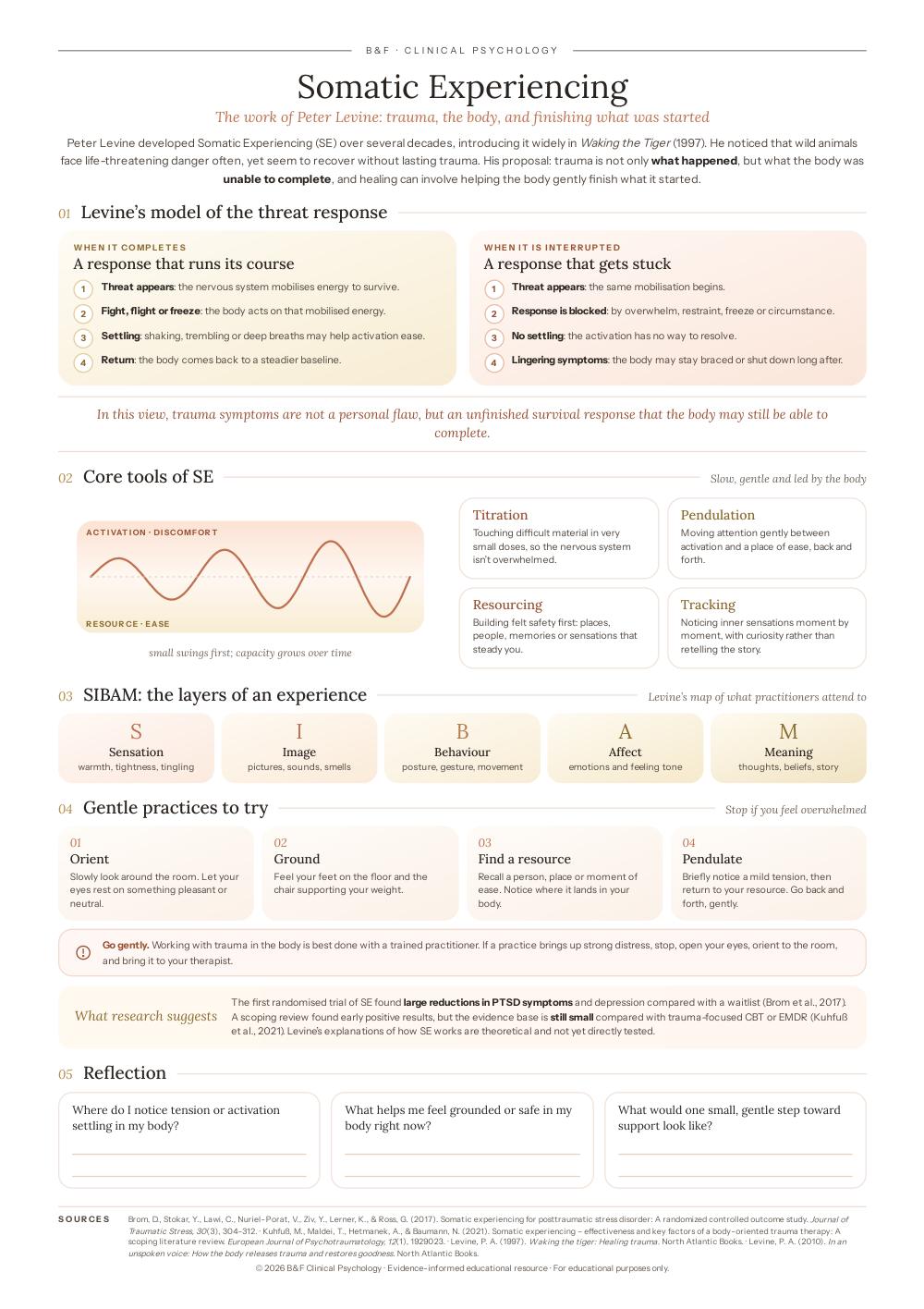
LearnPeter Levine: somatic experiencing
Trauma and the body: five decades of work on how the nervous system completes what it began.
-
 Preview
Learn
Preview
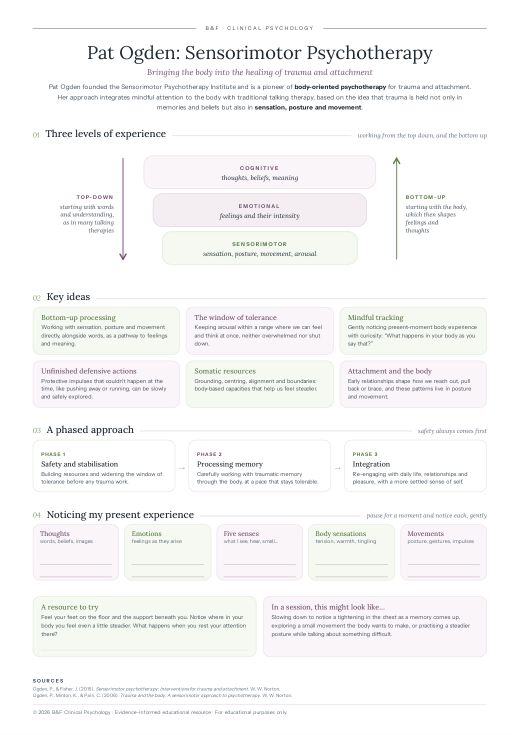
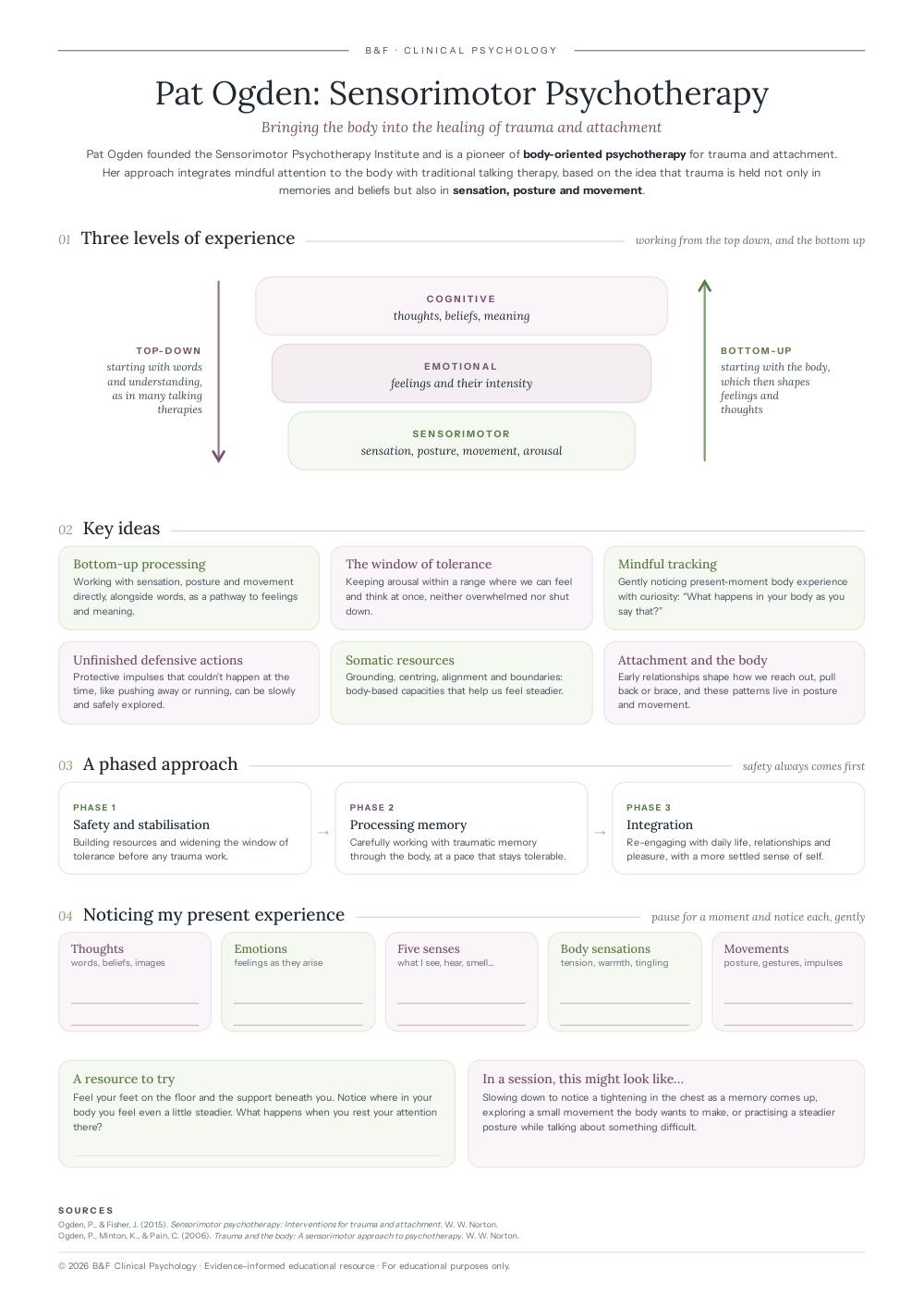
LearnPat Ogden: sensorimotor psychotherapy
Bringing the body into the healing of trauma and attachment.
-
 Preview
Learn
Preview
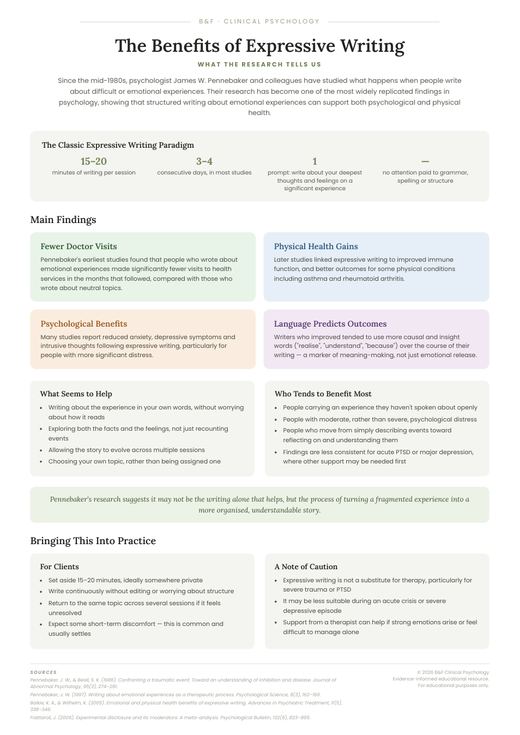
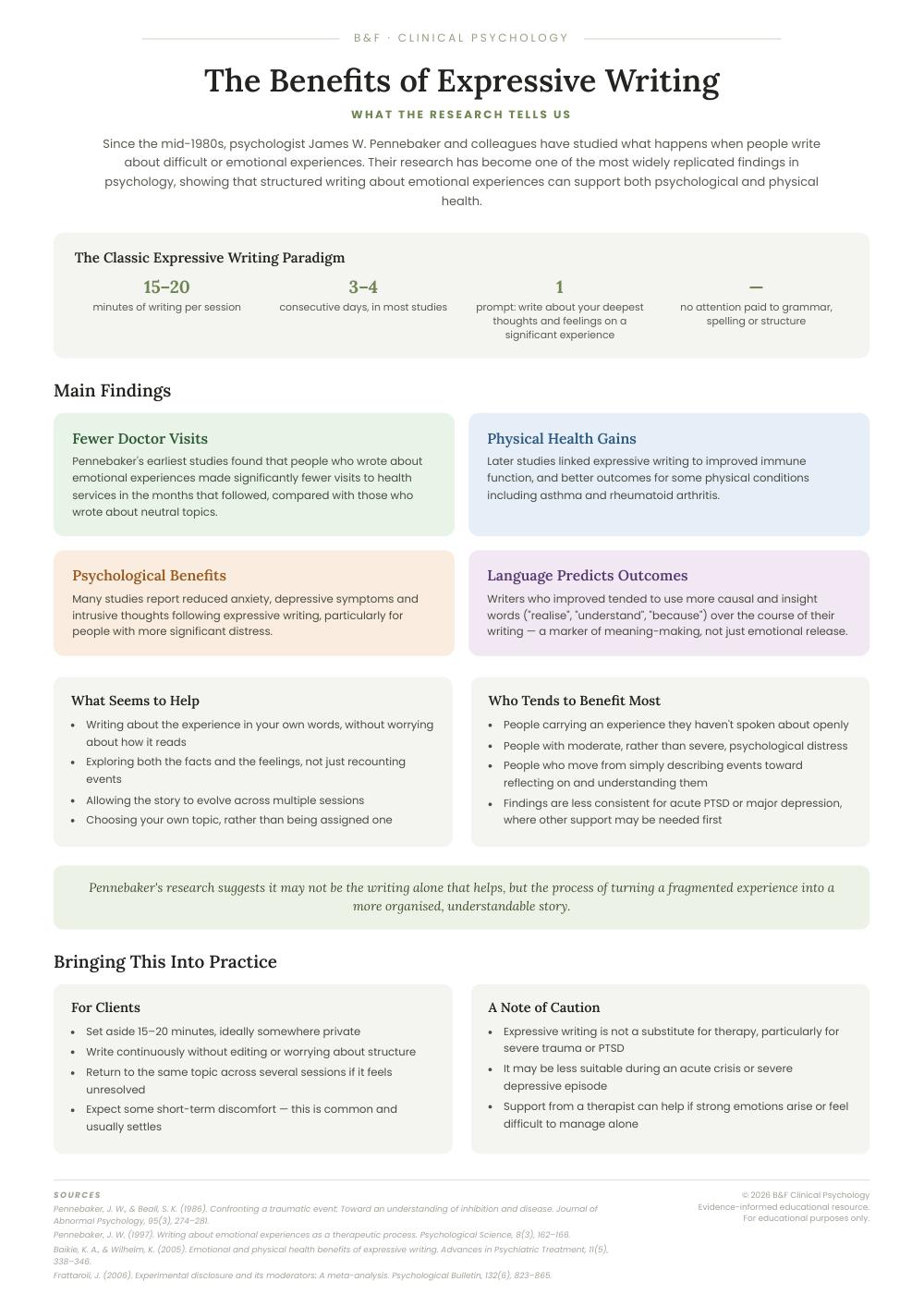
LearnJames Pennebaker: the benefits of expressive writing
What forty years of research say happens when people write about what hurts.
-
 Preview
Learn
Preview
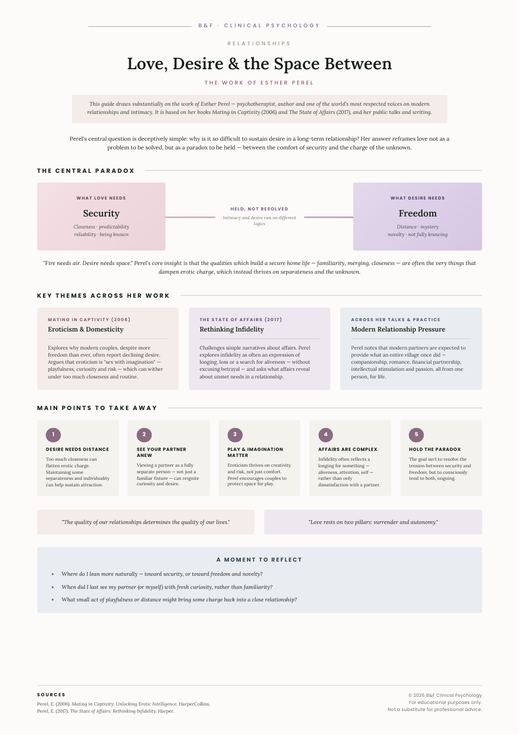
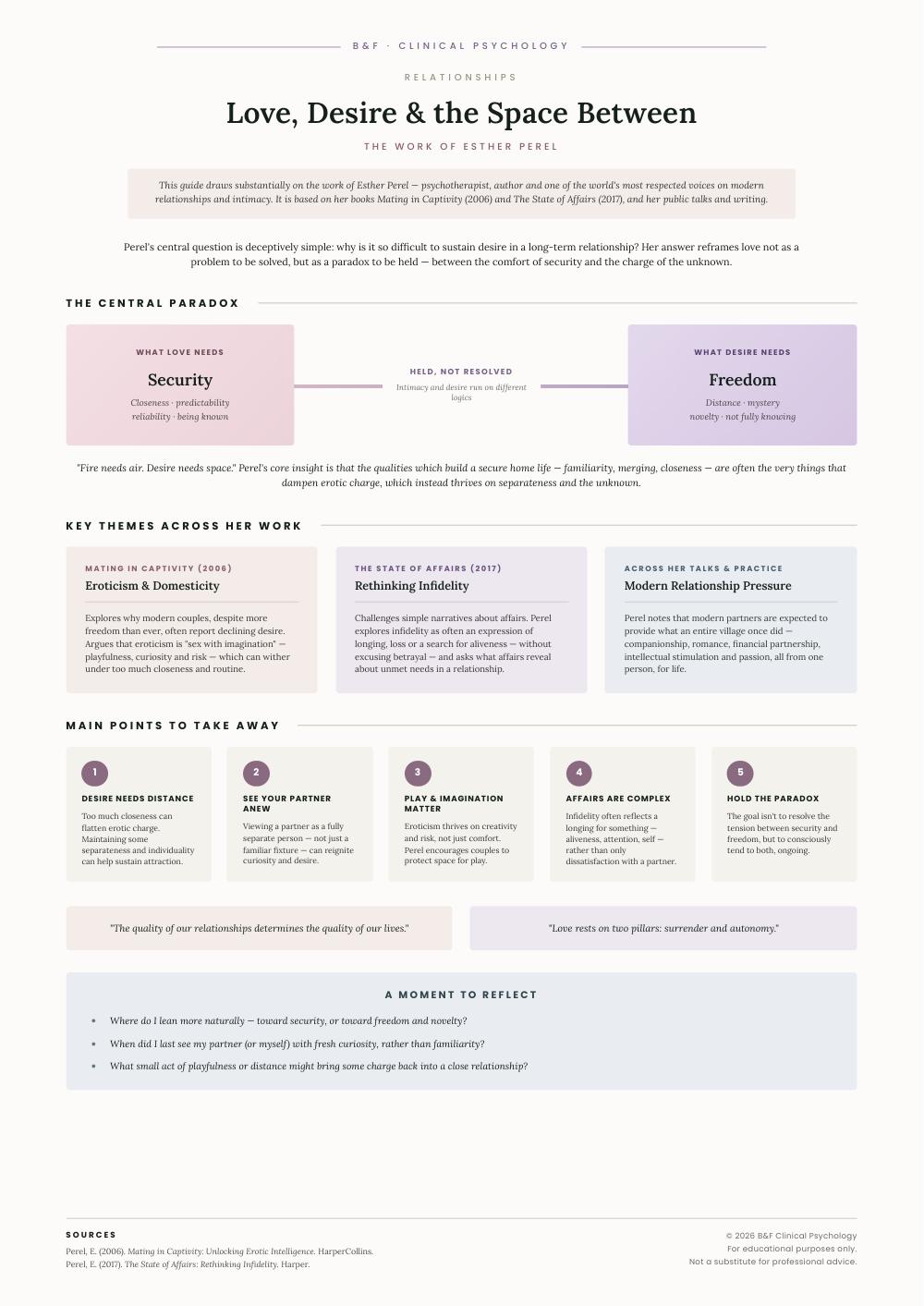
LearnEsther Perel: love, desire and the space between
Why security and desire pull in different directions, and how couples hold both.
-
 Preview
Learn
Preview
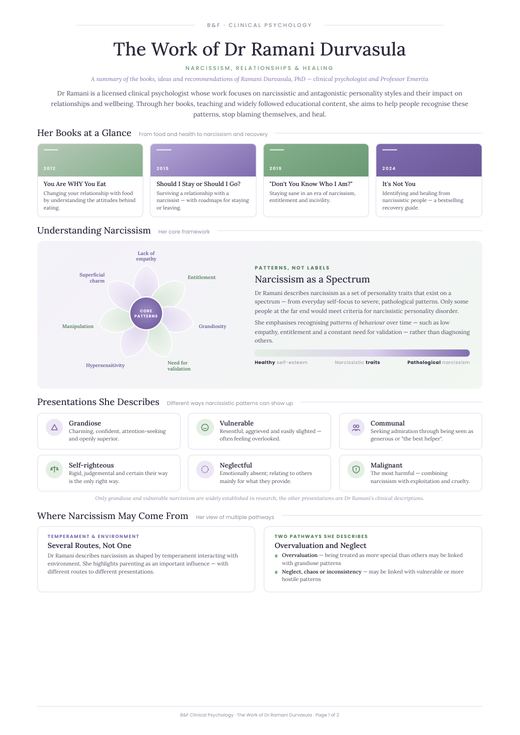
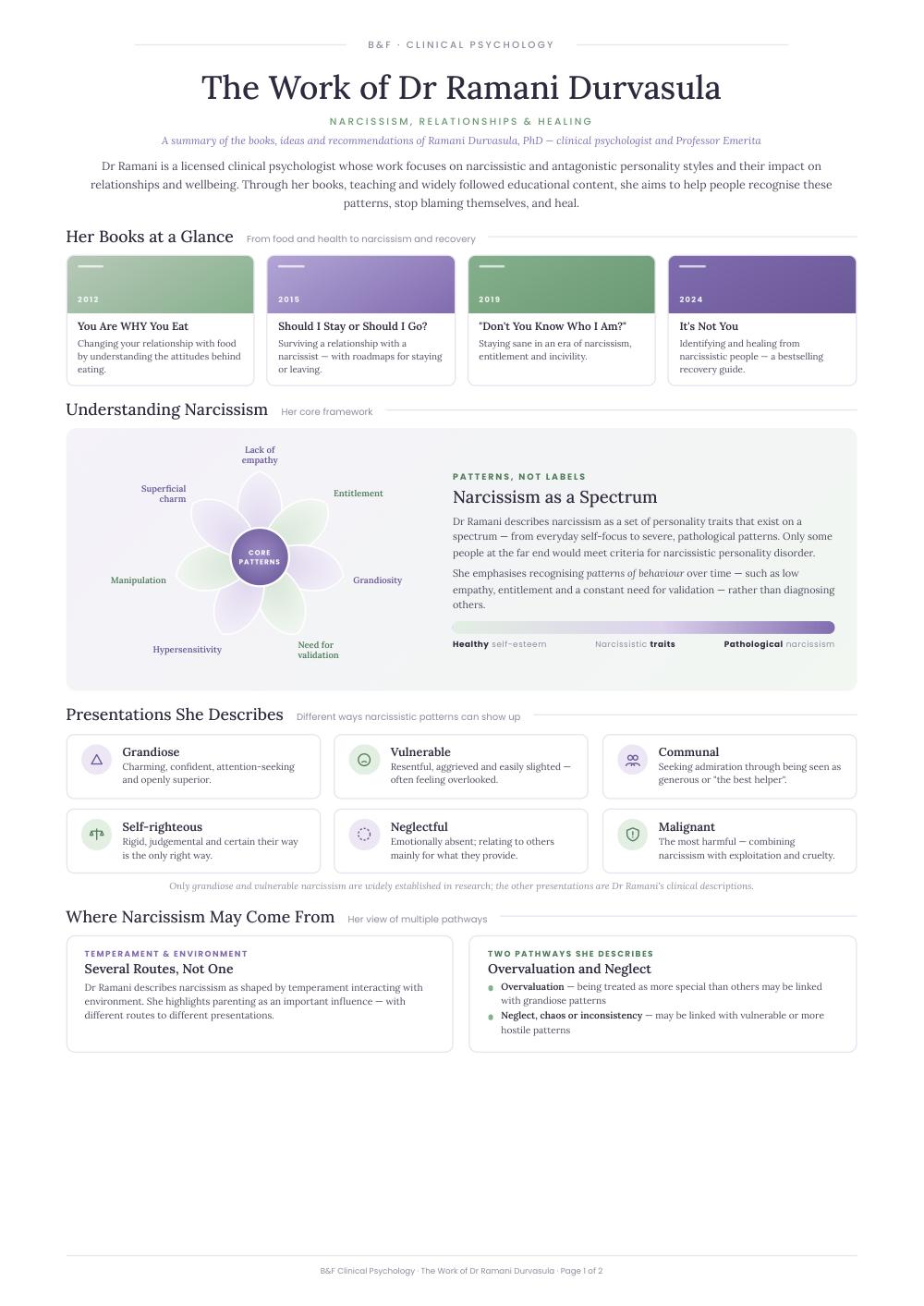
LearnRamani Durvasula: narcissism, relationships and healing
A summary of her books and ideas on narcissistic personality styles, their impact, and healing.
-
 Preview
Learn
Preview
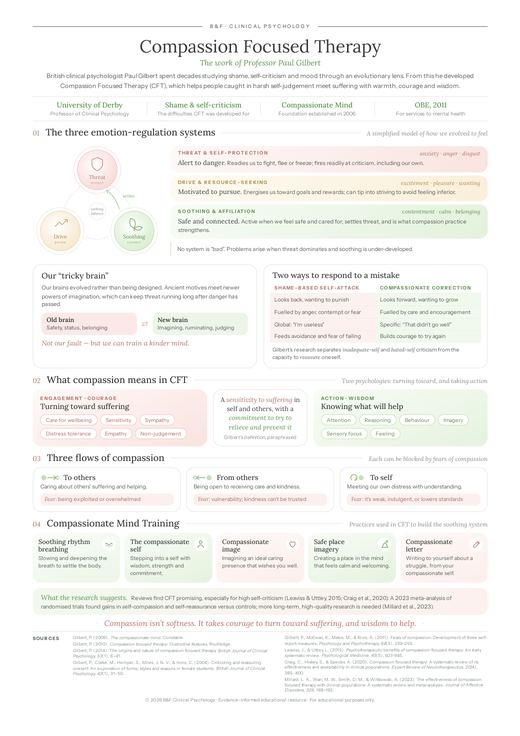
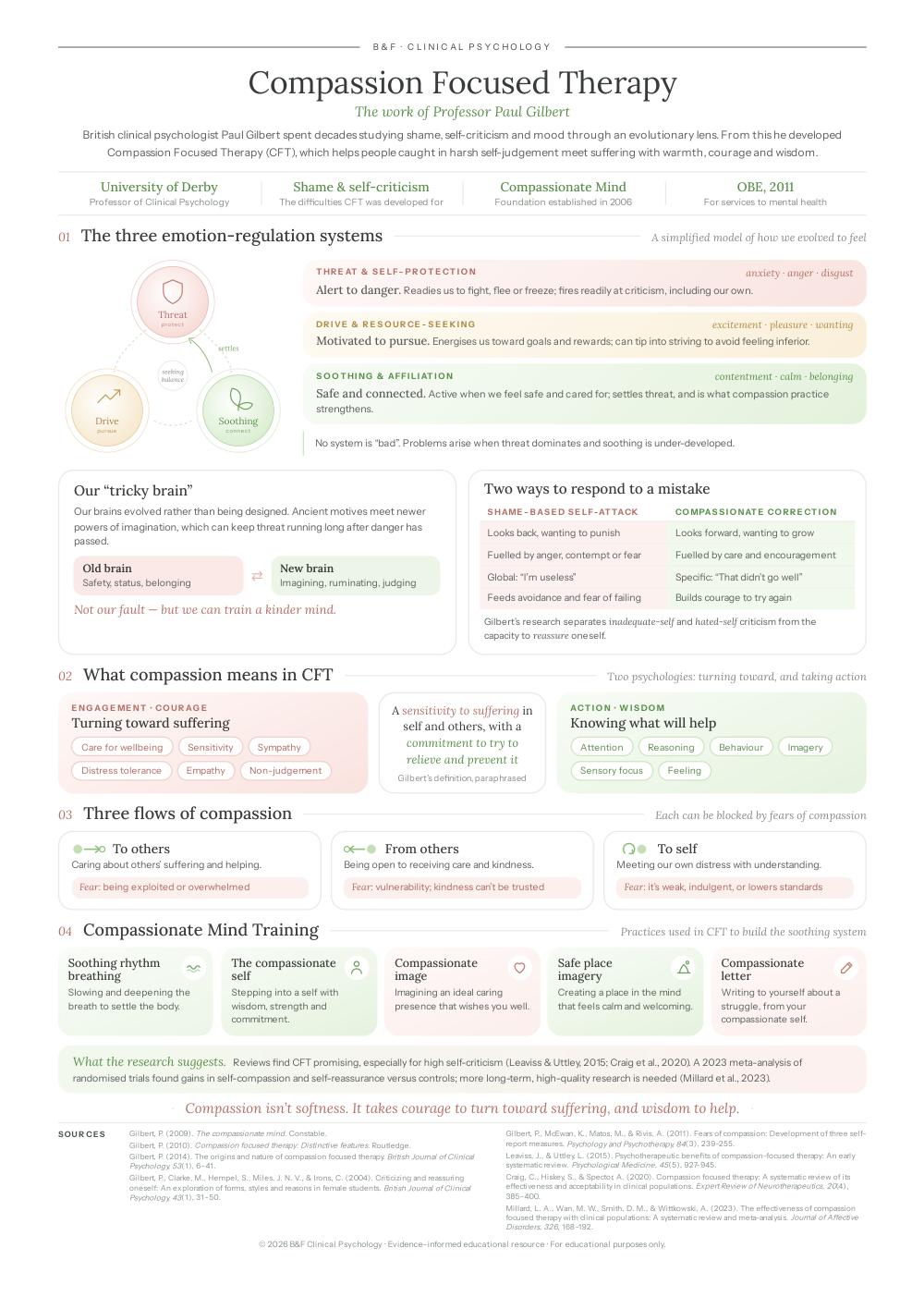
LearnPaul Gilbert: compassion focused therapy
Meeting shame and harsh self-criticism with warmth, courage and wisdom.
-
 Preview
Learn
Preview
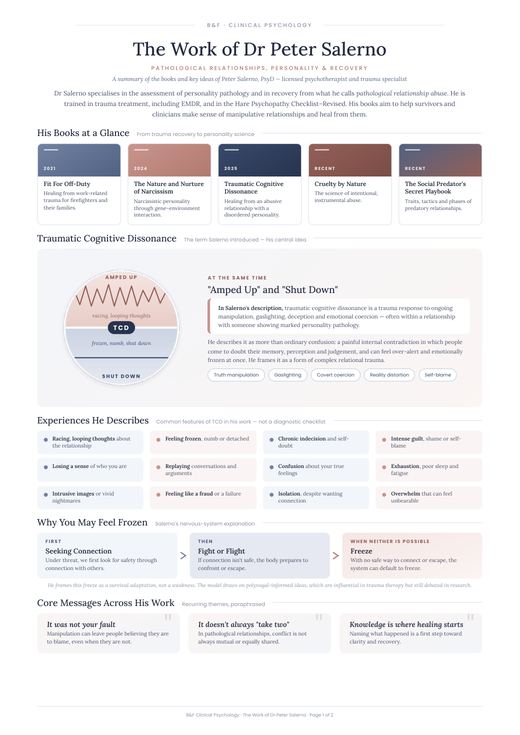
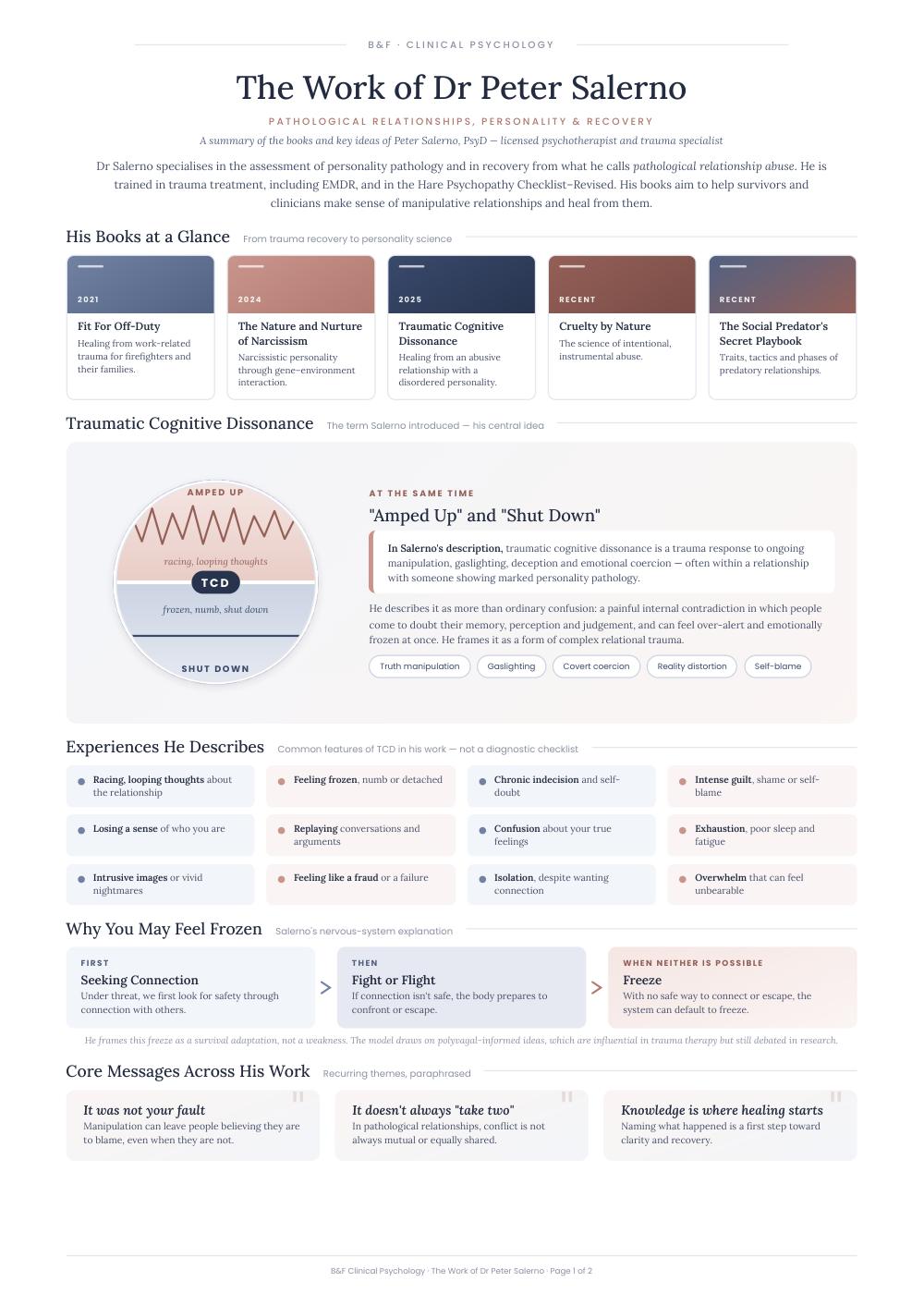
LearnPeter Salerno: pathological relationships and recovery
A summary of his books on personality pathology and recovery from pathological relationship abuse.
-
 Preview
Learn
Preview
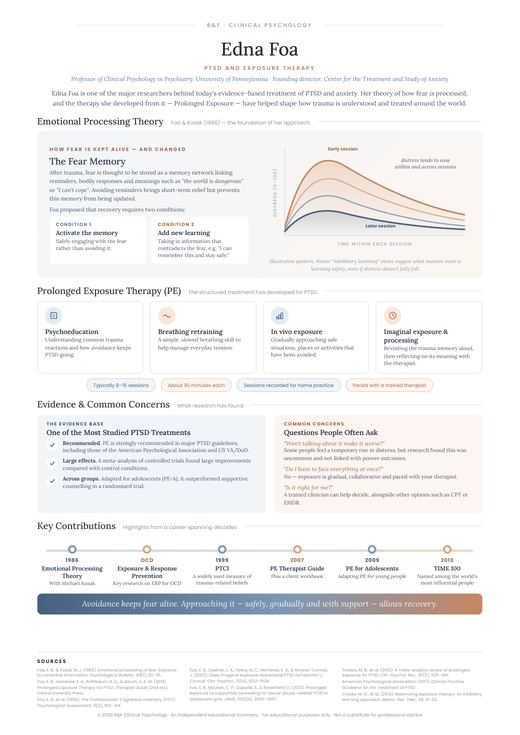
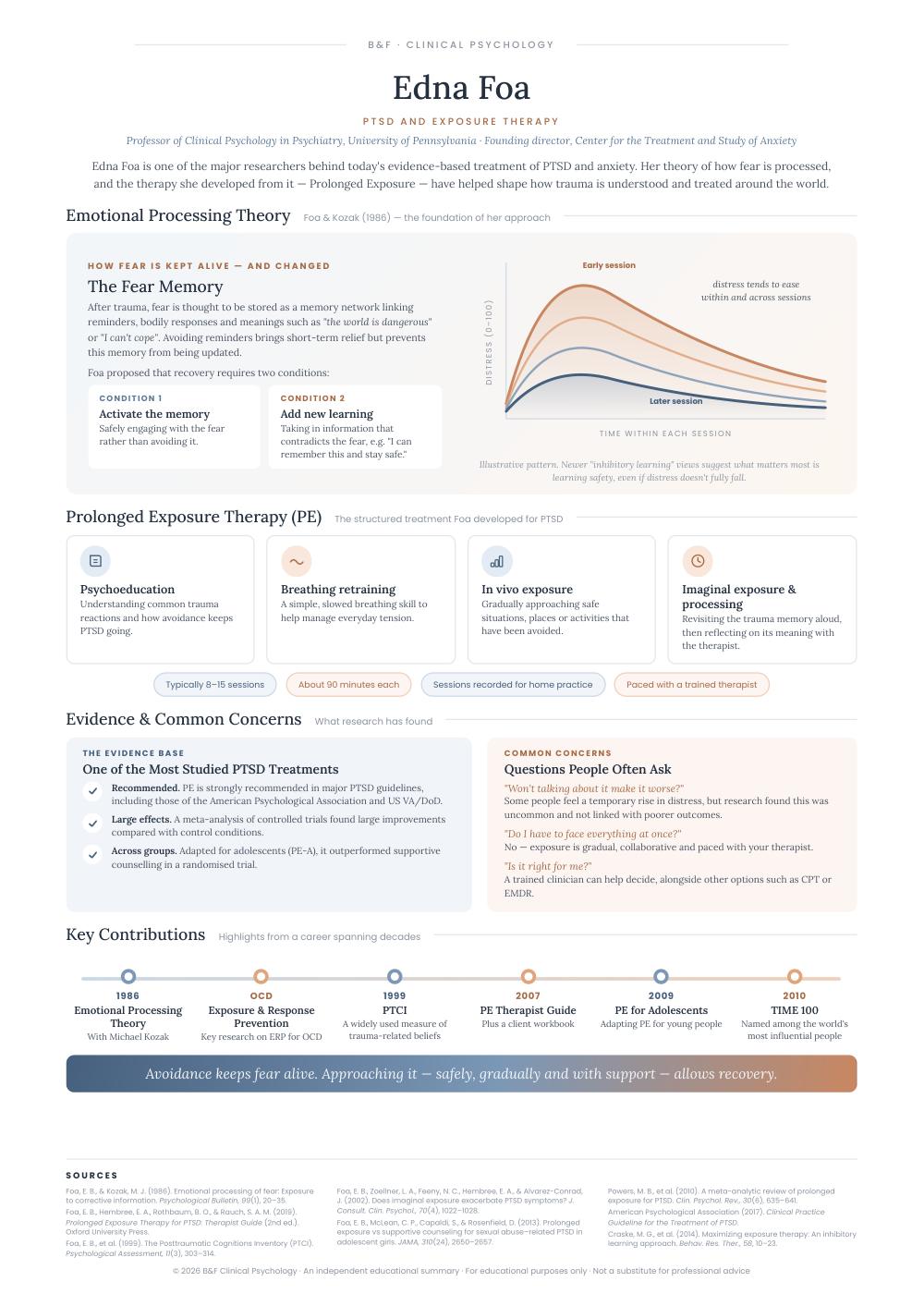
LearnEdna Foa: PTSD and exposure therapy
Emotional processing theory and Prolonged Exposure, a major evidence-based treatment for PTSD.
-
 Preview
Learn
Preview
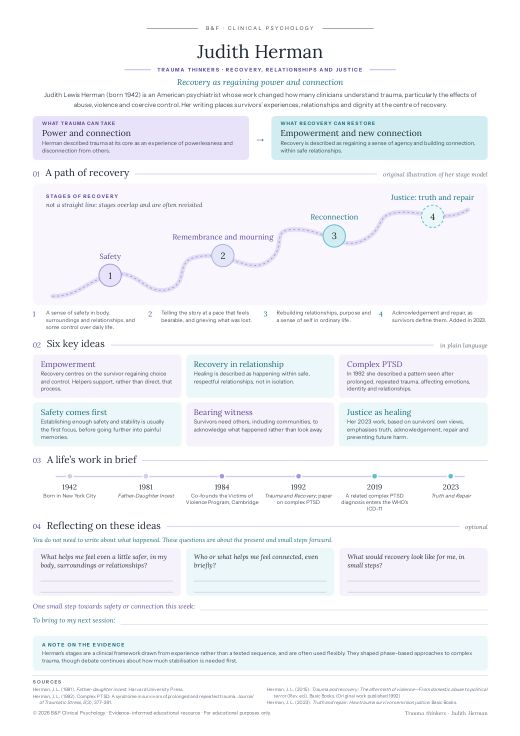
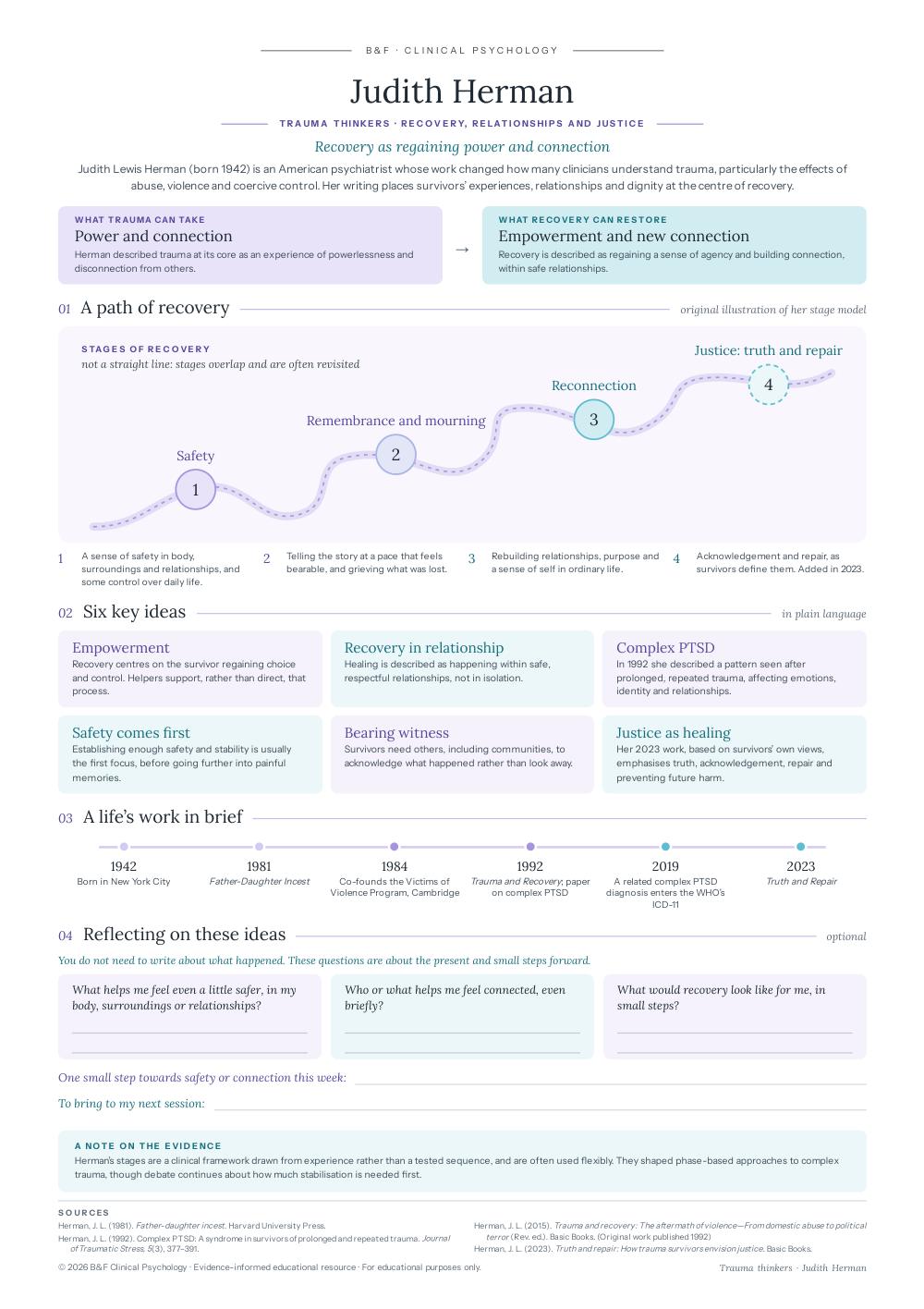
LearnJudith Herman: trauma and recovery
Recovery as regaining power and connection, from the psychiatrist who reshaped how we understand trauma.
-
 Preview
Learn
Preview
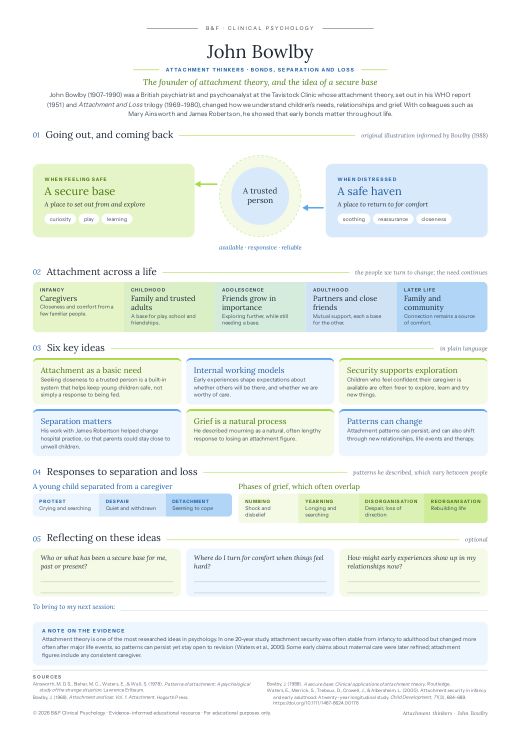
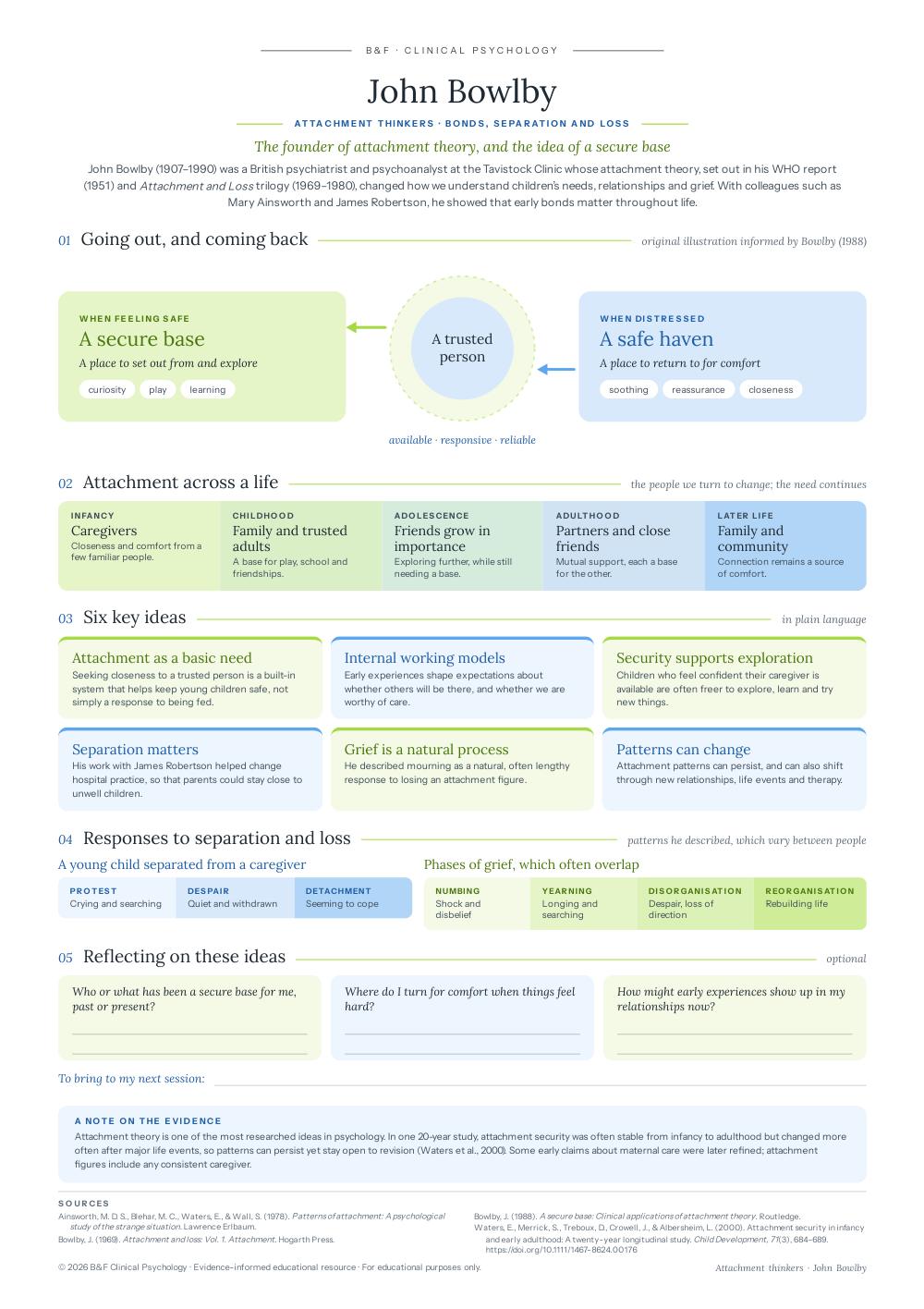
LearnJohn Bowlby: attachment and the secure base
The founder of attachment theory, on bonds, separation and loss.
-
 Preview
Learn
Preview
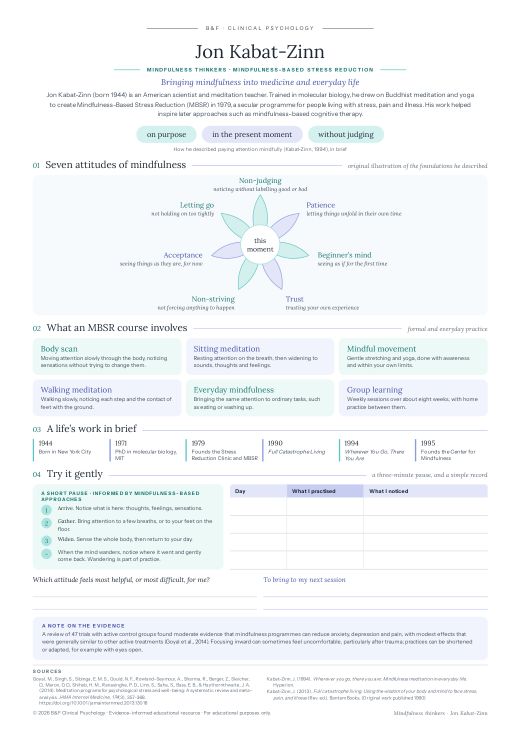
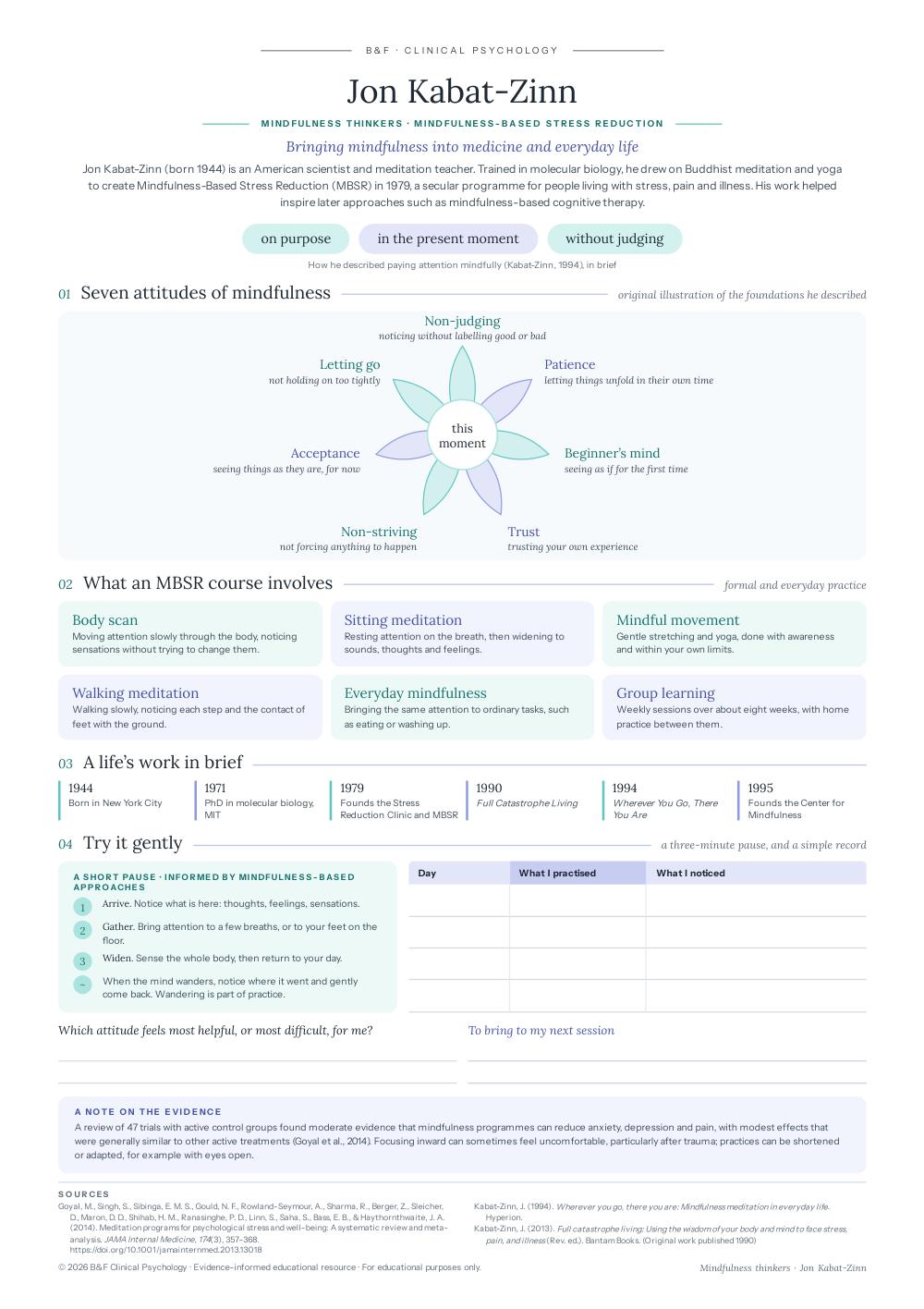
LearnJon Kabat-Zinn: mindfulness-based stress reduction
Bringing mindfulness into medicine and everyday life.
-
 Preview
Learn
Preview
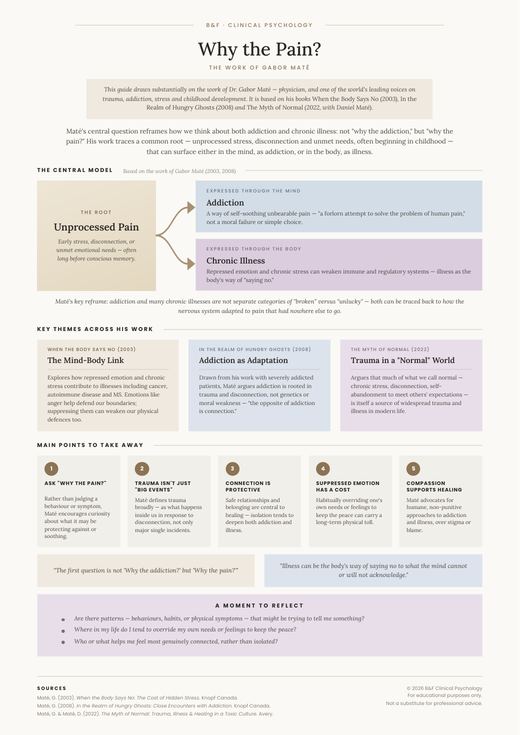
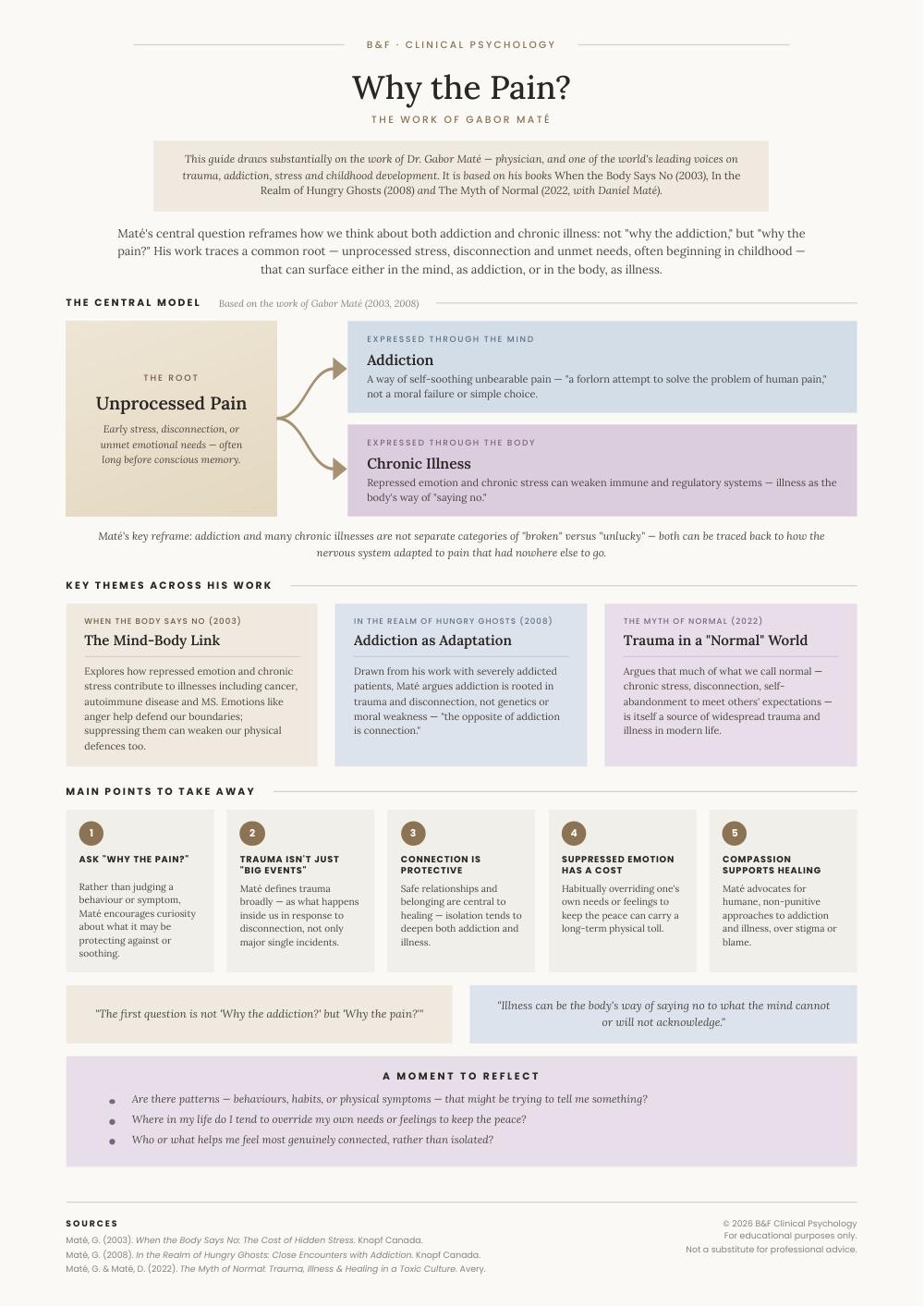
LearnGabor Maté: why the pain?
Addiction and illness traced to a common root: unprocessed stress, disconnection and unmet needs.
-
 Preview
Learn
Preview
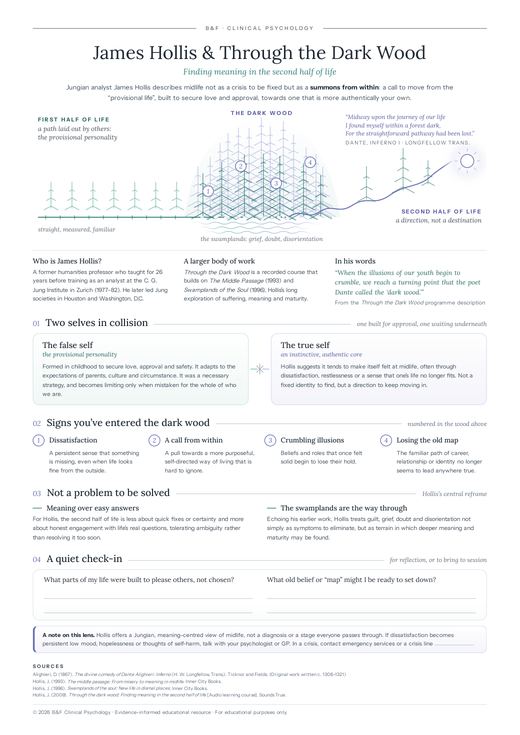
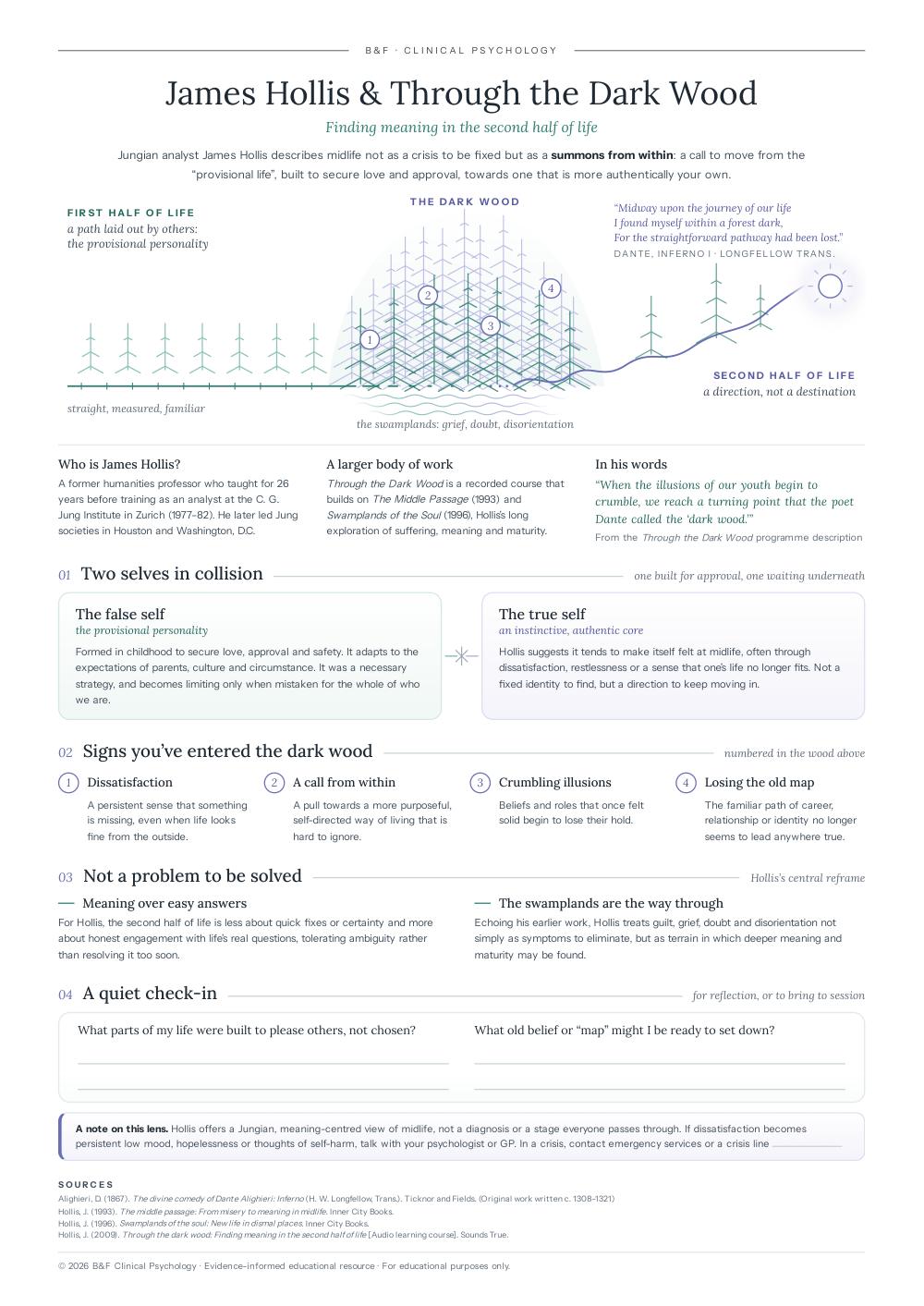
LearnJames Hollis: through the dark wood
Midlife as a summons from within: finding meaning in the second half of life.
-
 Preview
Learn
Preview
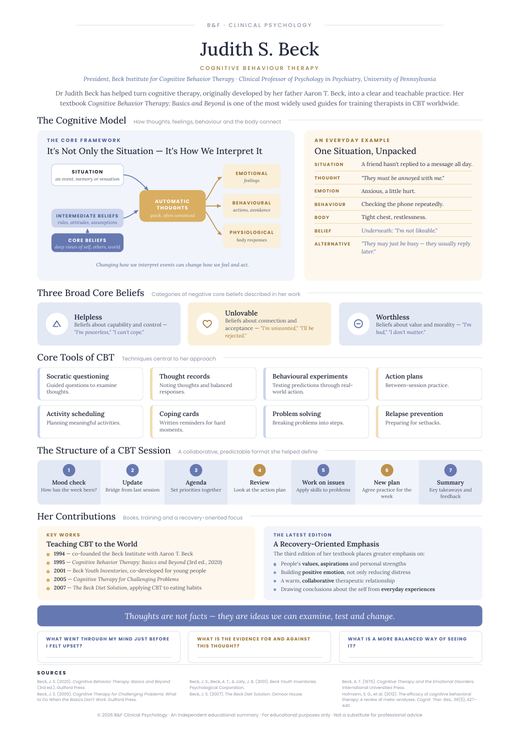
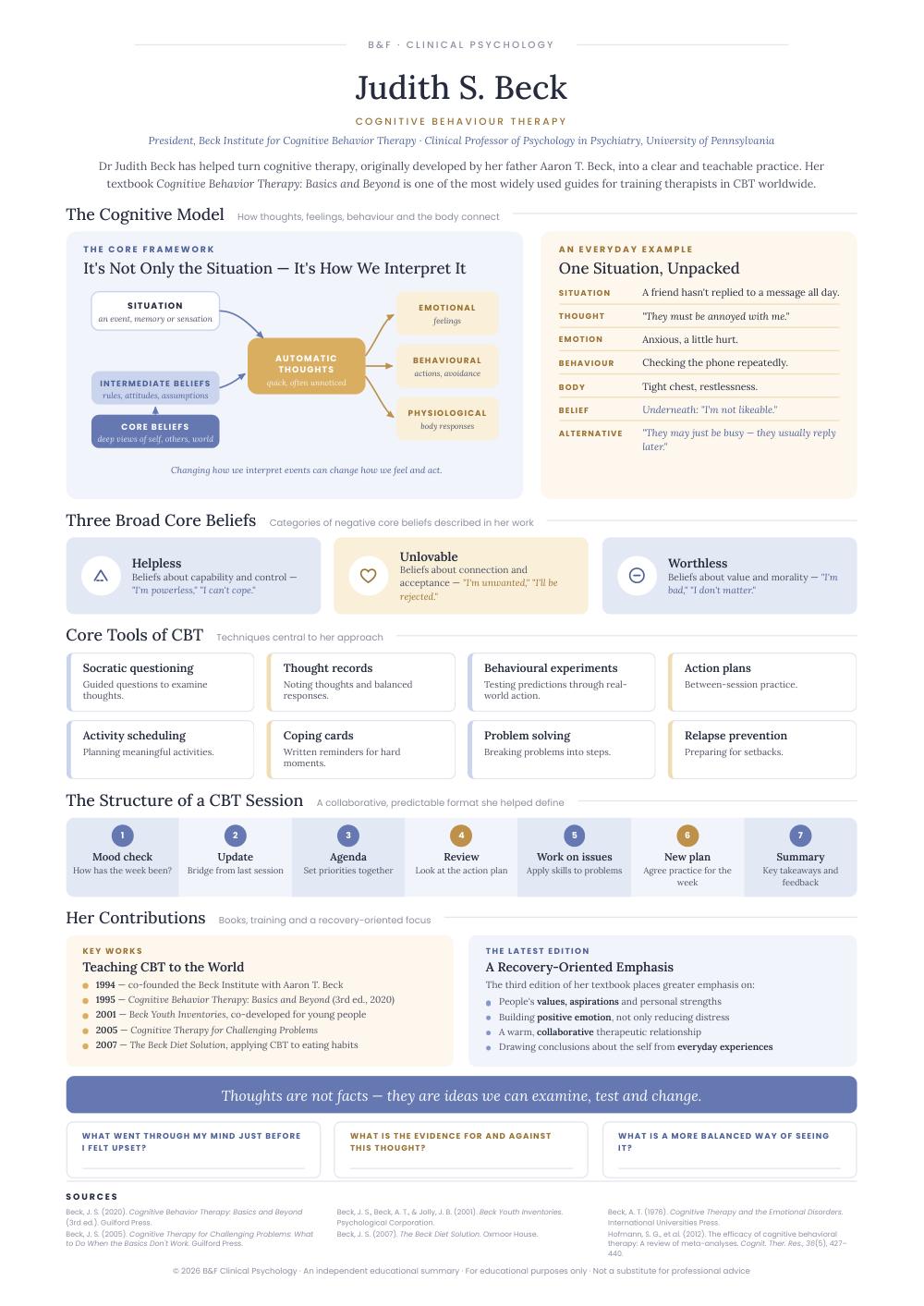
LearnJudith Beck: cognitive behaviour therapy
The cognitive model: how interpreting a situation links thoughts, feelings, behaviour and the body.
-
 Preview
Learn
Preview
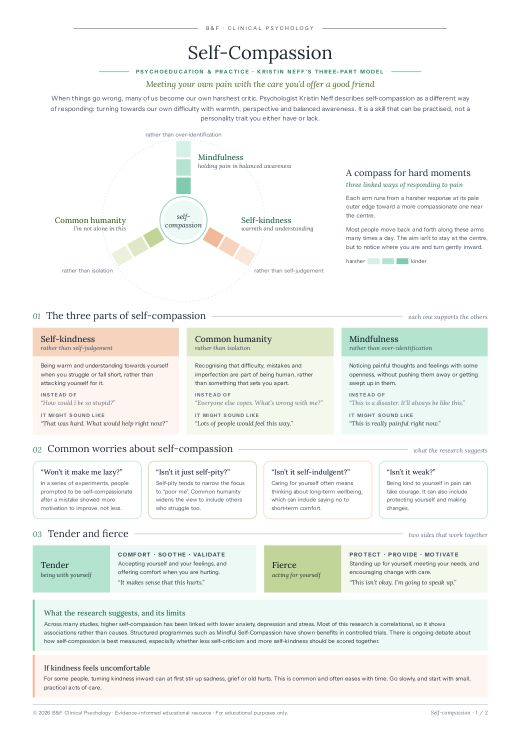
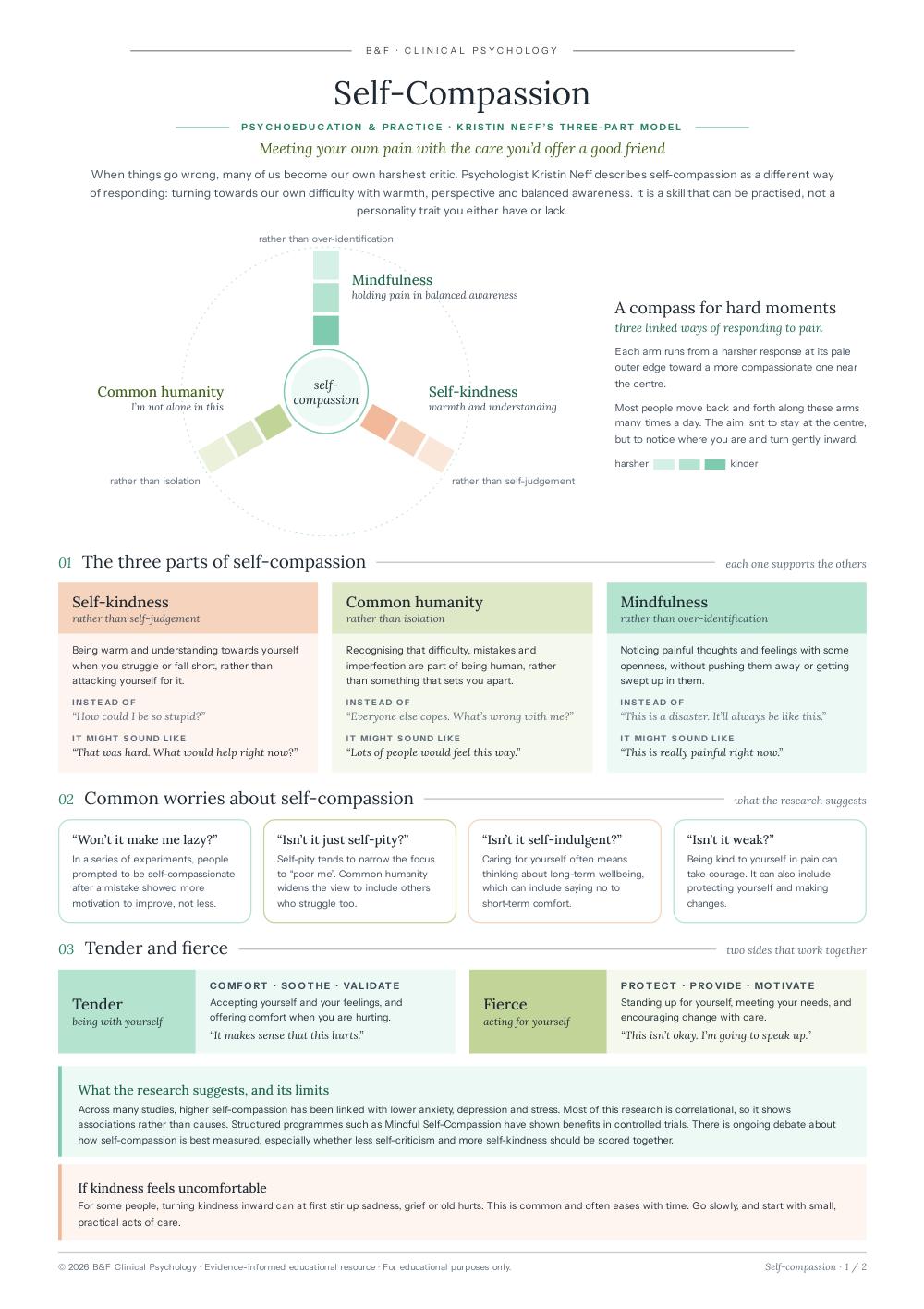
LearnKristin Neff: self-compassion
The three components of self-compassion, and how it differs from self-esteem.
-
 Preview
Learn
Preview
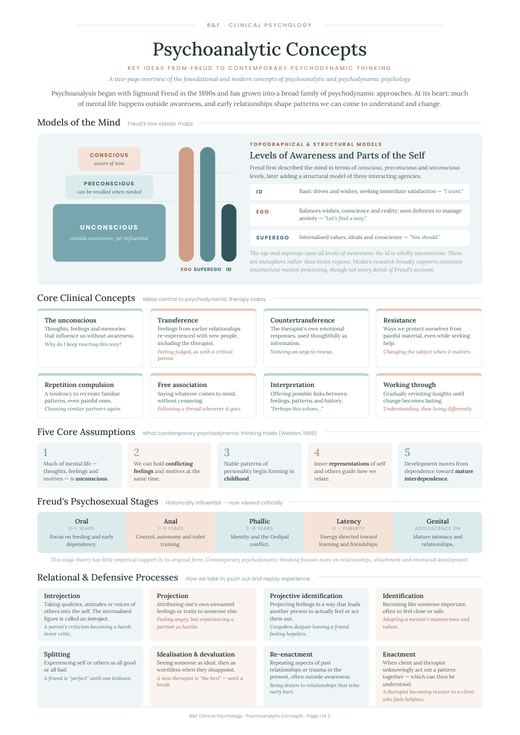
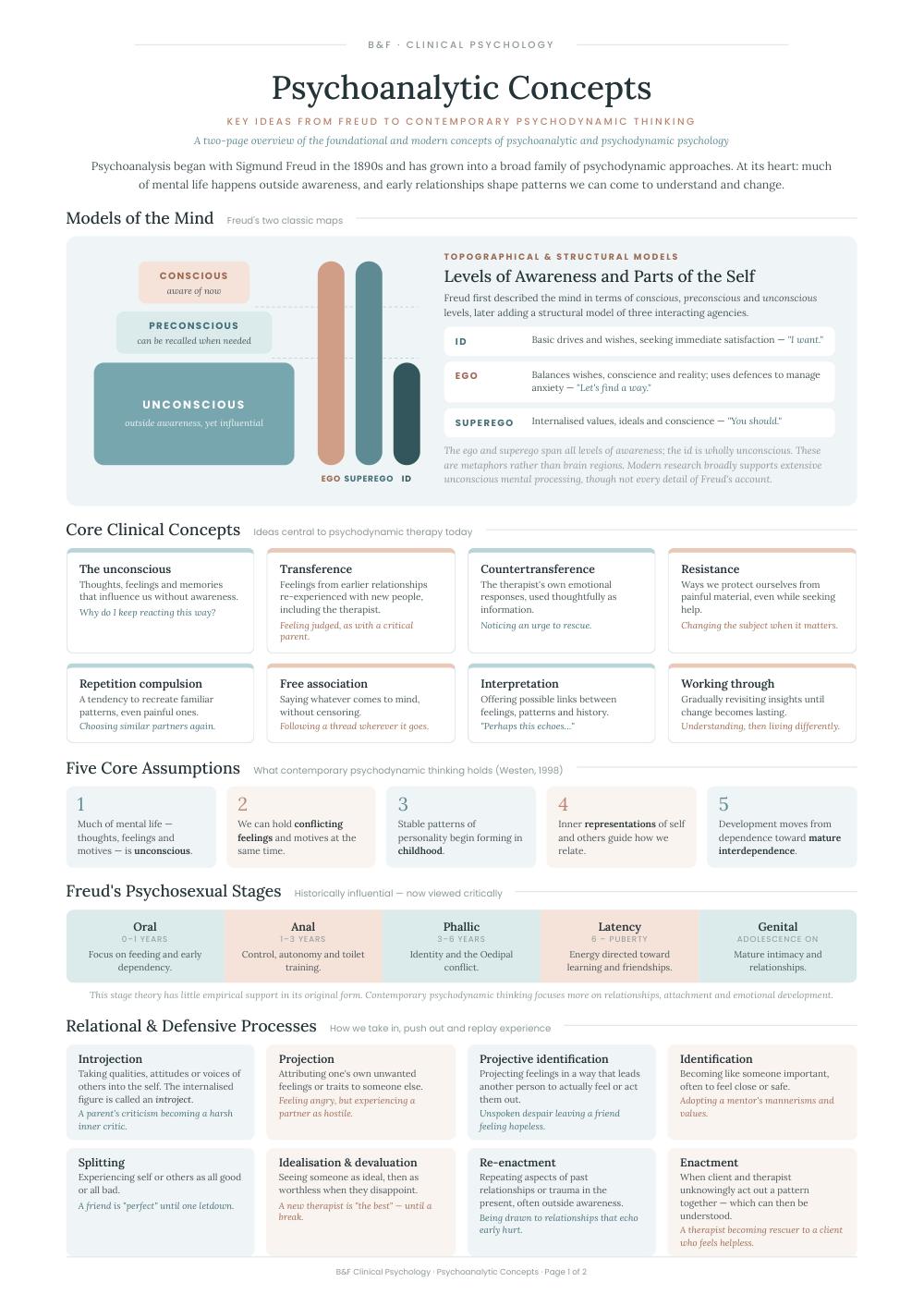
LearnPsychoanalytic concepts
Key ideas from Freud to contemporary psychodynamic thinking, in a two-page overview.
-
 Preview
Learn
Preview
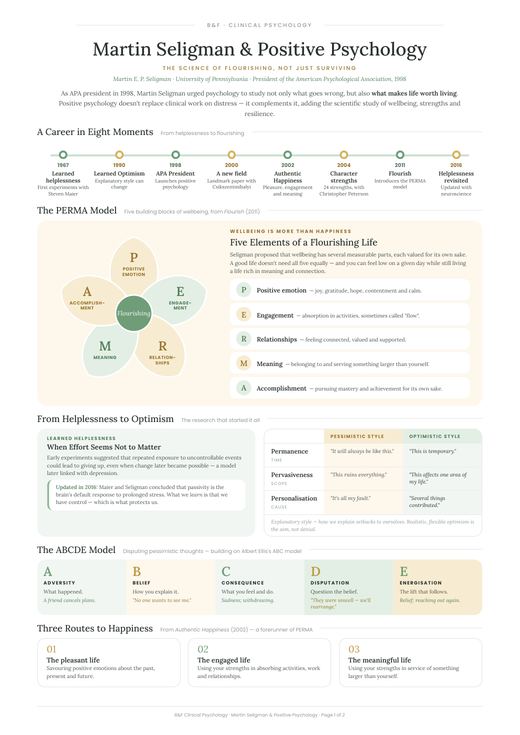
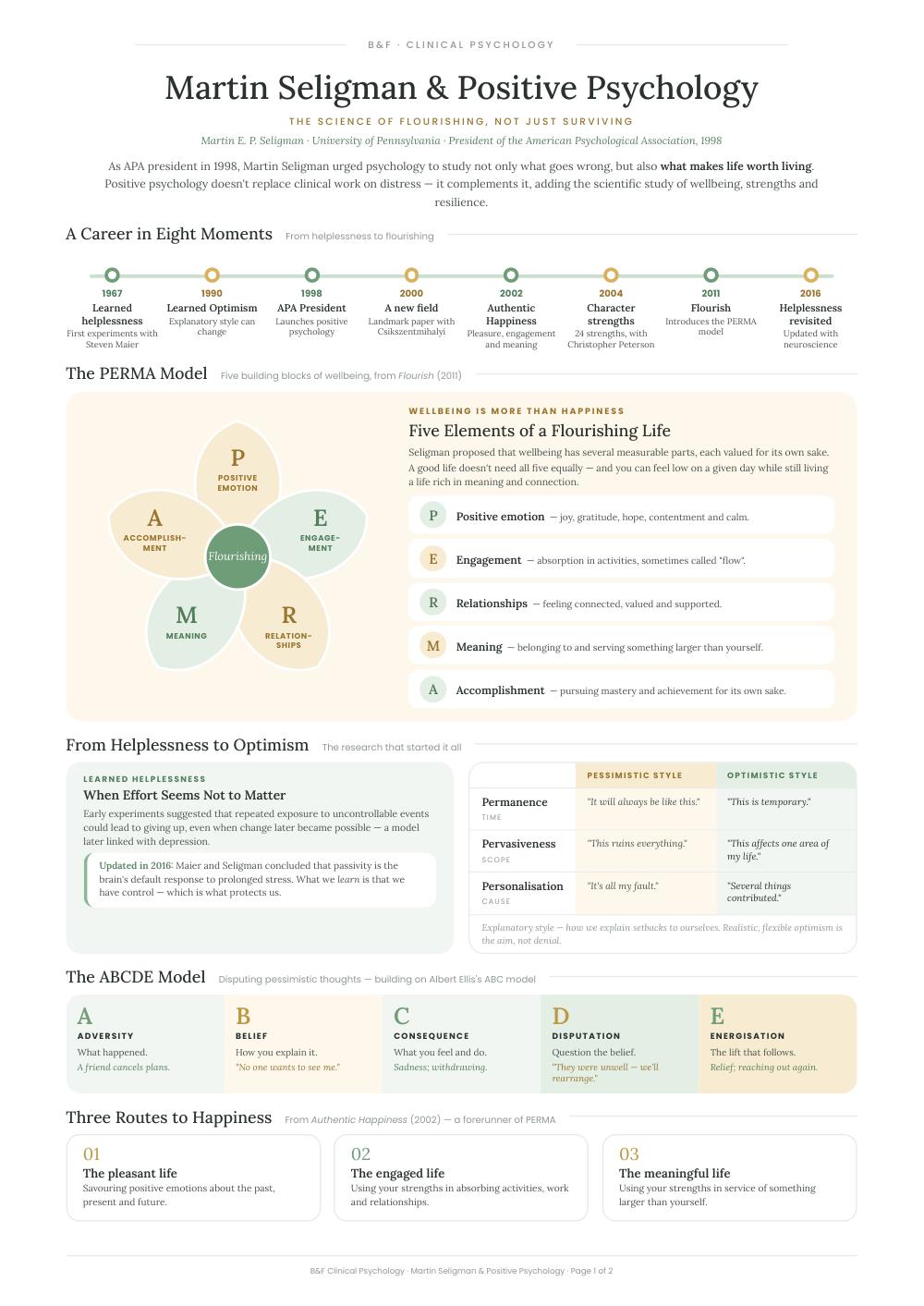
LearnMartin Seligman: positive psychology
The science of flourishing: studying what makes life worth living, alongside what goes wrong.
-
 Preview
Learn
Preview
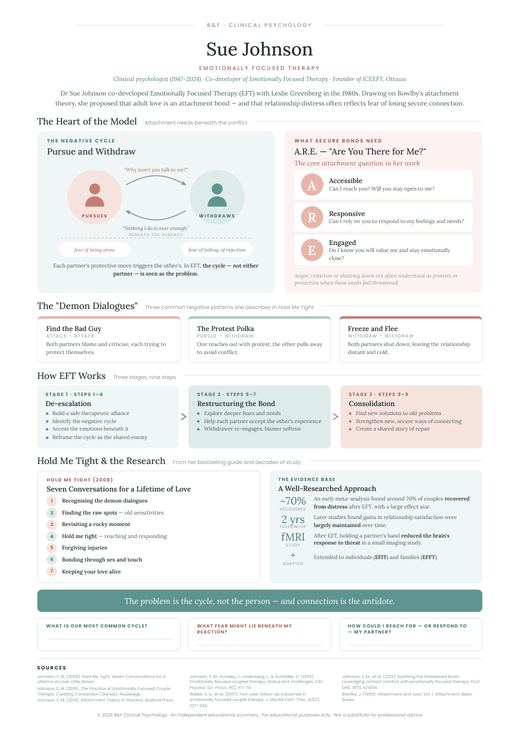
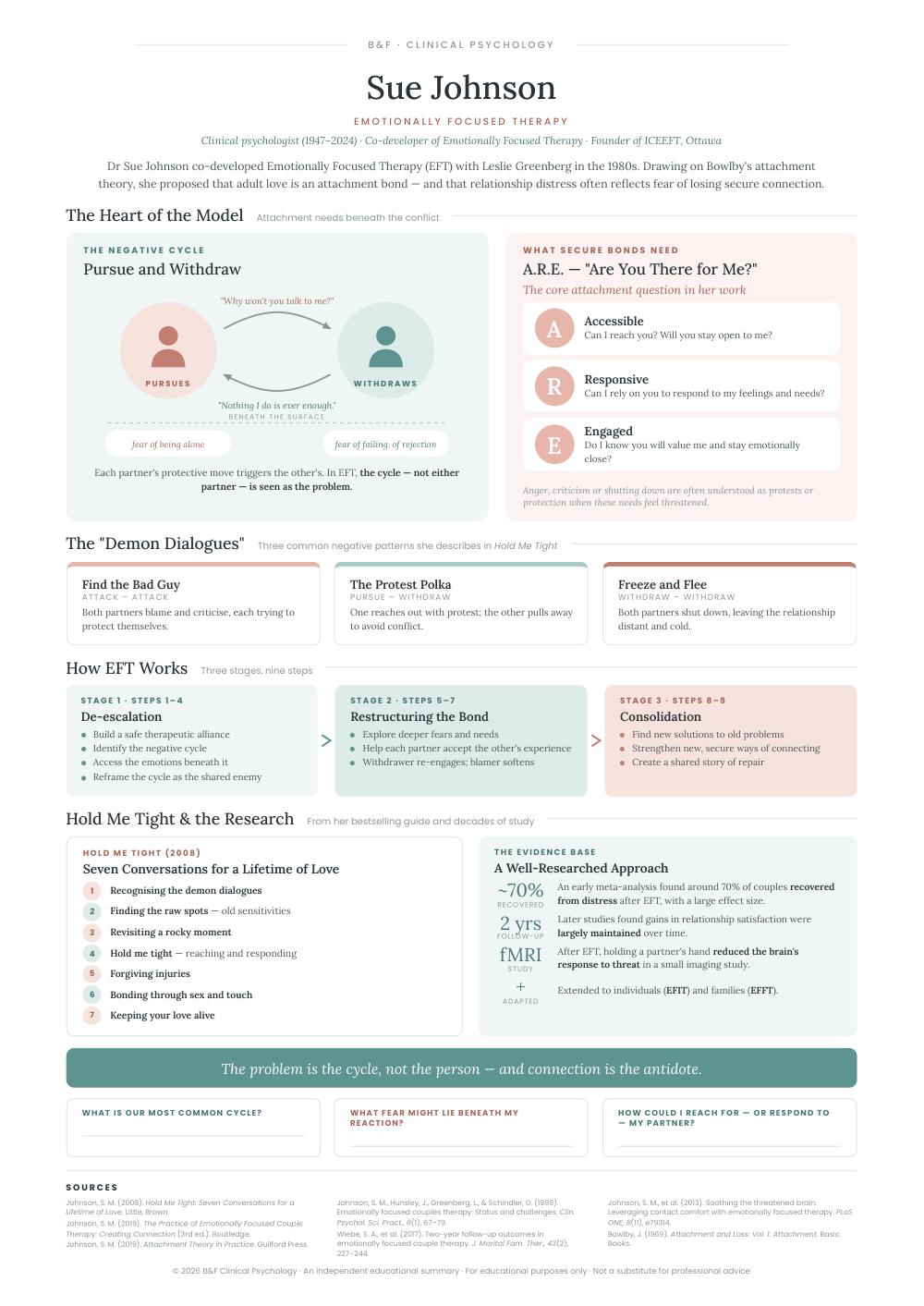
LearnSue Johnson: emotionally focused therapy
Adult love as an attachment bond, and the cycles that form when secure connection feels at risk.
Concepts 12
-
 Preview
Learn
Preview
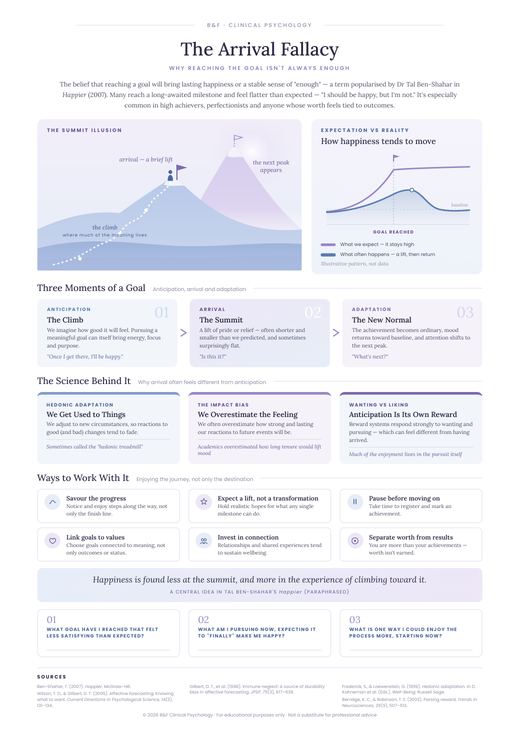
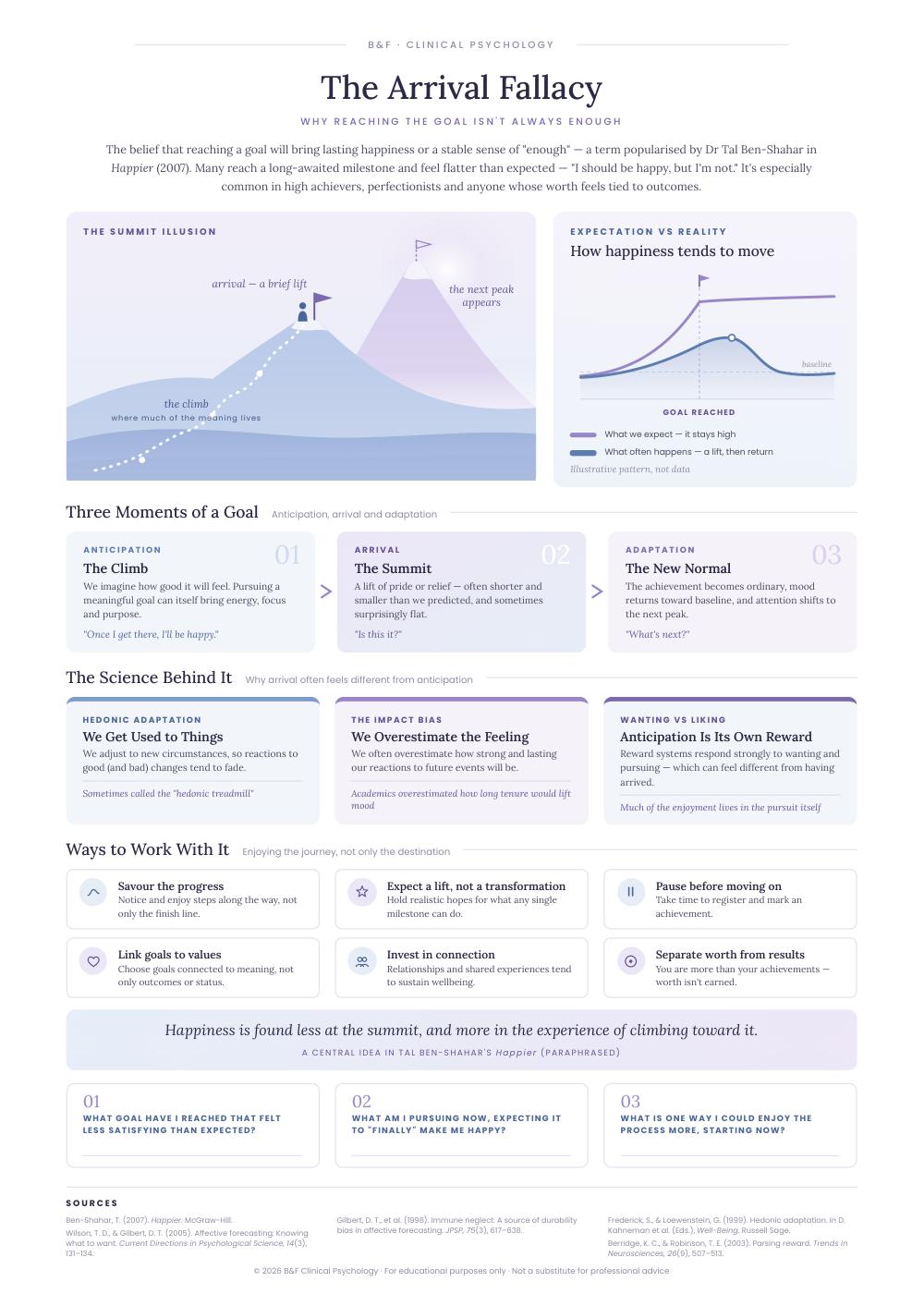
LearnThe arrival fallacy
Why reaching the goal is not always enough, from Tal Ben-Shahar.
-
 Preview
Learn
Preview
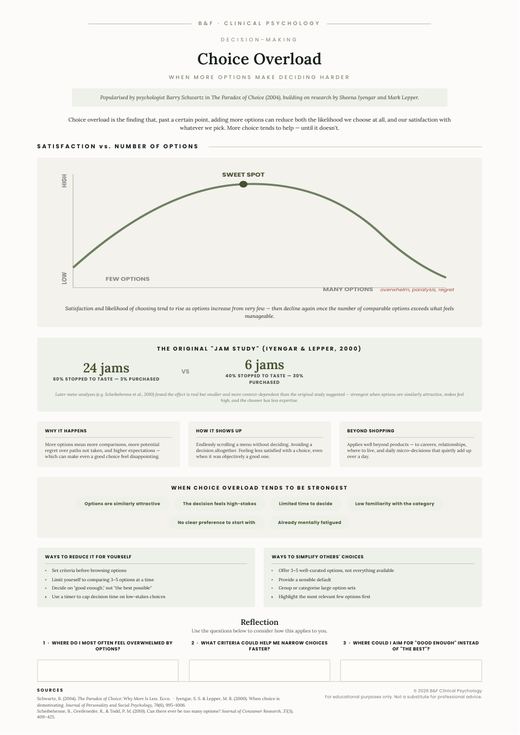
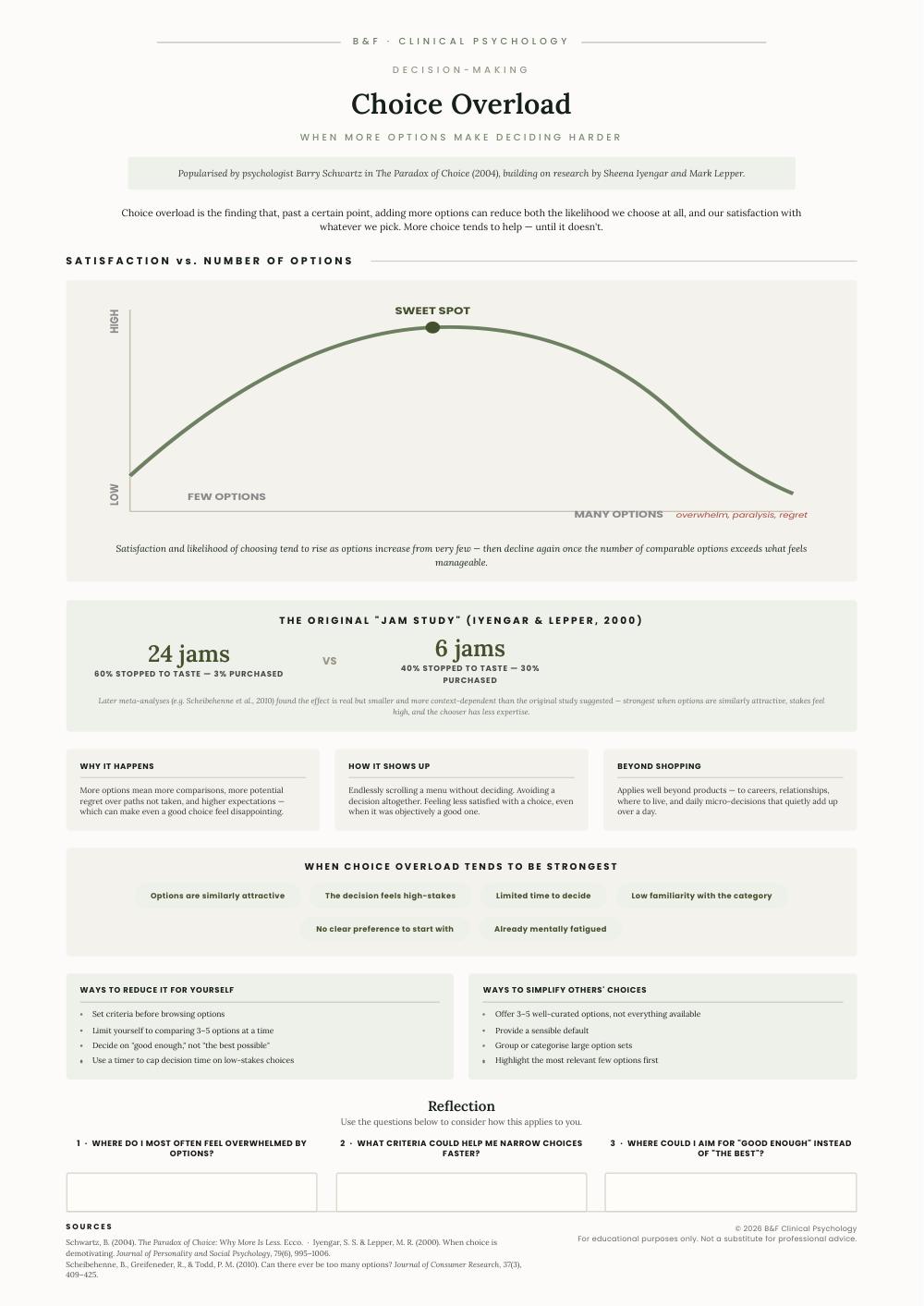
LearnChoice overload
When more options make deciding harder, from Schwartz's Paradox of Choice.
-
 Preview
Learn
Preview
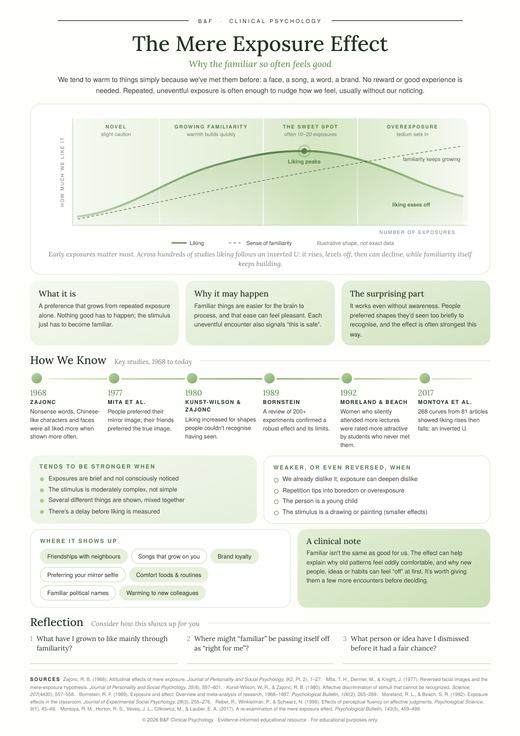
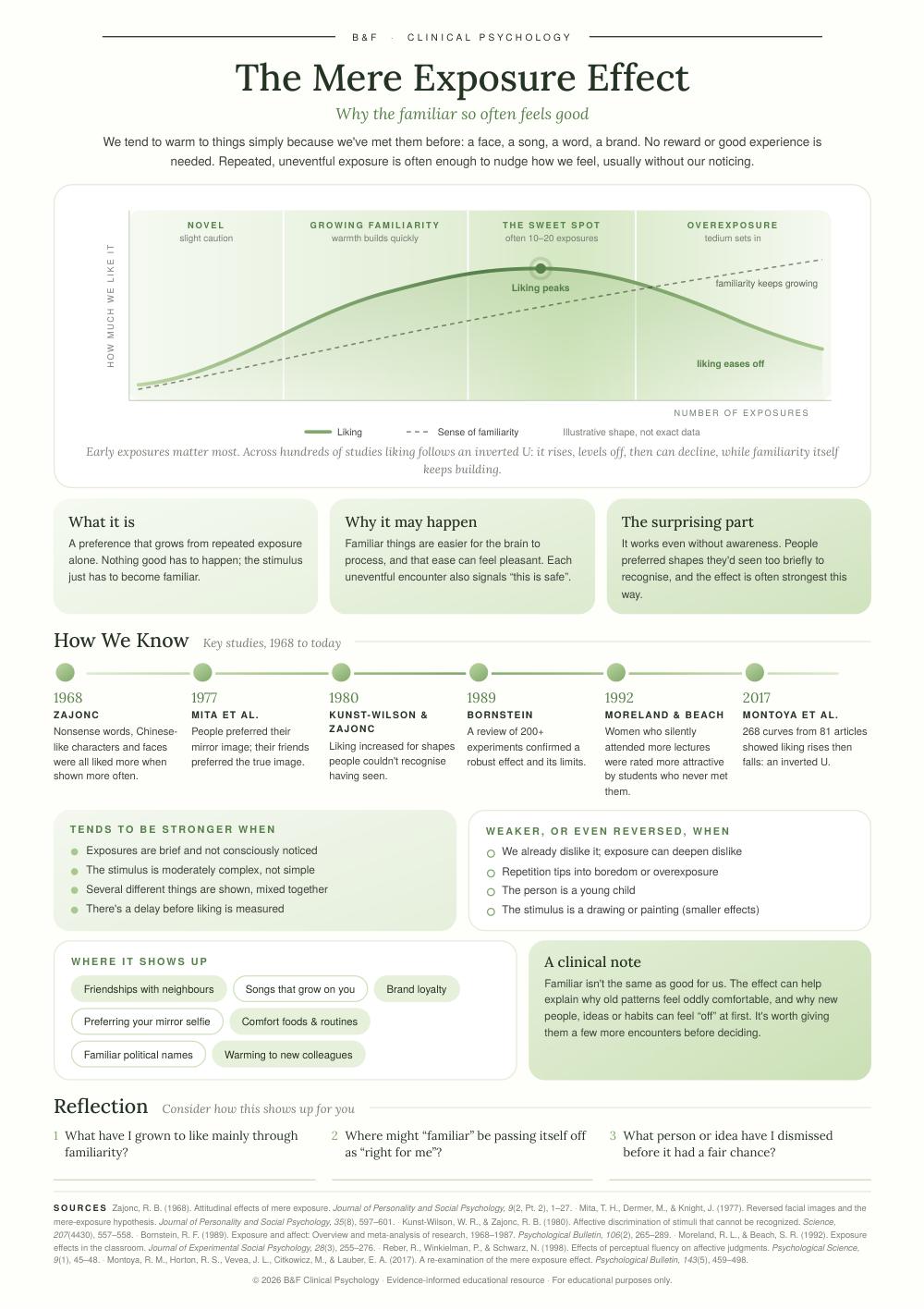
LearnThe mere exposure effect
Why the familiar so often feels good: repeated, uneventful exposure is enough to shift how we feel.
-
 Preview
Learn
Preview
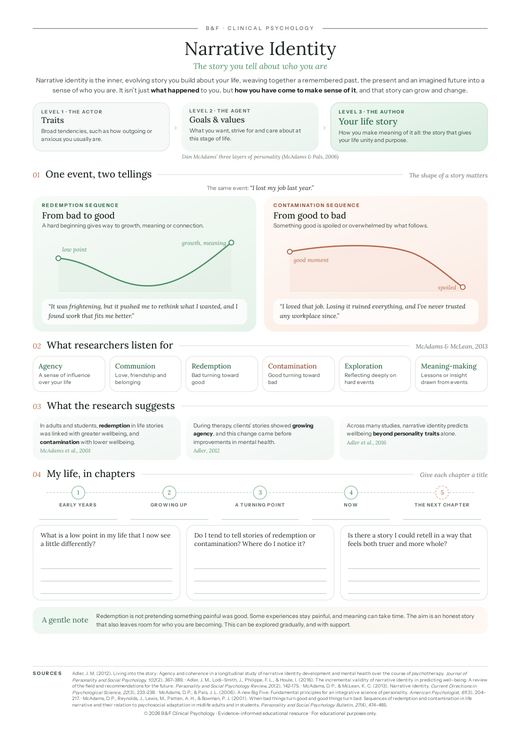
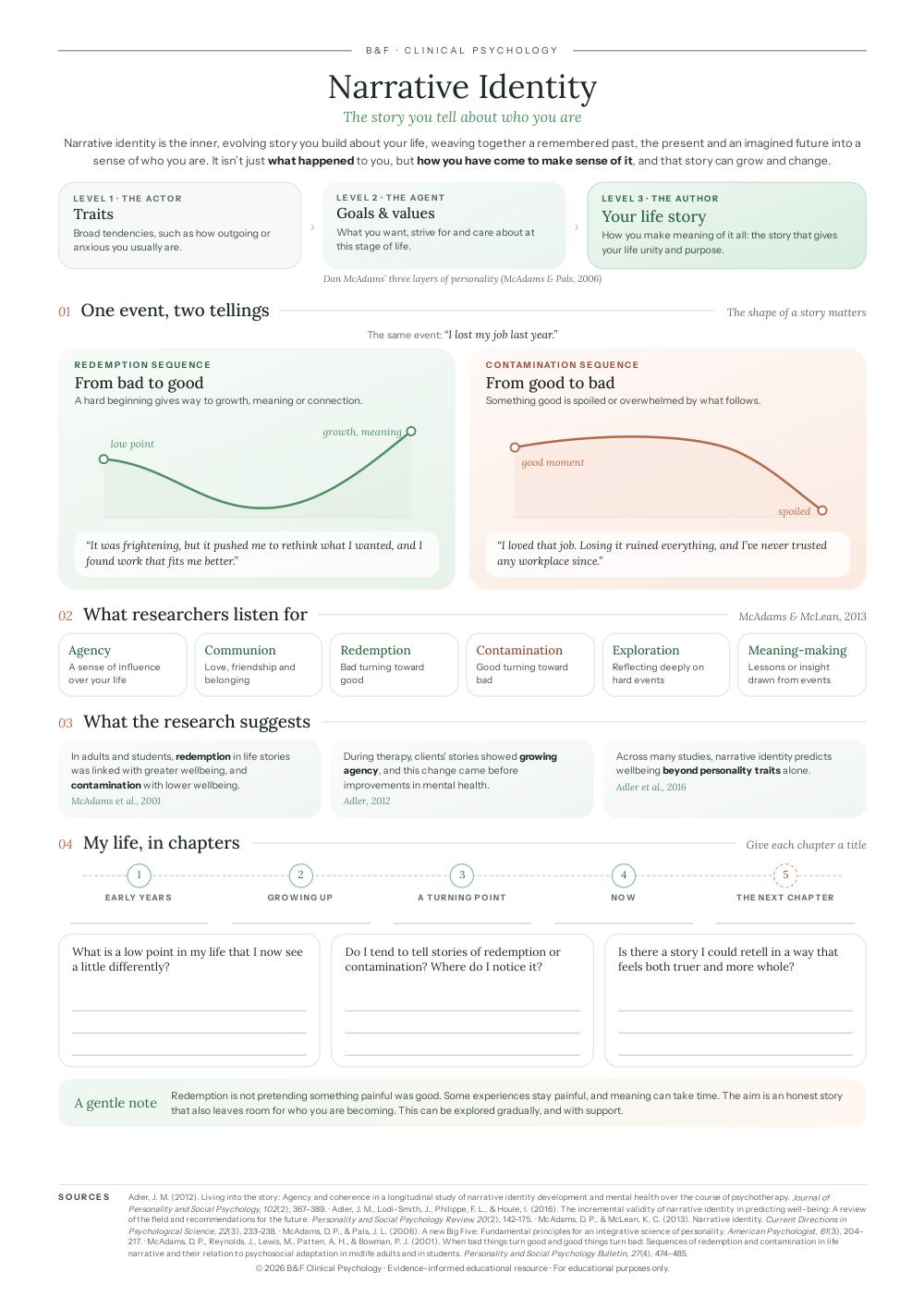
LearnNarrative identity
The story you tell about who you are, and how it can be rewritten, from Dan McAdams.
-
 Preview
Learn
Preview
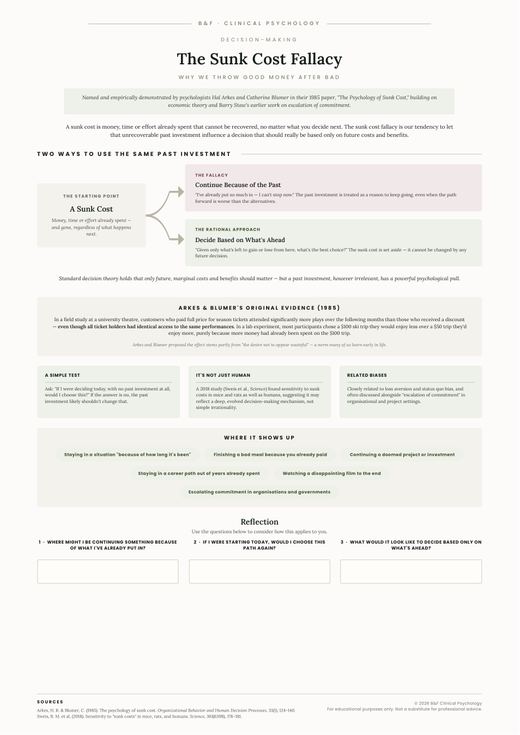
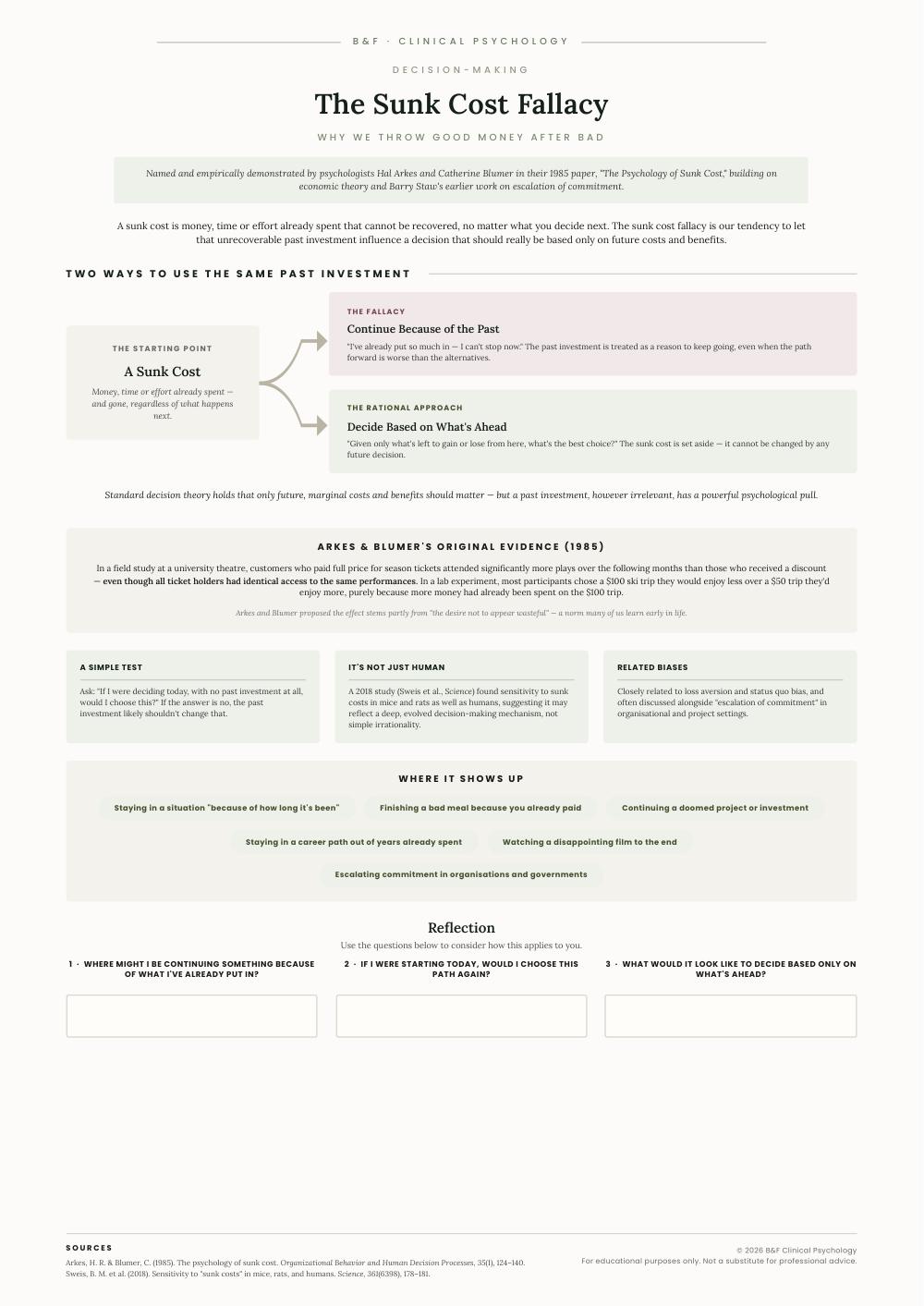
LearnThe sunk cost fallacy
Why we throw good money after bad, and how to notice when we are doing it.
-
 Preview
Learn
Preview
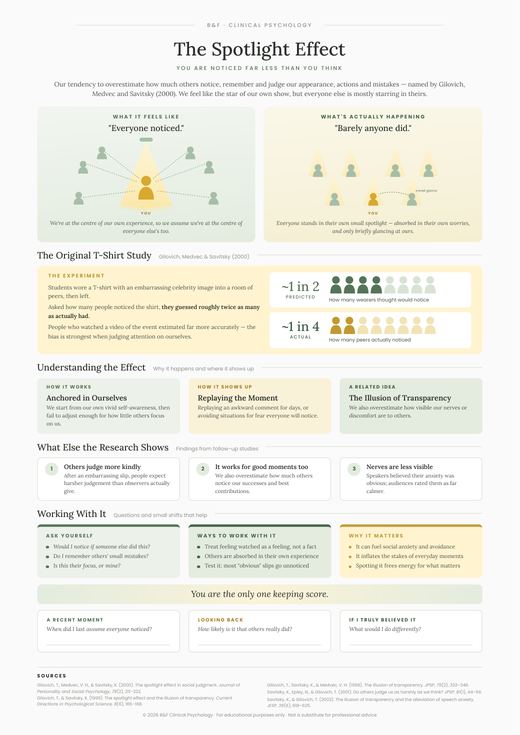
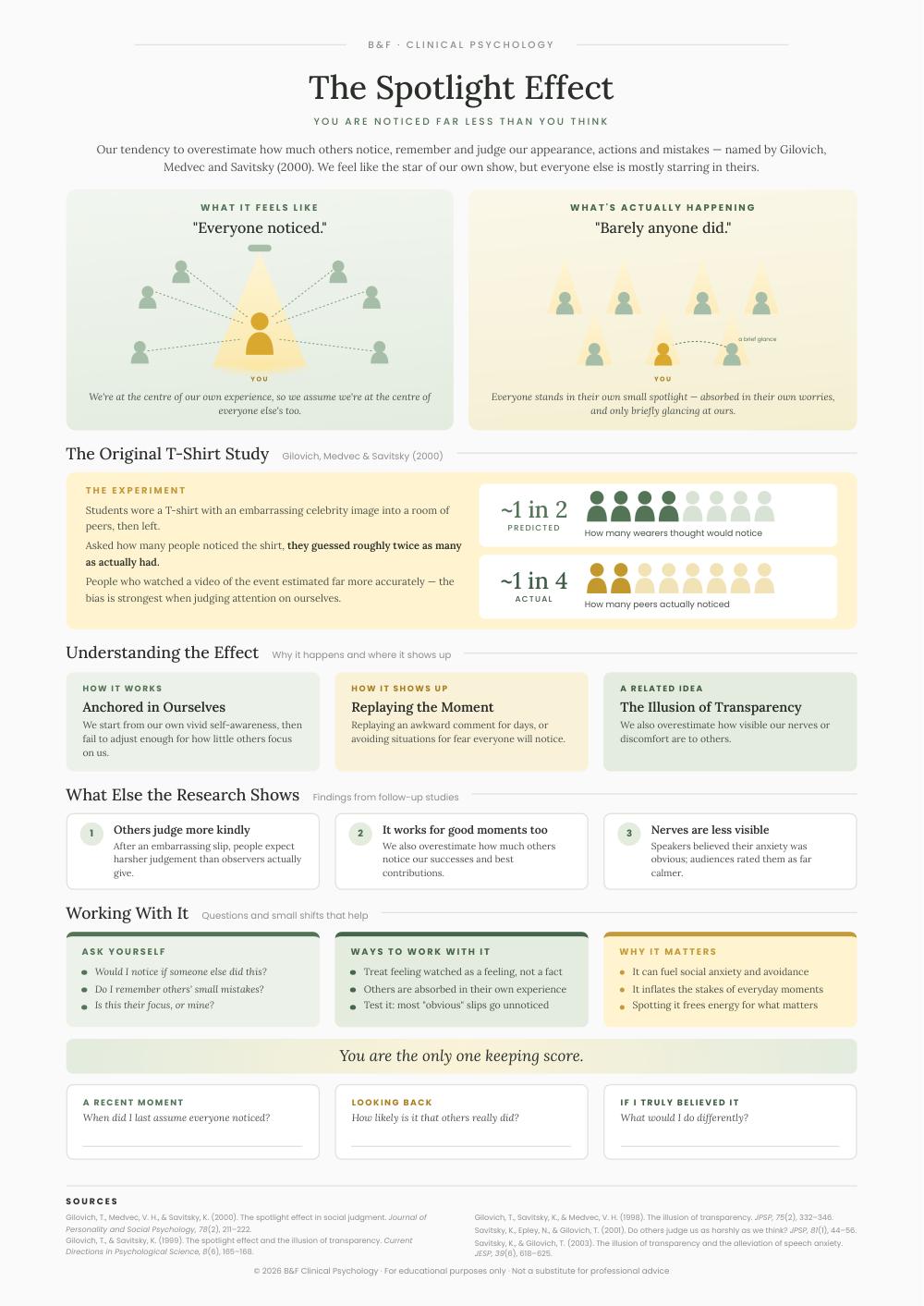
LearnThe spotlight effect
You are noticed far less than you think. The research behind the relief.
-
 Preview
Learn
Preview
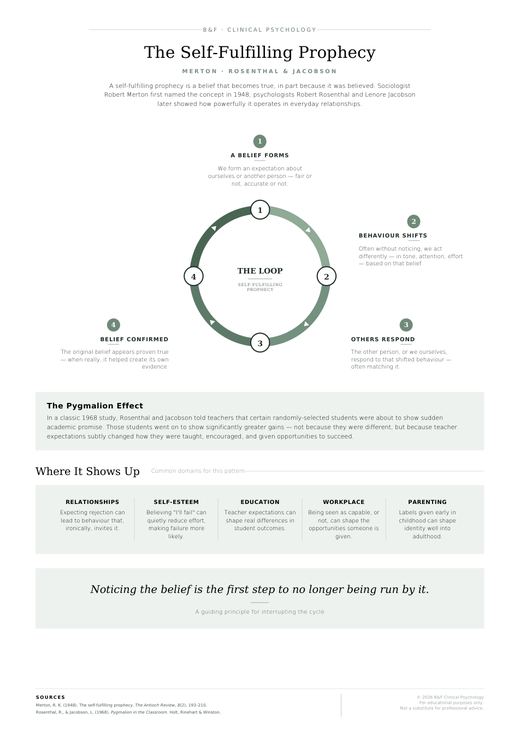
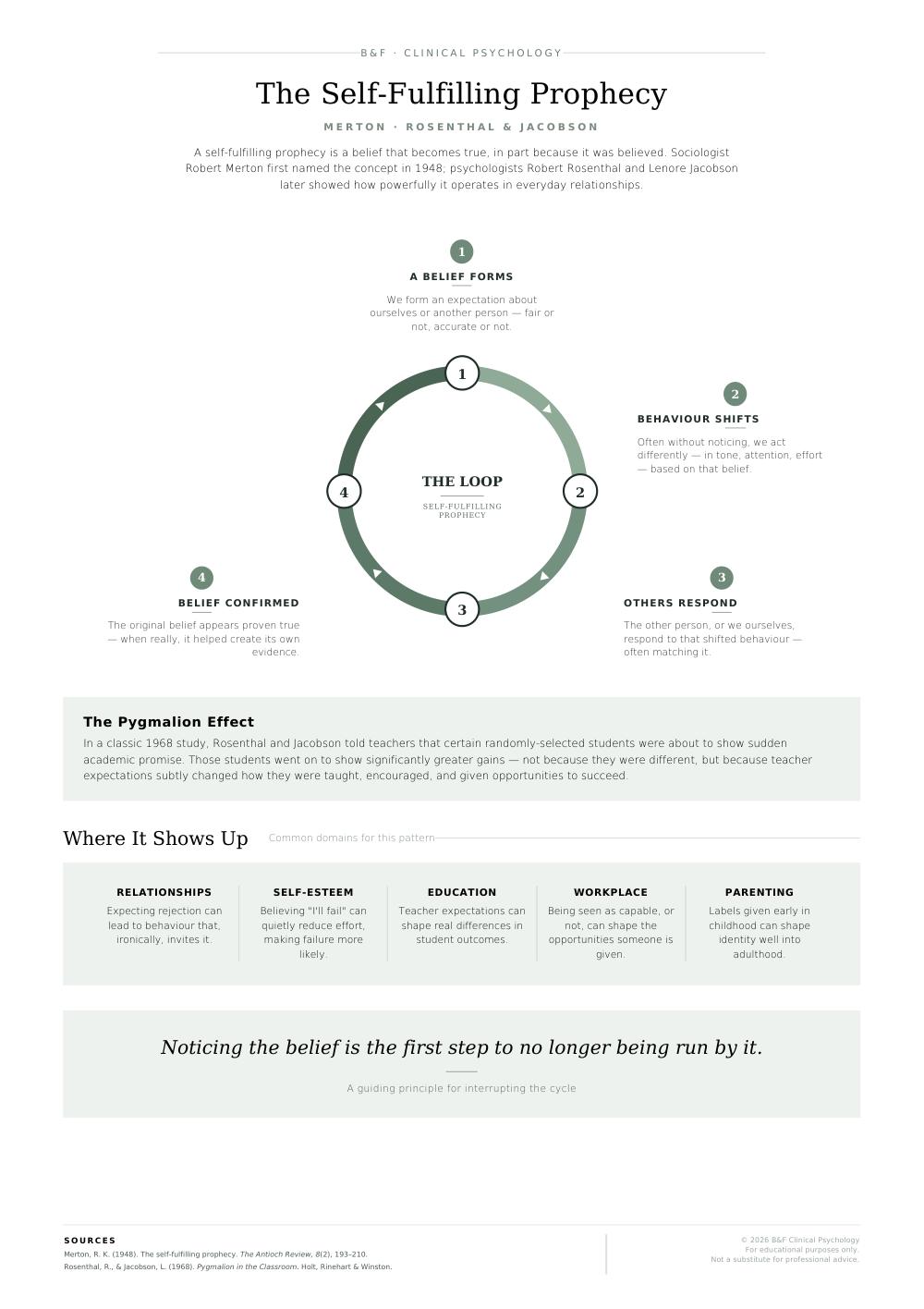
LearnThe self-fulfilling prophecy
A belief that comes true partly because it was believed, from Merton to Rosenthal.
-
 Preview
Learn
Preview
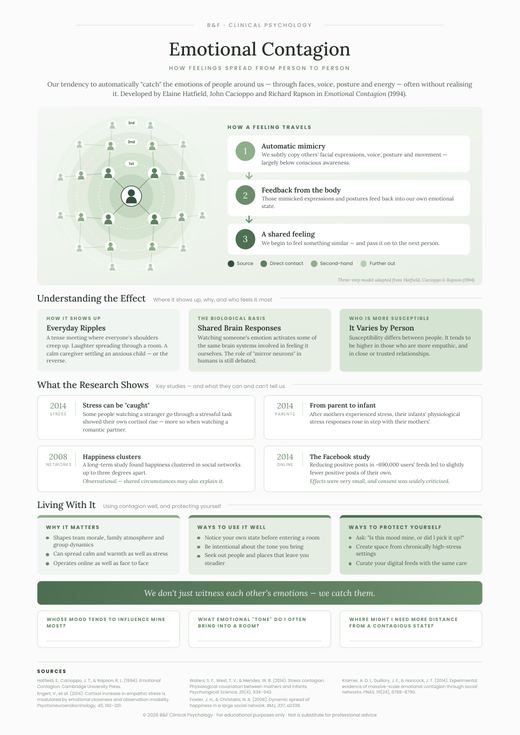
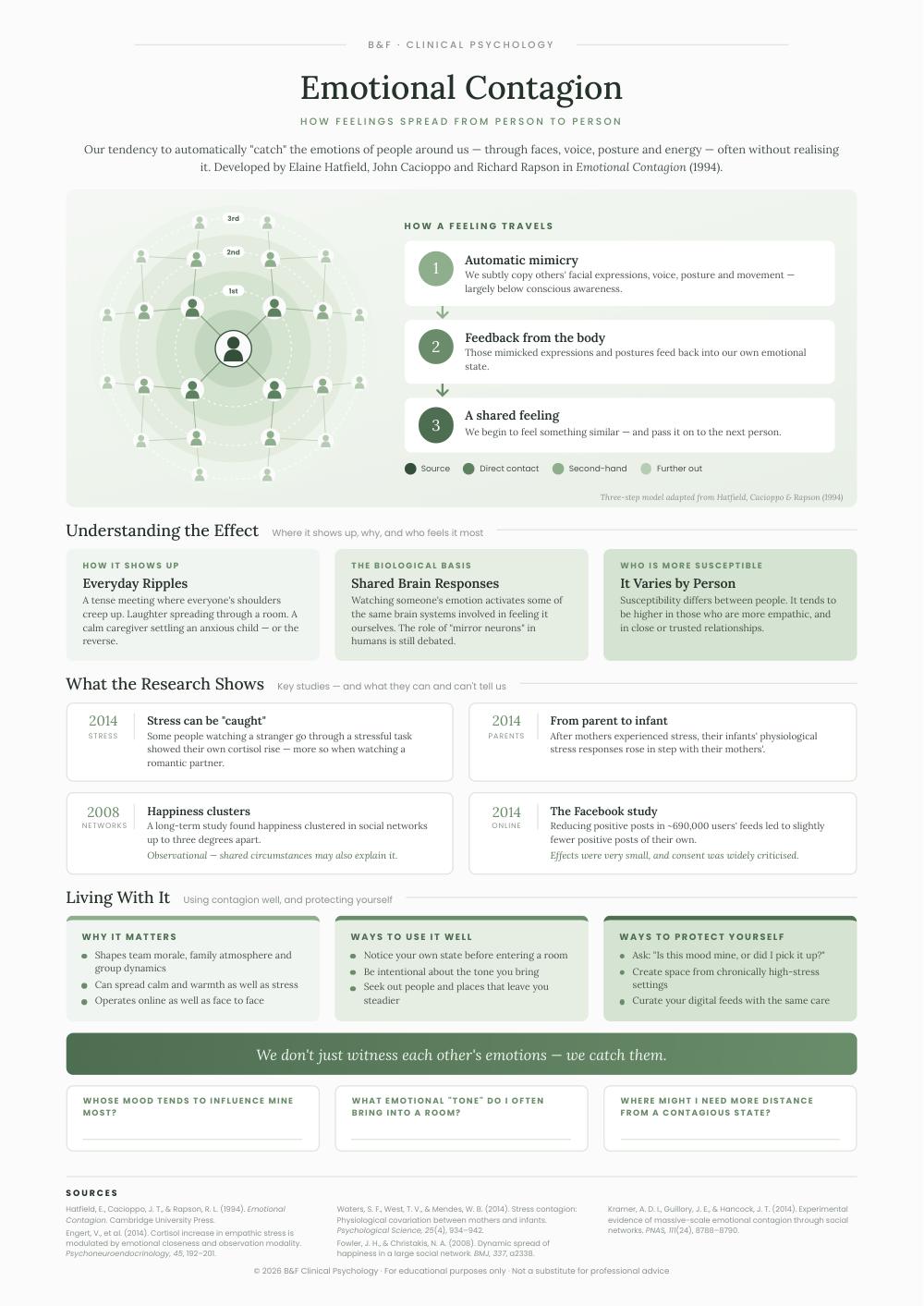
LearnEmotional contagion
How we automatically catch the emotions of people around us, often without realising it.
-
 Preview
Learn
Preview
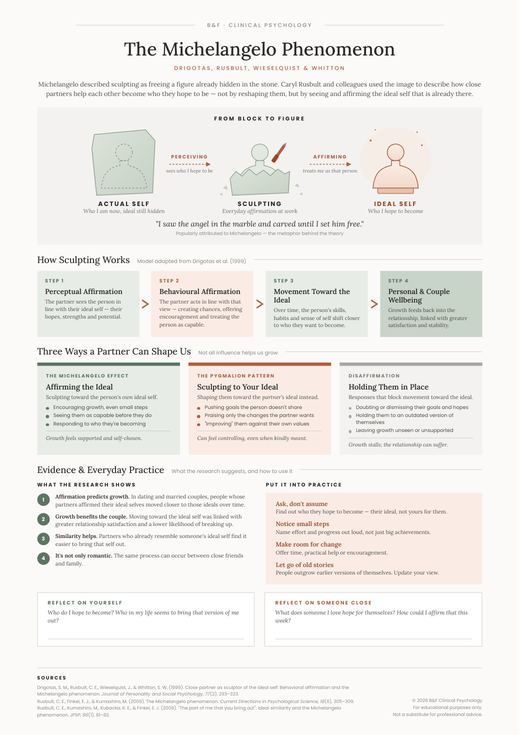
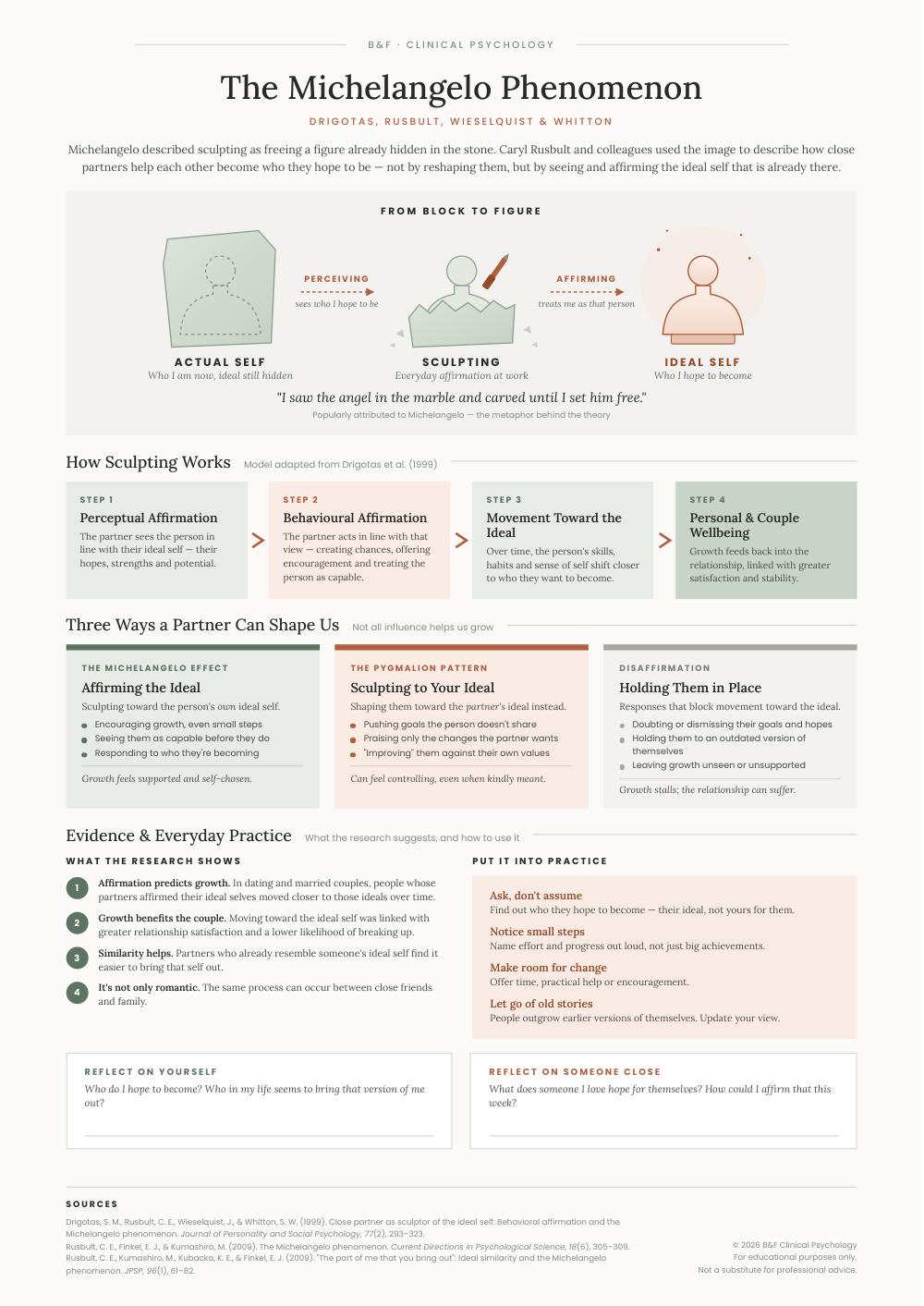
LearnThe Michelangelo phenomenon
How close partners help each other become who they hope to be, by seeing and affirming the ideal self.
-
 Preview
Learn
Preview
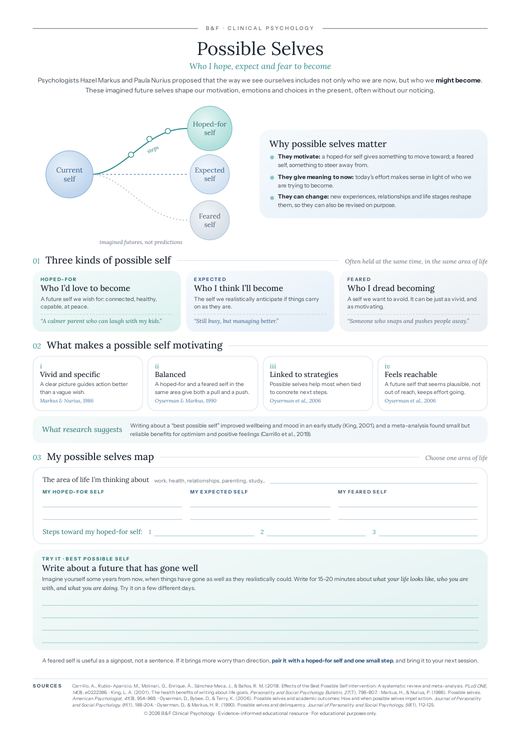
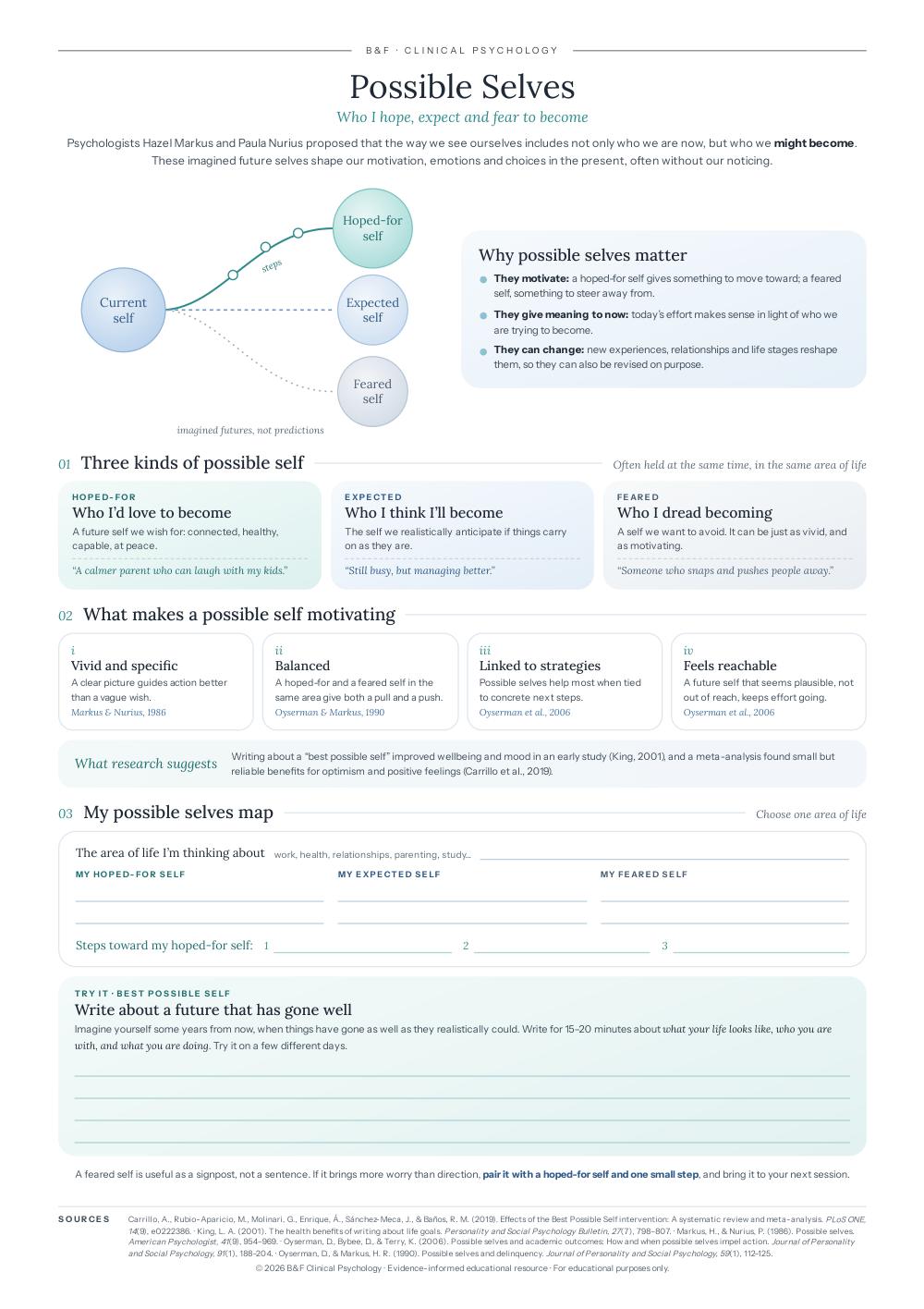
LearnPossible selves
Who you hope, expect and fear to become, and how those imagined selves shape the present.
-
 Preview
Learn
Preview
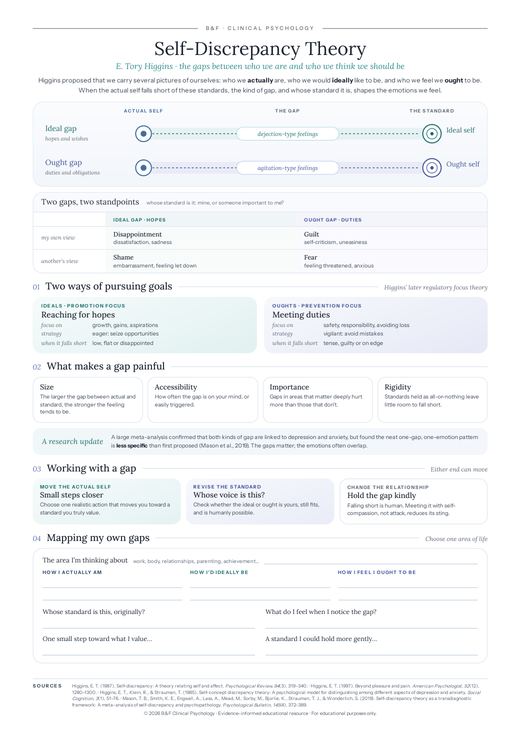
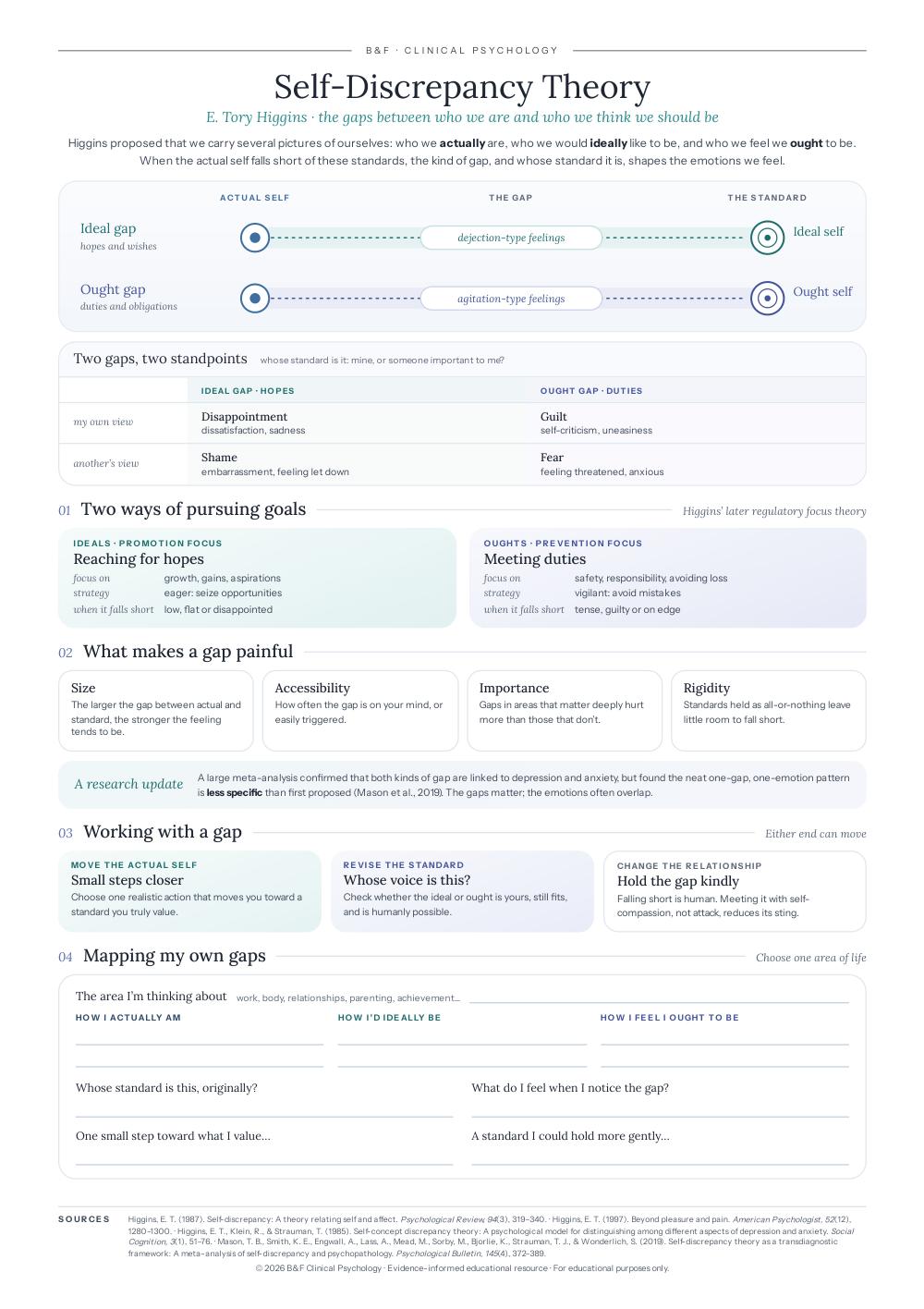
LearnSelf-discrepancy theory
E. Tory Higgins on the gaps between who we are, who we would like to be and who we feel we ought to be.
-
 Preview
Learn
Preview
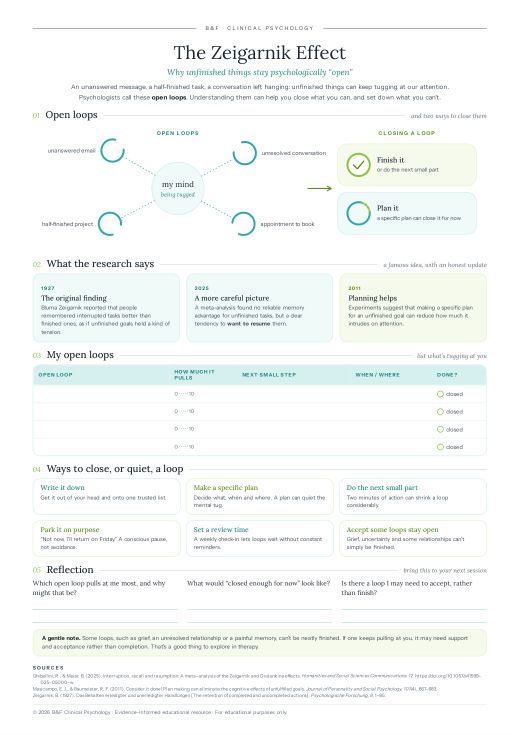
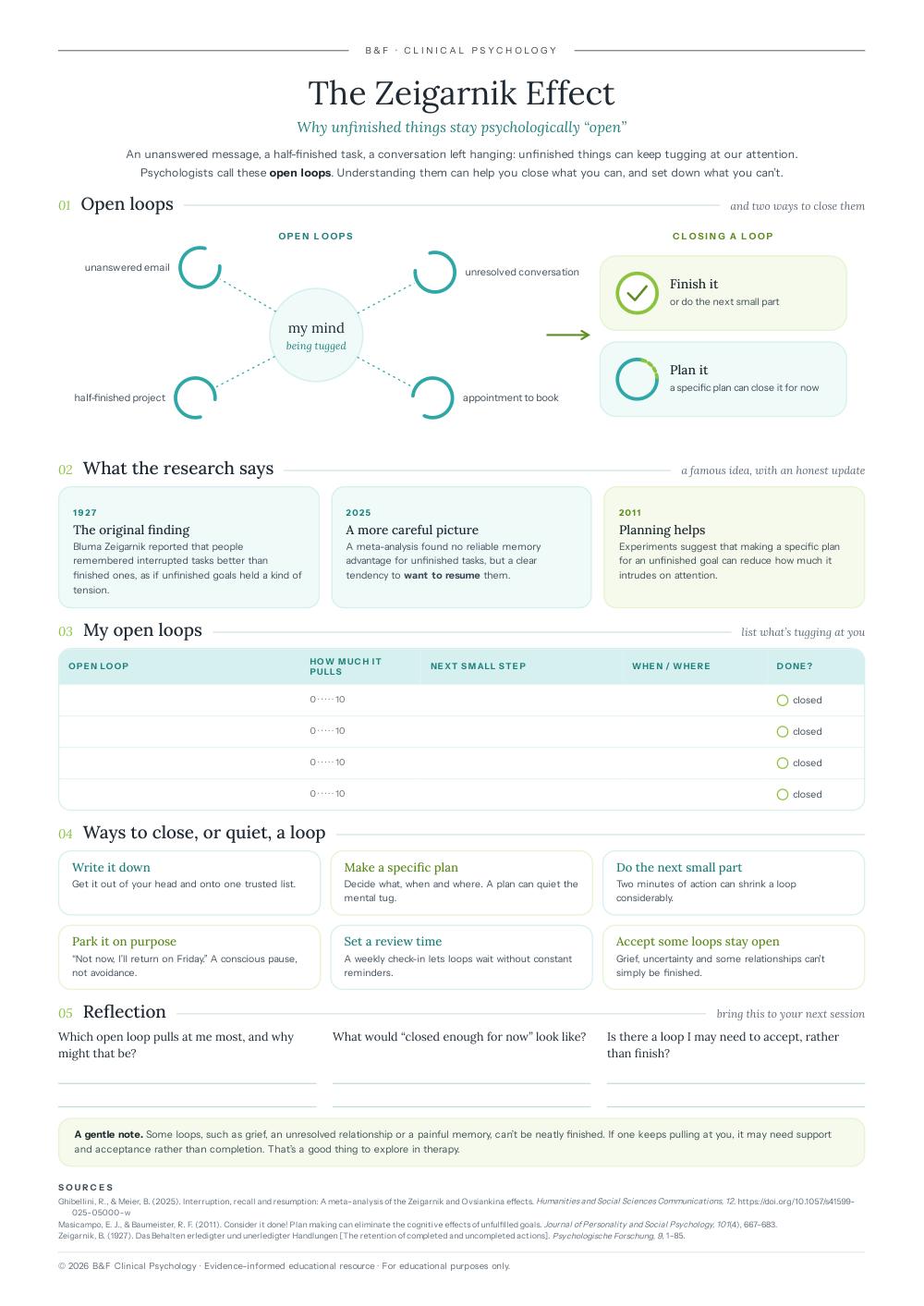
LearnThe Zeigarnik effect
Why unfinished things stay psychologically open, and how to close what you can.
These resources are for general education and self-reflection, not a substitute for individual psychological assessment or therapy. If you are in crisis, feel unsafe, or may harm yourself or someone else, please contact emergency services or go to the nearest emergency department.