

Free resources
Relationships and boundaries
Say what you need. Stay connected. Stay yourself.
These resources are for general education and self-reflection and do not replace professional psychological care. Accessing, downloading or using them does not establish a psychologist–client relationship with Barnardt & Fleming Clinical Psychology.
Relationships and boundaries resources
-
 Preview
Learn
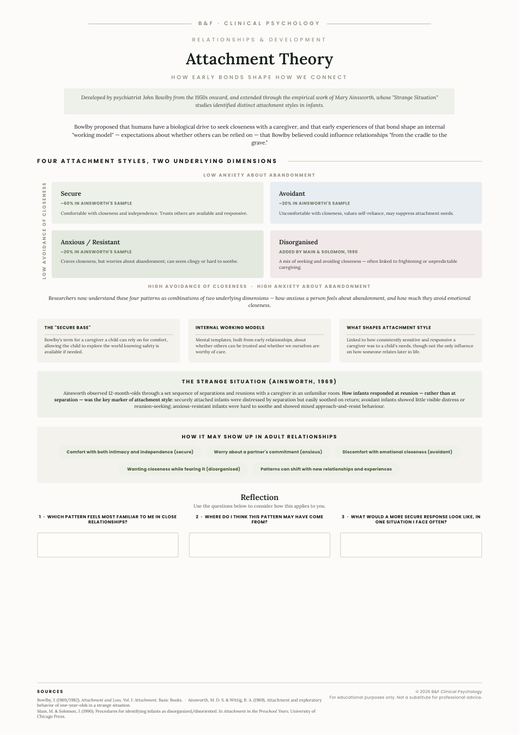
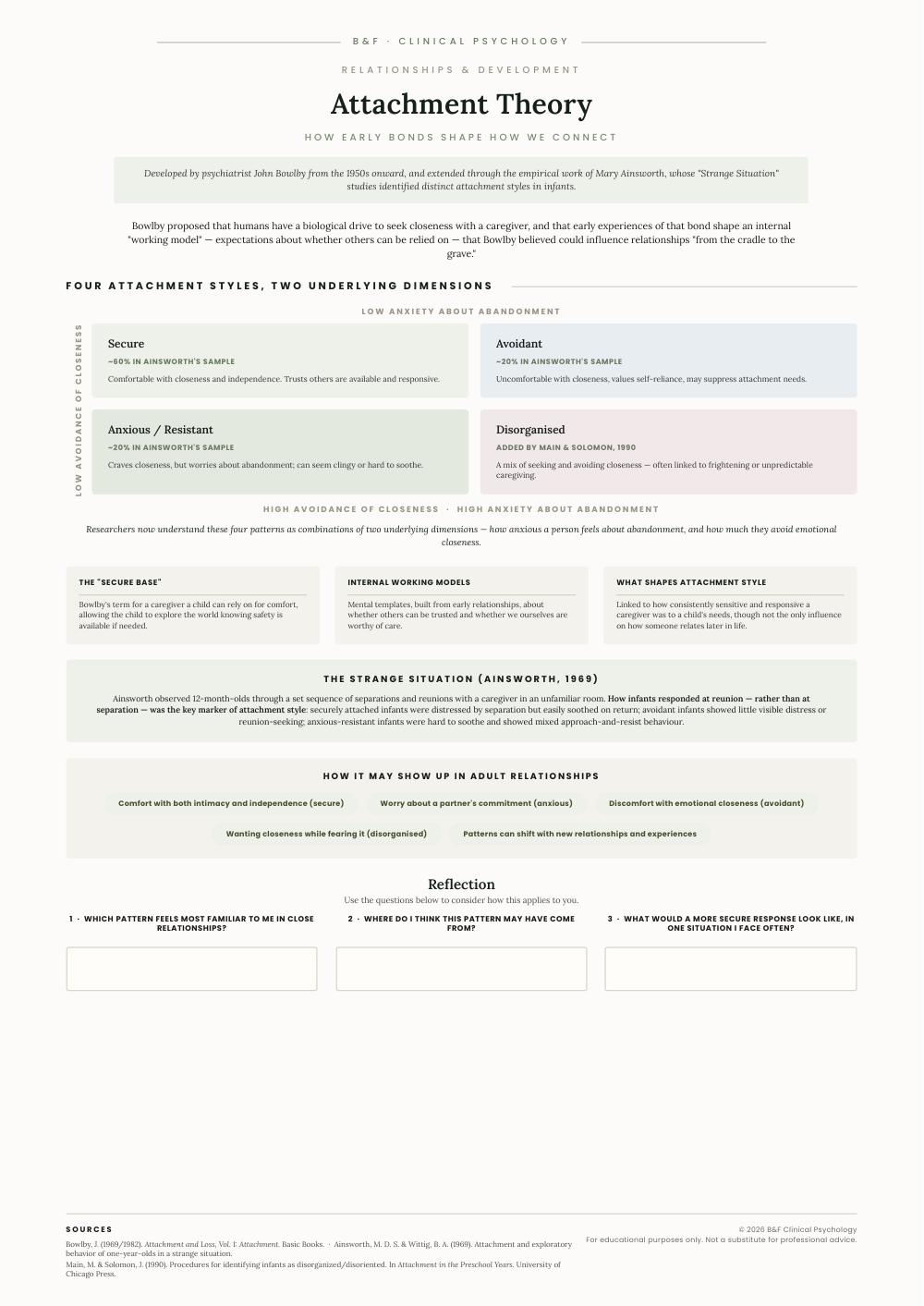
Attachment theory
How early bonds shape the way we connect as adults, from Bowlby onward.
-
 Preview
Learn
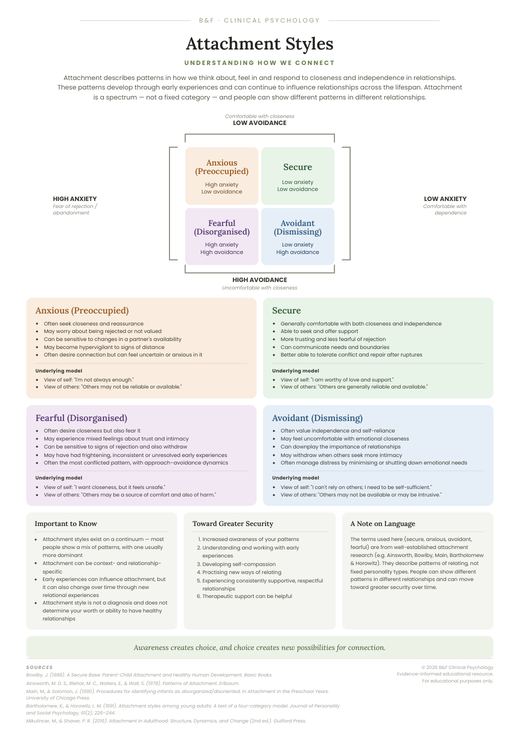
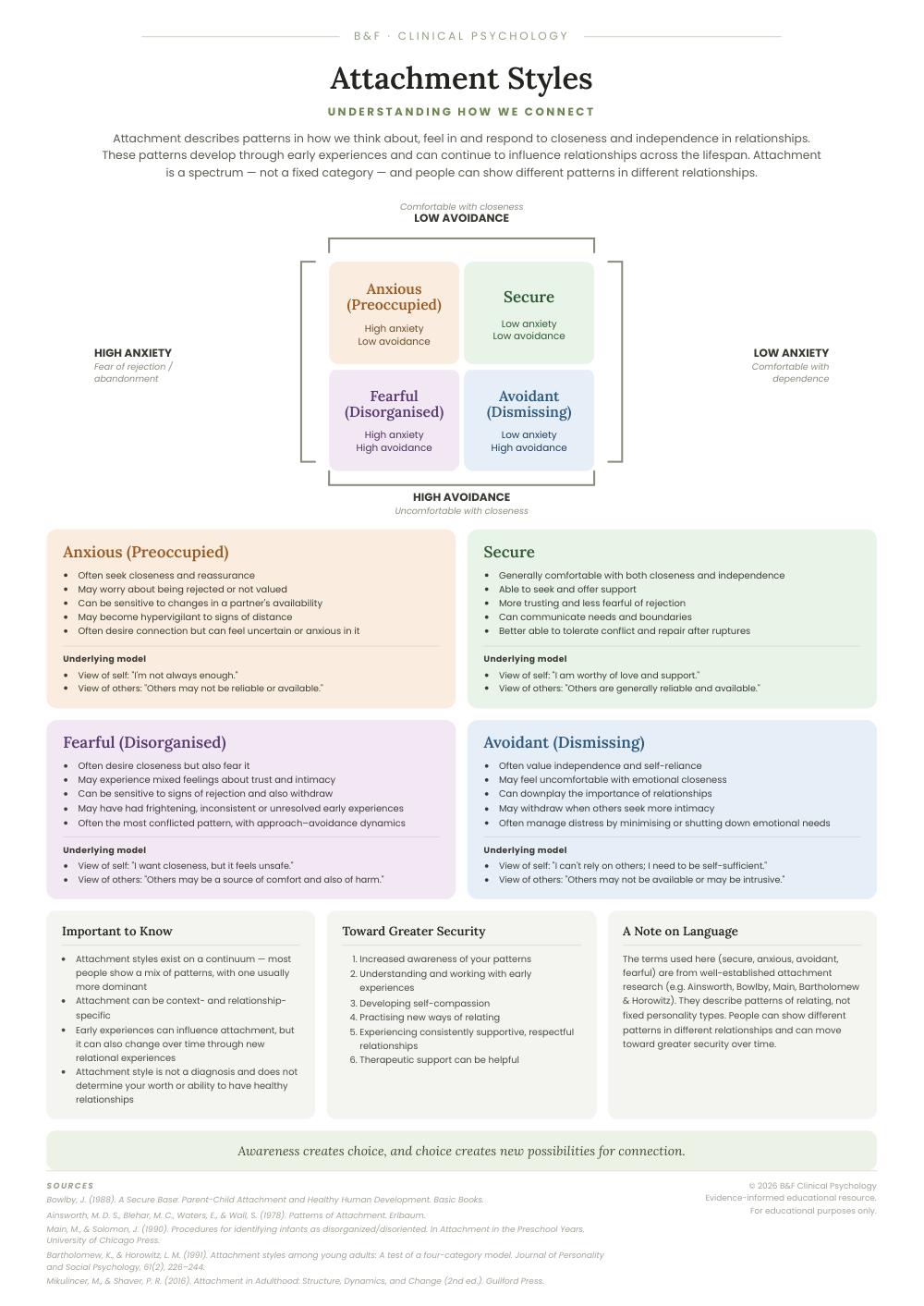
Attachment styles
Patterns in how we connect, and why attachment is a spectrum rather than a fixed category.
-
 Preview
Learn
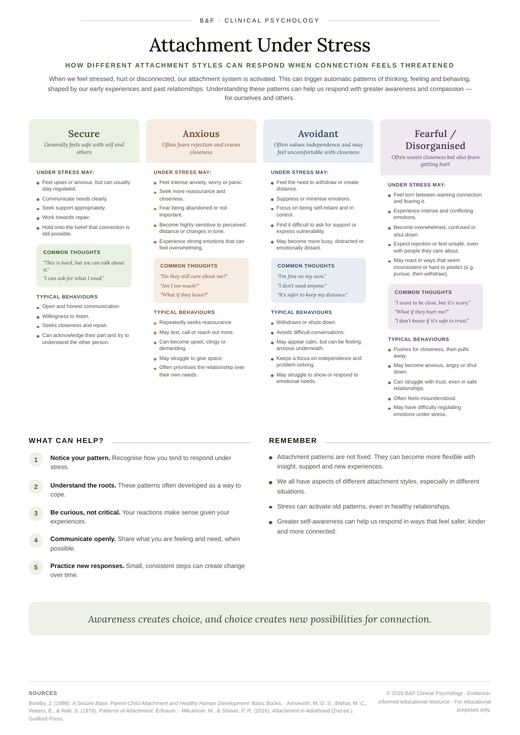
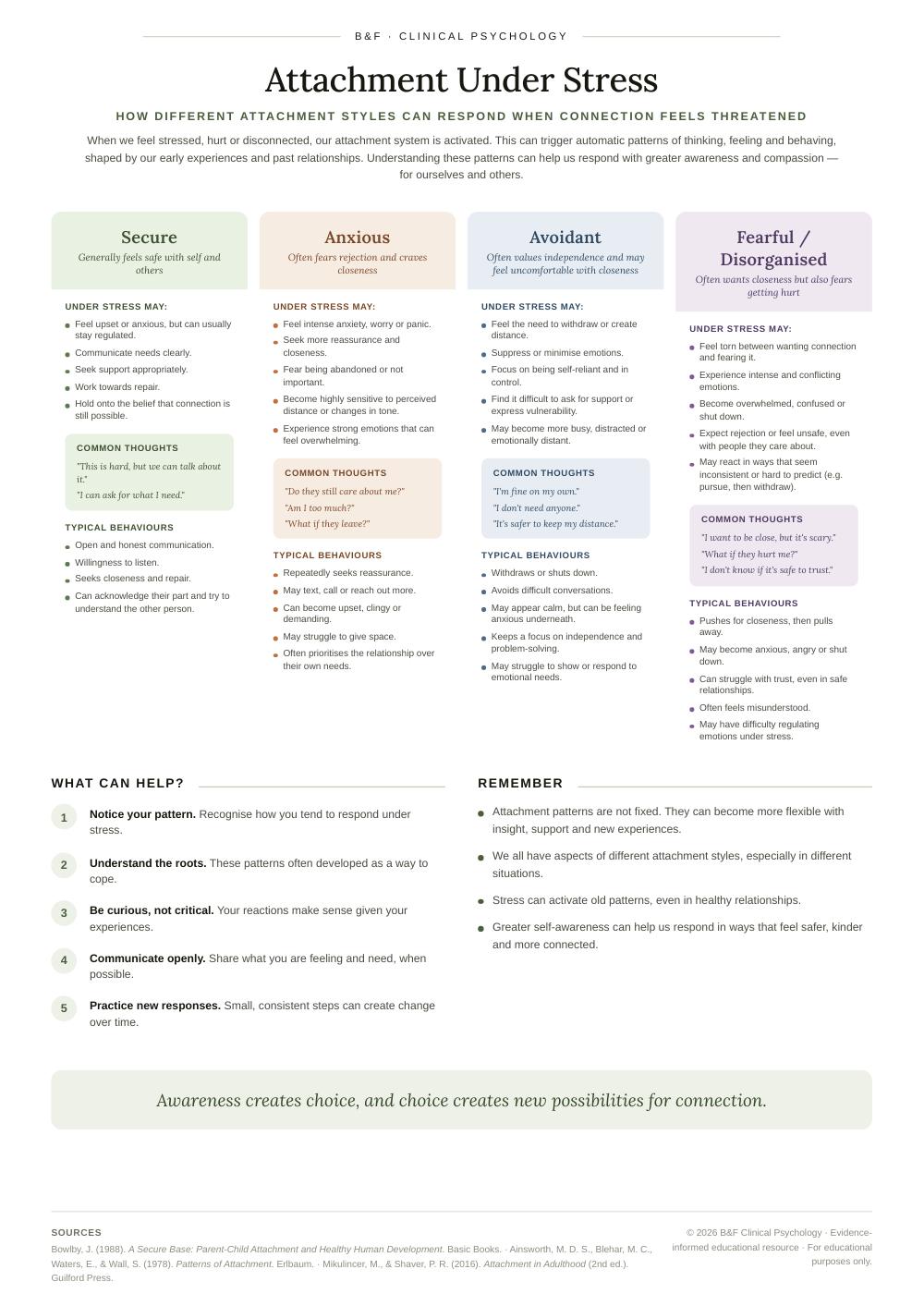
Attachment under stress
How different attachment styles can respond when connection feels threatened.
-
 Preview
Learn
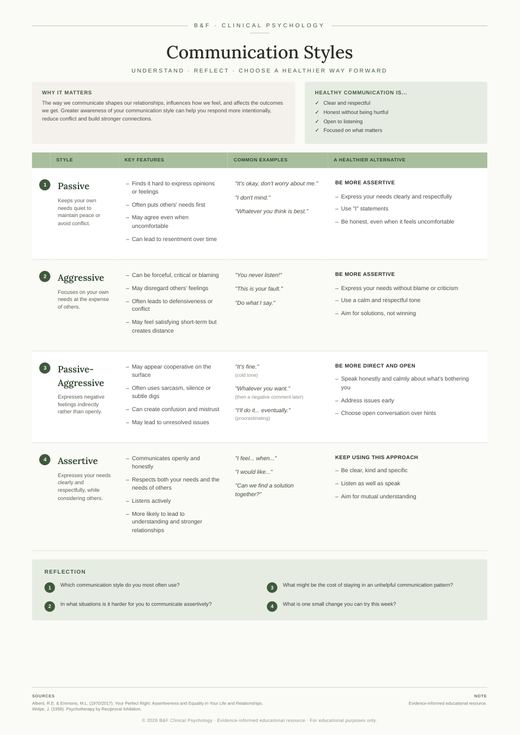
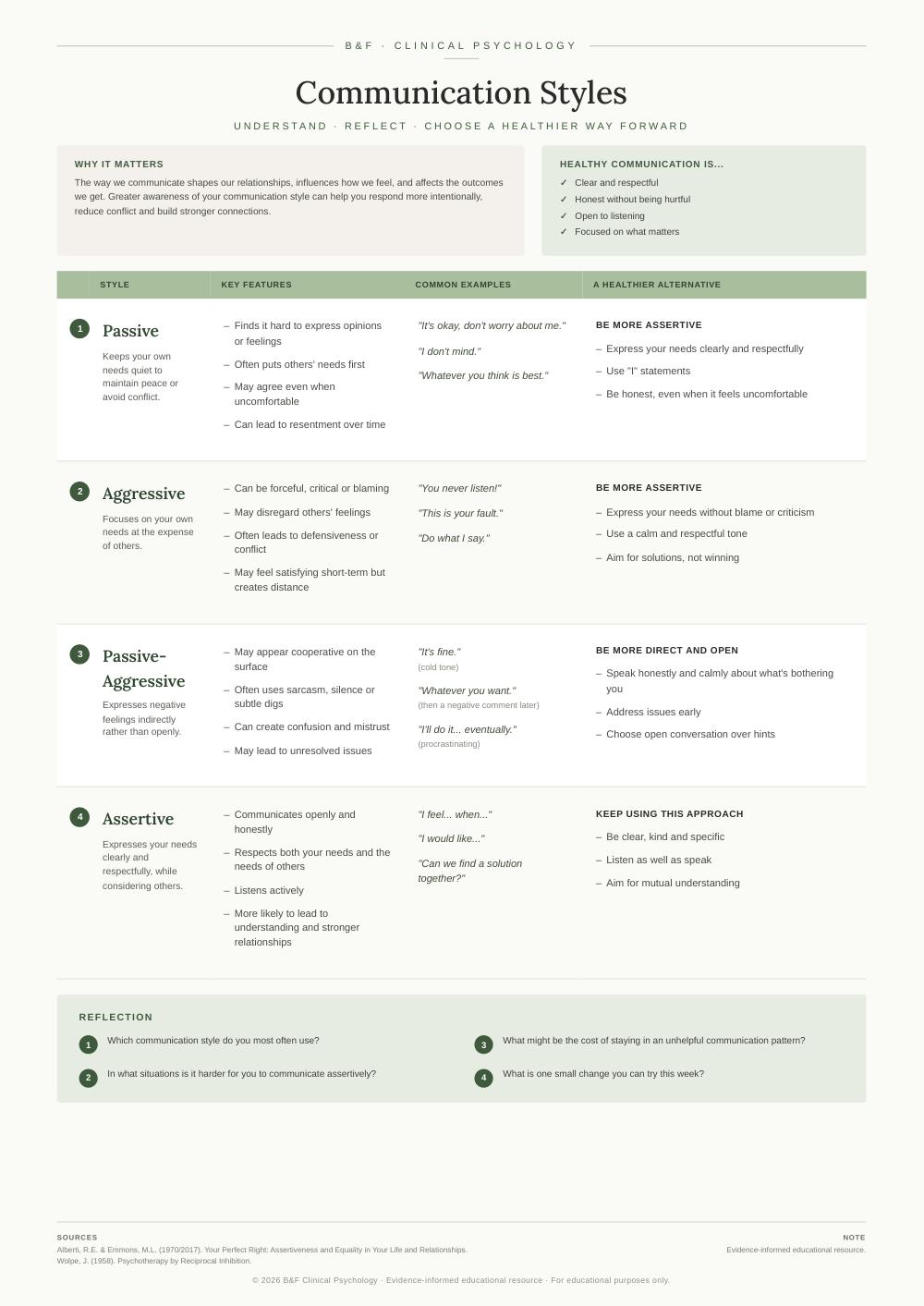
Communication styles
Passive, aggressive, passive-aggressive and assertive: recognise yours and choose better.
-
 Preview
Reflect
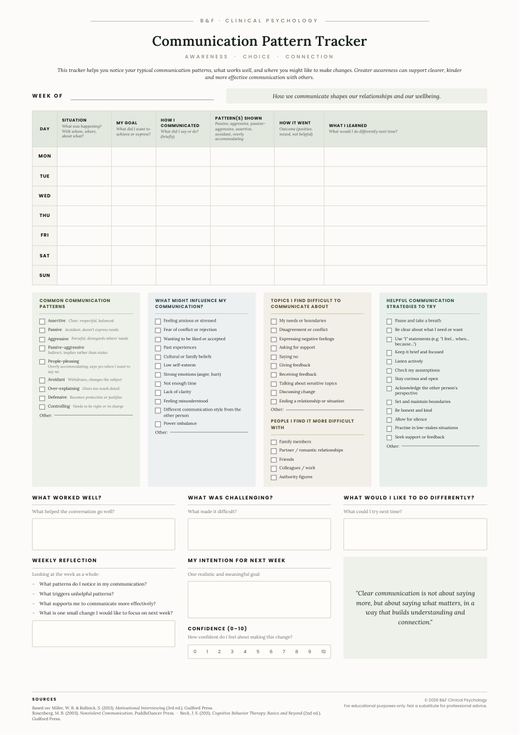
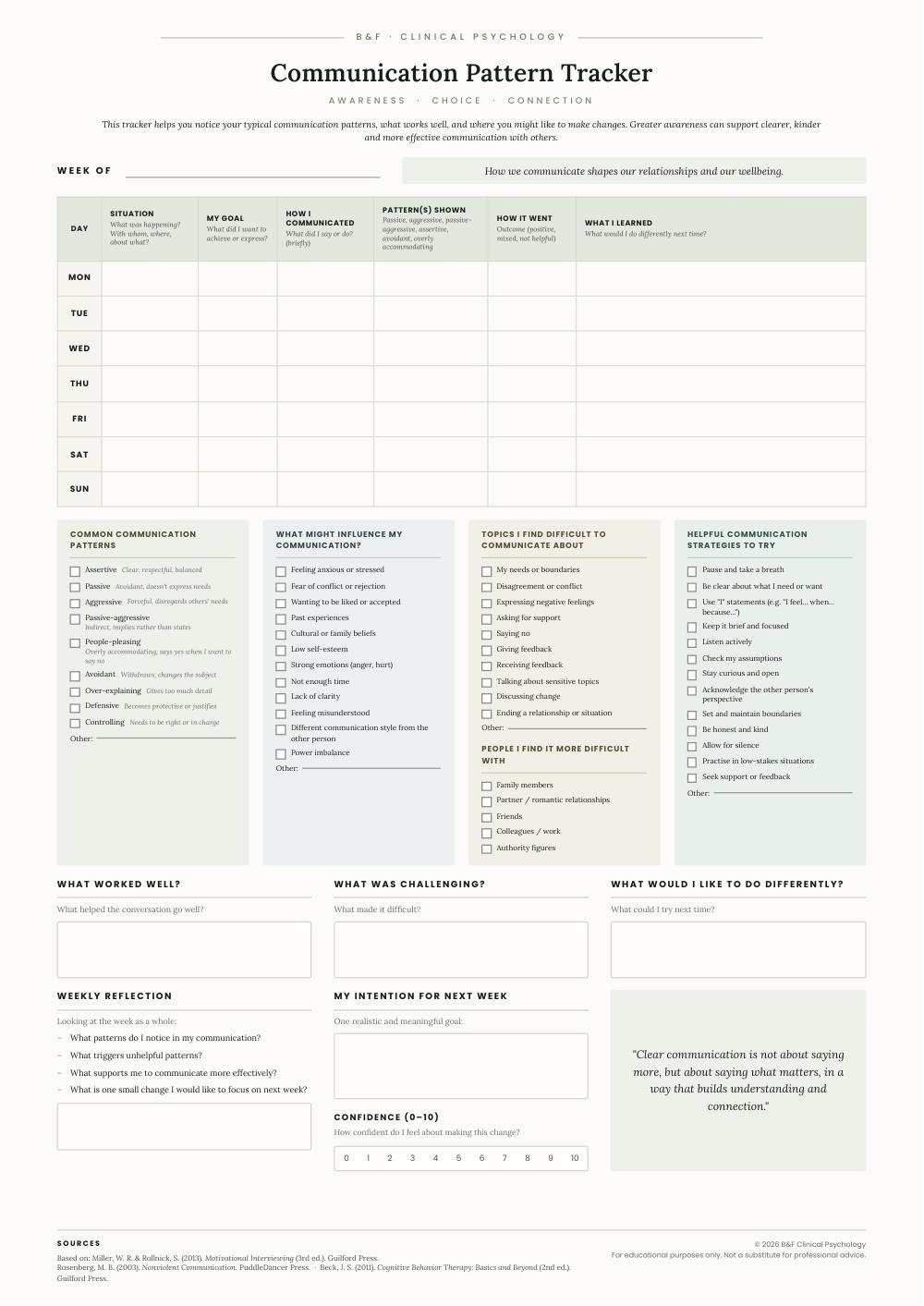
Communication pattern tracker
Notice your typical patterns, what works, and where you would like to change.
-
 Preview
Learn
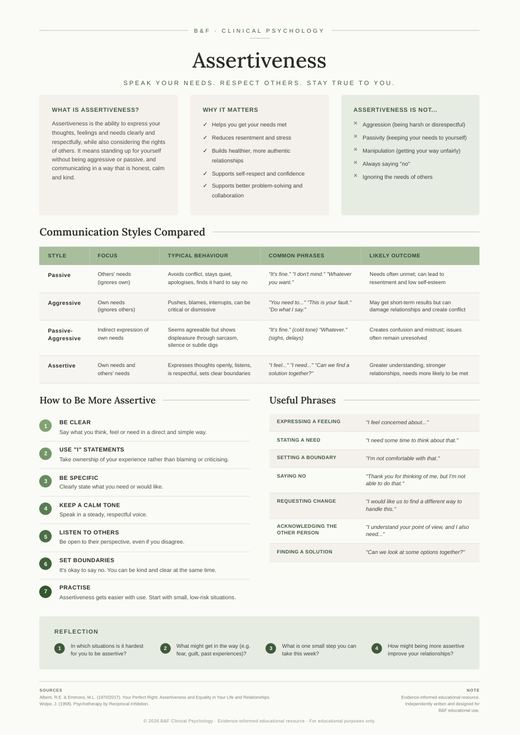
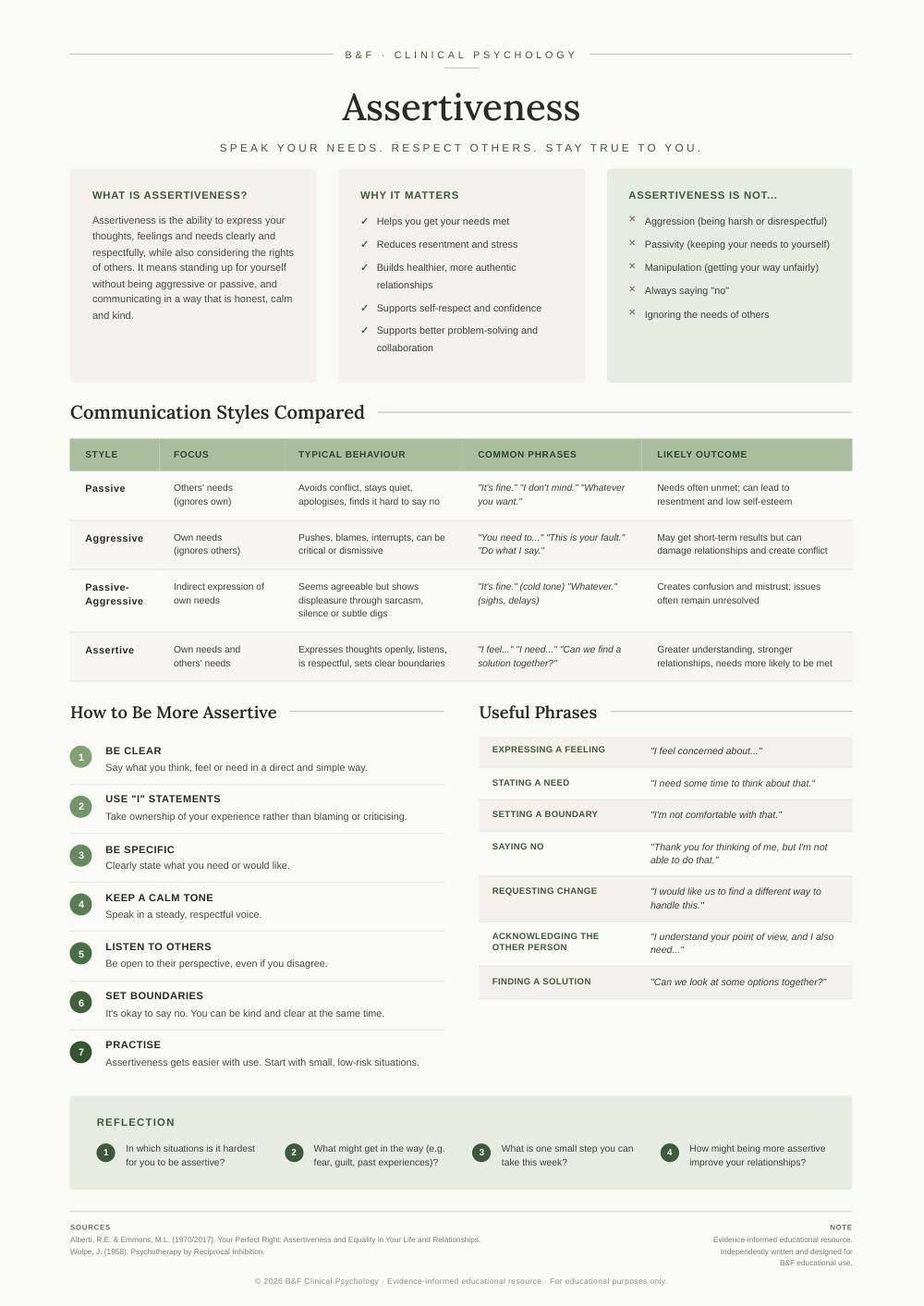
Assertiveness
Speak your needs, respect others, and stay true to yourself. What it is and how it sounds.
-
 Preview
Practice
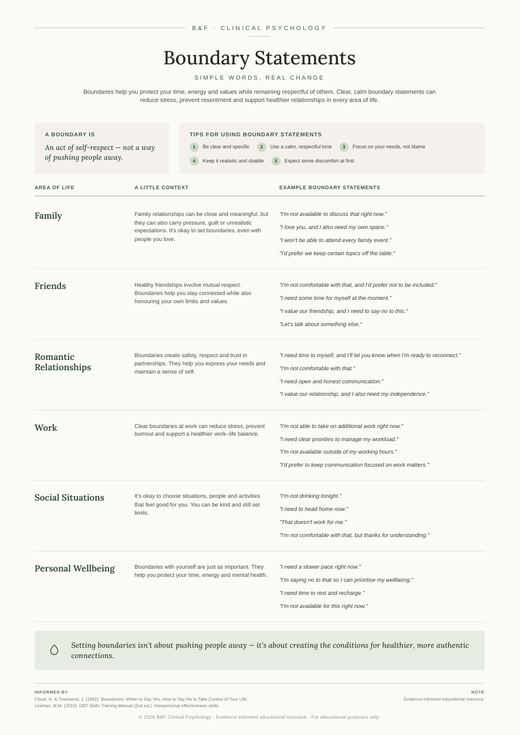
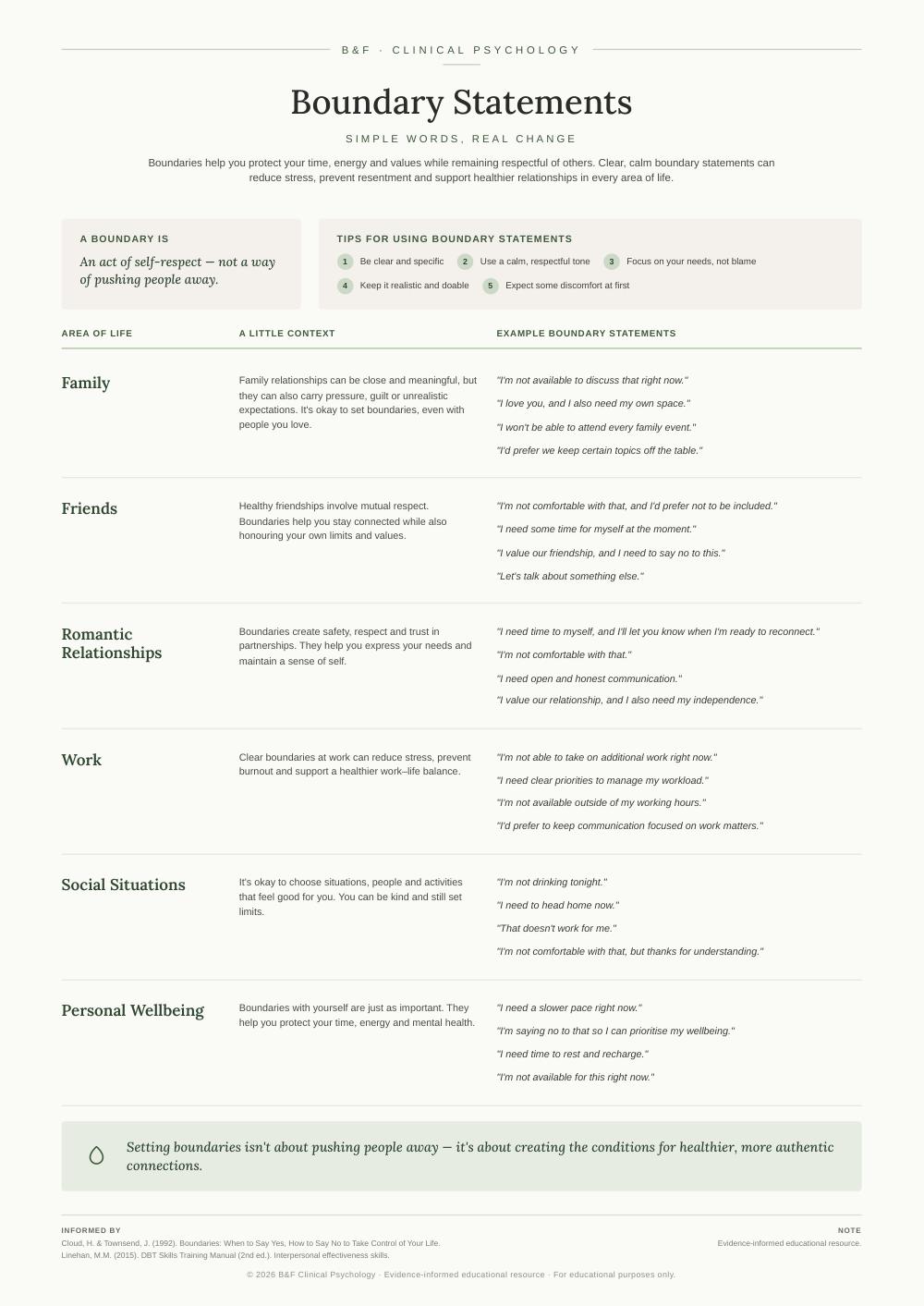
Boundary statements
Simple, calm words for protecting your time, energy and values.
-
 Preview
Reflect
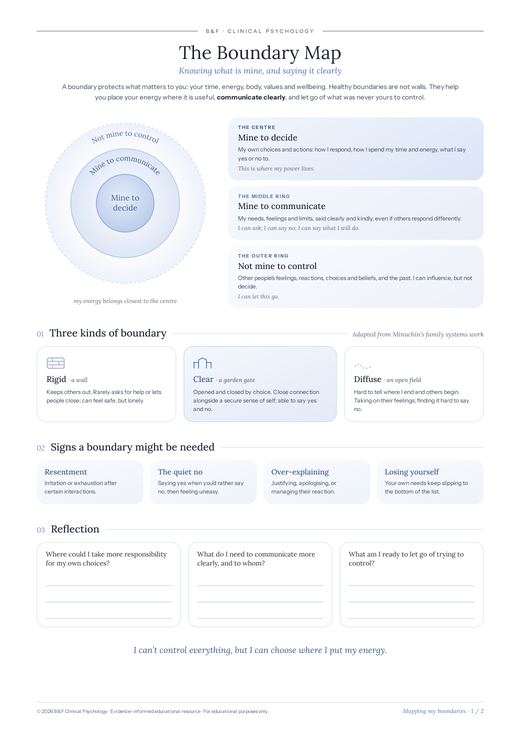
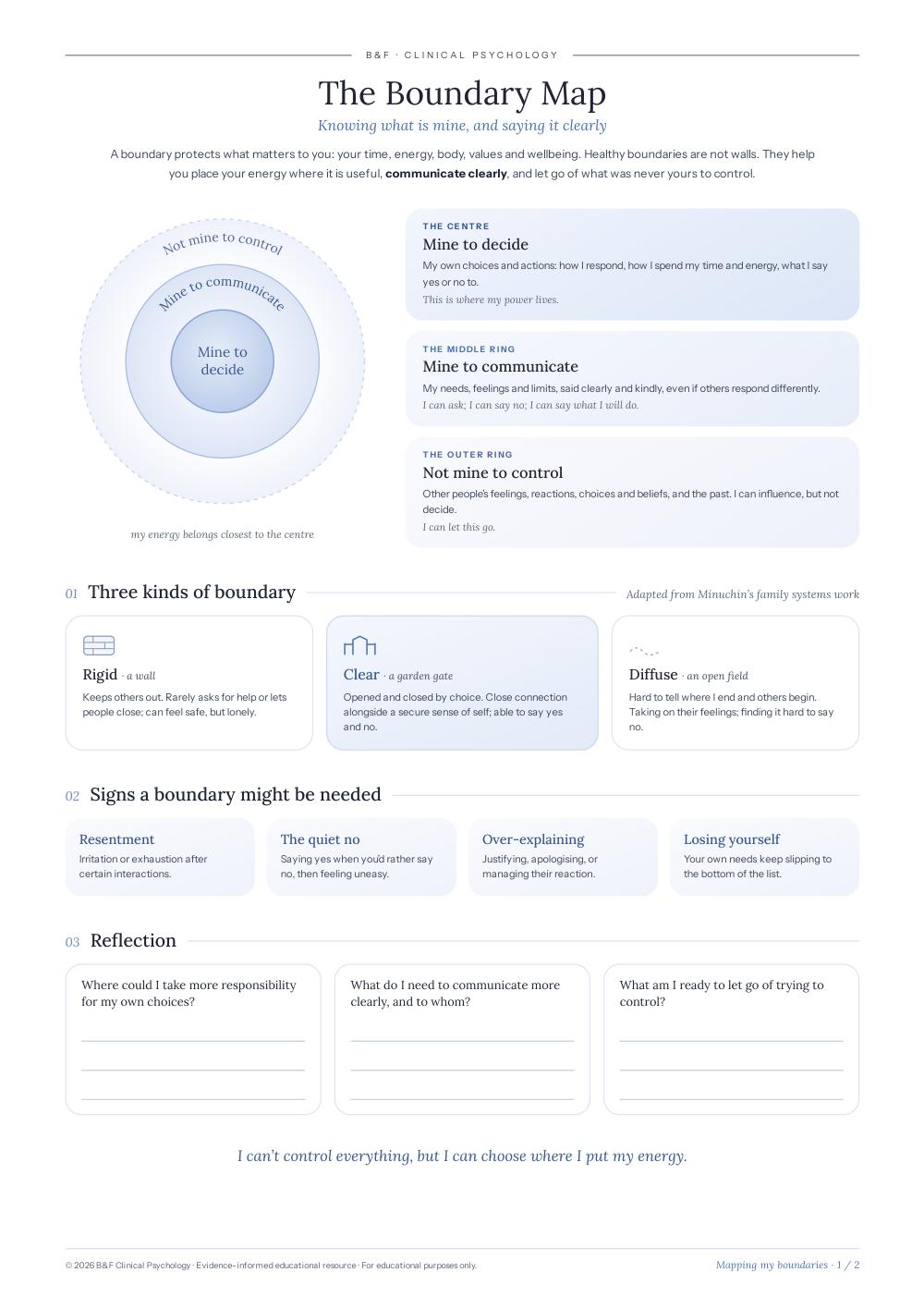
The boundary map
Knowing what is yours to decide, what is not, and saying it clearly.
-
 Preview
Reflect
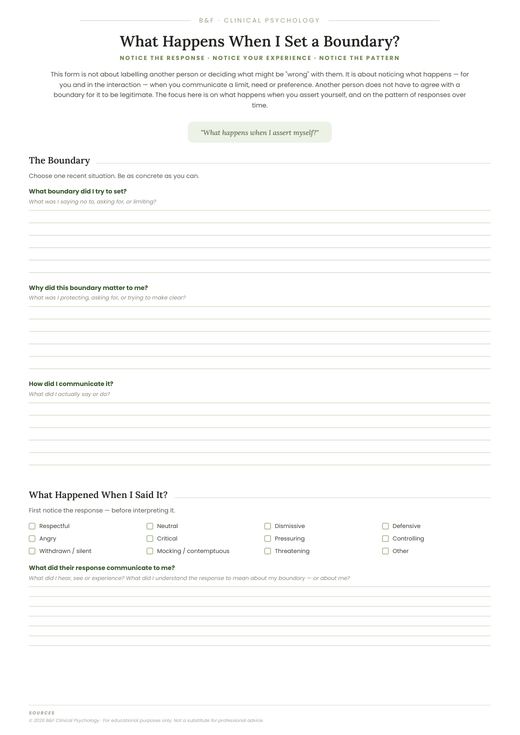
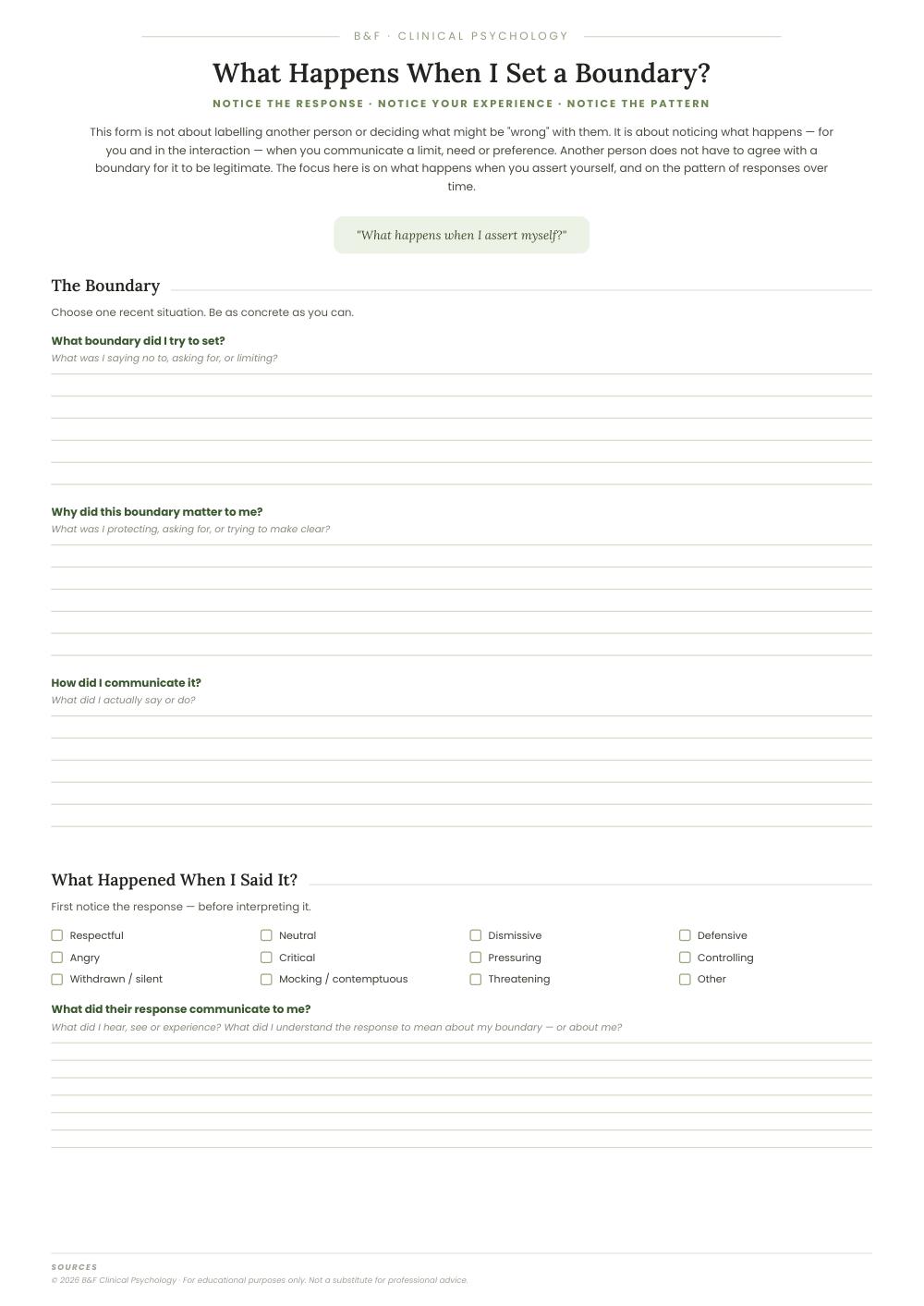
What happens when I set a boundary?
Notice the response, your own experience and the pattern over time when you communicate a limit.
-
 Preview
Reflect
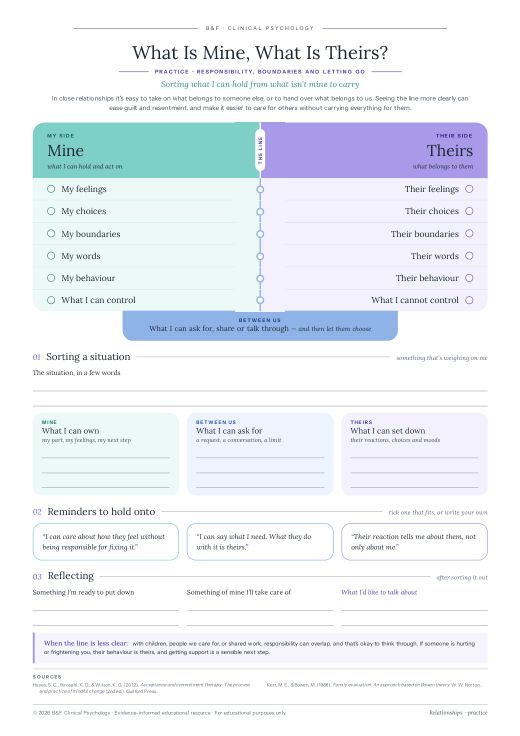
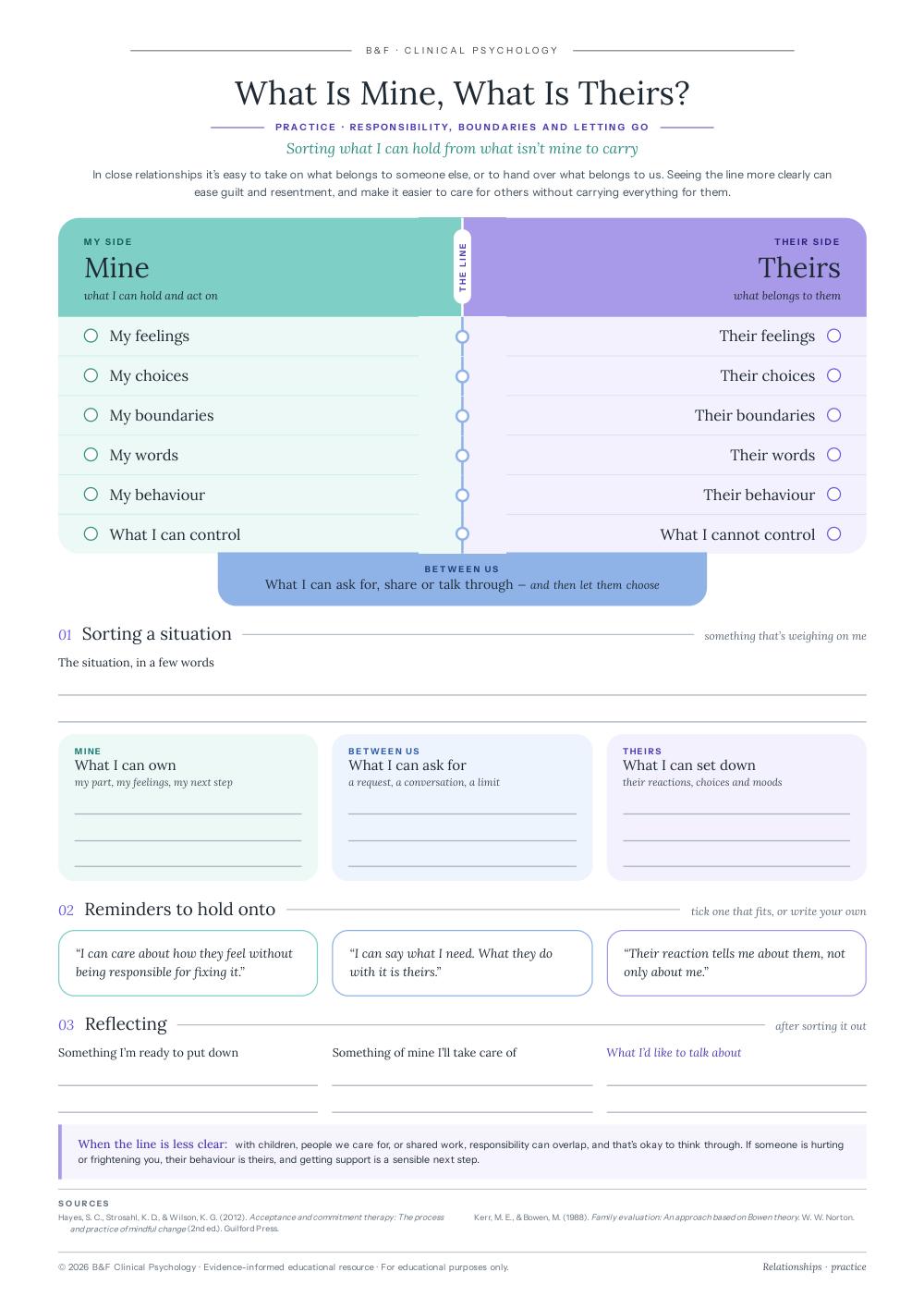
What is mine, what is theirs?
Sorting what you can hold from what isn't yours to carry.
-
 Preview
Learn
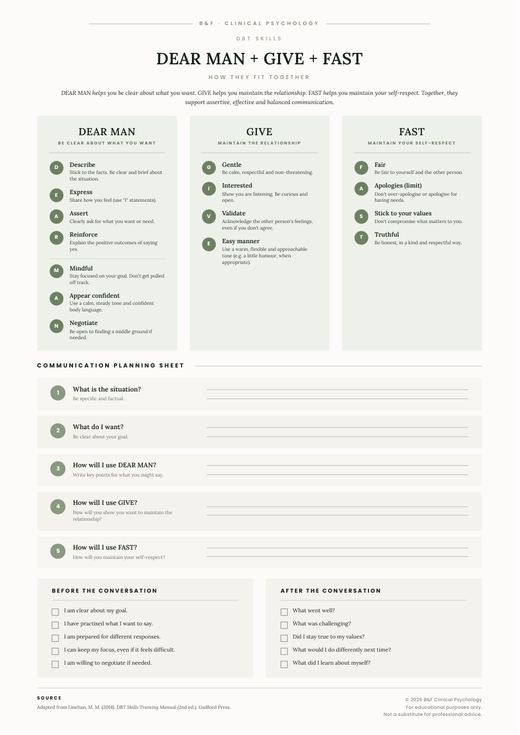
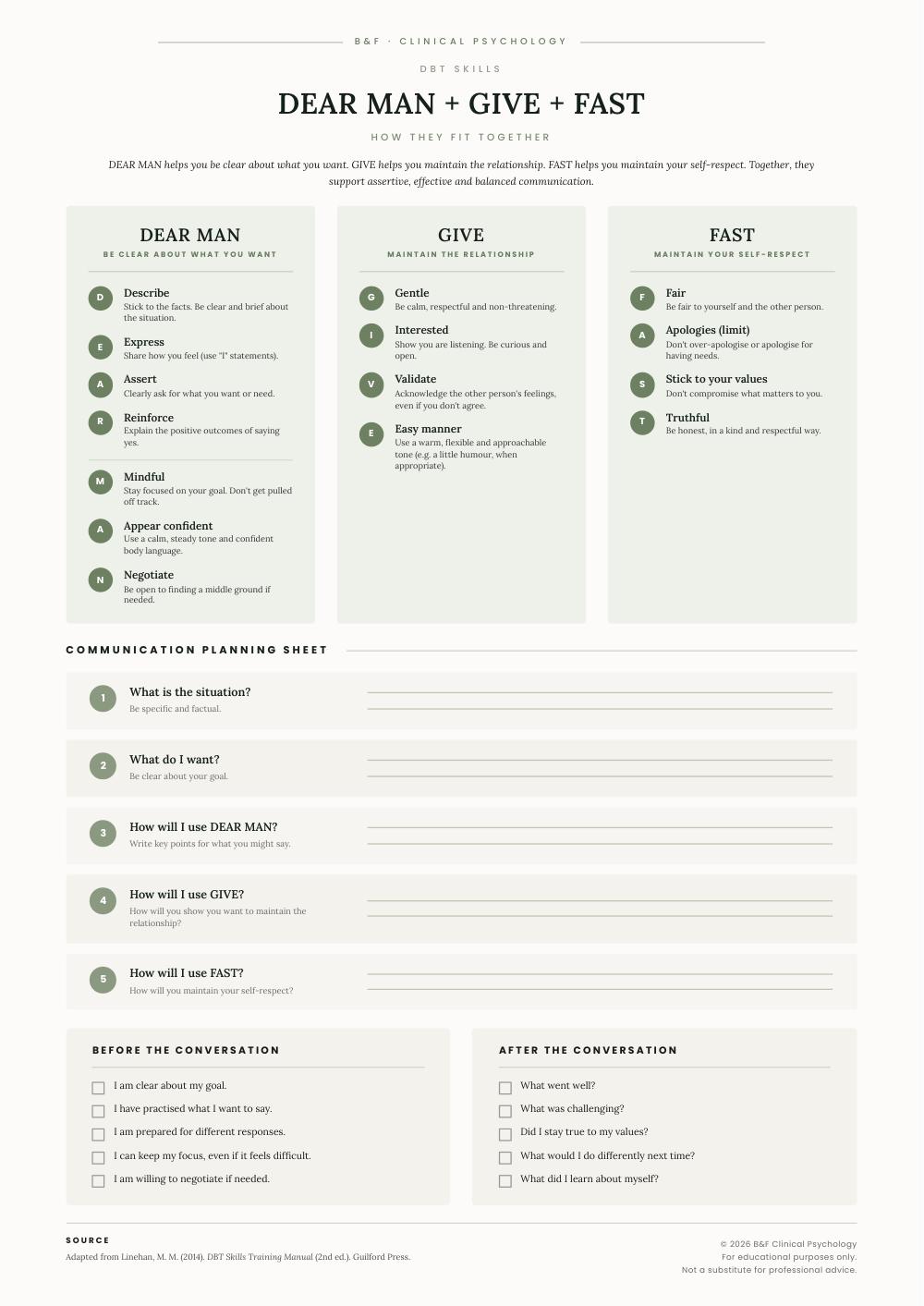
DEAR MAN, GIVE, FAST
Three DBT skills and how they fit: be clear, keep the relationship, keep your self-respect.
-
 Preview
Reflect
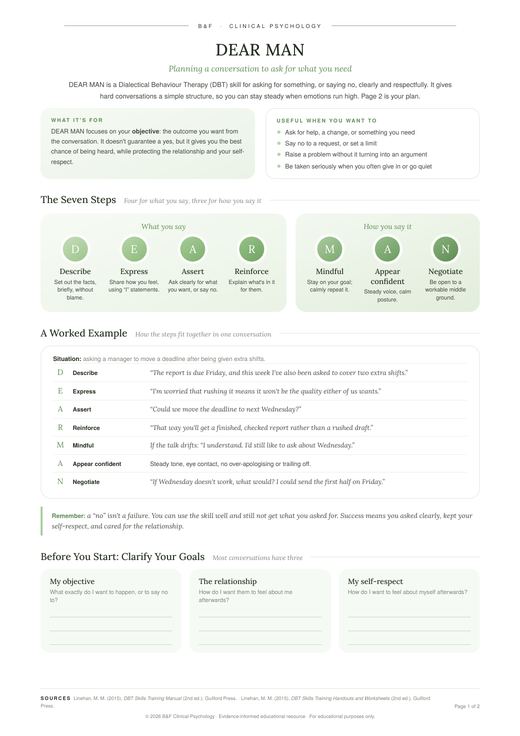
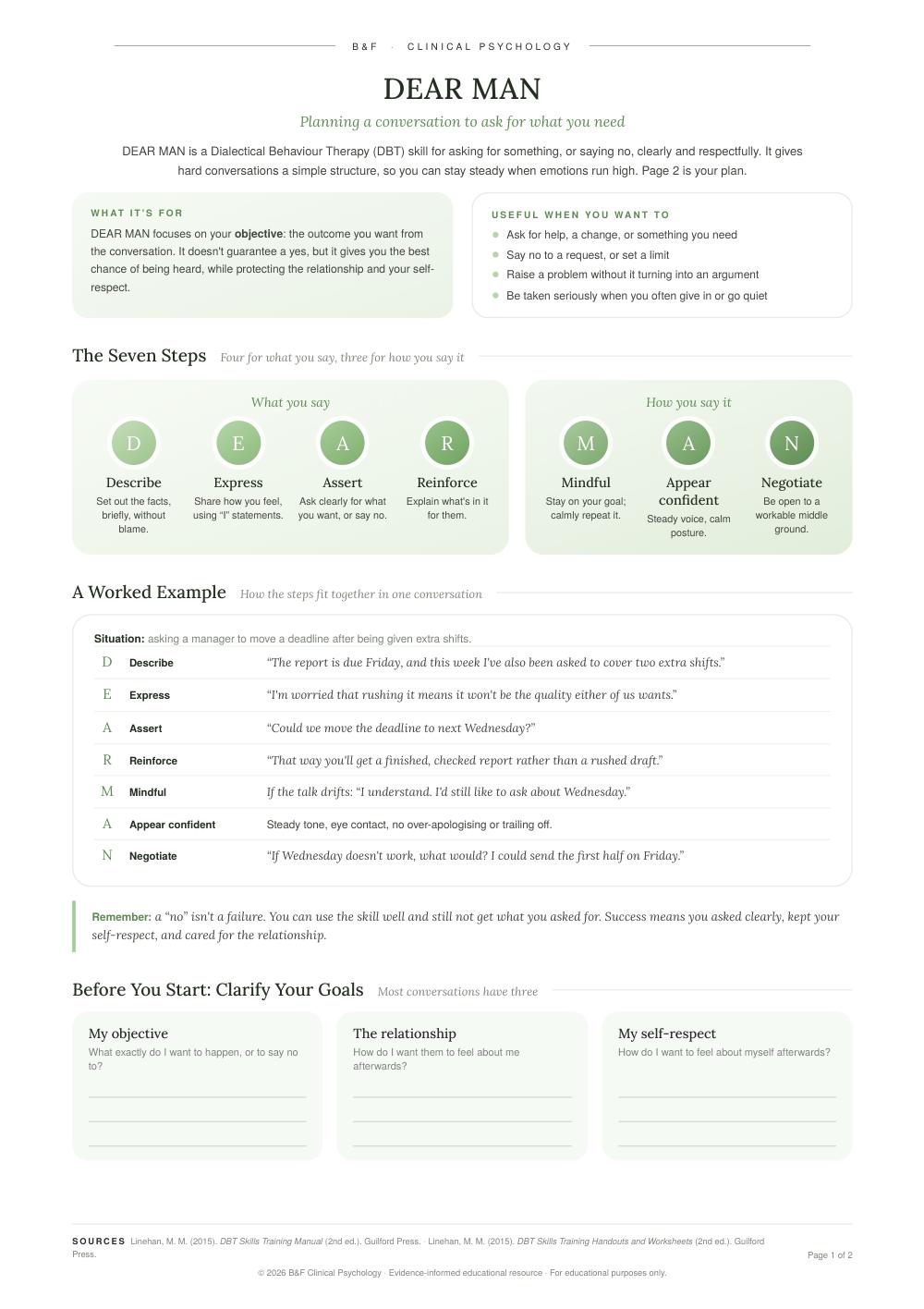
DEAR MAN planning sheet
The DBT skill for asking for what you need, with a page for planning the conversation.
-
 Preview
Reflect
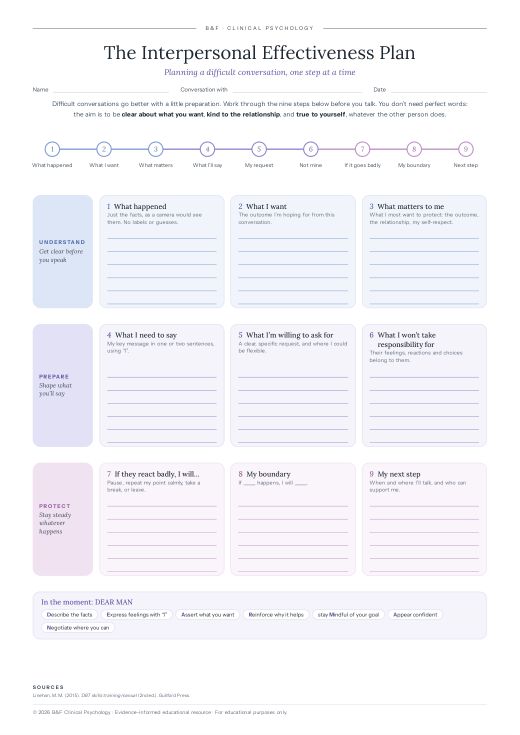
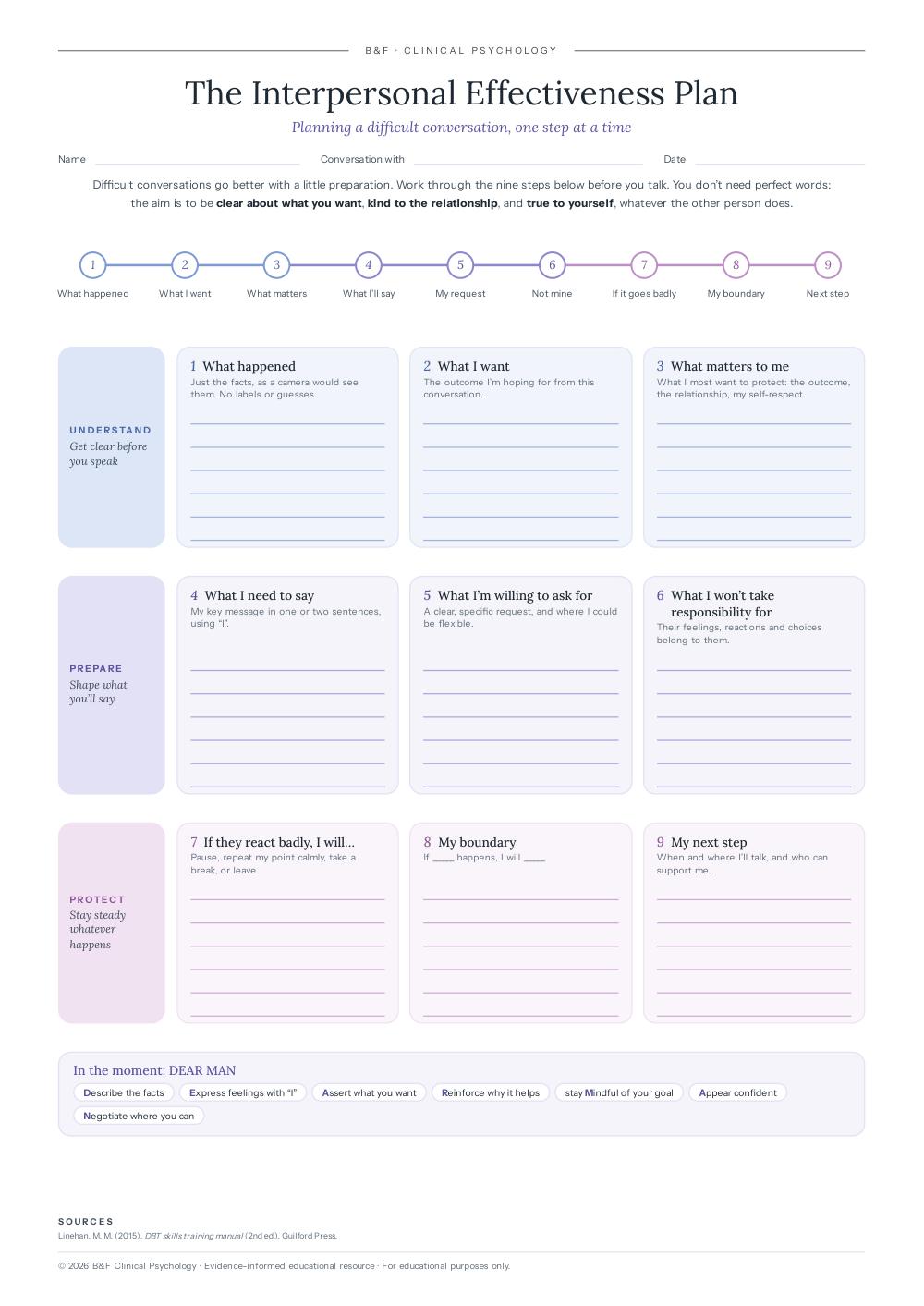
Interpersonal effectiveness plan
Planning a difficult conversation, one step at a time.
-
 Preview
Learn
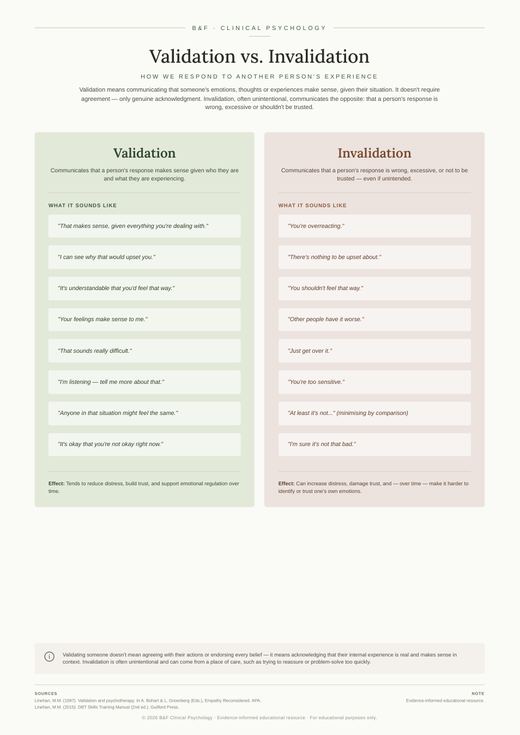
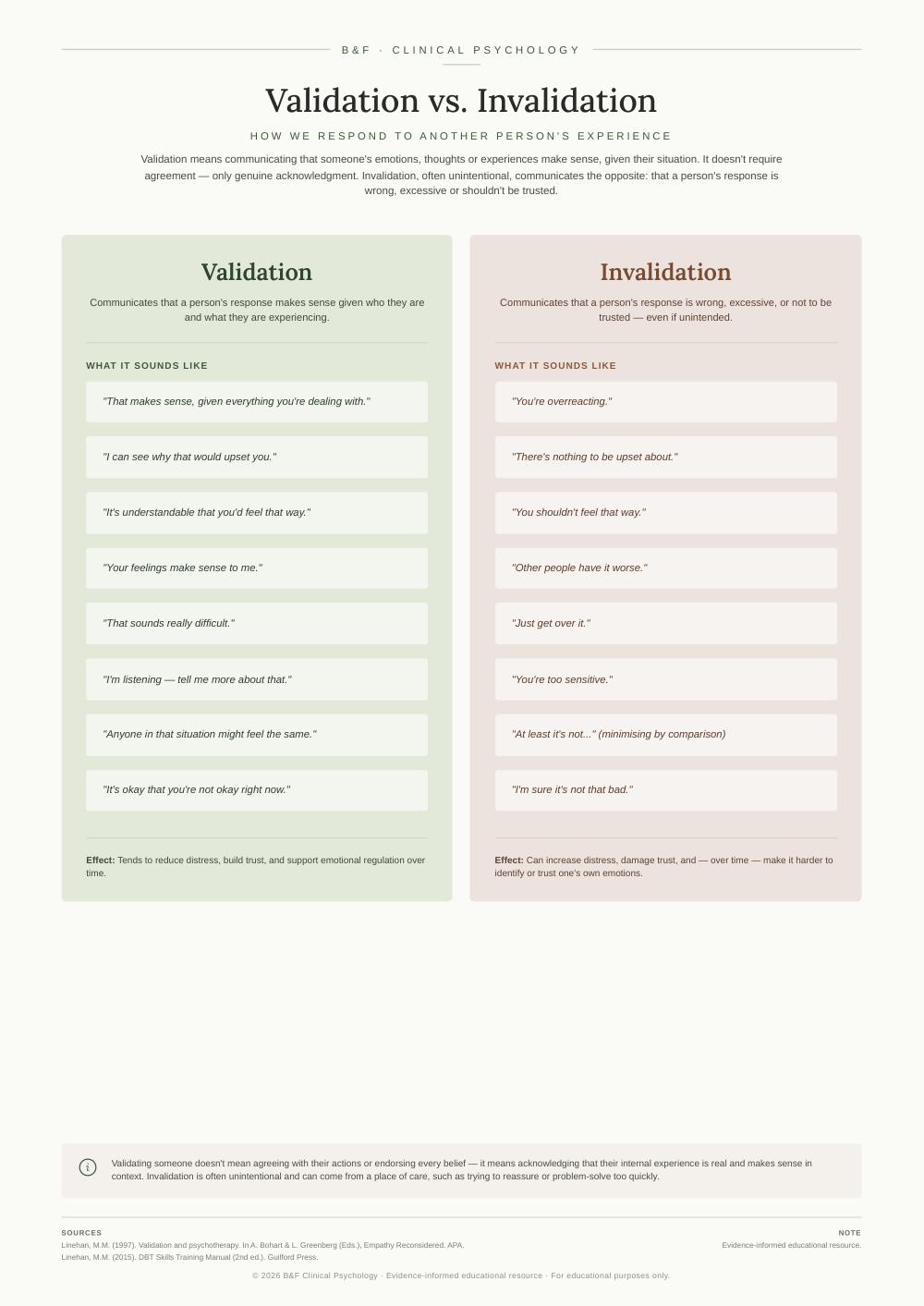
Validation vs invalidation
Communicating that someone's experience makes sense, and what it sounds like when we don't.
-
 Preview
Learn
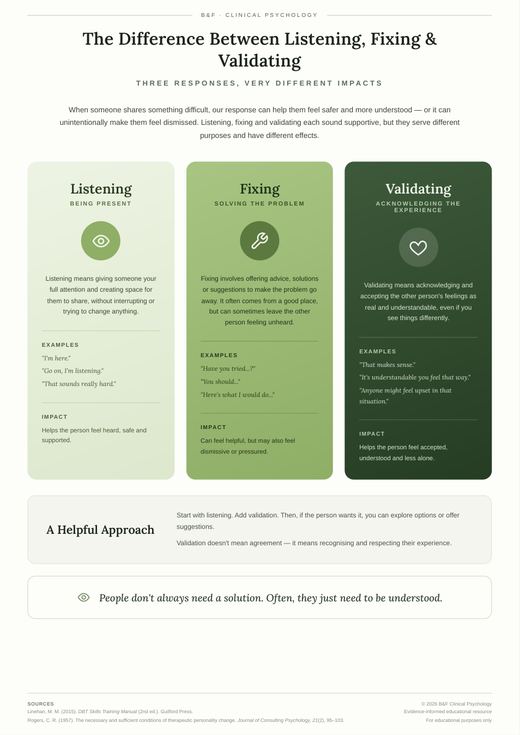
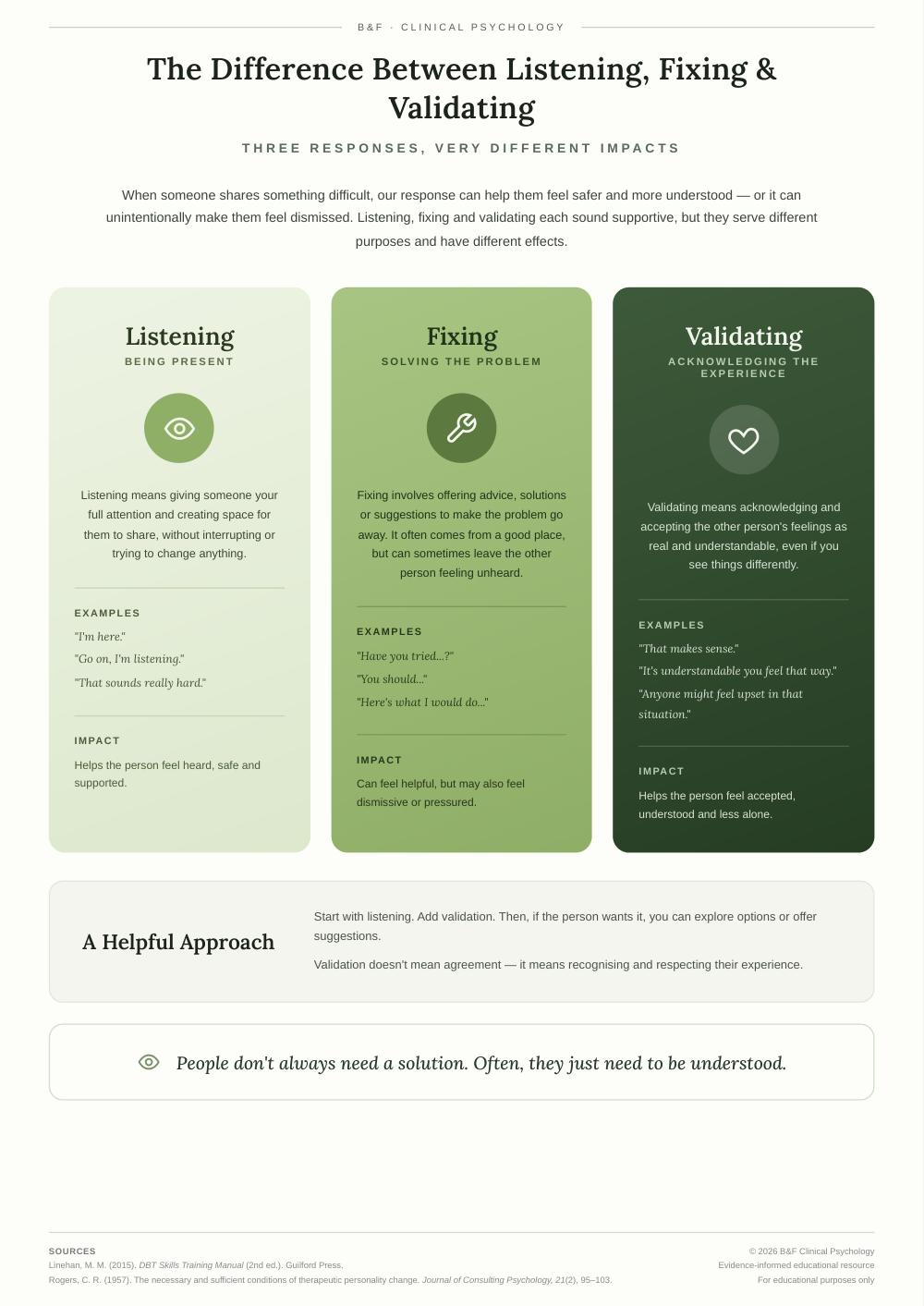
Listening, fixing and validating
Three responses to someone in difficulty, with very different effects.
-
 Preview
Learn
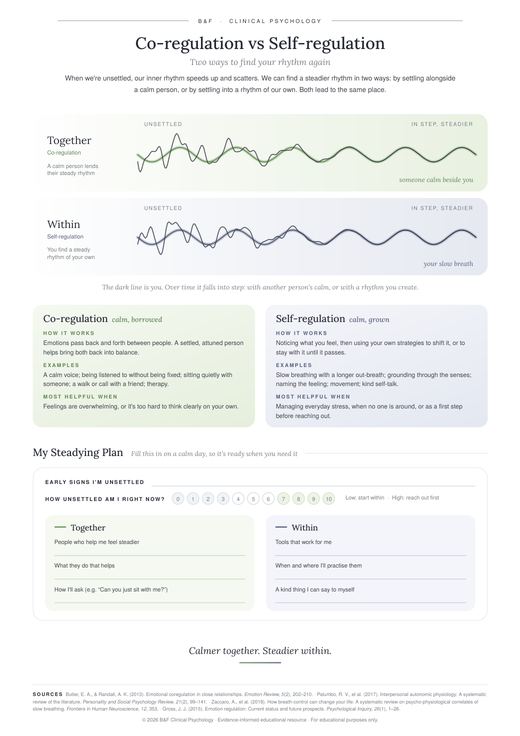
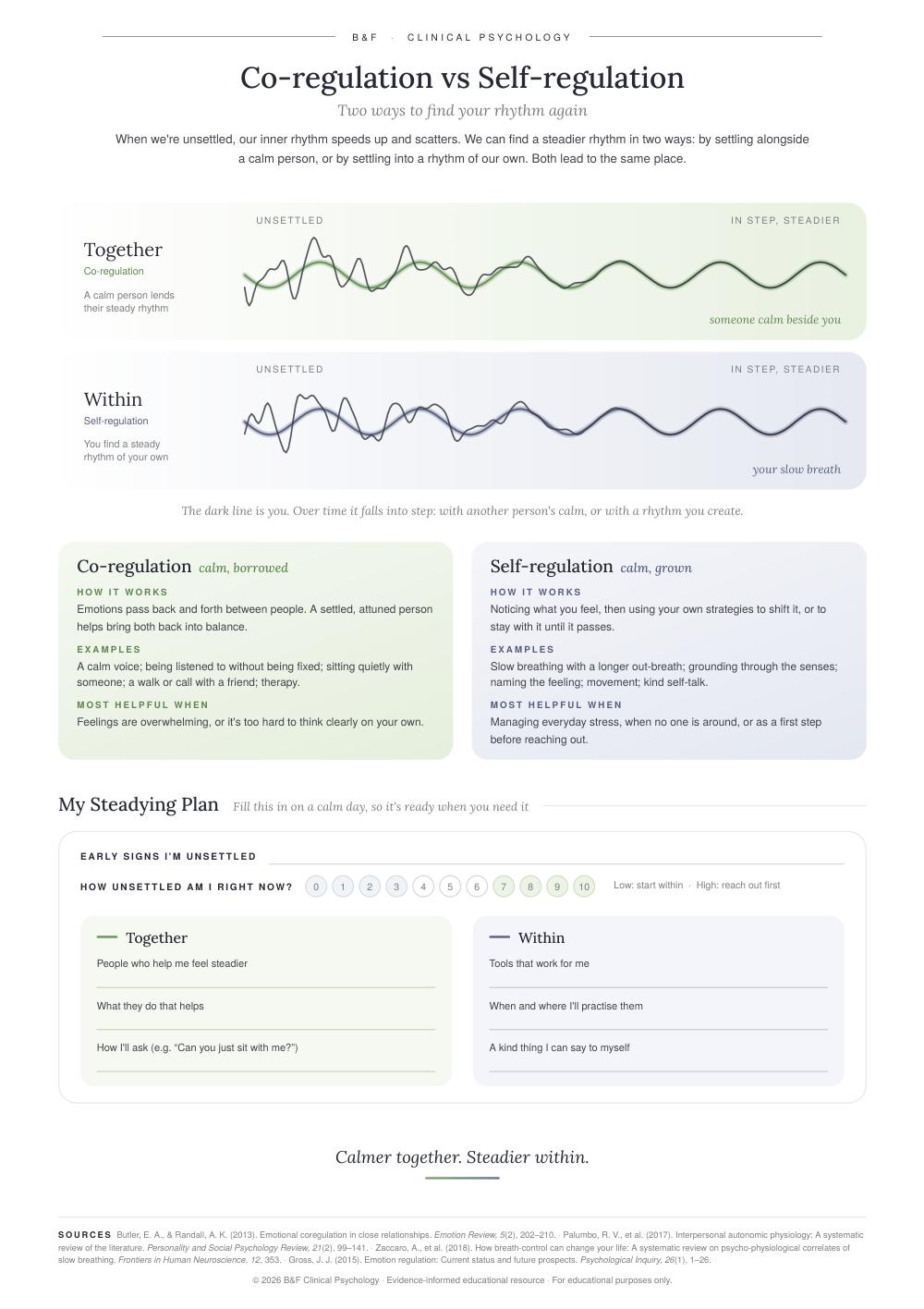
Co-regulation vs self-regulation
Calming with someone else's help and calming on your own: two paths, one goal.
-
 Preview
Learn
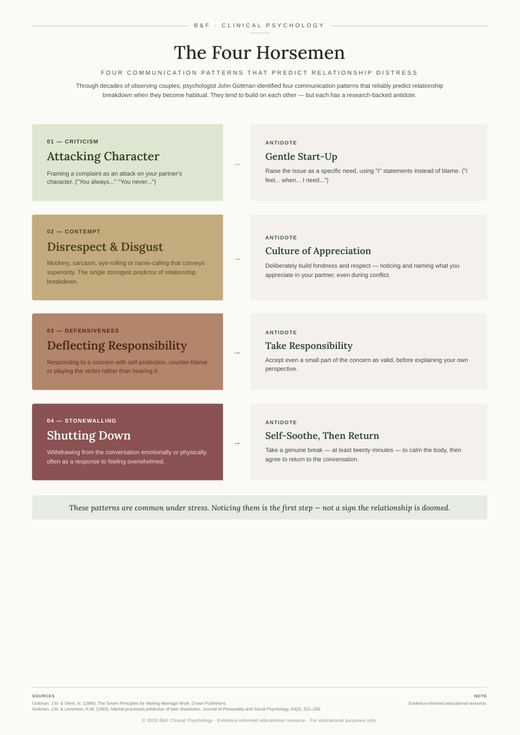
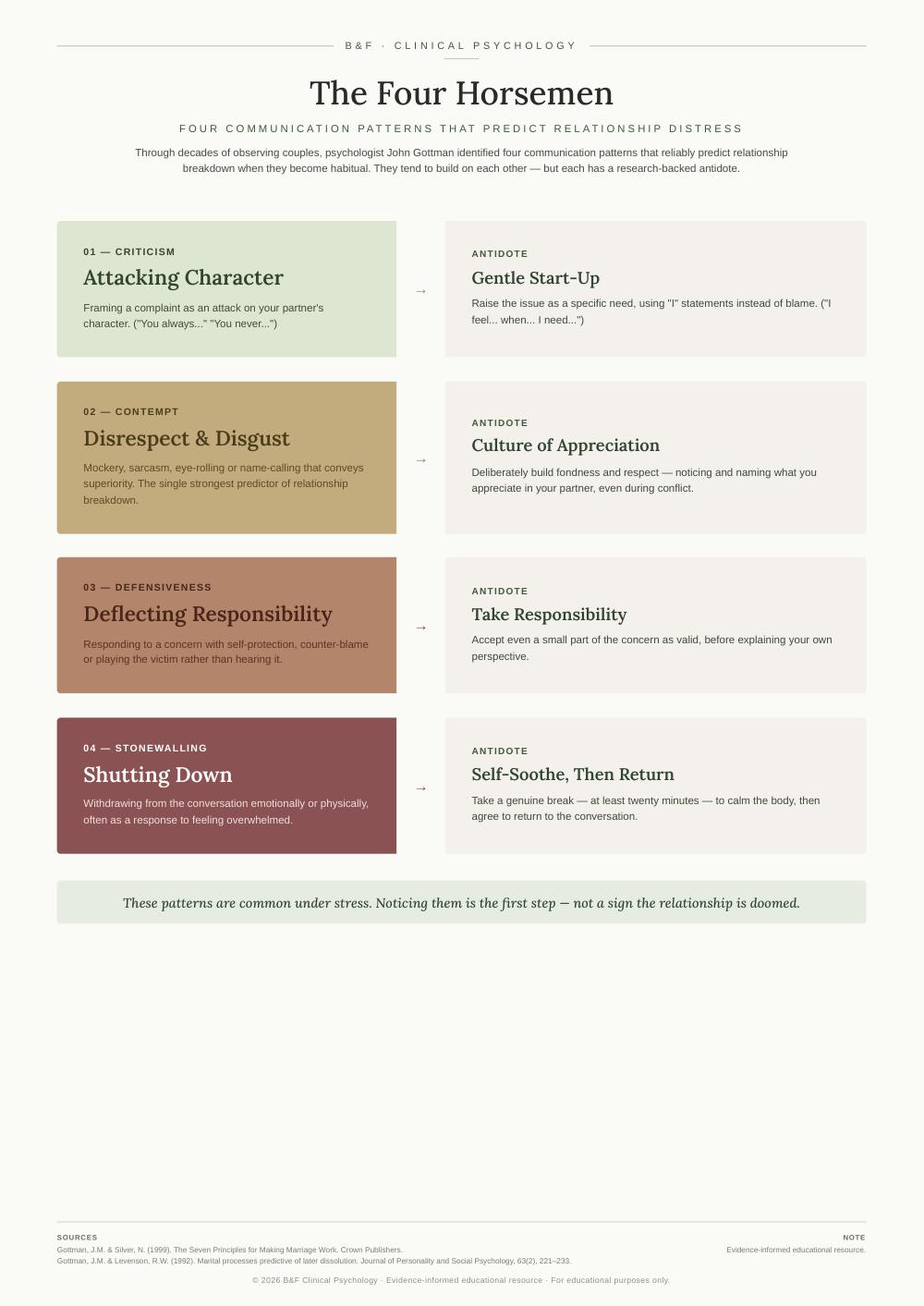
The four horsemen
Gottman's four communication patterns that predict relationship distress.
-
 Preview
Learn
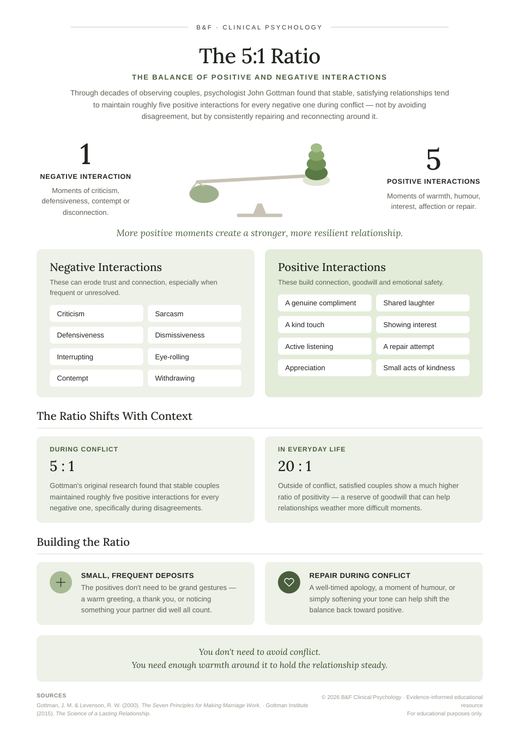
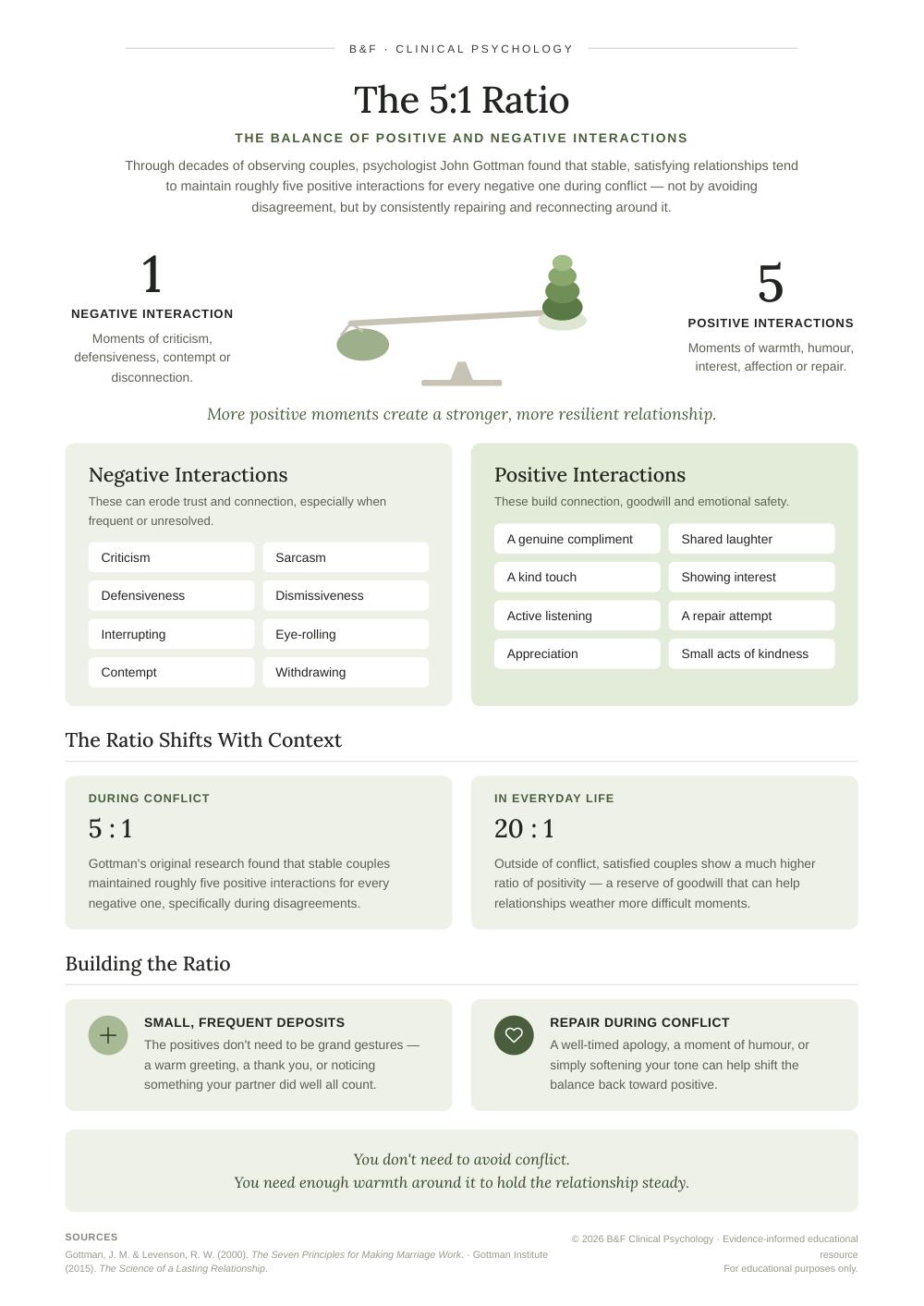
The 5:1 ratio
Stable relationships keep about five positive interactions for every negative one.
-
 Preview
Learn
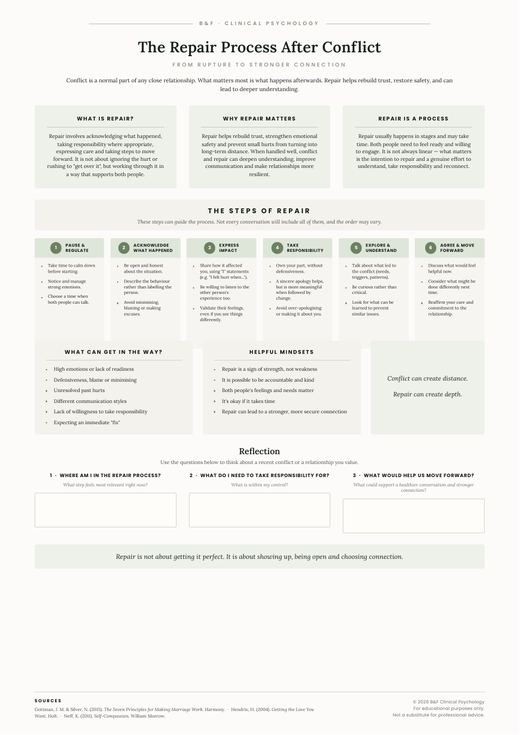
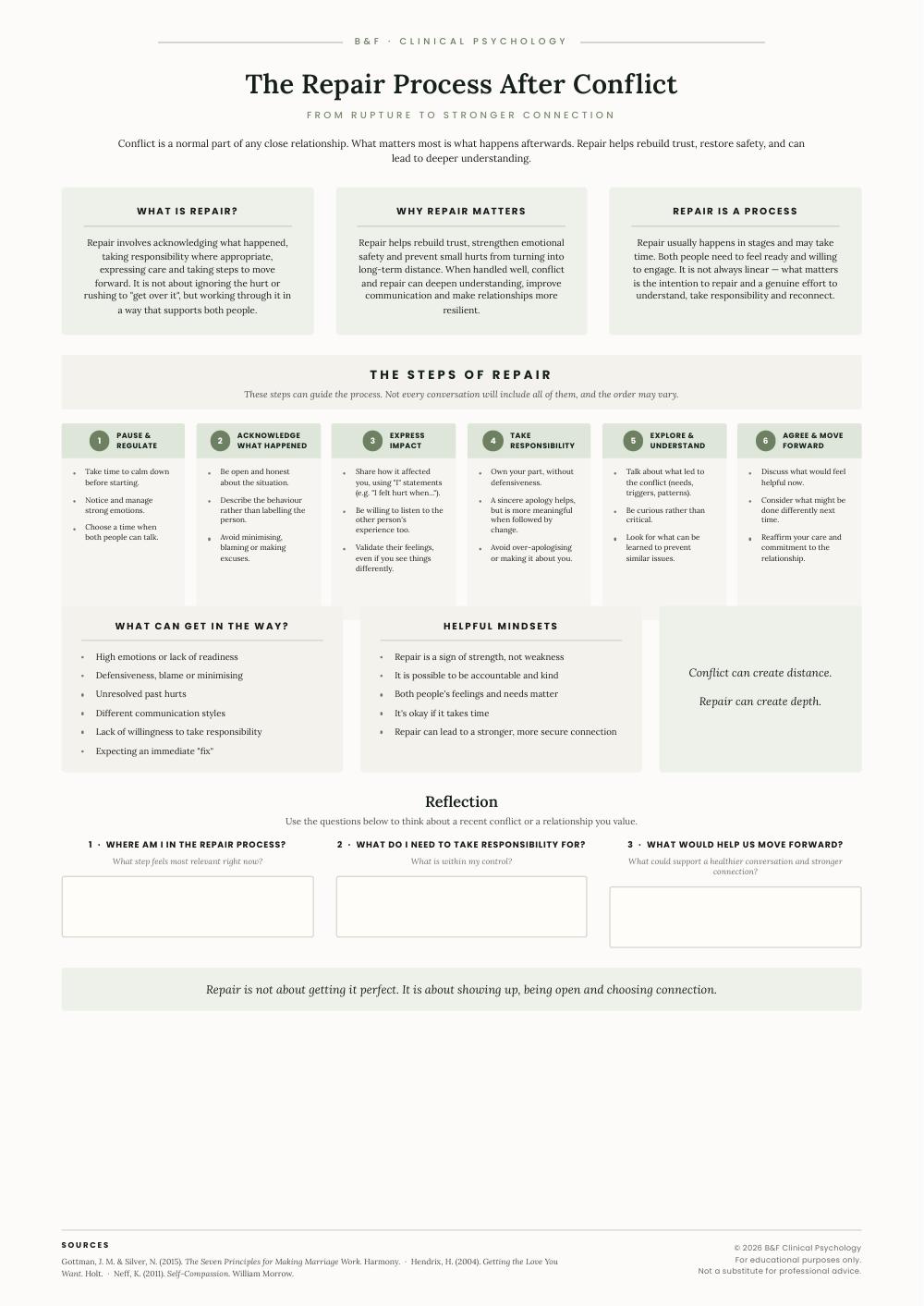
The repair process after conflict
Conflict is normal. What happens afterwards is what matters.
-
 Preview
Reflect
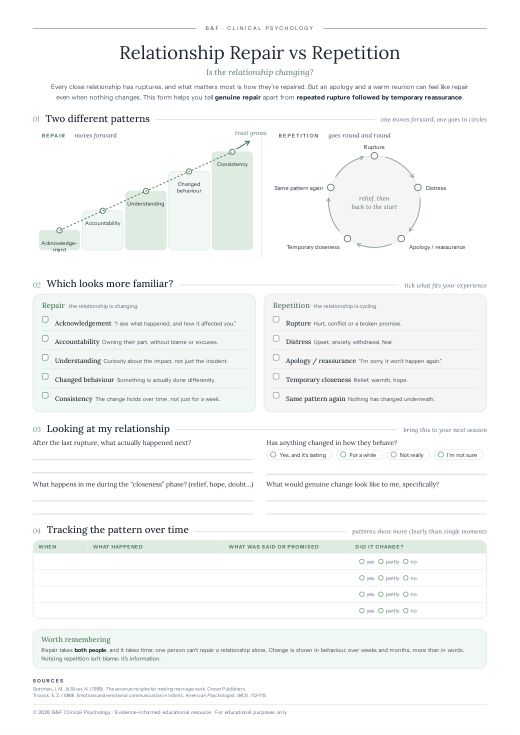
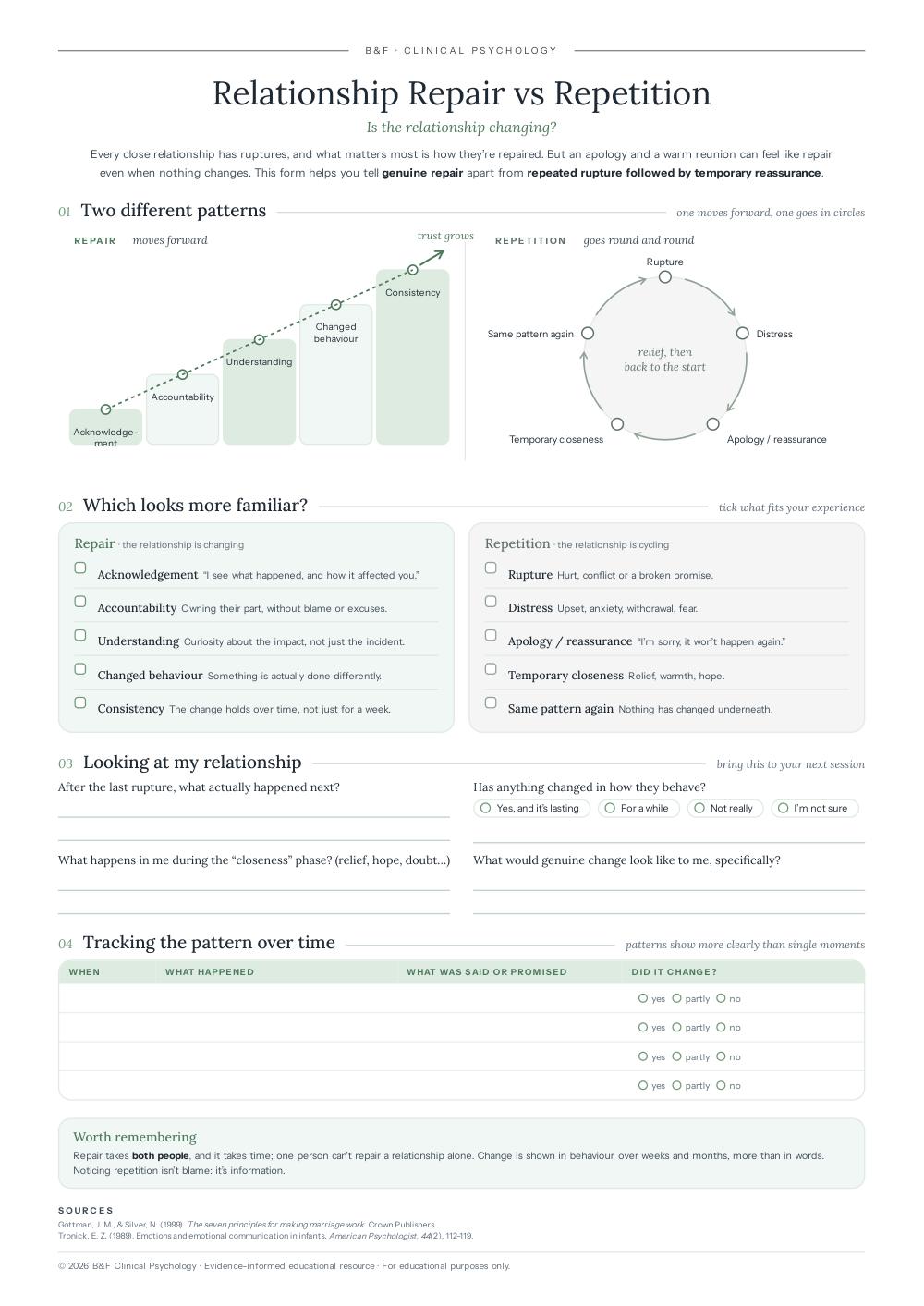
Relationship repair vs repetition
Is the relationship changing? Telling genuine repair apart from the same cycle again.
-
 Preview
Reflect
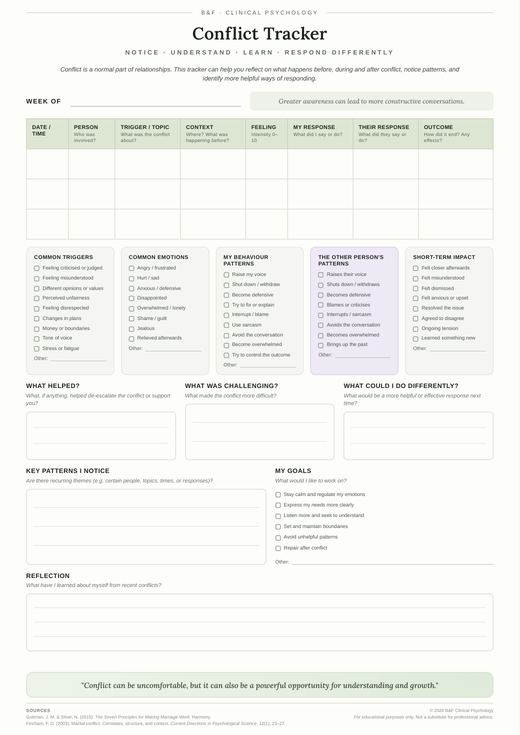
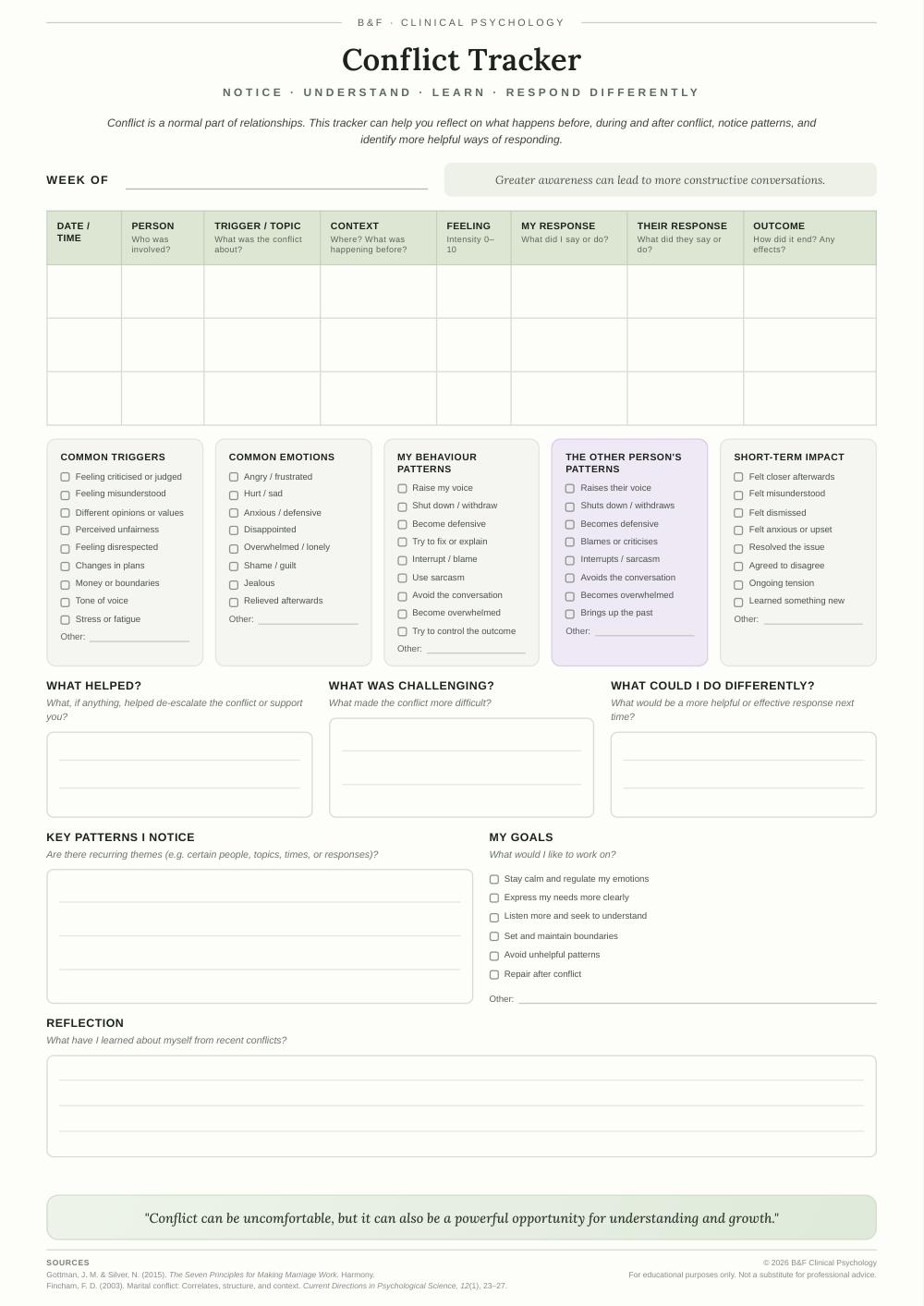
Conflict tracker
Reflect on what happens before, during and after conflict, and find more helpful ways to respond.
-
 Preview
Learn
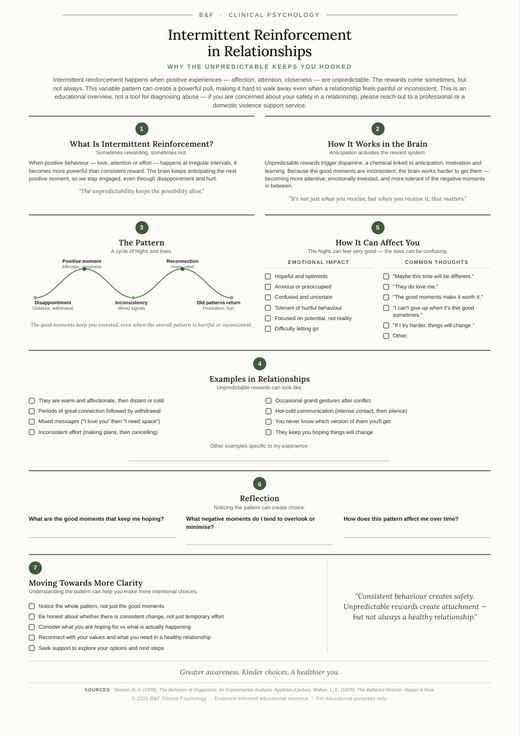
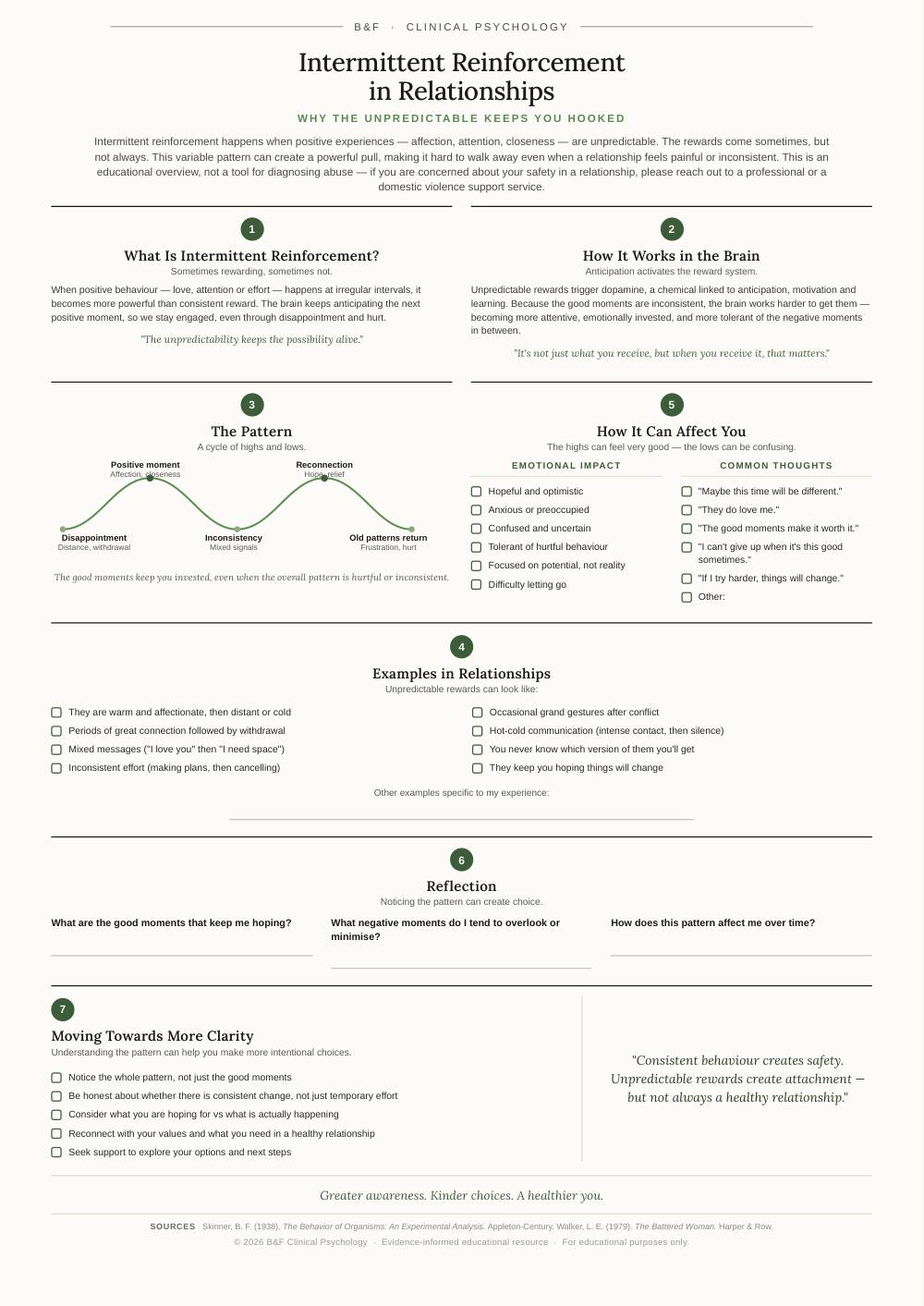
Intermittent reinforcement in relationships
Why unpredictable affection keeps you hooked harder than steady affection does.
-
 Preview
Learn
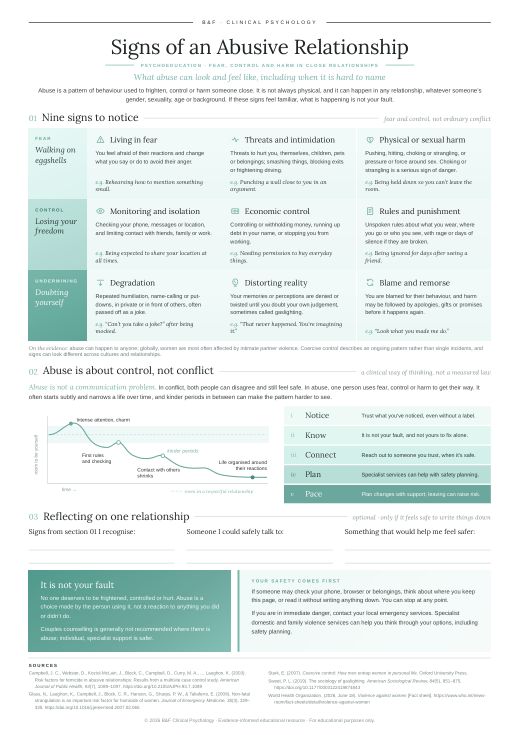
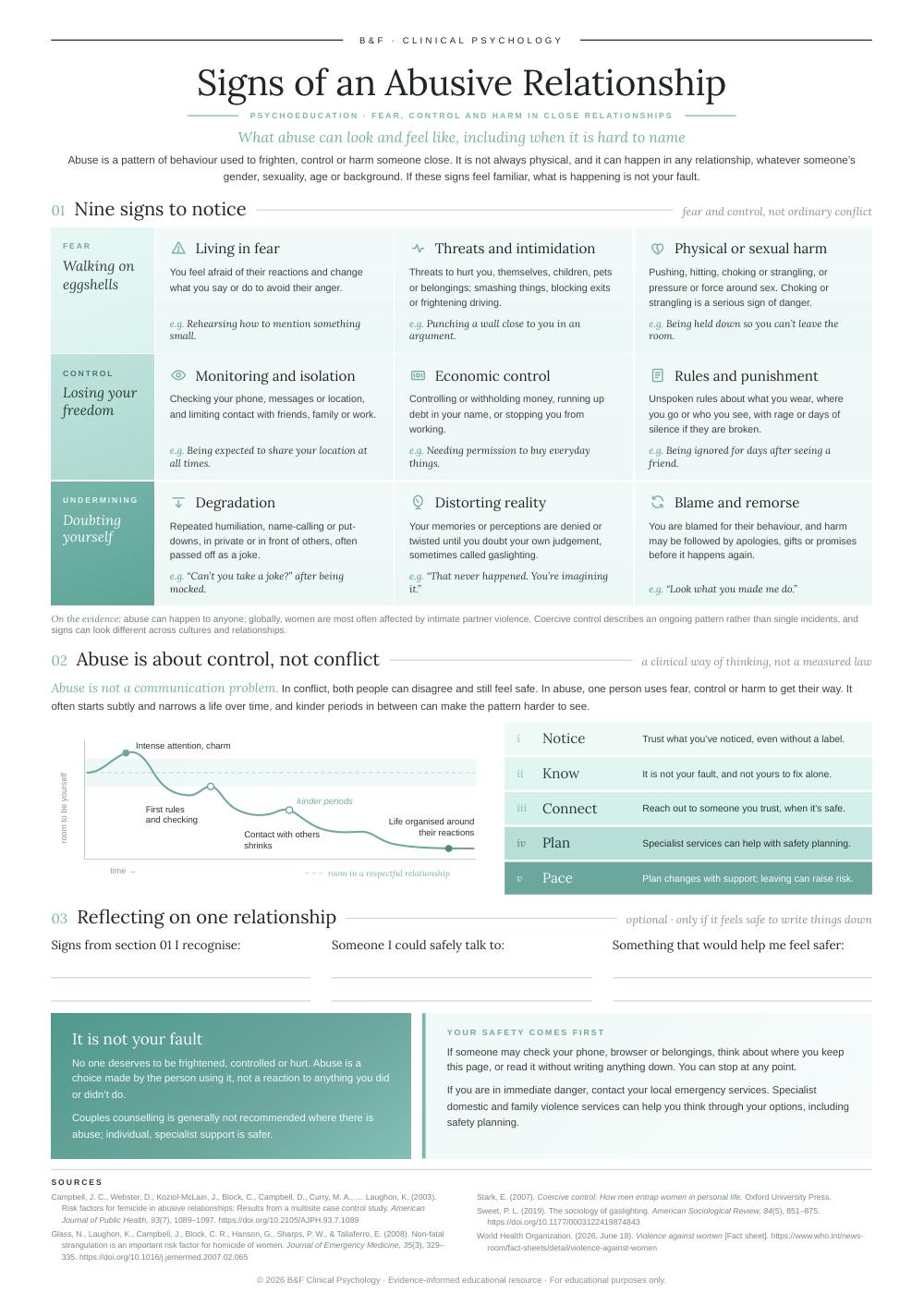
Signs of an abusive relationship
What abuse can look and feel like, including when it is hard to name.
-
 Preview
Reflect
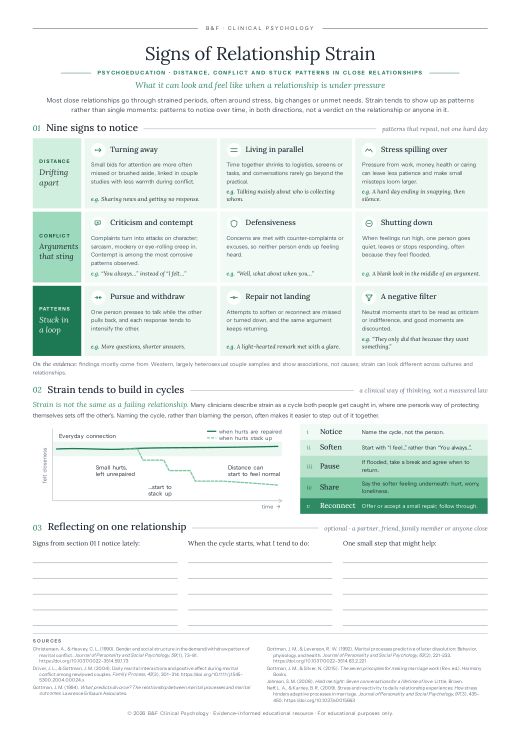
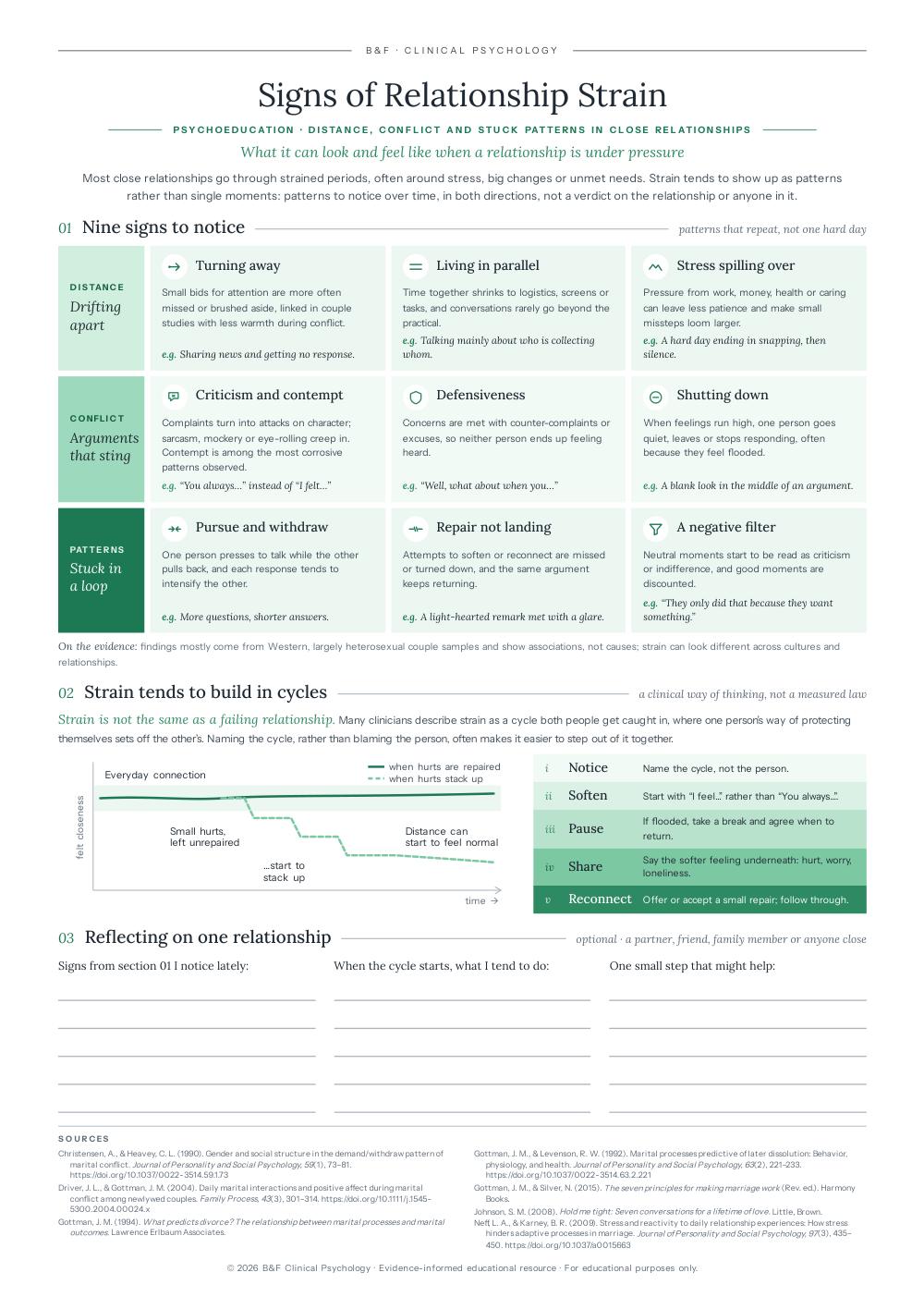
Signs of relationship strain
What it can look and feel like when a relationship is under pressure.
-
 Preview
Reflect
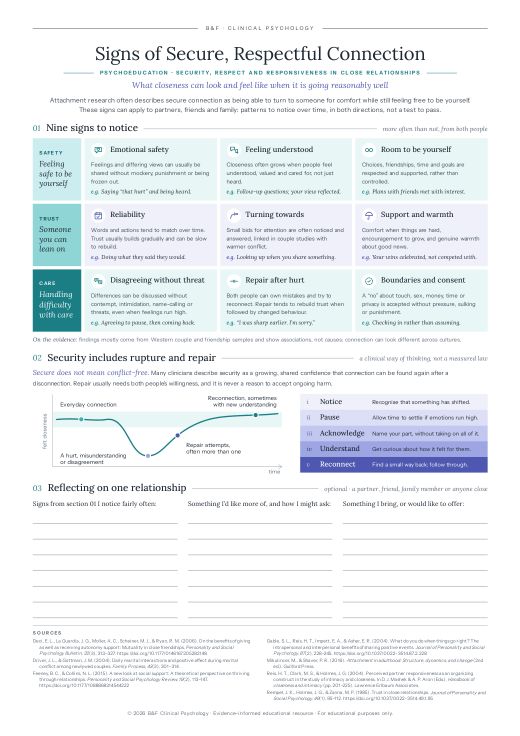
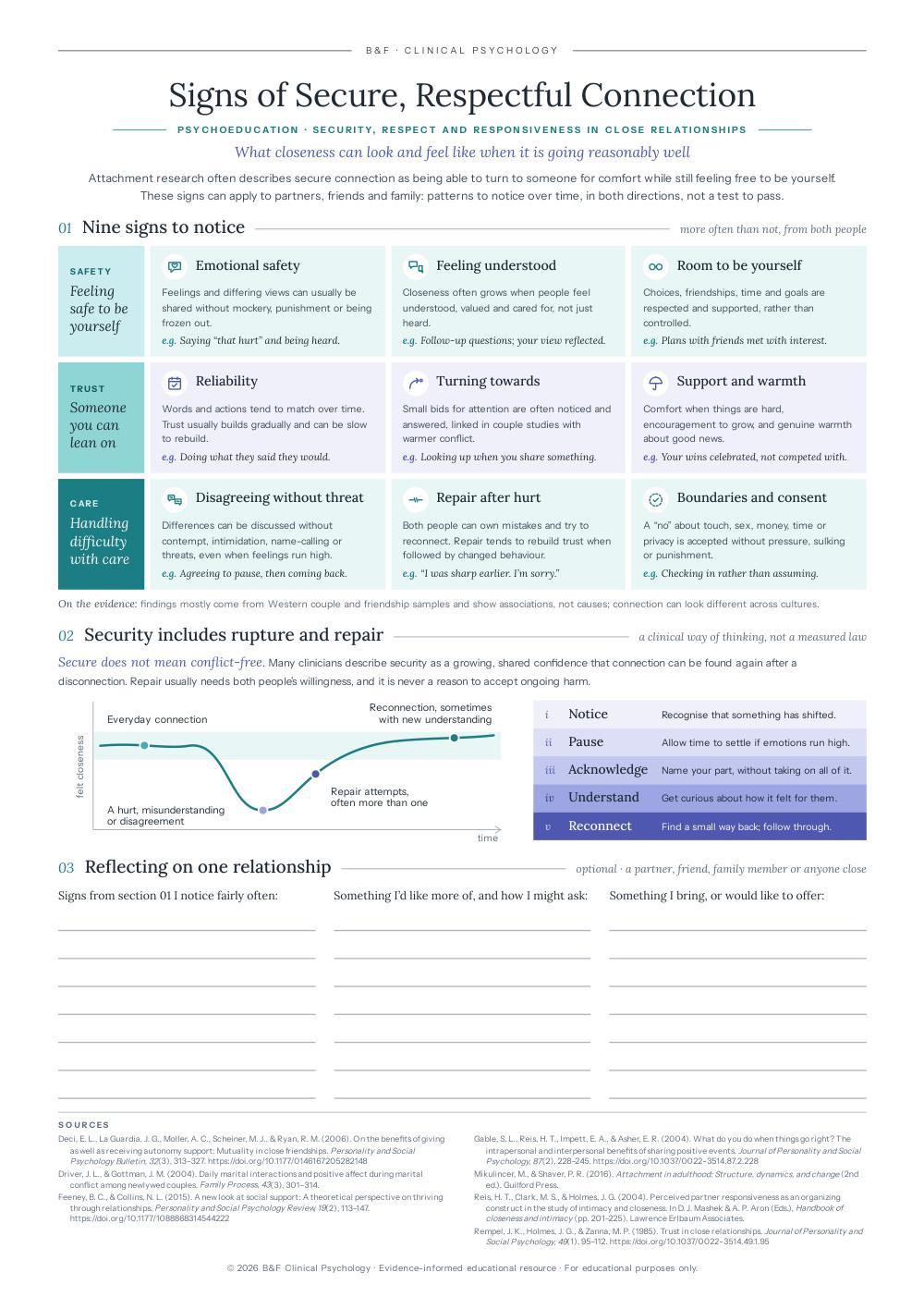
Signs of secure, respectful connection
What safety, trust and closeness often look and feel like over time.
-
 Preview
Learn
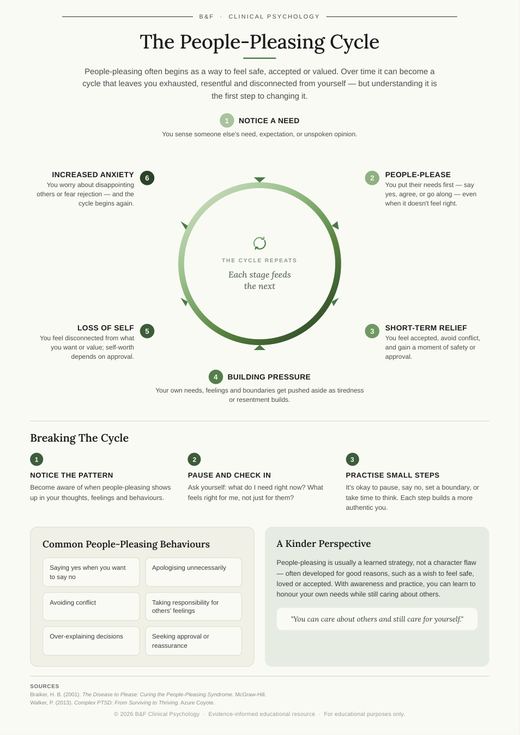
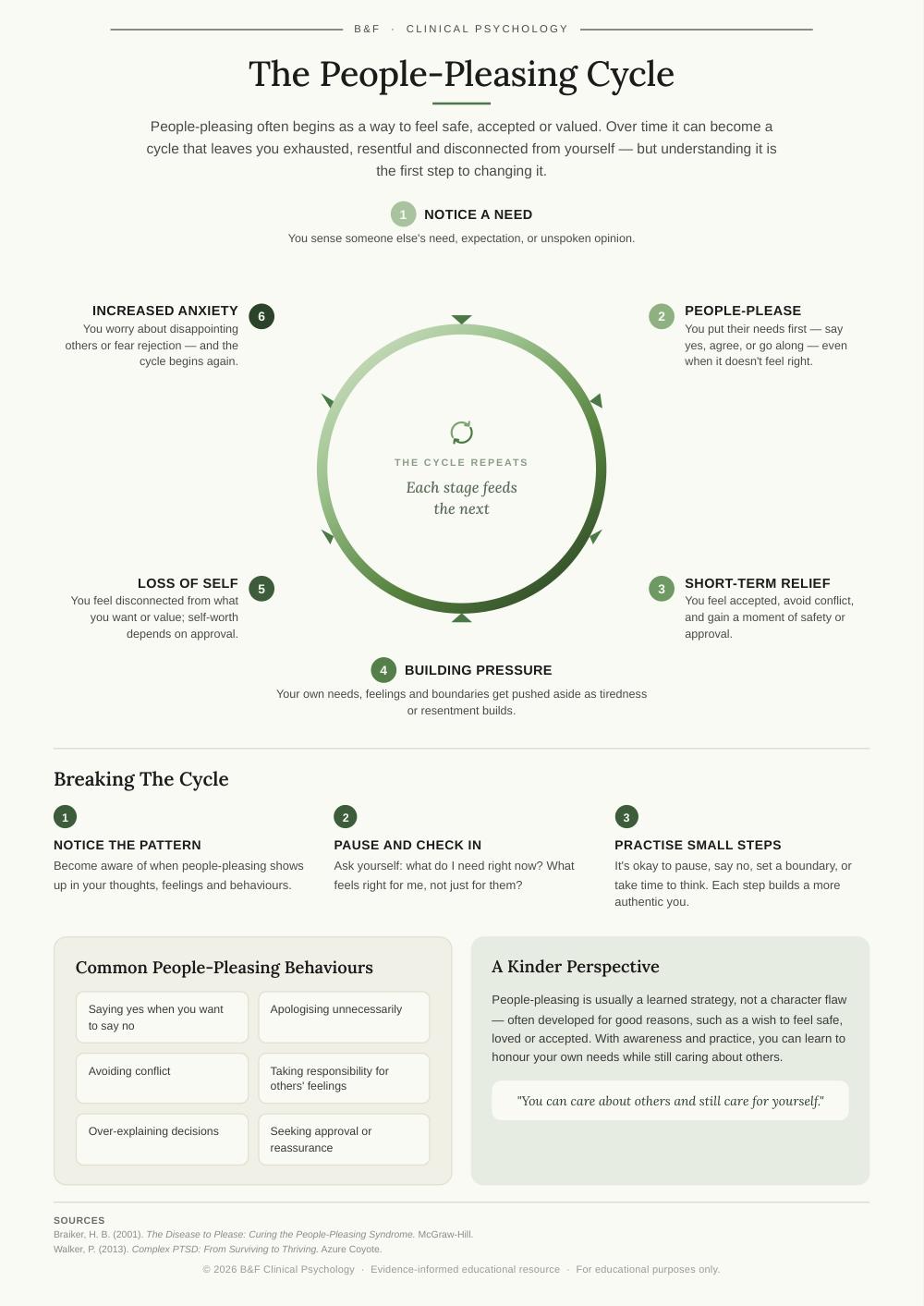
The people-pleasing cycle
It starts as a way to feel safe. How it turns into exhaustion and resentment.
-
 Preview
Reflect
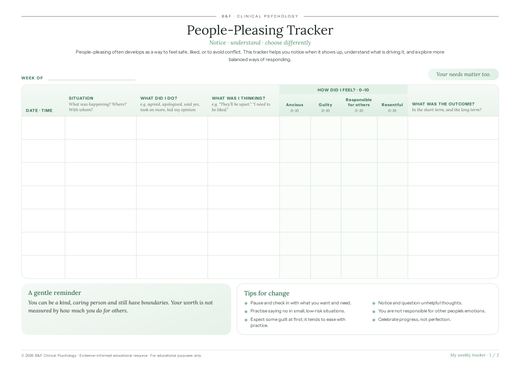
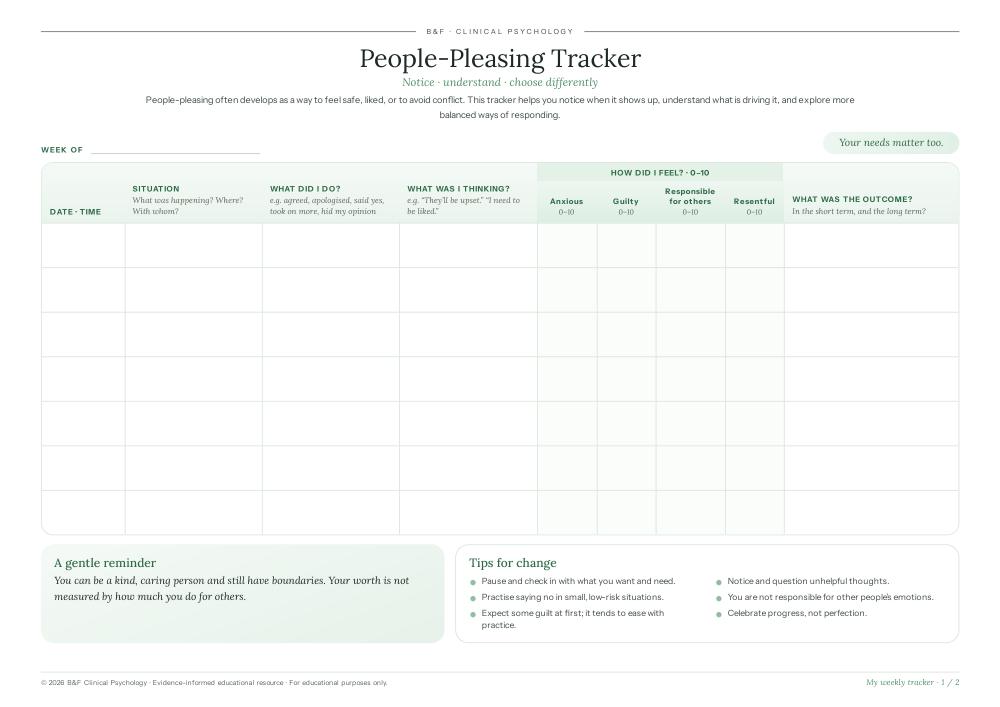
People-pleasing tracker
Notice when people-pleasing shows up, understand what drives it, and try more balanced responses.
-
 Preview
Learn
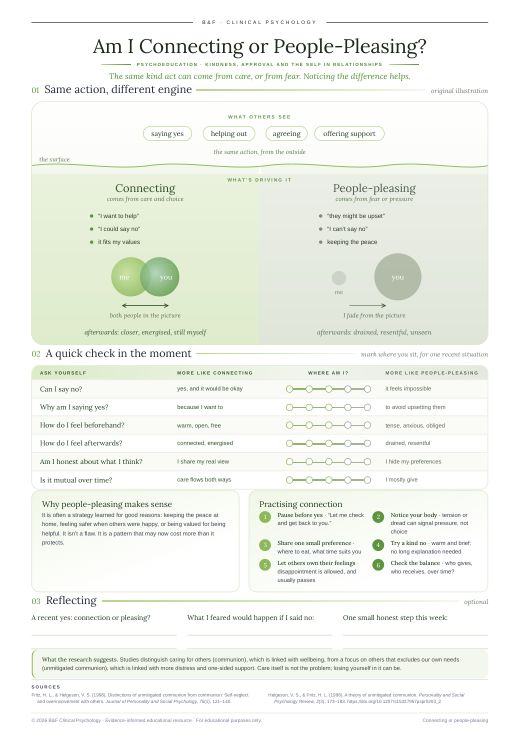
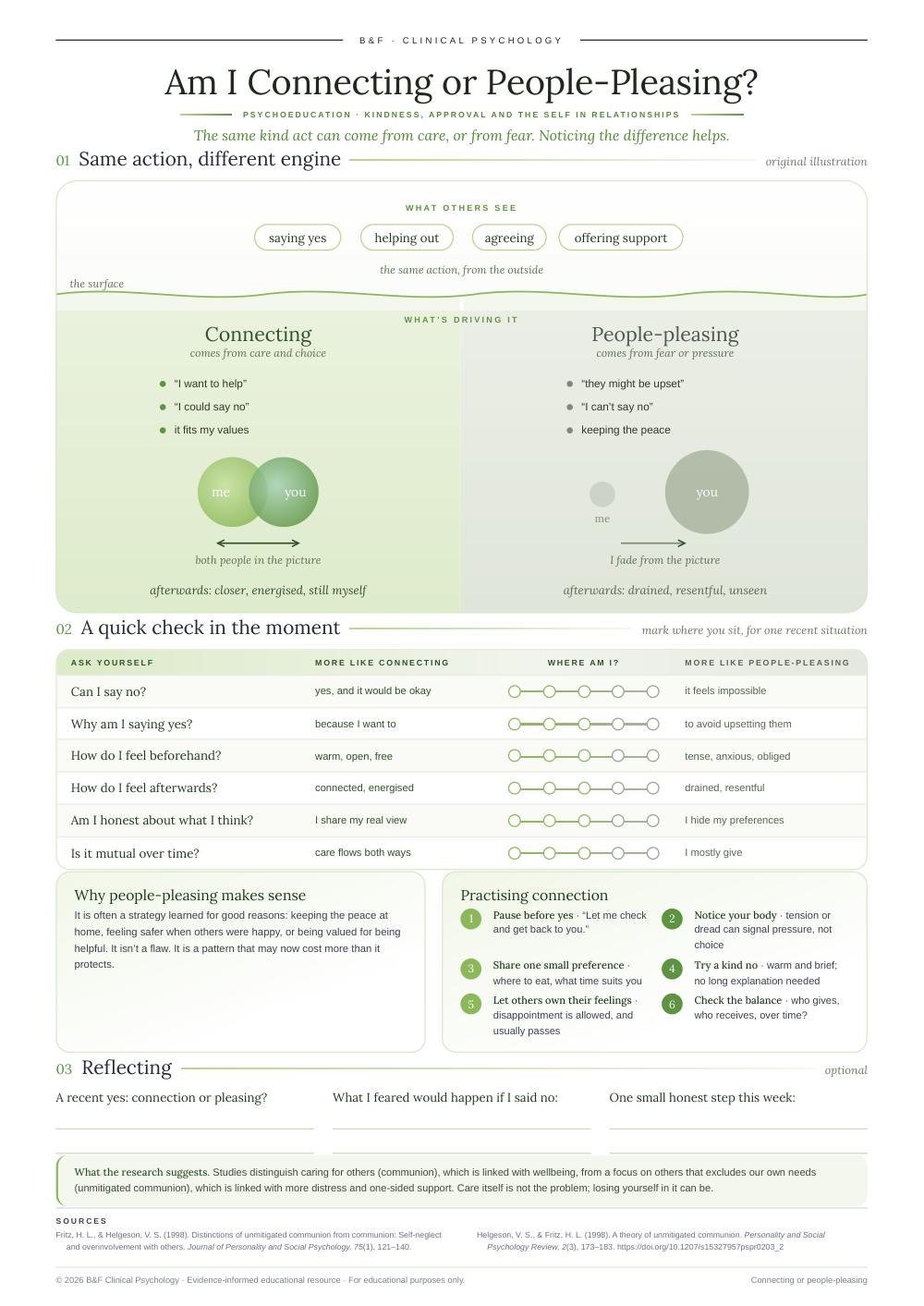
Am I connecting or people-pleasing?
The same kind act can come from care or from fear. Noticing the difference helps.
-
 Preview
Learn
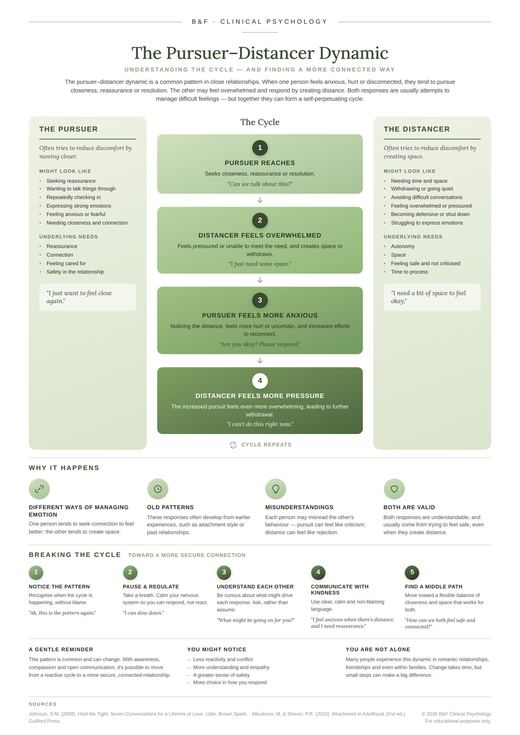
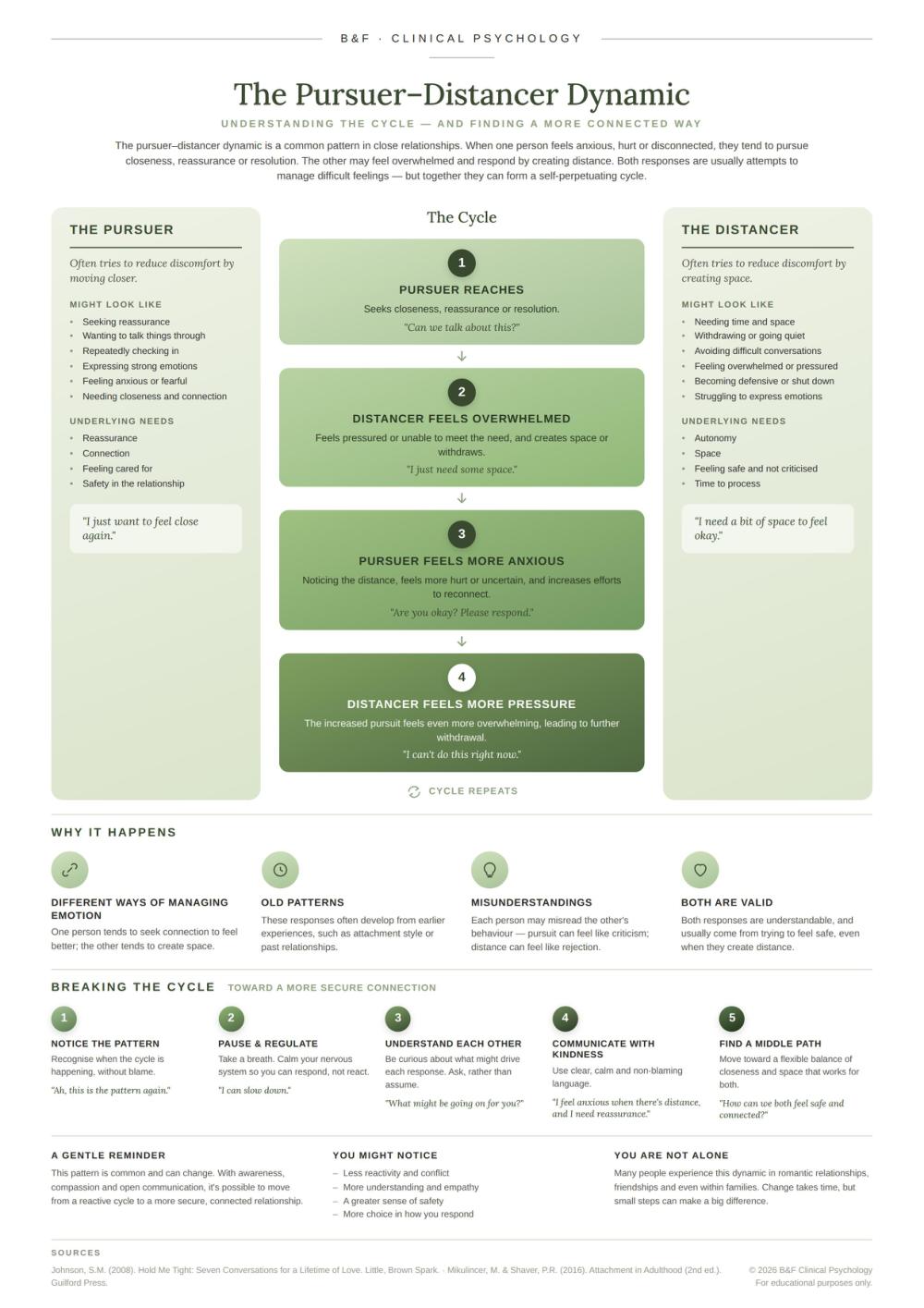
The pursuer-distancer dynamic
One reaches, the other retreats, and both feel unseen. The pattern in one picture.
-
 Preview
Learn
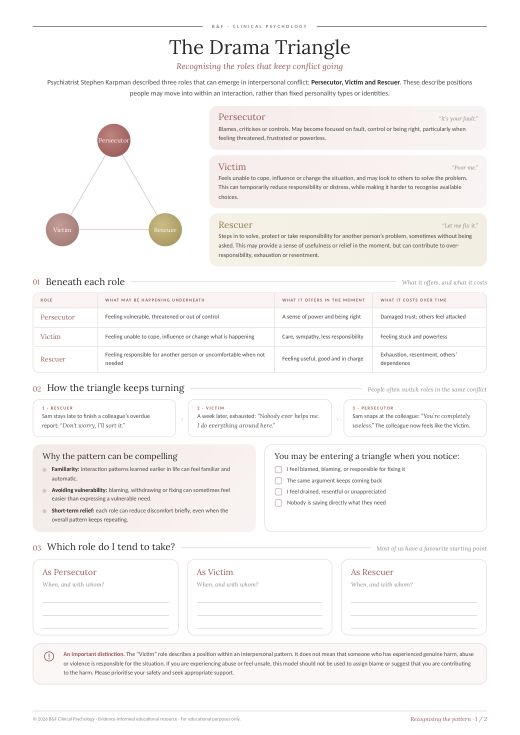
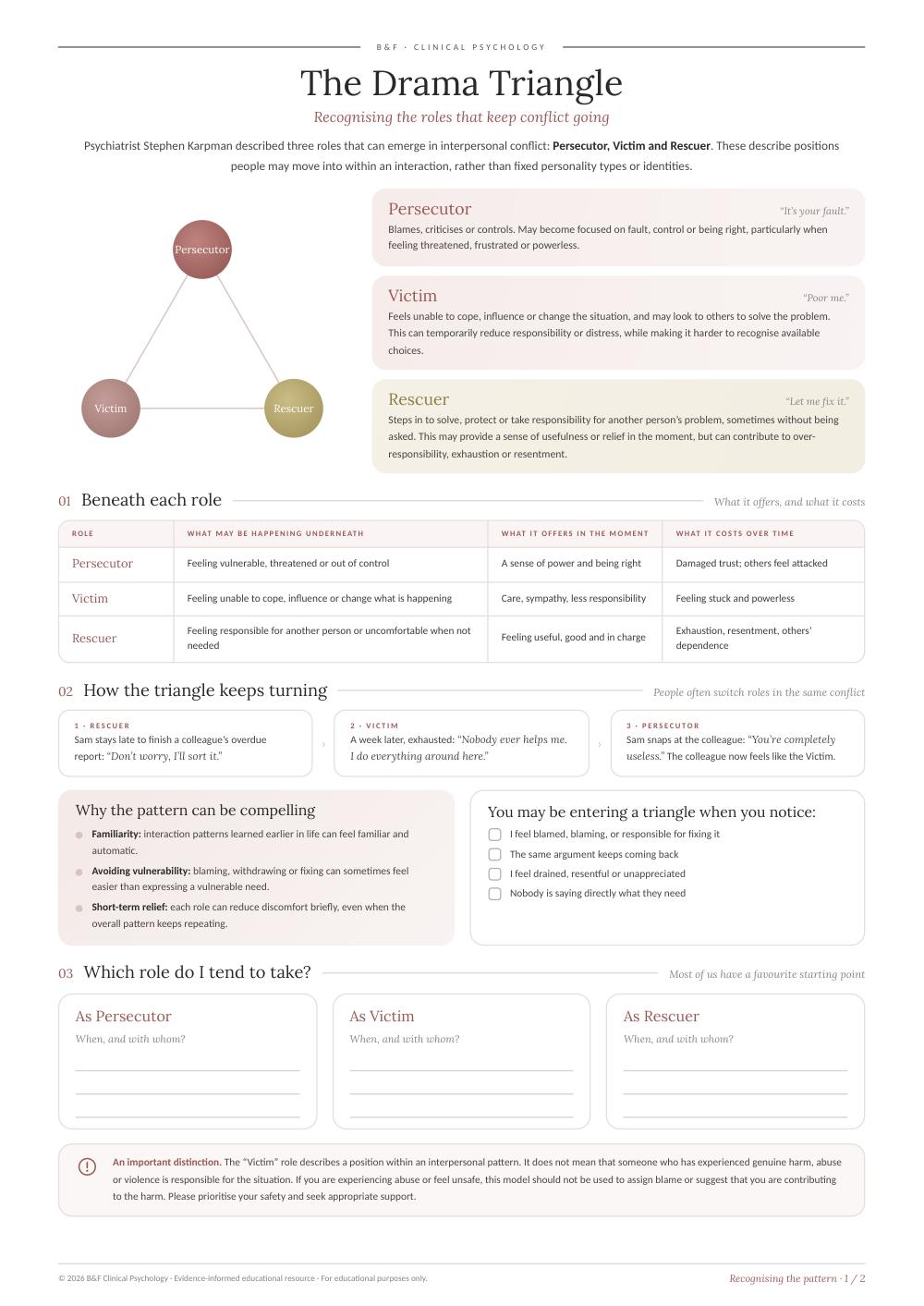
The drama triangle
Persecutor, victim and rescuer: recognising the roles that keep conflict going.
-
 Preview
Learn
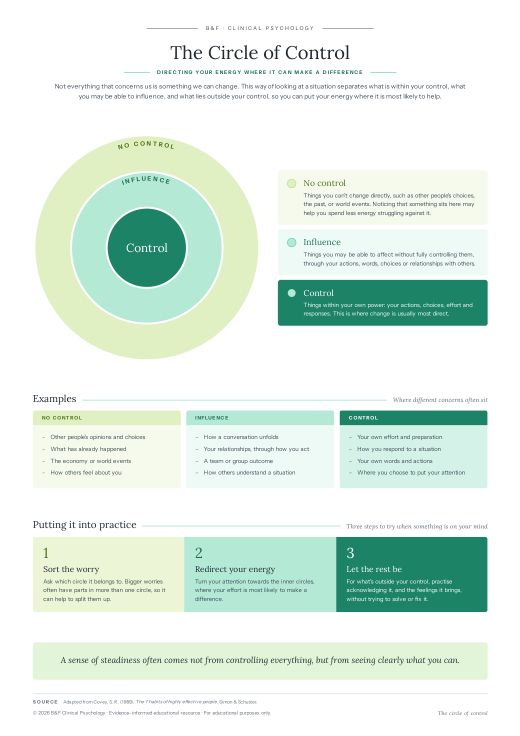
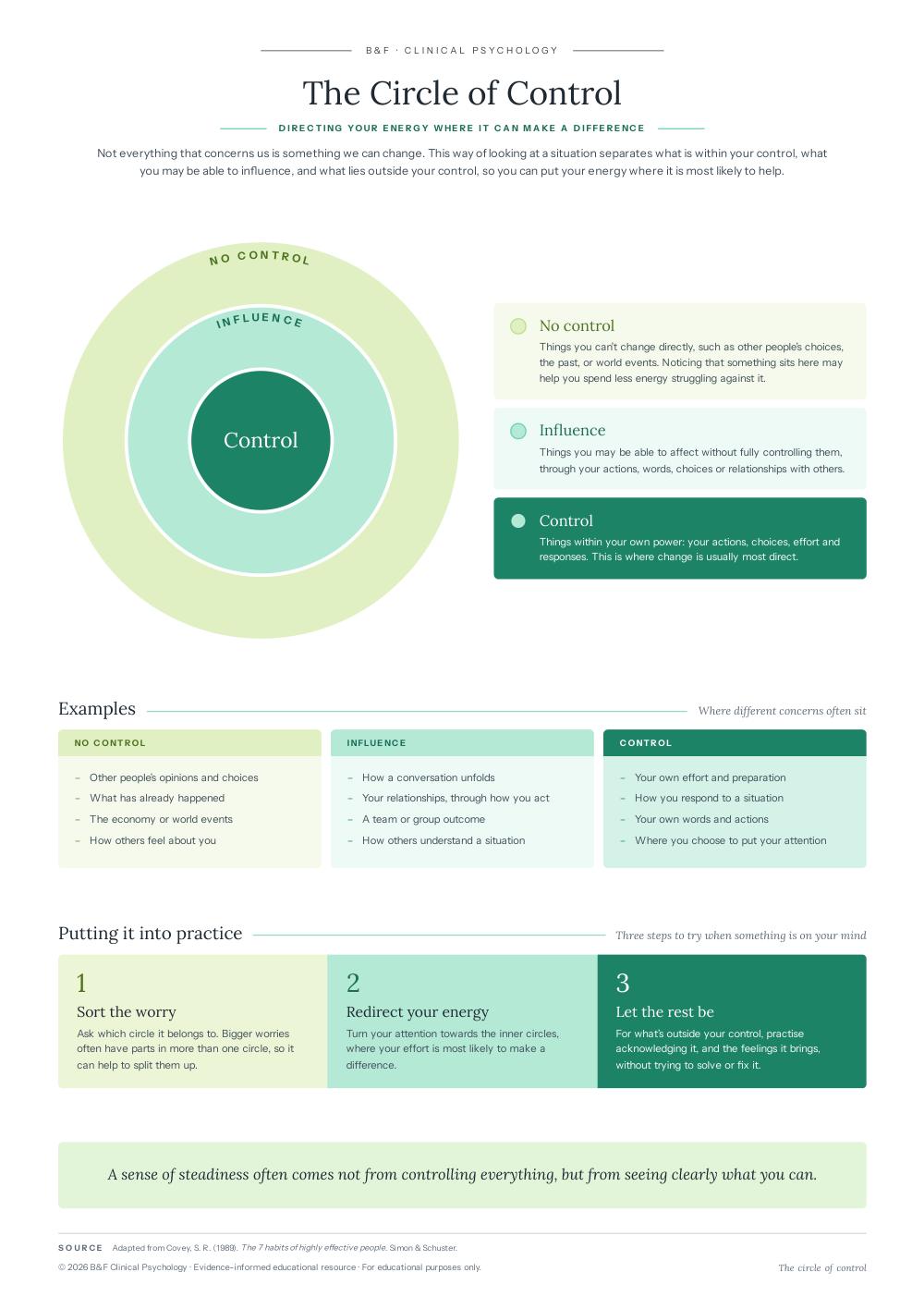
The circle of control
Directing your energy where it can make a difference: what you control, influence, and can't.
-
 Preview
Learn
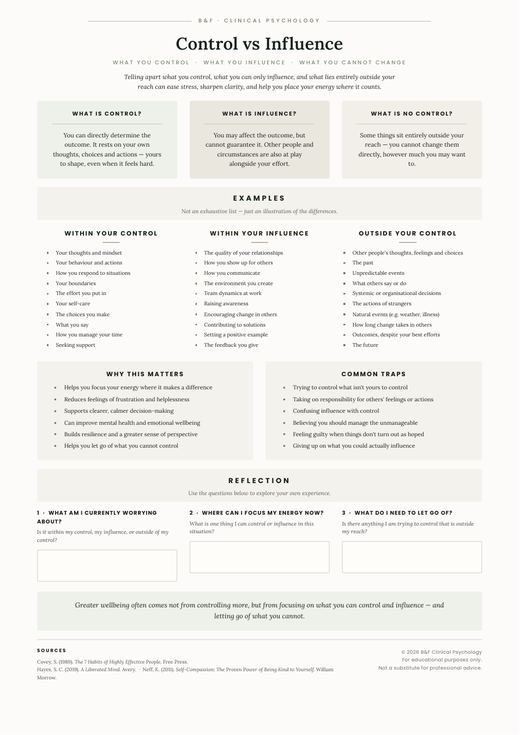
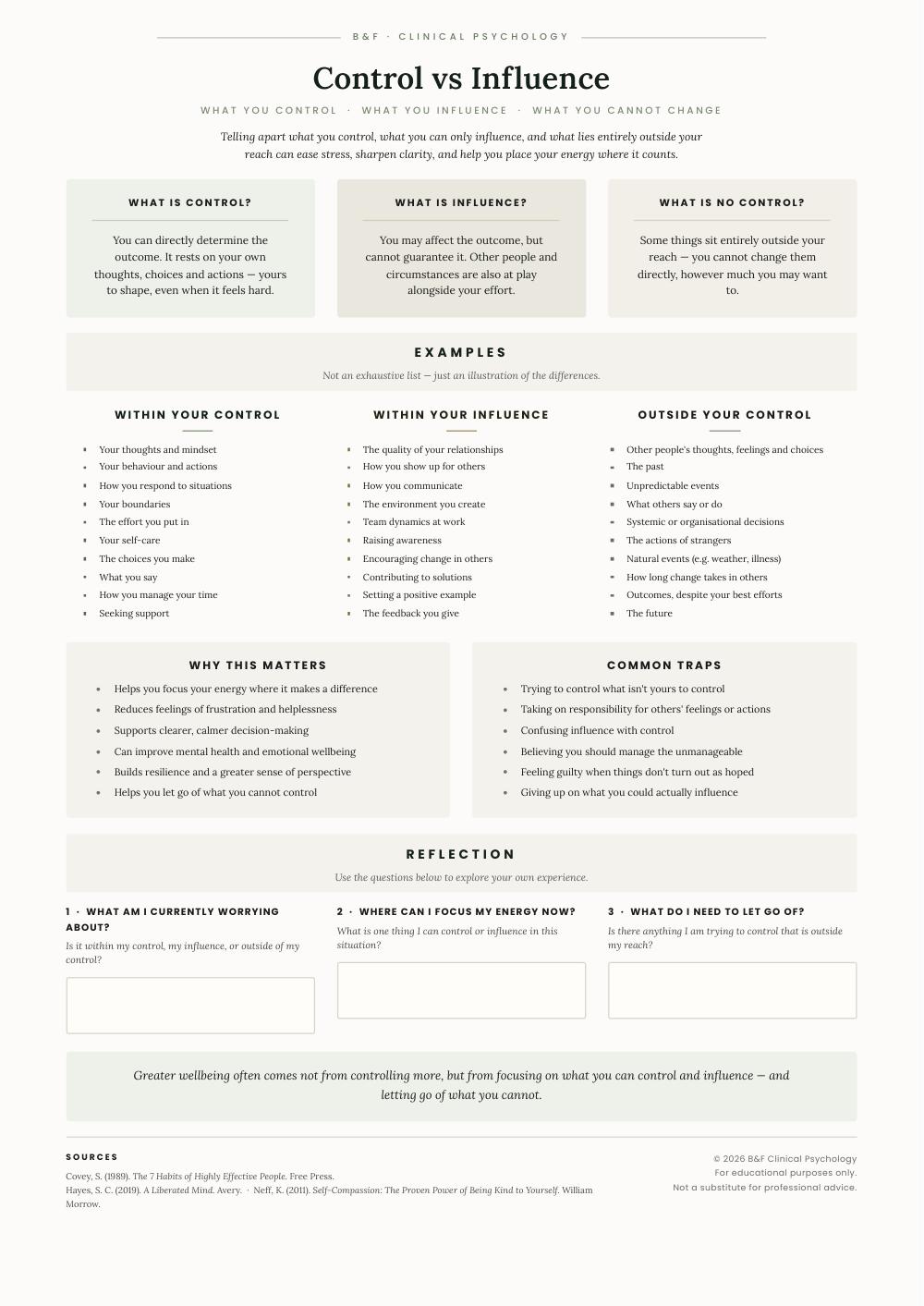
Control vs influence
What you control, what you can only influence, and what lies outside both.
-
 Preview
Reflect
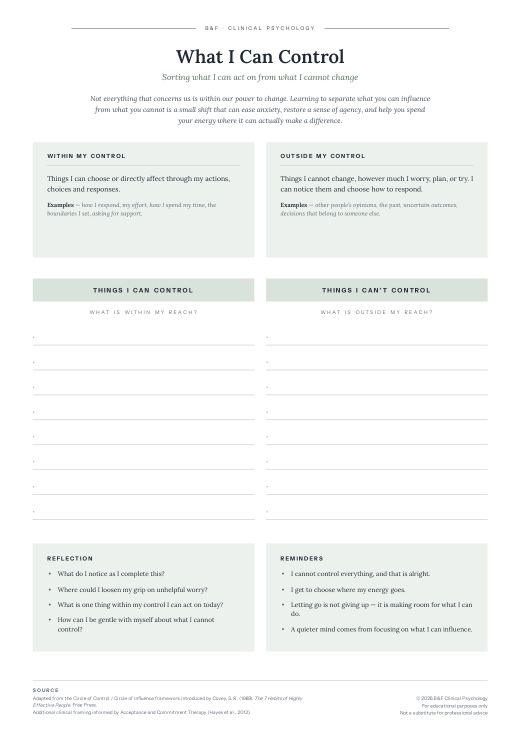
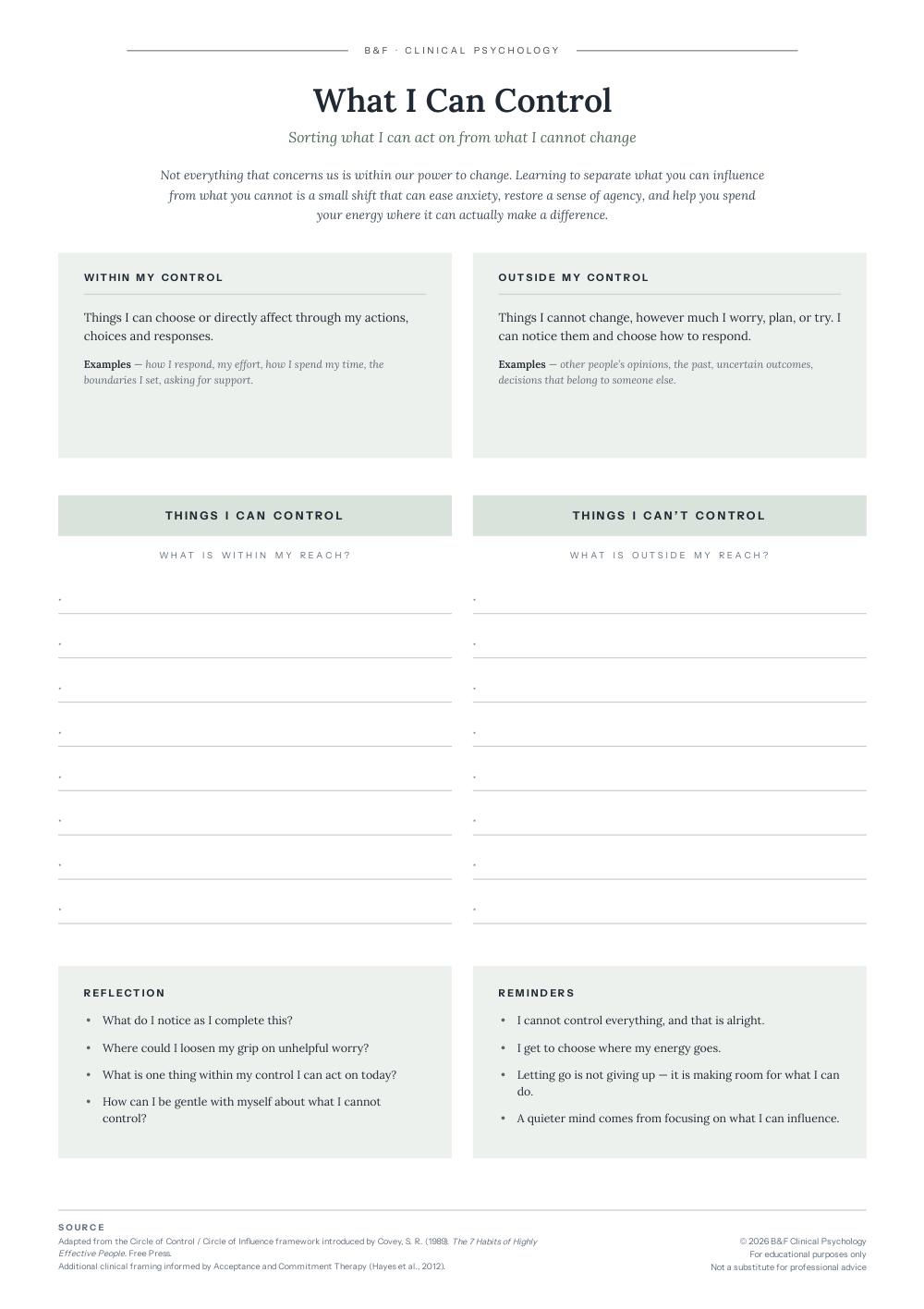
What I can control
Sorting what I can act on from what I cannot change.
-
 Preview
Learn
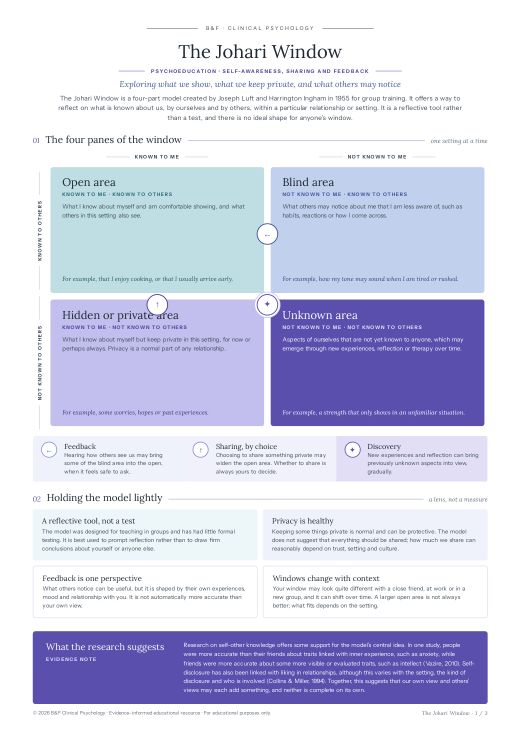
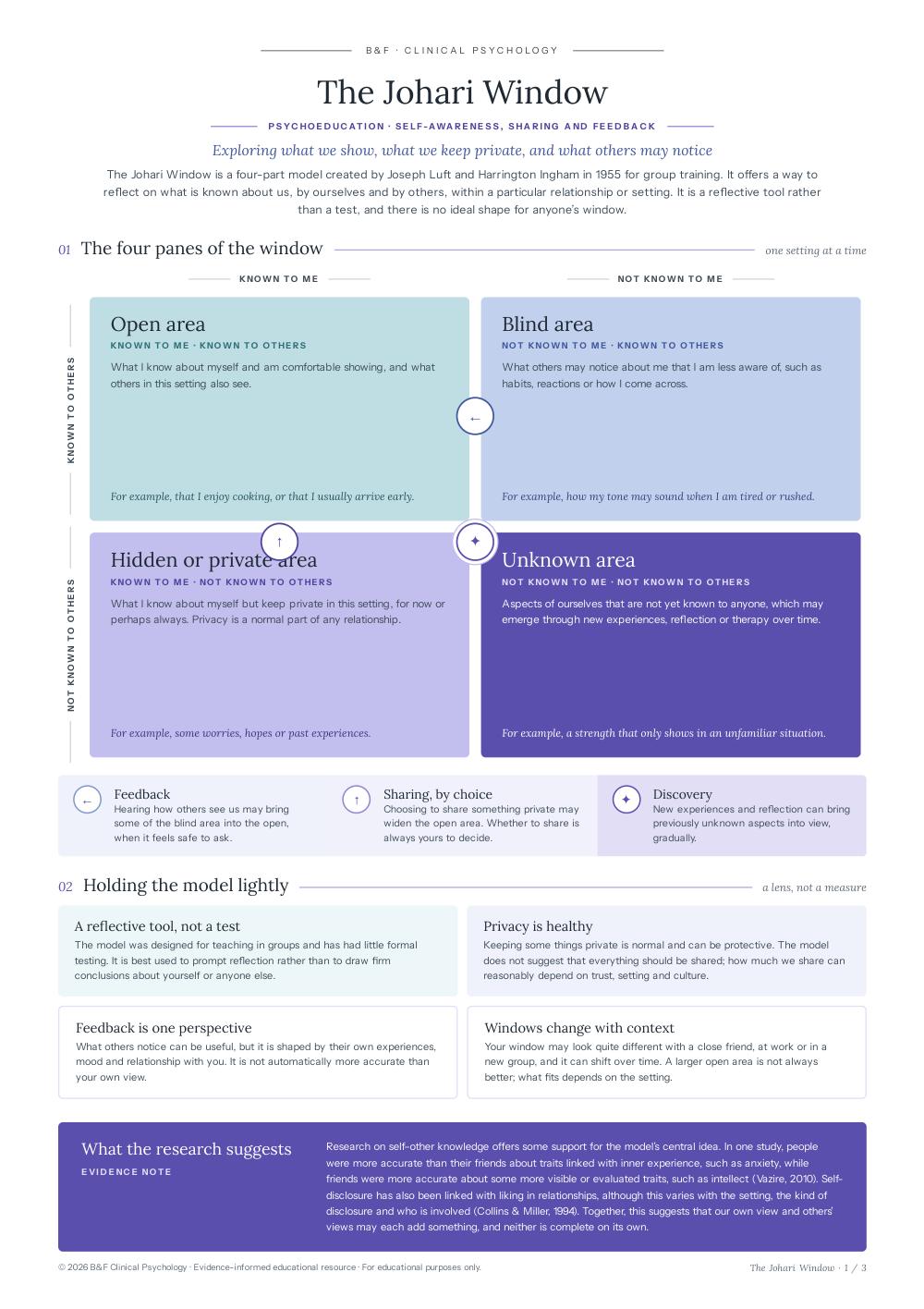
The Johari window
What we show, what we keep private, and what others may notice.
-
 Preview
Reflect
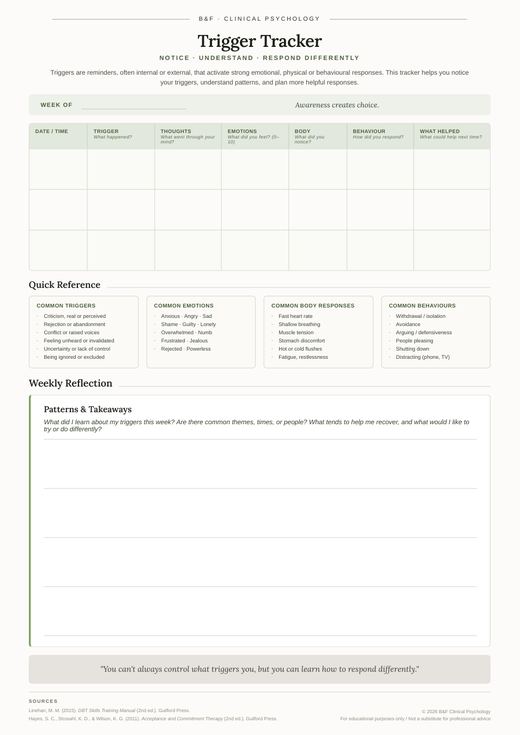
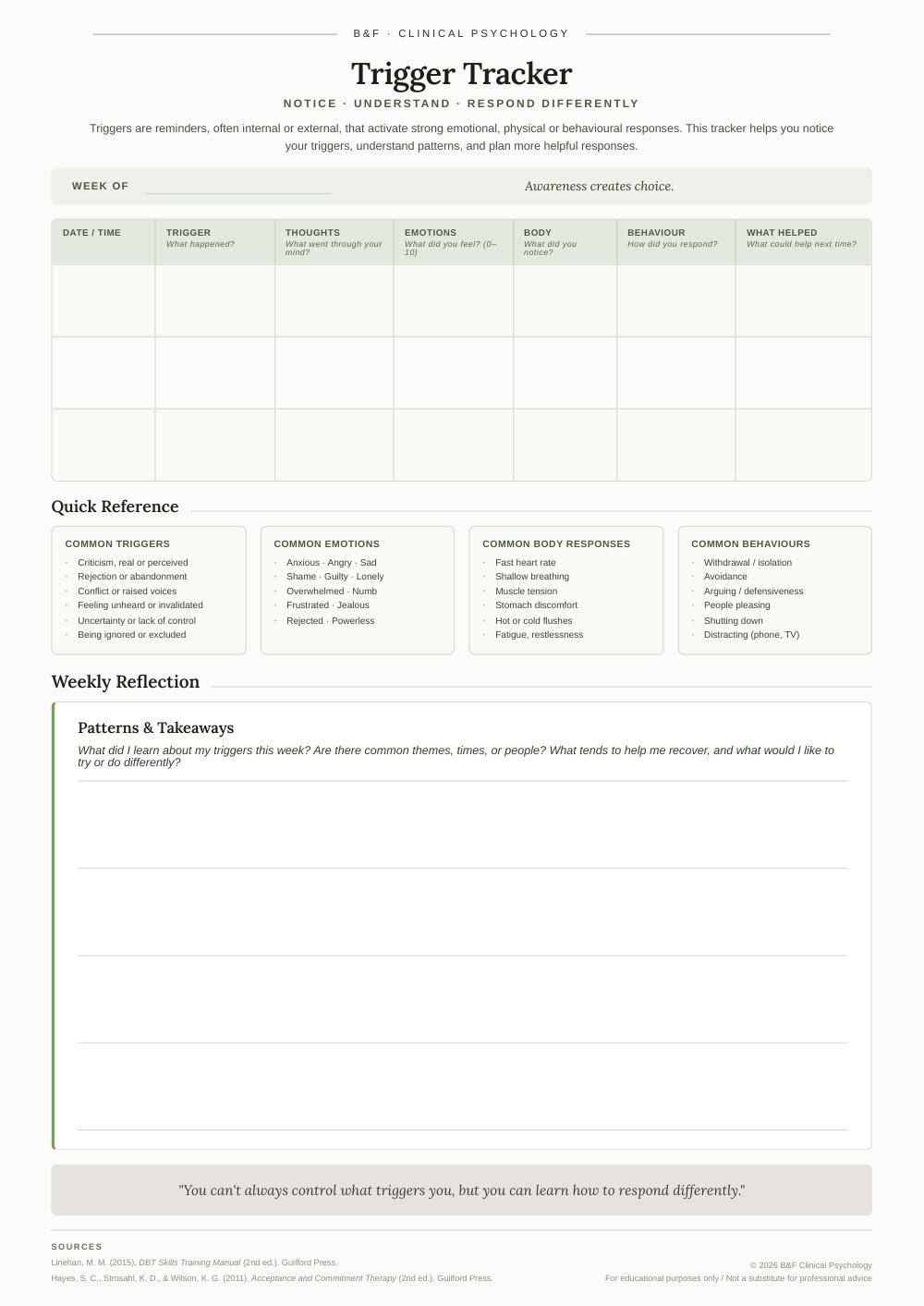
Trigger tracker
Notice what sets off a strong reaction, understand it, and plan a different response.
-
 Preview
Reflect
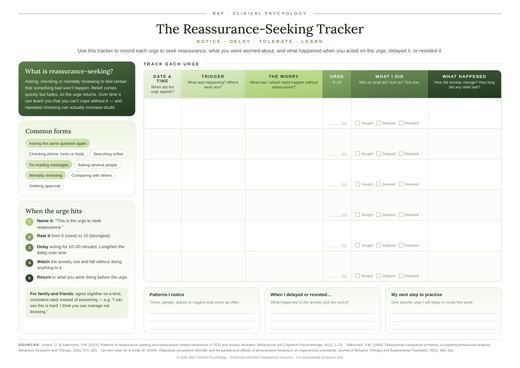
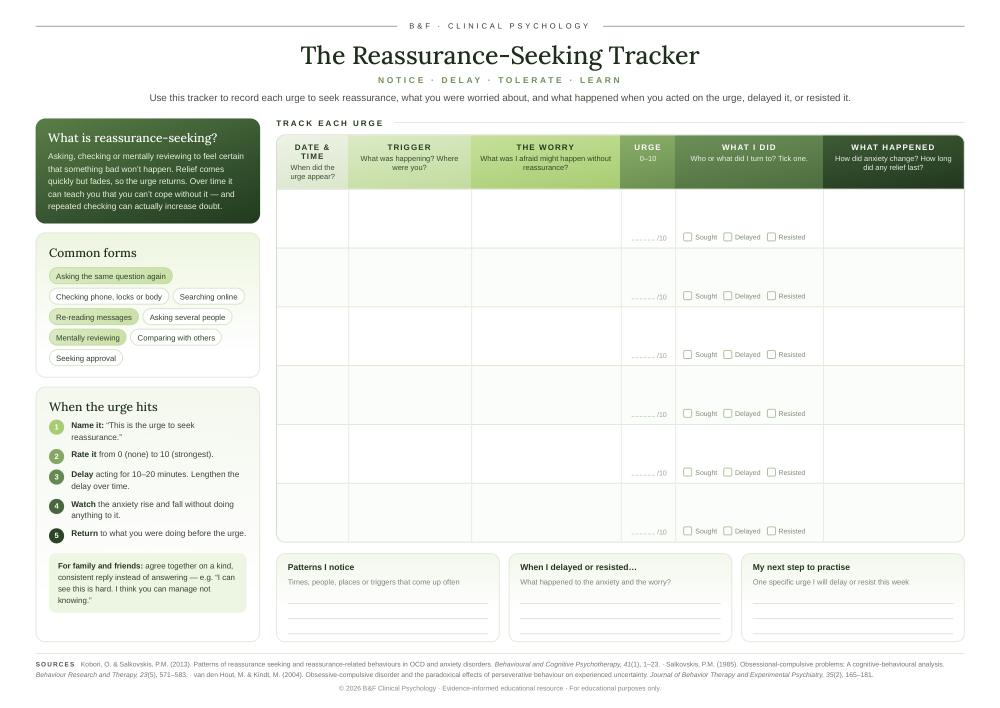
Reassurance-seeking tracker
Record each urge to seek reassurance, and what happened when you acted on it, delayed it or resisted it.
-
 Preview
Reflect
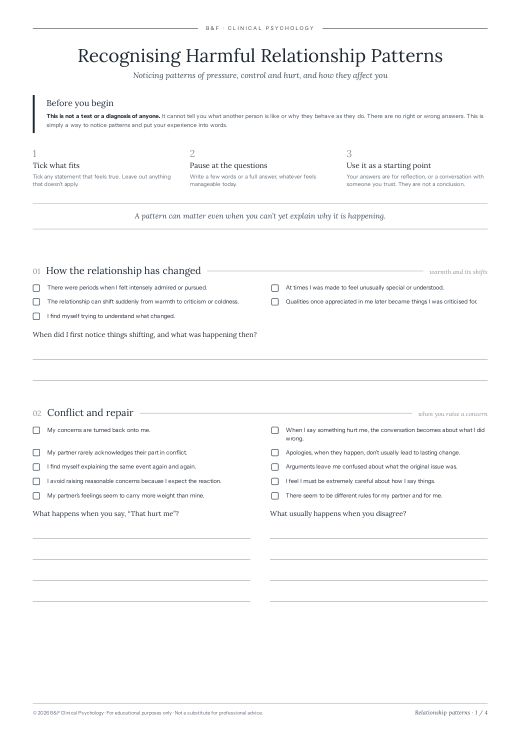
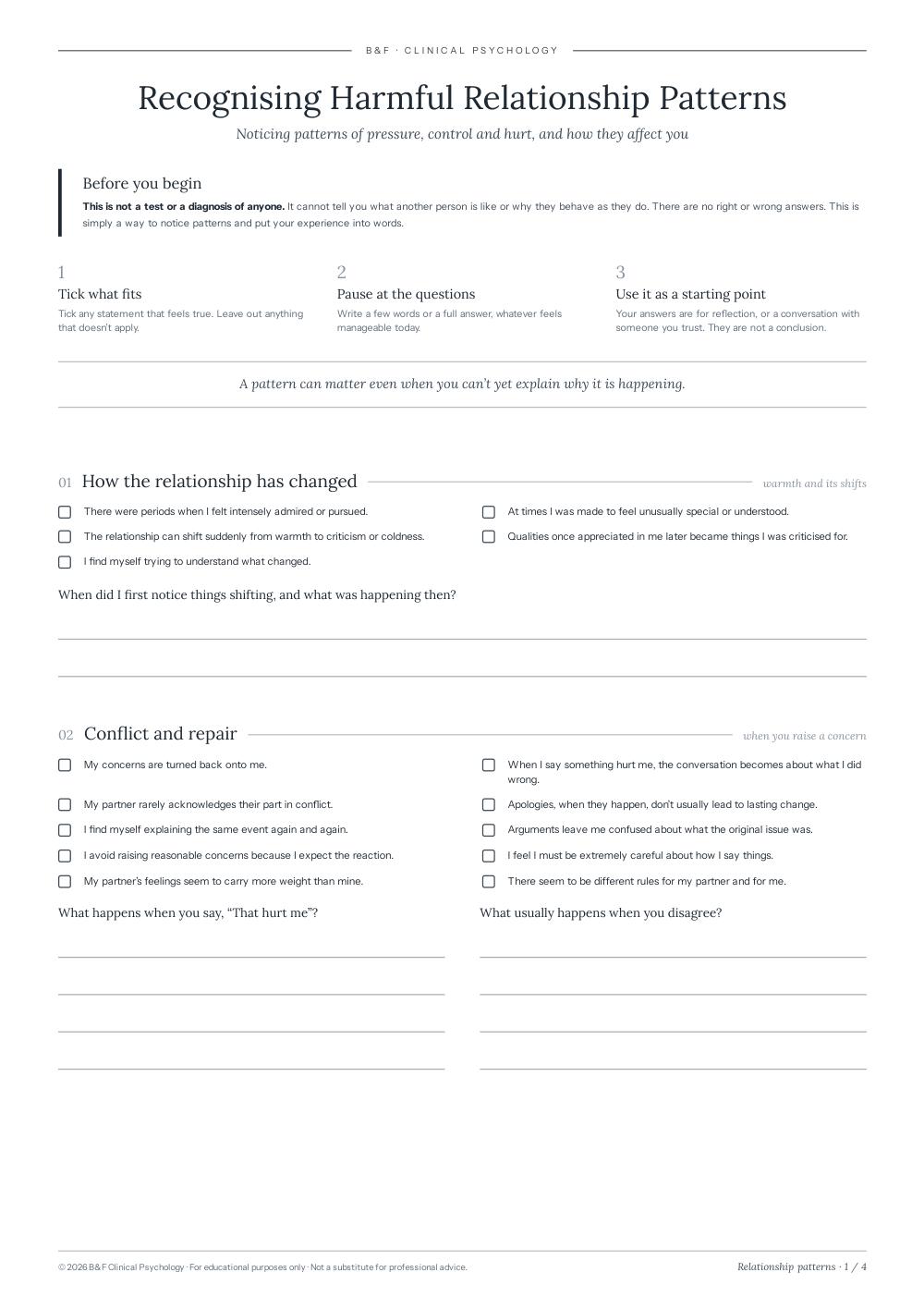
Recognising harmful relationship patterns
Noticing patterns of pressure, control and hurt, and how they affect you. Not a test or a diagnosis.
-
 Preview
Learn
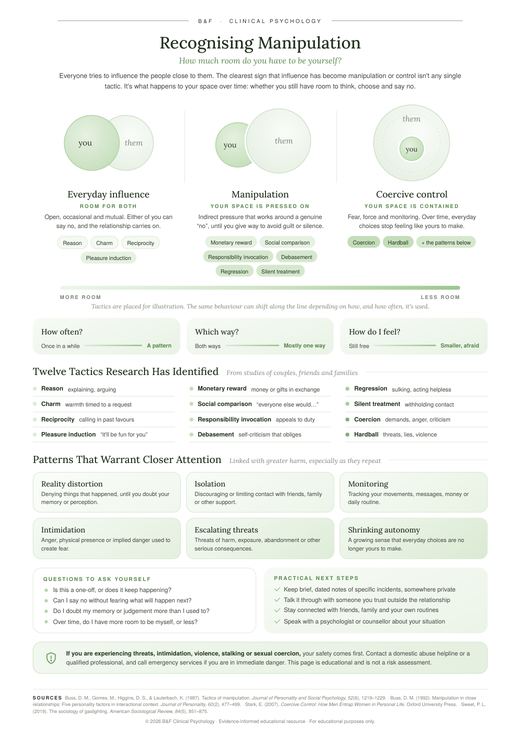
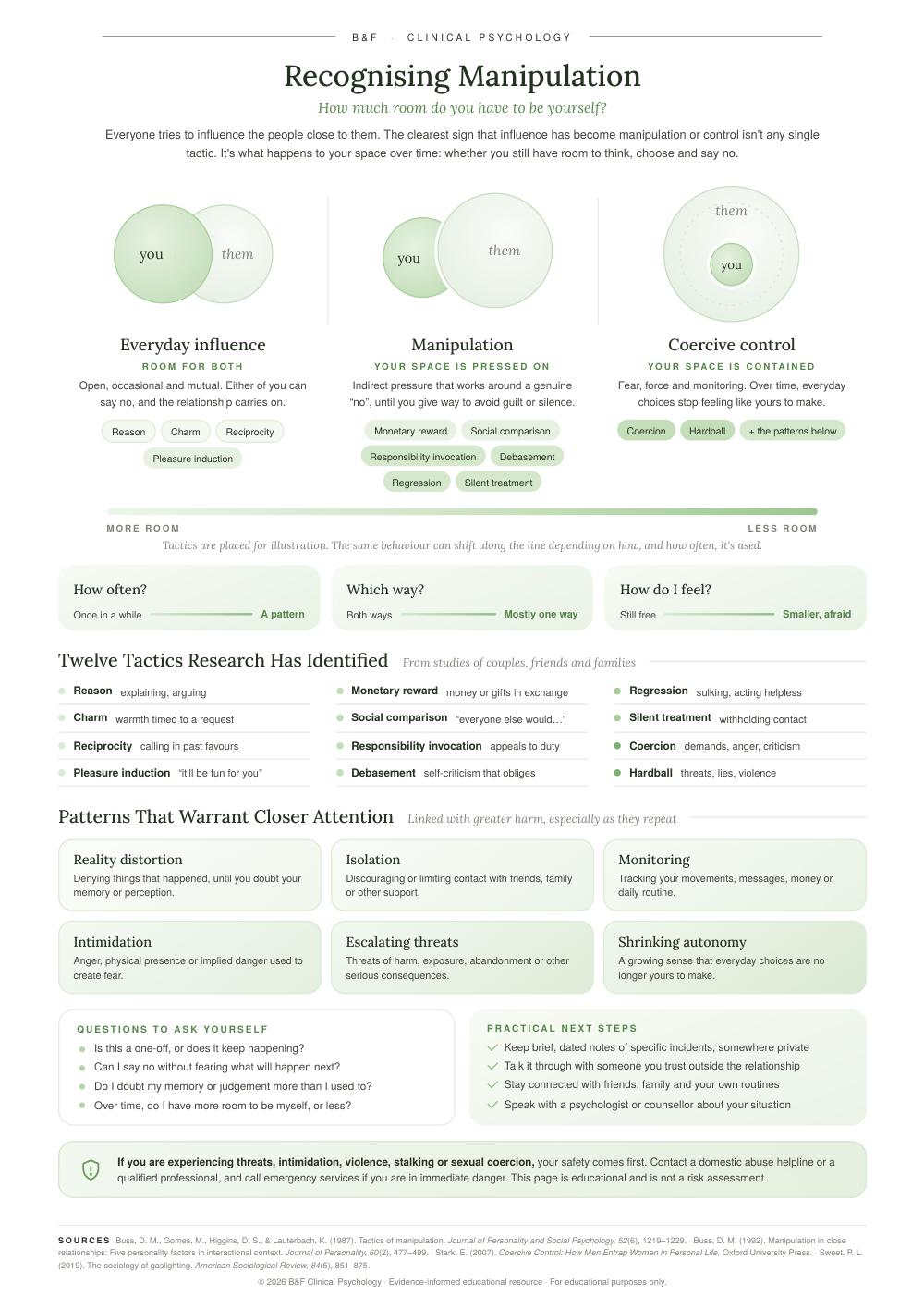
Recognising manipulation
When influence becomes control: what happens to your room to think, choose and say no.
-
 Preview
Learn
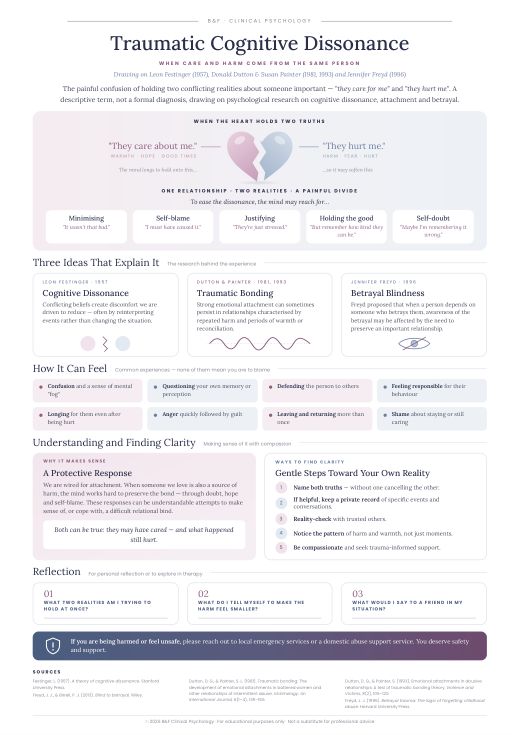
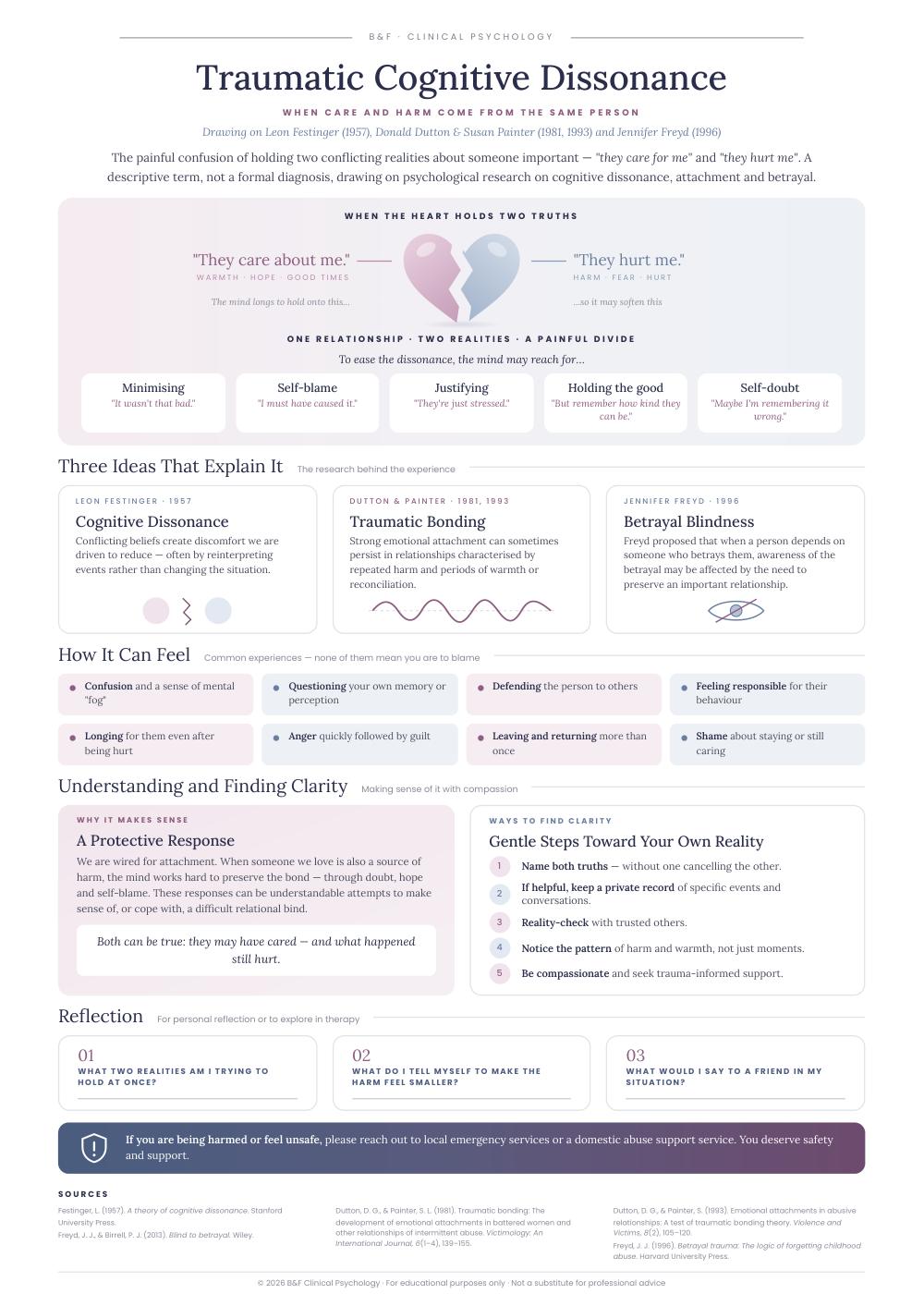
Traumatic cognitive dissonance
The painful confusion of care and harm coming from the same person.
-
 Preview
Reflect
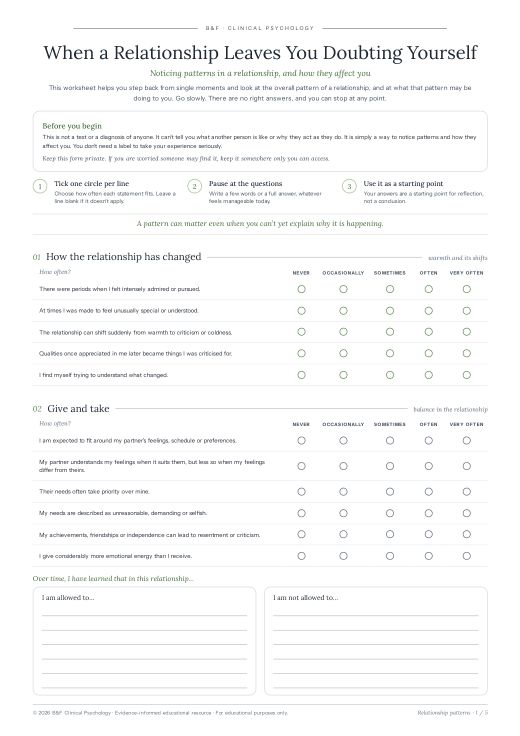
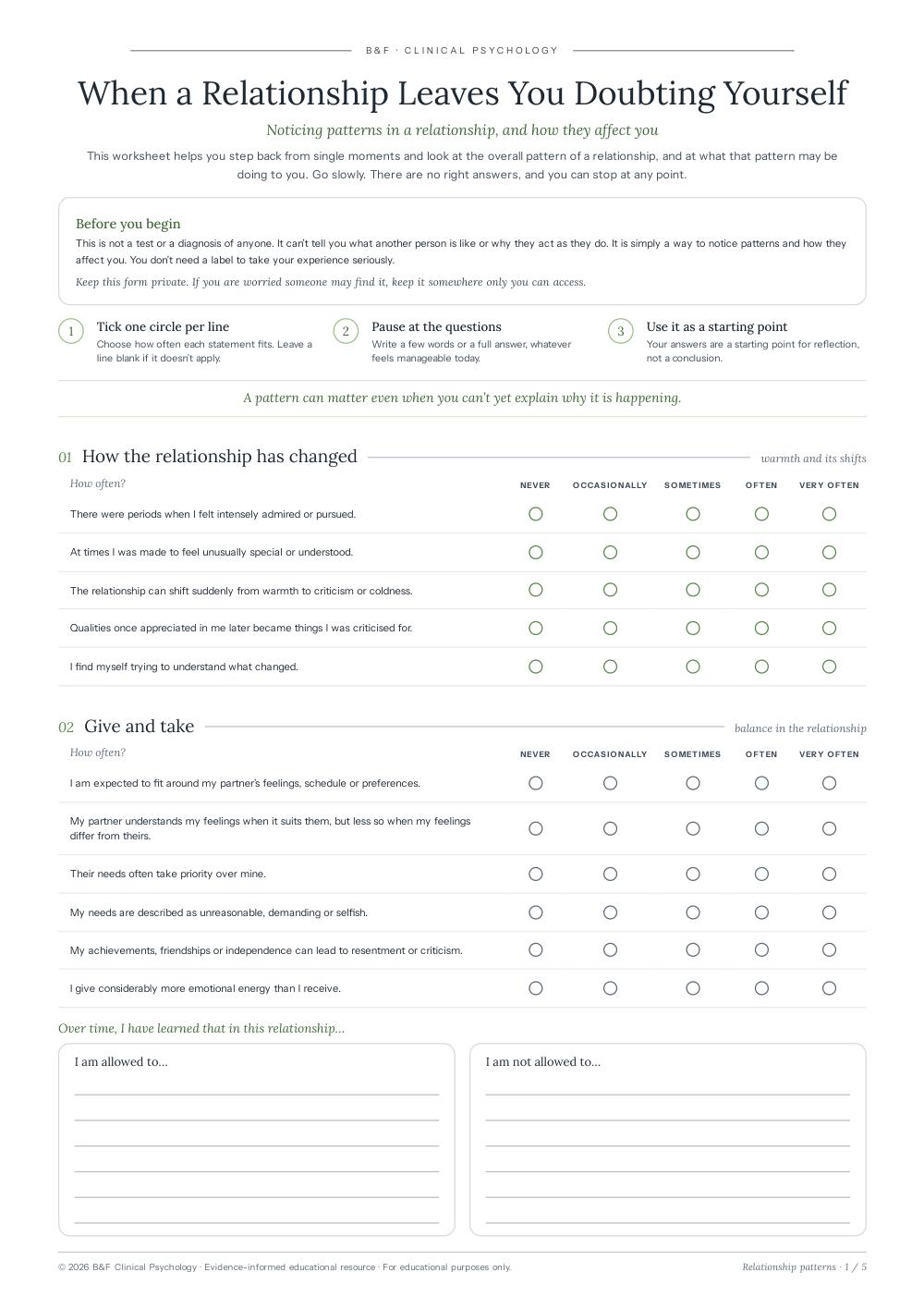
When a relationship leaves you doubting yourself
Step back from single moments to look at the overall pattern of a relationship, and what it may be doing to you.
-
 Preview
Reflect
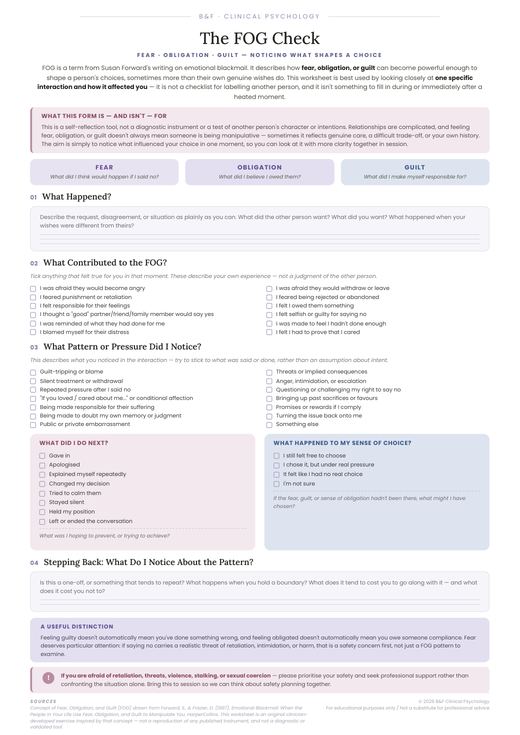
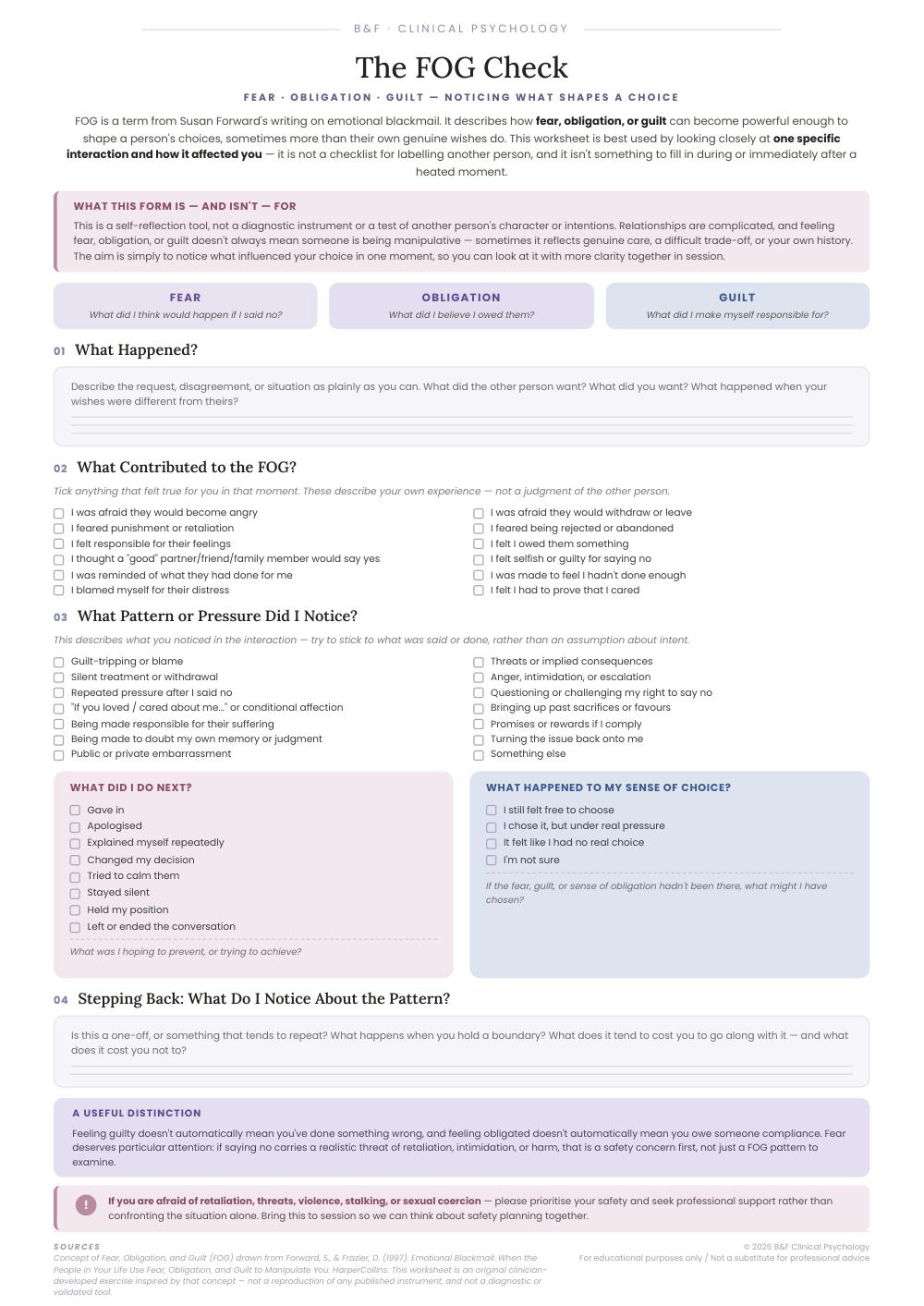
The FOG check
Fear, obligation and guilt: looking closely at one interaction and what shaped your choice.
-
 Preview
Learn
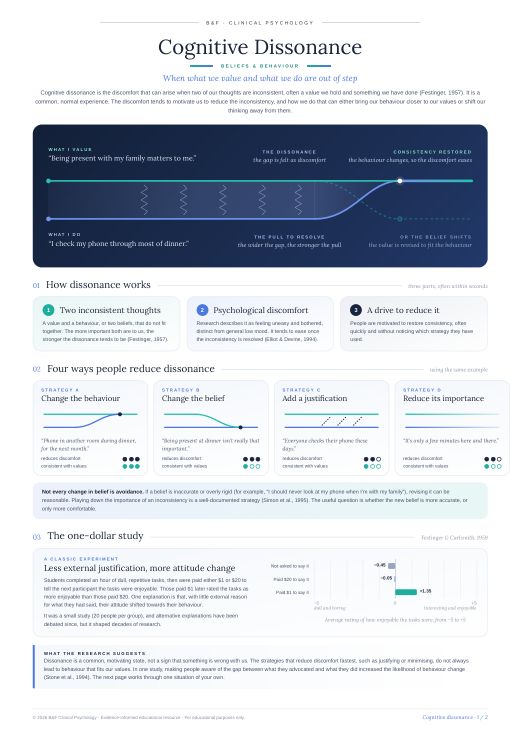
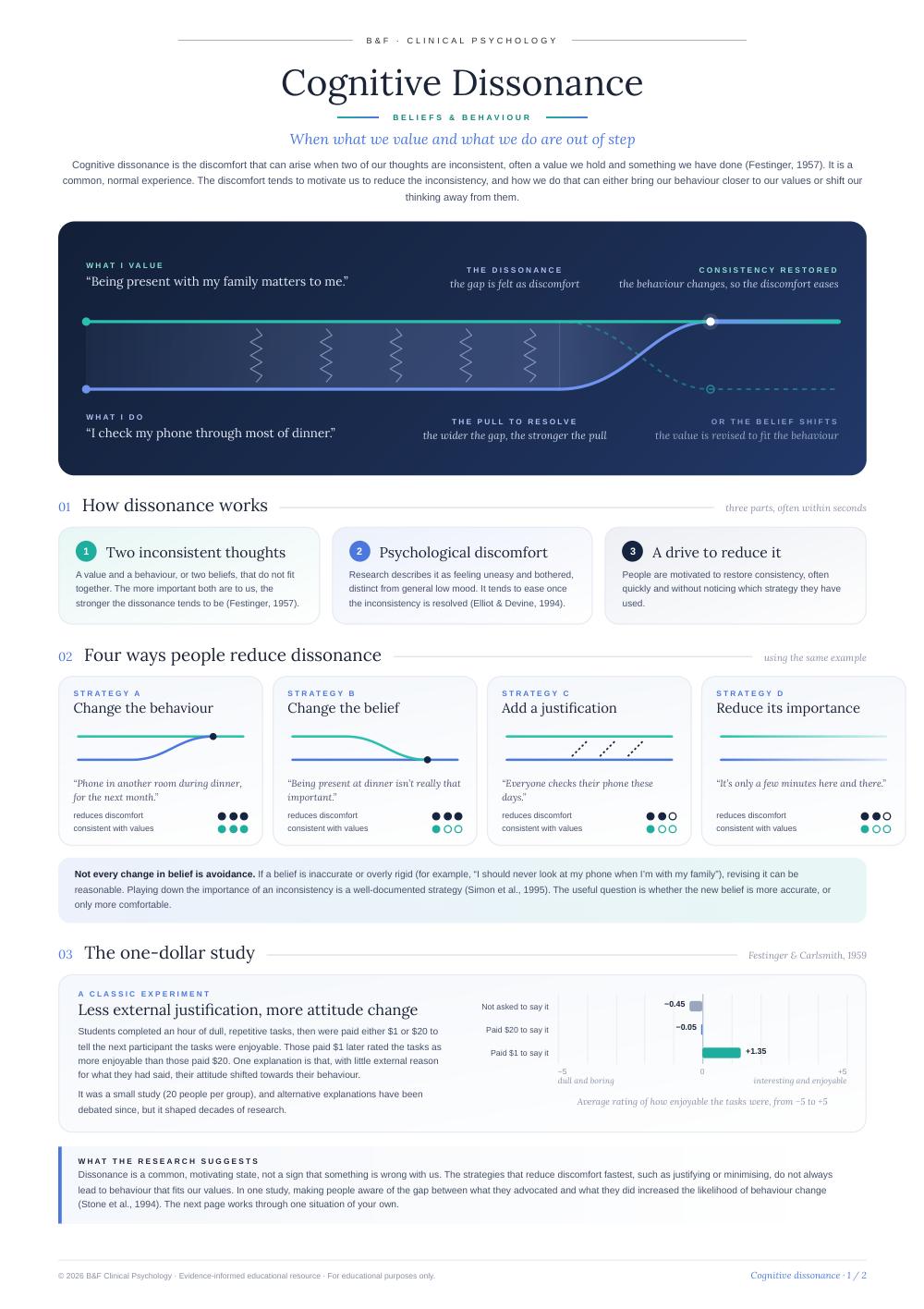
Cognitive dissonance
The discomfort when what we value and what we do are out of step.
-
 Preview
Learn
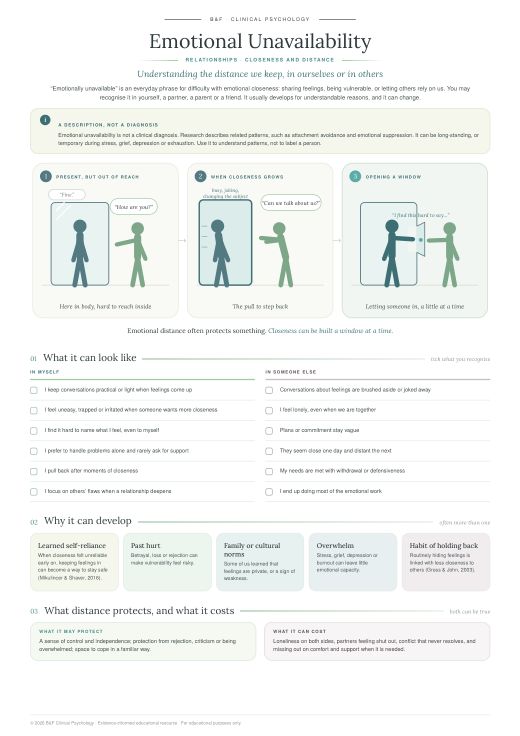
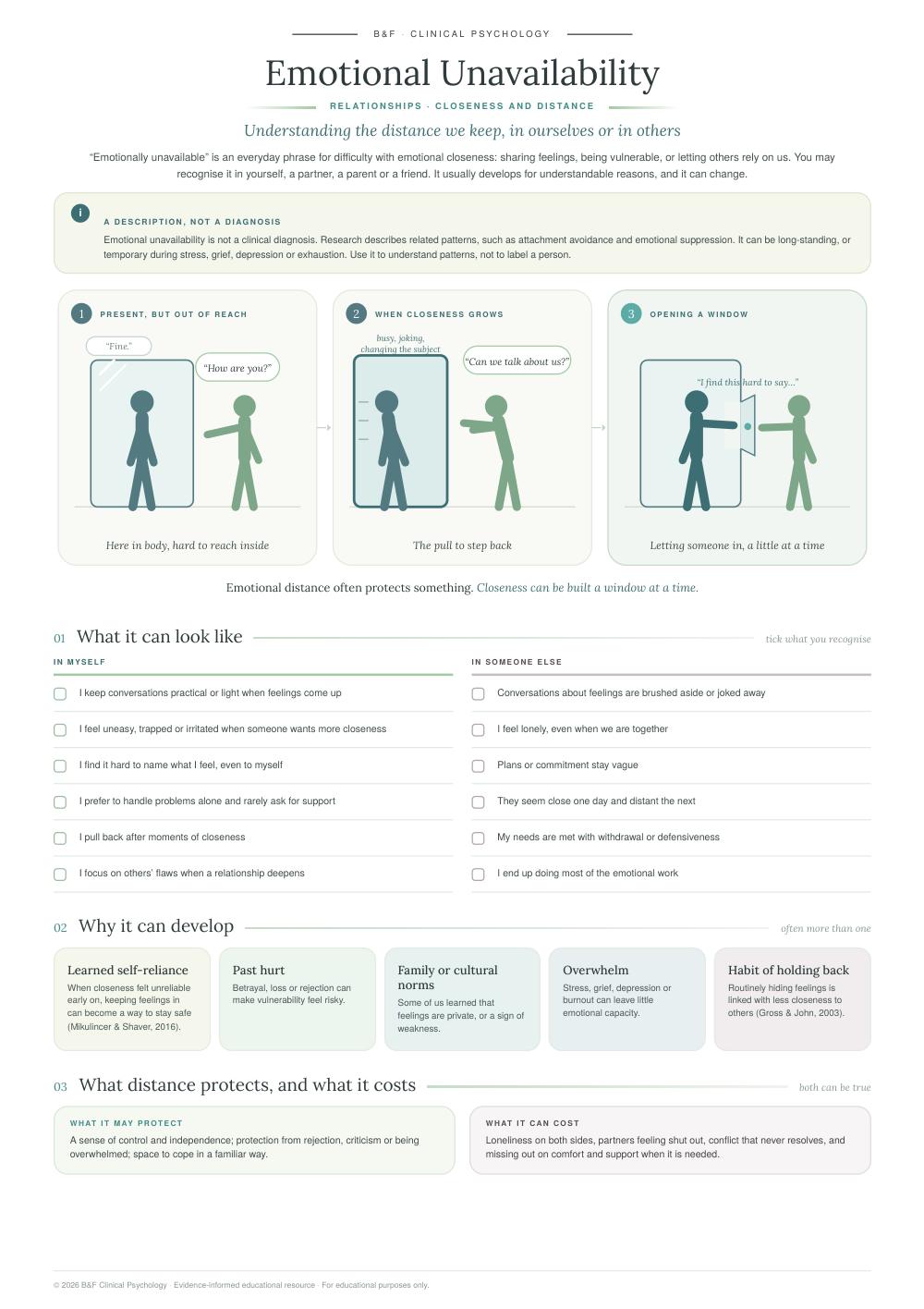
Emotional unavailability
Understanding the distance we keep, in ourselves or in others.
-
 Preview
Learn
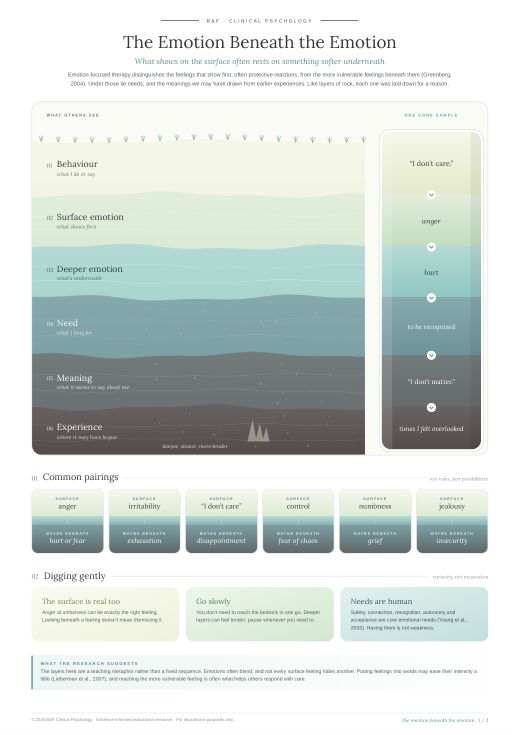
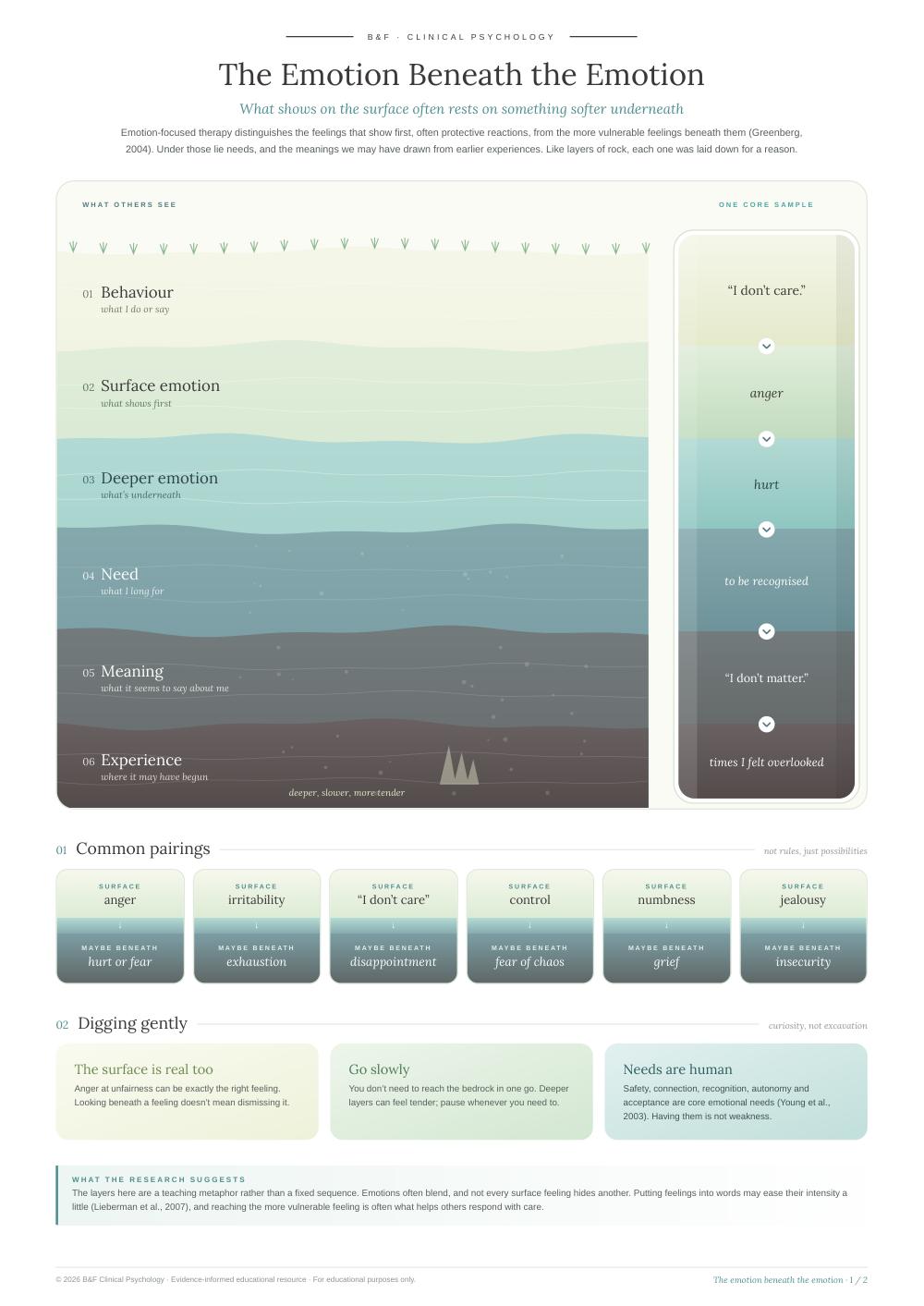
The emotion beneath the emotion
What shows on the surface often rests on something softer underneath.
-
 Preview
Learn
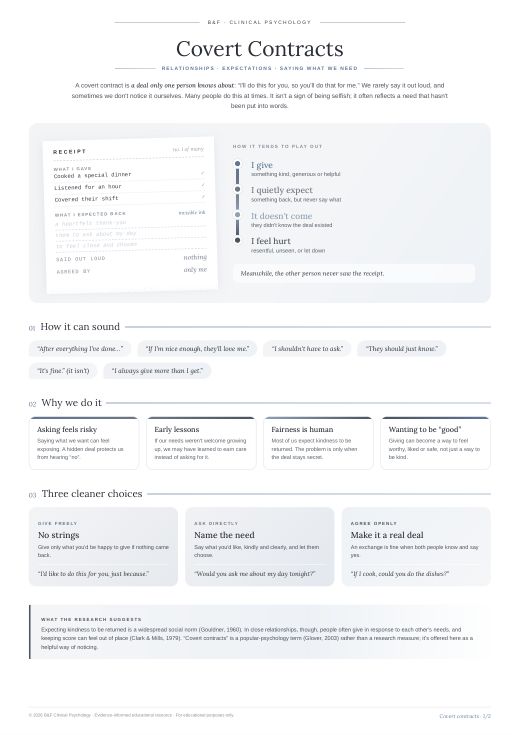
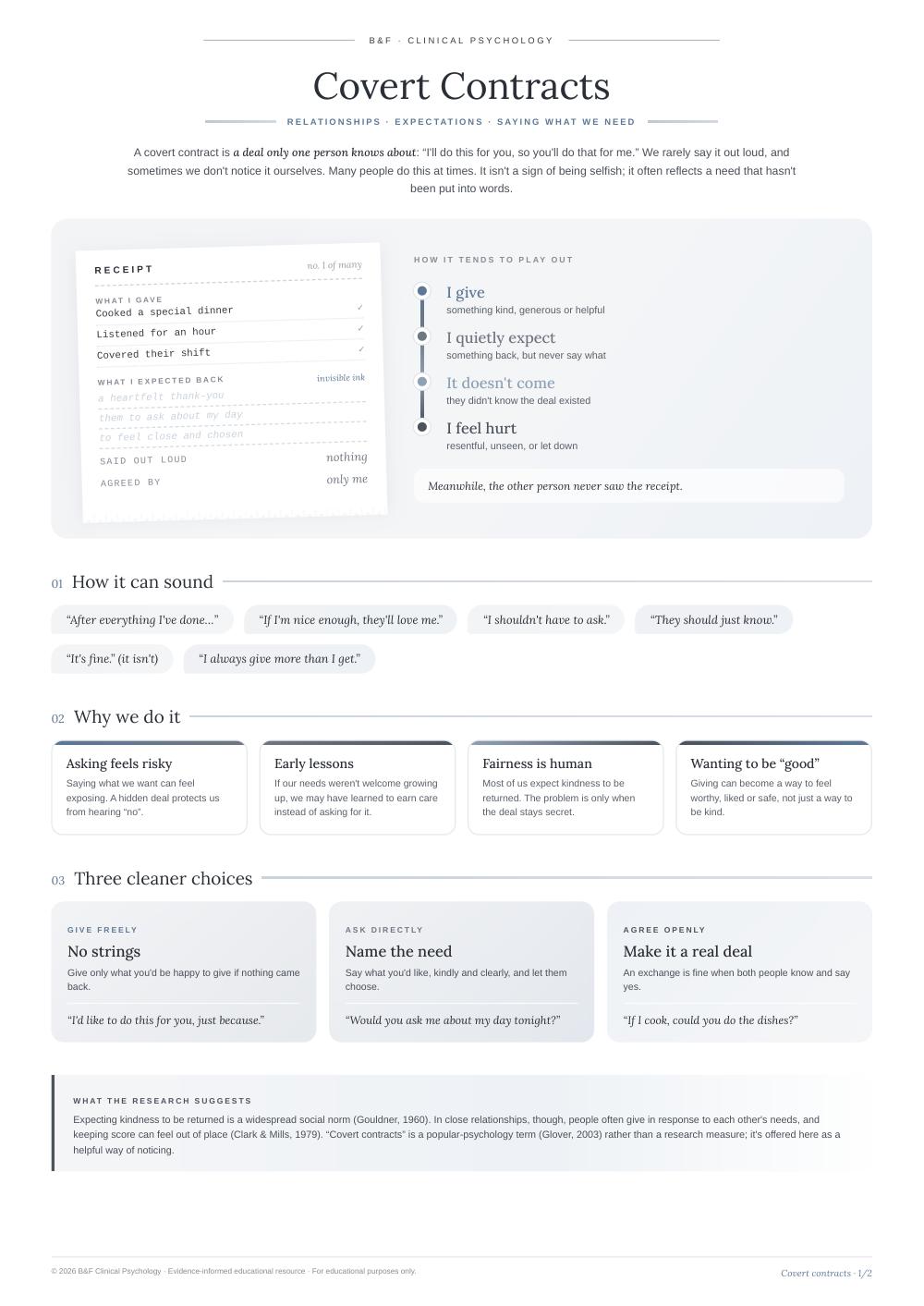
Covert contracts
The unspoken deals we make with others, and how to say what we need instead.
-
 Preview
Learn
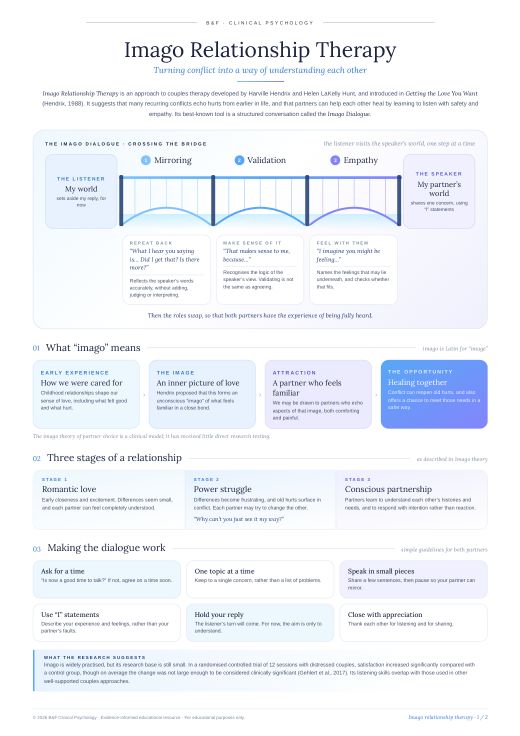
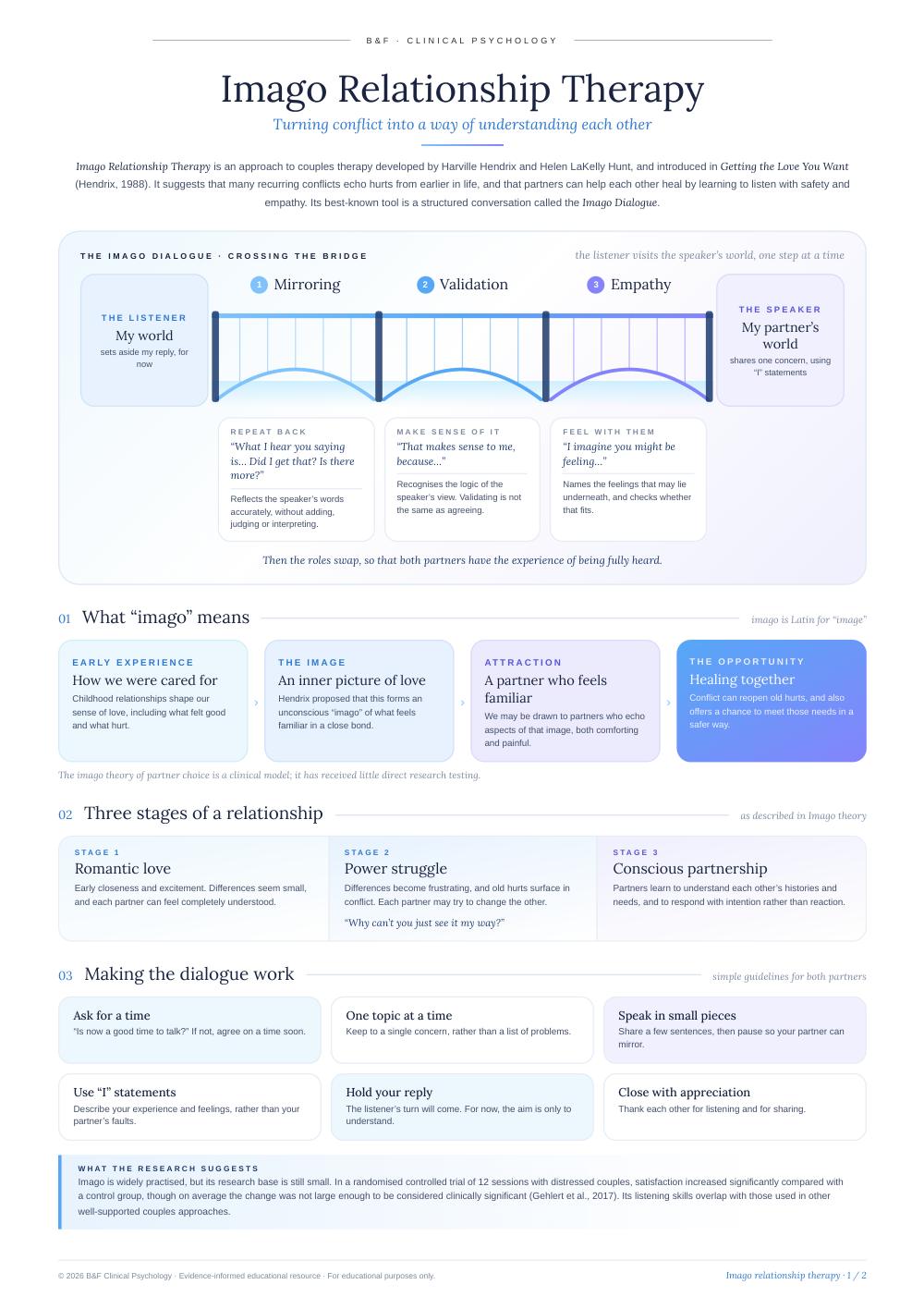
Imago Relationship Therapy
A couples approach that turns conflict into a way of understanding each other.
-
 Preview
Learn
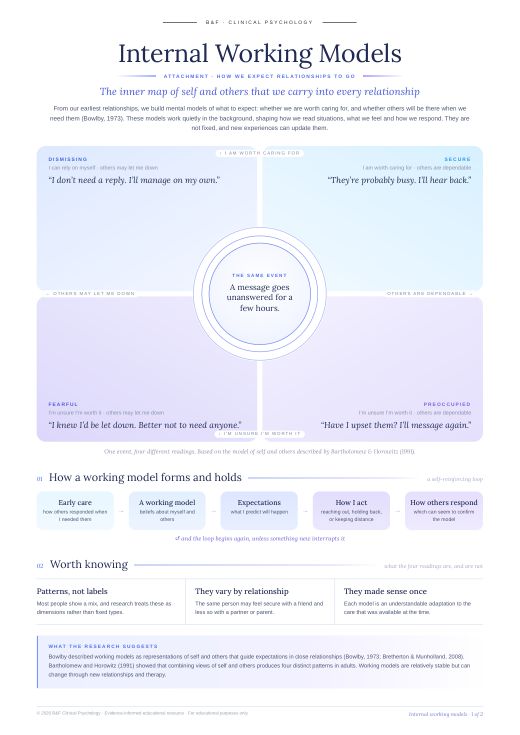
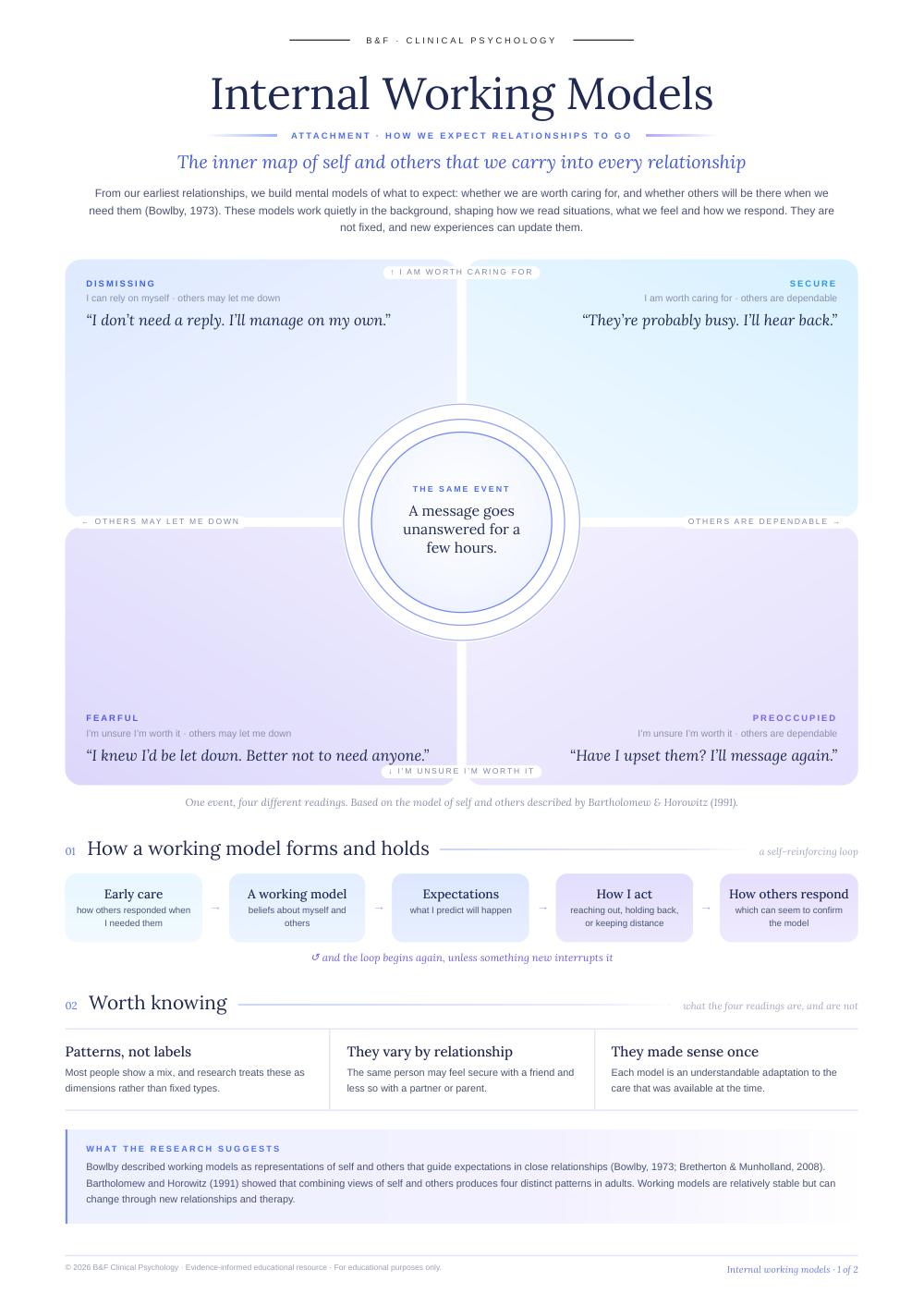
Internal working models
The inner map of self and others that we carry into every relationship.
-
 Preview
Learn
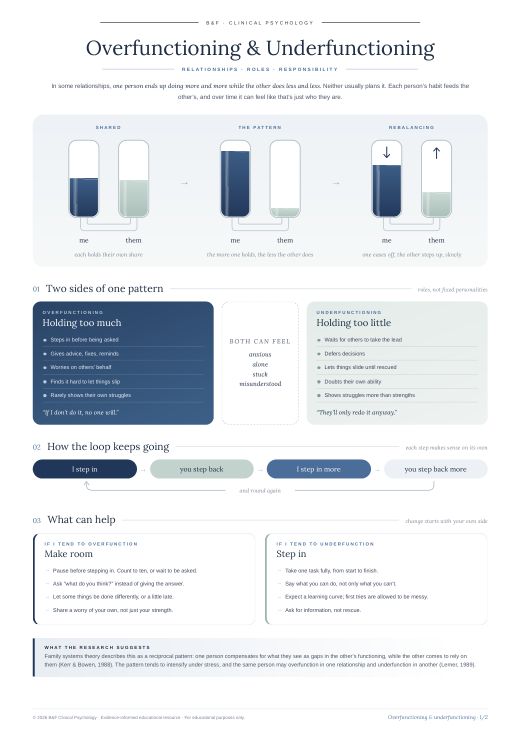
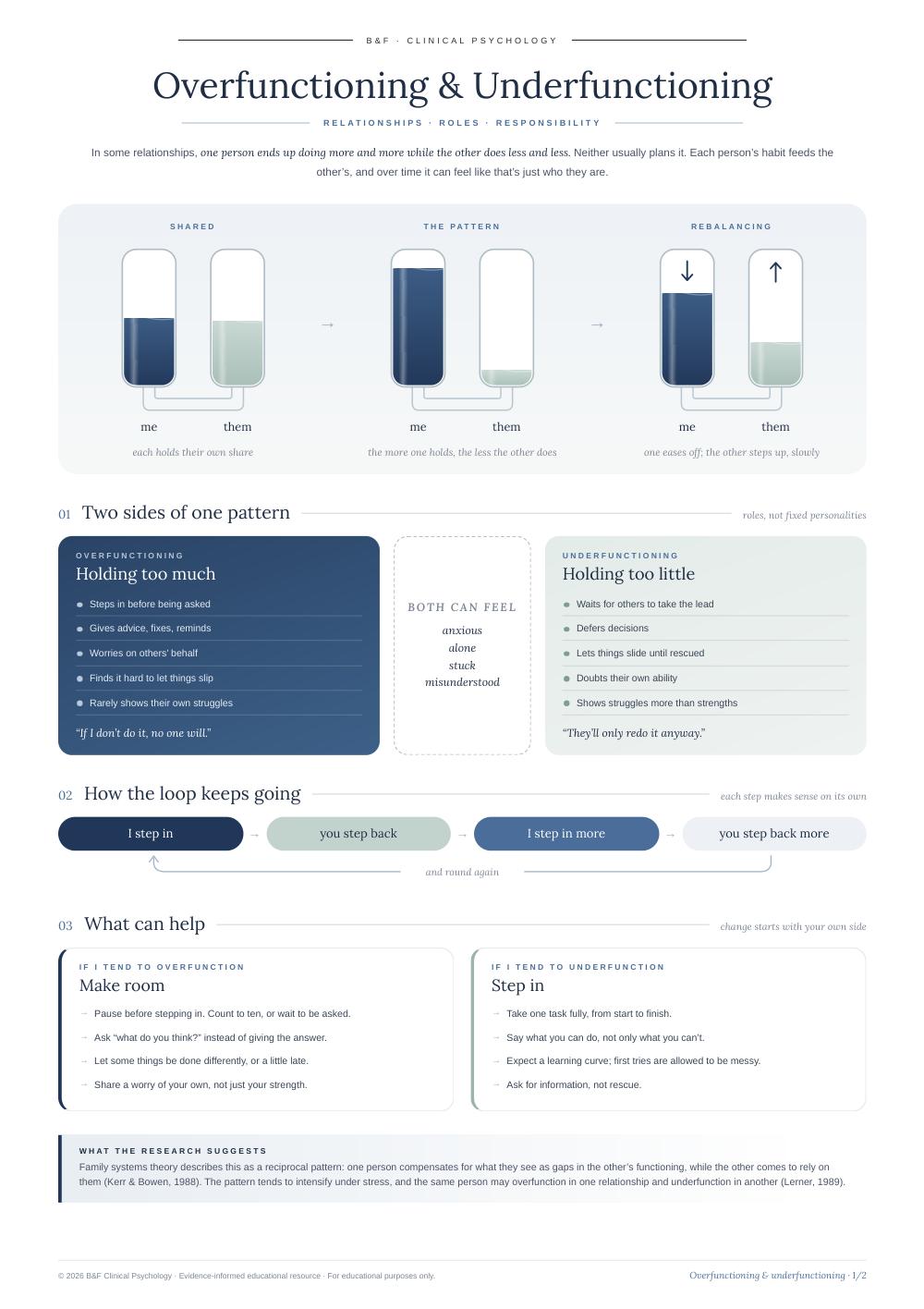
Overfunctioning and underfunctioning
When one person keeps doing more and the other less, and how to rebalance.
-
 Preview
Learn
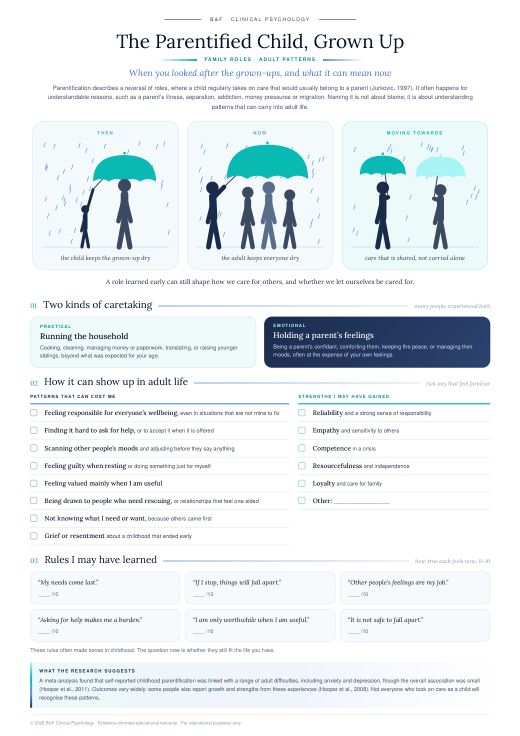
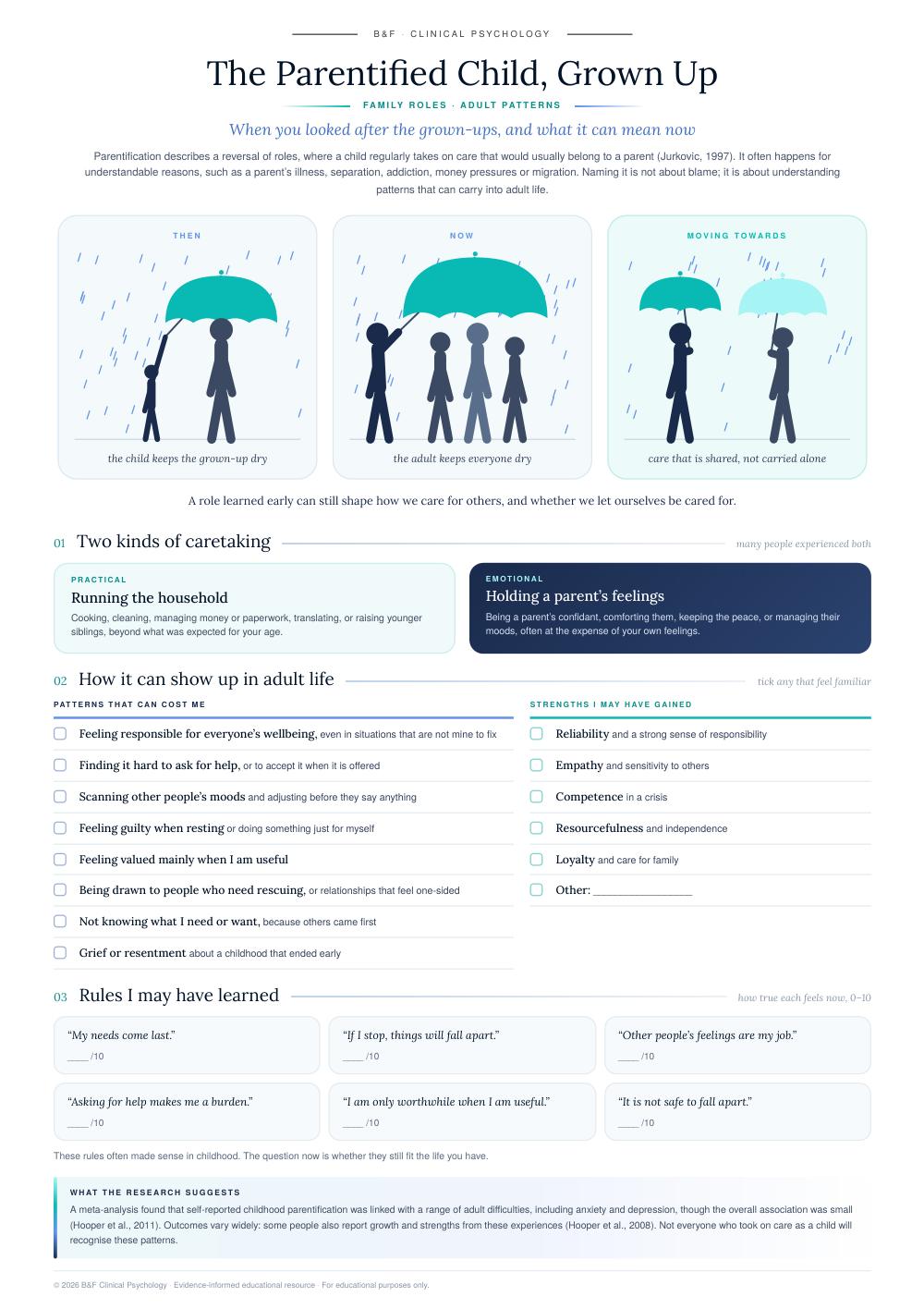
The parentified child, grown up
When you looked after the grown-ups as a child, and what it can mean now.
-
 Preview
Learn
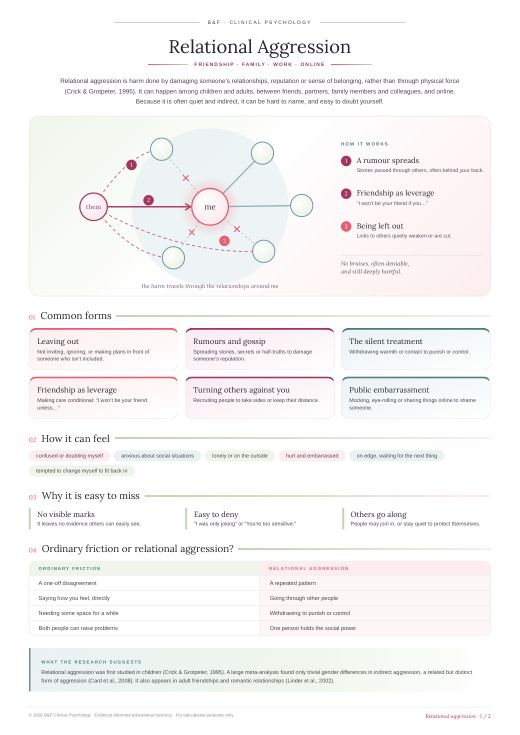
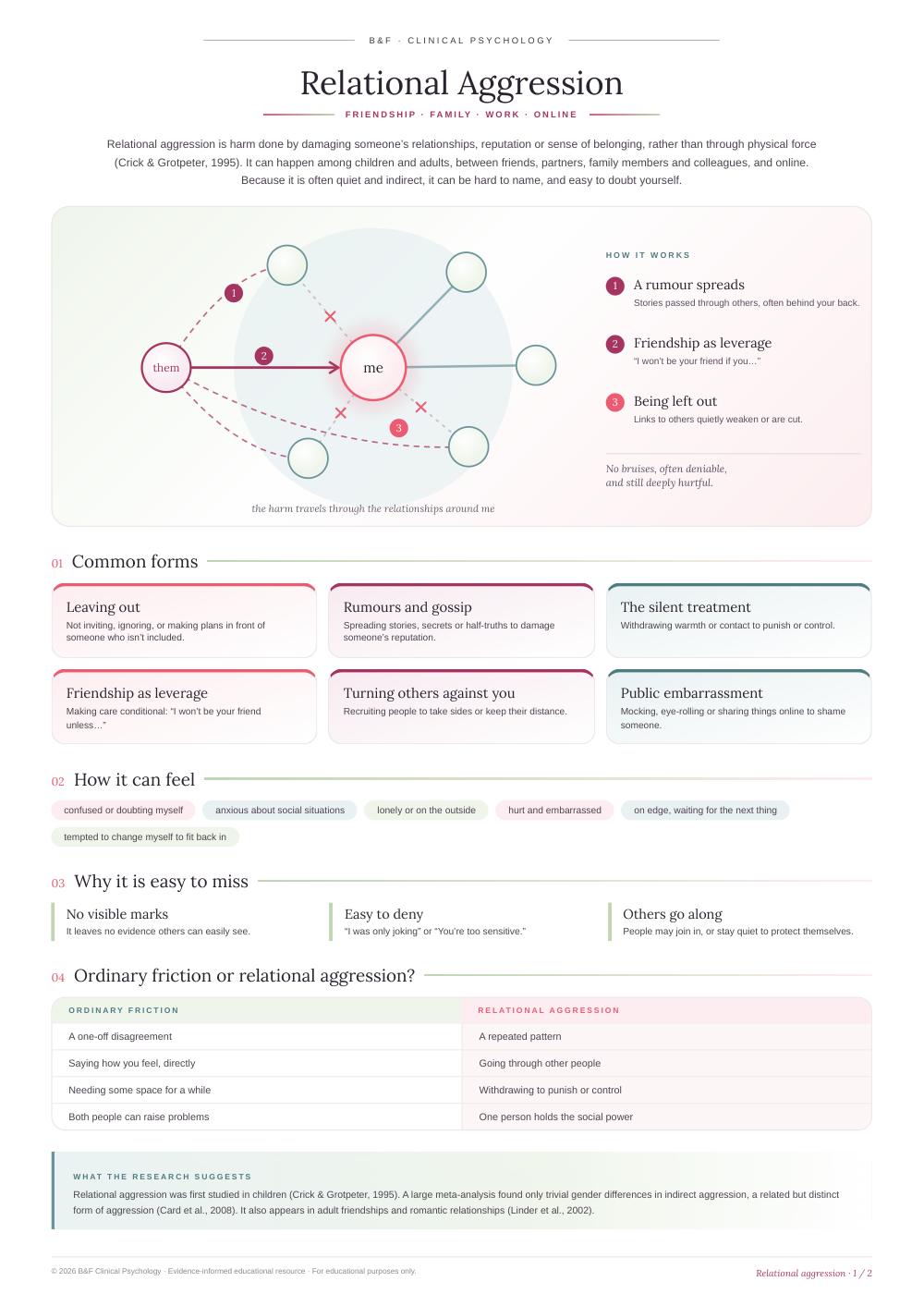
Relational aggression
Harm done through someone's relationships, reputation or sense of belonging.
-
 Preview
Learn
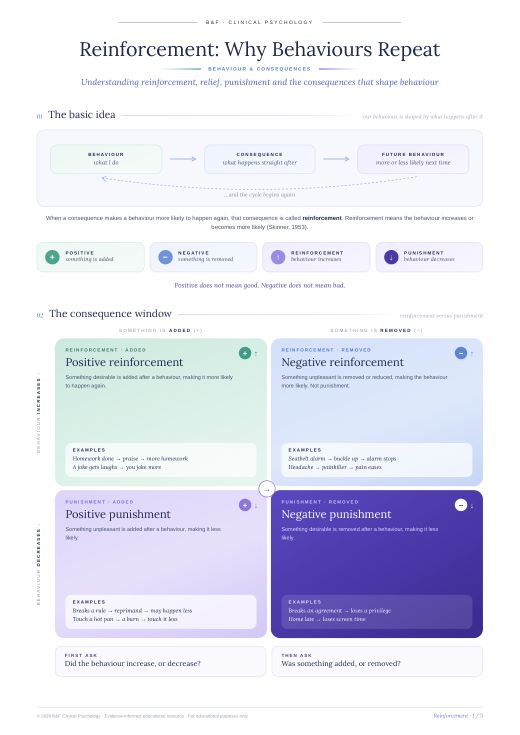
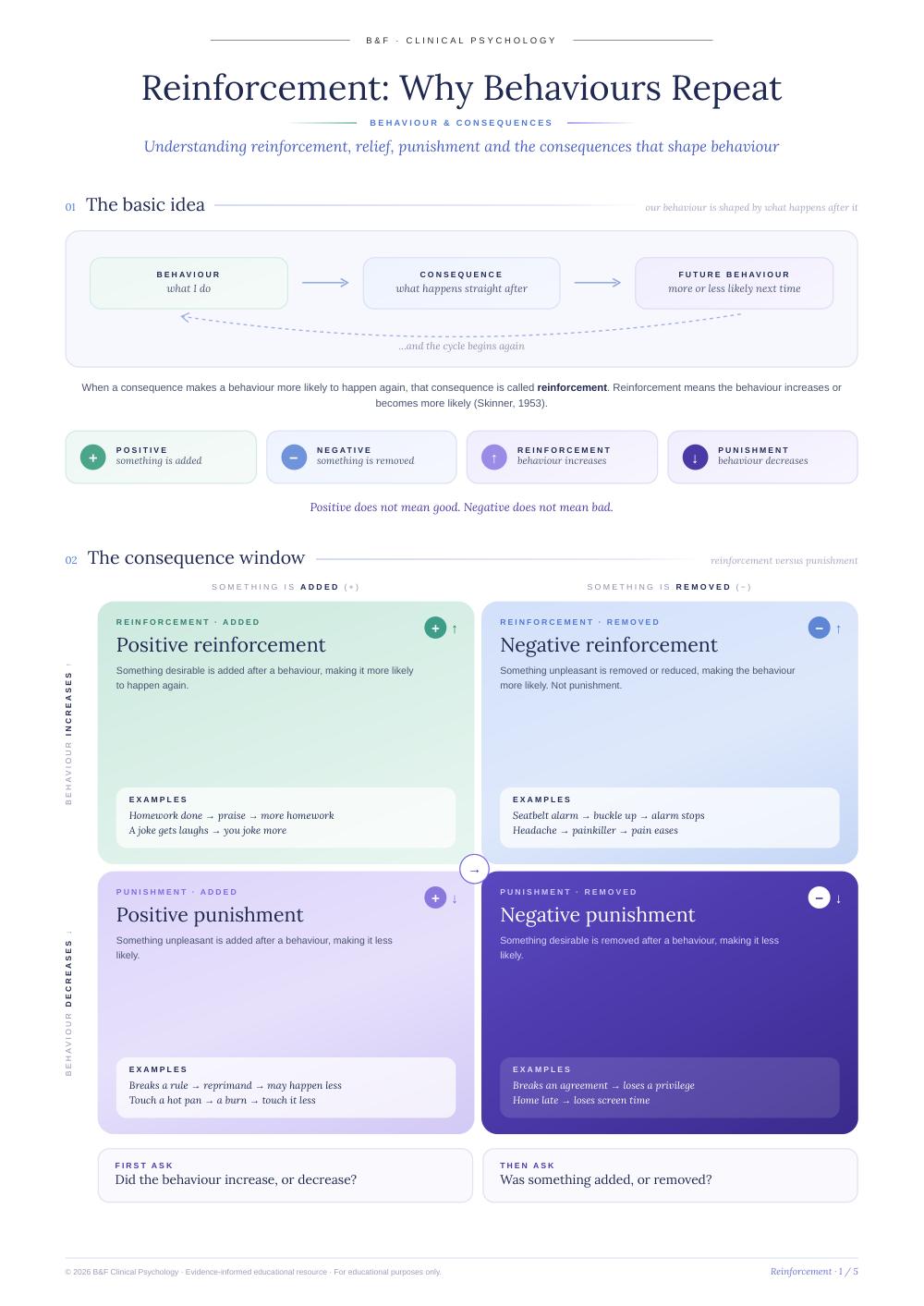
Reinforcement: why behaviours repeat
How relief, reward and inconsistency shape what we keep doing, in relationships and beyond.
-
 Preview
Reflect
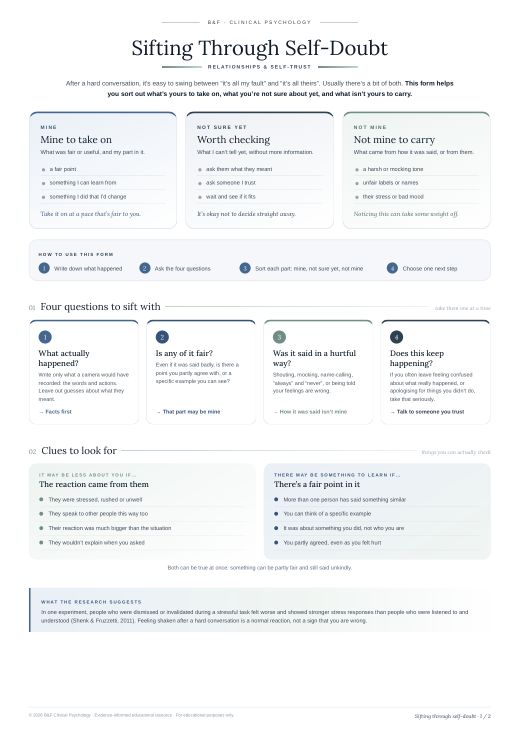
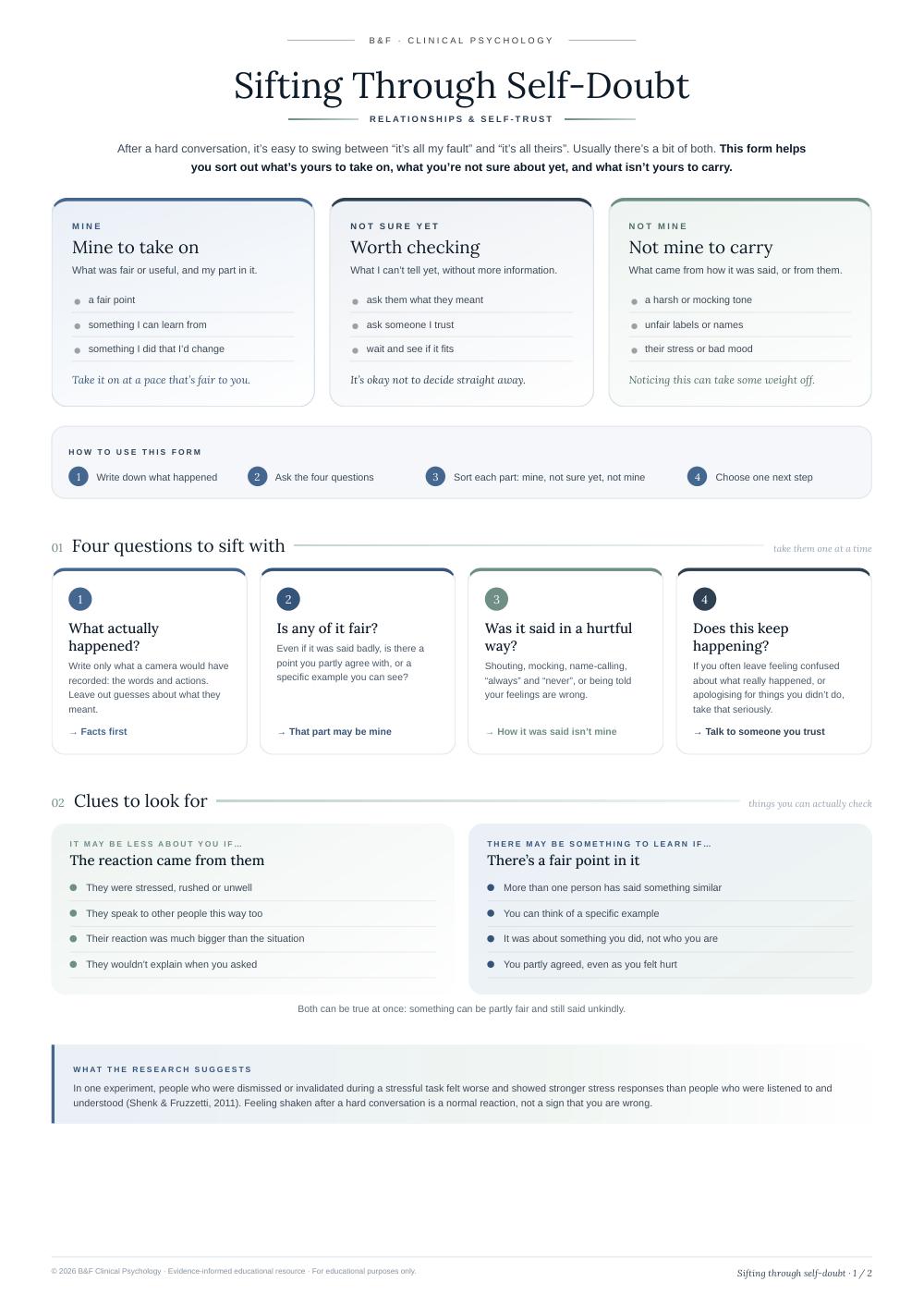
Sifting through self-doubt
After a hard conversation, sort out what was yours and what was theirs.
-
 Preview
Learn
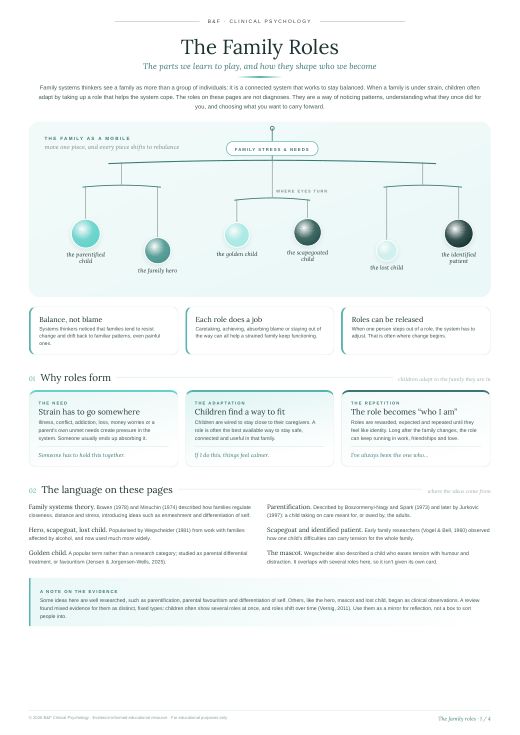
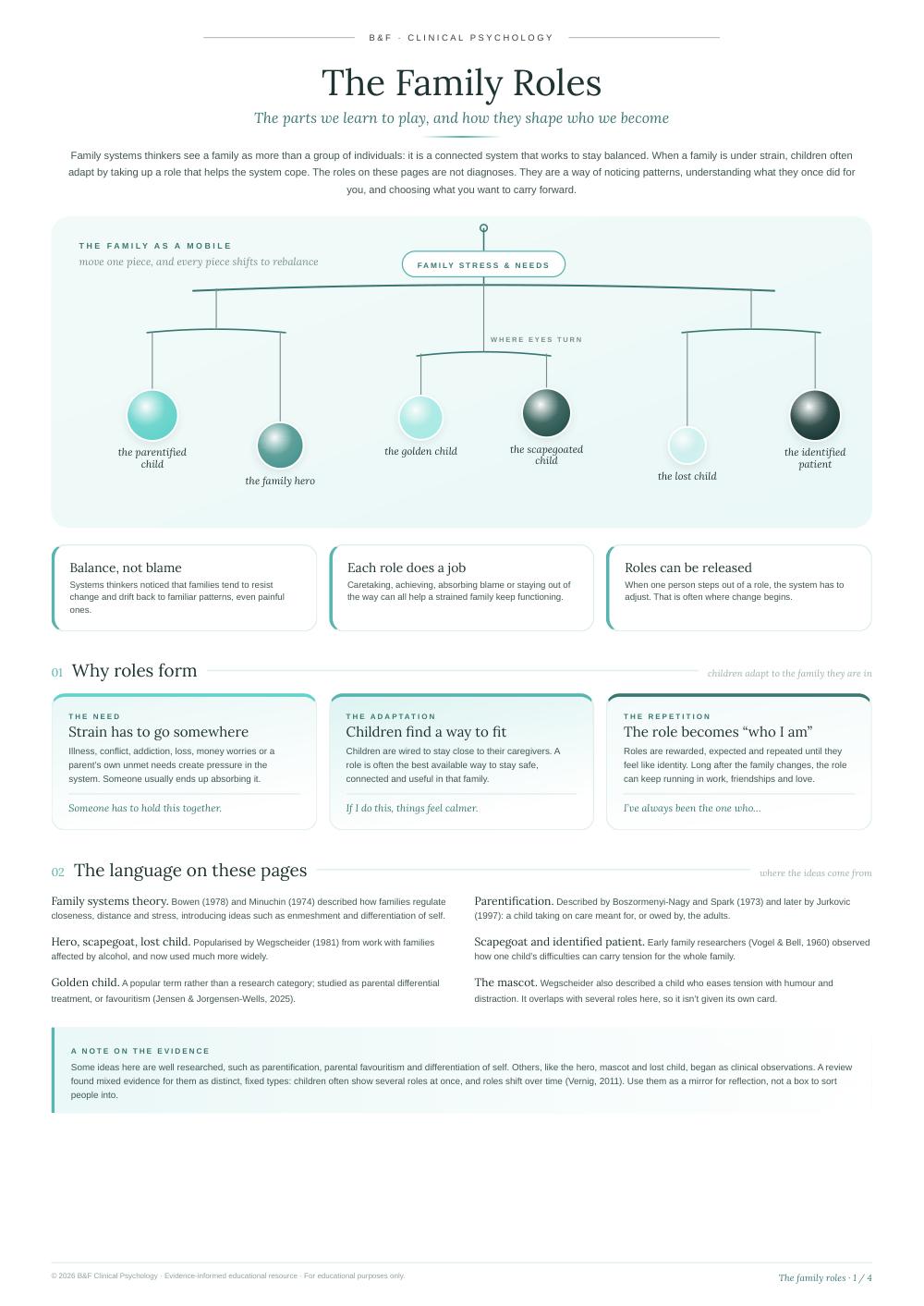
The family roles
The parts we learn to play in a family, and how they shape who we become.
-
 Preview
Learn
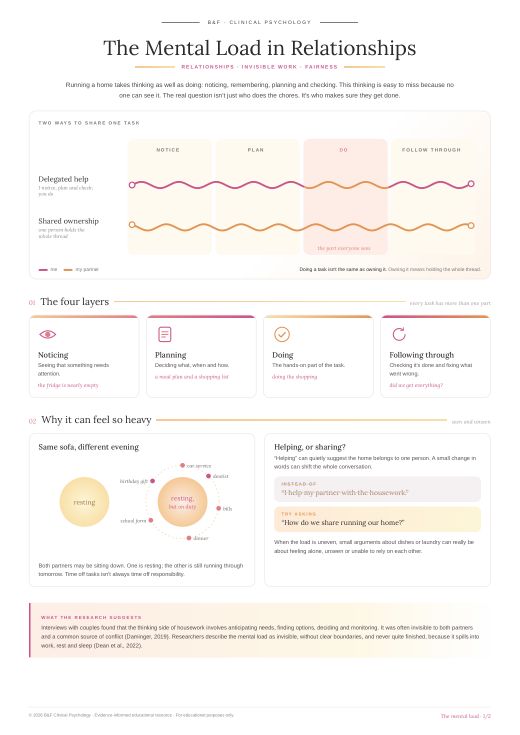
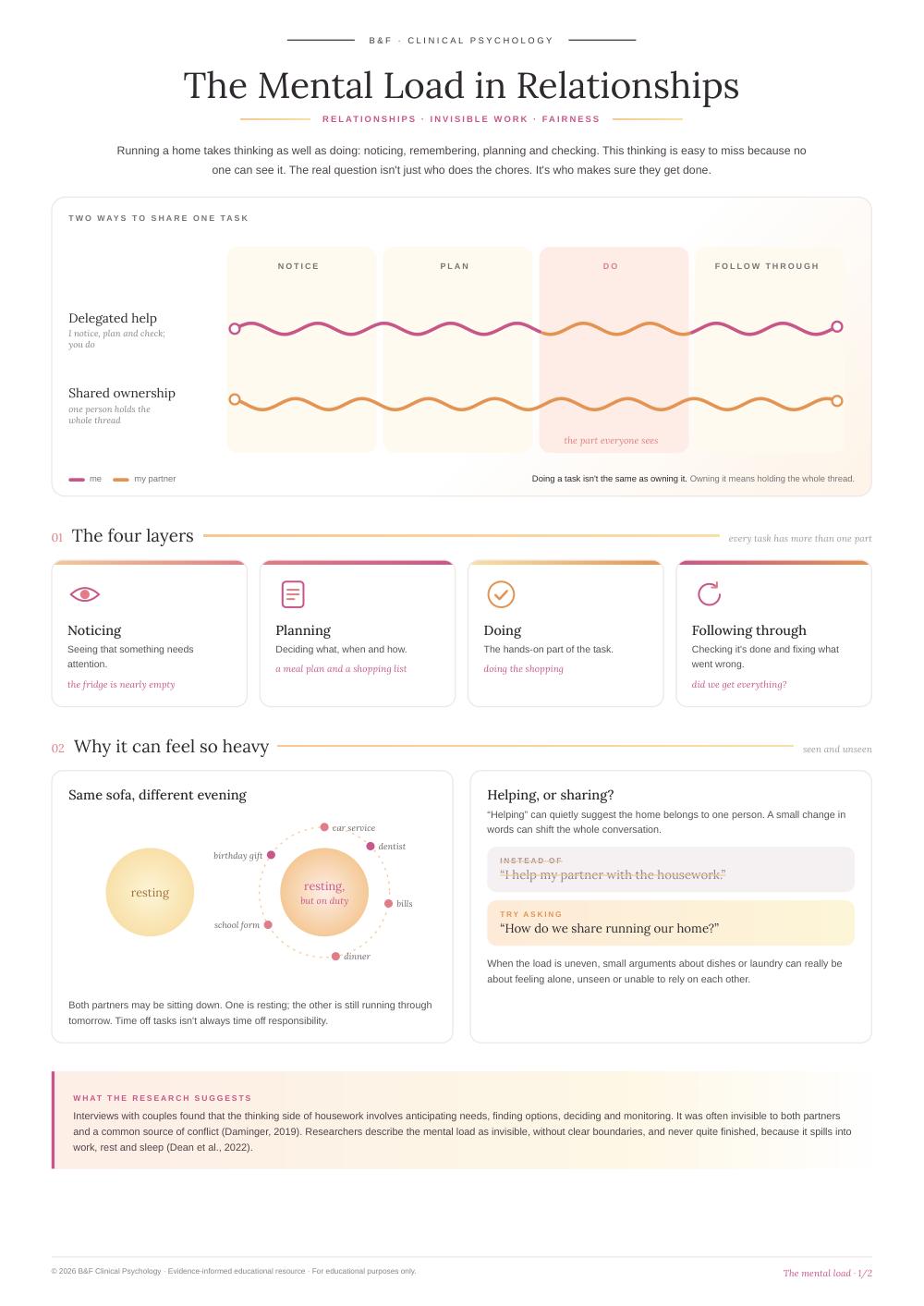
The mental load in relationships
The invisible thinking work of running a home, and how to share it more fairly.
-
 Preview
Learn
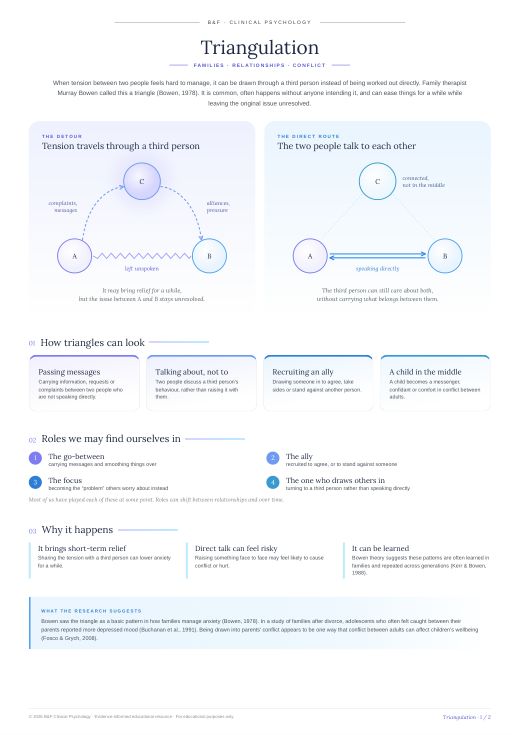
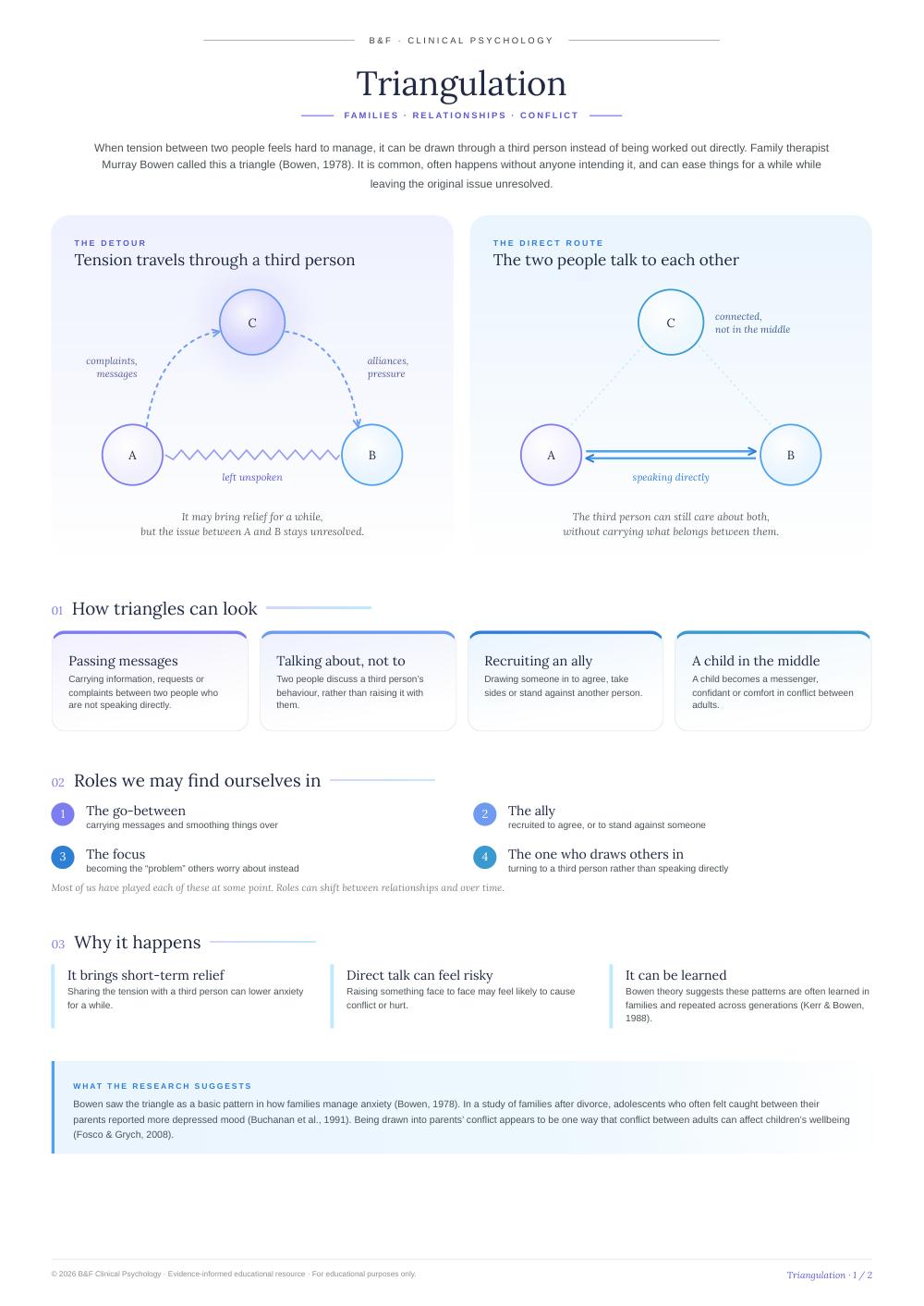
Triangulation
When tension between two people is drawn through a third instead of worked out directly.
-
 Preview
Learn
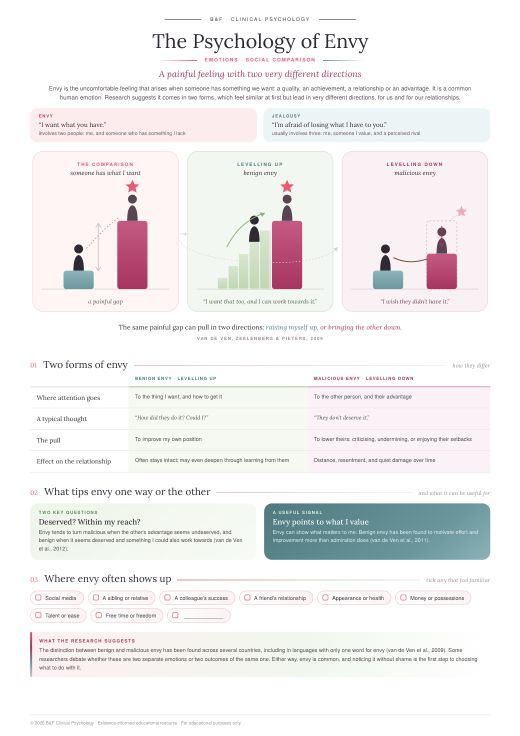
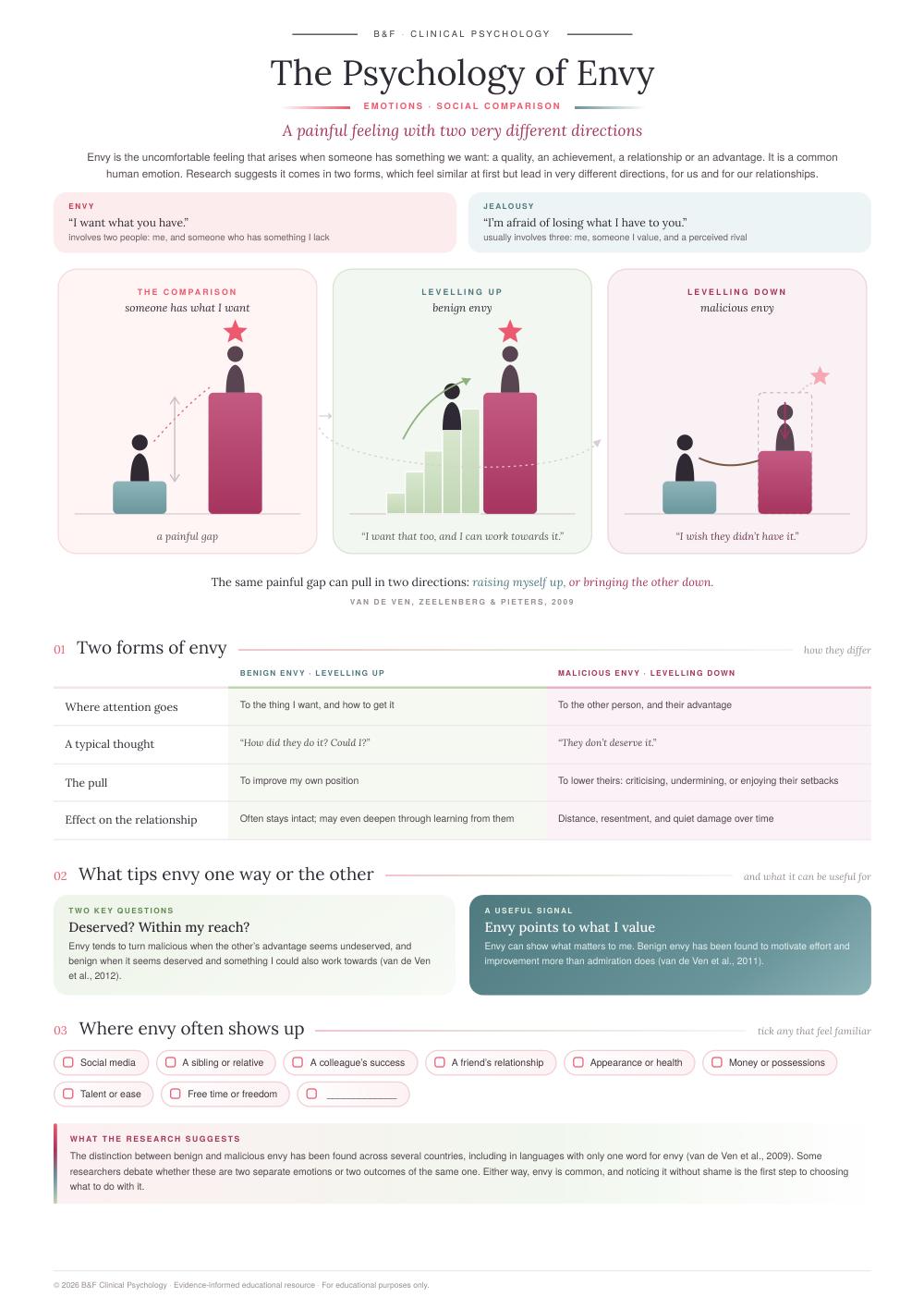
The psychology of envy
A painful feeling that can pull in two very different directions.
-
 Preview
Reflect
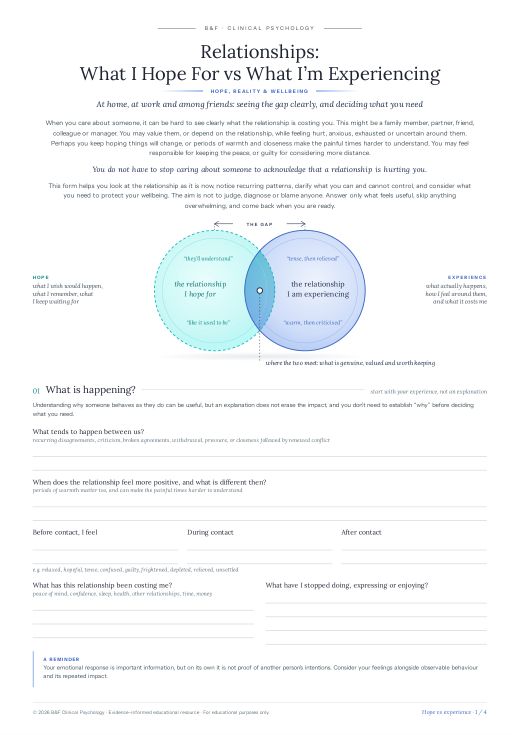
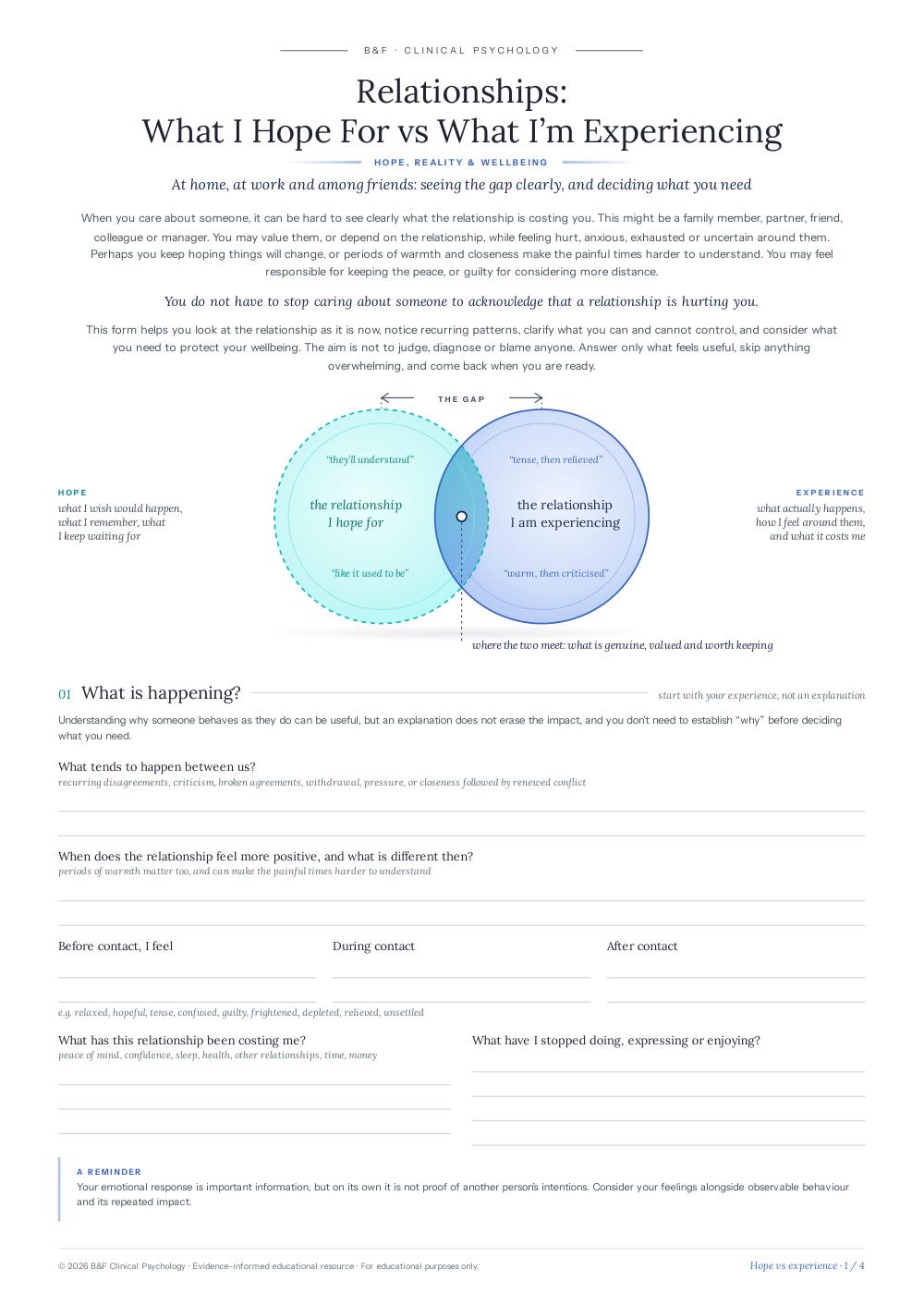
What I hope for vs what I'm experiencing
See the gap in a relationship clearly, and decide what you need.
-
 Preview
Reflect
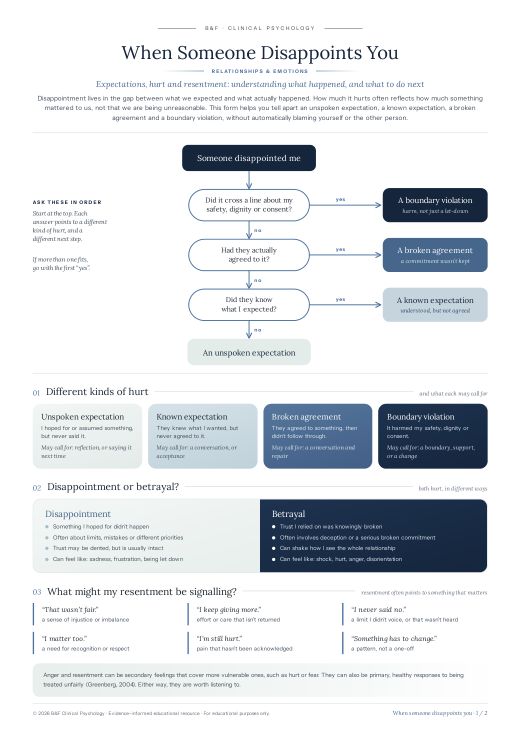
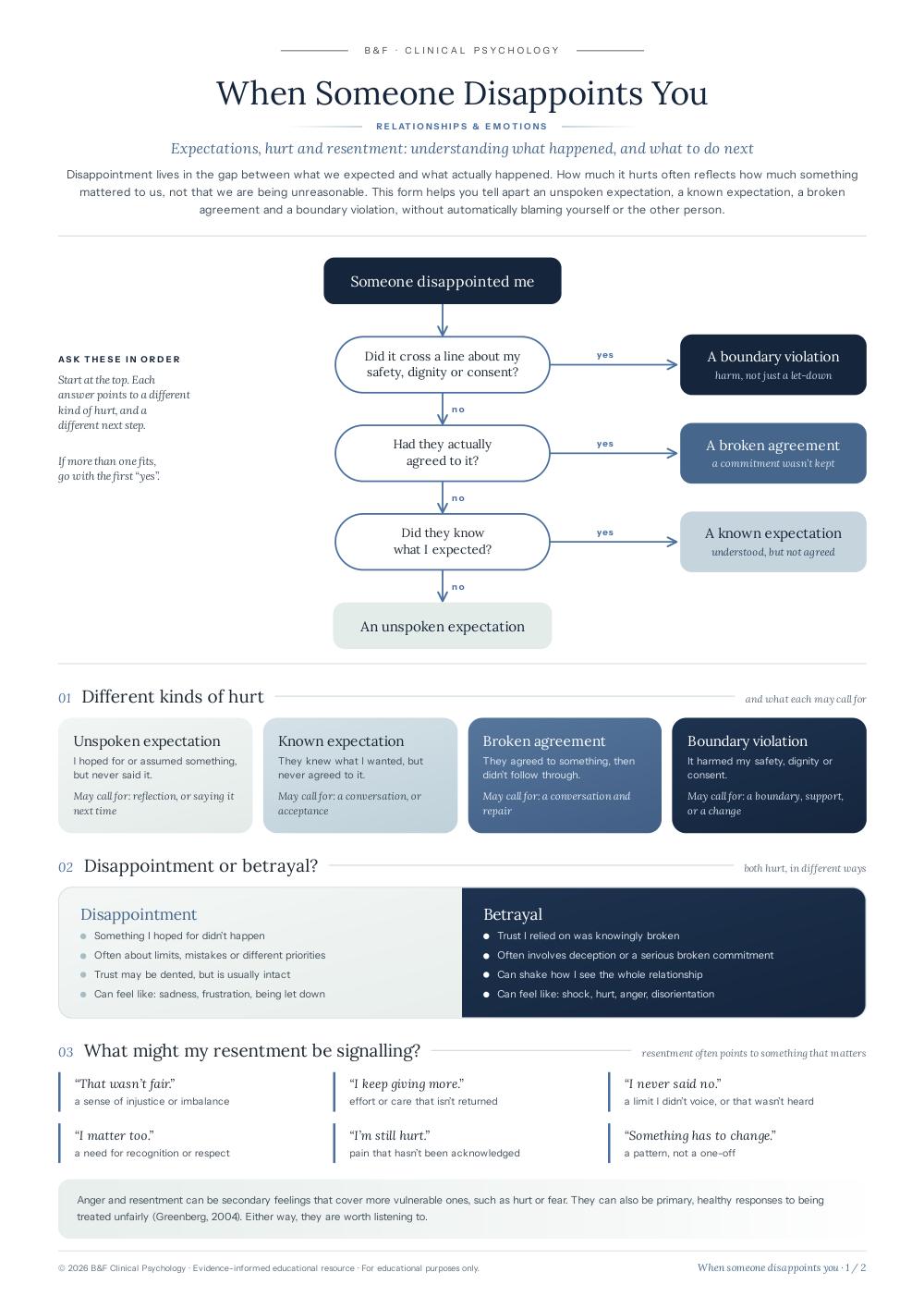
When someone disappoints you
Expectations, hurt and resentment: understand what happened and what to do next.
-
 Preview
Learn
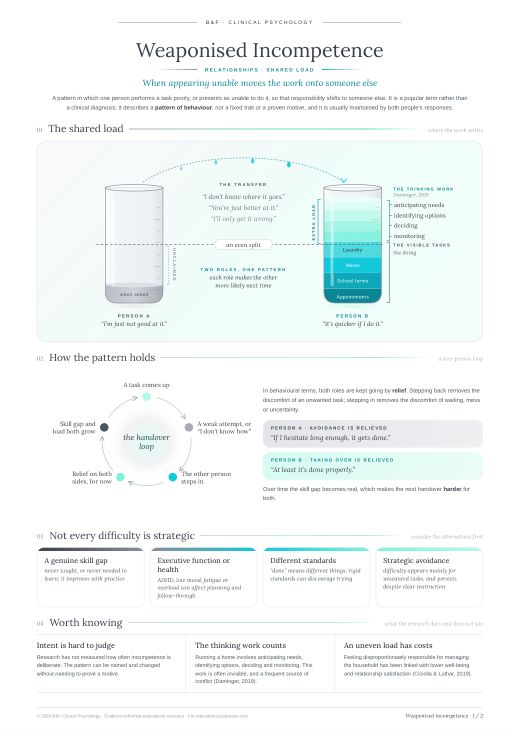
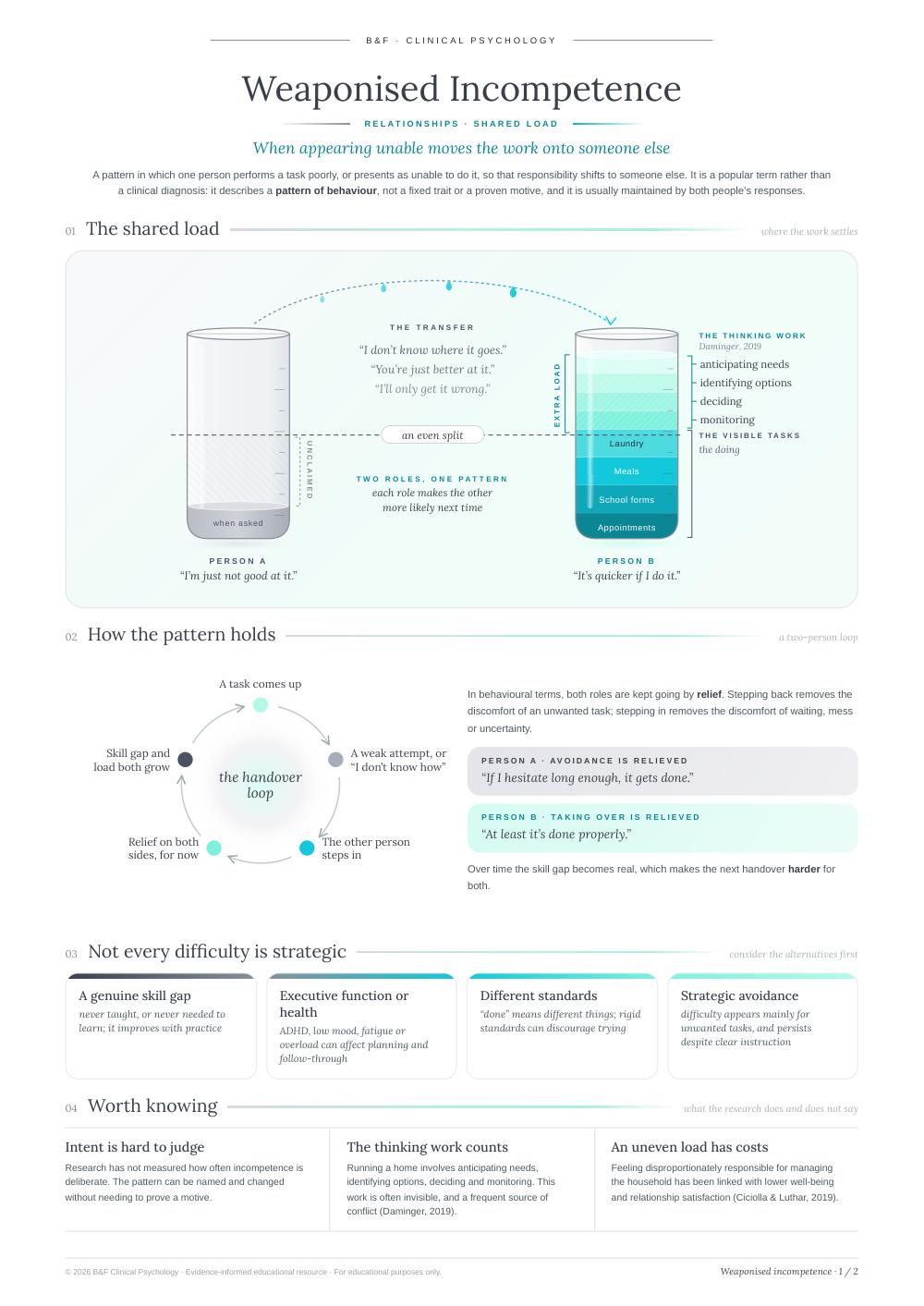
Weaponised incompetence
When appearing unable moves the work onto someone else.
-
 Preview
Learn
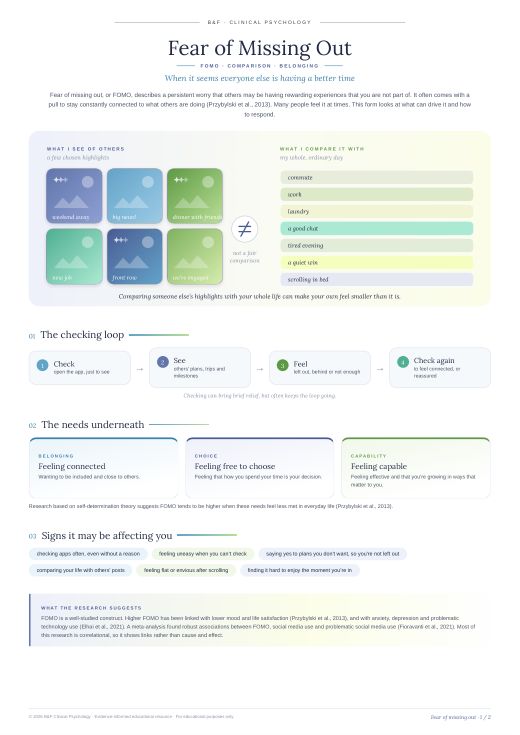
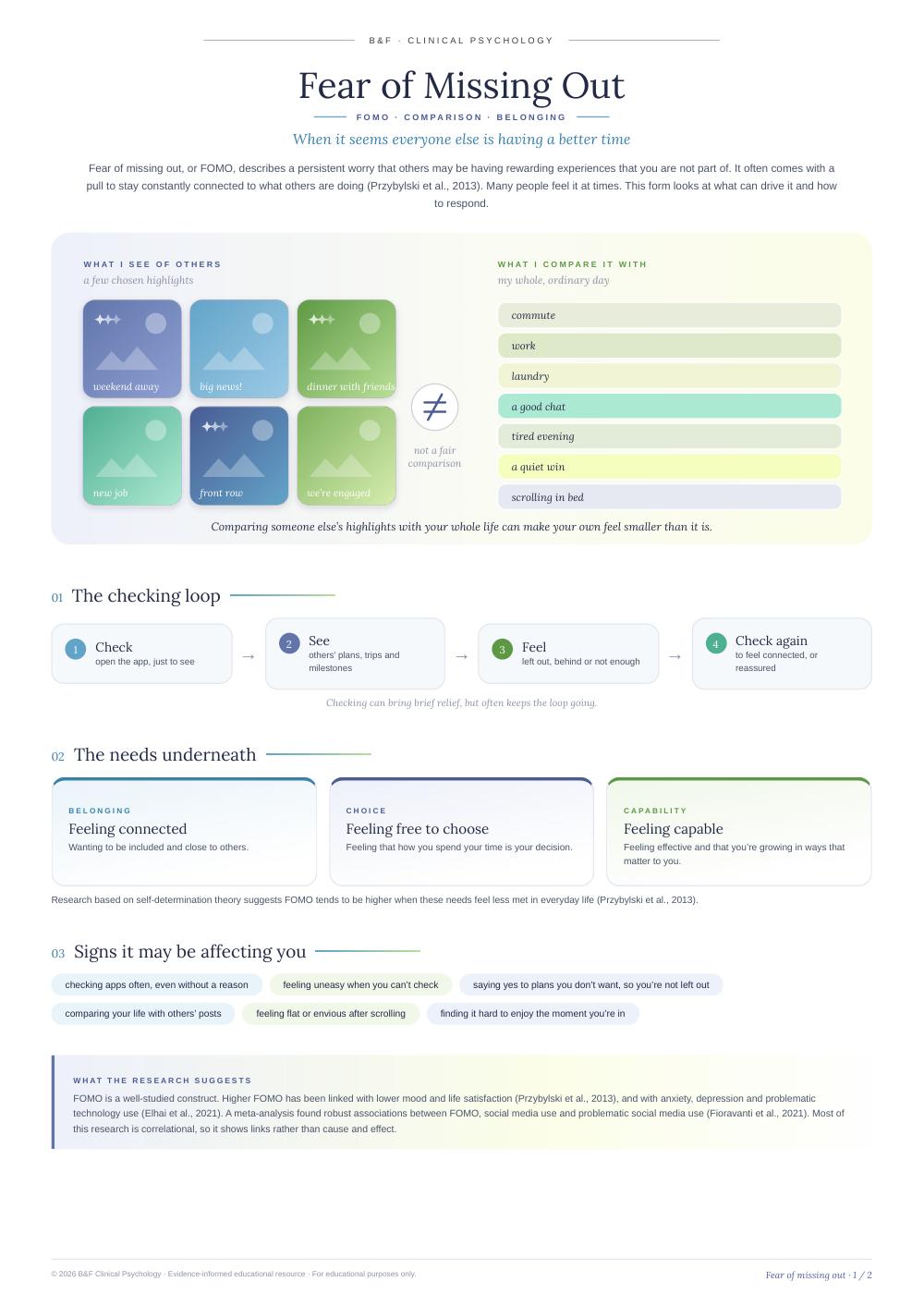
Fear of missing out
When it seems everyone else is having a better time.
-
 Preview
Learn
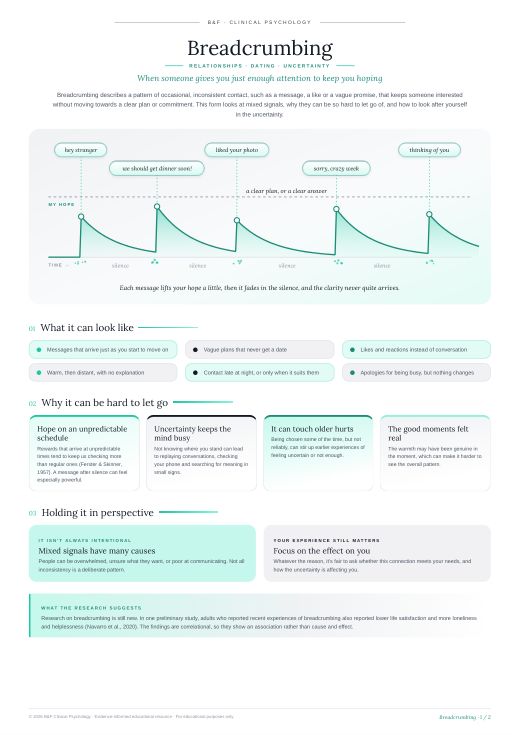
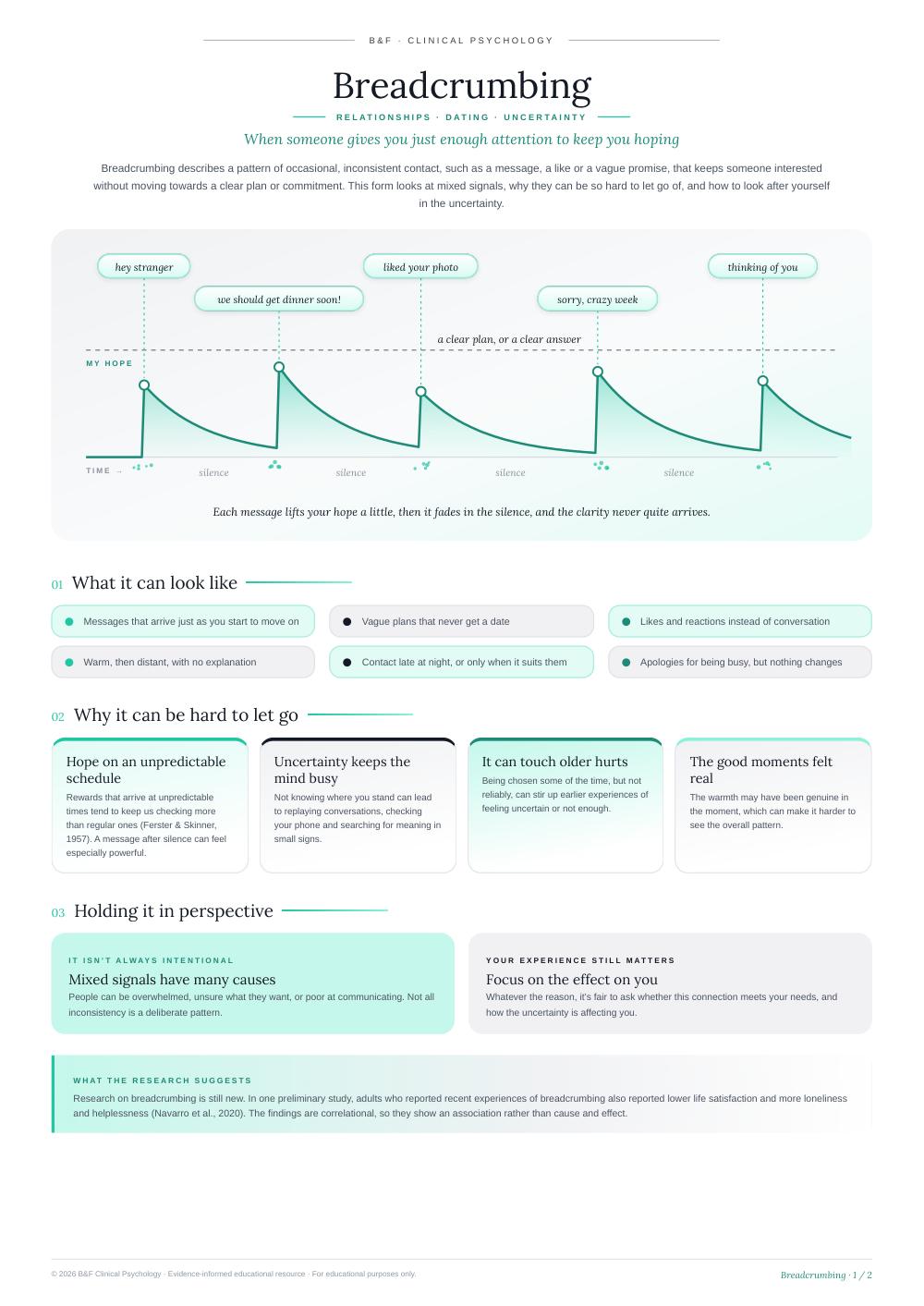
Breadcrumbing
When someone gives you just enough attention to keep you hoping.
-
 Preview
Learn
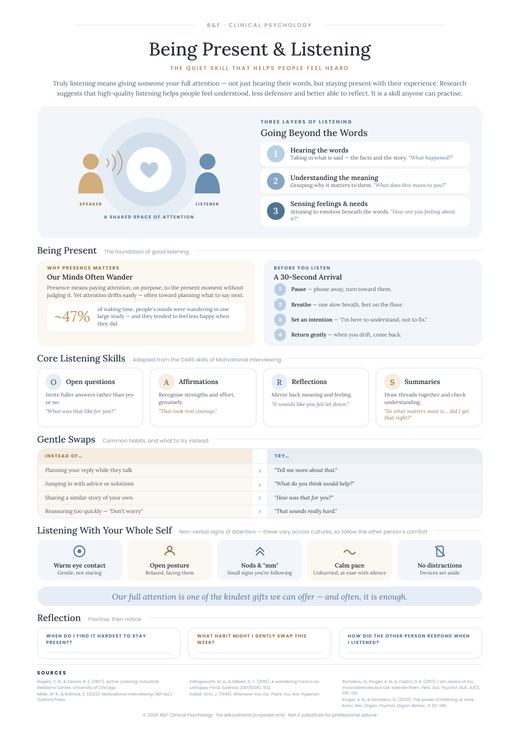
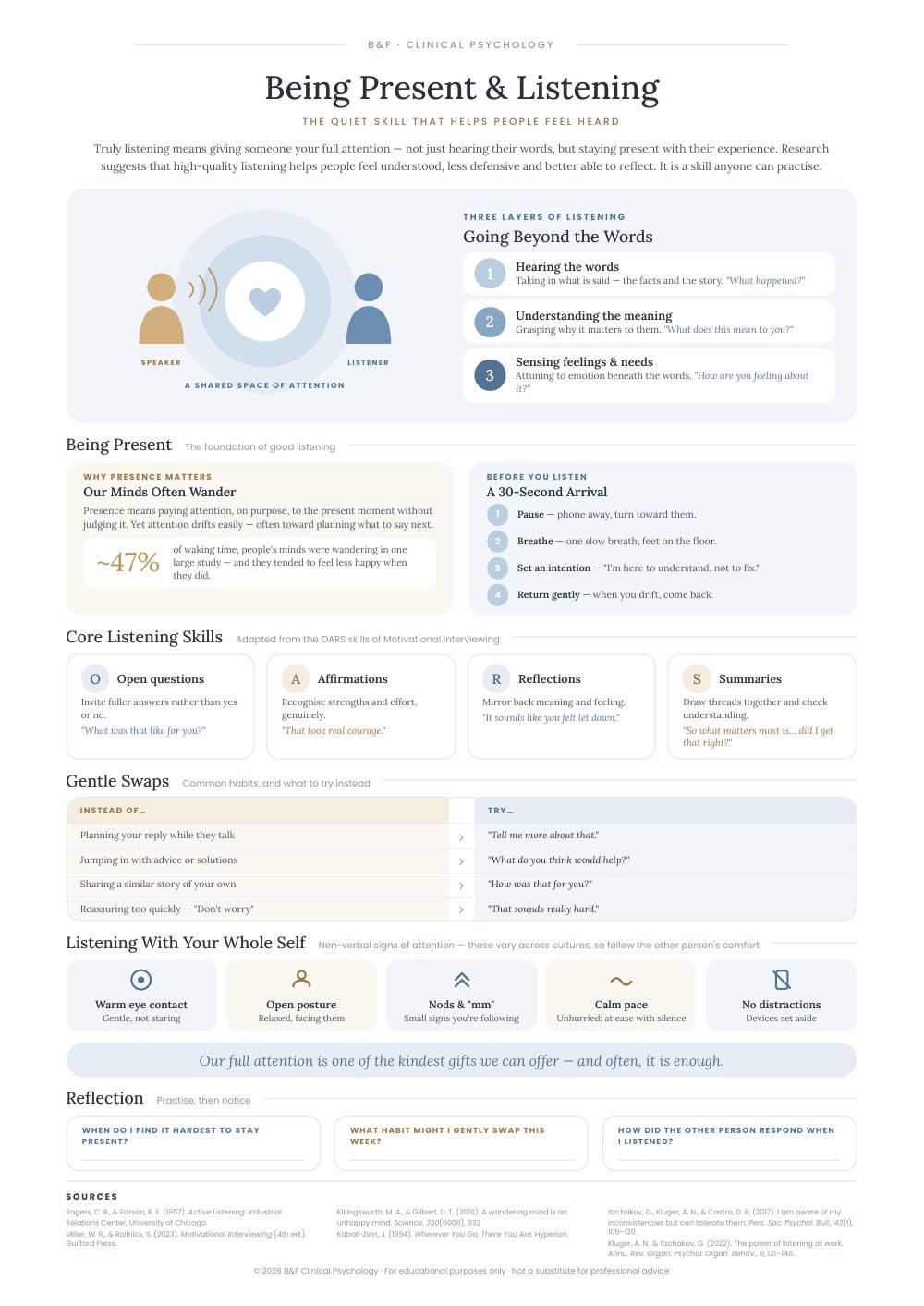
Being present and listening
The quiet skill that helps people feel heard: three layers of listening.
Important Information: These resources are provided for general education and self-reflection. They do not replace individual psychological assessment, diagnosis, professional advice or therapy. Accessing, downloading or using these resources does not establish a psychologist–client relationship with Barnardt & Fleming Clinical Psychology or constitute psychological consultation or treatment. These resources may not be suitable for every individual or circumstance. If you are uncertain about their suitability, please consult a qualified healthcare professional. If you are in crisis, feel unsafe, or may harm yourself or someone else, please contact your local emergency services or go to the nearest emergency department.