

Free resources
Anxiety, fear & OCD
Understand anxiety, break the cycle of avoidance, and build confidence in facing what feels difficult.
These resources are for general education and self-reflection and do not replace professional psychological care. Accessing, downloading or using them does not establish a psychologist–client relationship with Barnardt & Fleming Clinical Psychology.
Anxiety, fear & OCD resources
-
 Preview
Learn
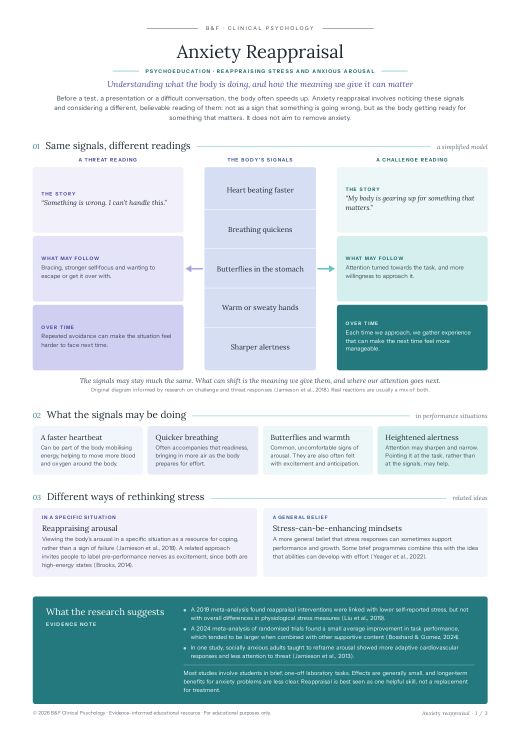
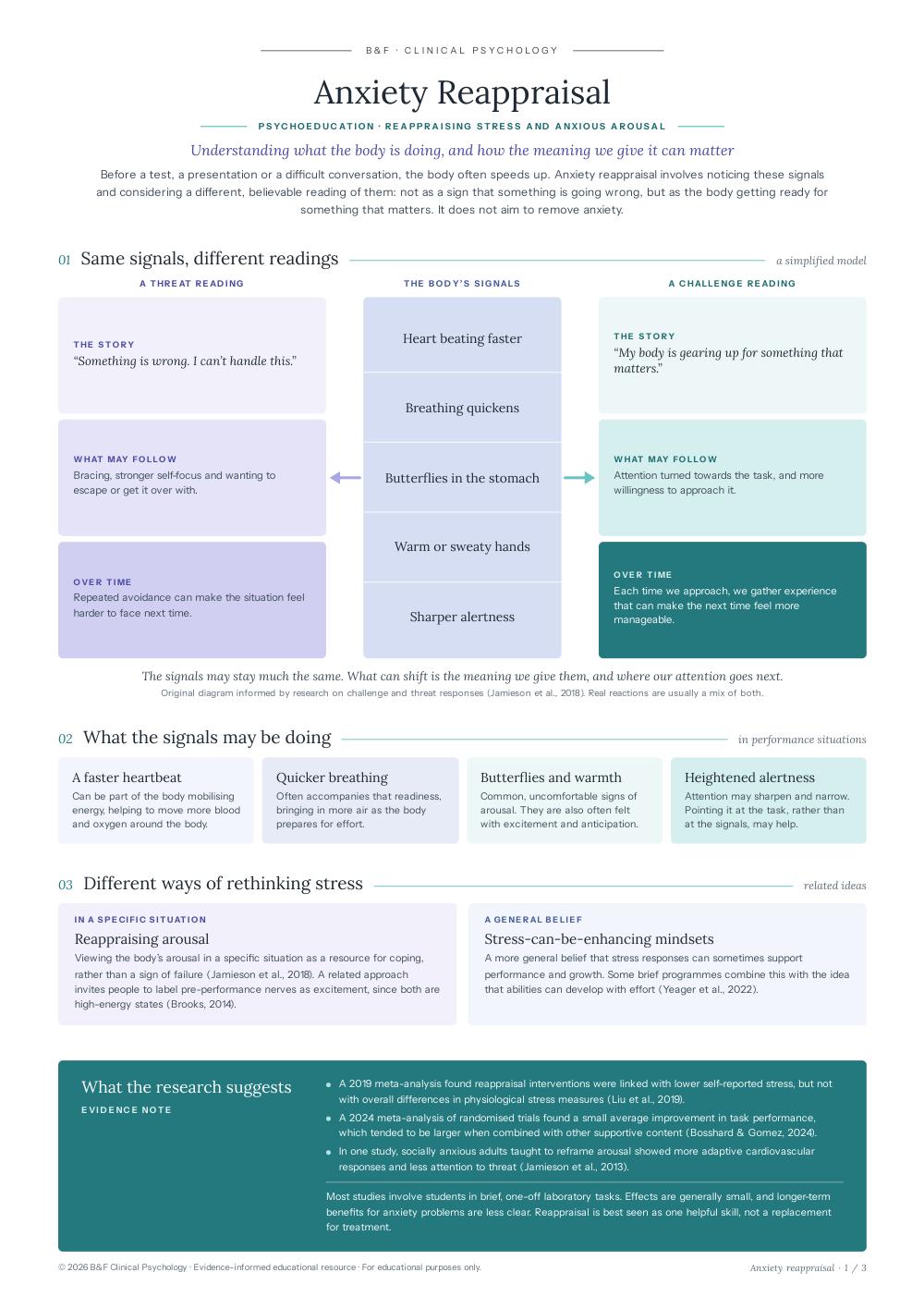
Anxiety reappraisal
Understanding what the body is doing before a big moment, and how the meaning we give it can matter.
-
 Preview
Learn
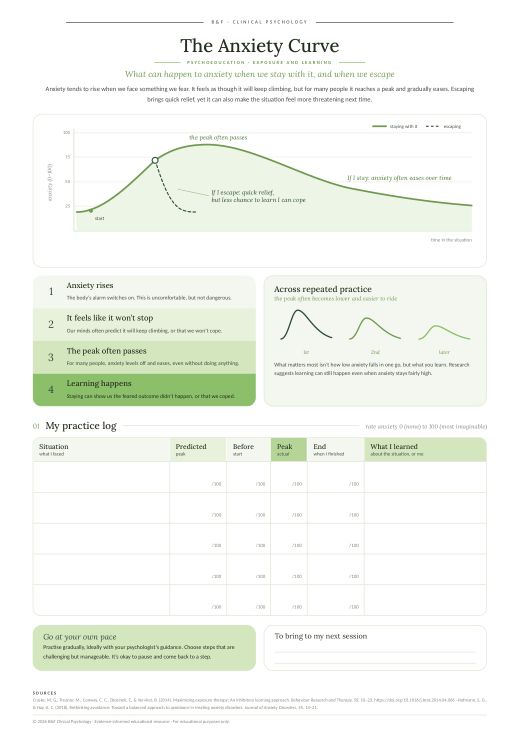
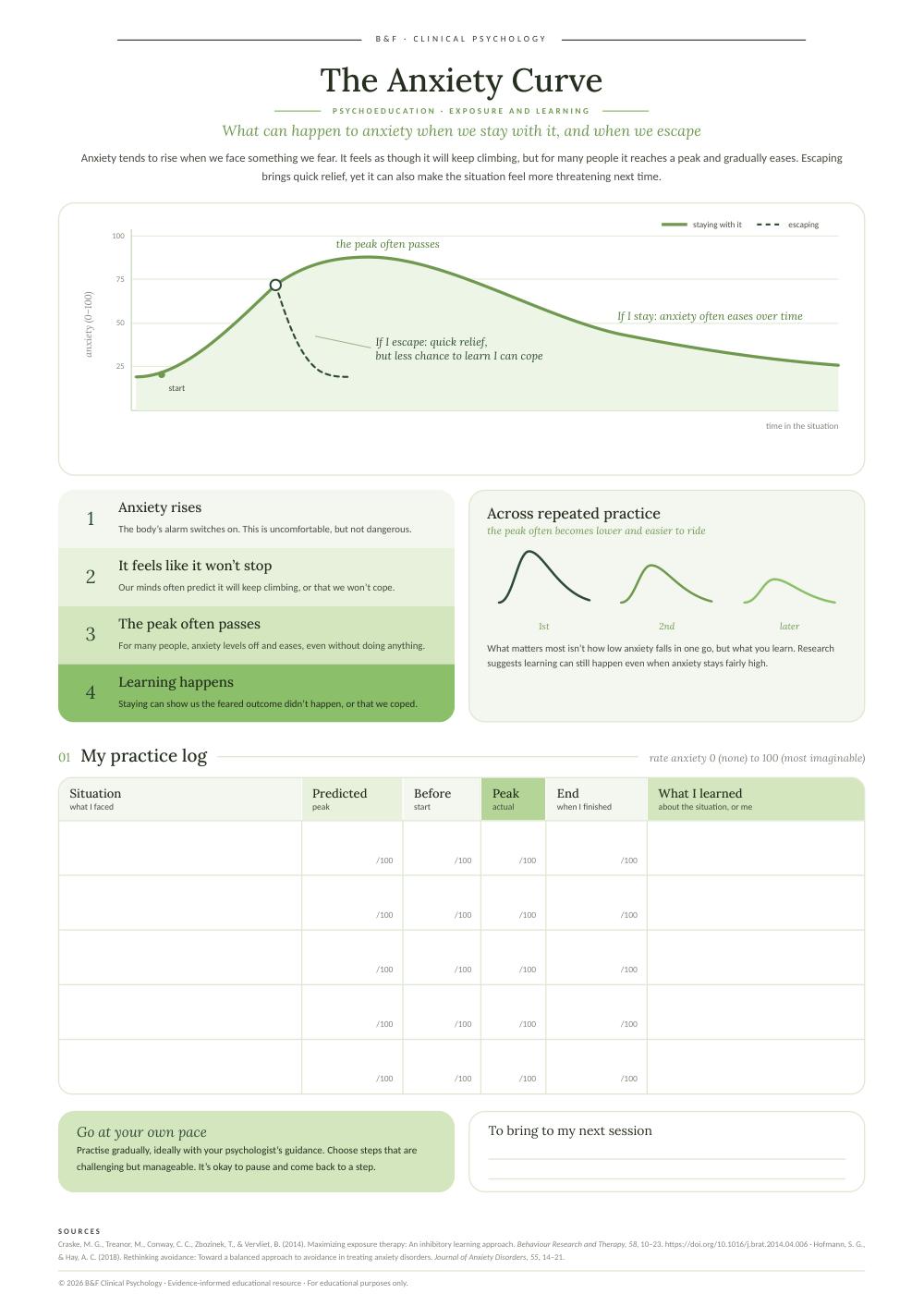
The anxiety curve
What can happen to anxiety when we stay with it, and when we escape.
-
 Preview
Learn
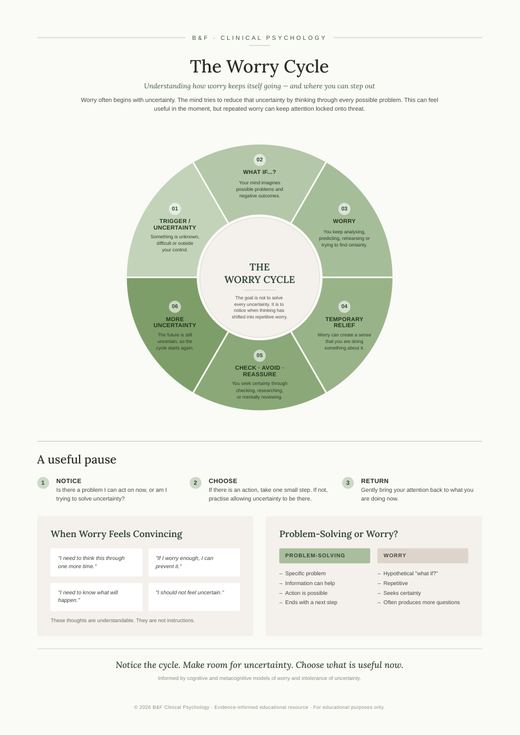
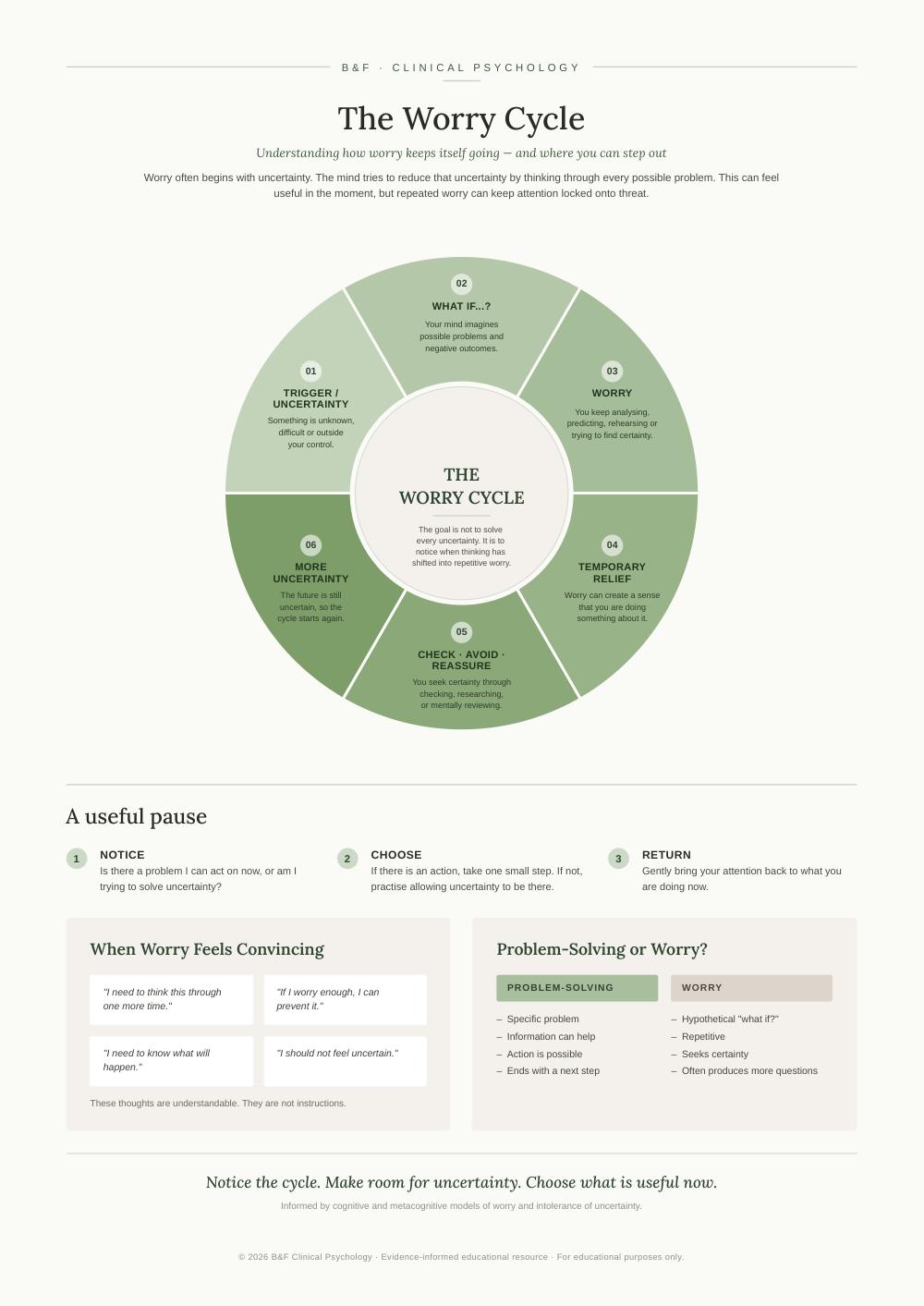
The worry cycle
Understand how worry keeps itself going — and where you can begin to interrupt the cycle.
-
 Preview
Learn
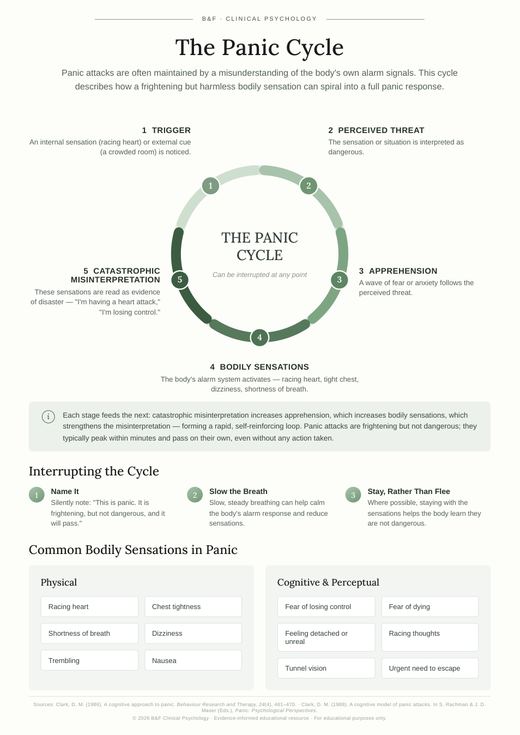
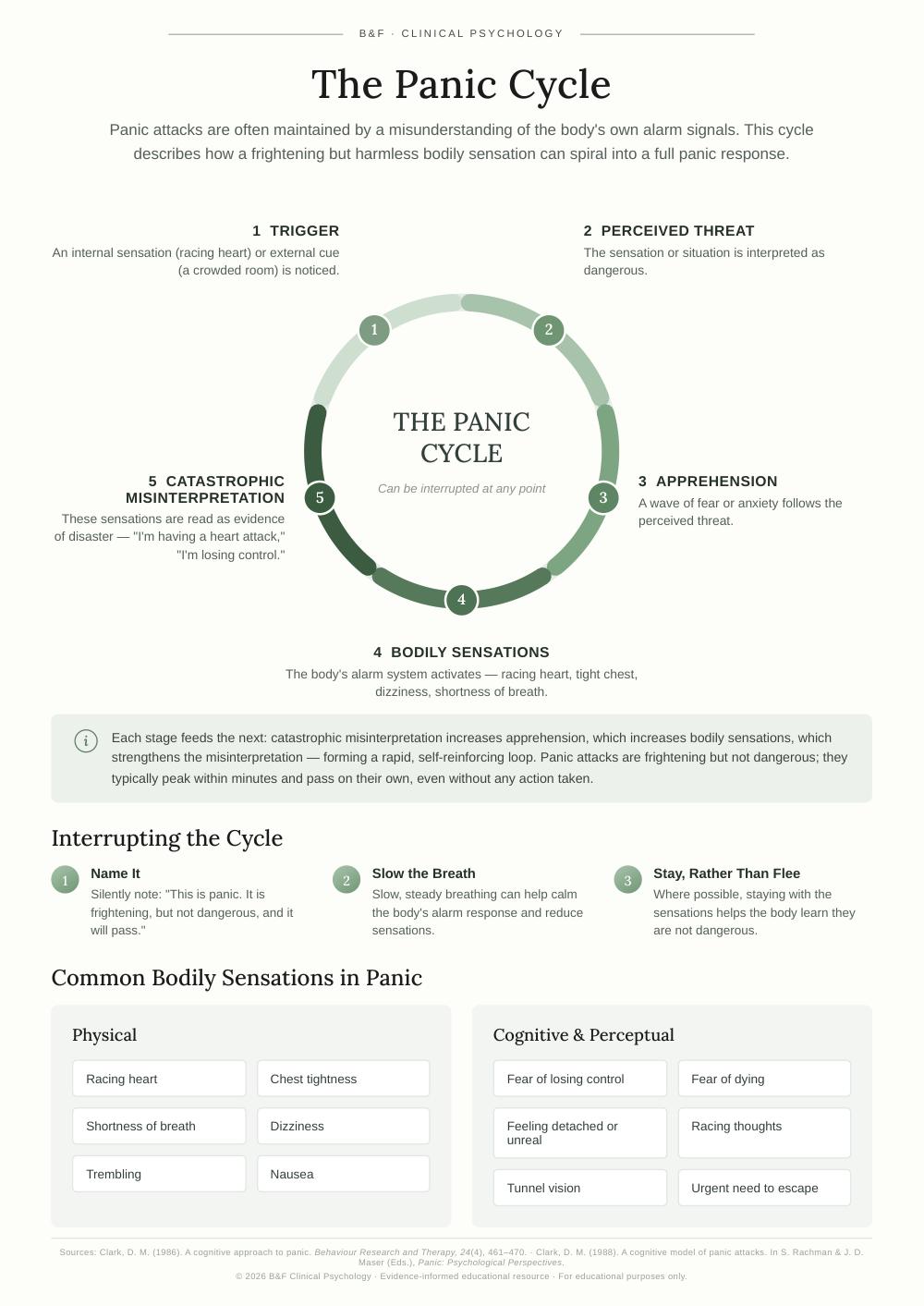
The panic cycle
How a harmless bodily sensation can spiral into a full panic response, step by step.
-
 Preview
Practice
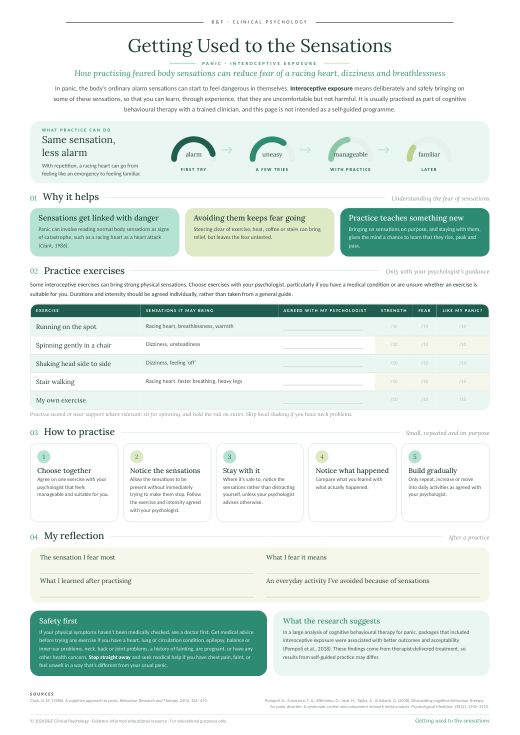
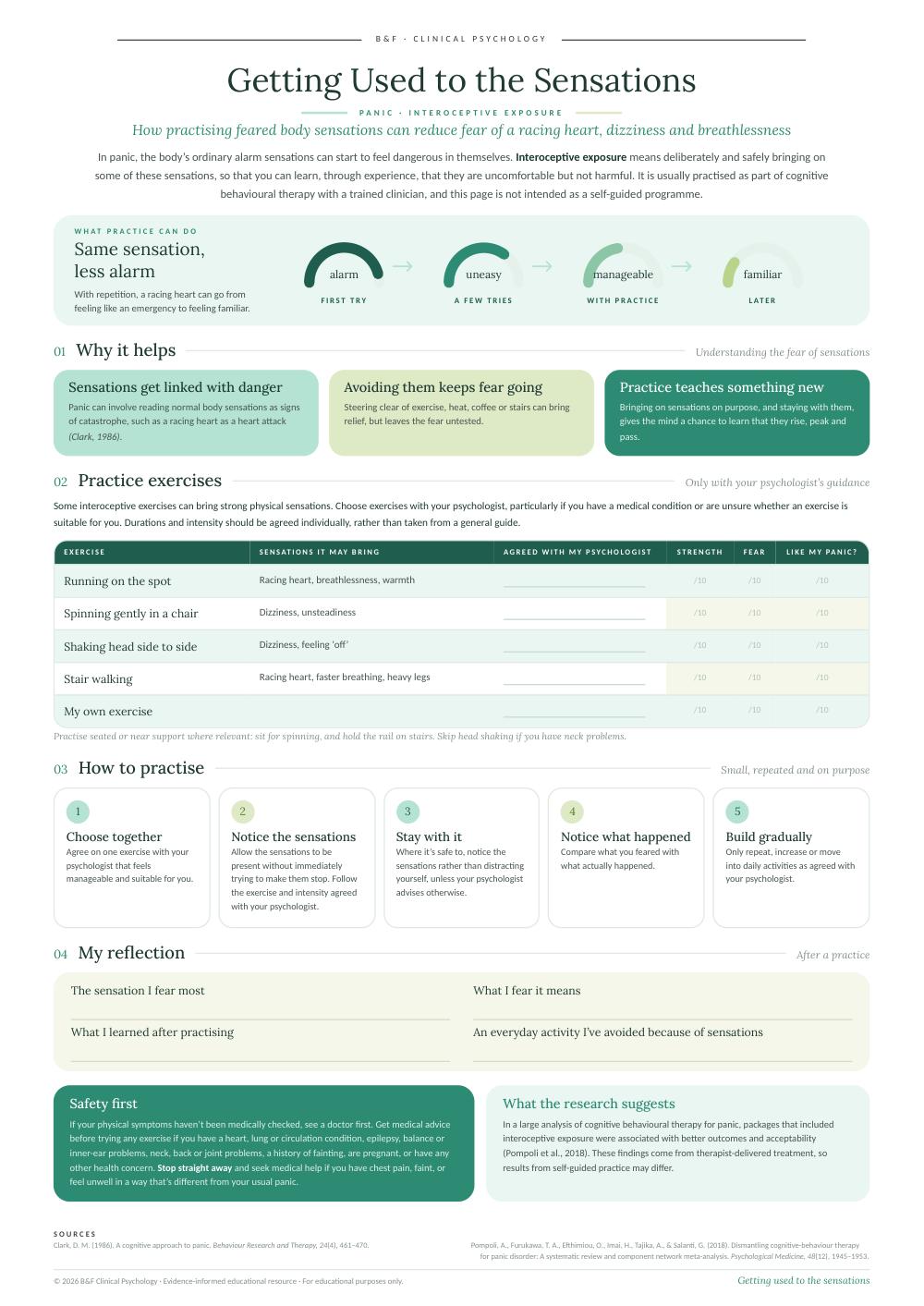
Getting used to the sensations
Practising feared body sensations to take the fear out of a racing heart or dizziness.
-
 Preview
Learn
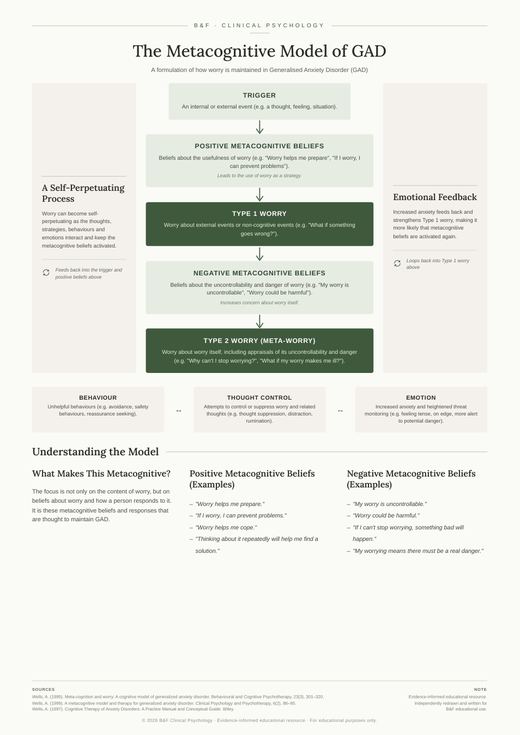
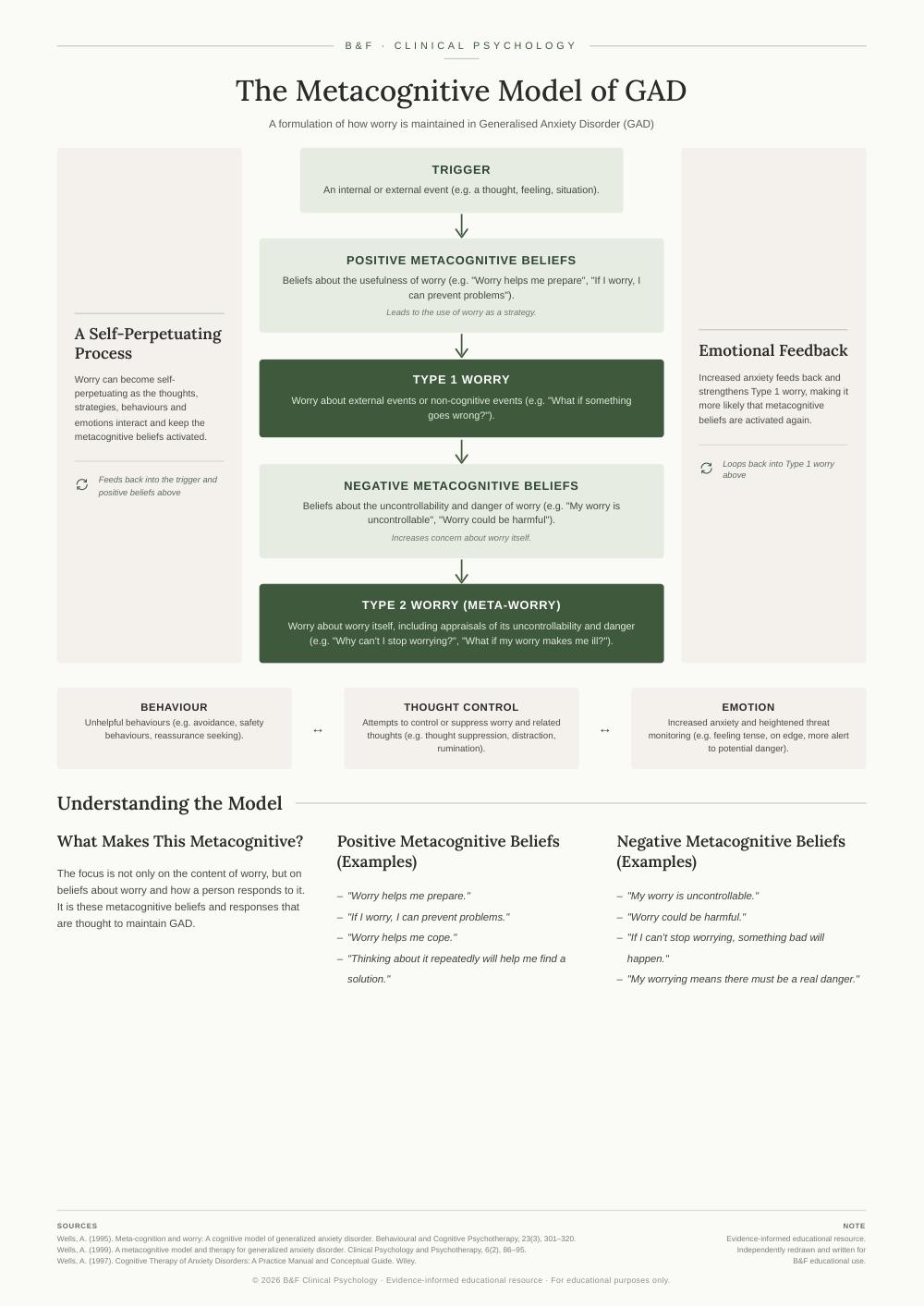
The metacognitive model of GAD
A formulation of how worry is maintained in generalised anxiety disorder.
-
 Preview
Practice
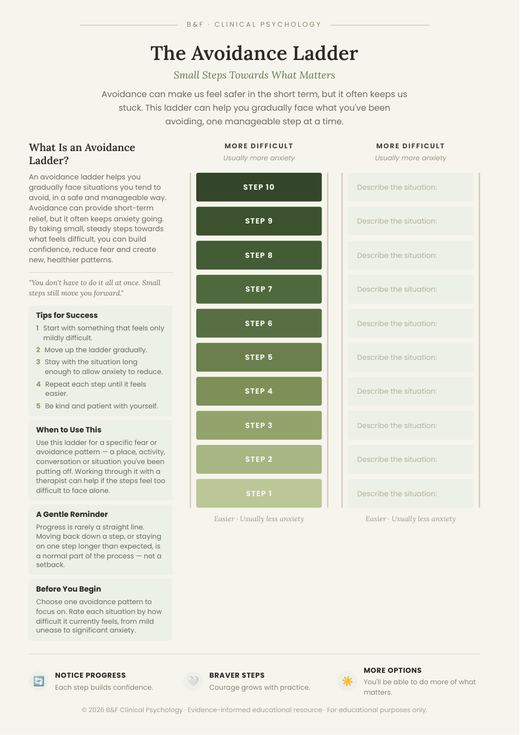
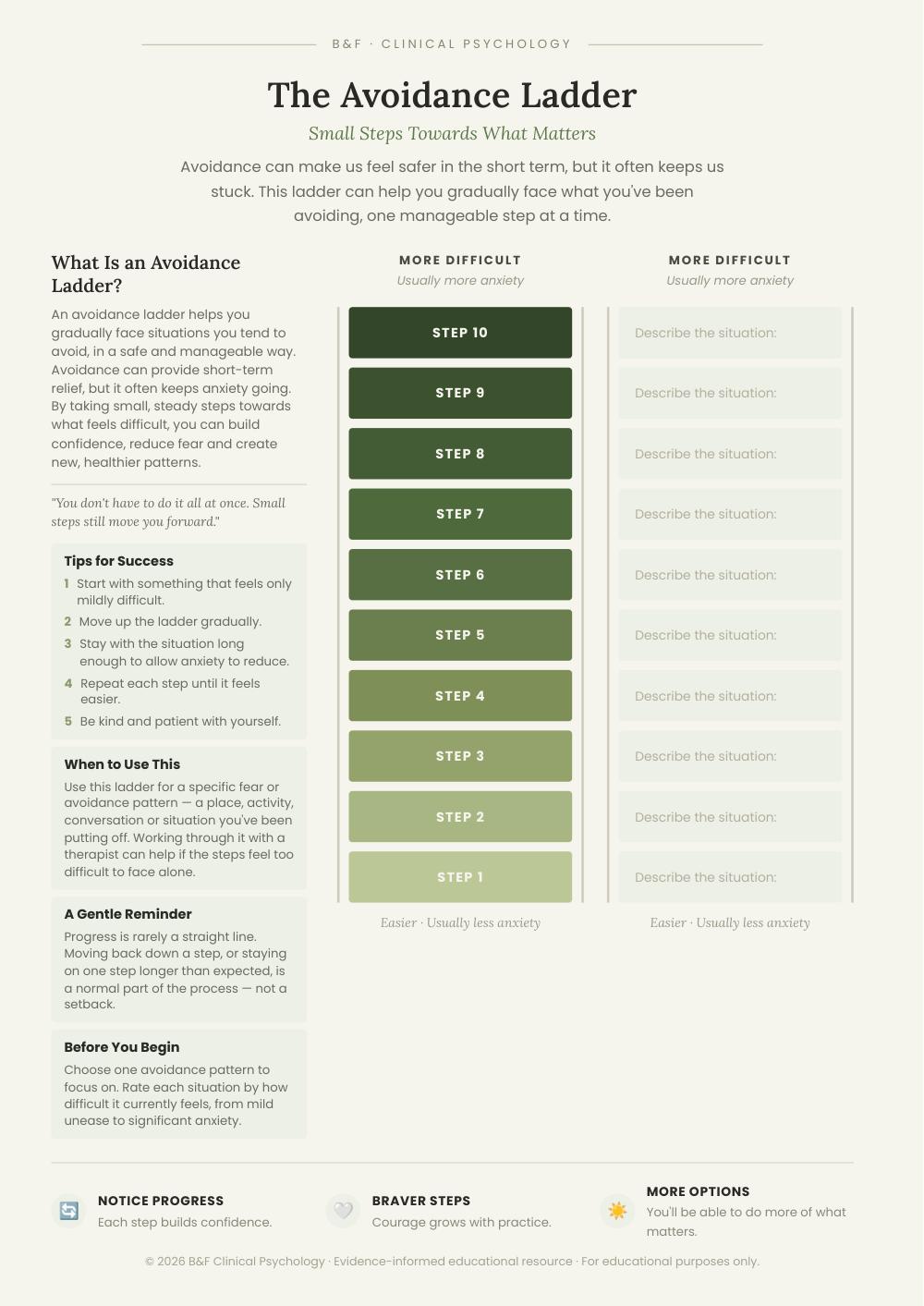
The avoidance ladder
Face what you have been avoiding one manageable step at a time.
-
 Preview
Practice
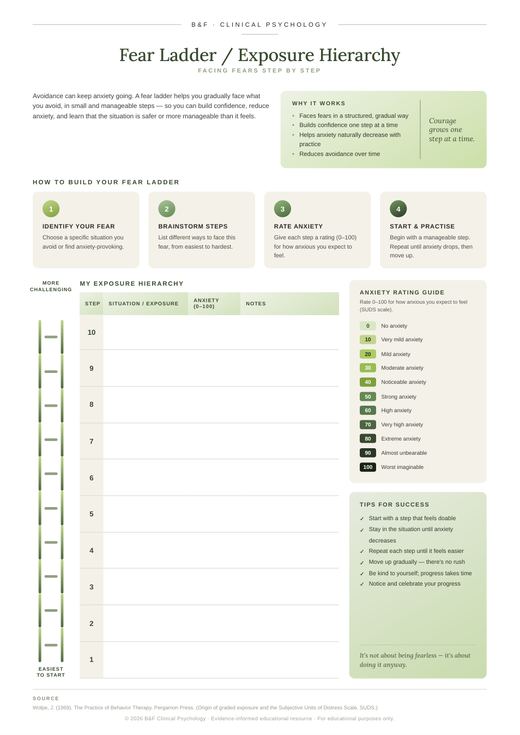
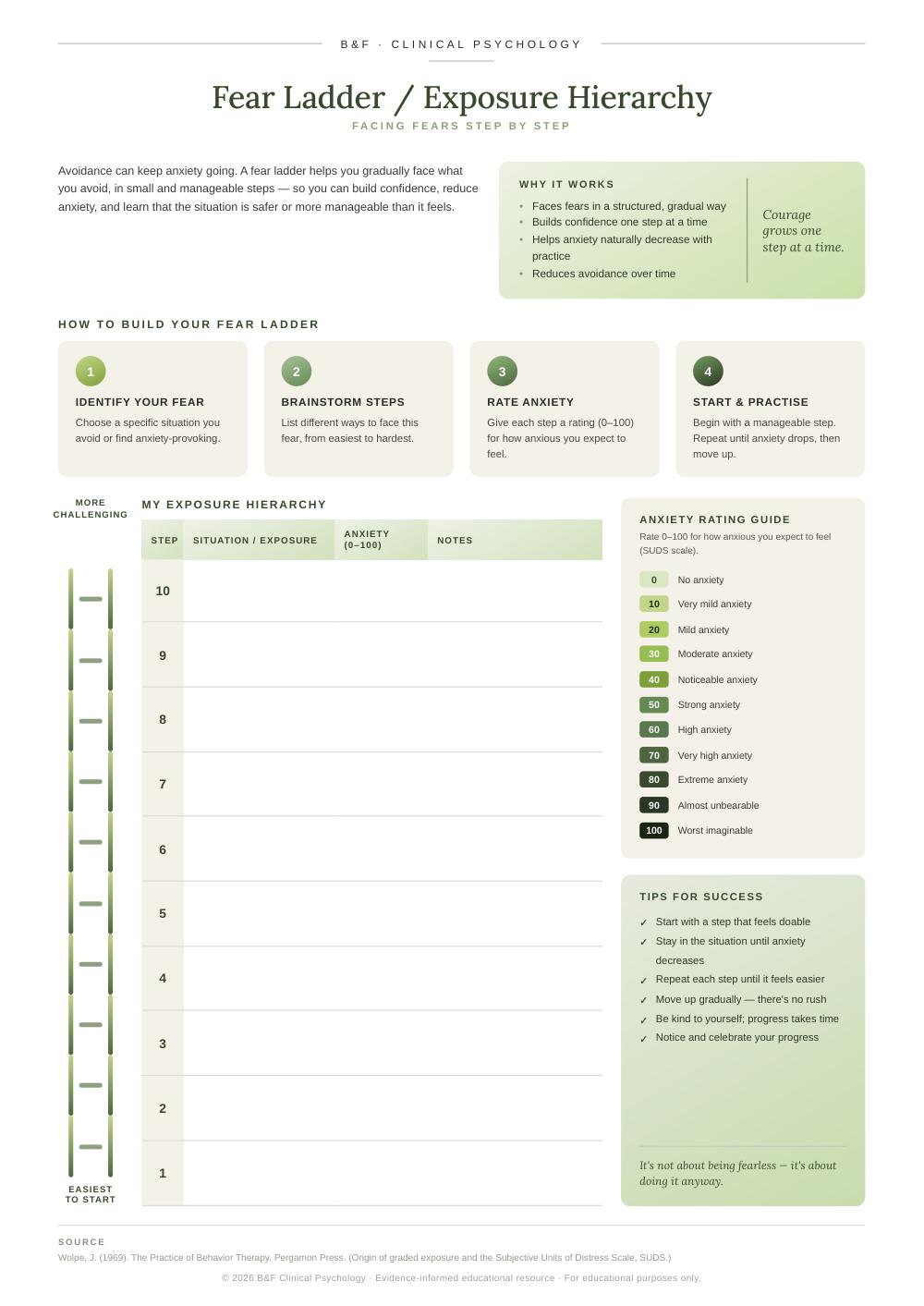
The fear ladder
Build an exposure hierarchy and climb it in small, planned steps.
-
 Preview
Reflect
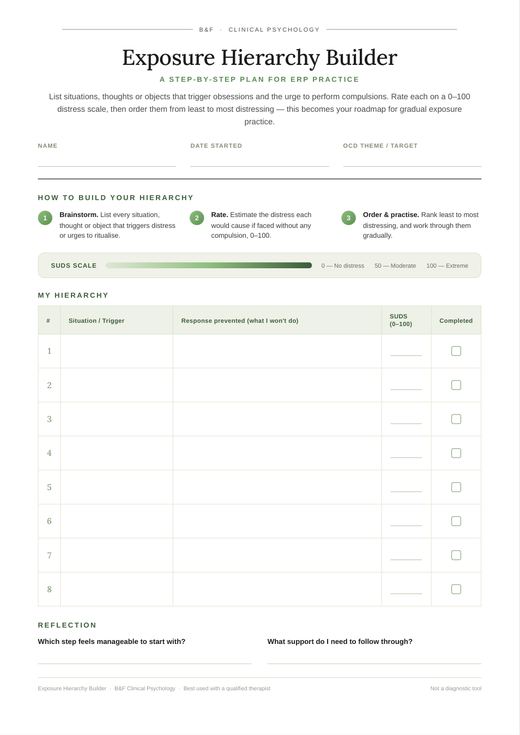
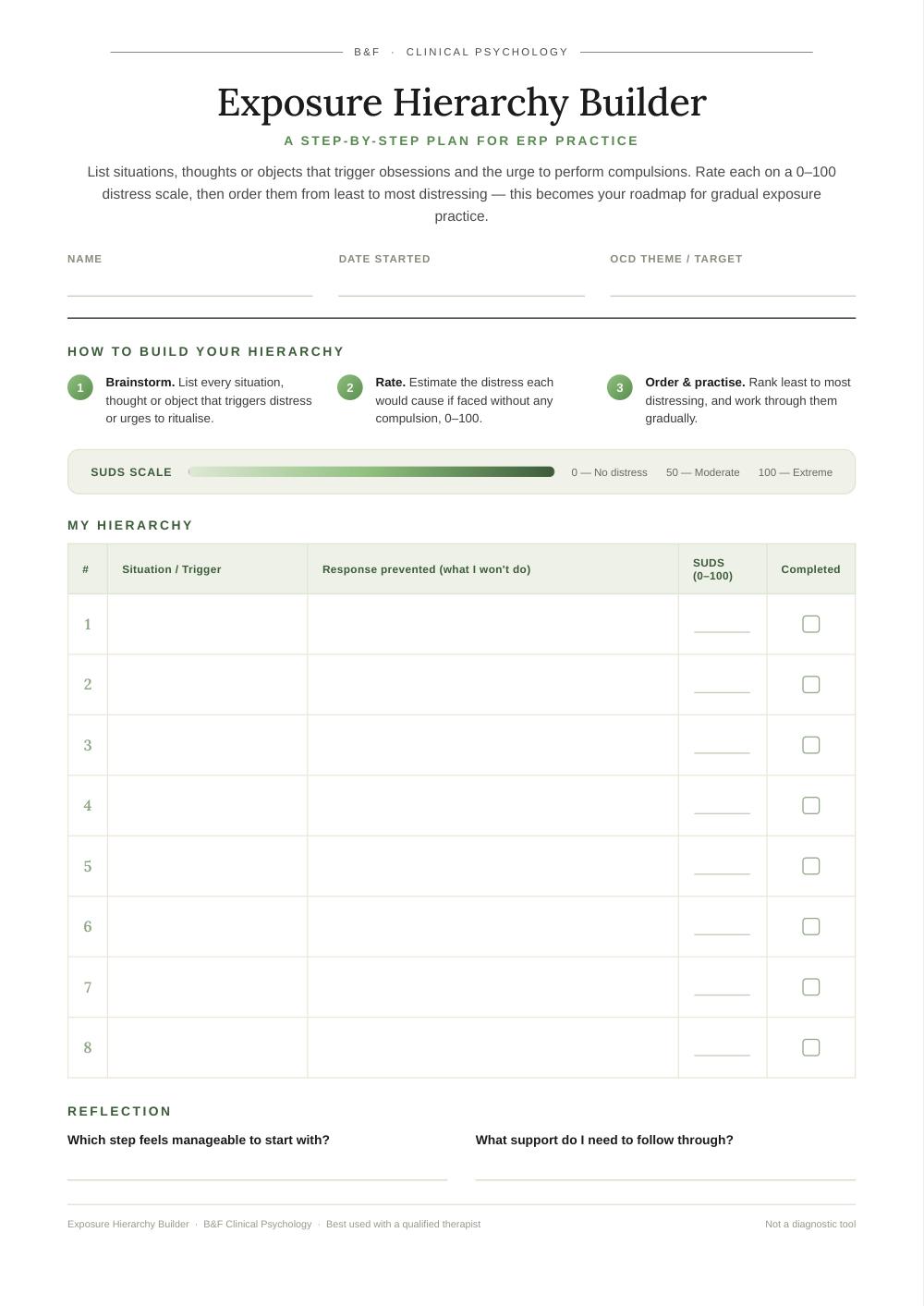
Exposure hierarchy builder
A step-by-step plan for ERP: list the triggers, rate the distress, order the work.
-
 Preview
Learn
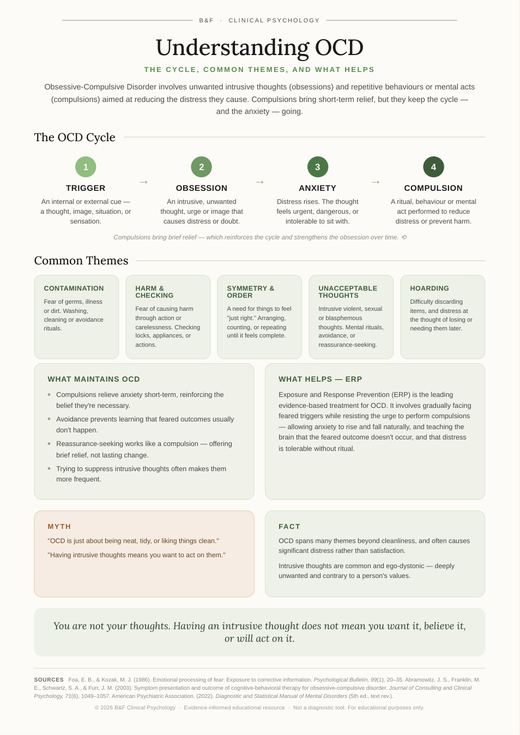
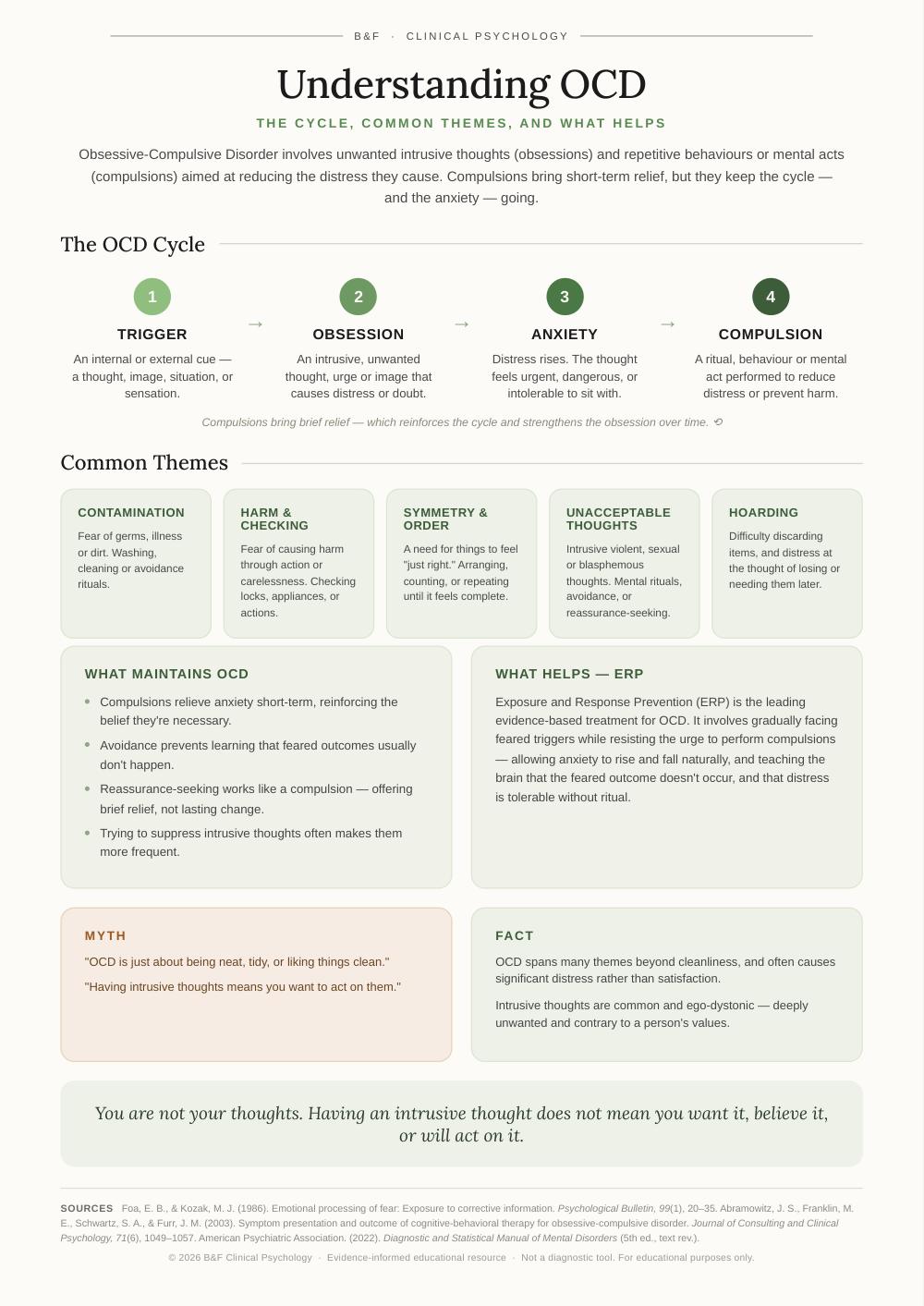
Understanding OCD
The cycle of obsessions and compulsions, the common themes, and what helps.
-
 Preview
Learn
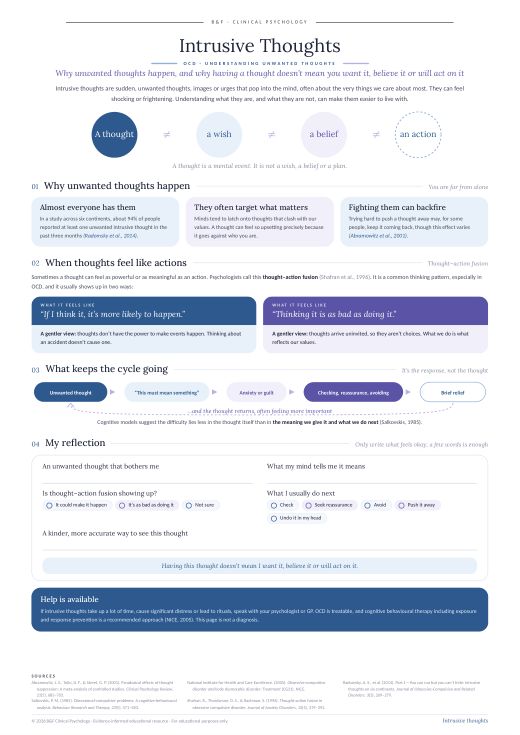
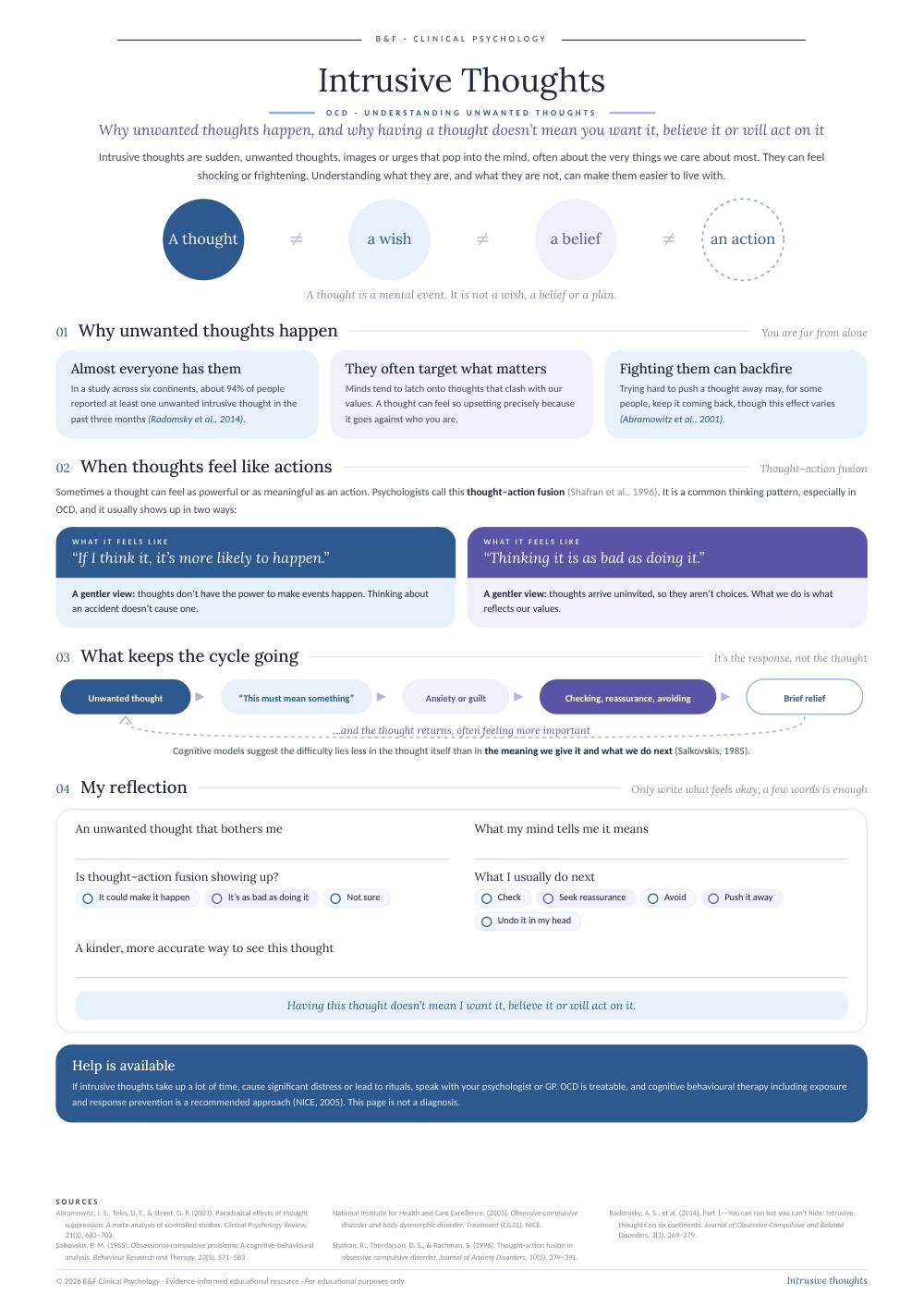
Intrusive thoughts
Why unwanted thoughts happen, and why having a thought doesn't mean you want it or will act on it.
-
 Preview
Learn
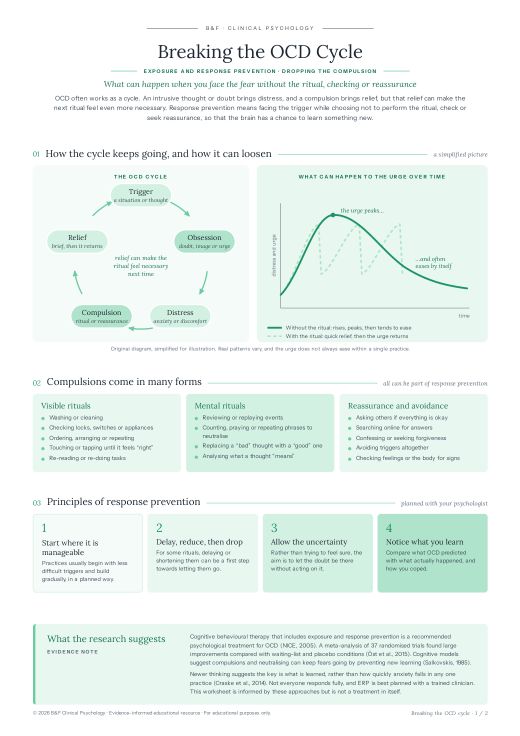
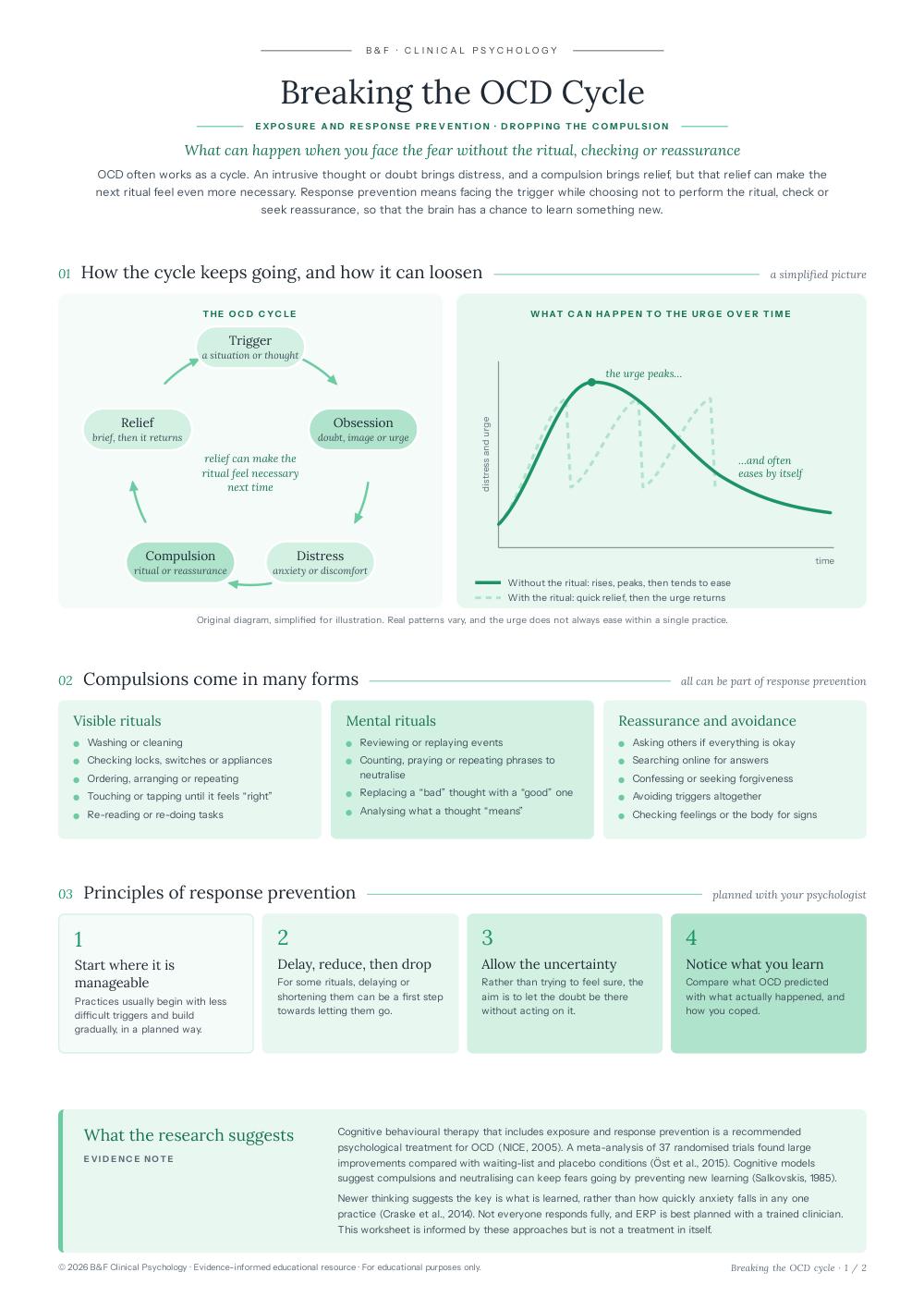
Breaking the OCD cycle
What can happen when you face the fear without the ritual, checking or reassurance.
-
 Preview
Reflect
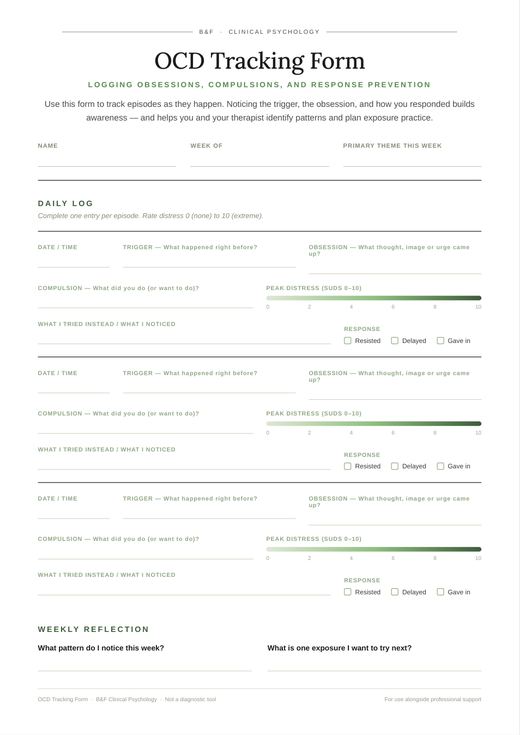
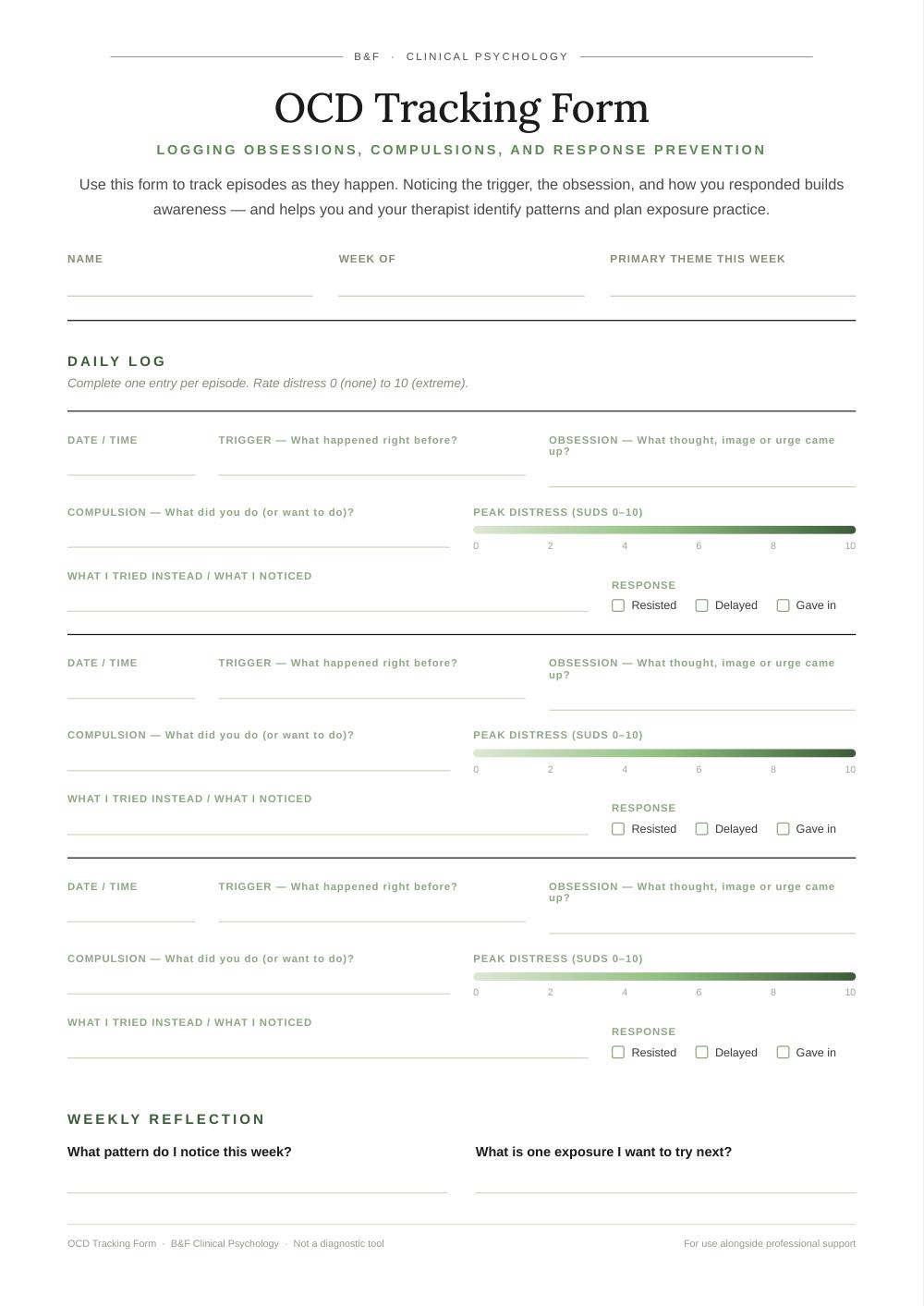
OCD tracking form
Log the trigger, the obsession, the urge and what you did instead, as it happens.
-
 Preview
Practice
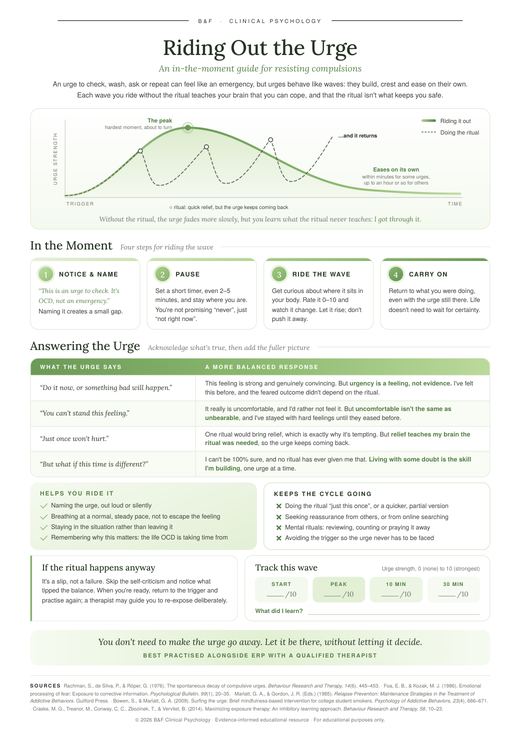
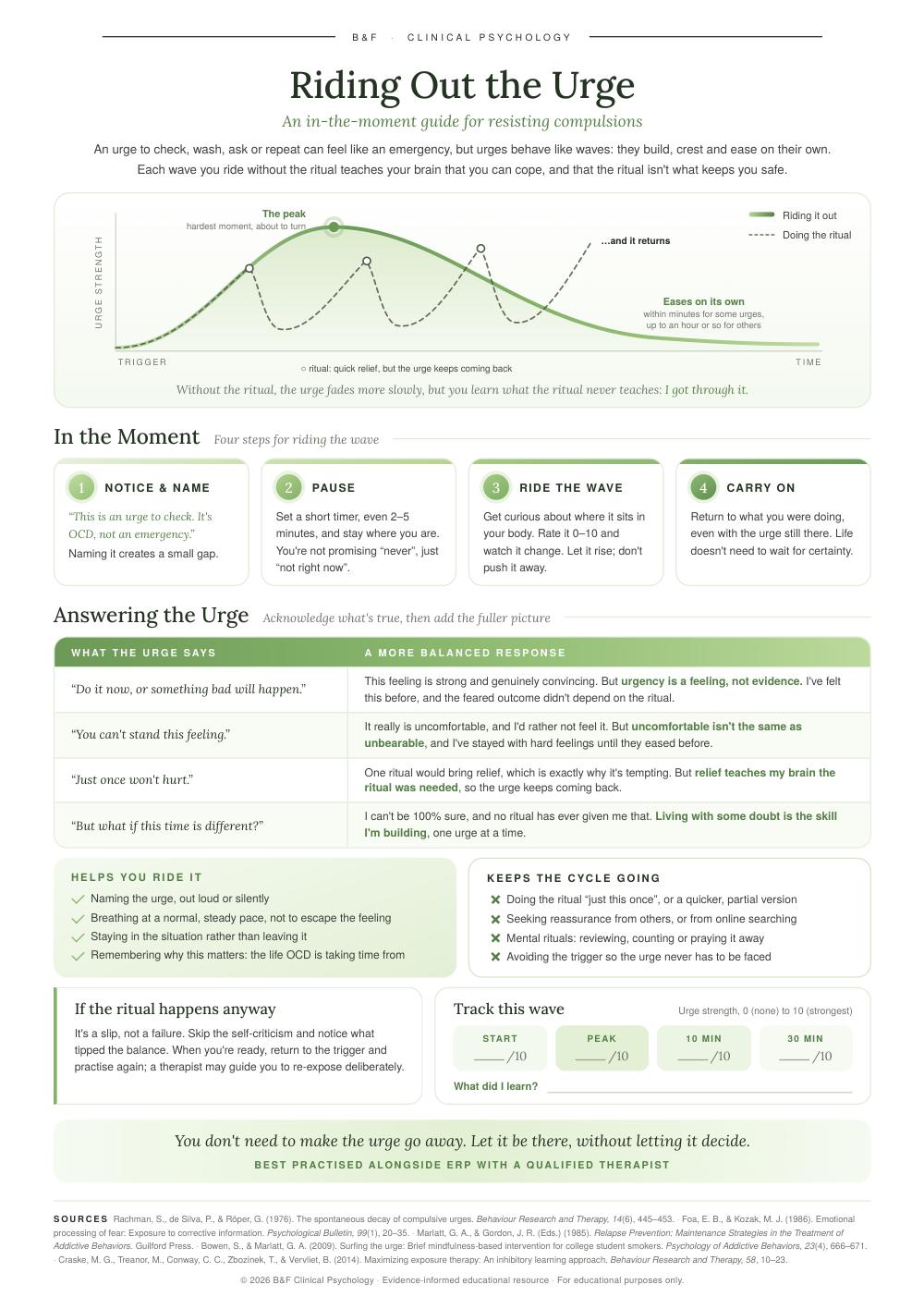
Riding out the urge
An in-the-moment guide for resisting a compulsion: urges rise, peak and fall on their own.
-
 Preview
Learn
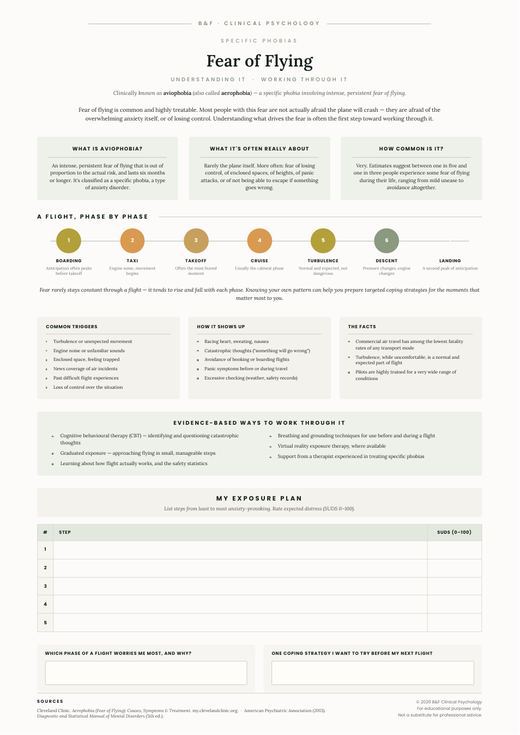
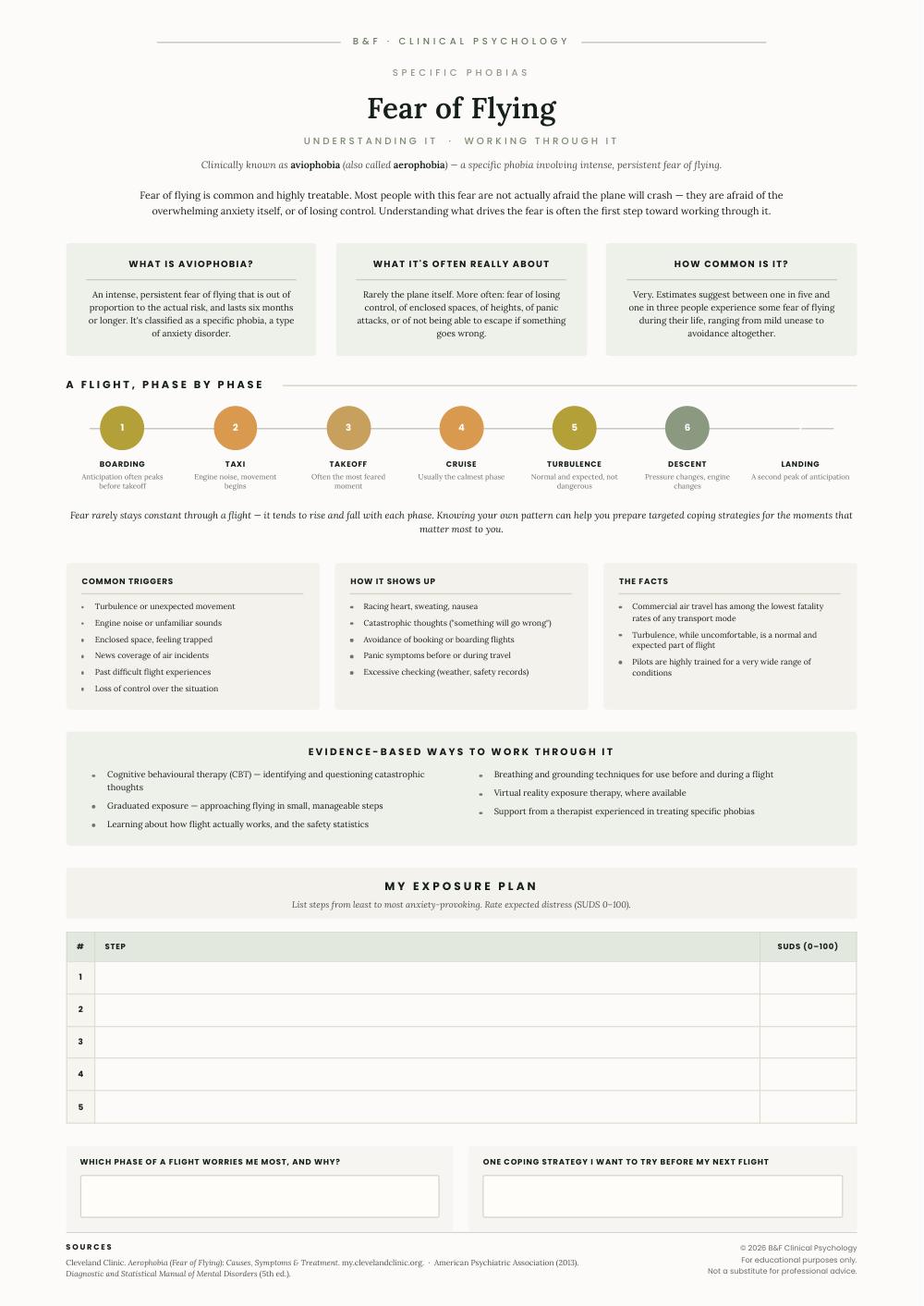
Fear of flying
Understanding aviophobia, and how it is worked through.
-
 Preview
Learn
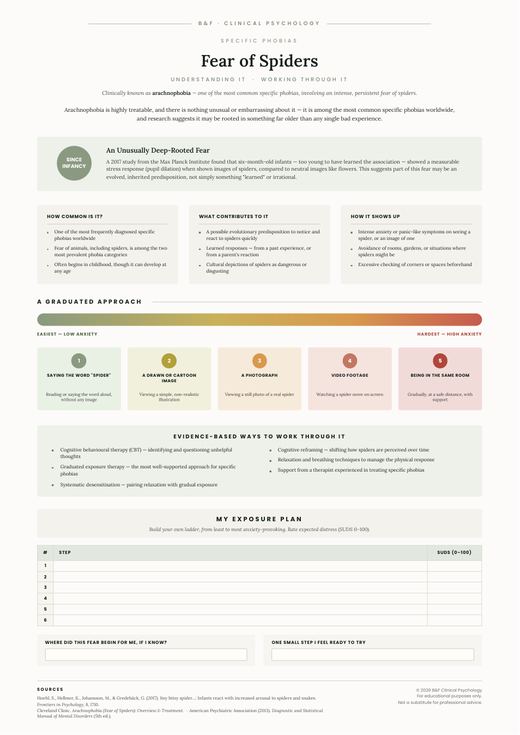
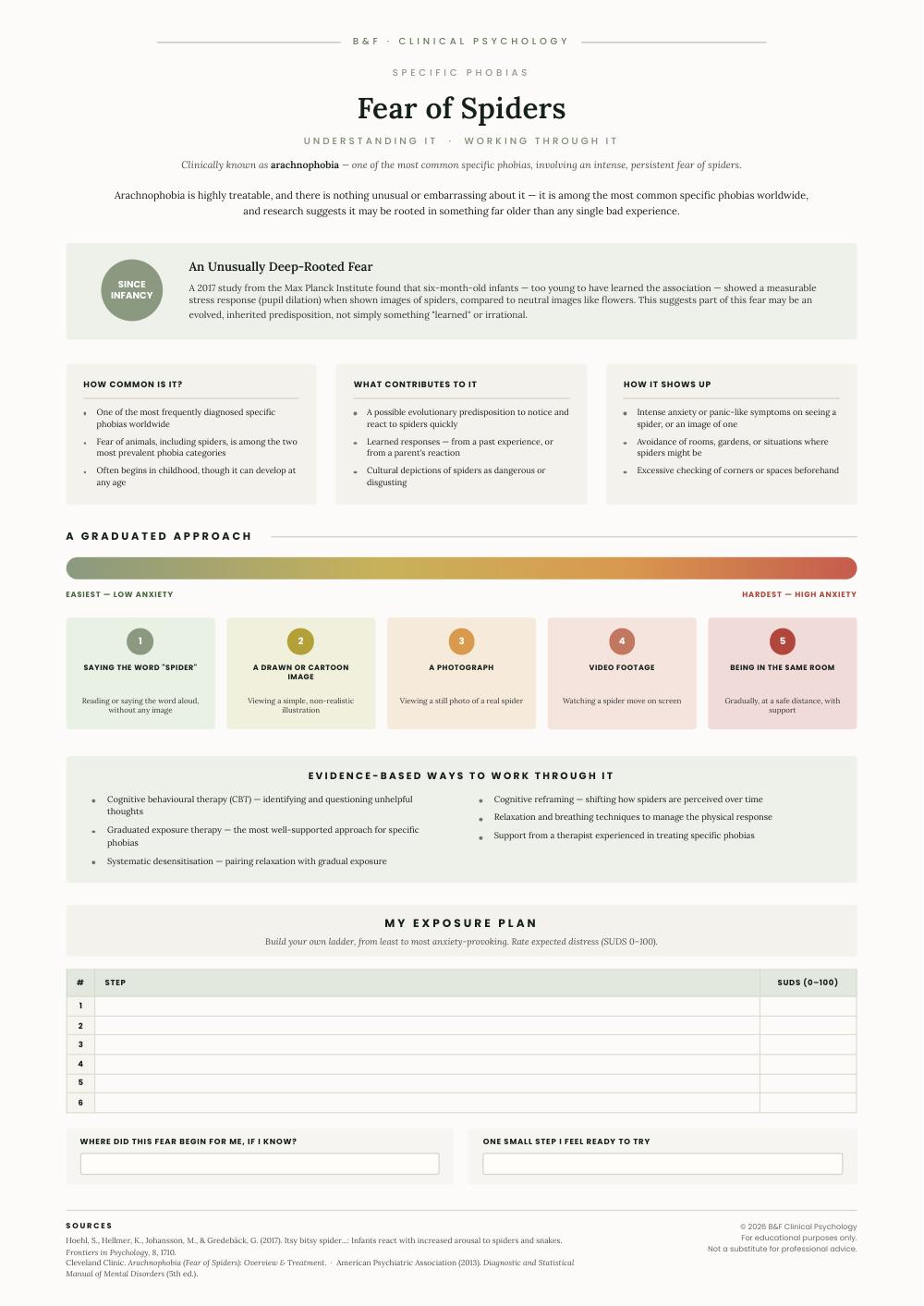
Fear of spiders
Understanding arachnophobia, one of the most common specific phobias, and how it is treated.
-
 Preview
Learn
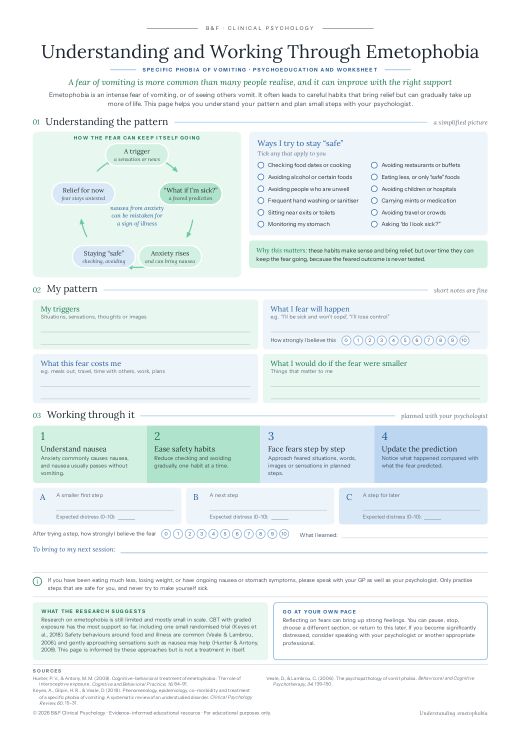
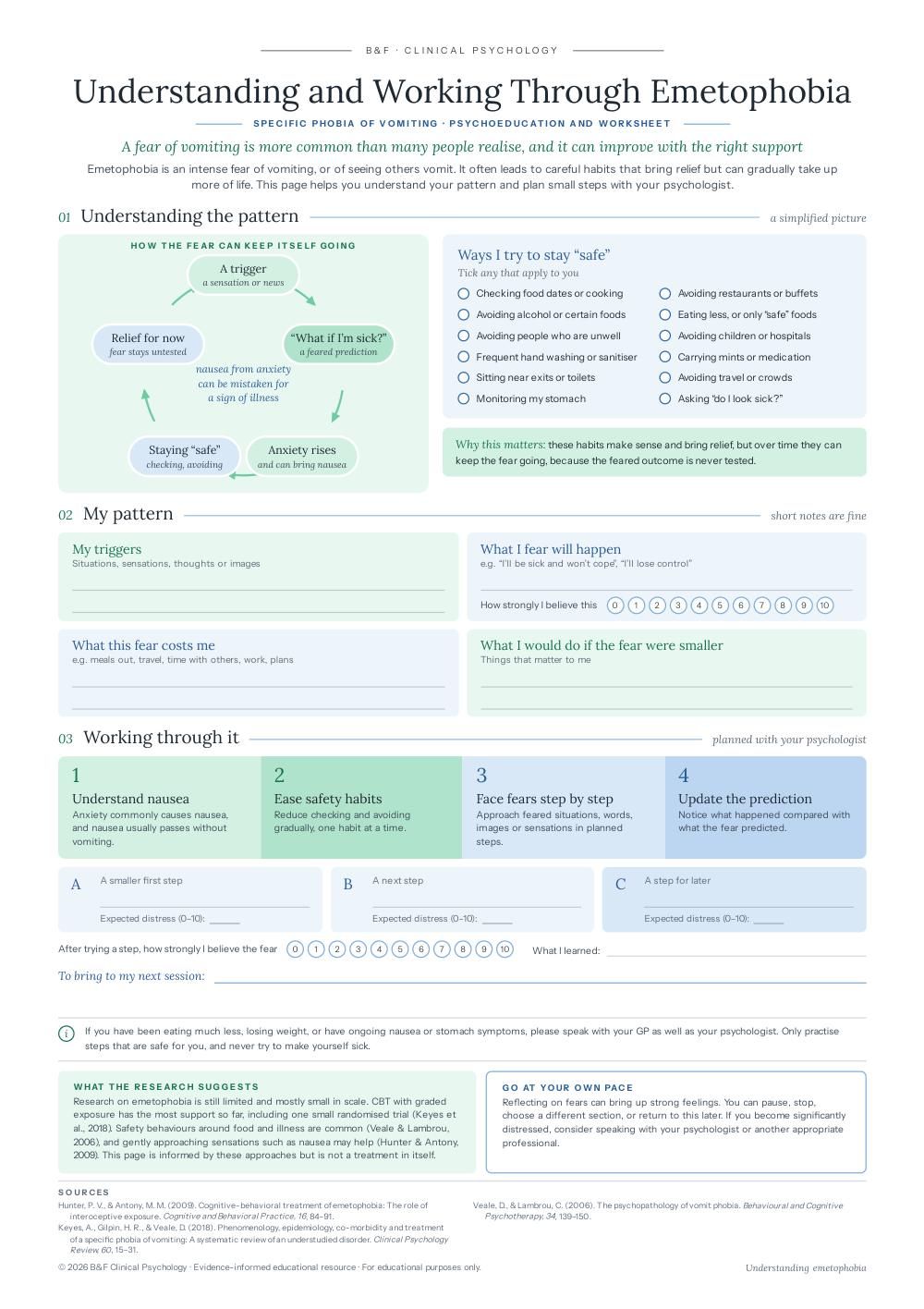
Understanding emetophobia
A fear of vomiting is more common than many realise, and it can improve with the right support.
-
 Preview
Learn
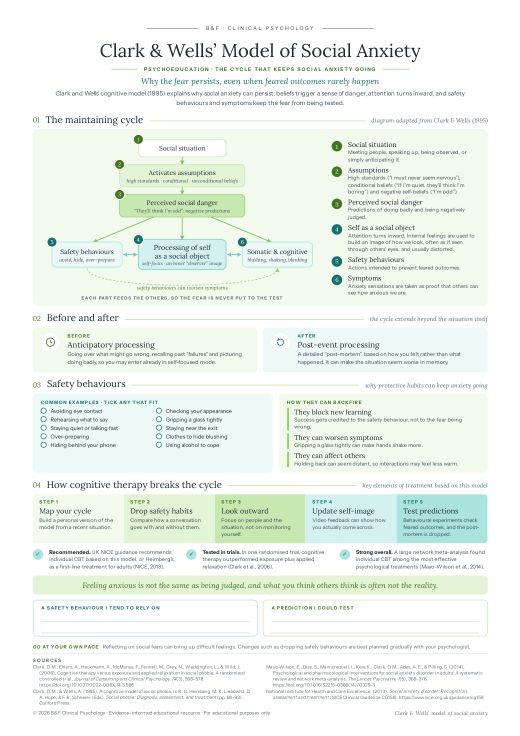
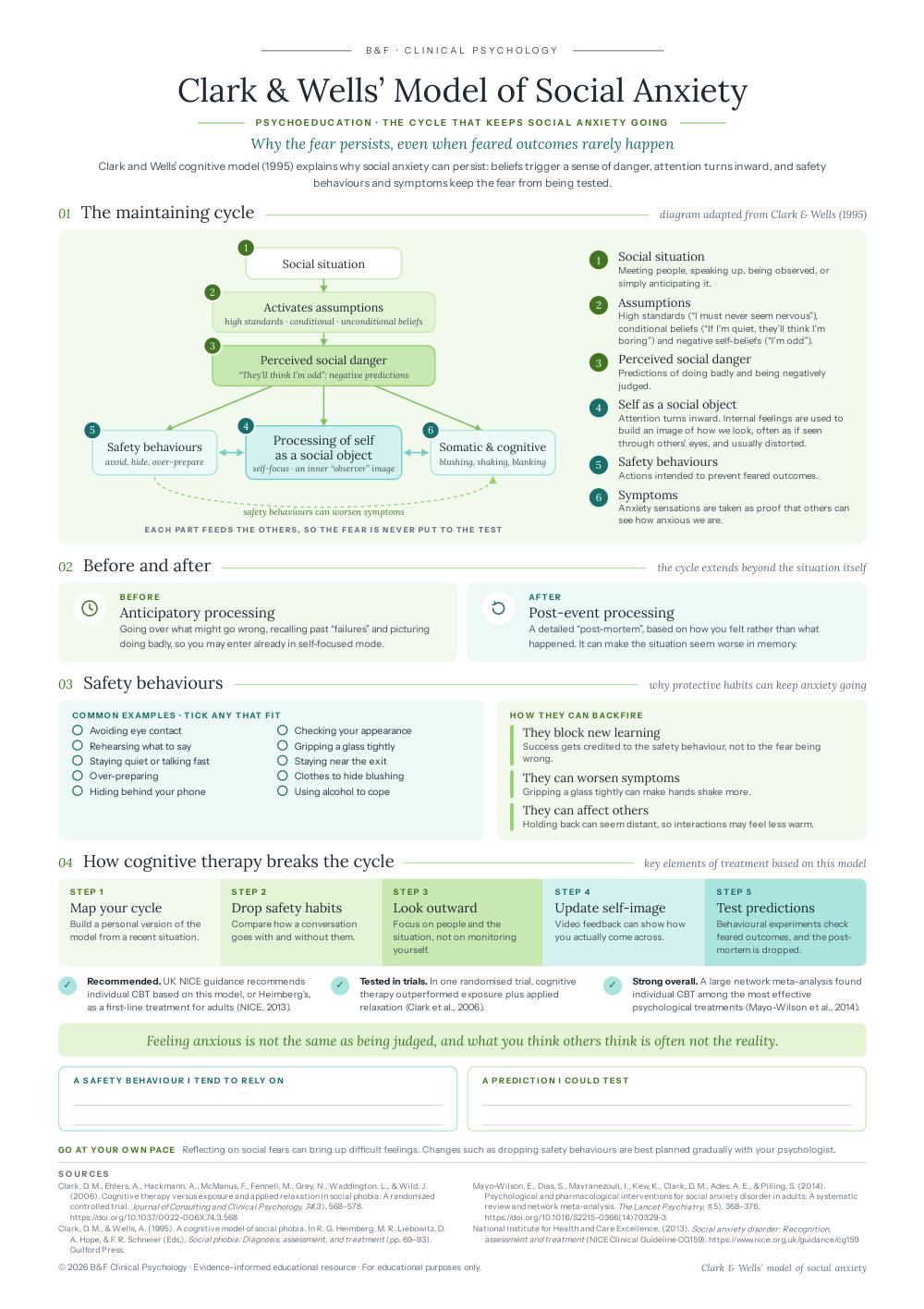
Clark and Wells' model of social anxiety
The cycle that keeps social anxiety going: inward attention and safety behaviours that stop fears being tested.
-
 Preview
Learn
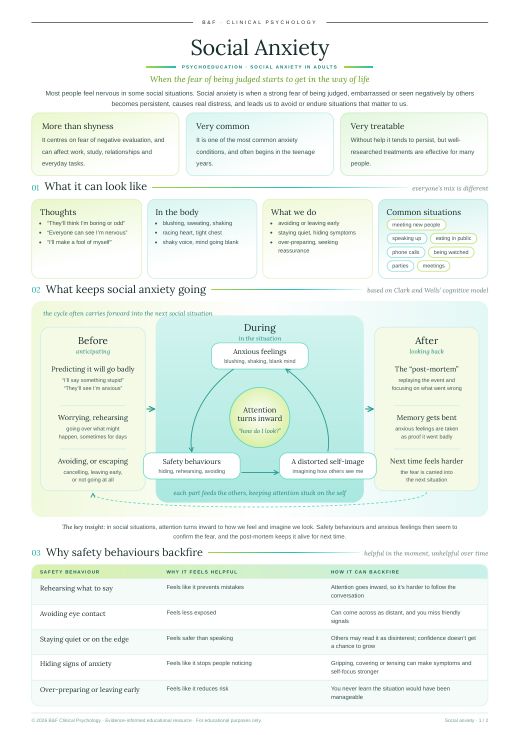
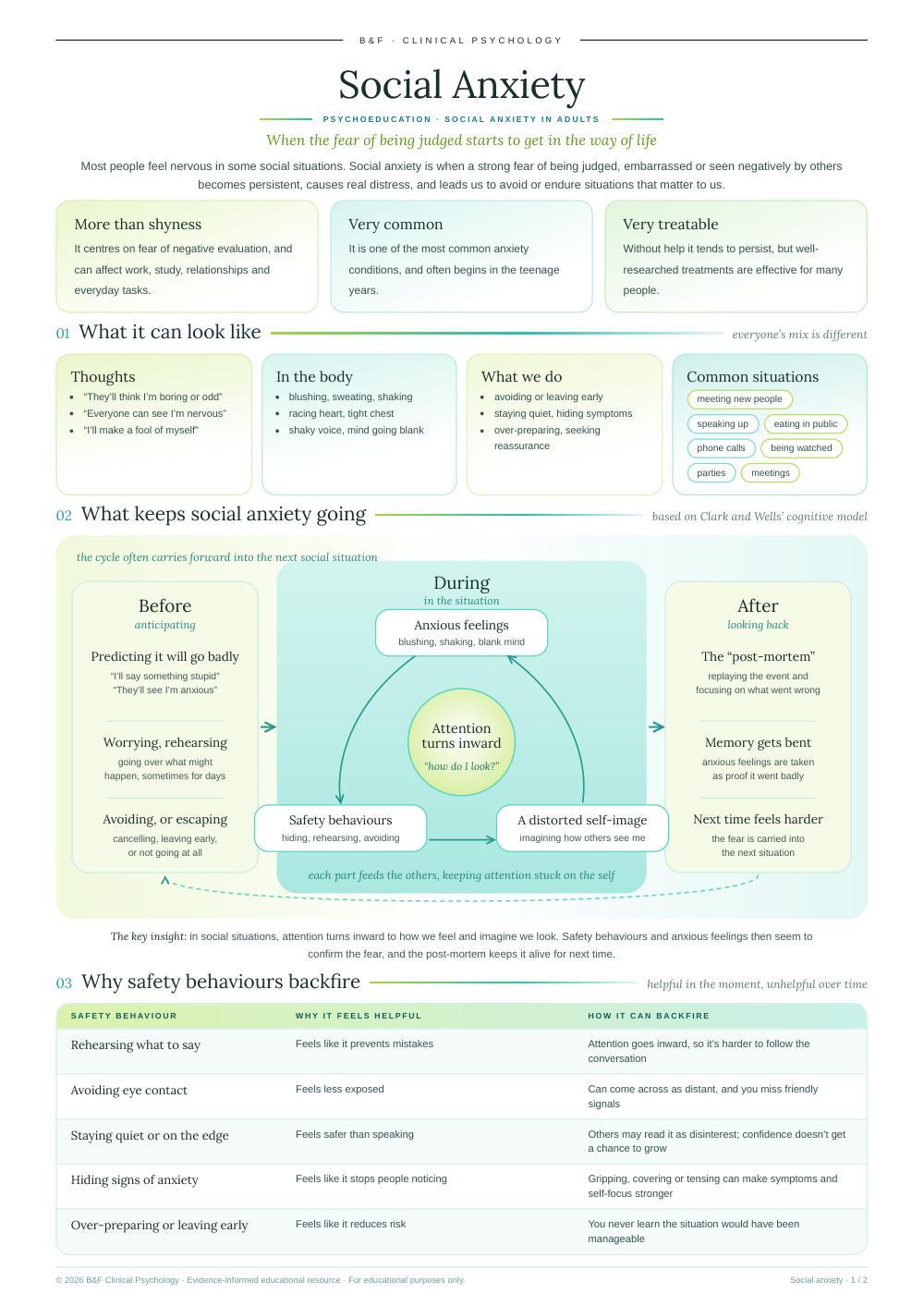
Social anxiety
When the fear of being judged gets in the way of life, with prompts to write about your own experience.
-
 Preview
Practice
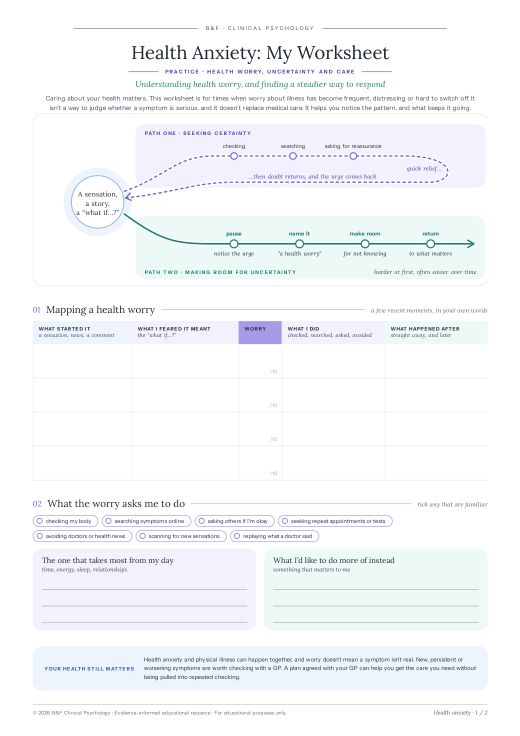
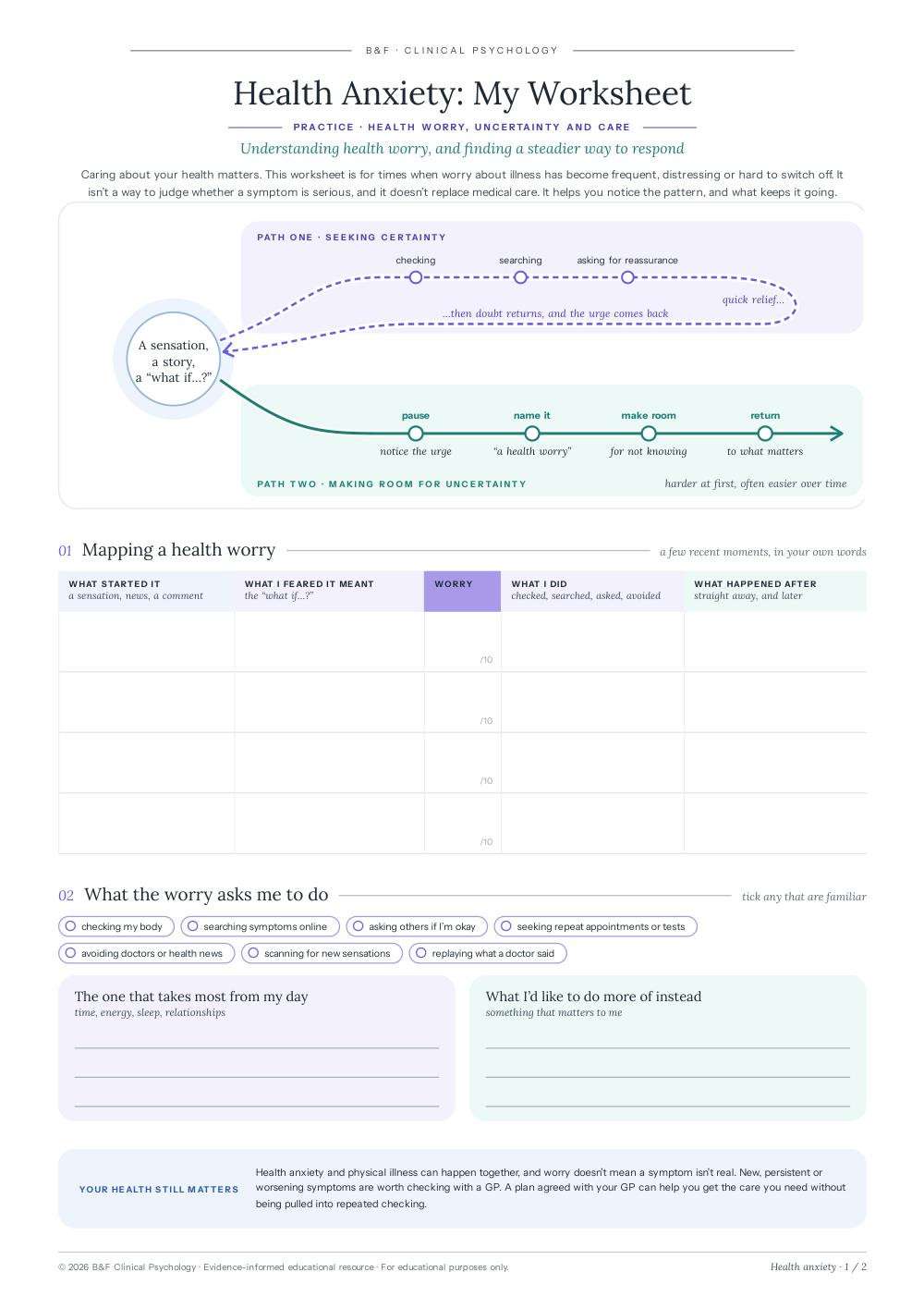
Health anxiety: my worksheet
Understanding health worry and finding a steadier way to respond. It does not replace medical care.
-
 Preview
Learn
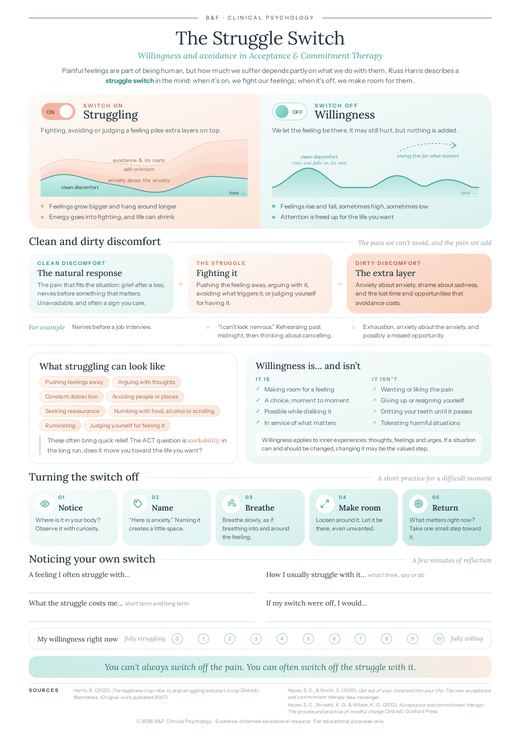
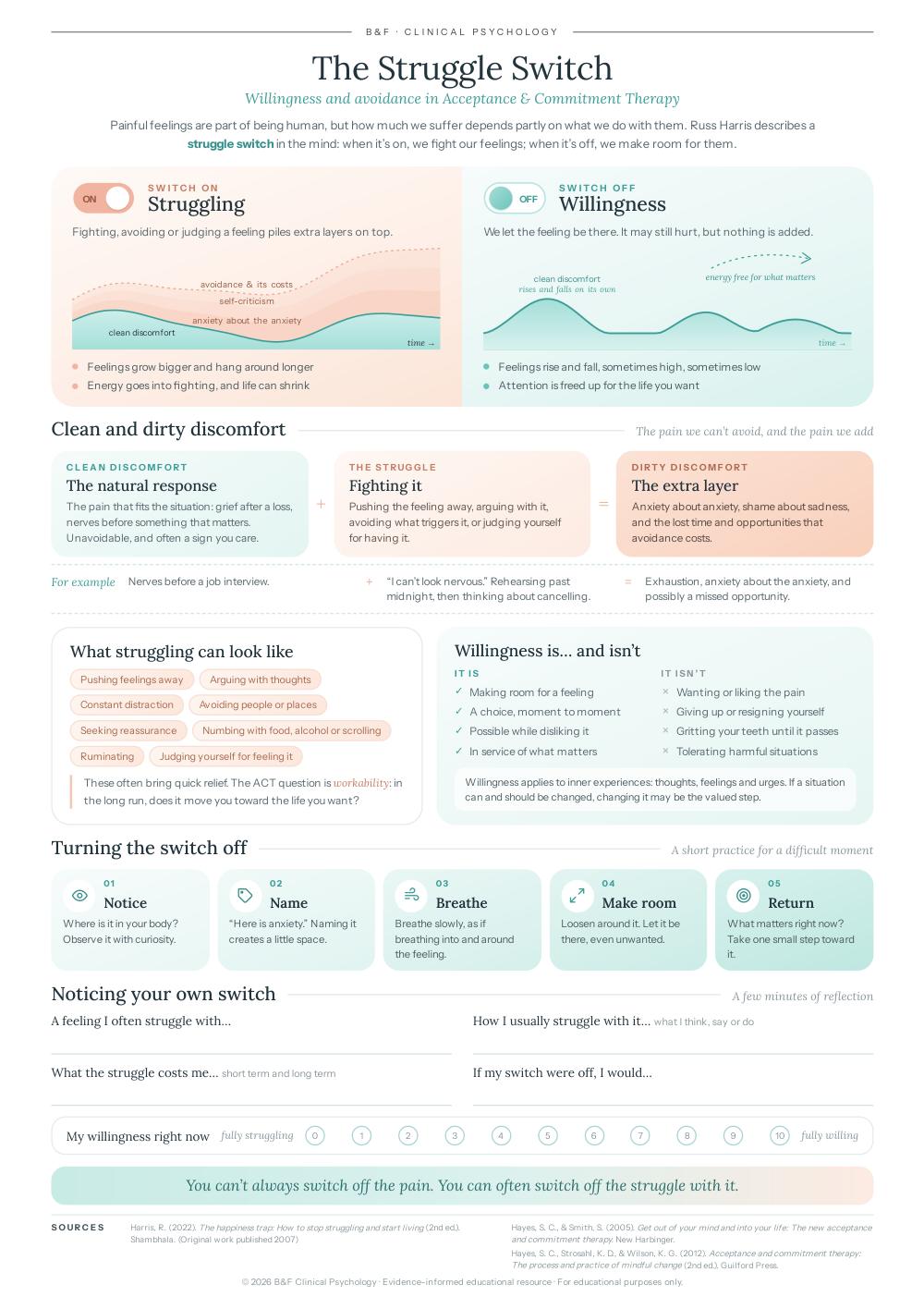
The struggle switch
An ACT metaphor from Russ Harris: fighting painful feelings, or making room for them.
-
 Preview
Learn
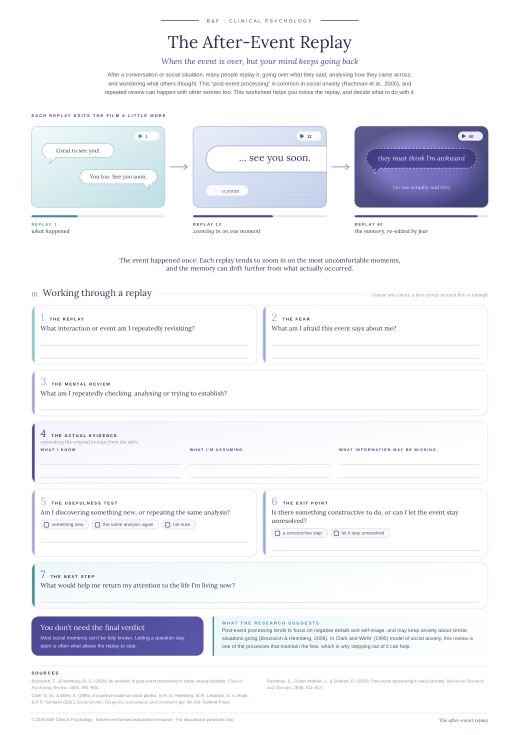
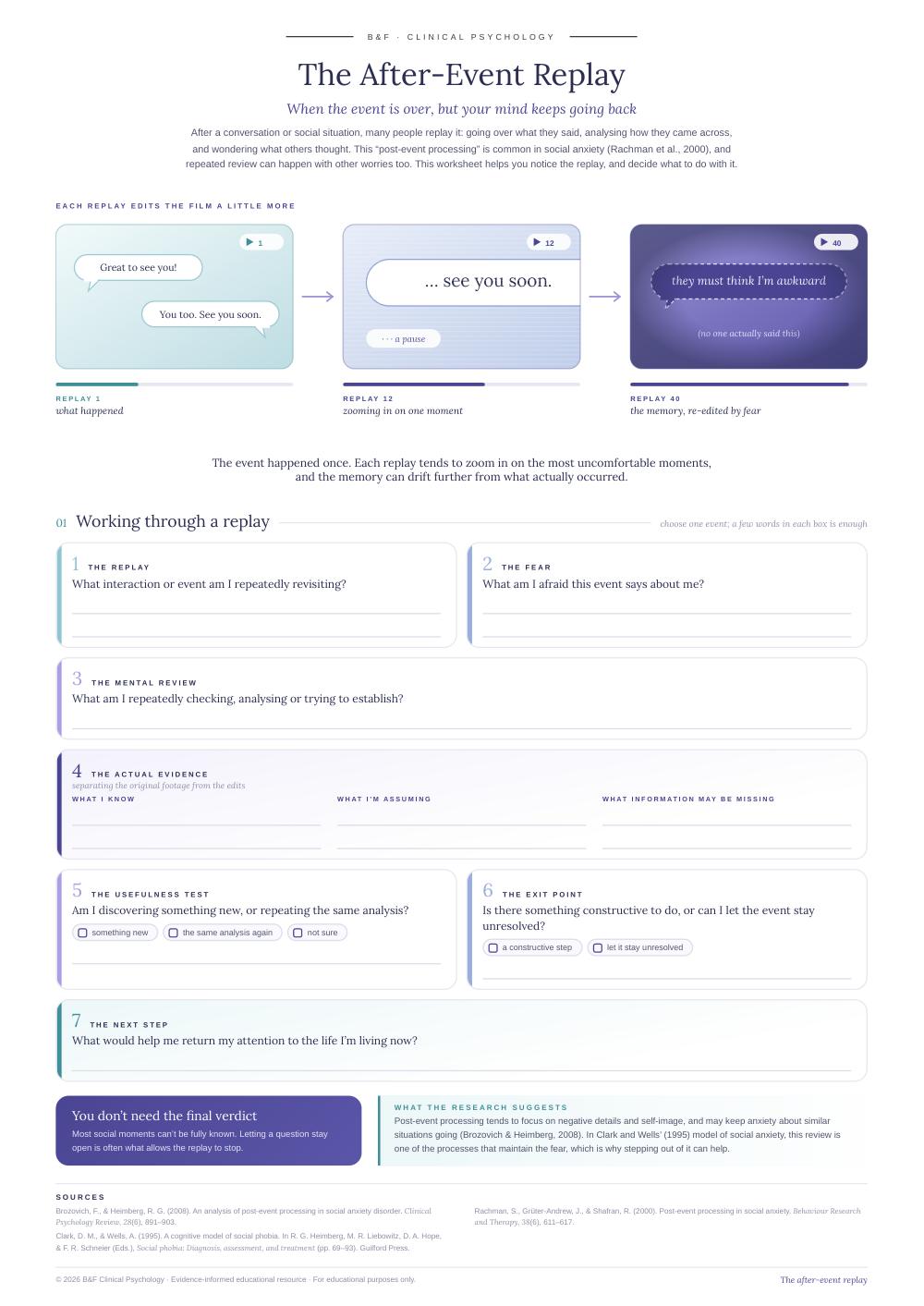
The after-event replay
When the conversation is over but your mind keeps going back to it.
-
 Preview
Learn
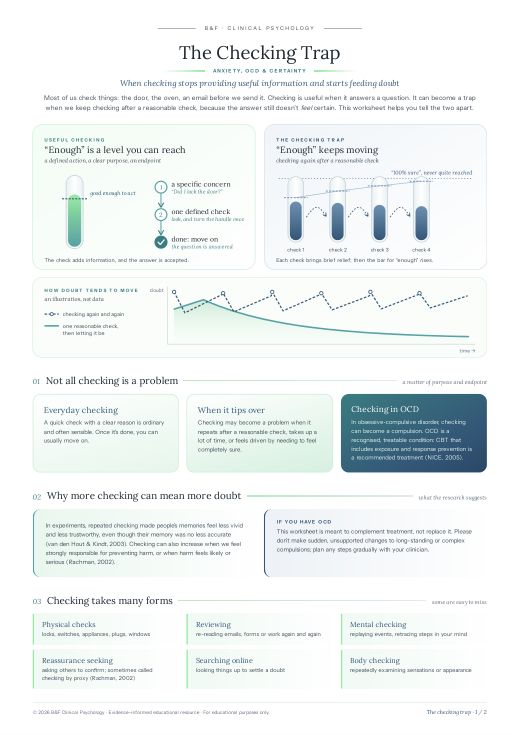
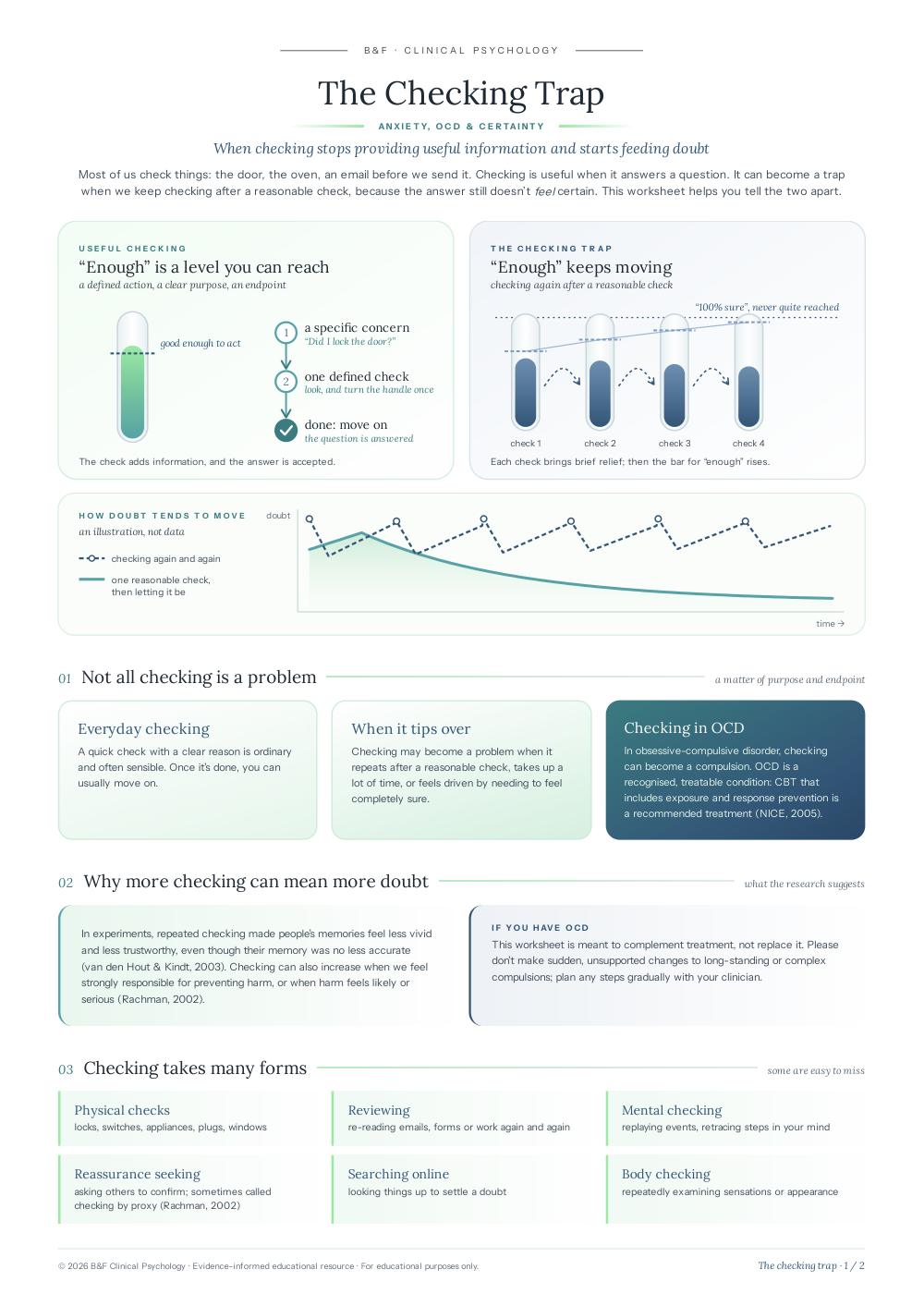
The checking trap
When checking stops giving useful information and starts feeding doubt.
-
 Preview
Reflect
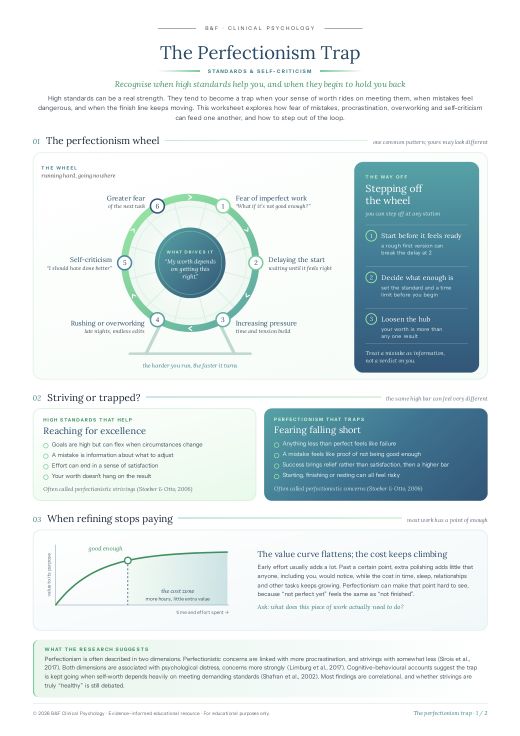
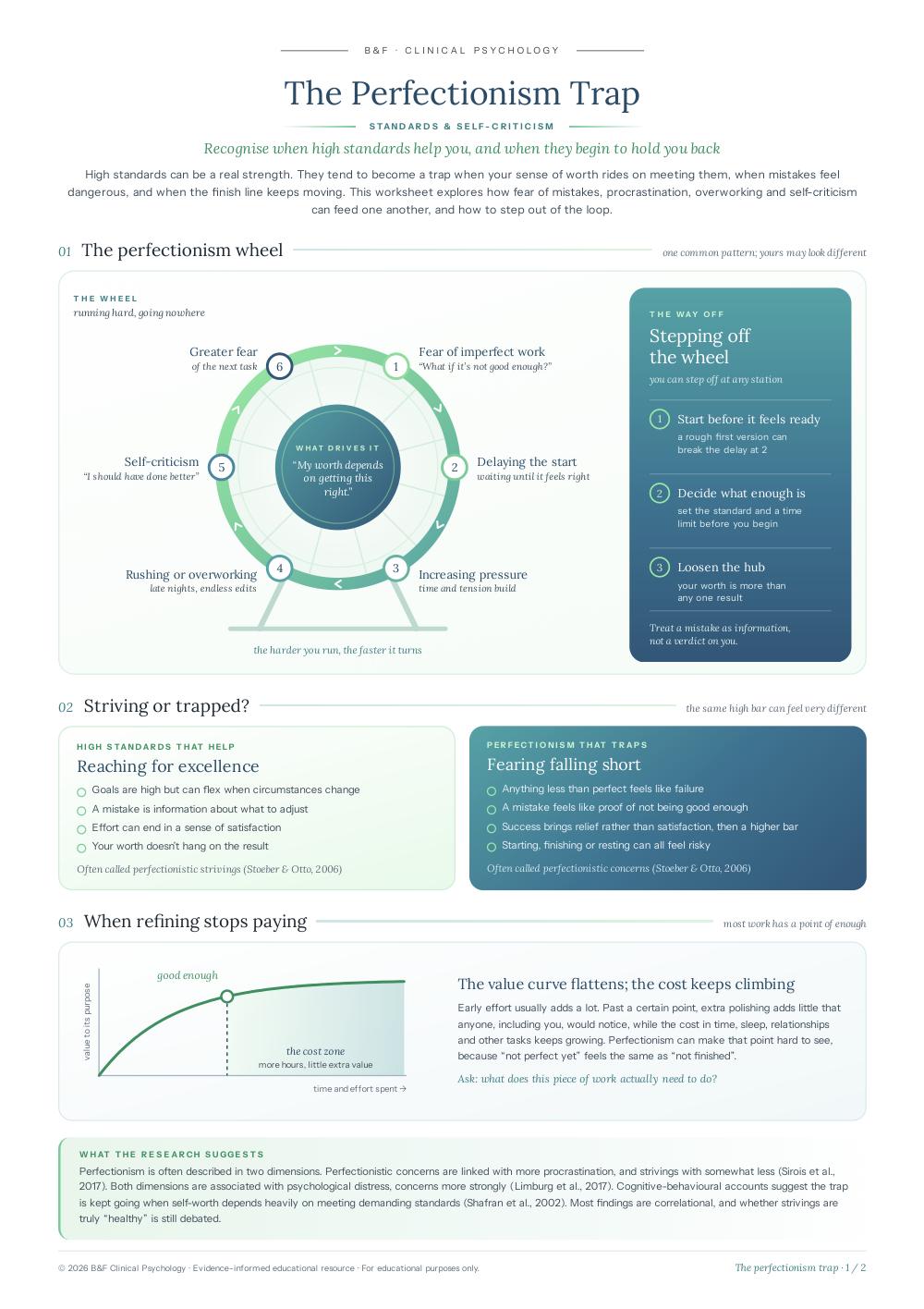
The perfectionism trap
Recognise when high standards help you, and when they begin to hold you back.
-
 Preview
Practice
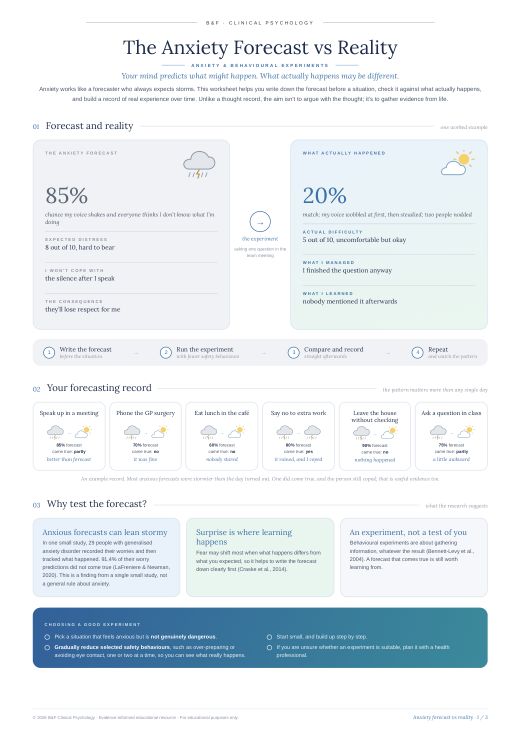
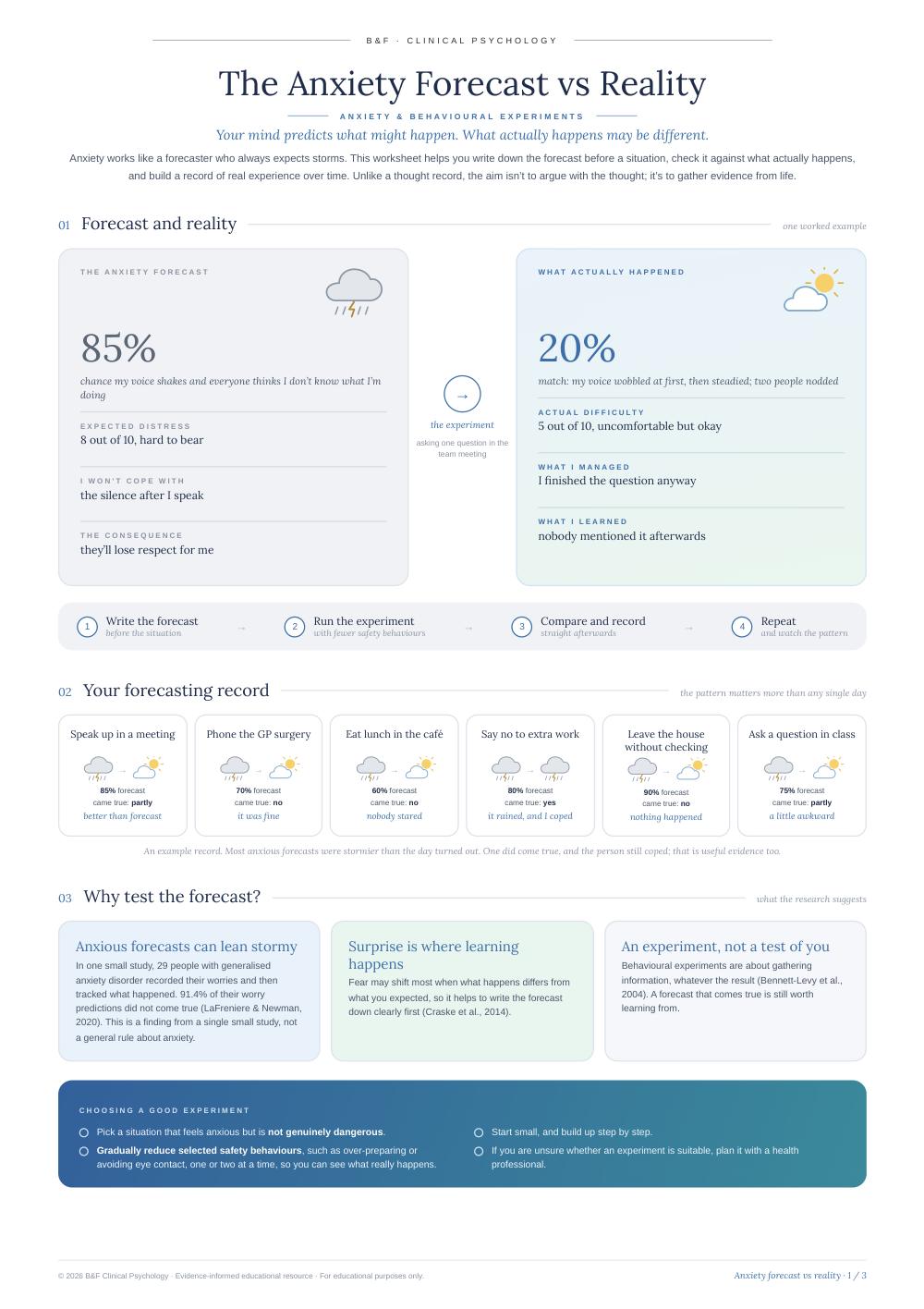
The anxiety forecast vs reality
Test what anxiety predicts against what actually happens.
-
 Preview
Reflect
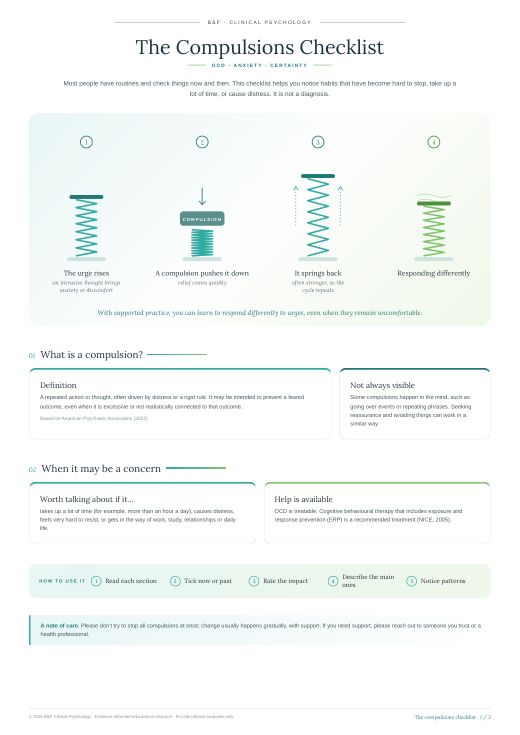
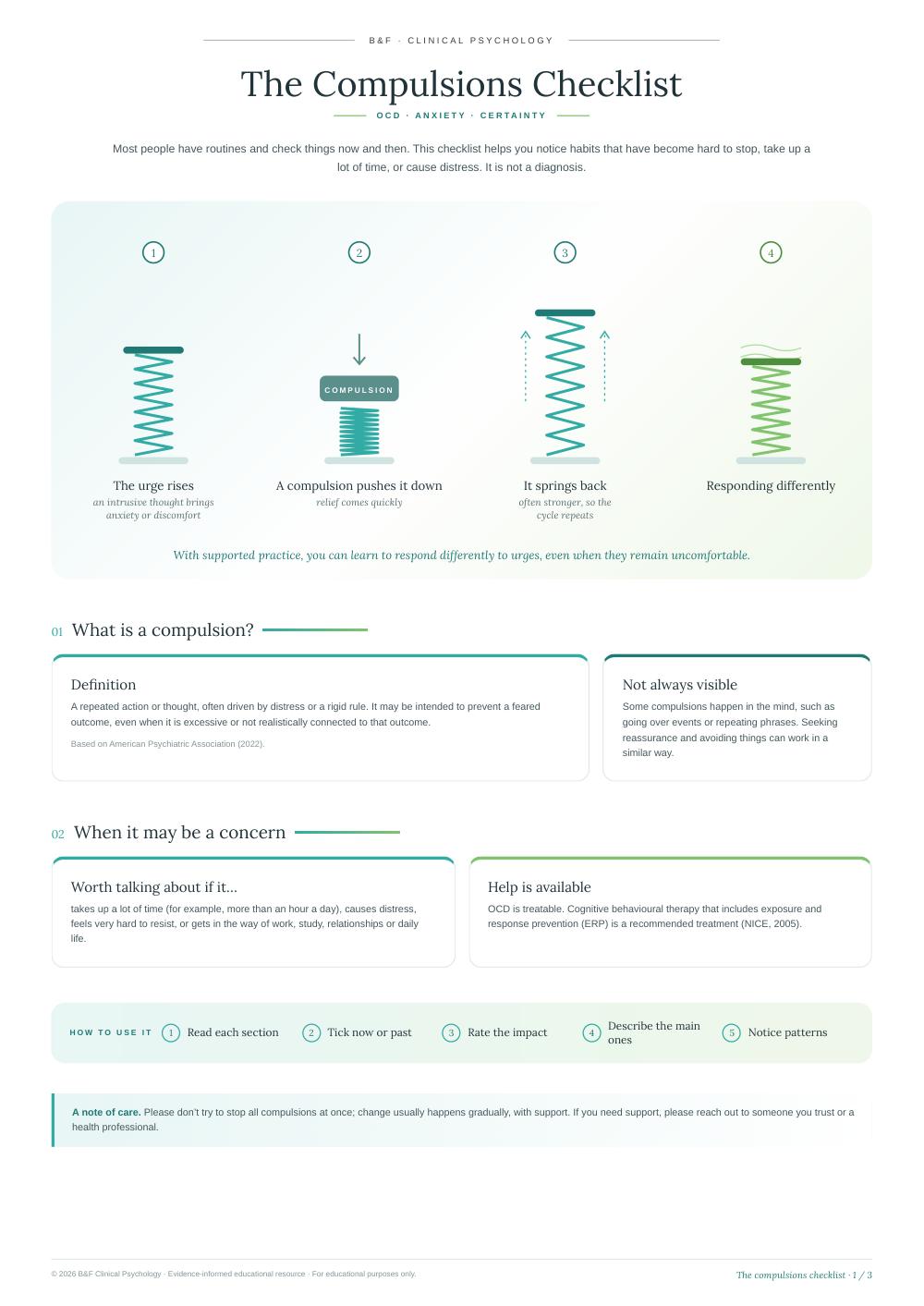
The compulsions checklist
Notice which habits have become hard to stop, take up time or get in the way.
-
 Preview
Practice
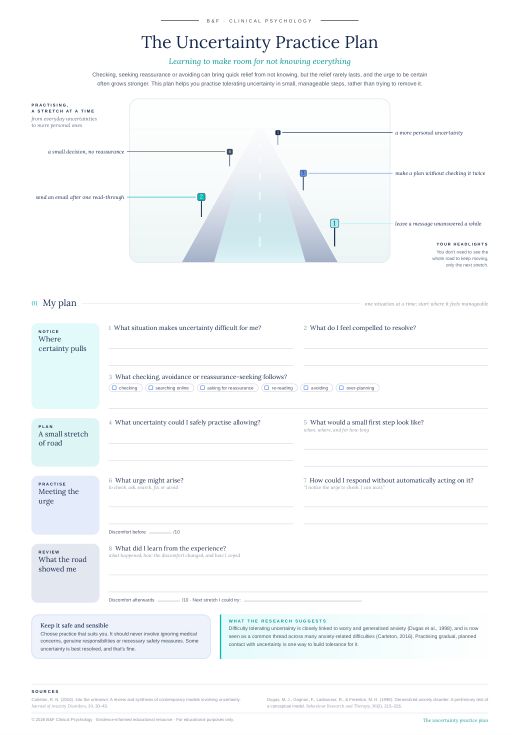
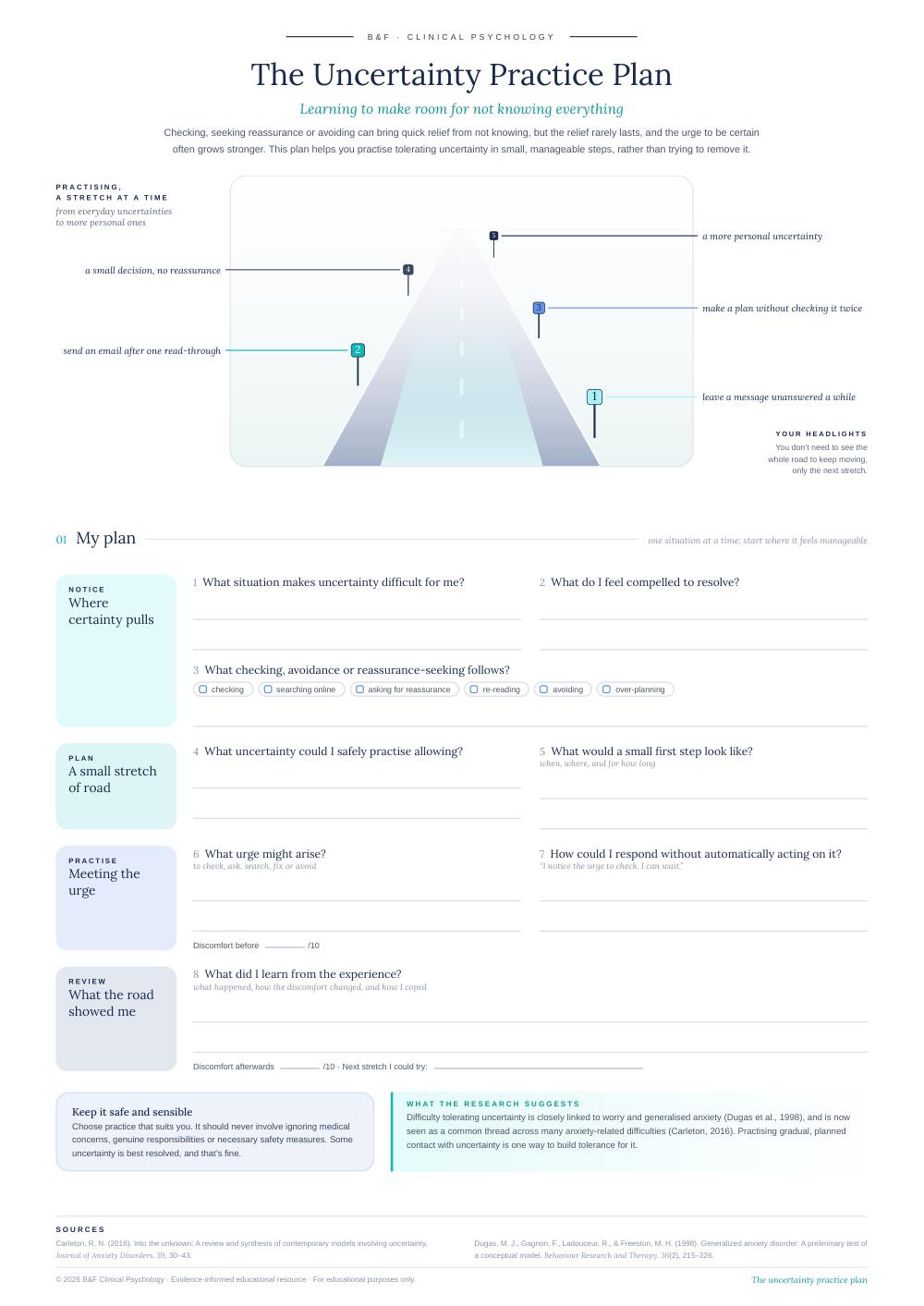
The uncertainty practice plan
Small, planned steps to make room for not knowing everything.
-
 Preview
Learn
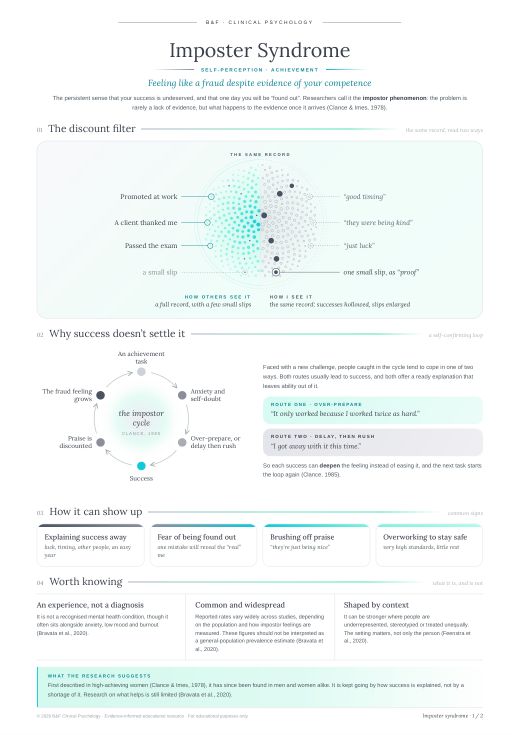
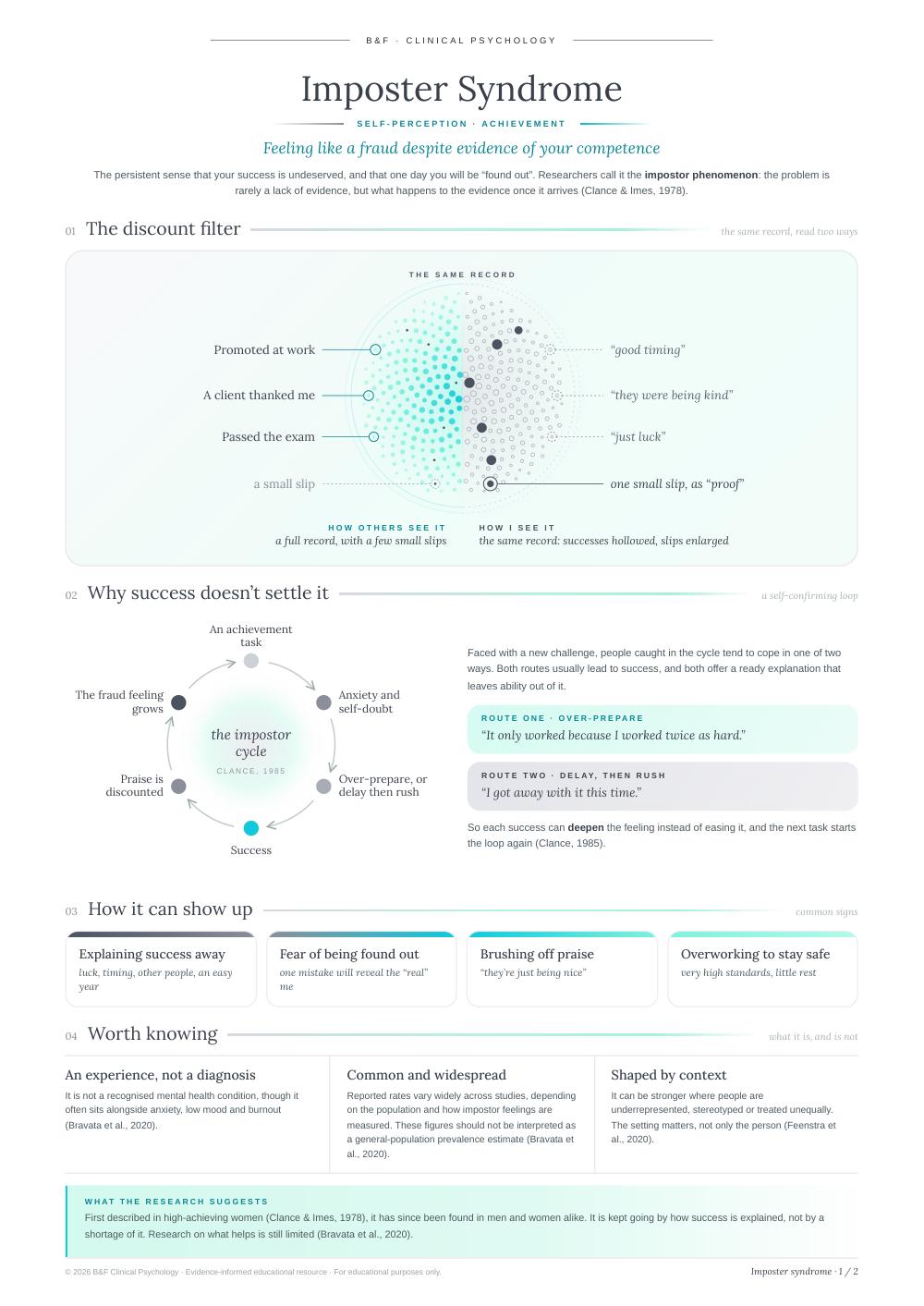
Imposter syndrome
Feeling like a fraud despite the evidence of your competence, and how to loosen its hold.
Important Information: These resources are provided for general education and self-reflection. They do not replace individual psychological assessment, diagnosis, professional advice or therapy. Accessing, downloading or using these resources does not establish a psychologist–client relationship with Barnardt & Fleming Clinical Psychology or constitute psychological consultation or treatment. These resources may not be suitable for every individual or circumstance. If you are uncertain about their suitability, please consult a qualified healthcare professional. If you are in crisis, feel unsafe, or may harm yourself or someone else, please contact your local emergency services or go to the nearest emergency department.