

Free resources
Thinking patterns & worry
Understand the patterns that shape your thinking and find new ways forward.
These resources are for general education and self-reflection and do not replace professional psychological care. Accessing, downloading or using them does not establish a psychologist–client relationship with Barnardt & Fleming Clinical Psychology.
Thinking patterns & worry resources
-
 Preview
Learn
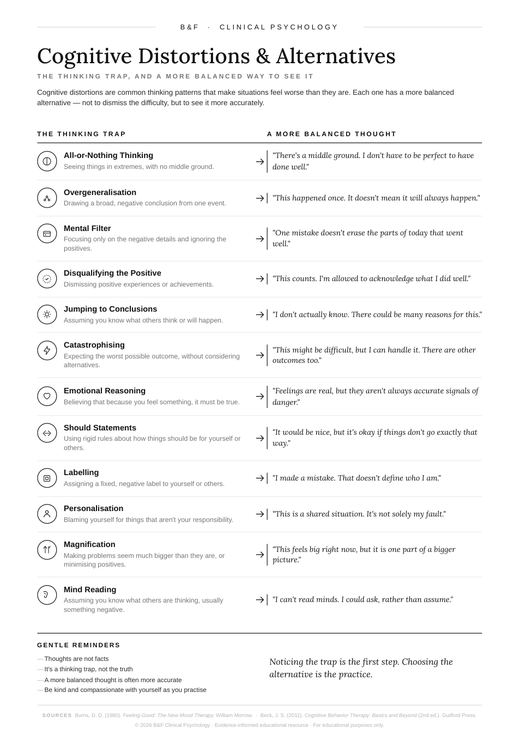
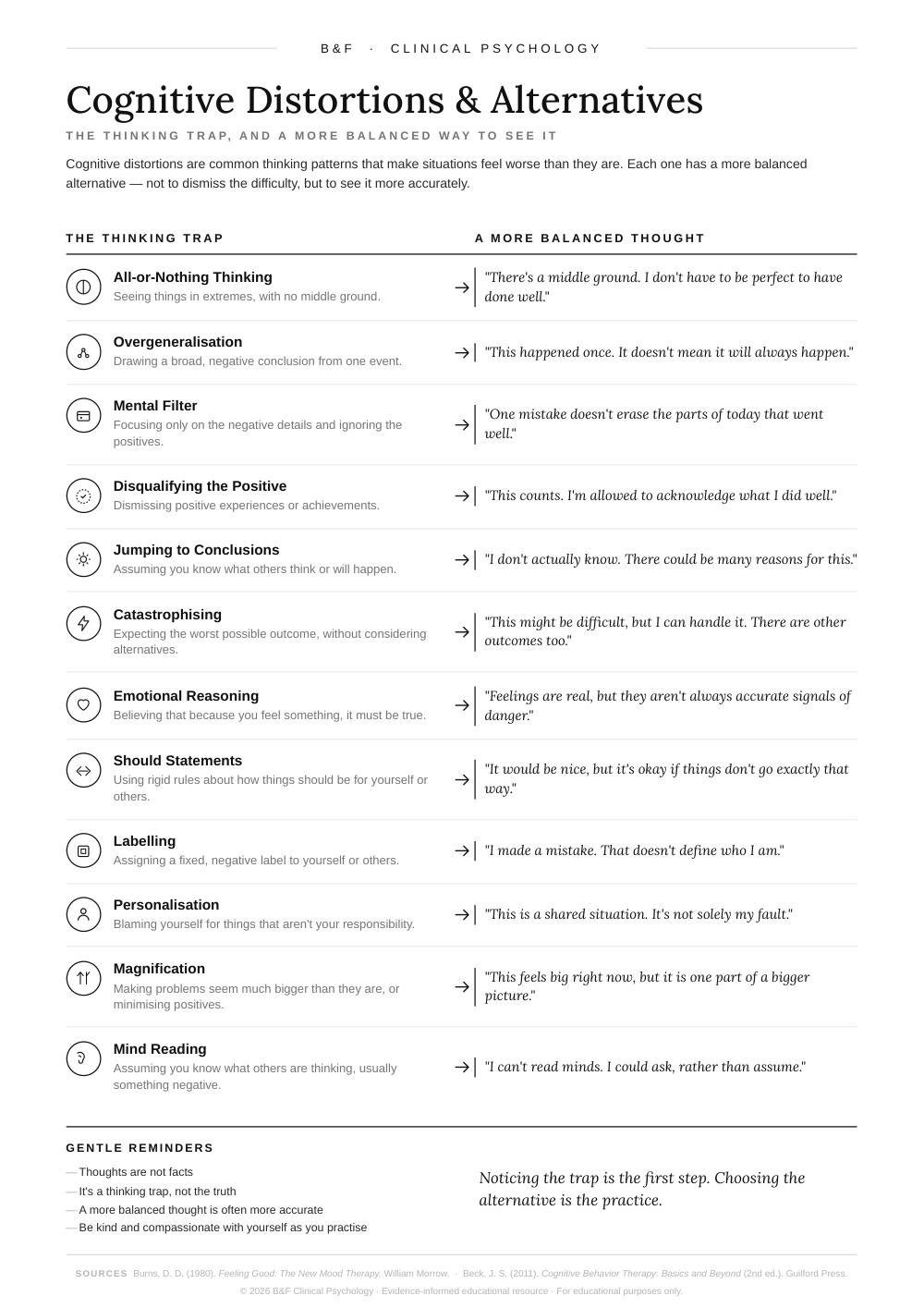
Cognitive distortions and alternatives
The common thinking traps, each paired with a more balanced way to see the same situation.
-
 Preview
Learn
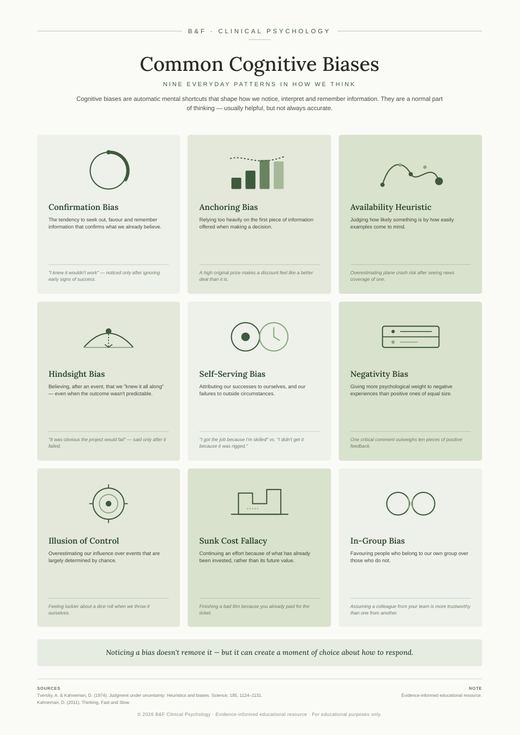
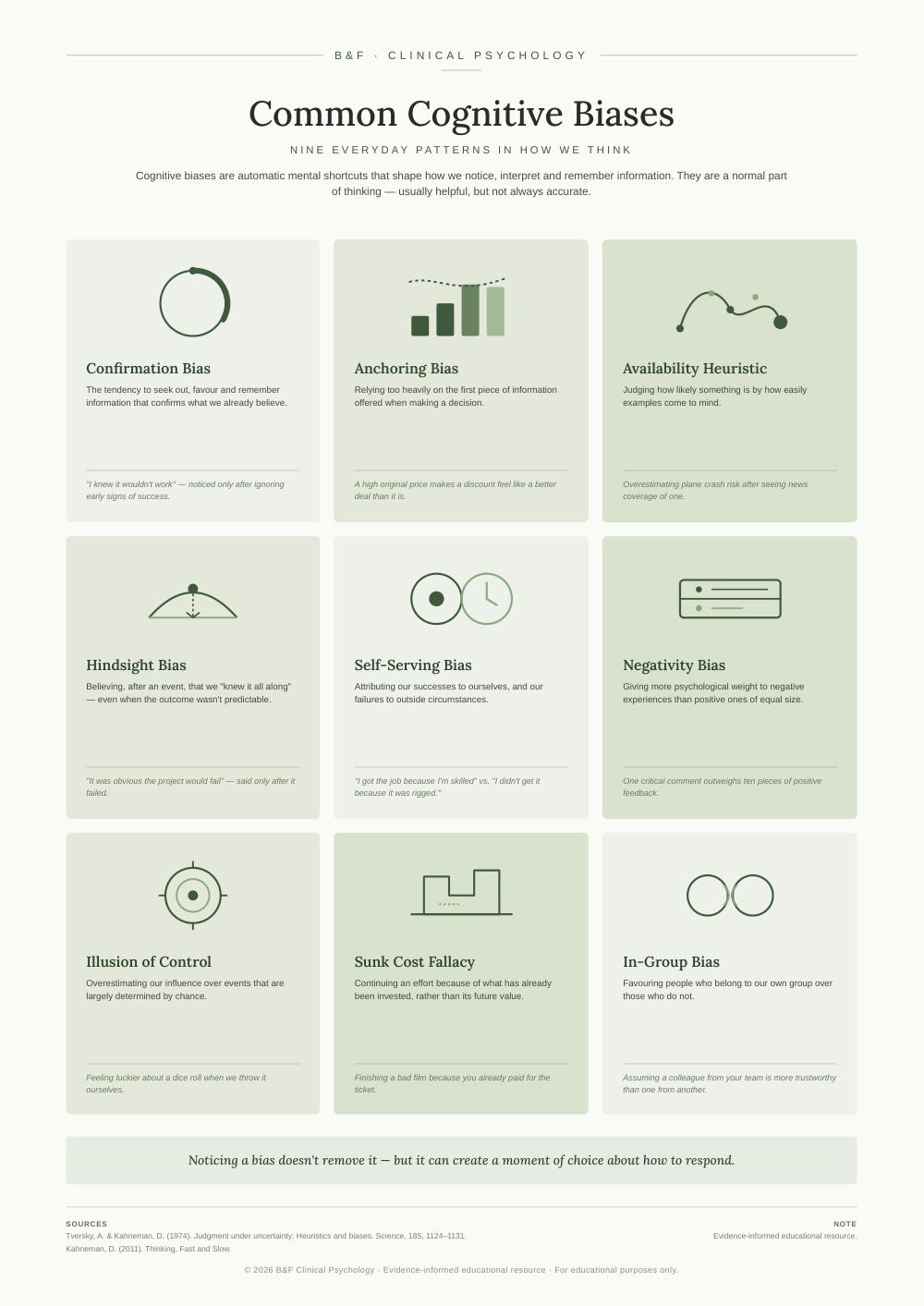
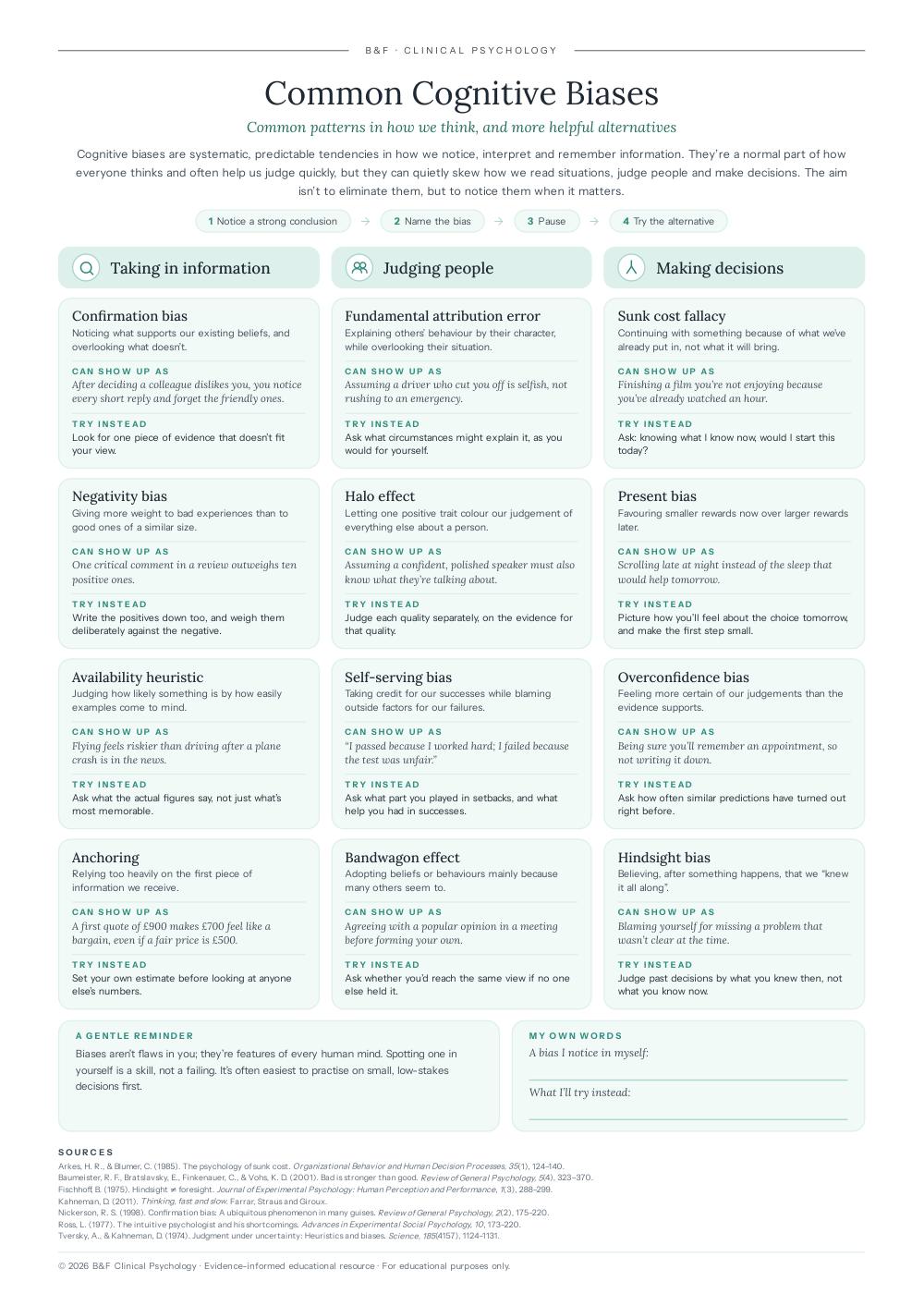
Common cognitive biases (1)
Nine everyday shortcuts in how we notice, interpret and remember things.
-
 Preview
Learn
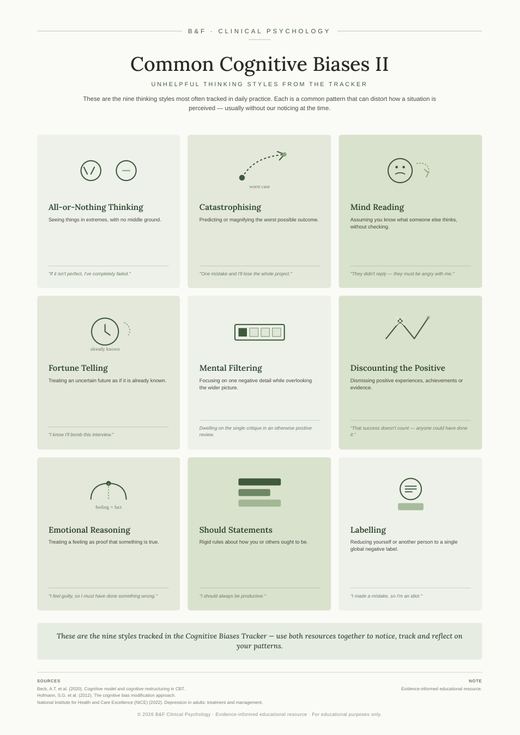
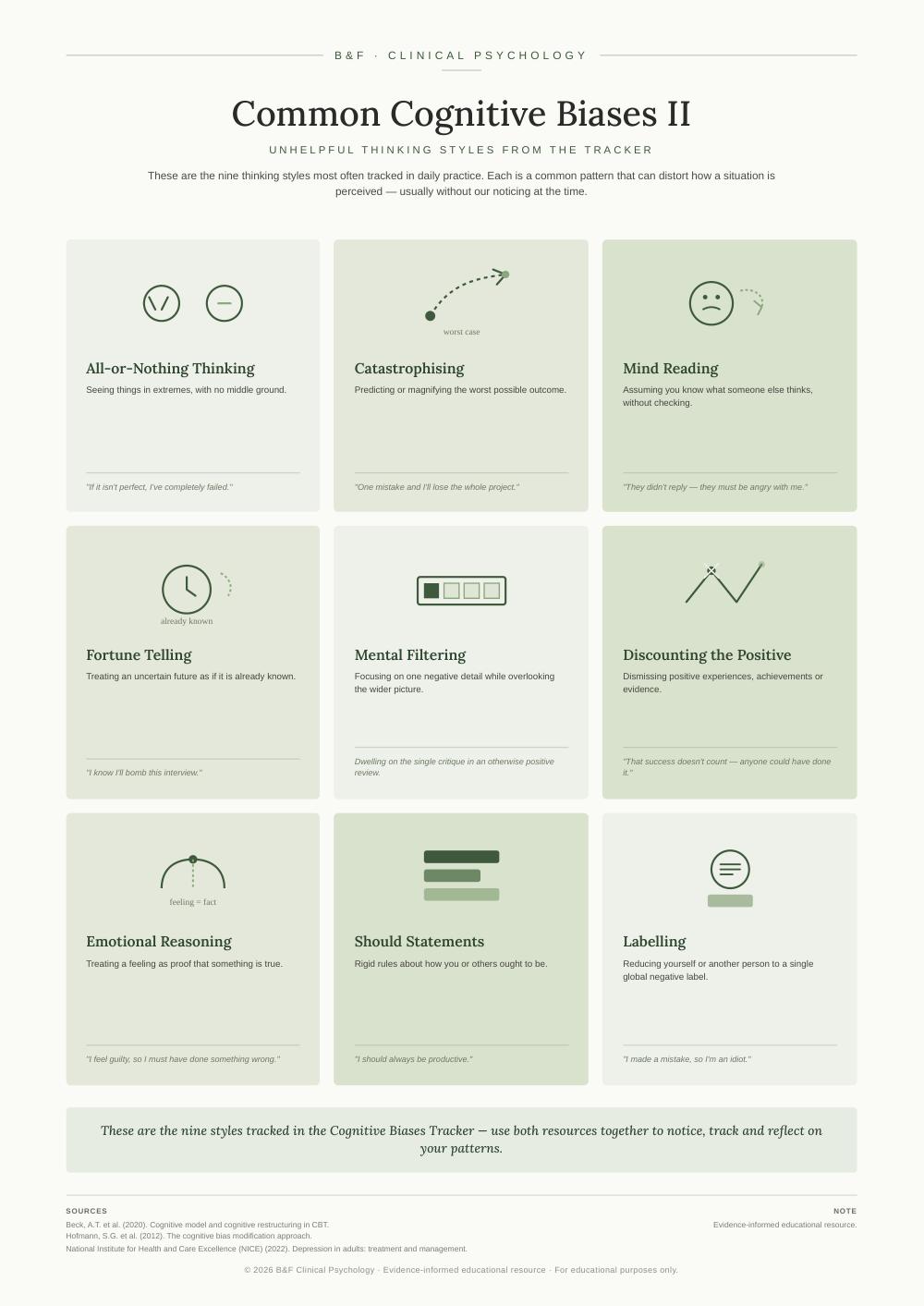
Common cognitive biases (2)
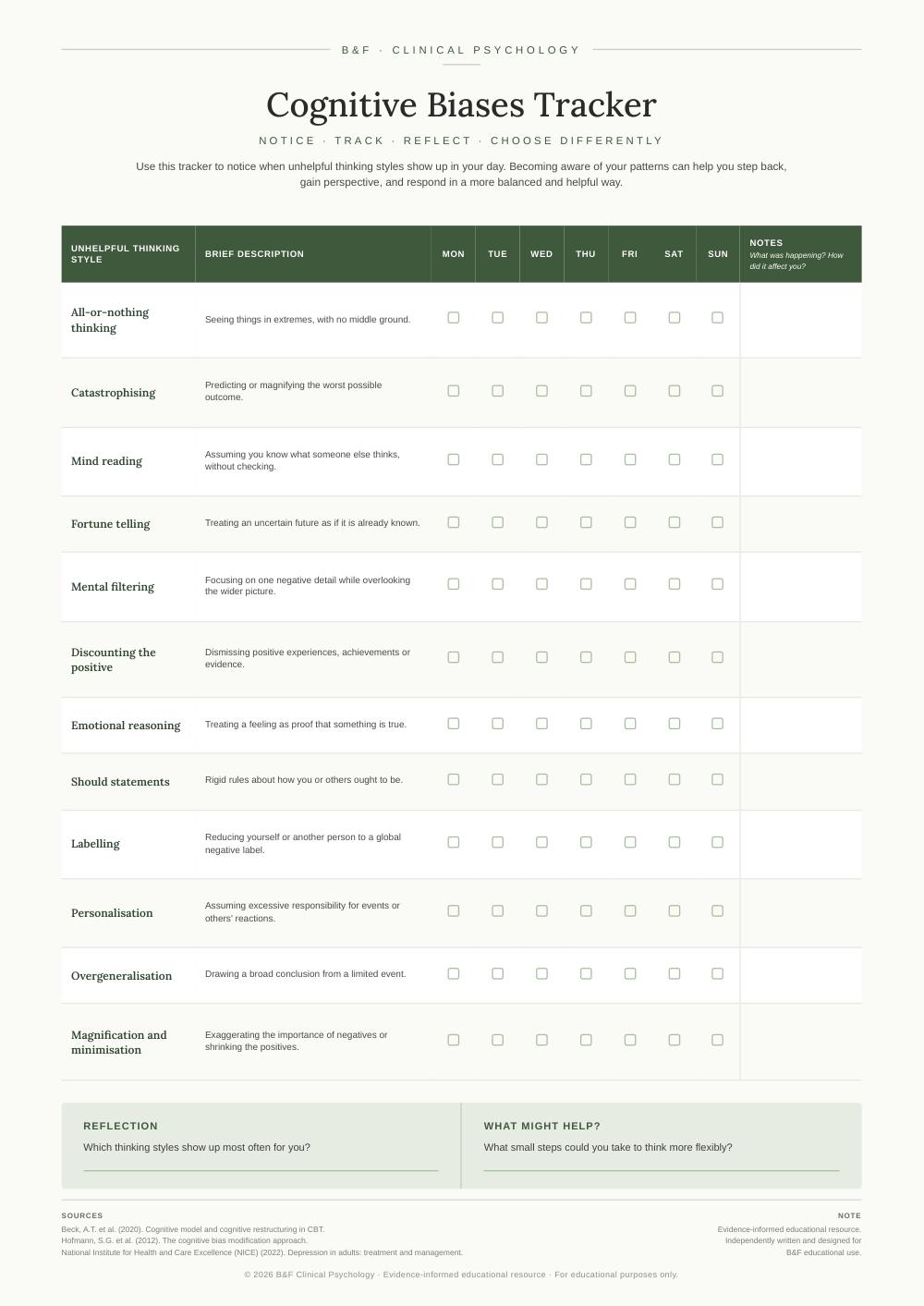
The nine unhelpful thinking styles used in the tracker, explained one by one.
-
 Preview
Reflect
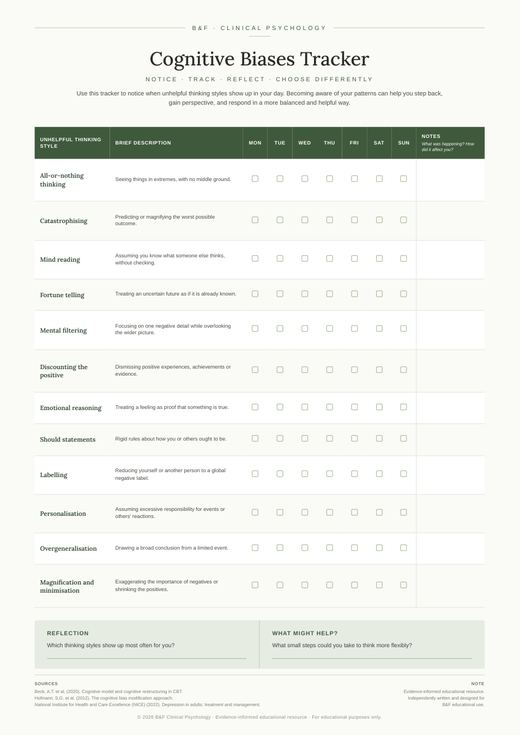
Cognitive biases tracker
Notice which thinking styles show up in your day, and how often.
-
 Preview
Learn
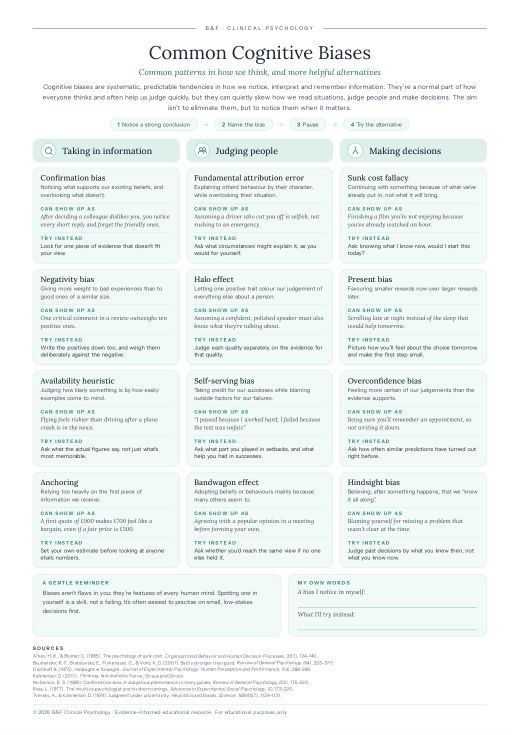
Common cognitive biases and alternatives (1)
Predictable shortcuts in how we notice and interpret things, each with a more helpful alternative.
-
 Preview
Learn
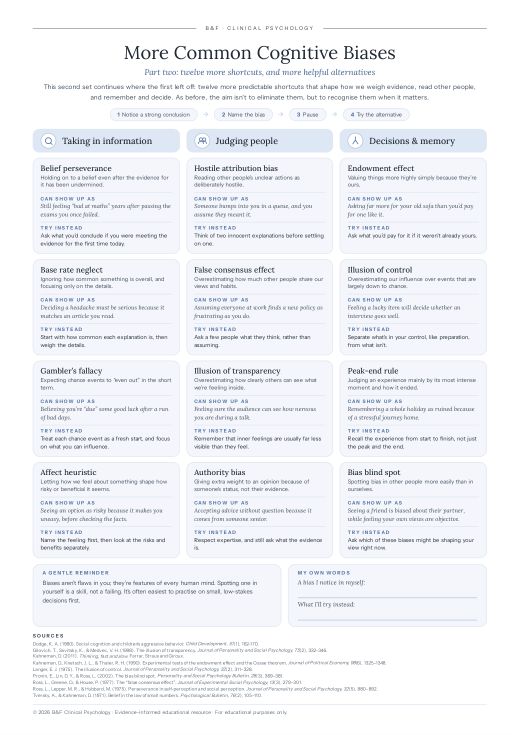
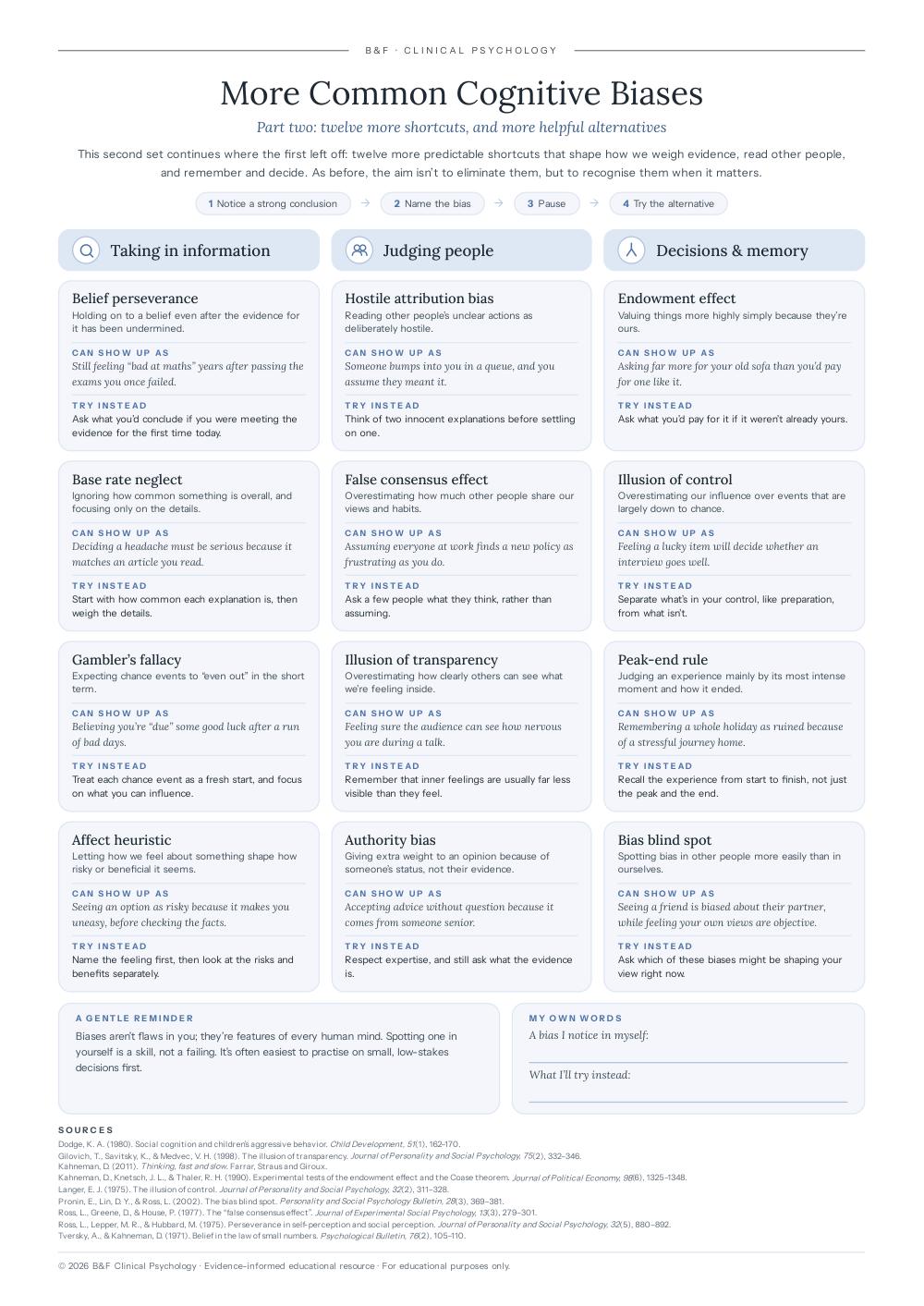
More common cognitive biases and alternatives (2)
Twelve more shortcuts that shape how we weigh evidence, read people and decide, with alternatives.
-
 Preview
Reflect
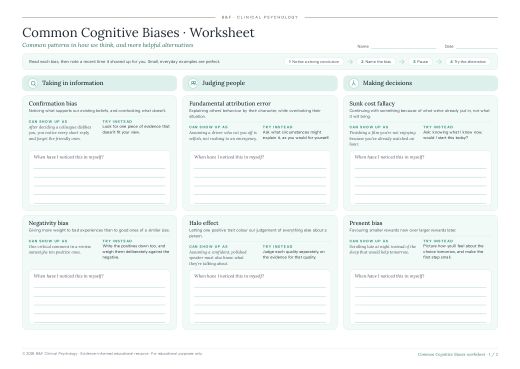
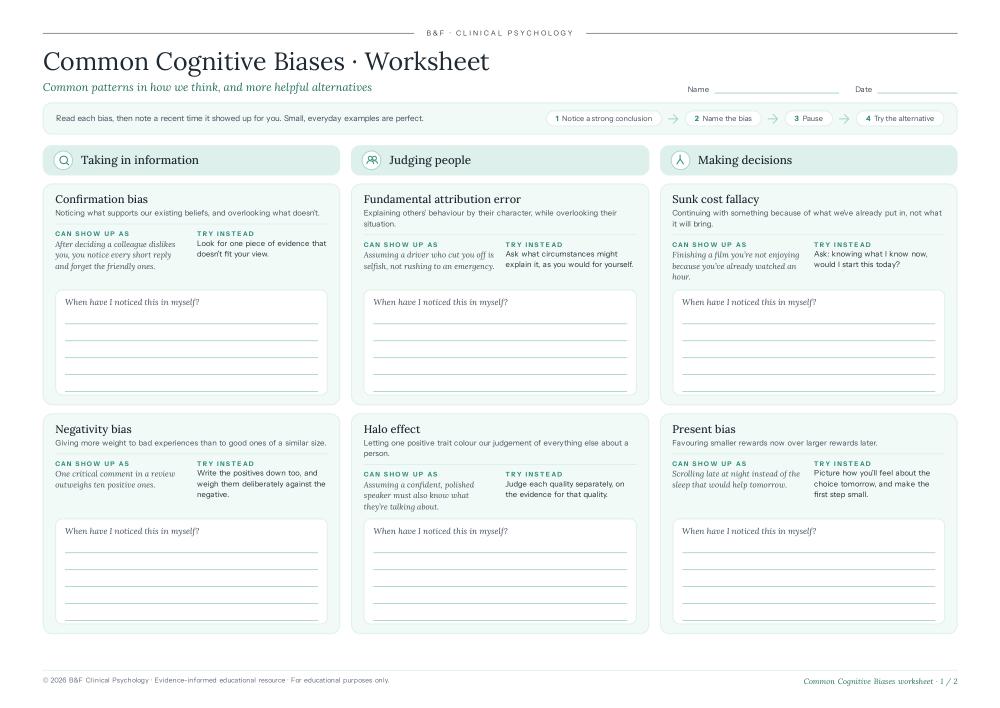
Common cognitive biases: worksheet
Note a recent time each bias showed up for you, then try the alternative.
-
 Preview
Learn
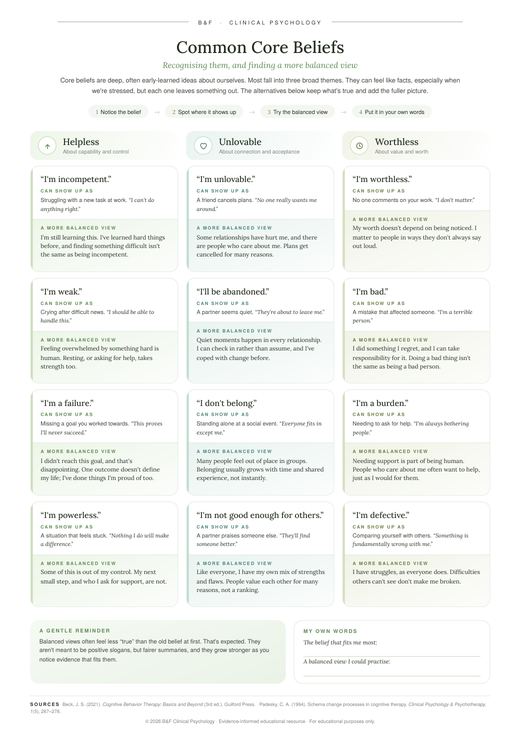
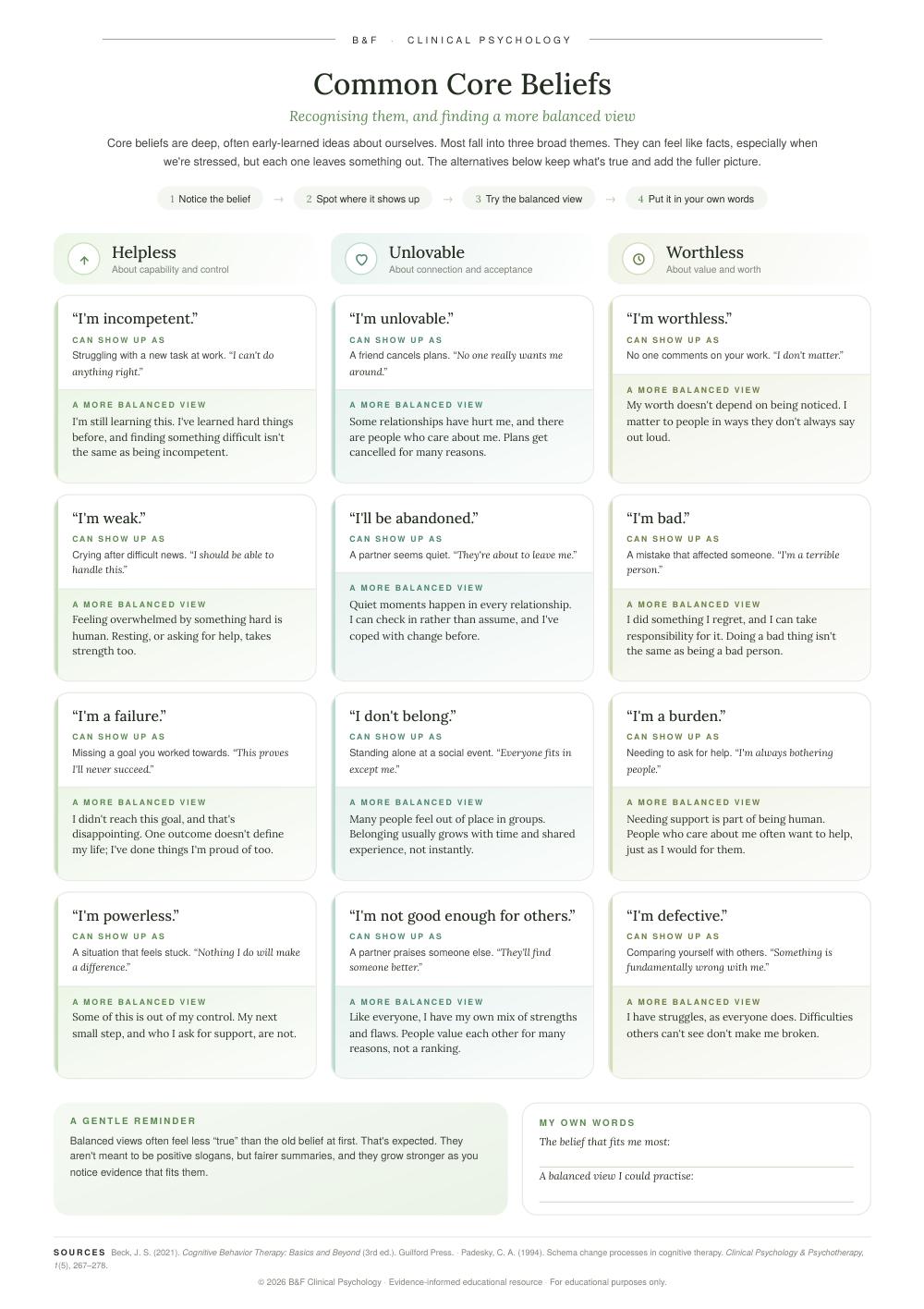
Common core beliefs and alternatives (1)
Deep, early-learned beliefs about ourselves, each paired with a more balanced view.
-
 Preview
Learn
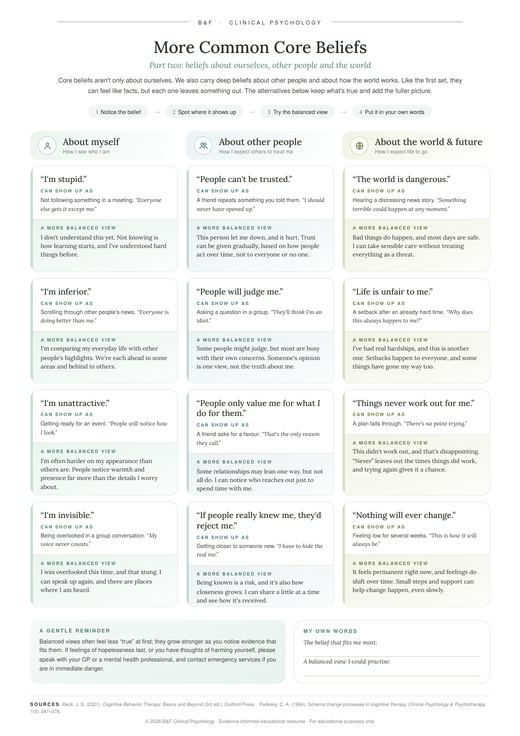
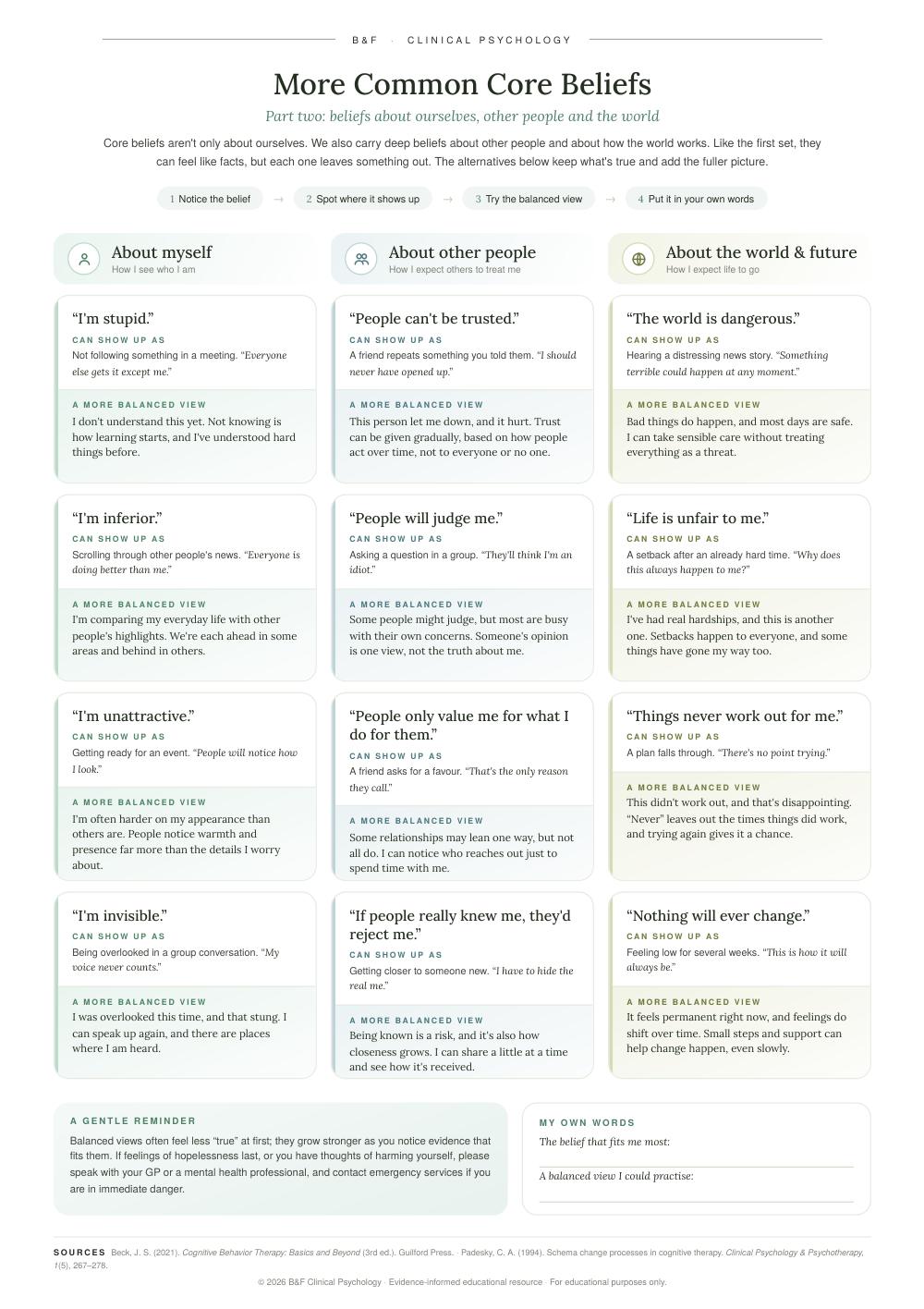
Common core beliefs and alternatives (2)
Core beliefs about other people and the world, each paired with a more balanced view.
-
 Preview
Reflect
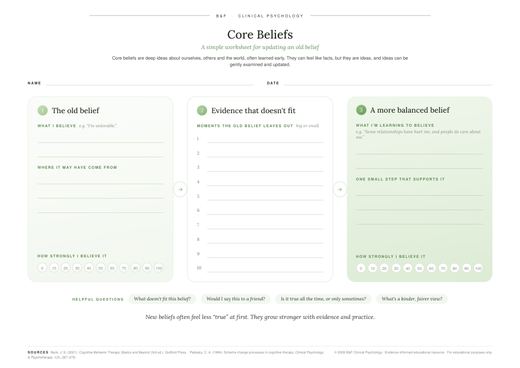
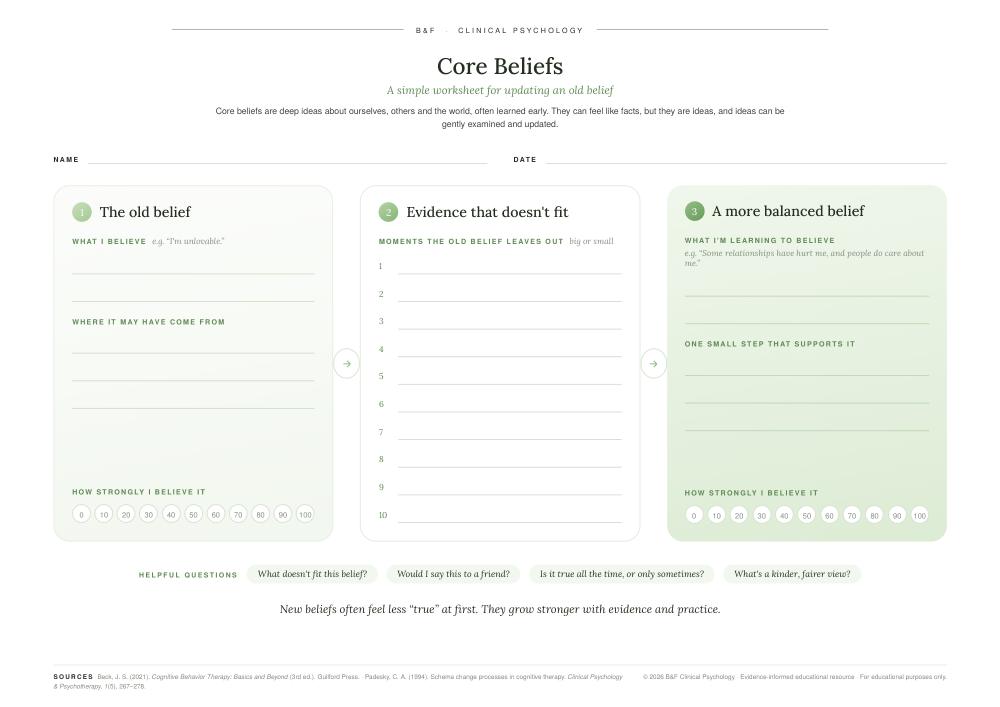
Core beliefs worksheet
A simple worksheet for examining an old belief and gently updating it.
-
 Preview
Learn
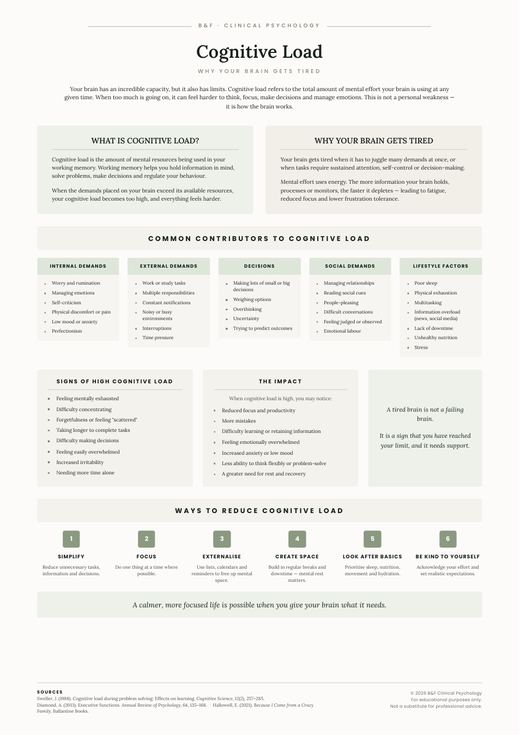
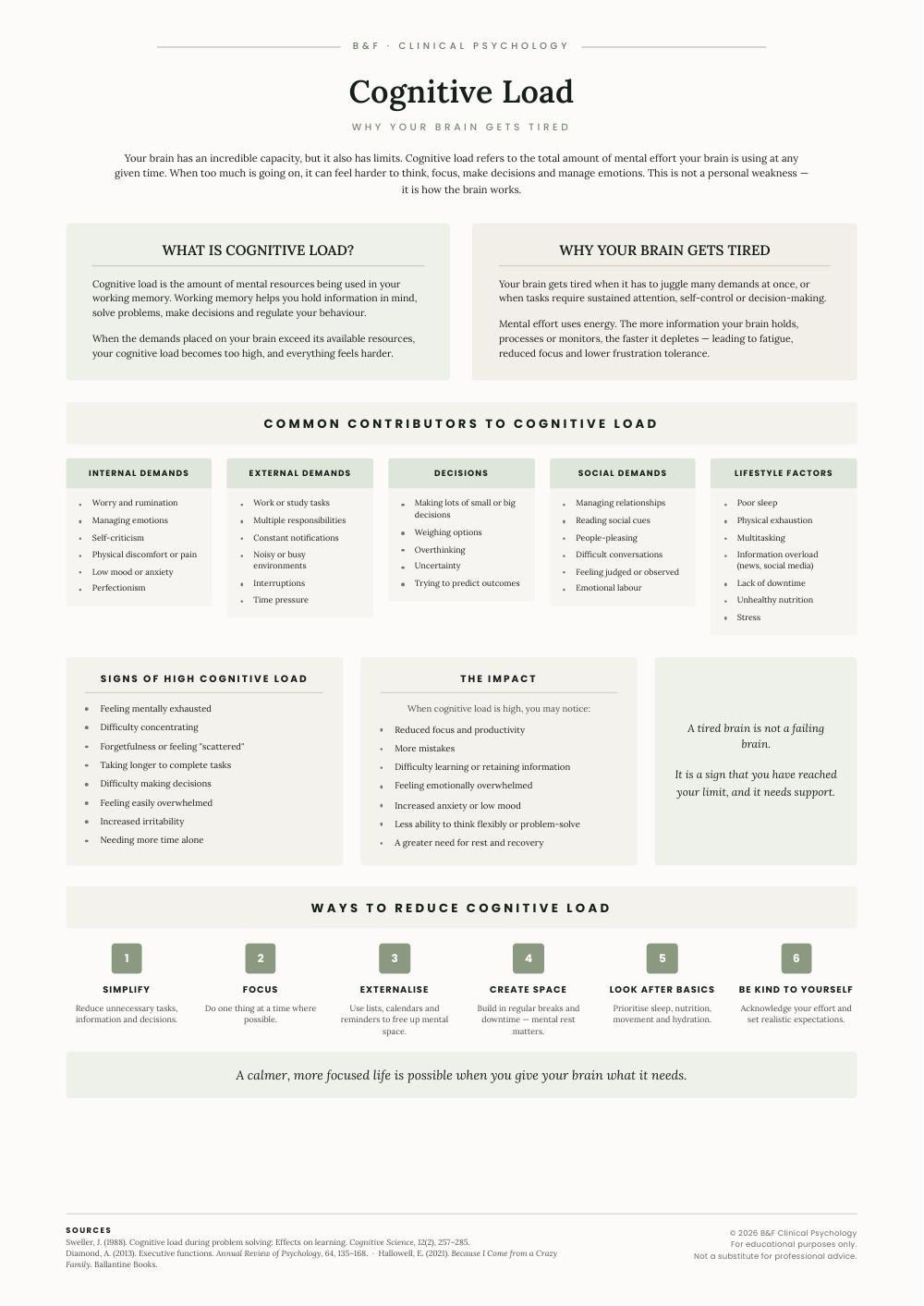
Cognitive load
Why the brain gets tired, and what happens to thinking when it does.
-
 Preview
Learn
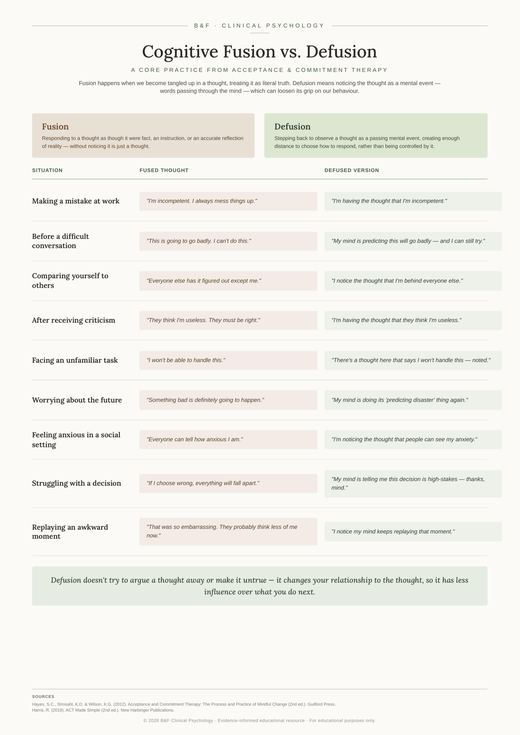
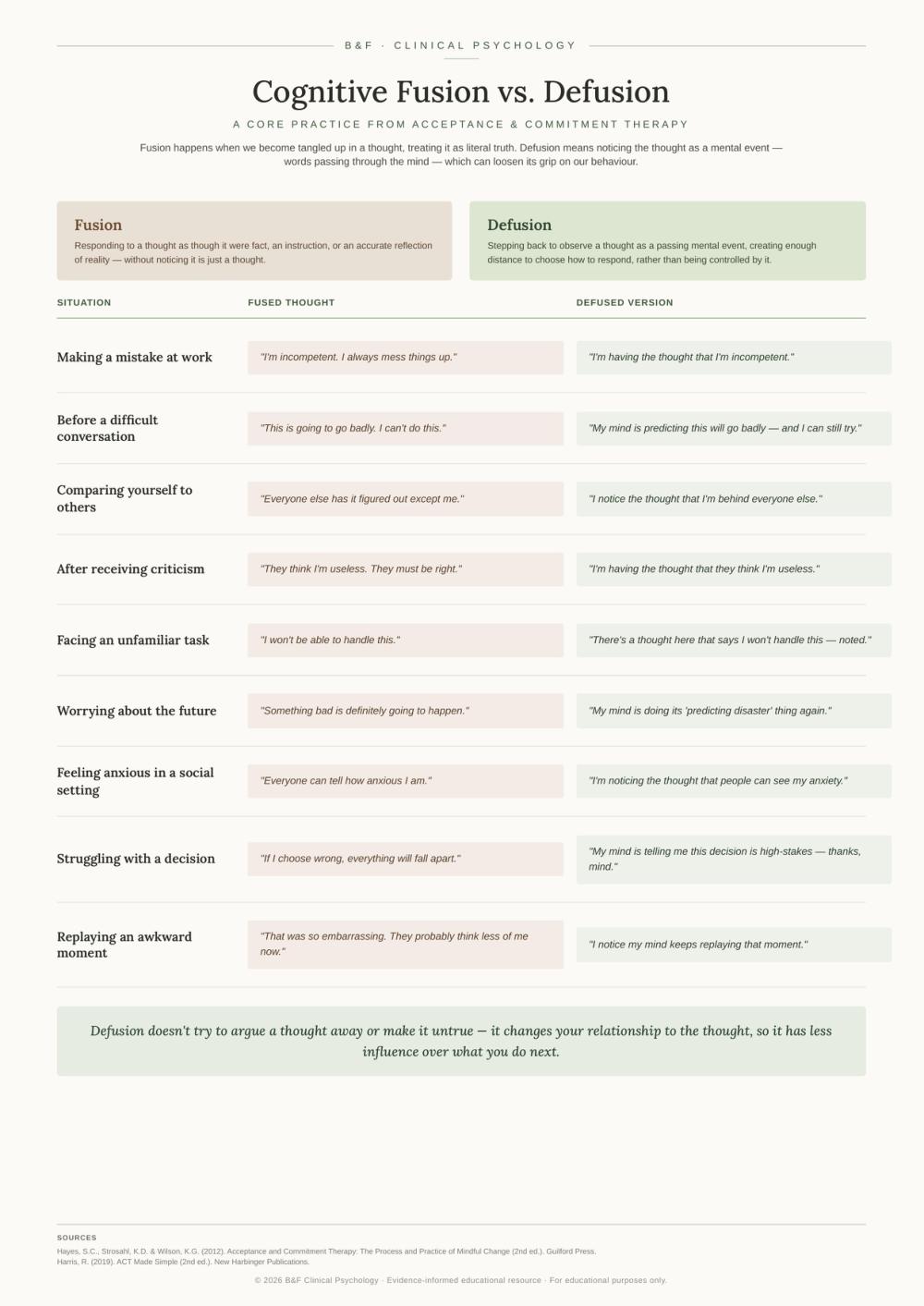
Cognitive fusion vs defusion
Being caught inside a thought, versus noticing it as a thought. The difference in one page.
-
 Preview
Practice
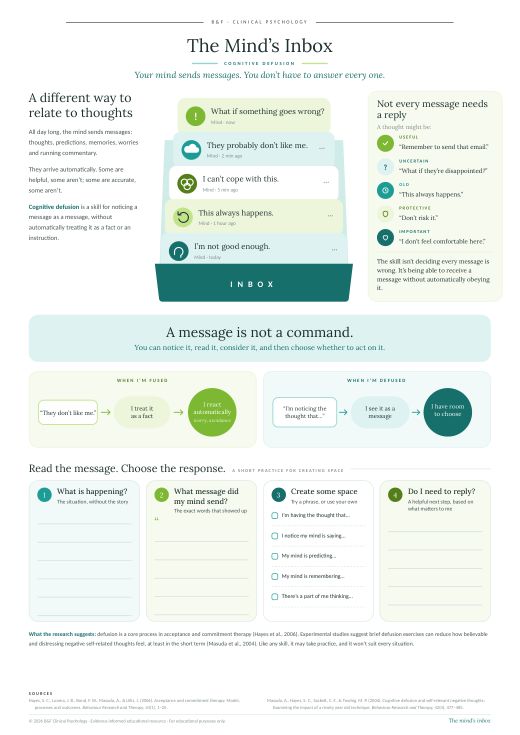
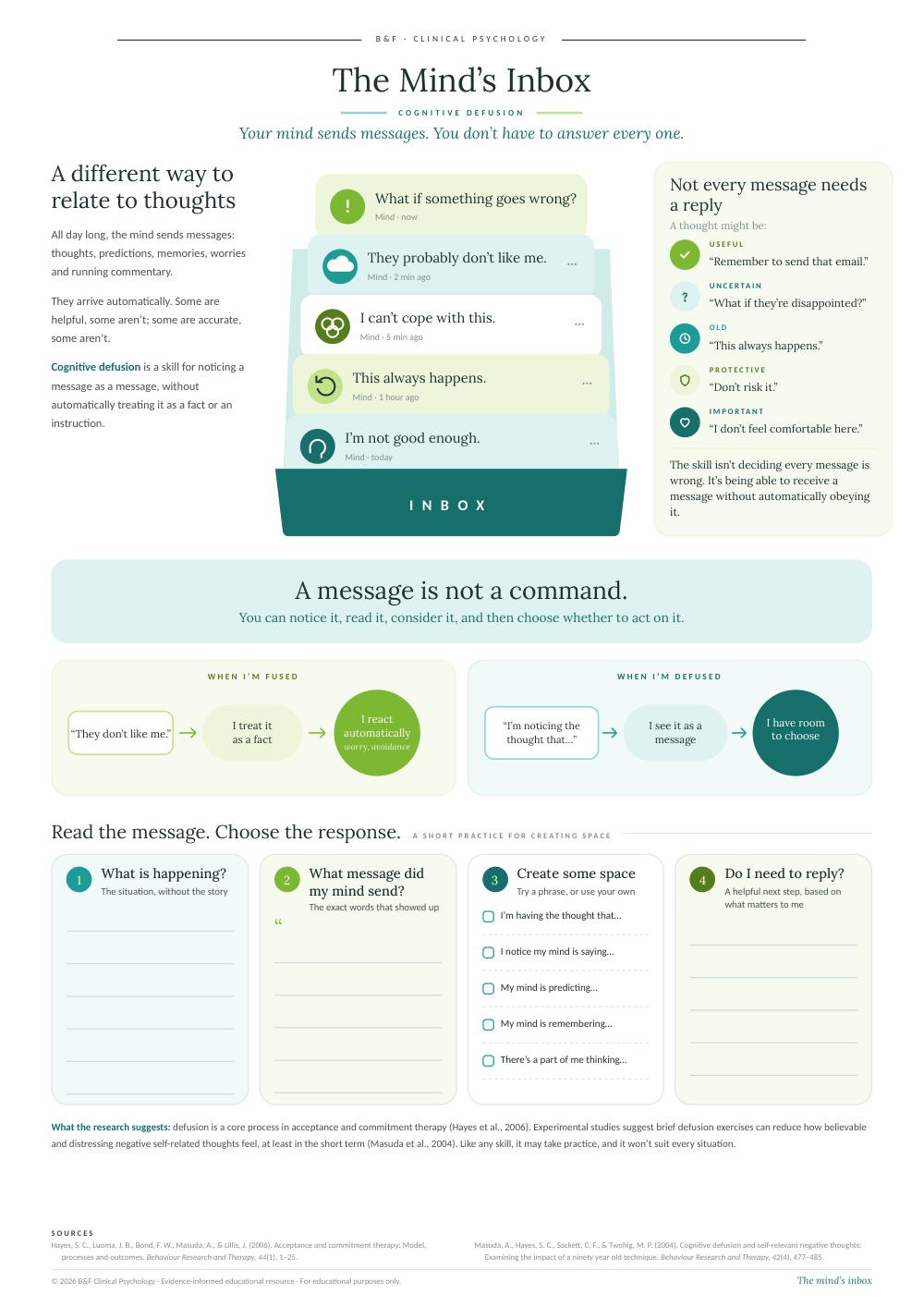
The mind's inbox
Your mind sends messages all day. You don't have to answer every one.
-
 Preview
Reflect
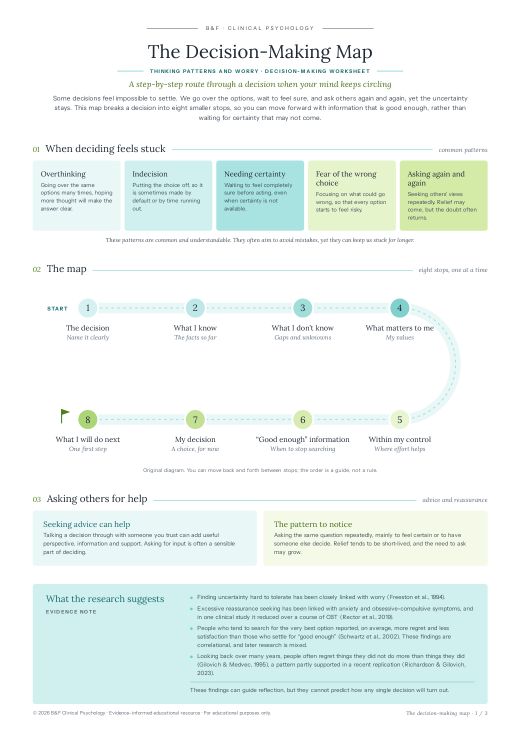
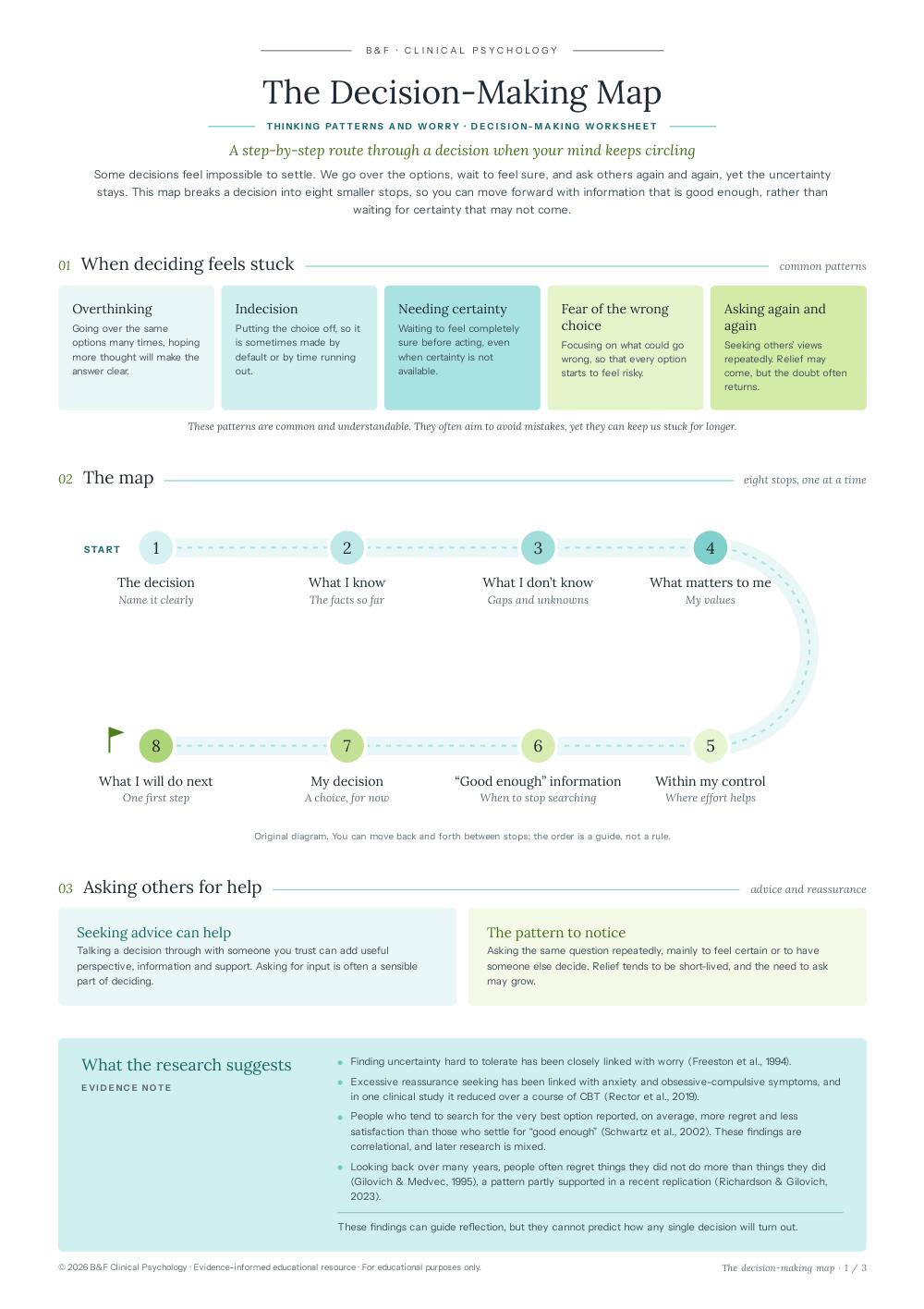
The decision-making map
A step-by-step route through a decision when your mind keeps circling.
-
 Preview
Practice
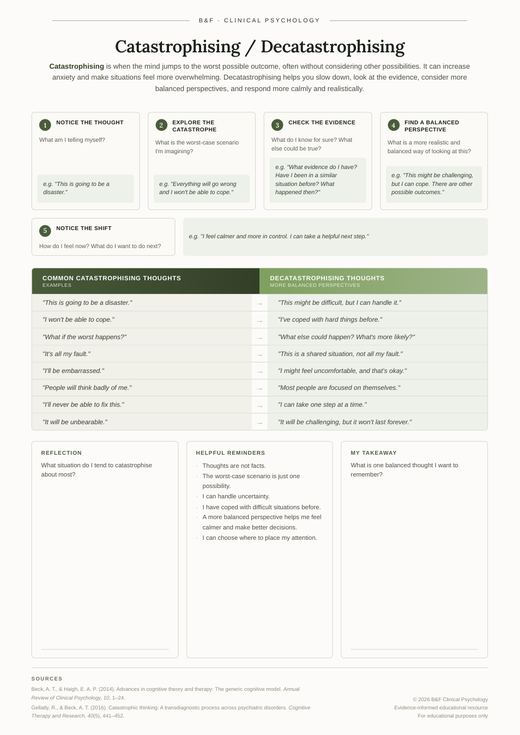
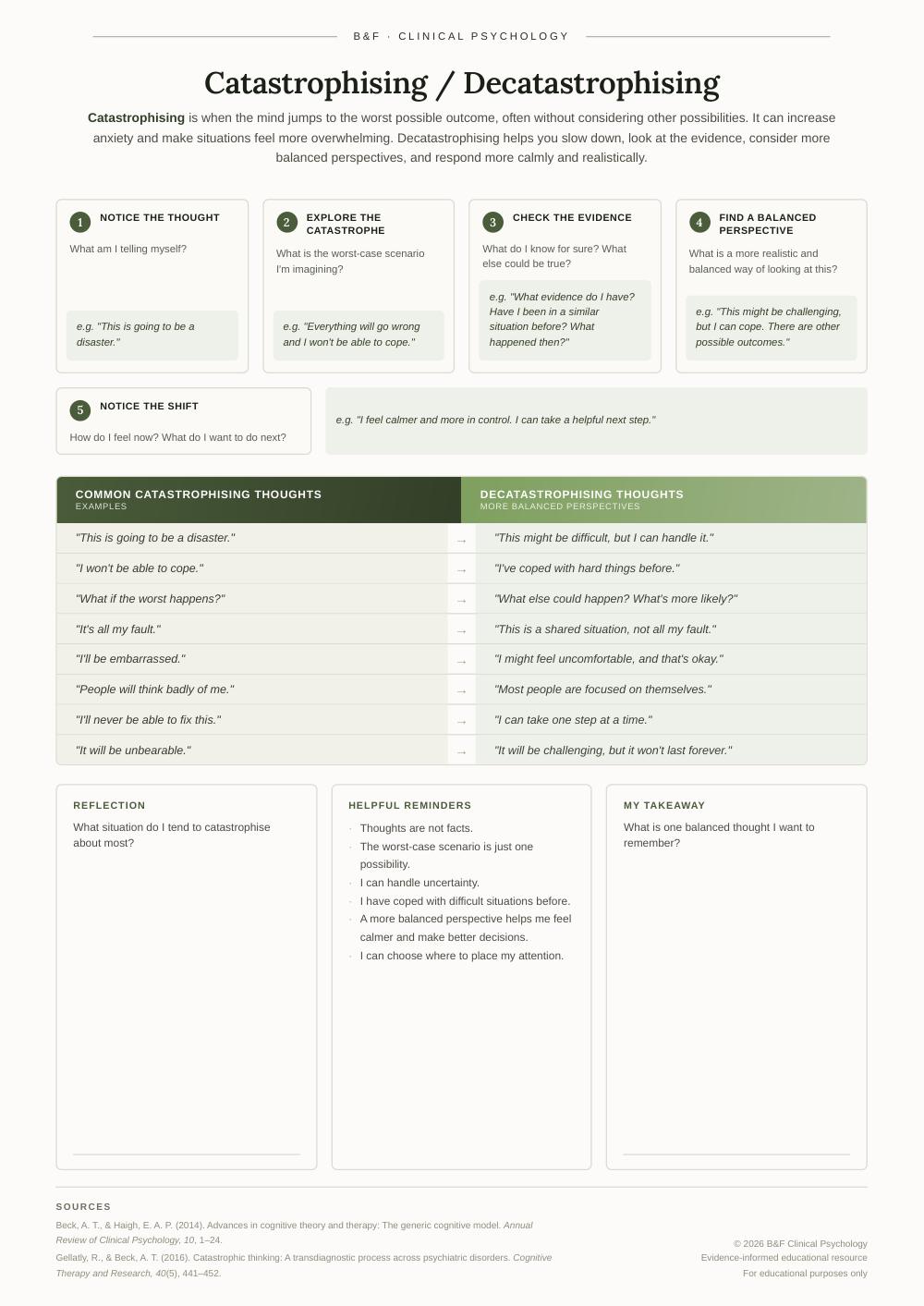
Catastrophising and decatastrophising
When the mind jumps to the worst outcome: questions that bring the other possibilities back.
-
 Preview
Learn
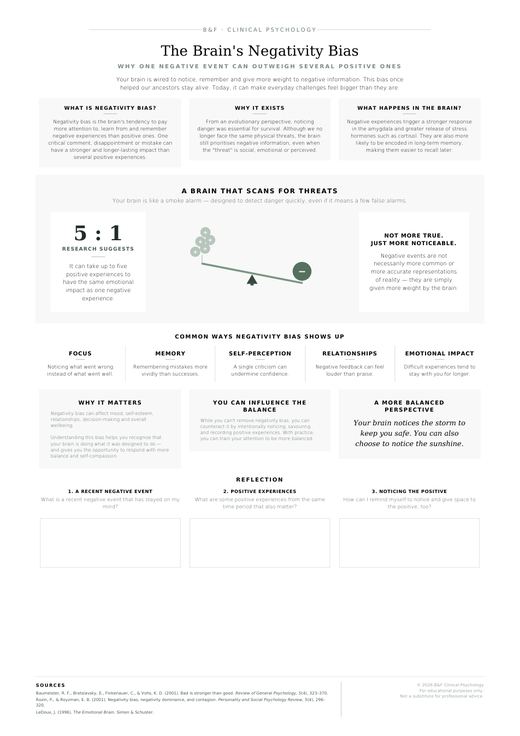
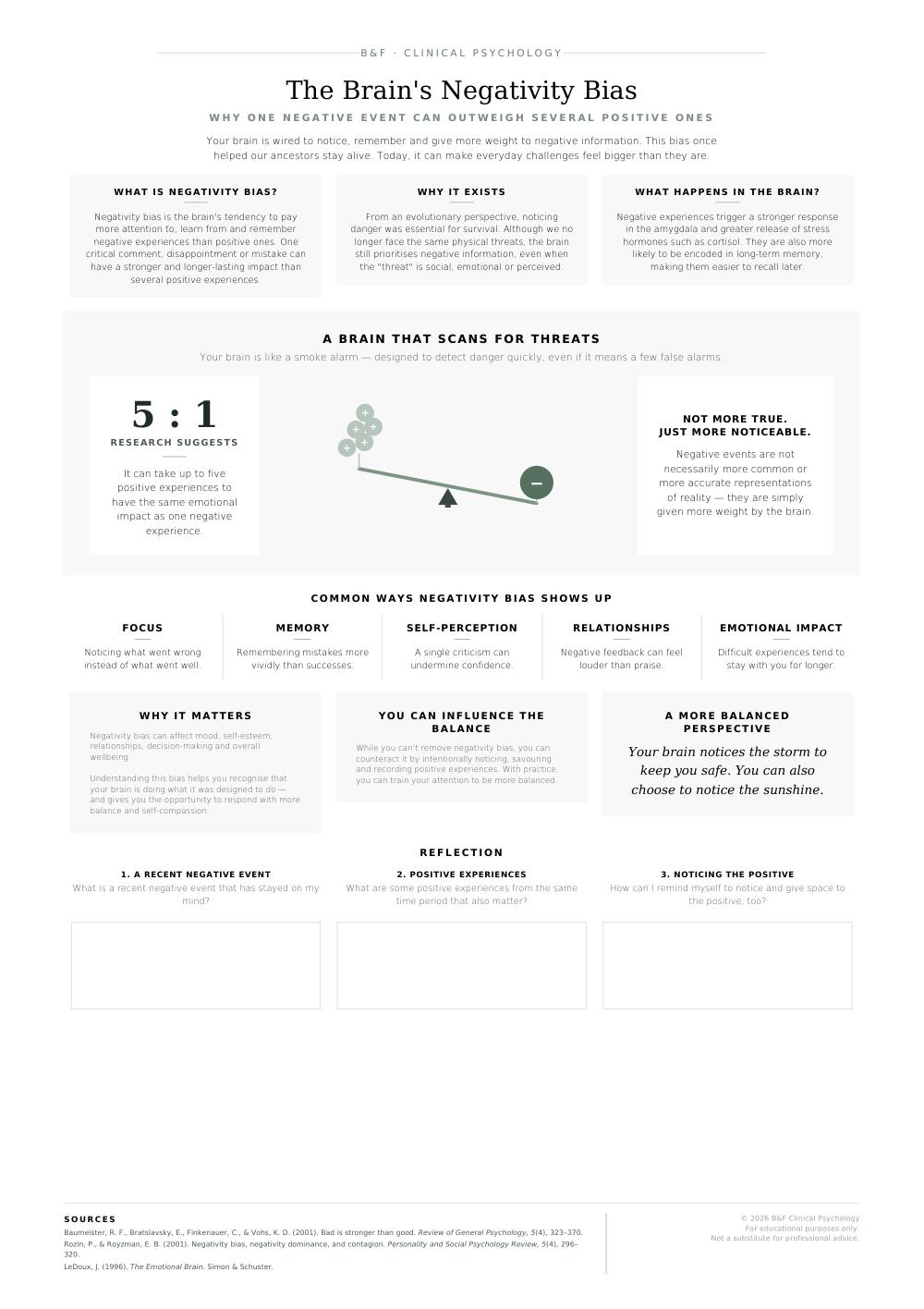
The brain's negativity bias
Why one negative event can outweigh several good ones, and what to do about it.
-
 Preview
Learn
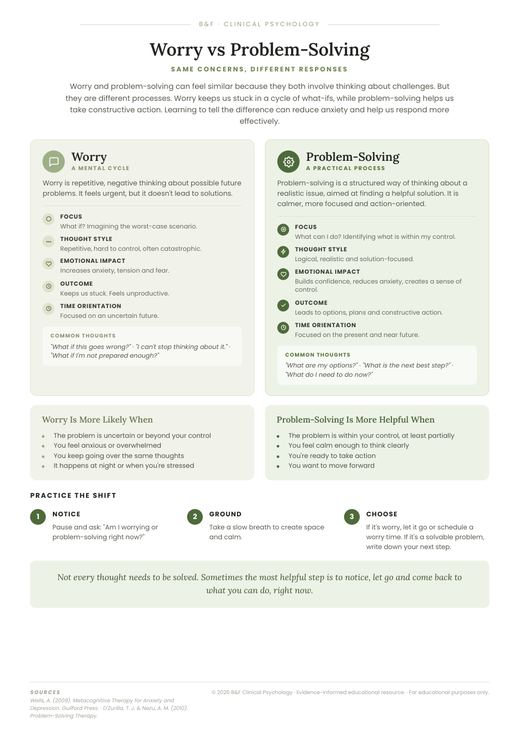
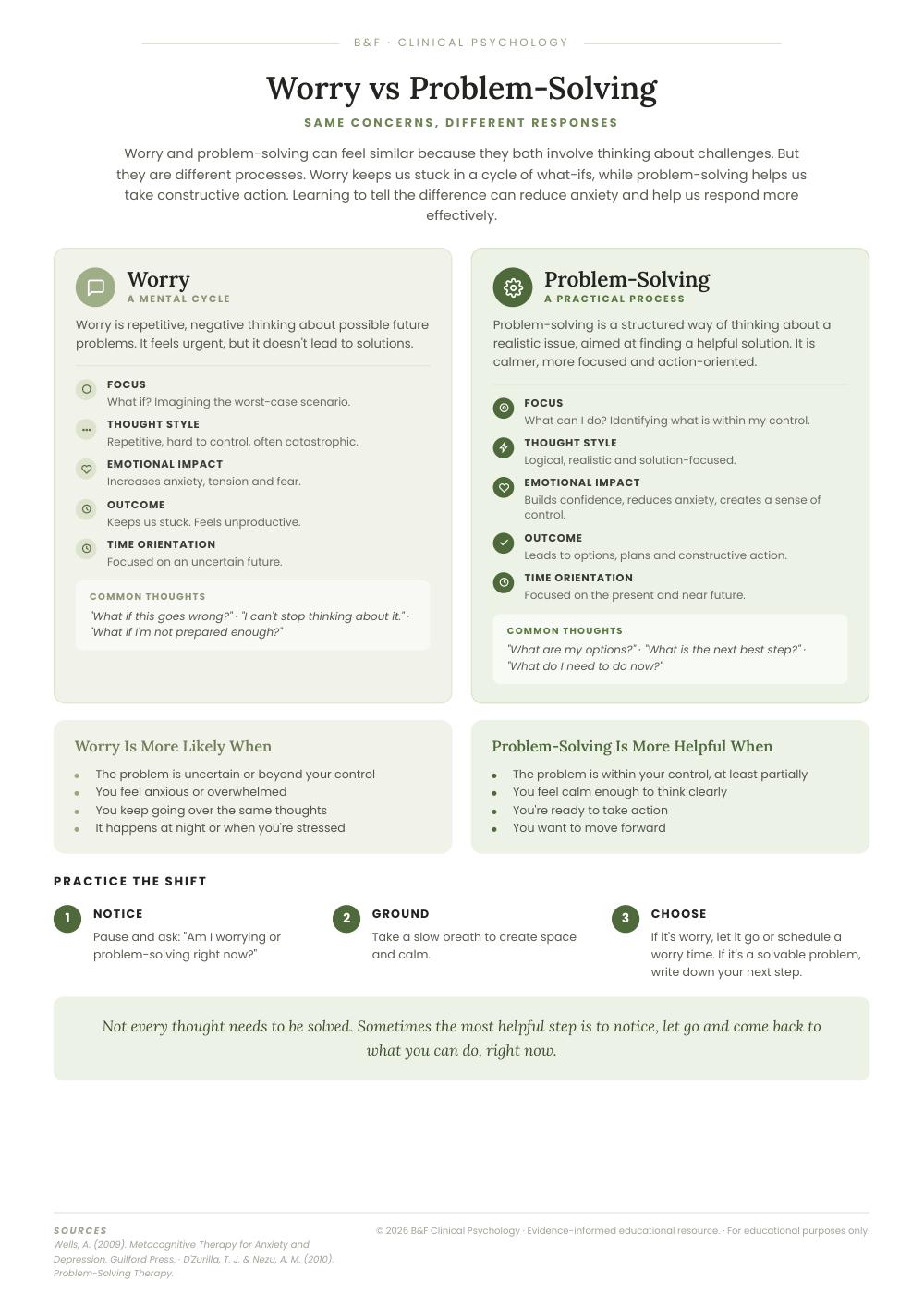
Worry vs problem-solving
They feel alike. One goes round in circles and the other gets somewhere.
-
 Preview
Learn
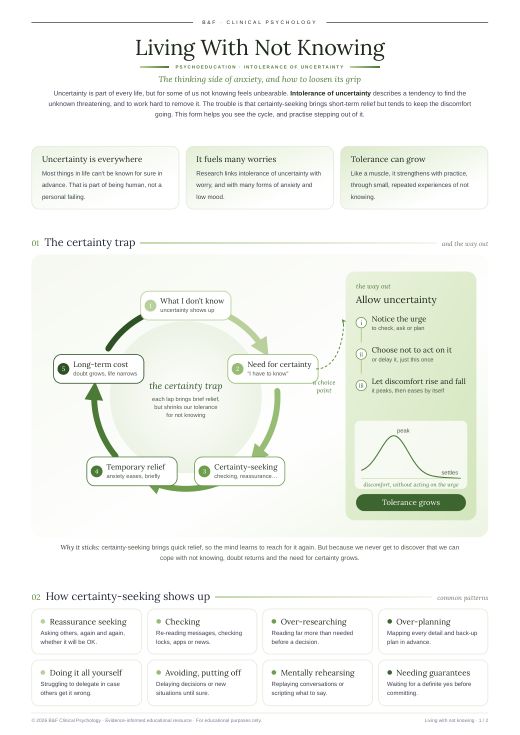
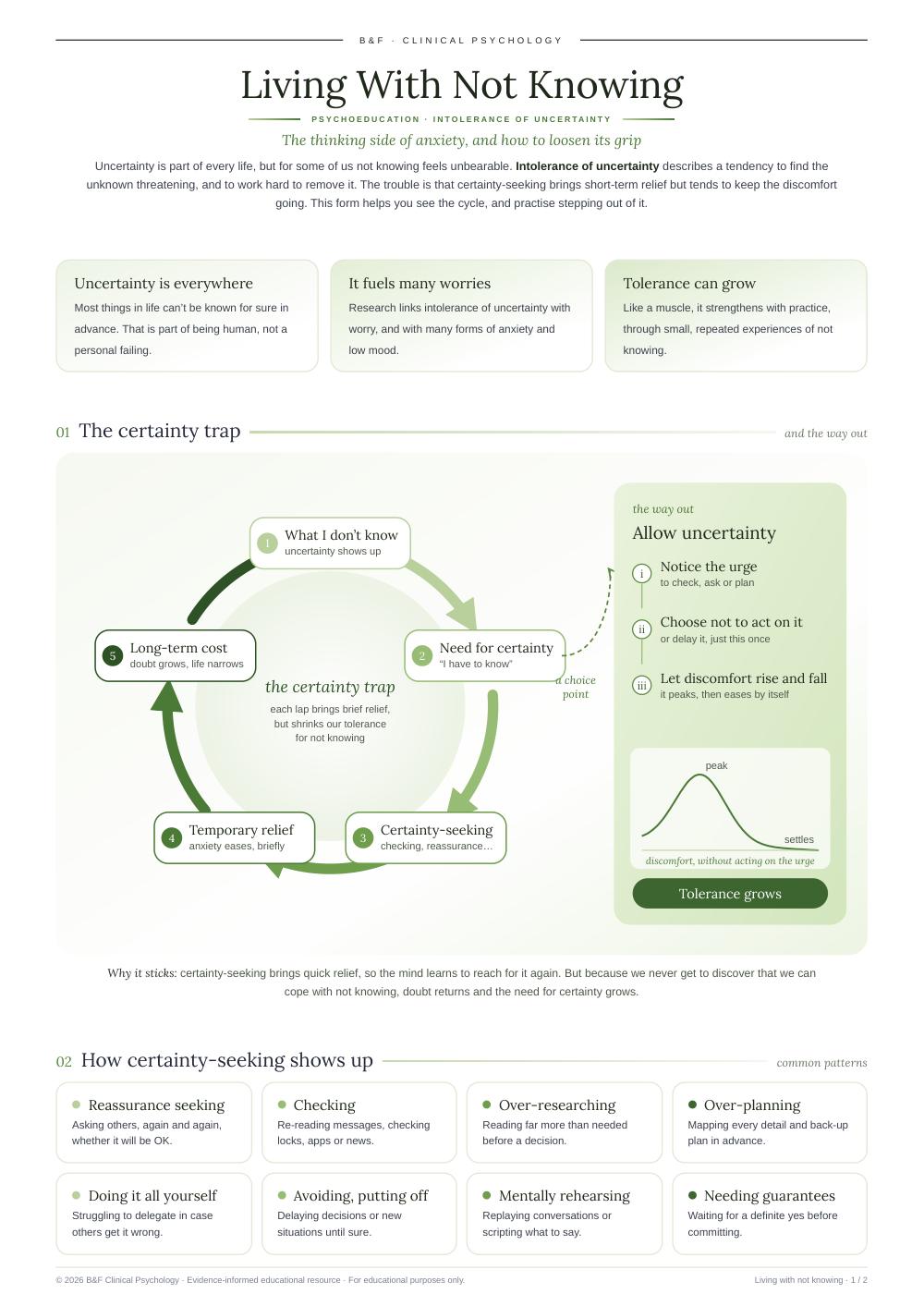
Living with not knowing
Intolerance of uncertainty: the thinking side of anxiety, and how to loosen its grip.
-
 Preview
Practice
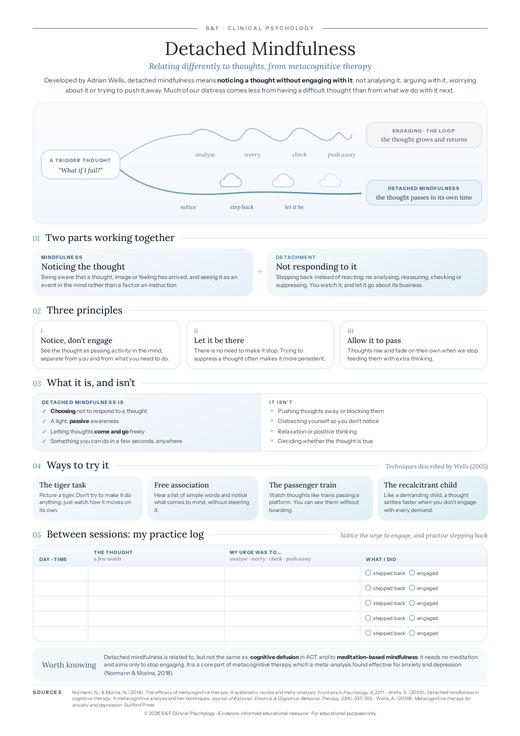
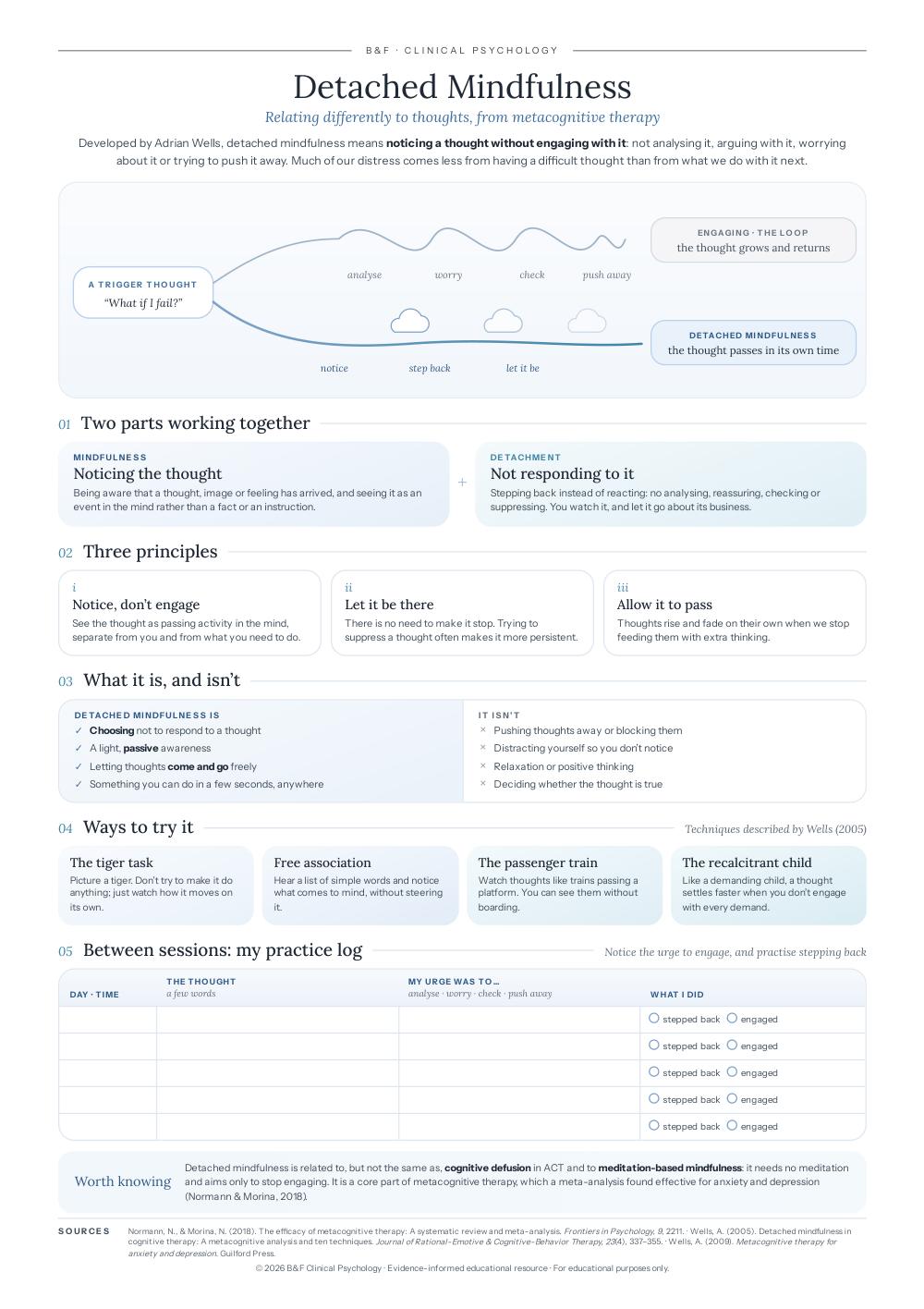
Detached mindfulness
Adrian Wells' metacognitive skill of noticing a thought without engaging with it.
-
 Preview
Learn
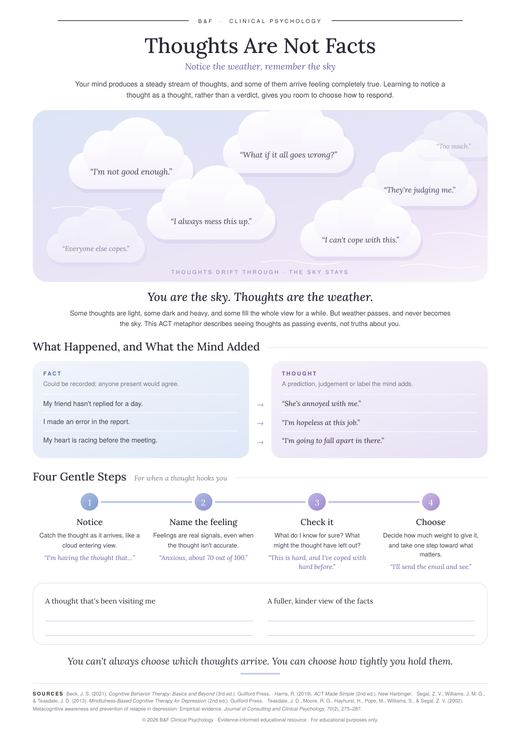
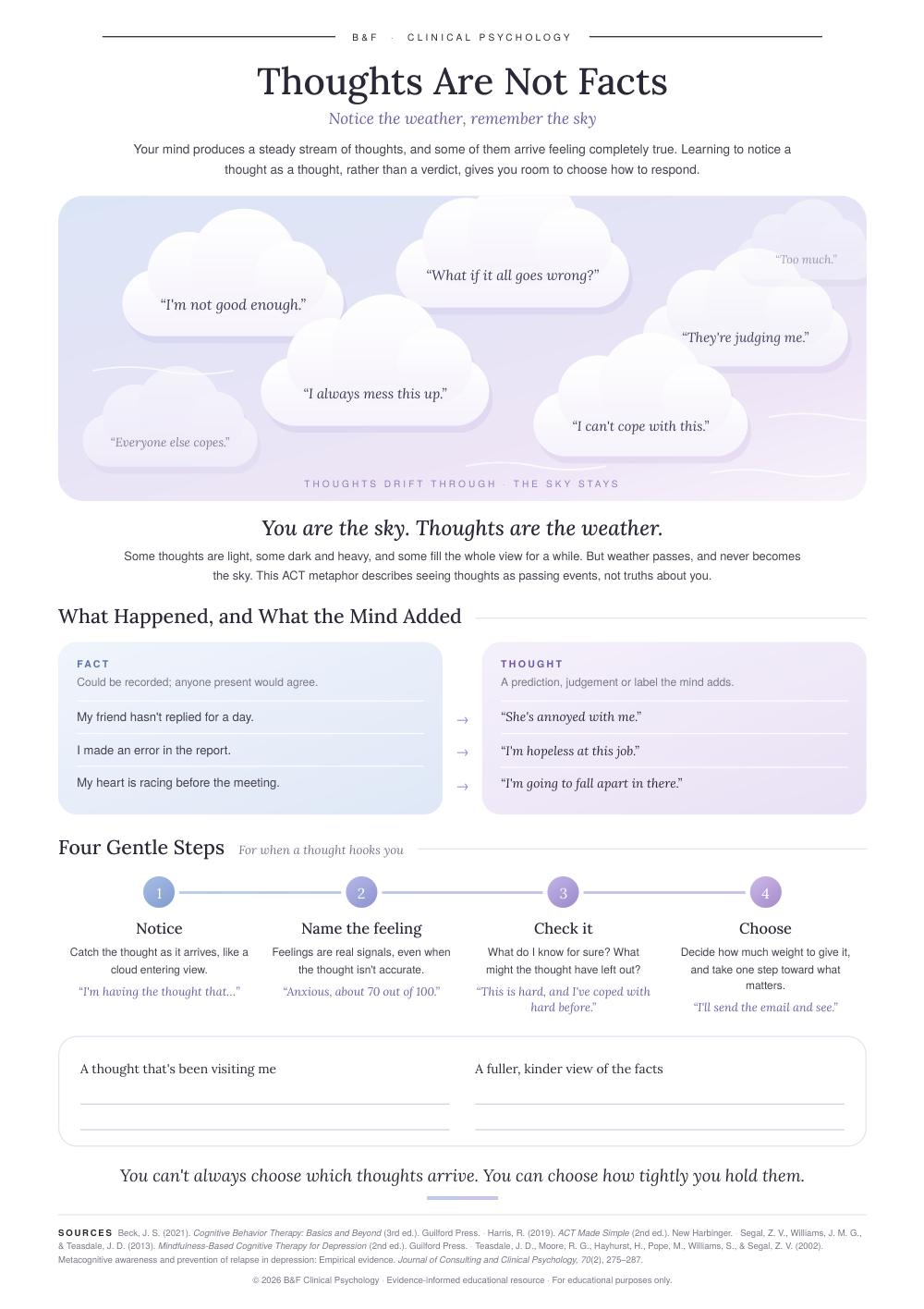
Thoughts are not facts
Learning to notice a thought as a thought, rather than a verdict, gives you room to choose.
-
 Preview
Learn
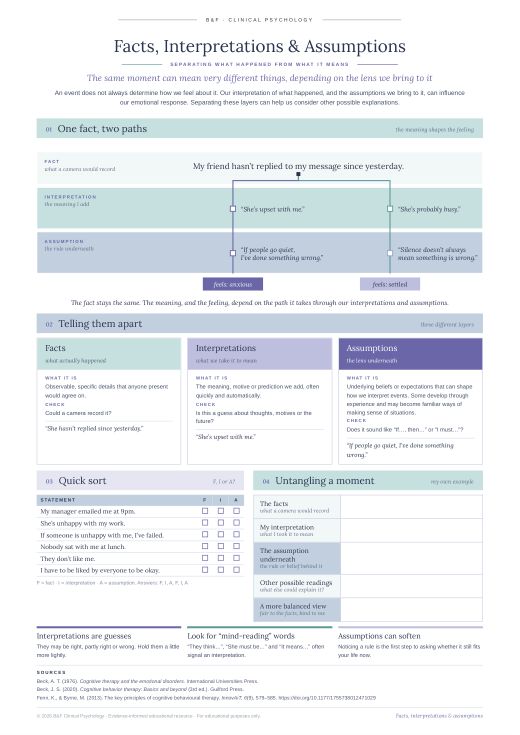
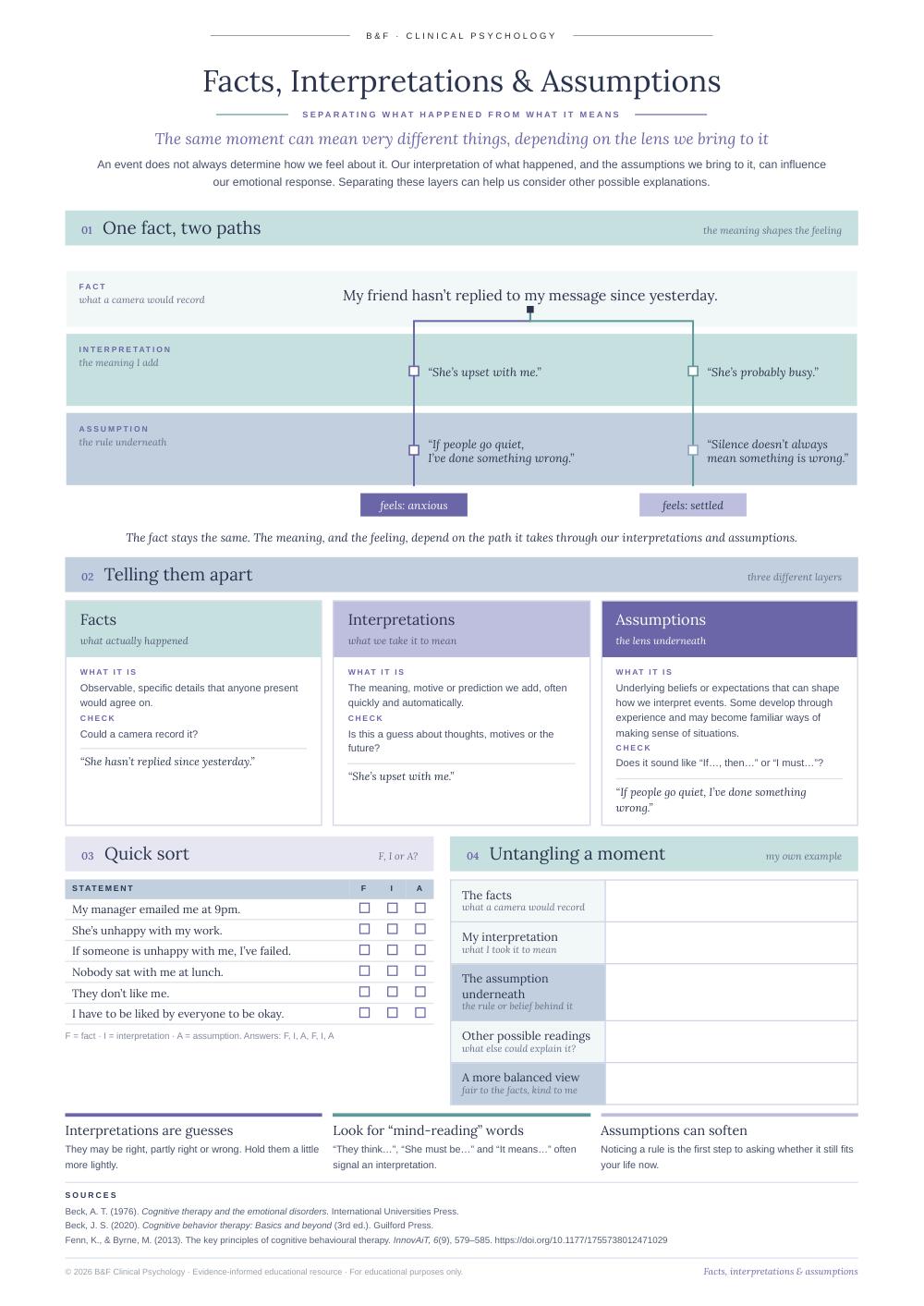
Facts, interpretations and assumptions
Separating what happened from what it means: one moment, seen through different lenses.
-
 Preview
Reflect
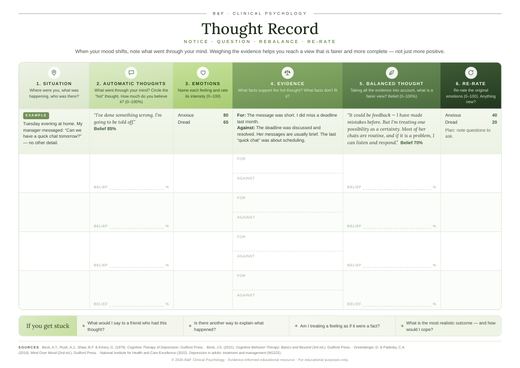
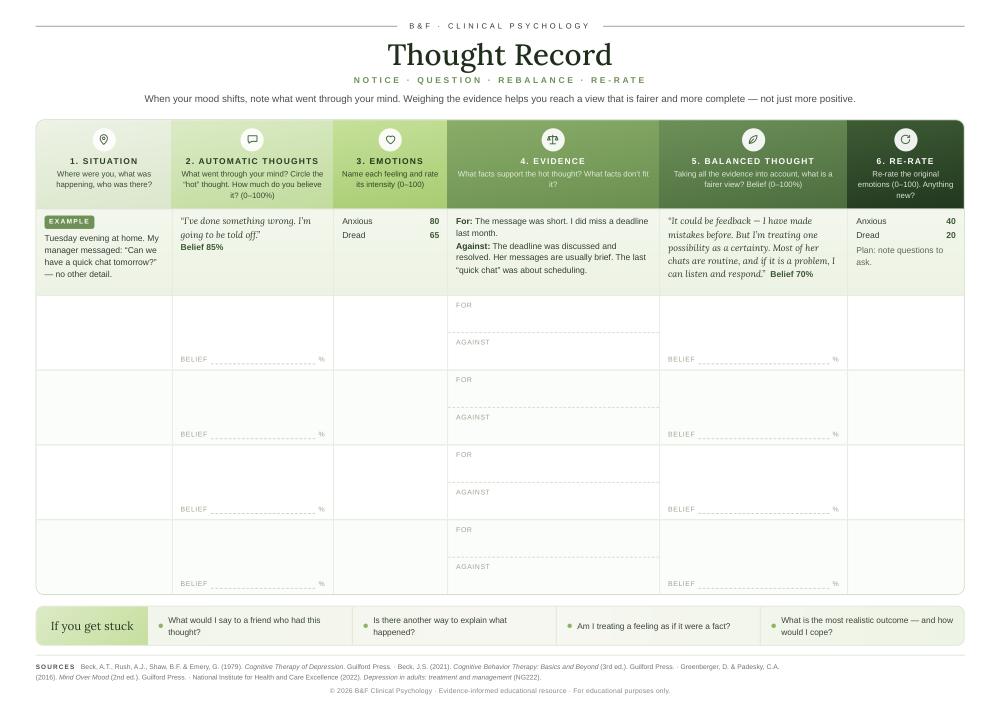
Thought record
Note what went through your mind, weigh the evidence, and reach a fairer, fuller view.
-
 Preview
Practice
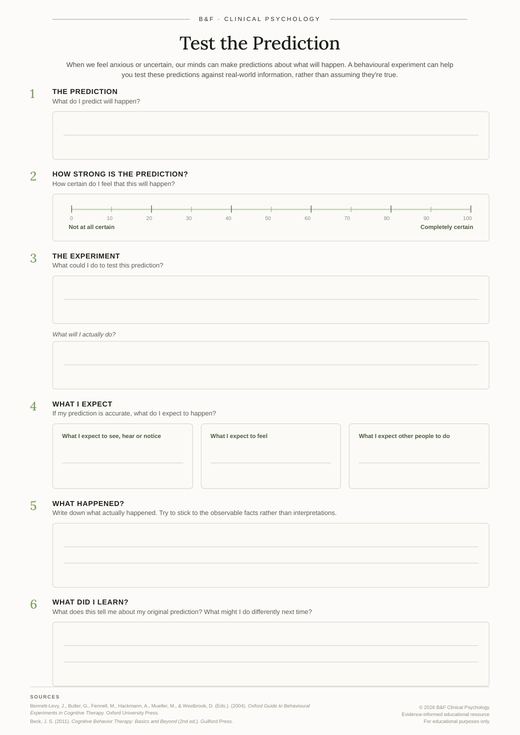
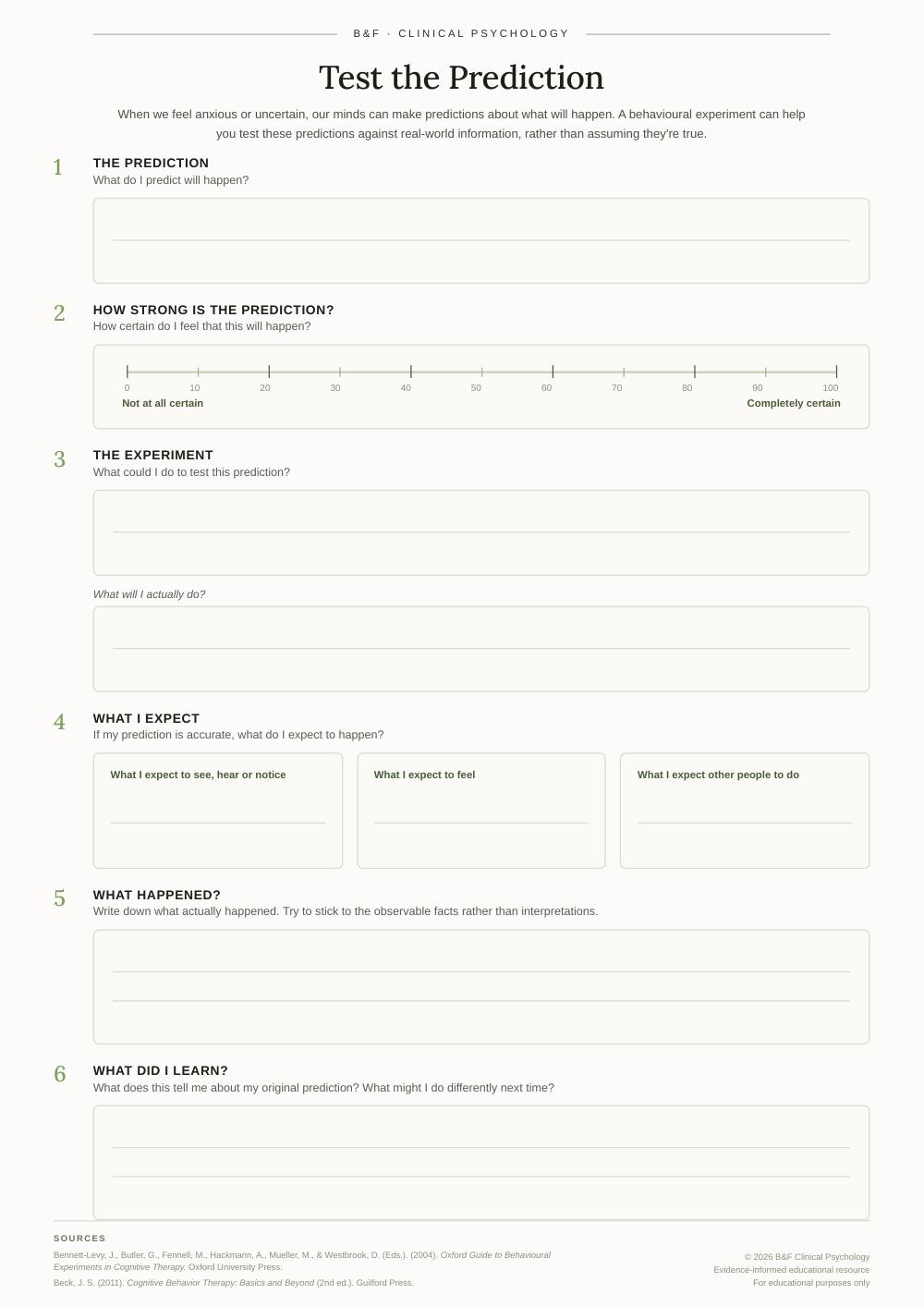
Test the prediction
A behavioural experiment for testing an anxious prediction against what actually happens.
-
 Preview
Learn
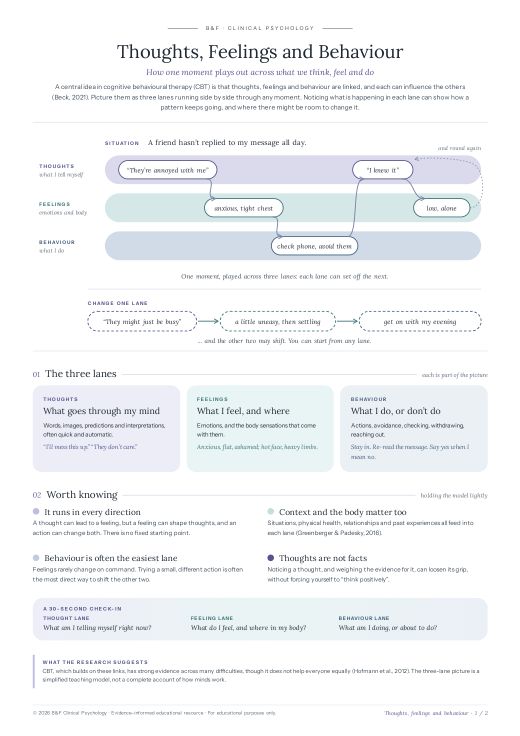
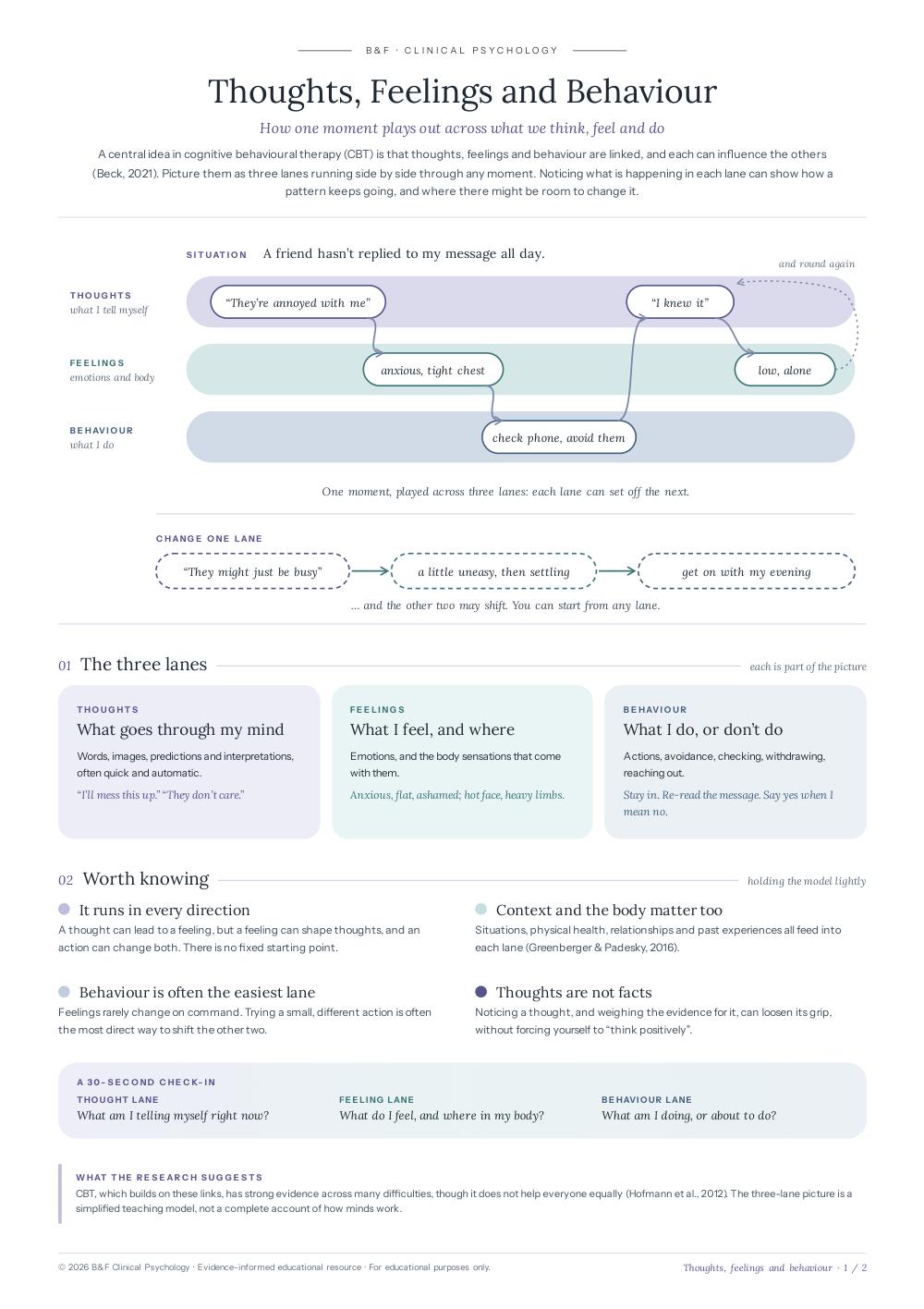
Thoughts, feelings and behaviour
How one moment plays out across what we think, feel and do, and where change can start.
-
 Preview
Learn
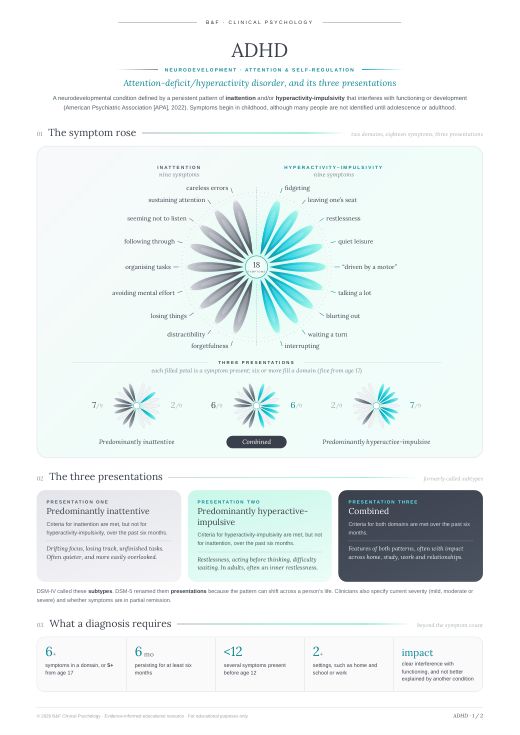
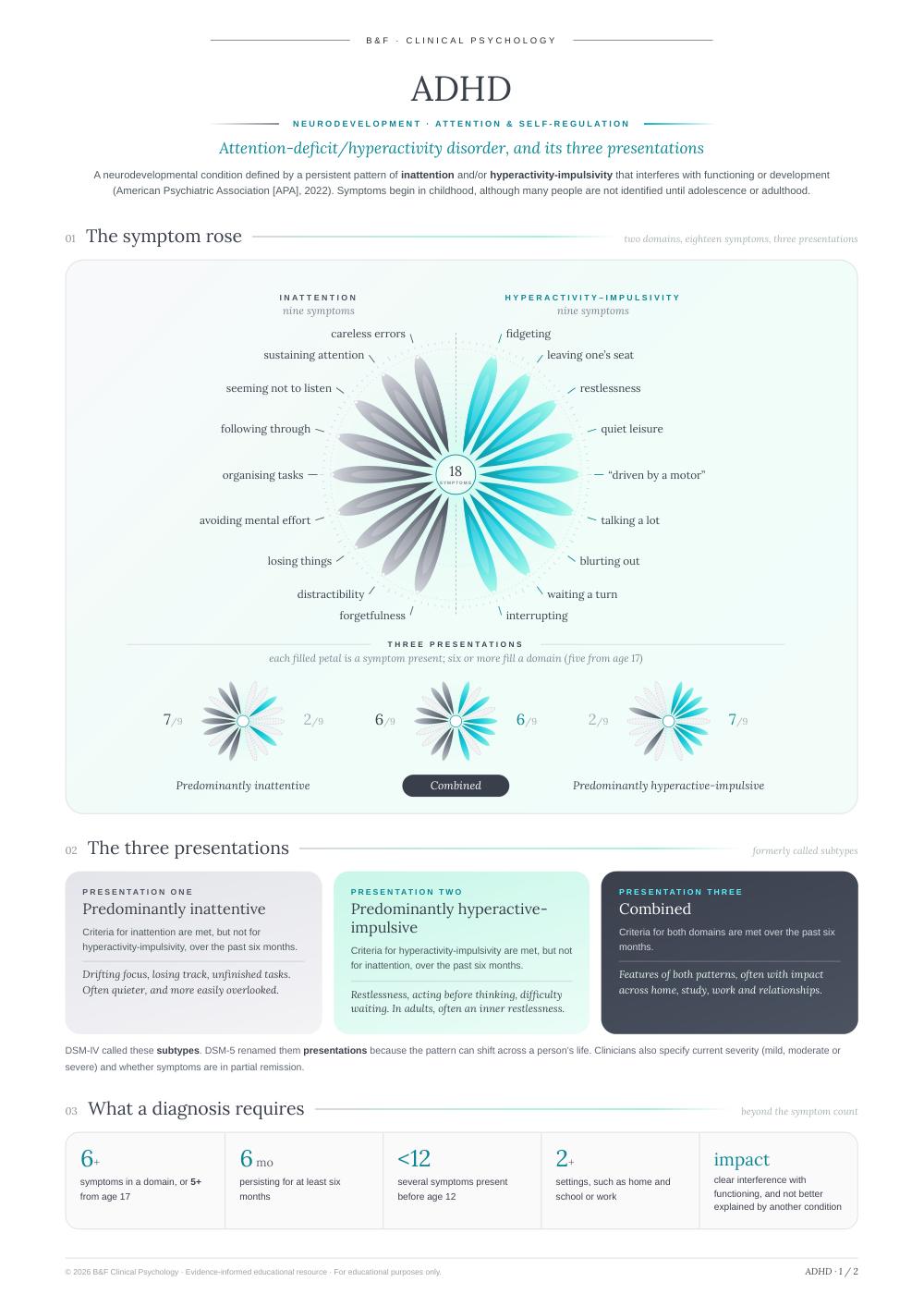
ADHD
What attention-deficit/hyperactivity disorder is, its three presentations, and how it can show up in daily life.
Important Information: These resources are provided for general education and self-reflection. They do not replace individual psychological assessment, diagnosis, professional advice or therapy. Accessing, downloading or using these resources does not establish a psychologist–client relationship with Barnardt & Fleming Clinical Psychology or constitute psychological consultation or treatment. These resources may not be suitable for every individual or circumstance. If you are uncertain about their suitability, please consult a qualified healthcare professional. If you are in crisis, feel unsafe, or may harm yourself or someone else, please contact your local emergency services or go to the nearest emergency department.