

Free resources
Emotions and self understanding
Recognise your feelings, make sense of your experiences, and discover what matters to you.
These resources are for general education and self-reflection and do not replace professional psychological care. Accessing, downloading or using them does not establish a psychologist–client relationship with Barnardt & Fleming Clinical Psychology.
Emotions and self understanding resources
-
 Preview
Learn
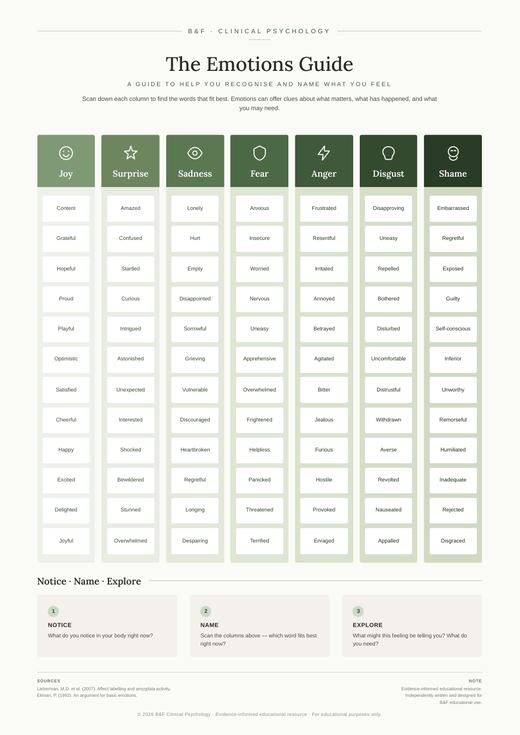
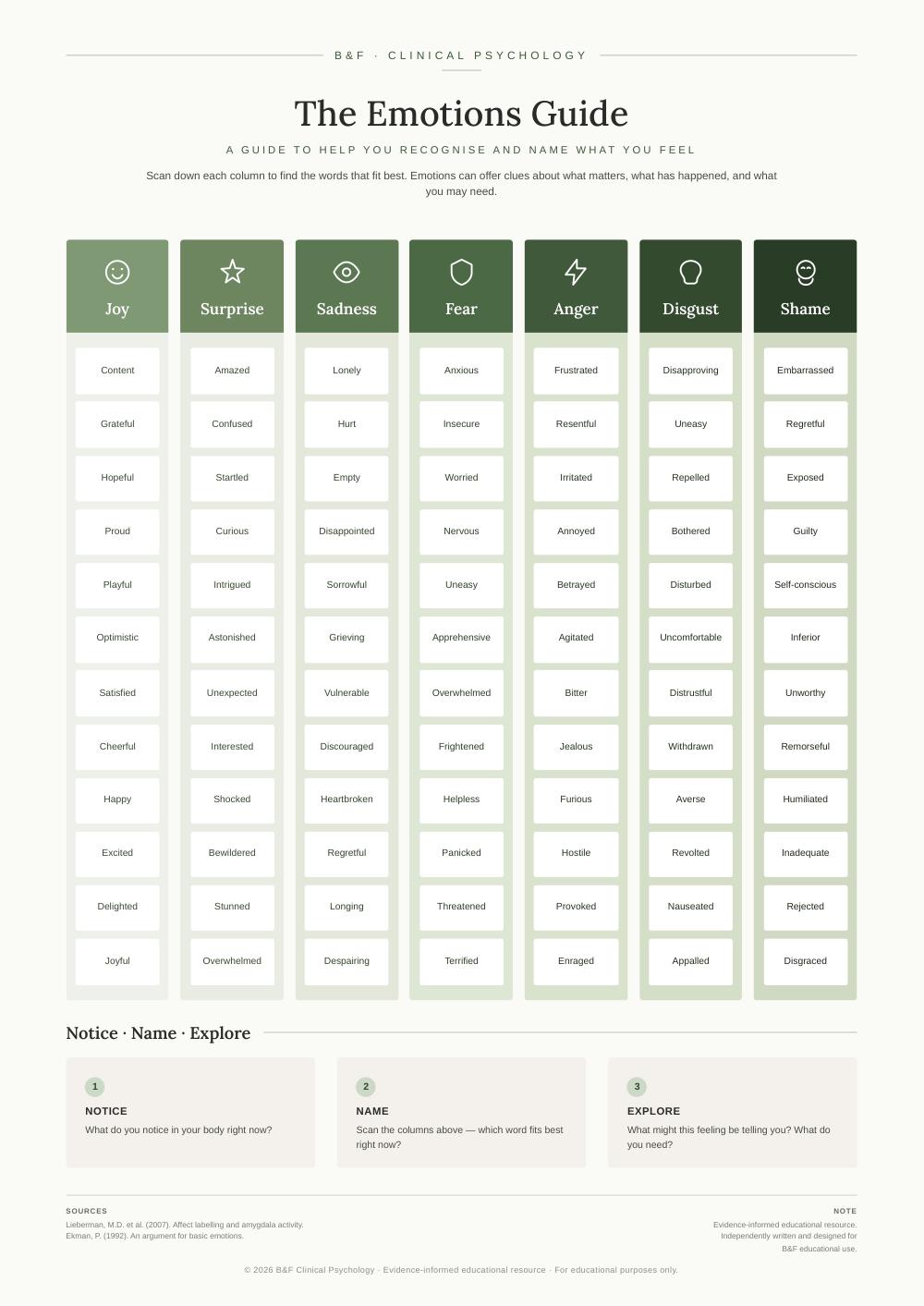
The emotions guide
A vocabulary of feelings, arranged so you can scan for the word that fits.
-
 Preview
Learn
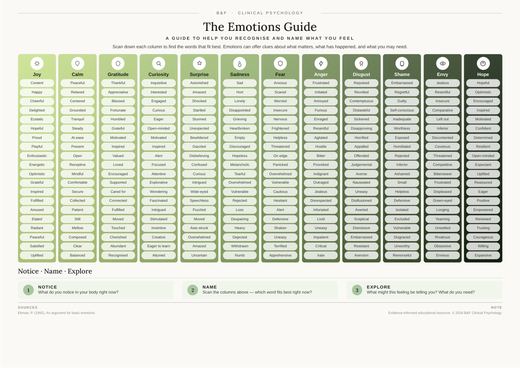
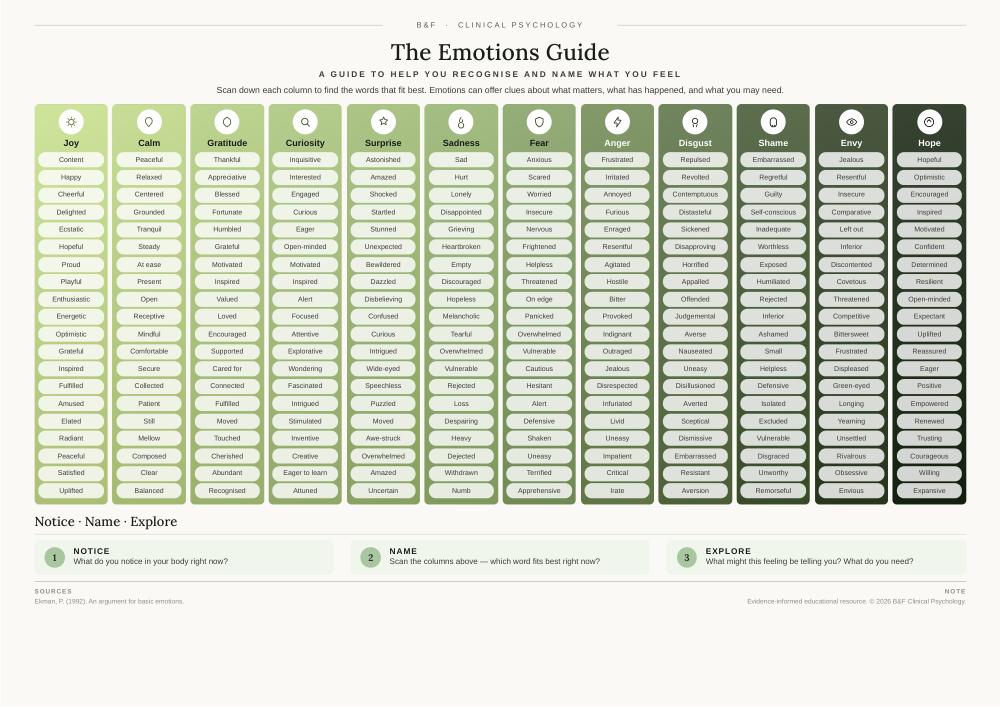
The emotions guide, extended
The fuller version of the guide, with more words for each family of feeling.
-
 Preview
Learn
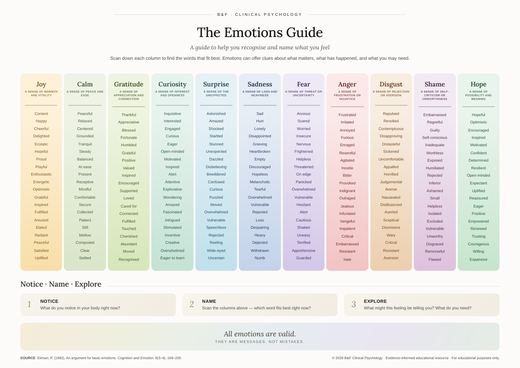
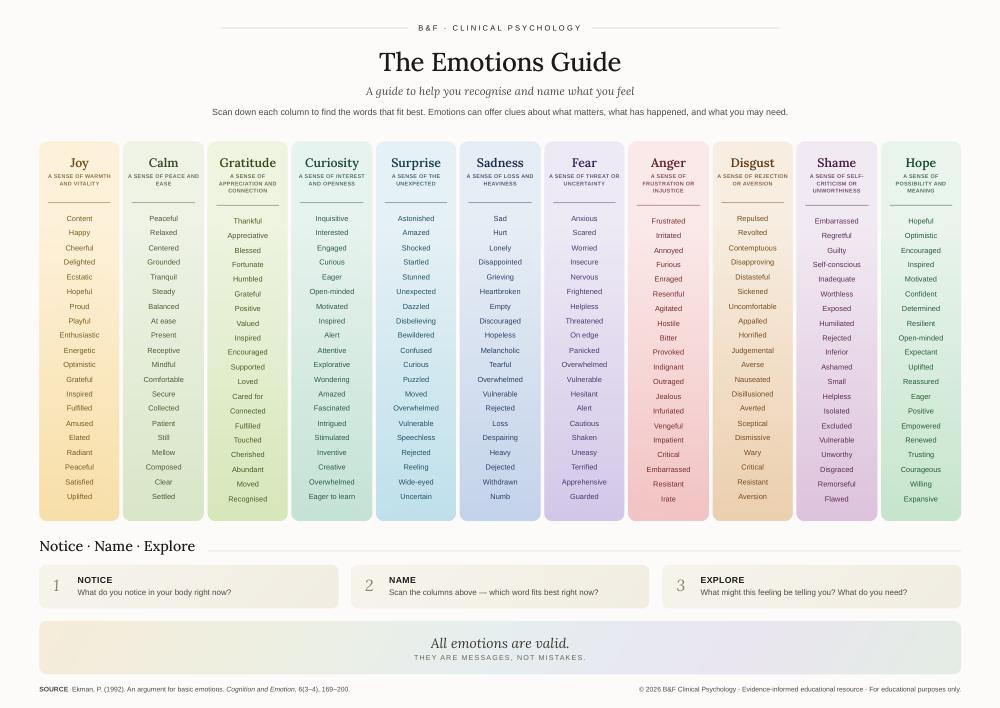
The emotions guide, in colour
A third layout of the feelings vocabulary, with the same columns to scan.
-
 Preview
Learn
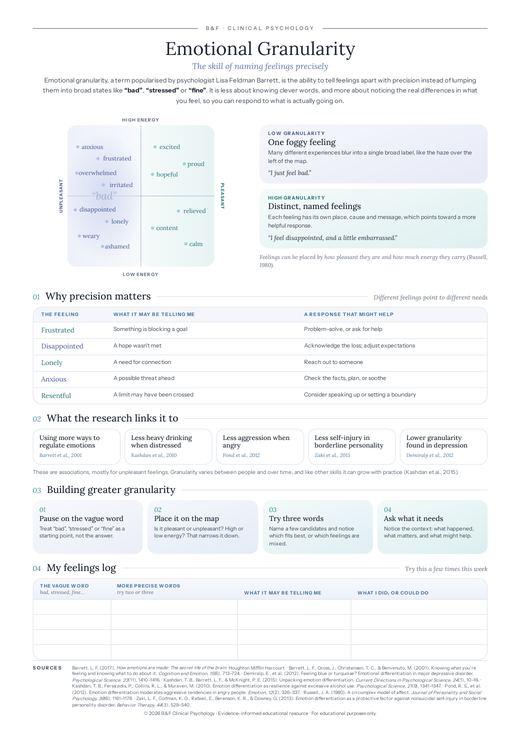
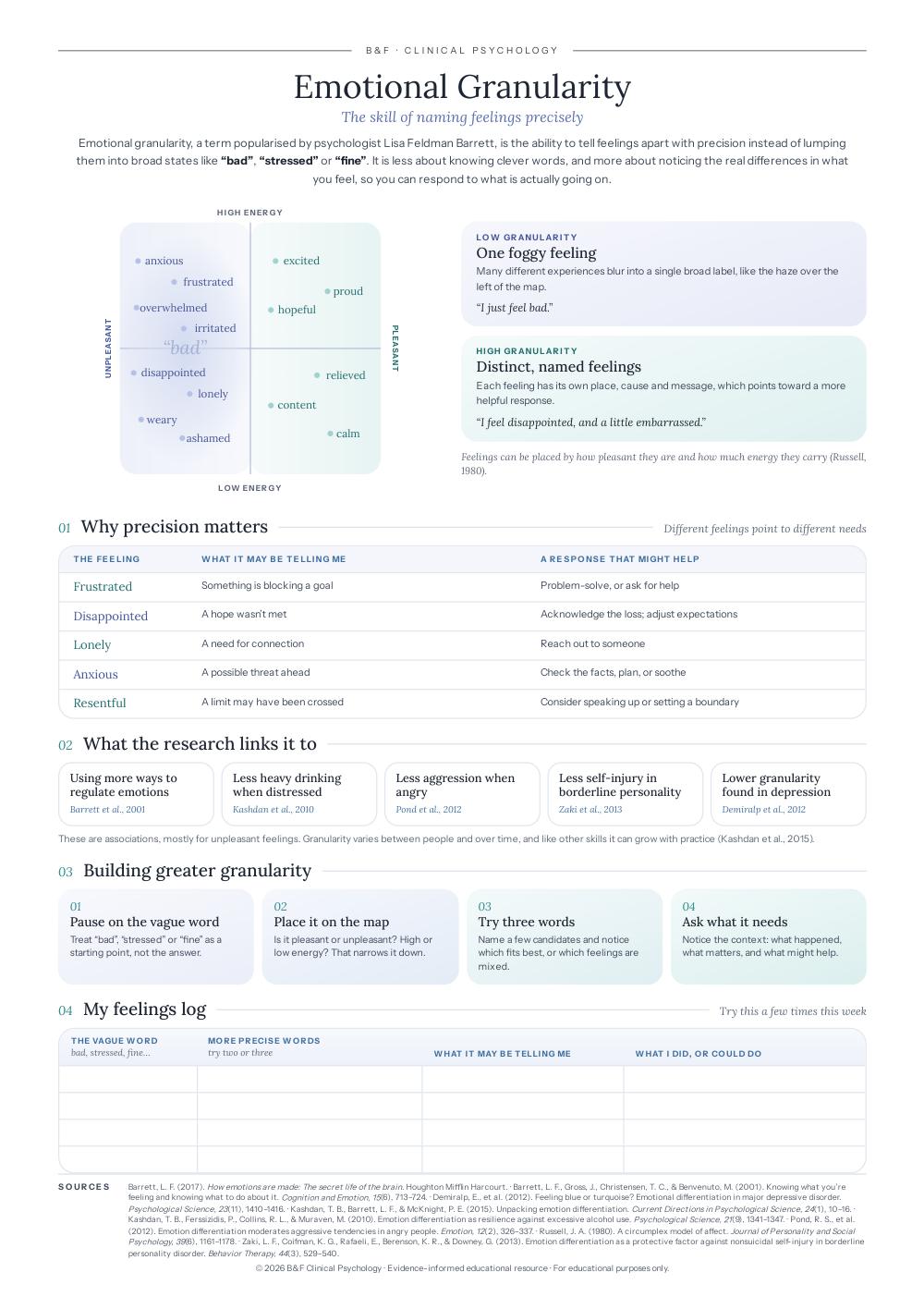
Emotional granularity
The skill of naming feelings precisely, and why it changes how they are felt.
-
 Preview
Learn
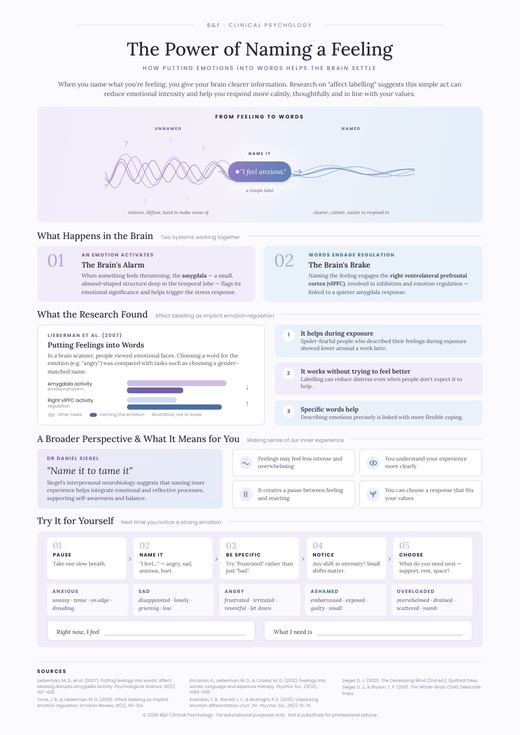
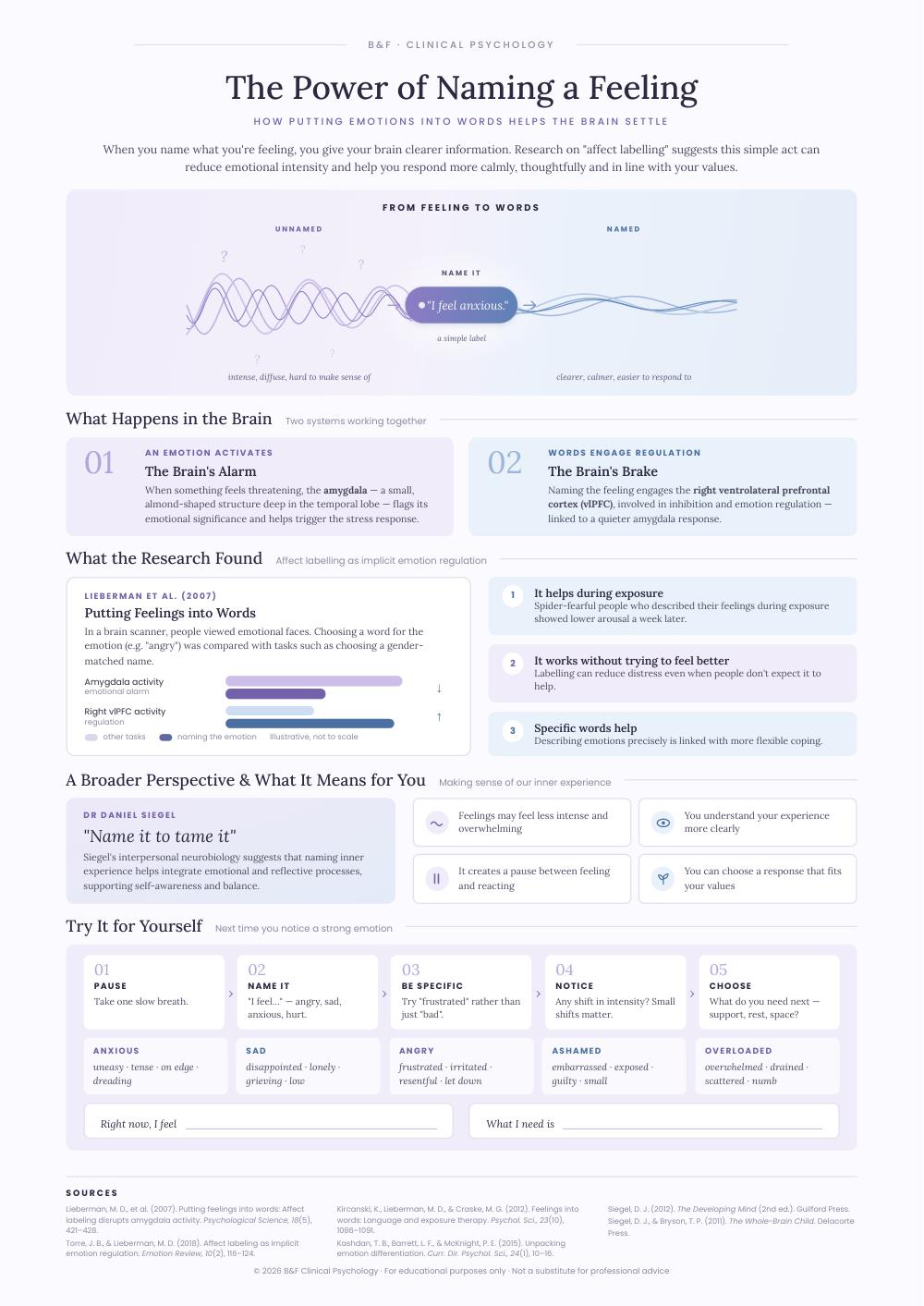
The power of naming a feeling
How putting emotions into words, known as affect labelling, can help the brain settle.
-
 Preview
Learn
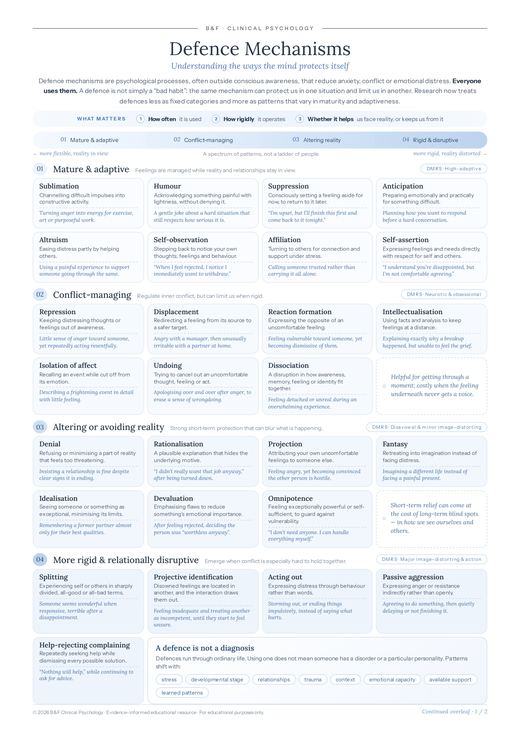
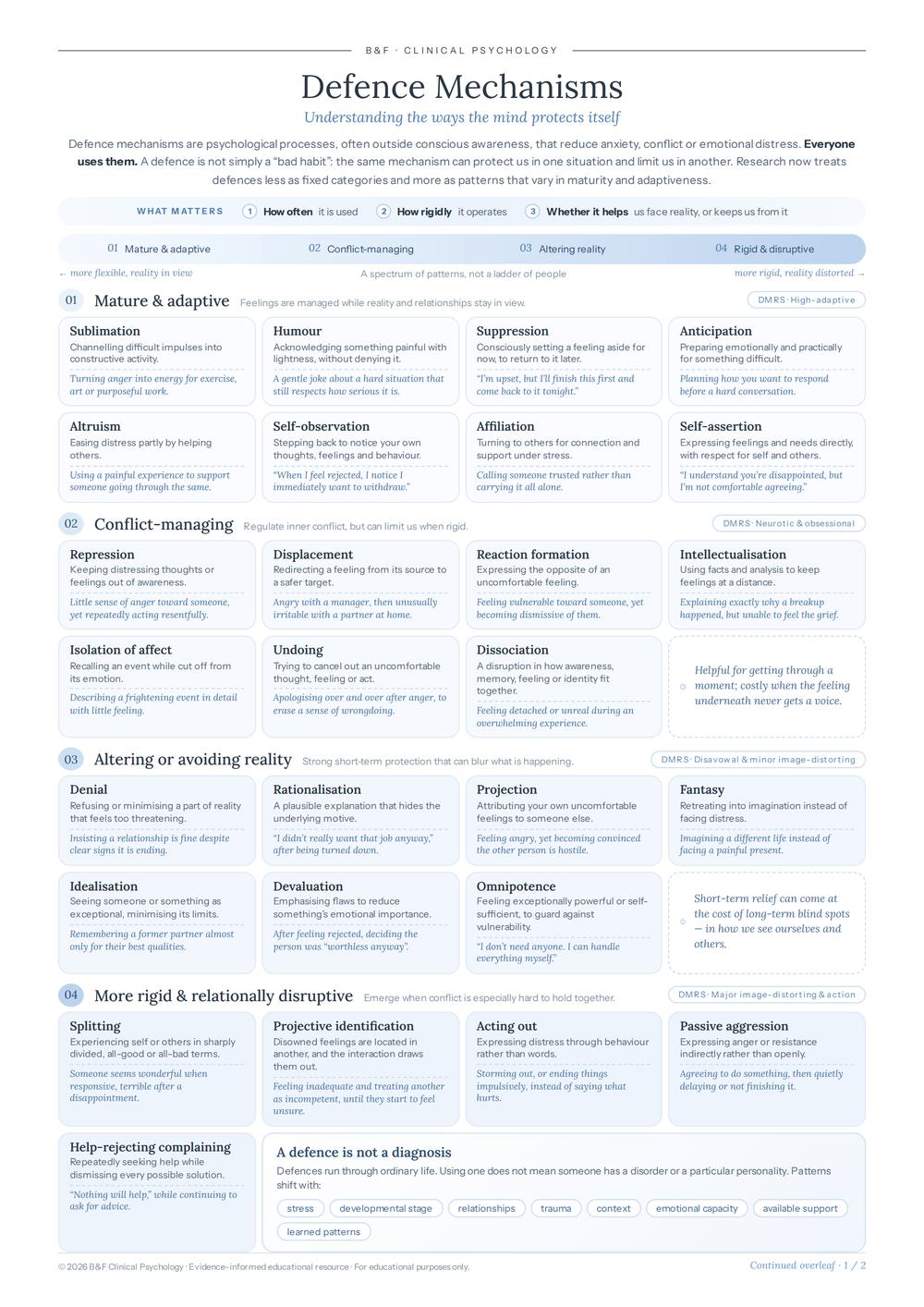
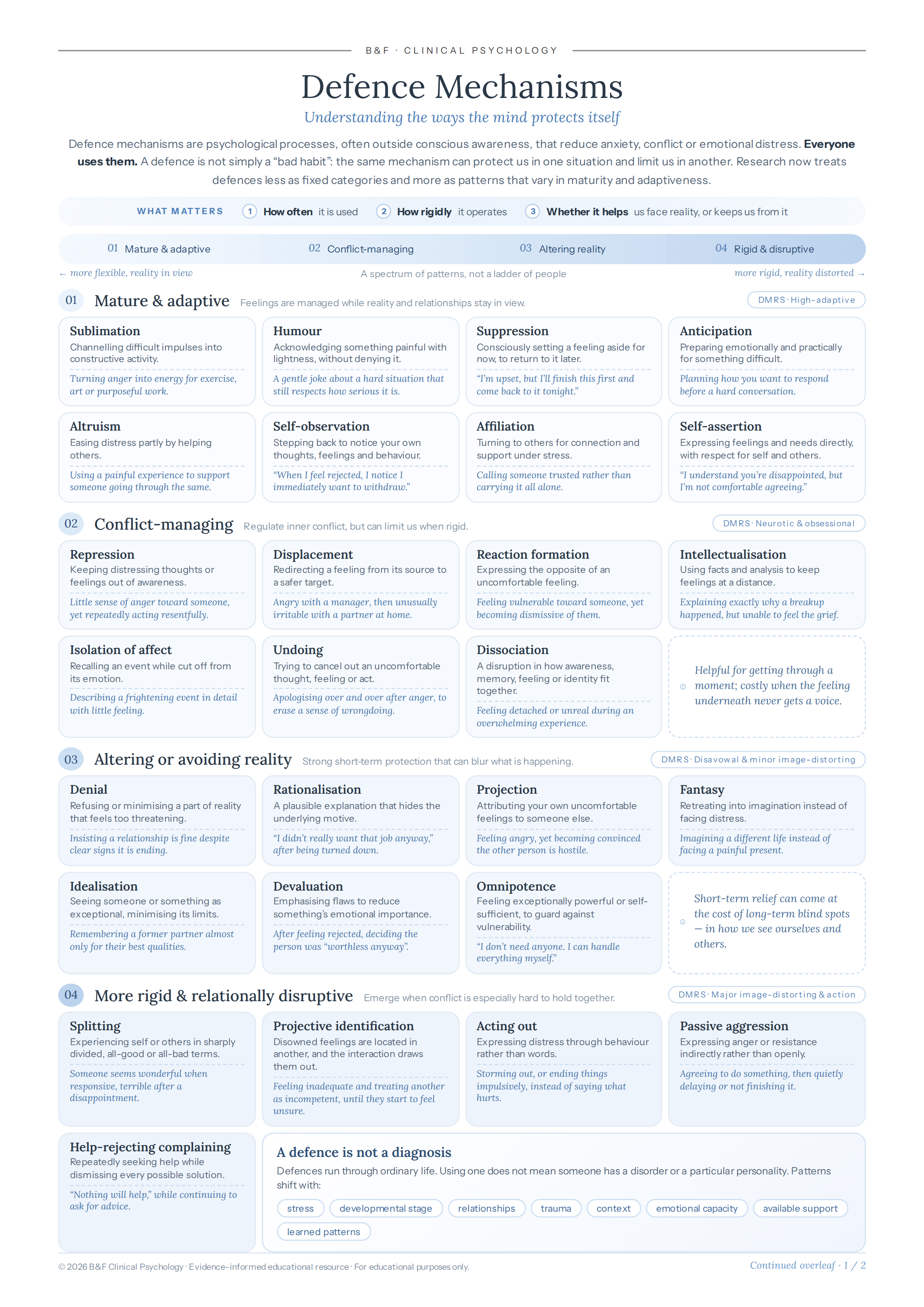
Defence mechanisms (1)
Ways the mind protects itself, grouped from the most flexible to the most distorting.
-
 Preview
Learn
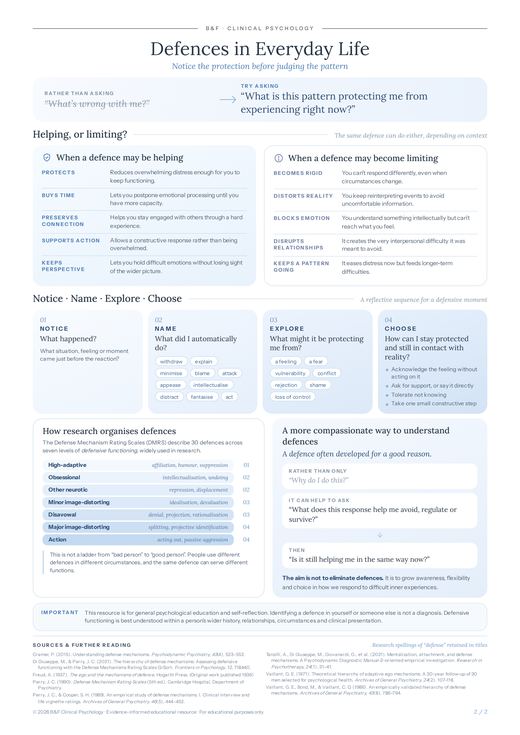
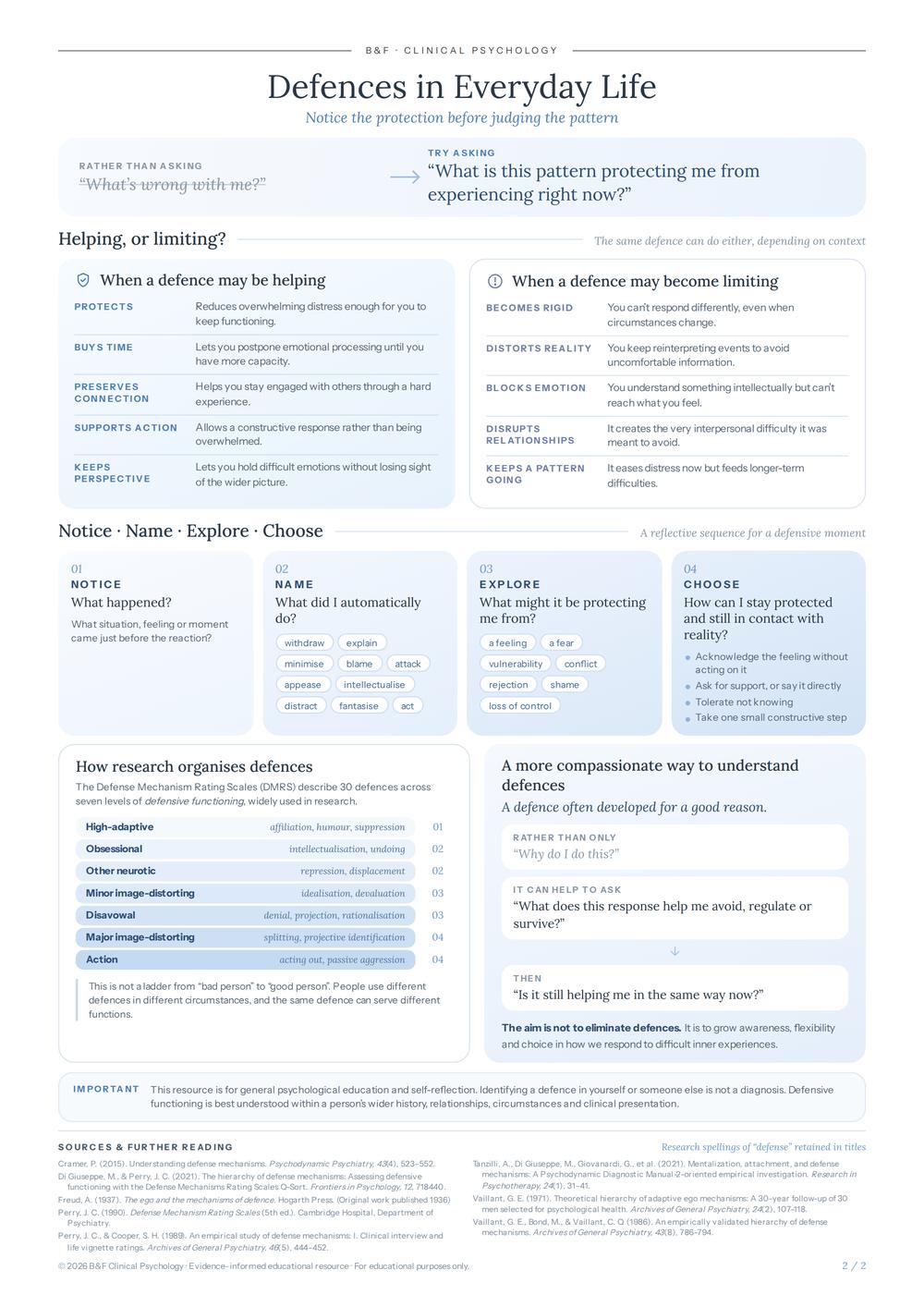
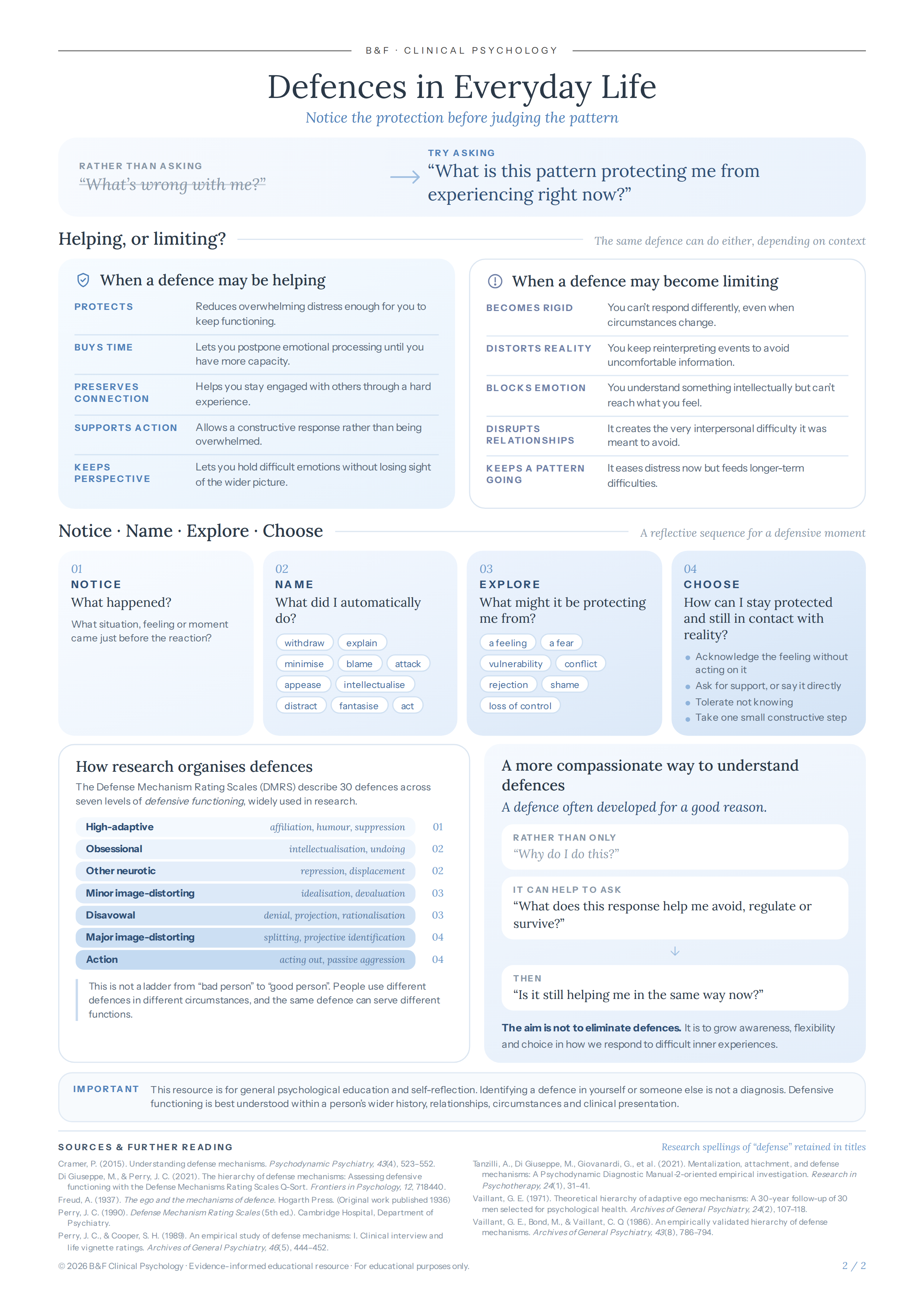
Defence mechanisms (2)
Defences in everyday life: when a defence helps, when it limits, and a kinder way to understand it.
-
 Preview
Learn
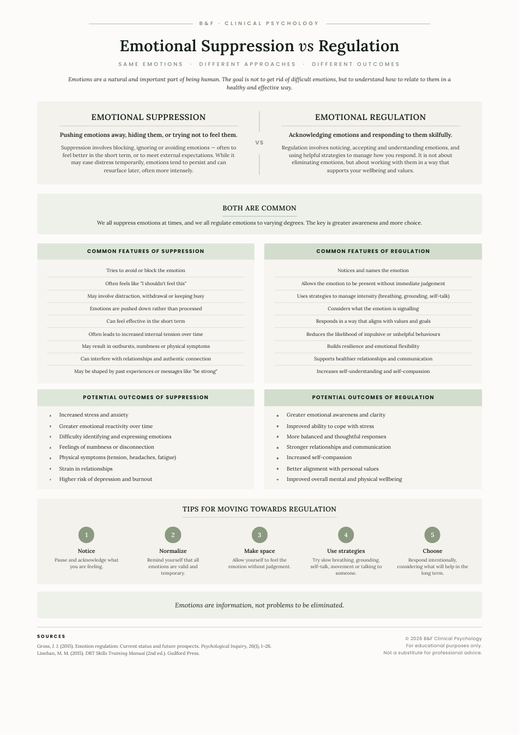
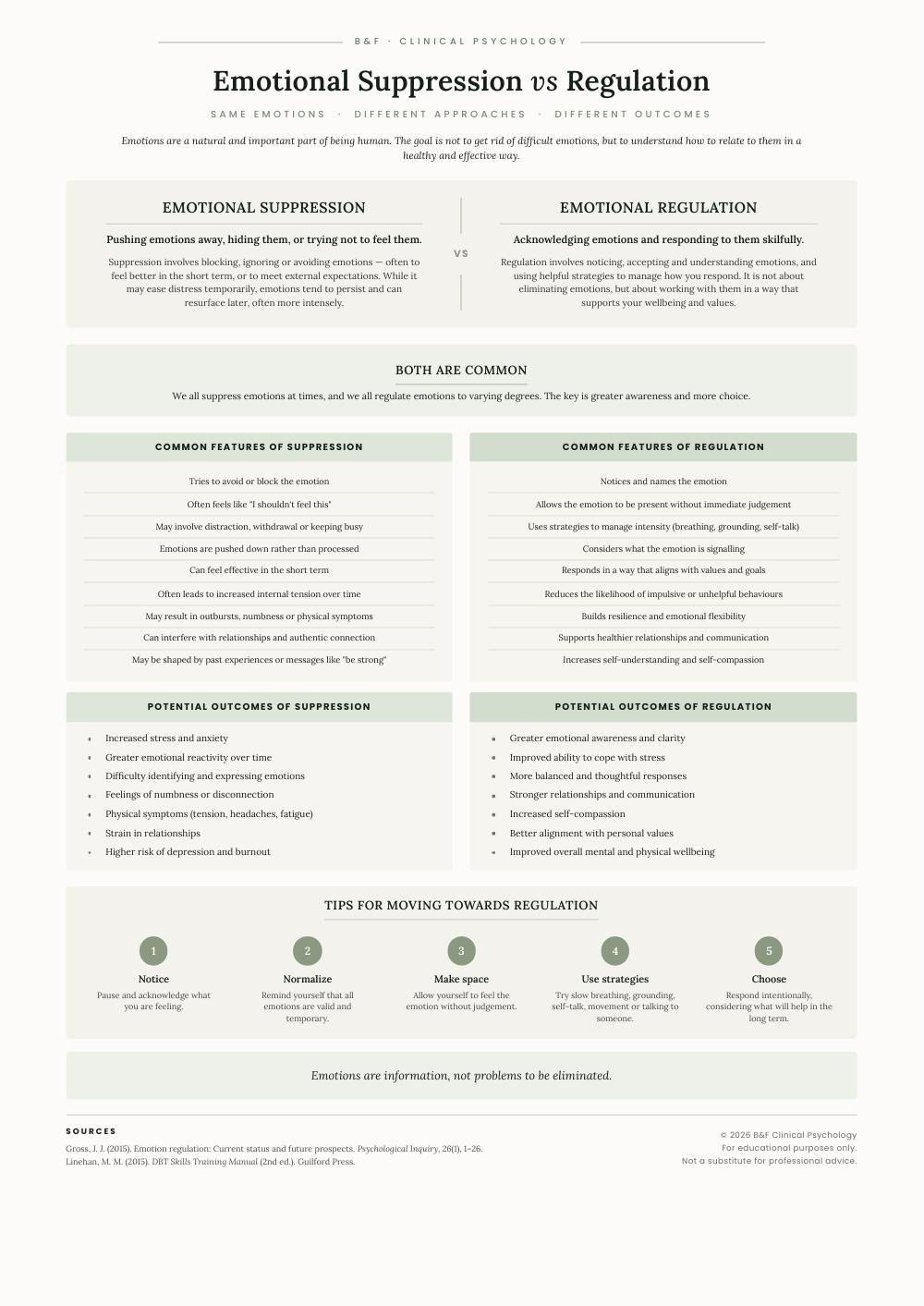
Emotional suppression vs regulation
Pushing a feeling down and working with it look similar from outside. They end very differently.
-
 Preview
Practice
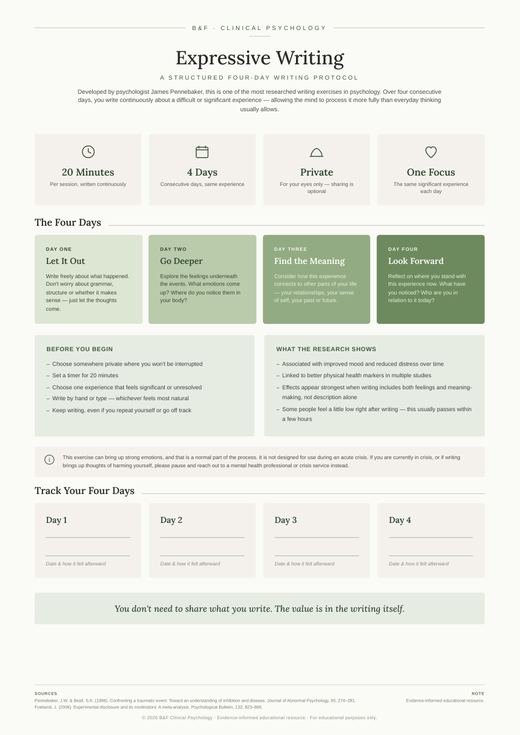
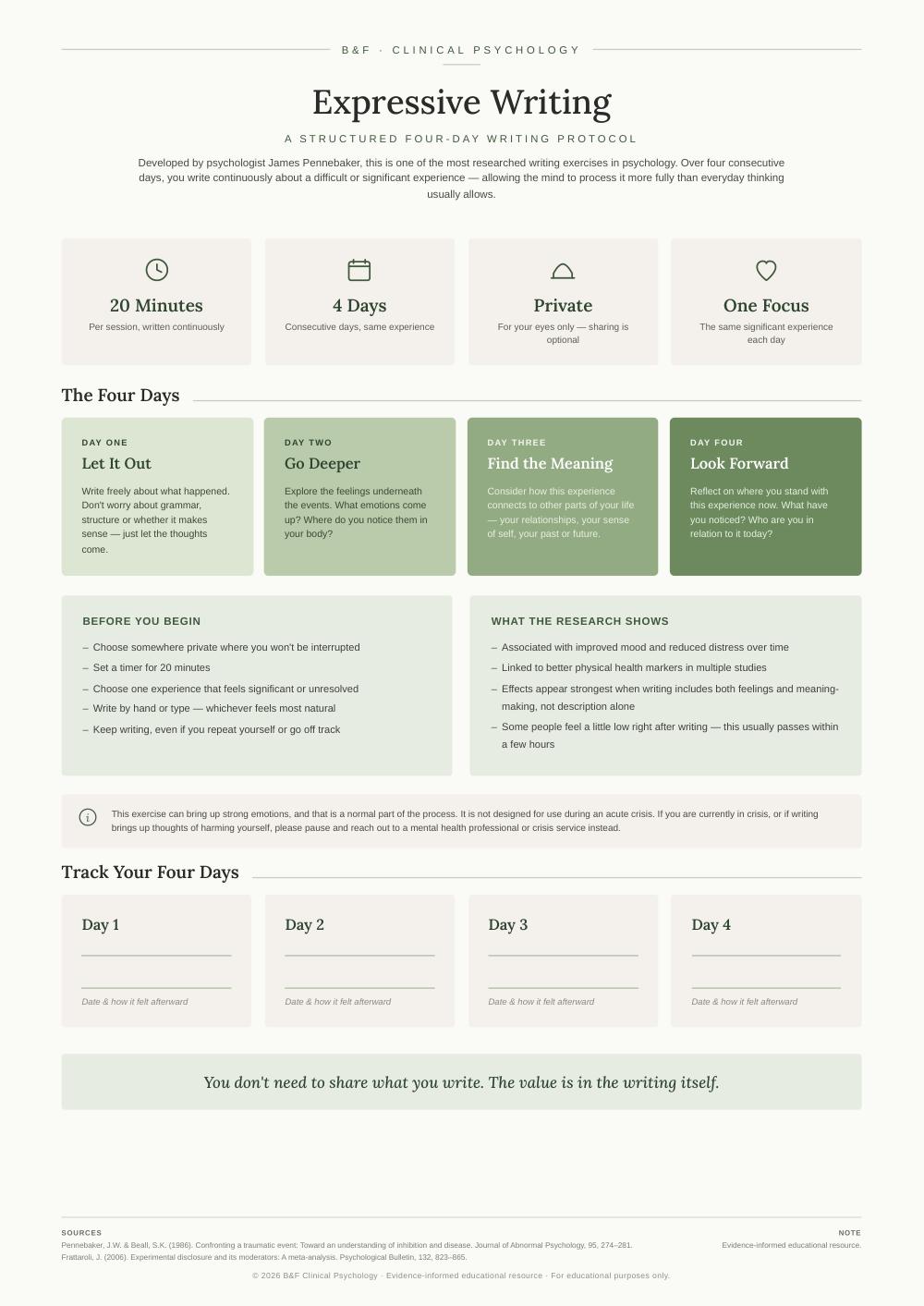
Expressive writing
Pennebaker's four-day writing protocol, one of the most researched exercises in psychology.
-
 Preview
Practice
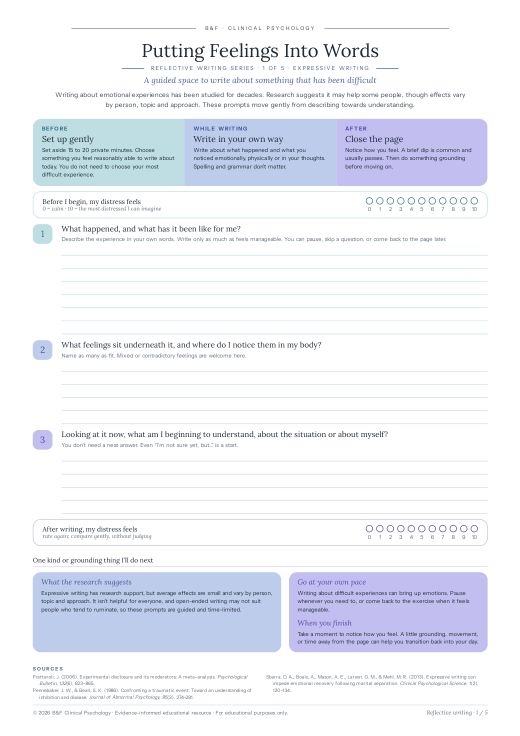
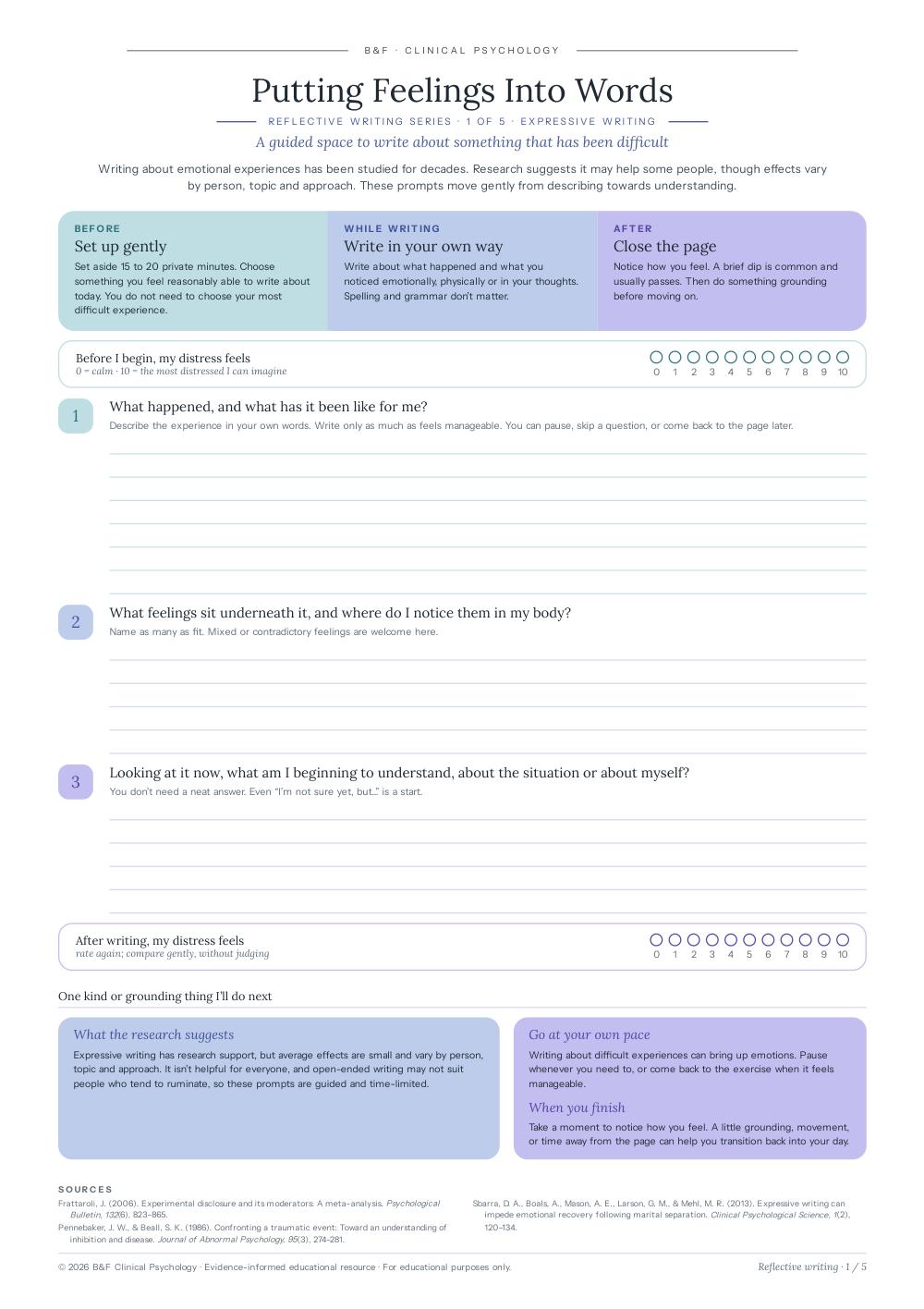
Putting feelings into words
Reflective writing, 1 of 5. A guided space to write about something that has been difficult.
-
 Preview
Practice
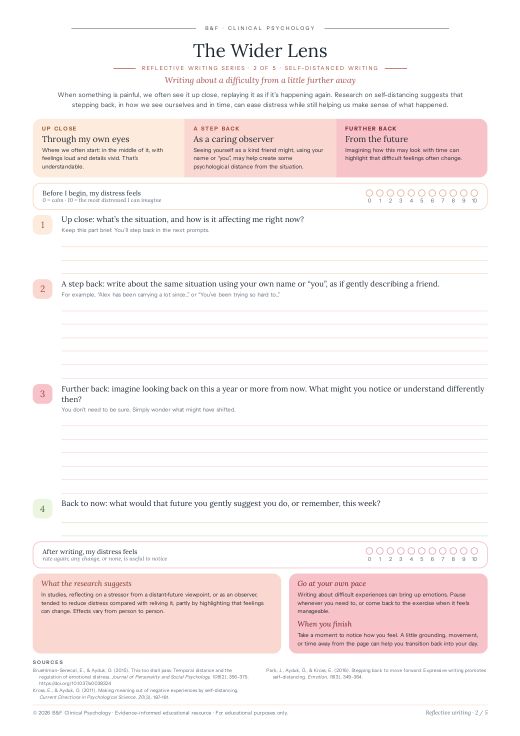
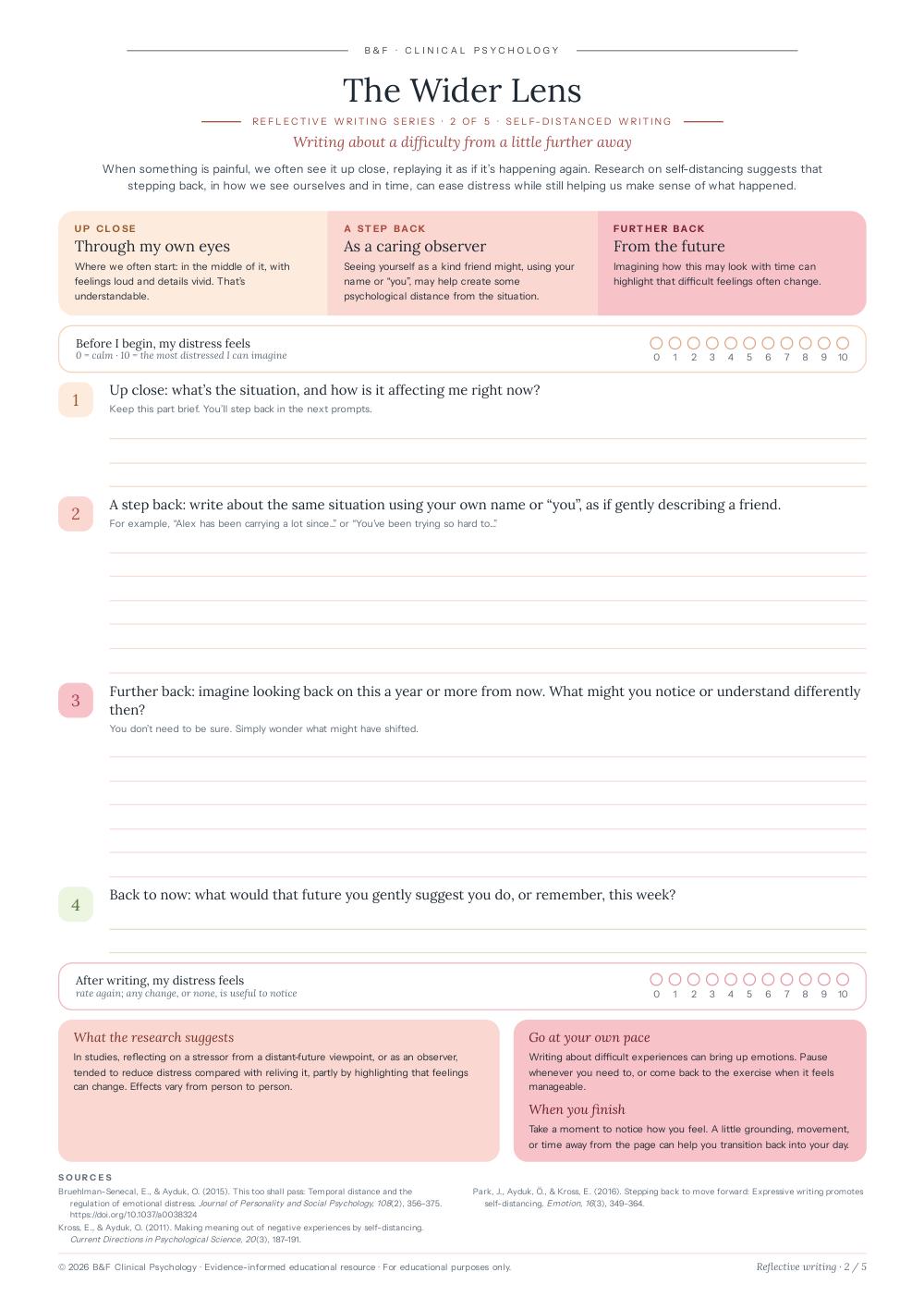
The wider lens
Reflective writing, 2 of 5. Writing about a difficulty from a little further away.
-
 Preview
Practice
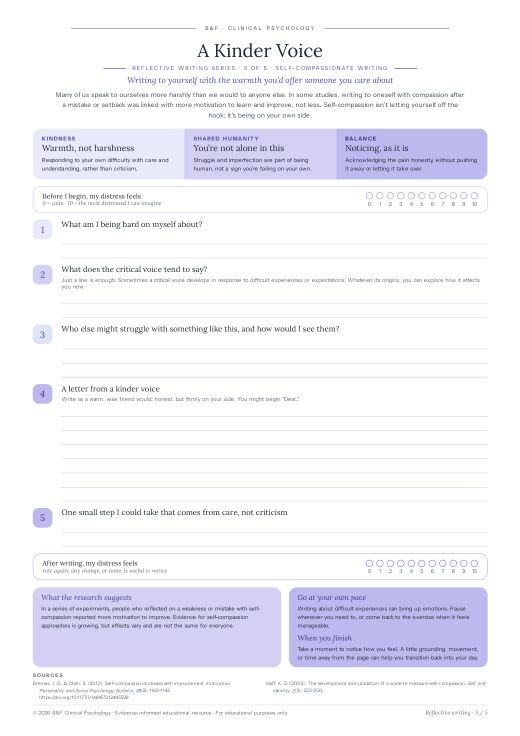
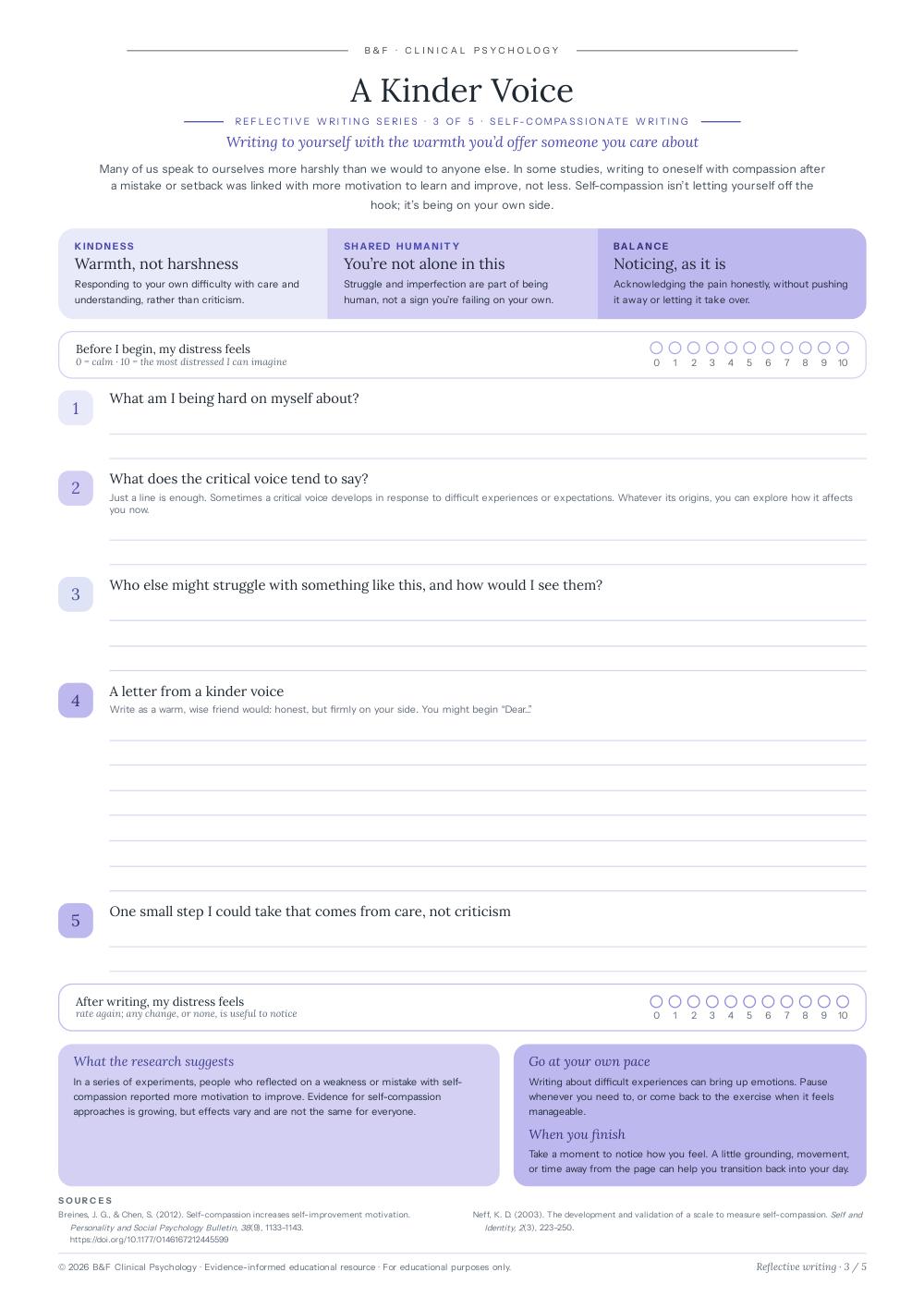
A kinder voice
Reflective writing, 3 of 5. Writing to yourself with the warmth you'd offer someone you care about.
-
 Preview
Practice
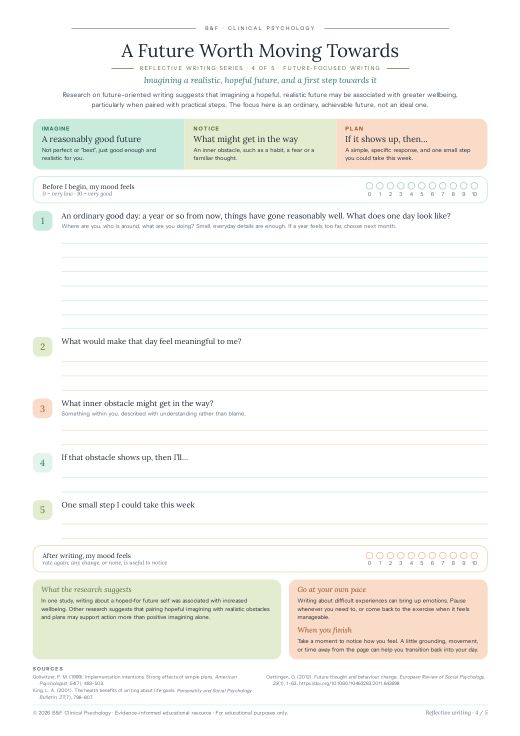
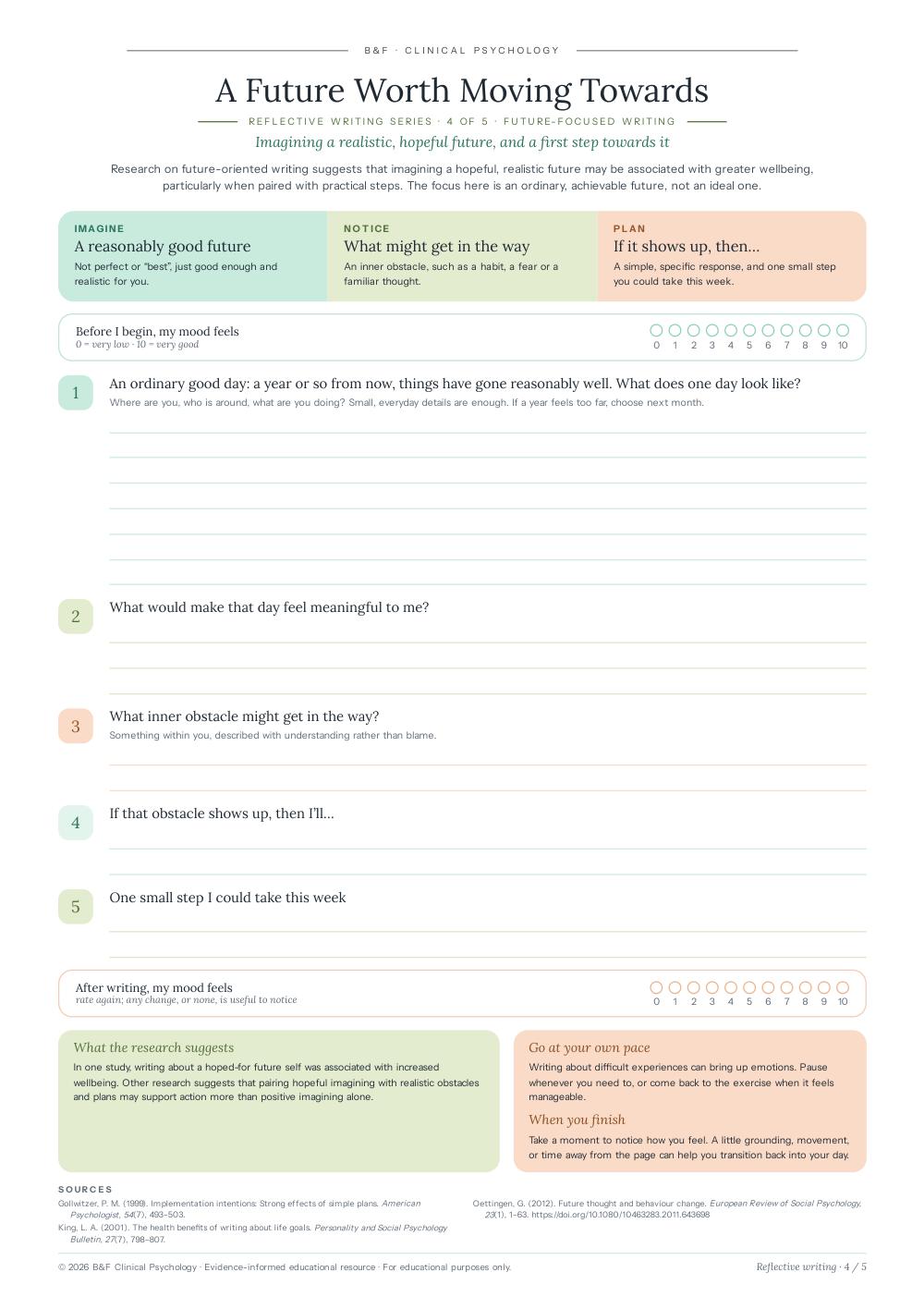
A future worth moving towards
Reflective writing, 4 of 5. Imagining a realistic, hopeful future, and a first step towards it.
-
 Preview
Practice
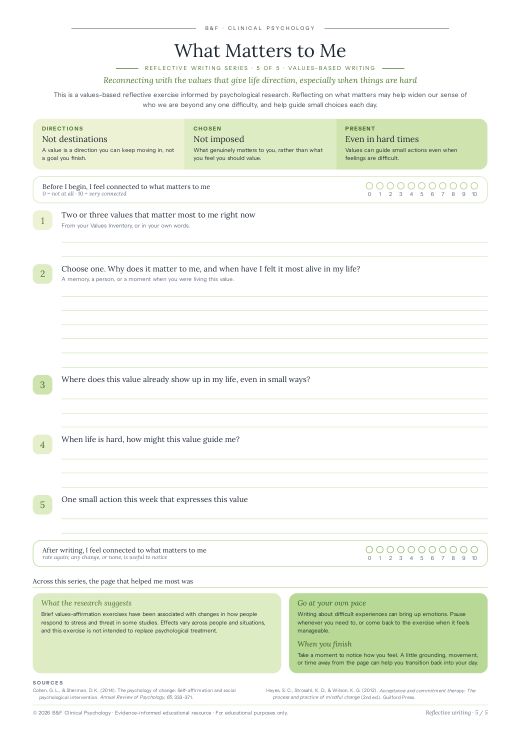
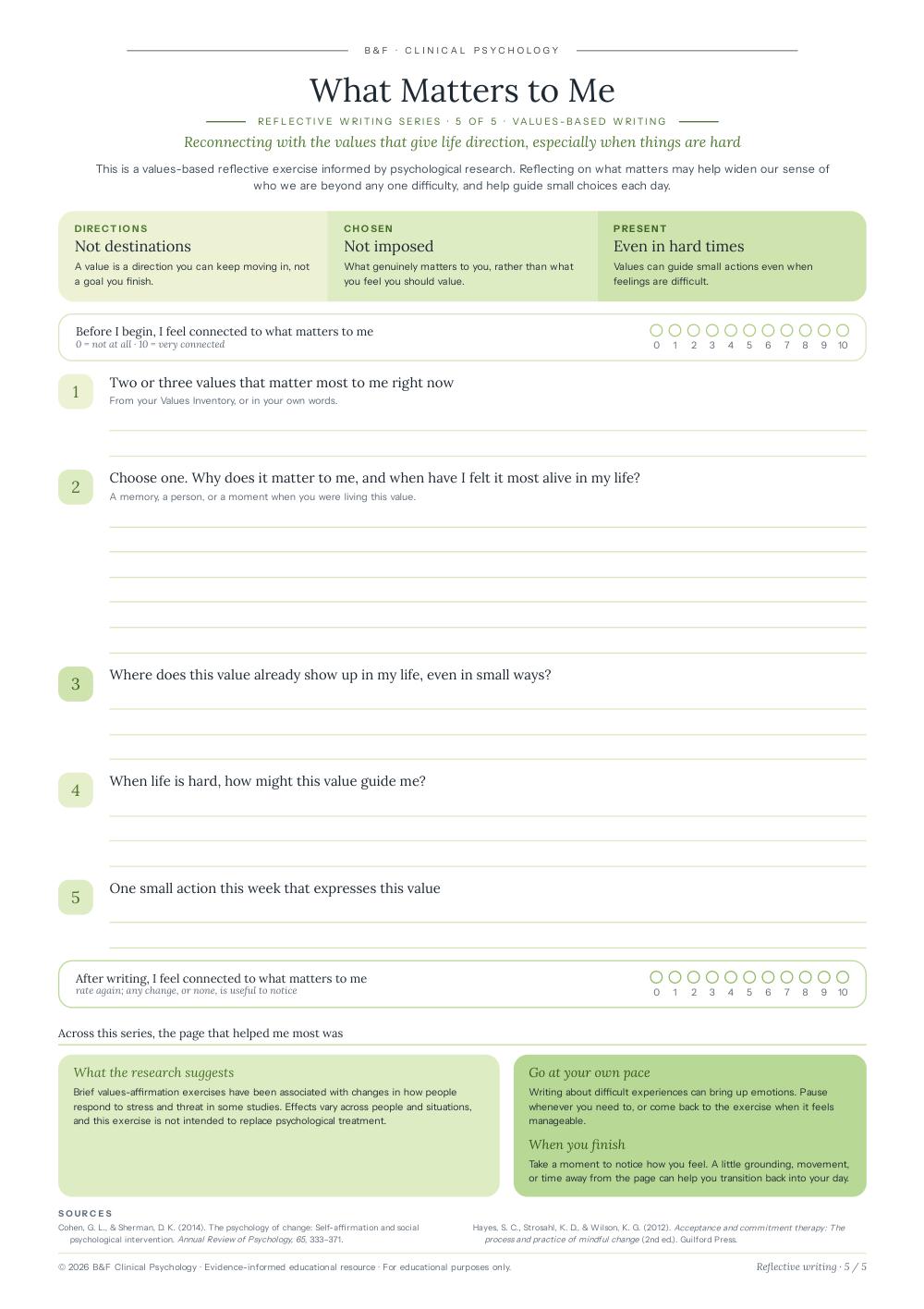
What matters to me
Reflective writing, 5 of 5. Reconnecting with the values that give life direction, especially when things are hard.
-
 Preview
Practice
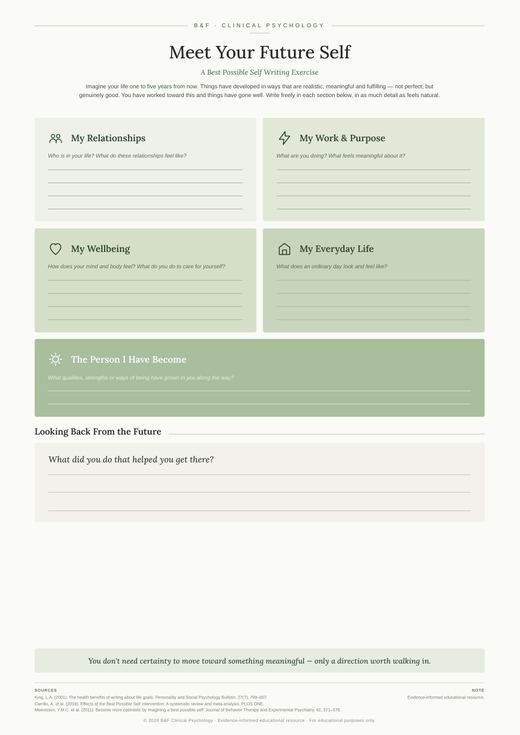
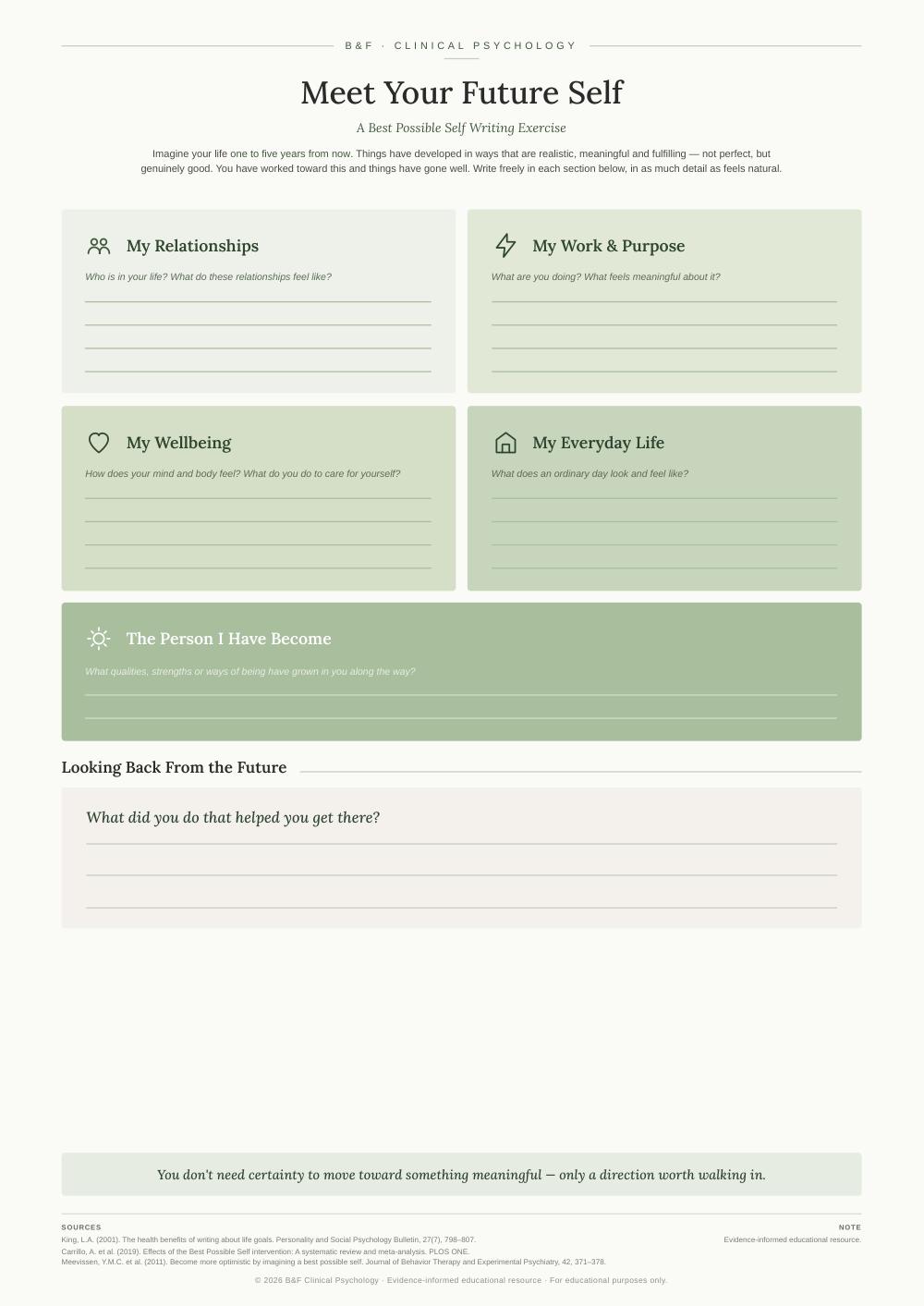
Meet your future self
A best-possible-self writing exercise: your life, one to five years on, gone genuinely well.
-
 Preview
Reflect
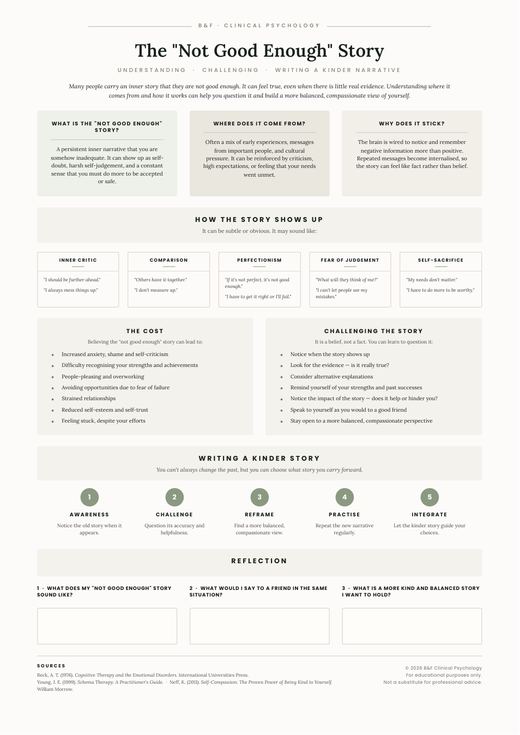
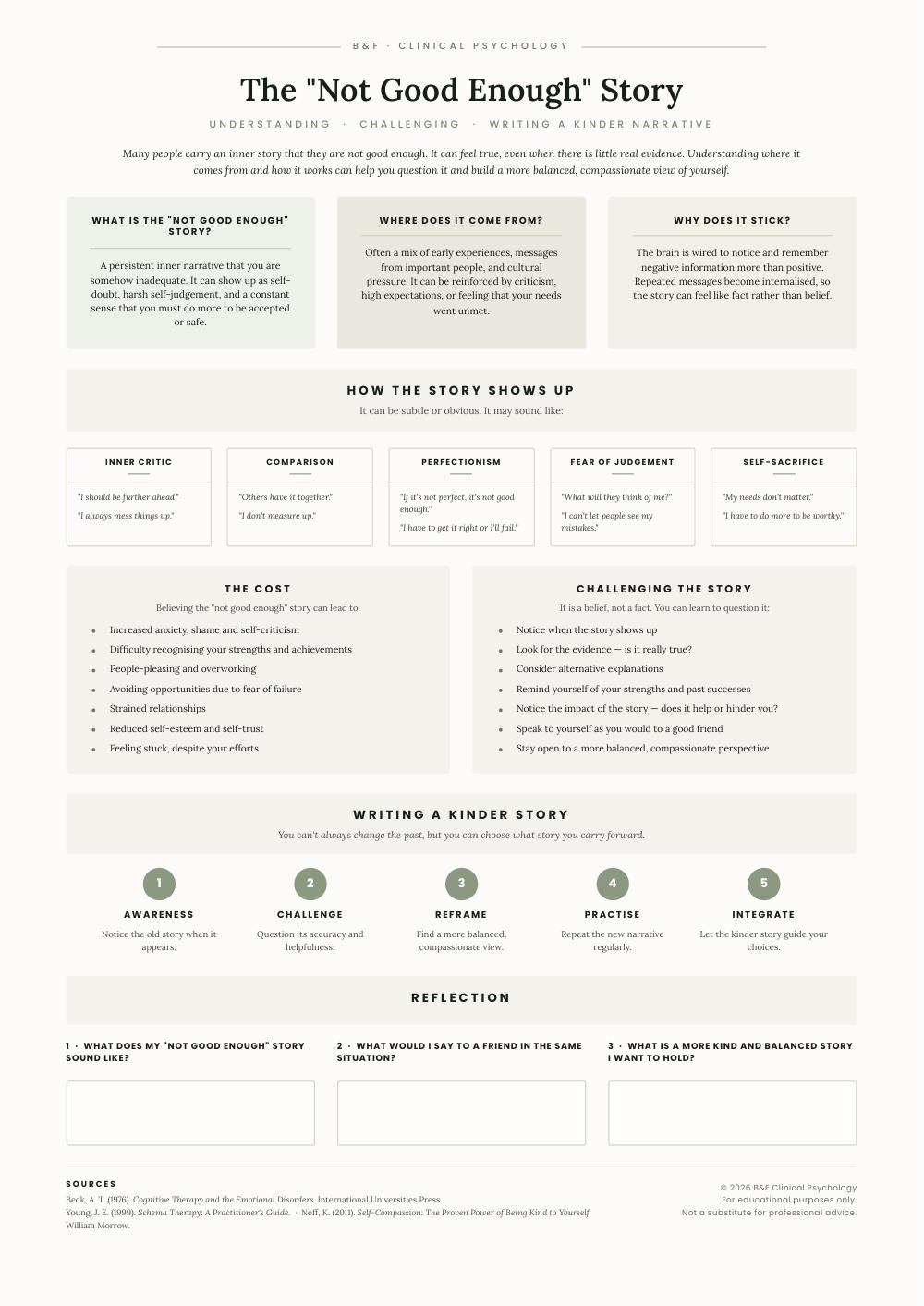
The “not good enough” story
Where the story comes from, how to question it, and how to write a kinder one.
-
 Preview
Practice
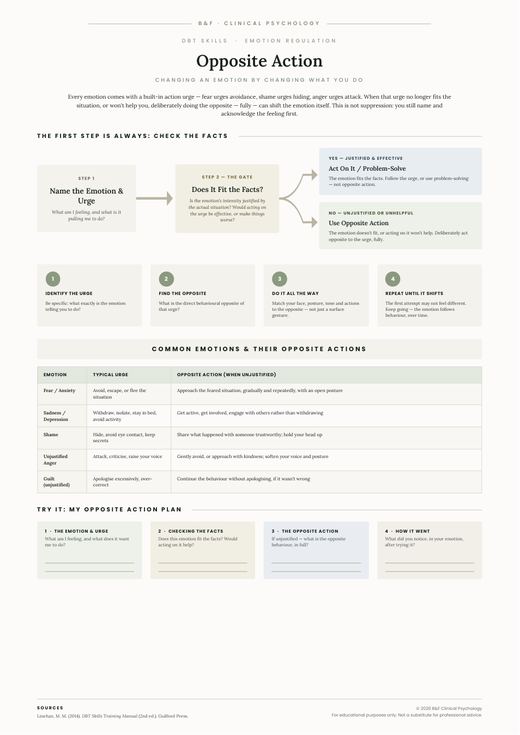
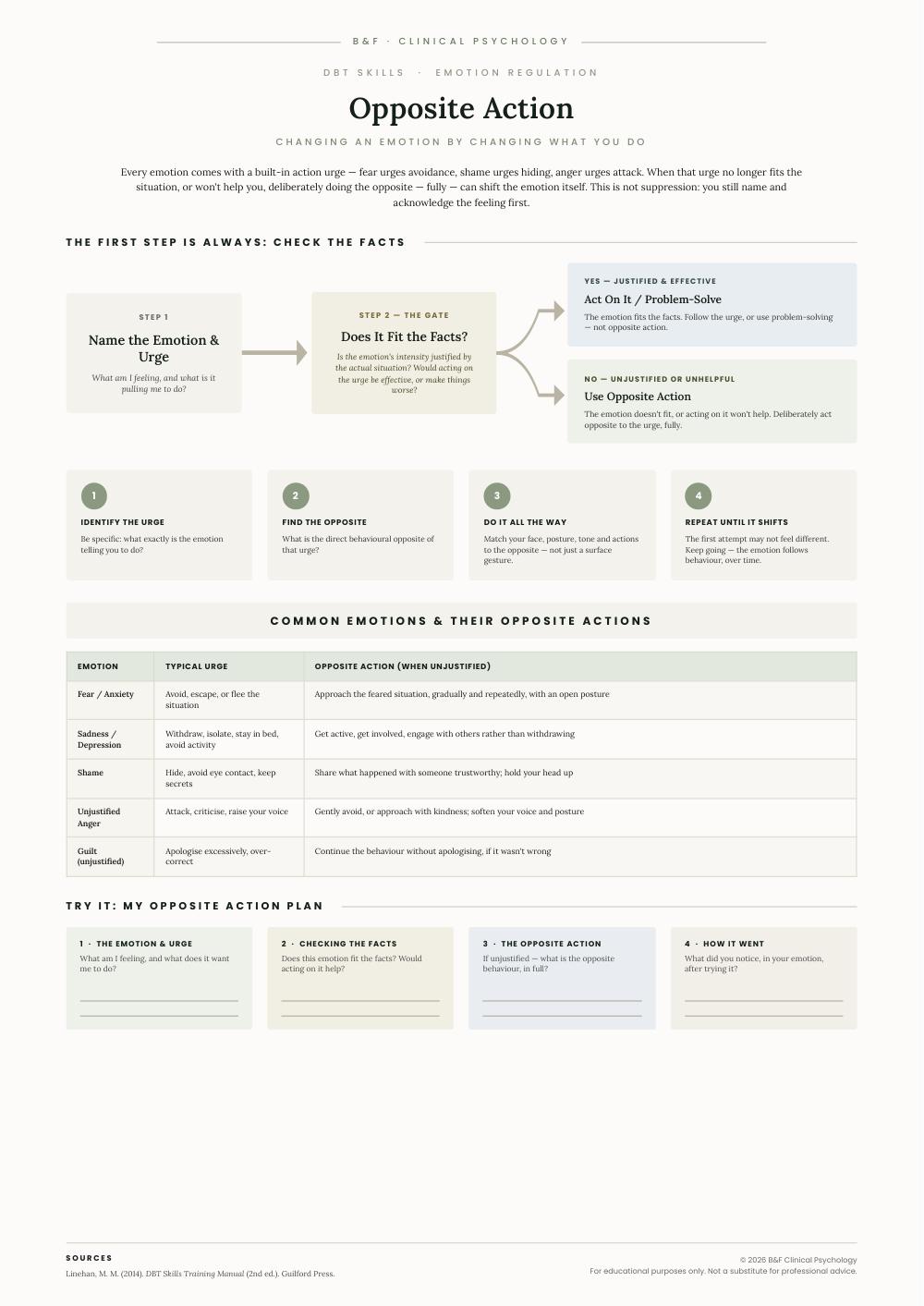
Opposite action
A DBT skill: every emotion carries an urge, and acting against the urge can change the emotion.
-
 Preview
Reflect
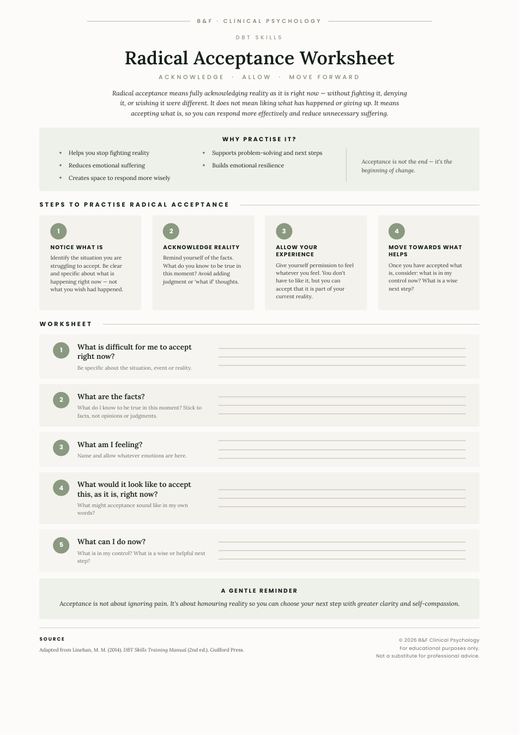
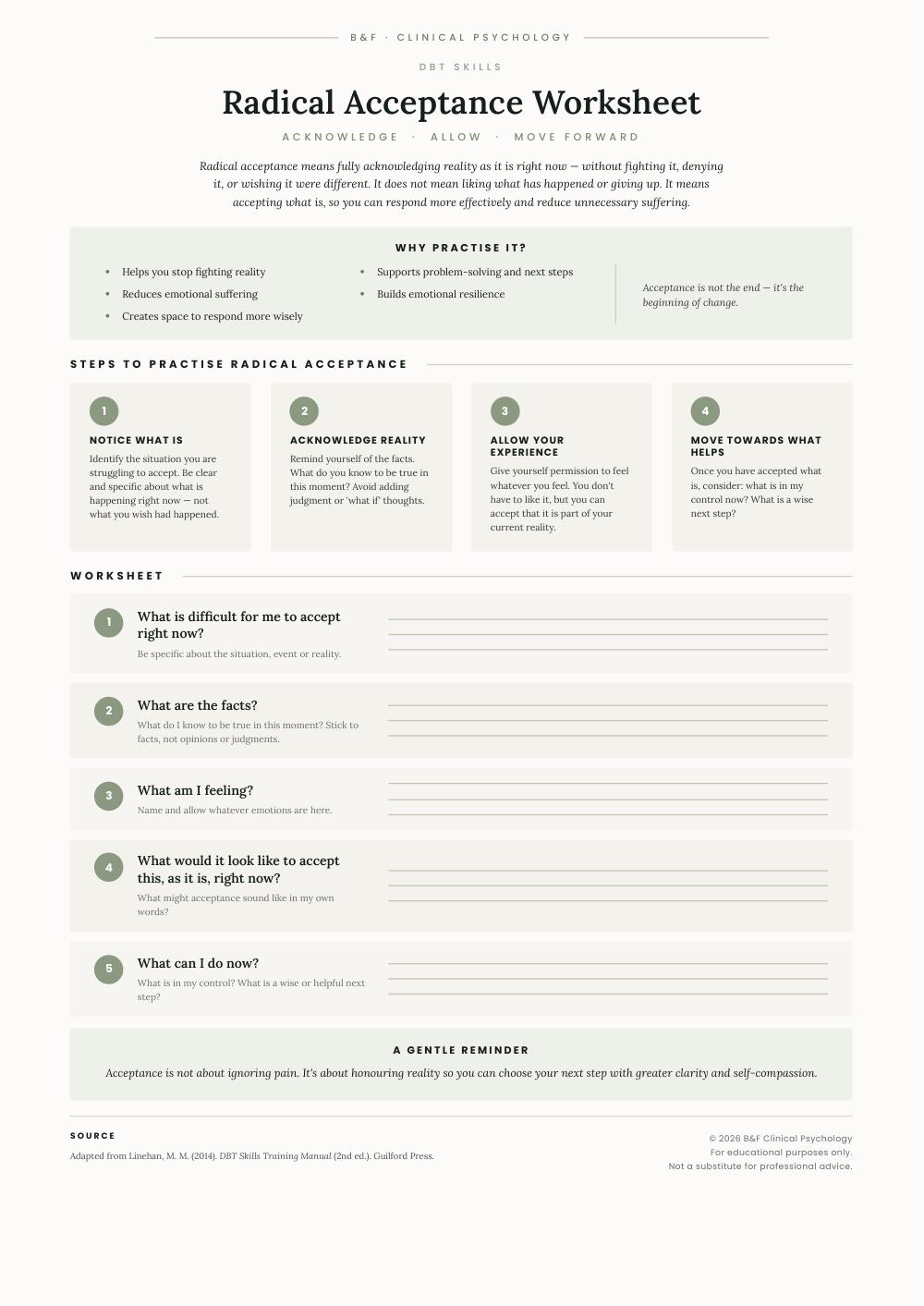
Radical acceptance worksheet
Acknowledge what is, without fighting it, as the first step to moving forward.
-
 Preview
Learn
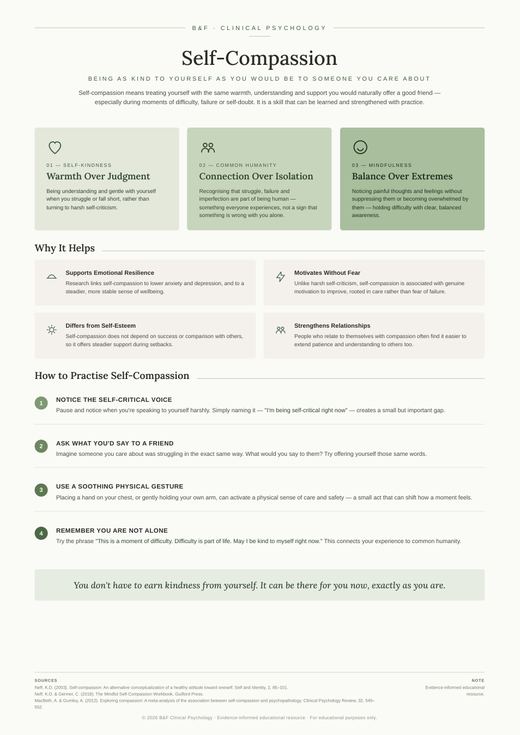
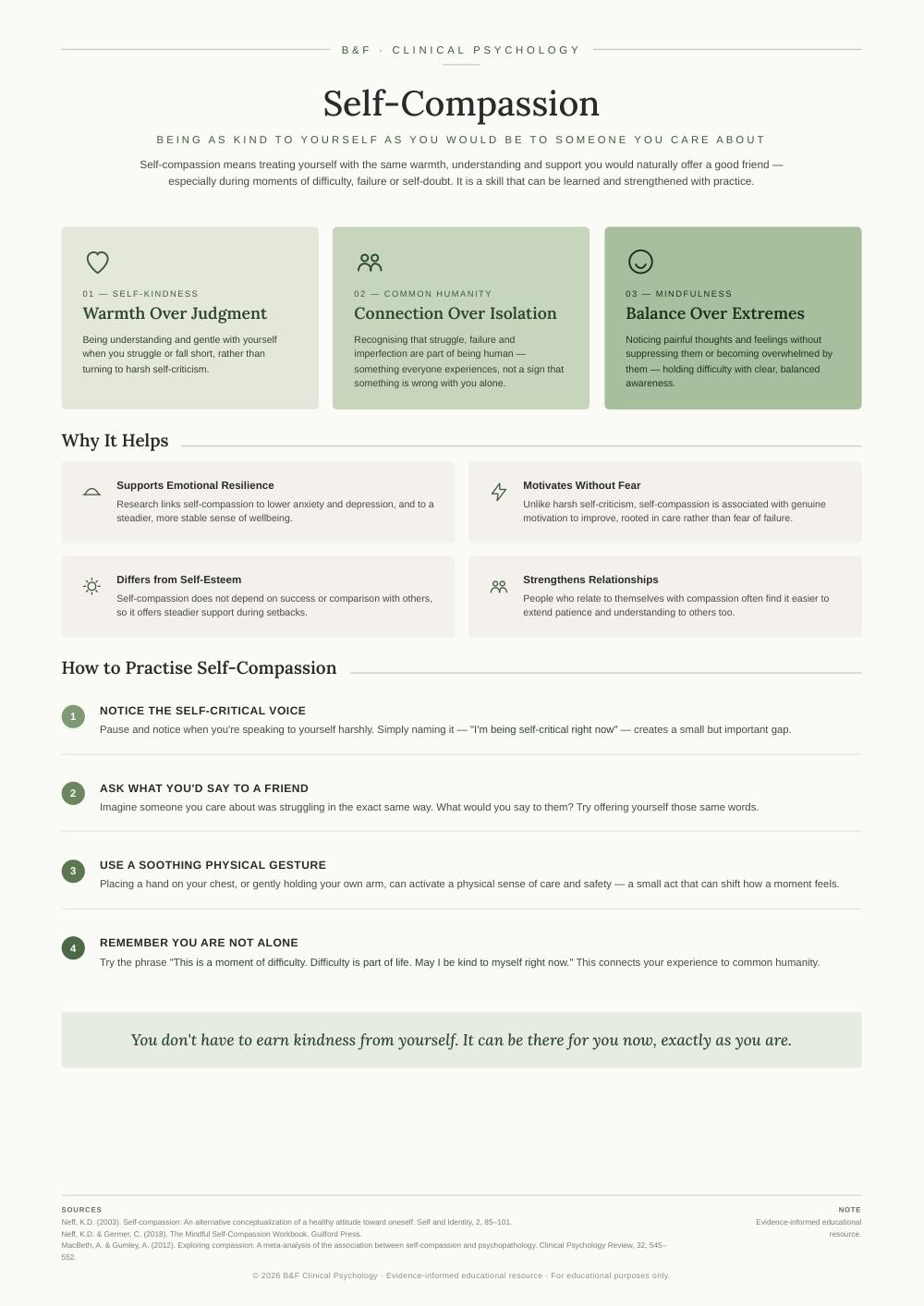
Self-compassion
Treating yourself with the warmth you would offer someone you care about, and why it works.
-
 Preview
Learn
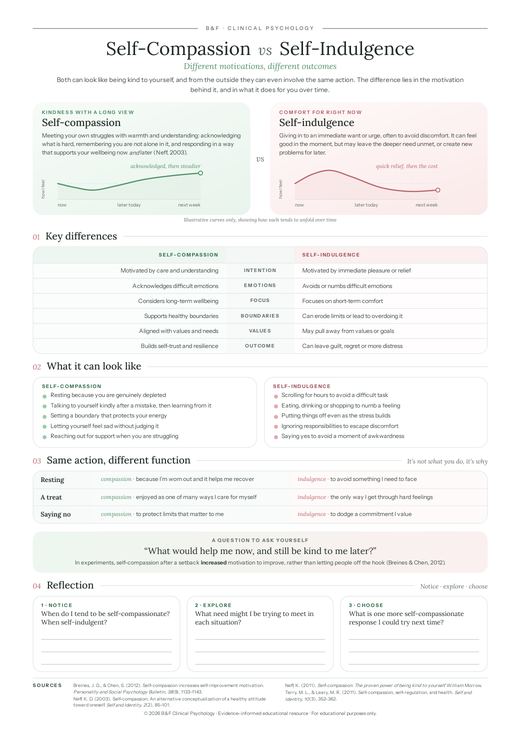
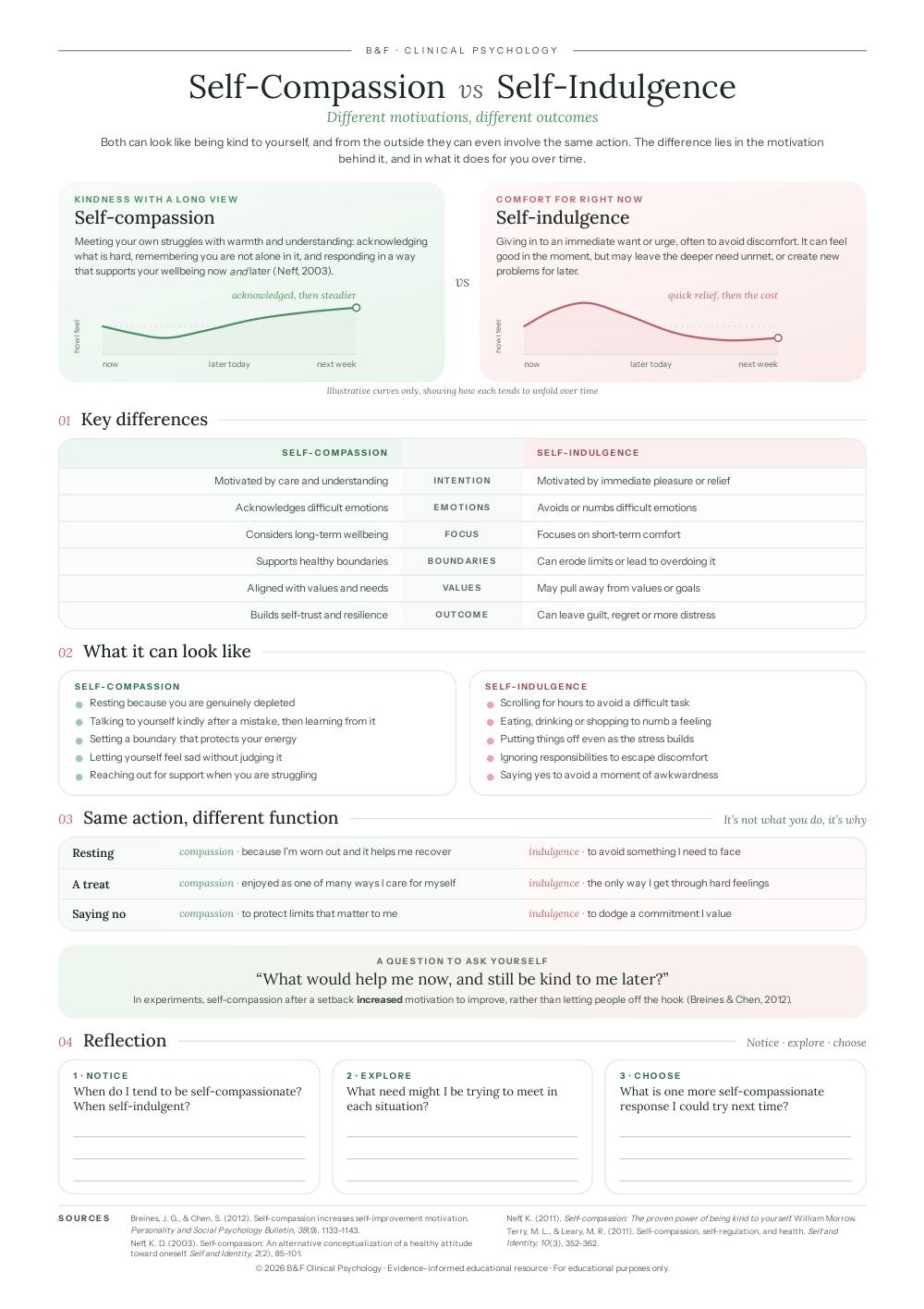
Self-compassion vs self-indulgence
Both can look like kindness to yourself. The difference lies in the motivation, and in what it does over time.
-
 Preview
Learn
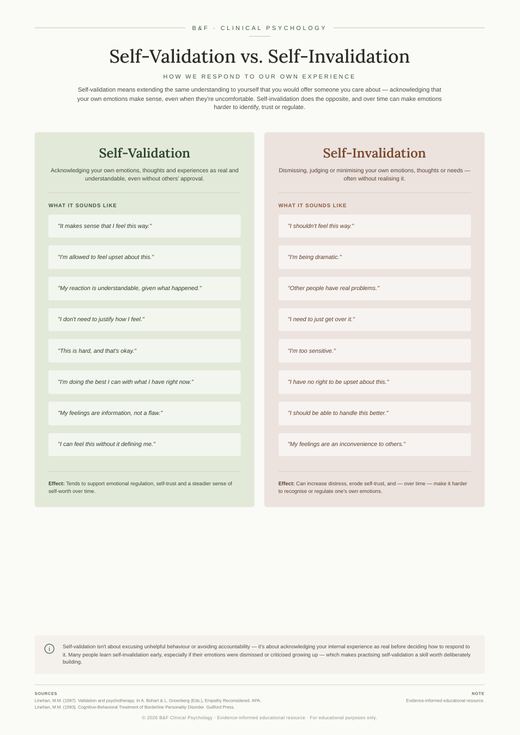
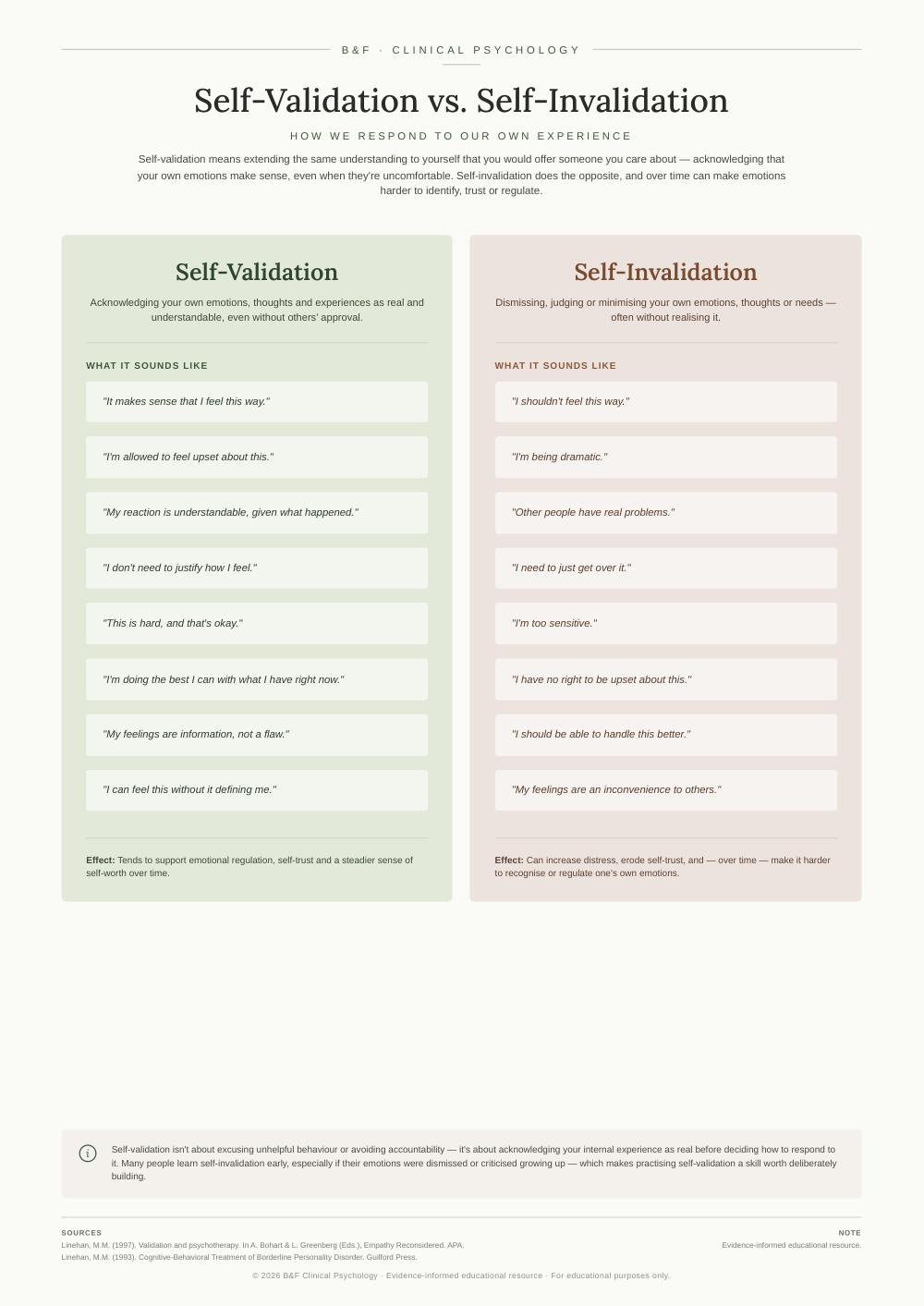
Self-validation vs self-invalidation
How you respond to your own experience shapes it. The two responses, side by side.
-
 Preview
Reflect
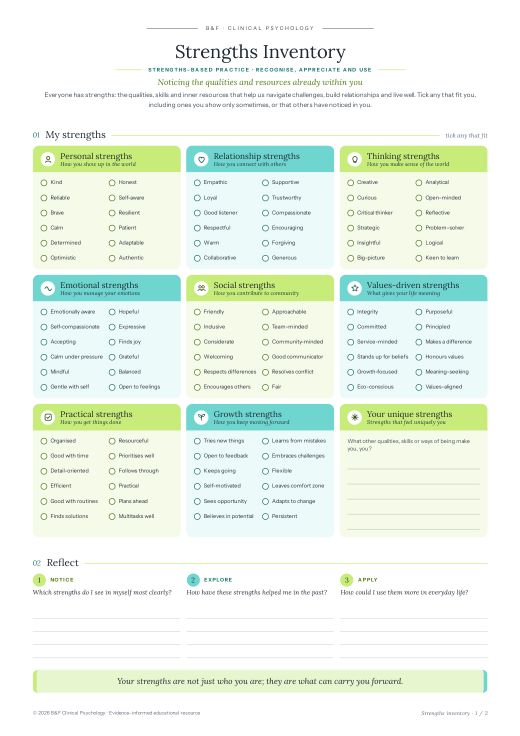
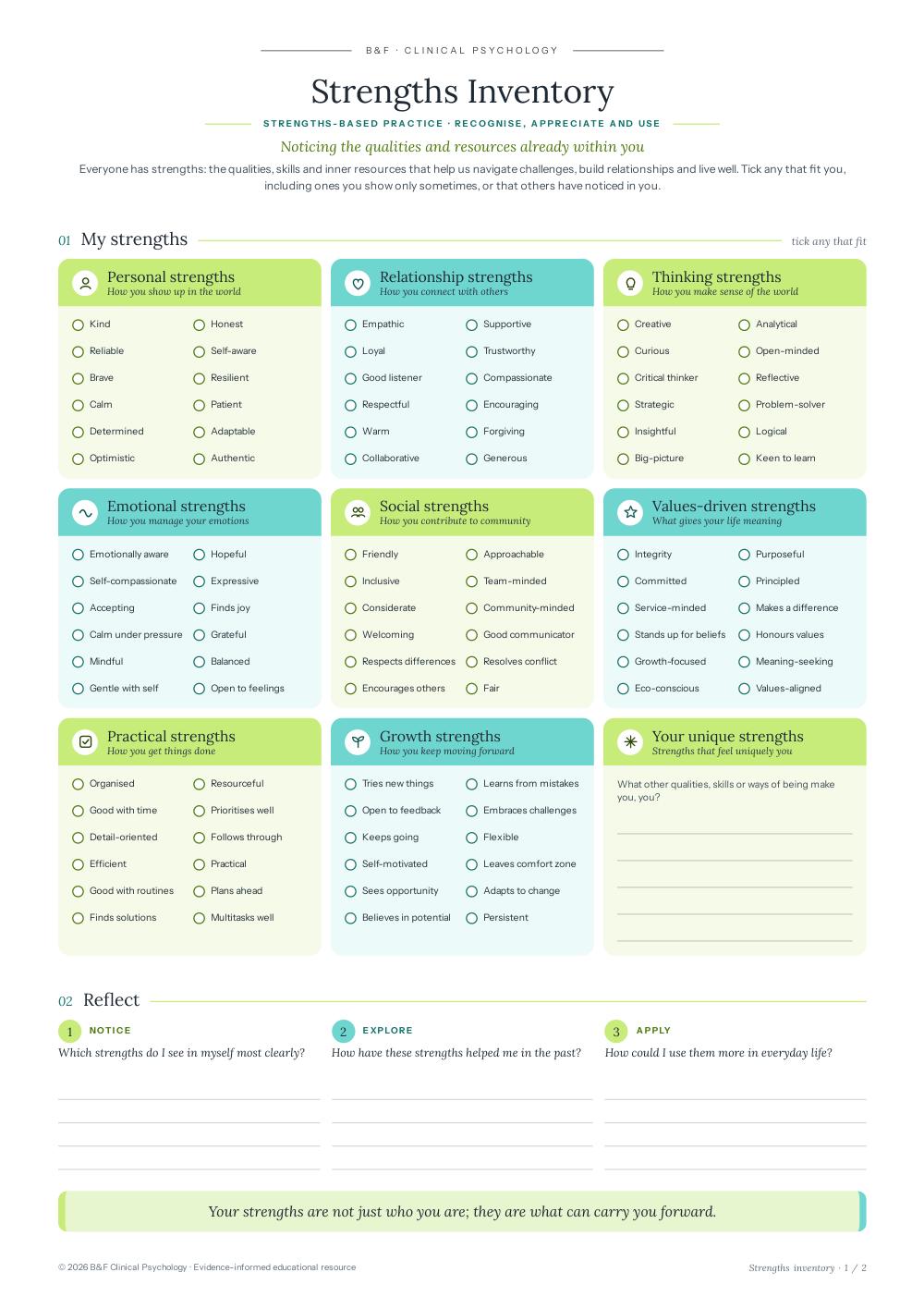
Identify & work with my strengths
Noticing the qualities and resources already within you, and putting them to use.
-
 Preview
Practice
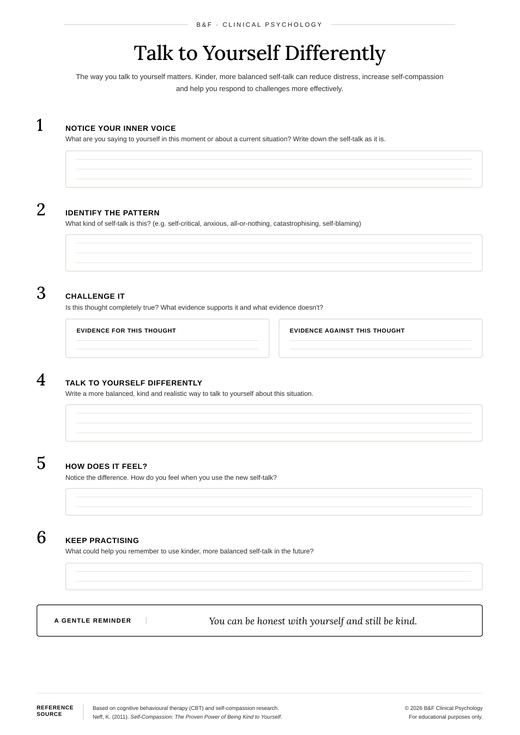
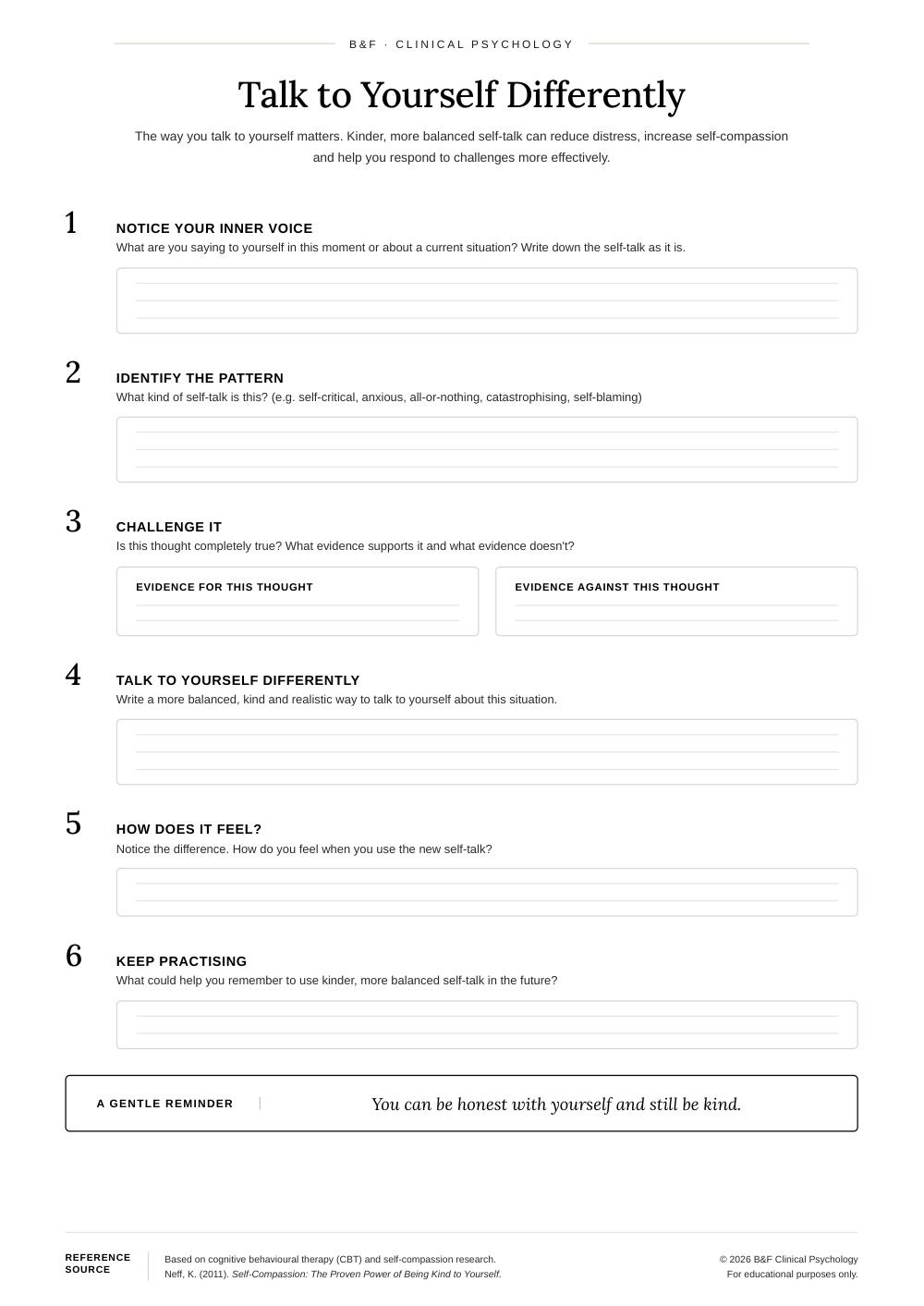
Talk to yourself differently
Steps for noticing harsh self-talk and replacing it with something more balanced.
-
 Preview
Reflect
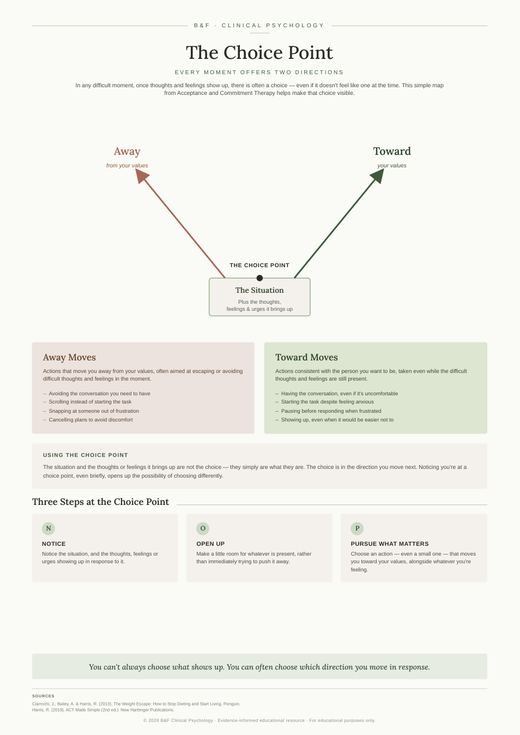
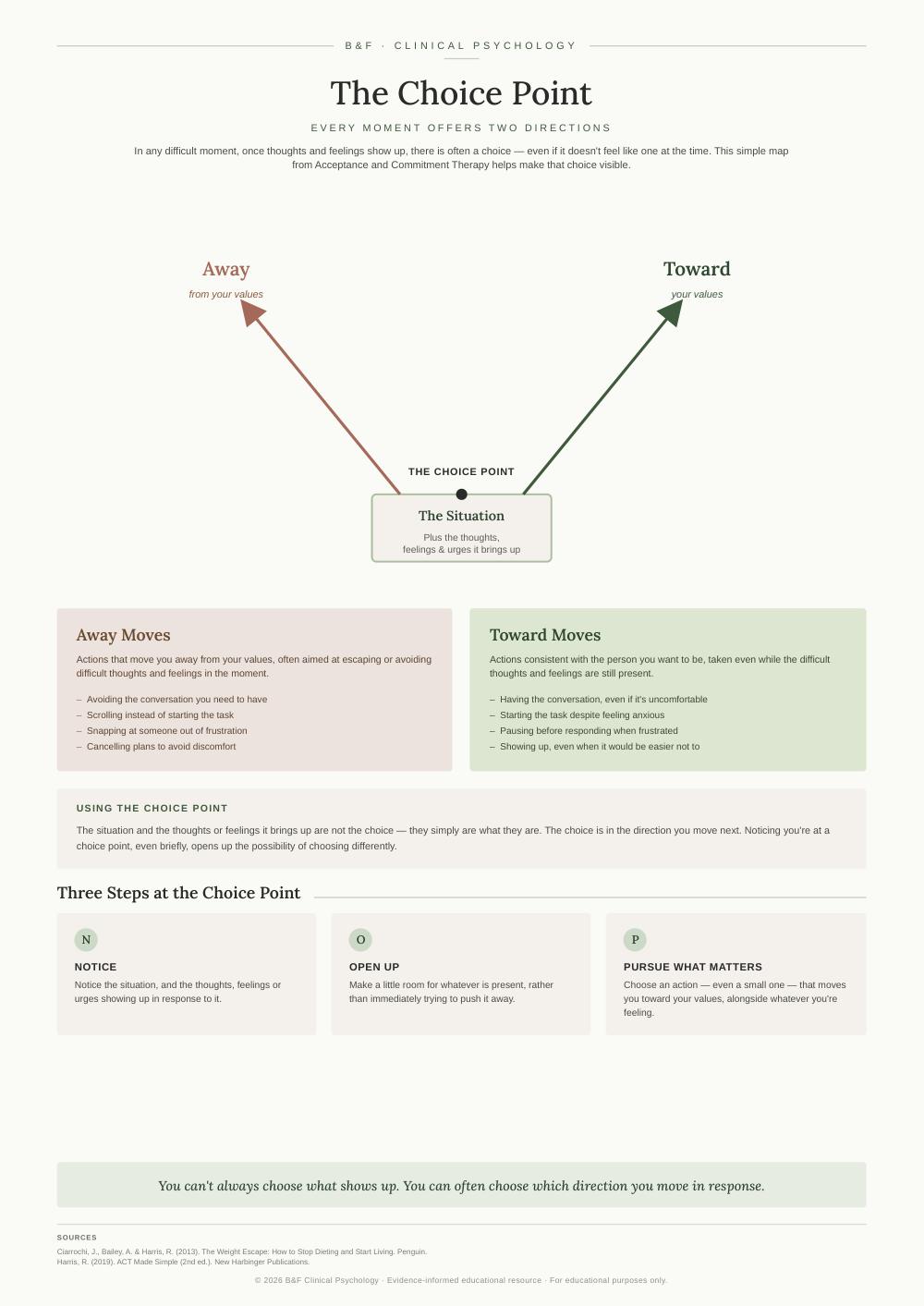
The choice point
In a hard moment there are two directions. This sheet helps you see them, and choose.
-
 Preview
Learn
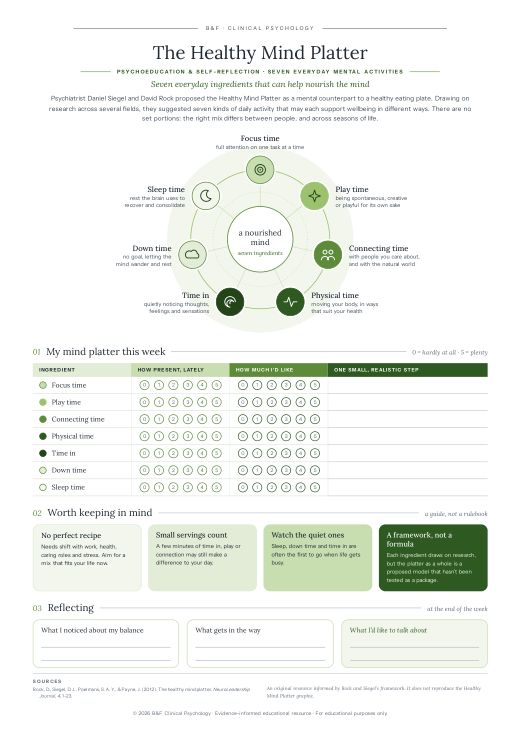
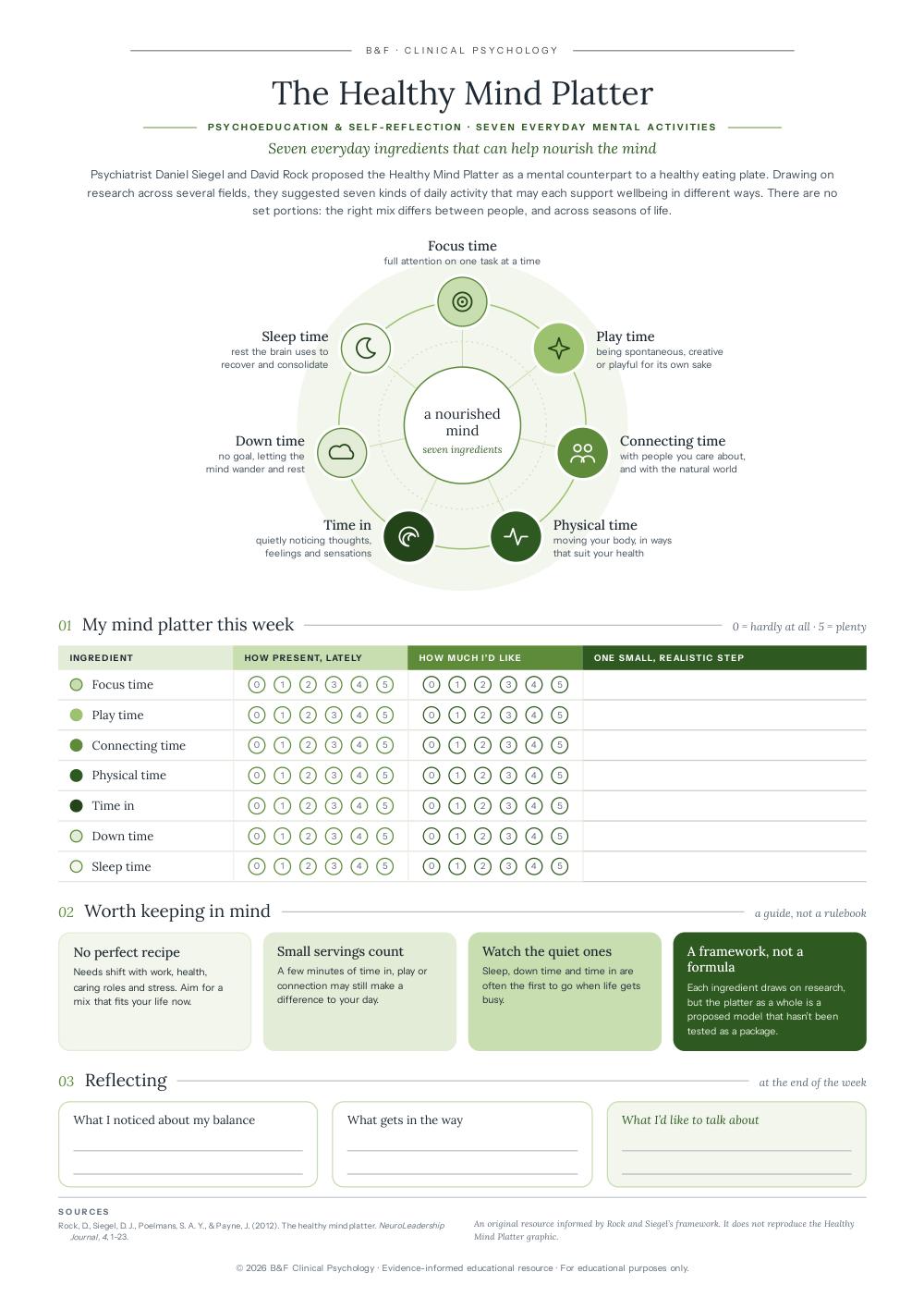
The healthy mind platter
Dan Siegel's seven daily servings for a well-nourished mind, with a week to fill in.
-
 Preview
Reflect
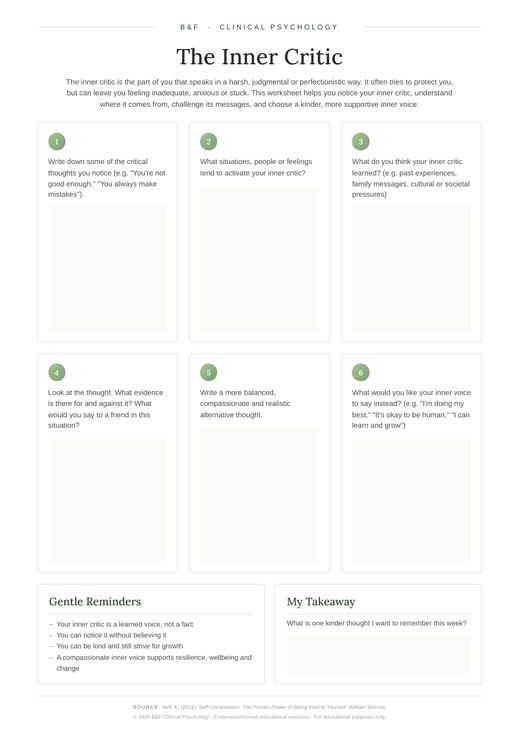
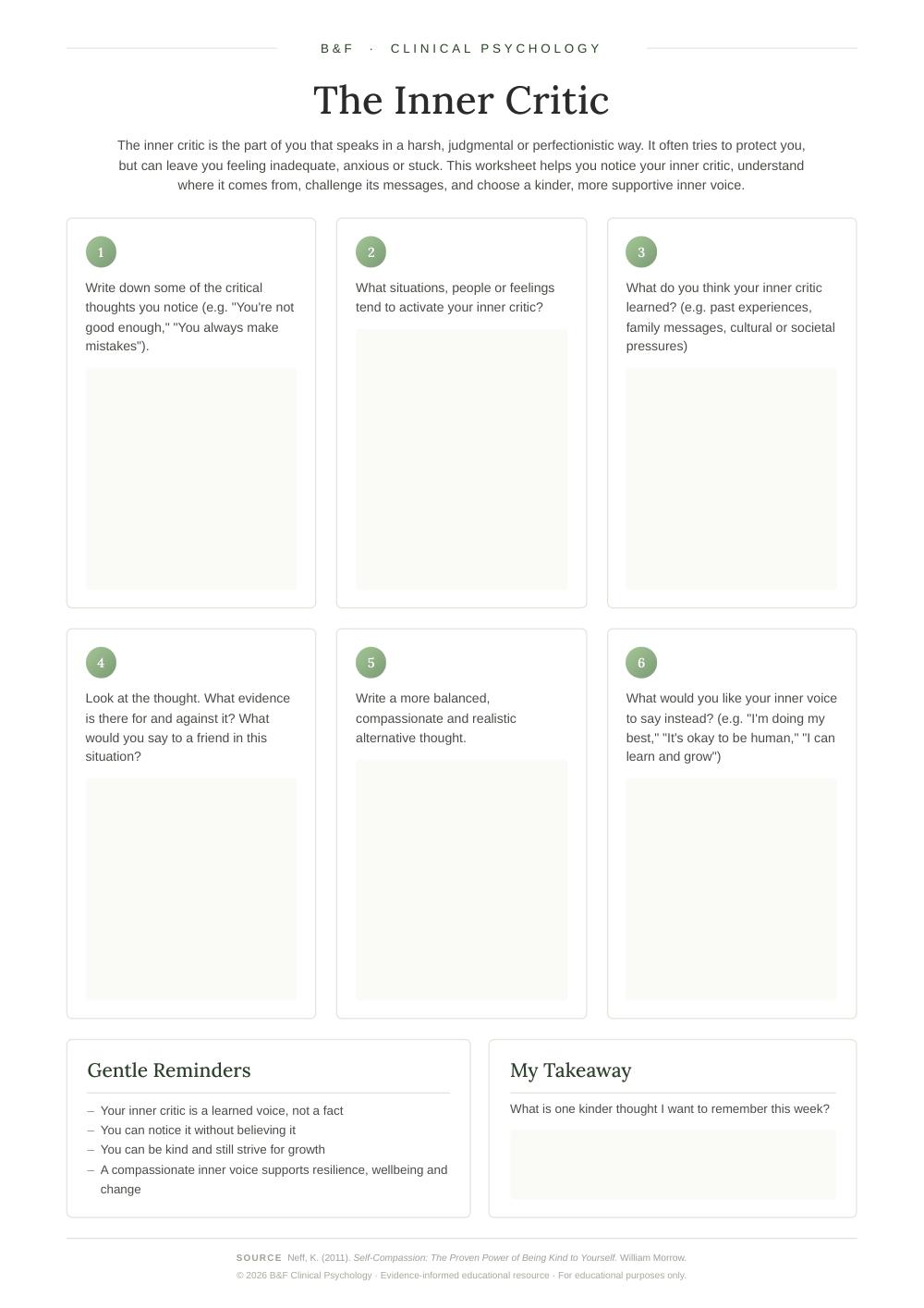
The inner critic: worksheet
Get to know the voice that judges you, what it is trying to do, and how to answer it.
-
 Preview
Learn
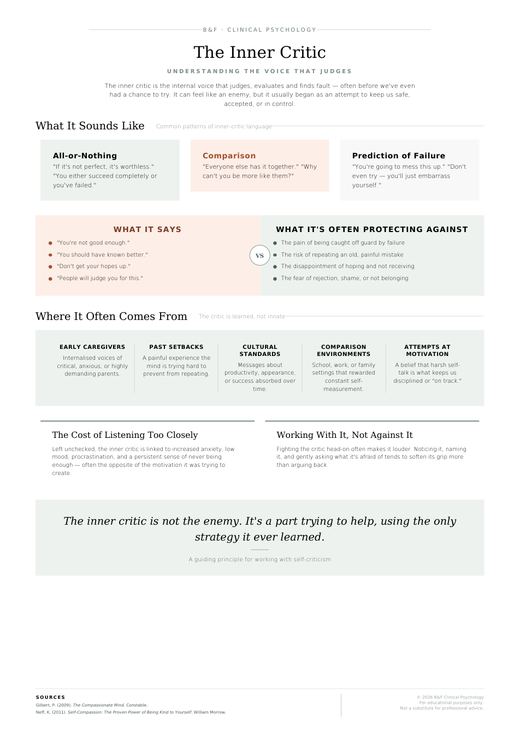
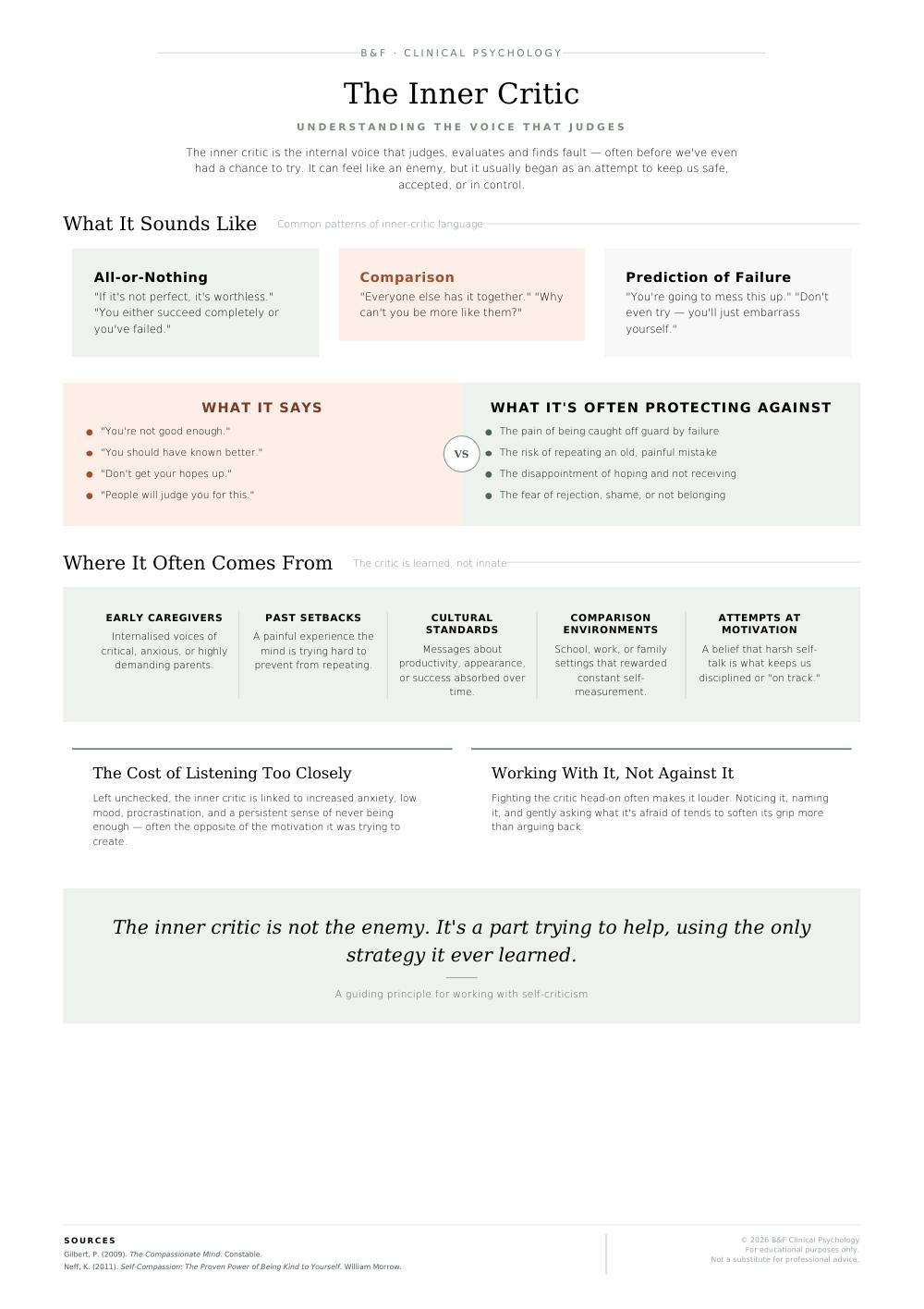
The inner critic
Understanding the voice that finds fault, often before you have had a chance to try.
-
 Preview
Learn
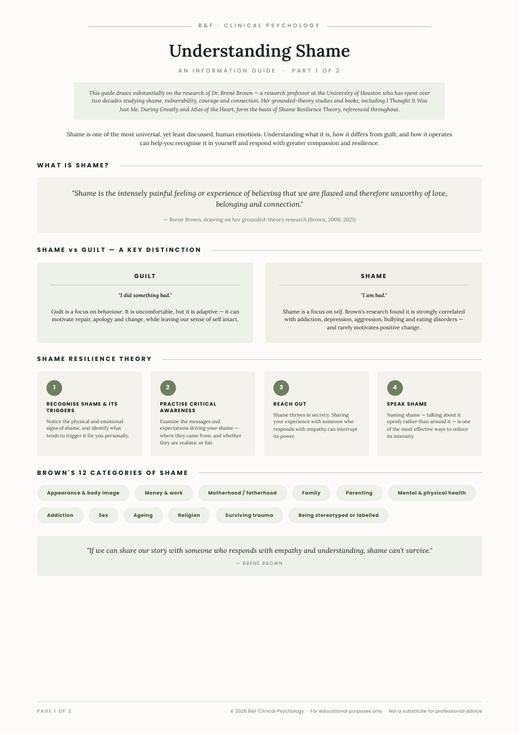
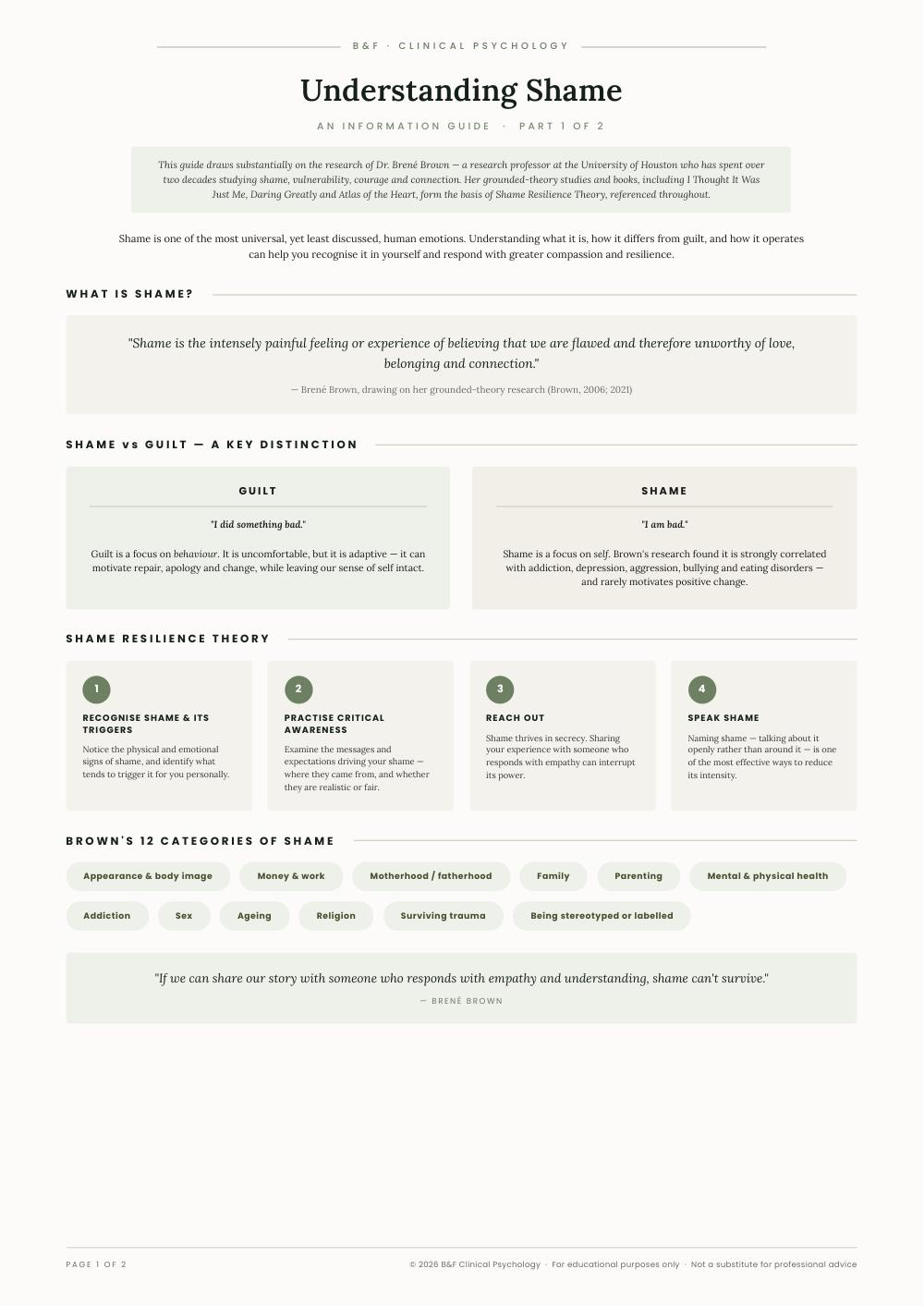
Understanding shame
A two-part guide drawing on Brené Brown's research into shame, and what loosens its grip.
-
 Preview
Learn
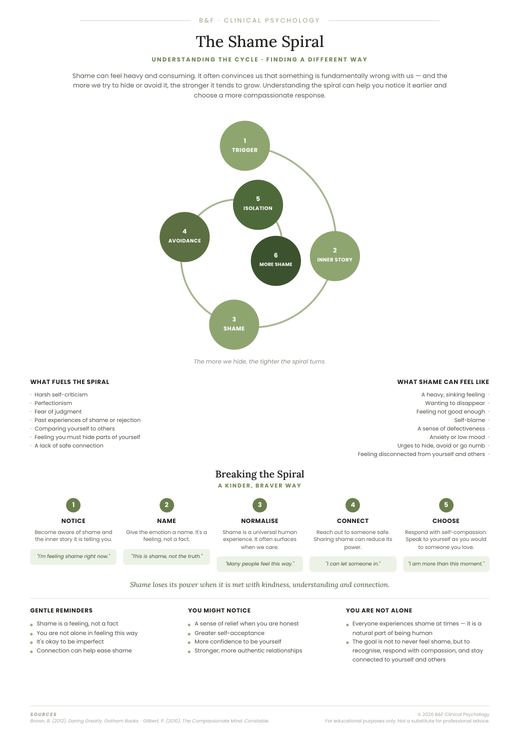
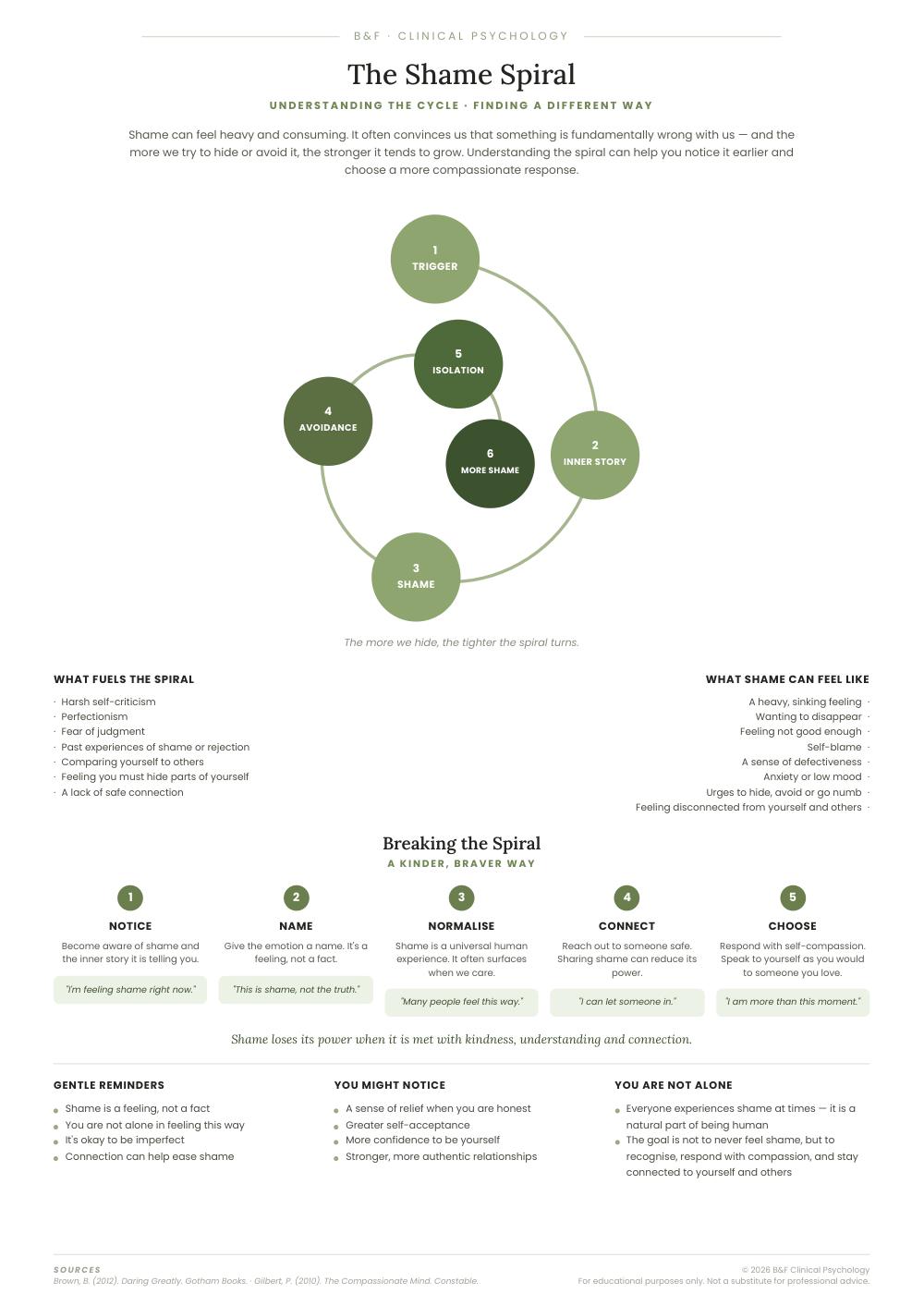
The shame spiral
How shame grows through hiding and avoidance, and where a more compassionate response can interrupt it.
-
 Preview
Learn
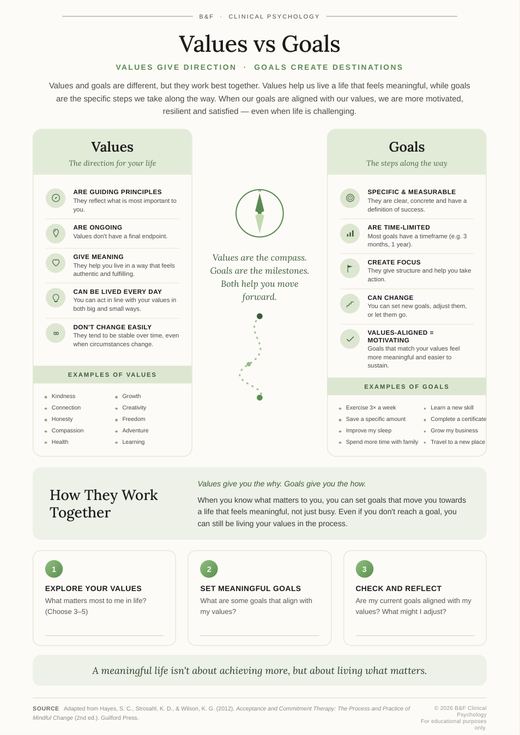
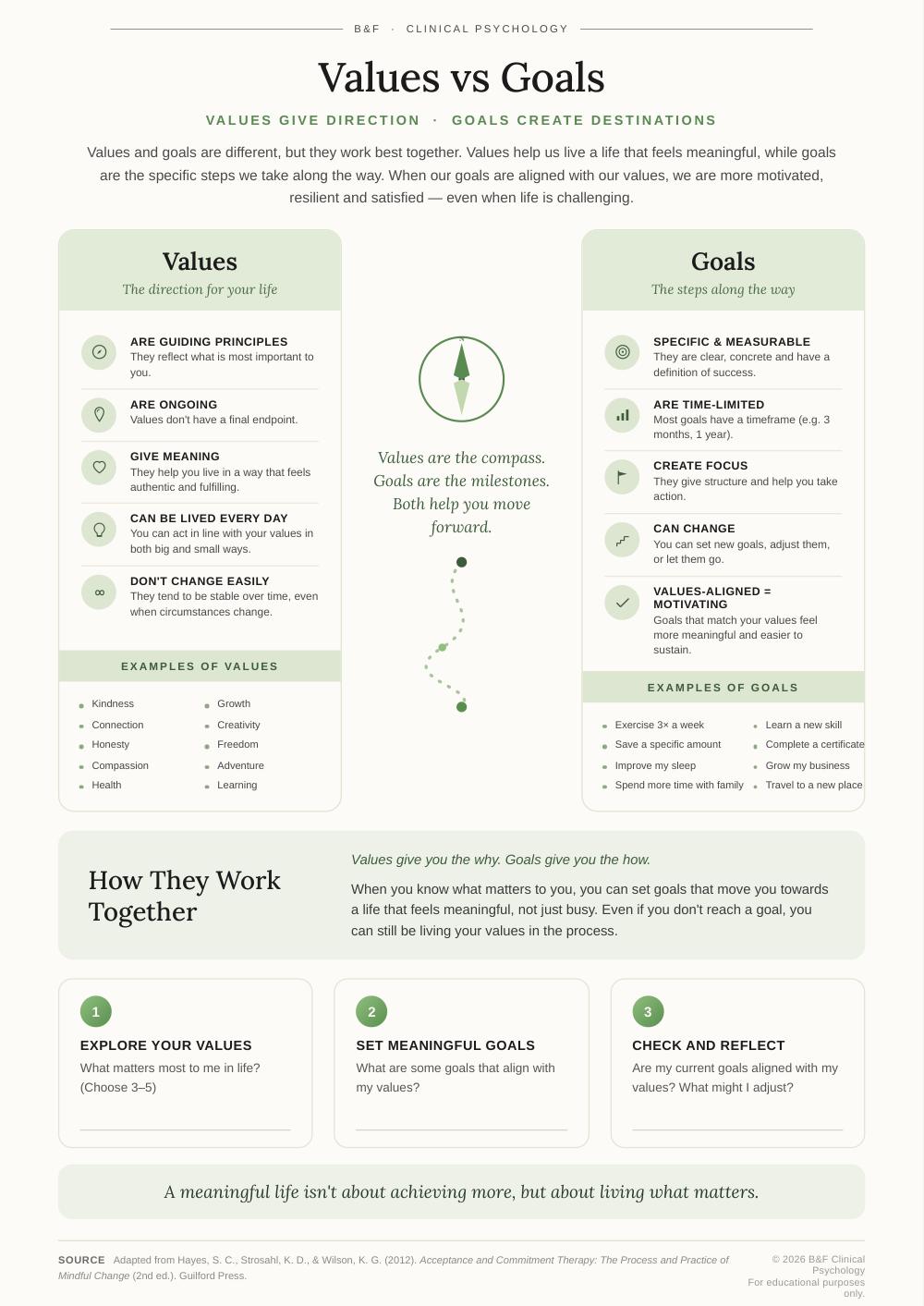
Values vs goals
Values give direction, goals mark destinations. Why you need both, and how they differ.
-
 Preview
Reflect
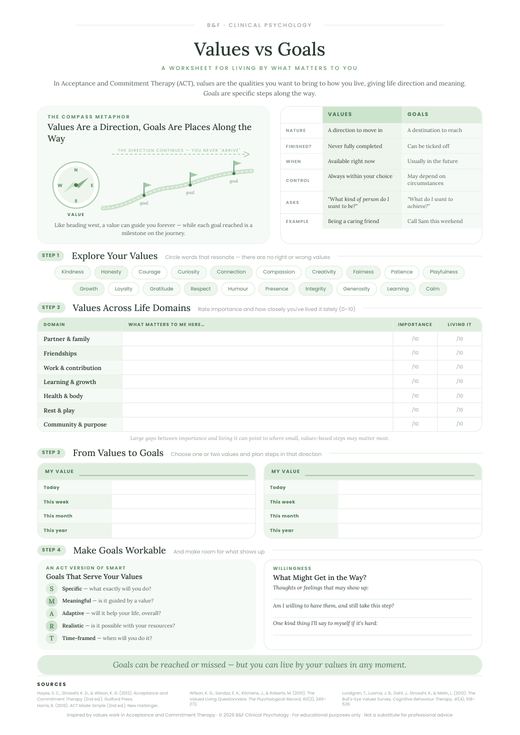
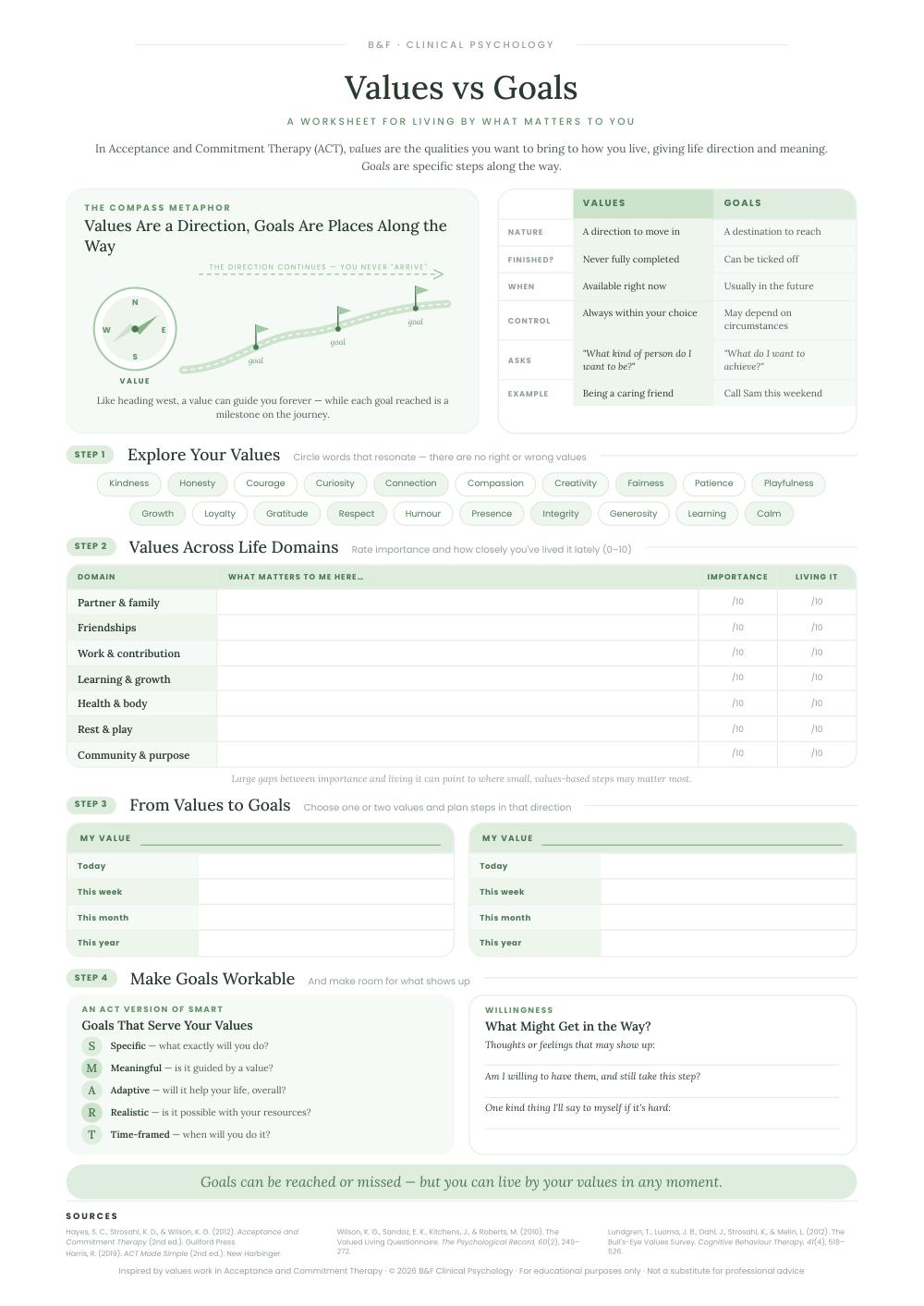
Values vs goals: worksheet
Map your own values against the goals you are chasing, and see where they line up.
-
 Preview
Reflect
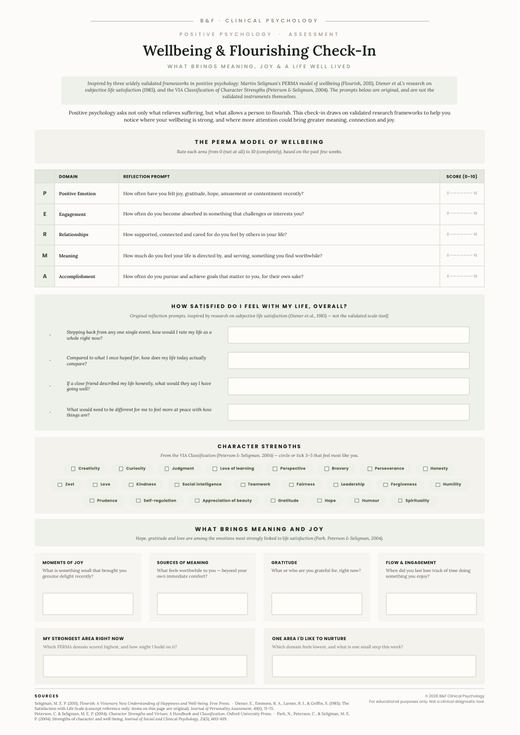
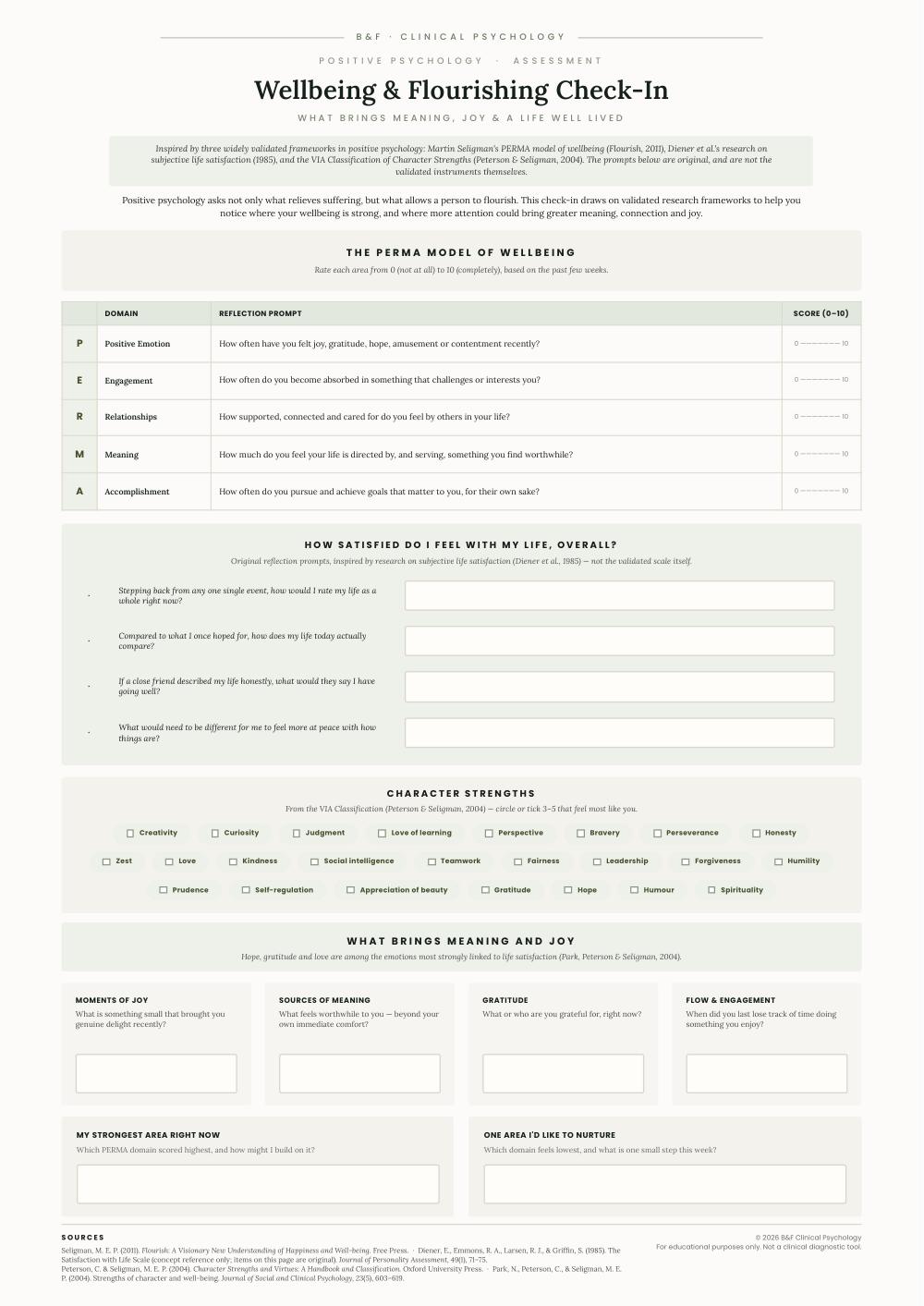
Wellbeing and flourishing check-in
A positive-psychology check-in on meaning, joy and what a life well lived means to you.
-
 Preview
Learn
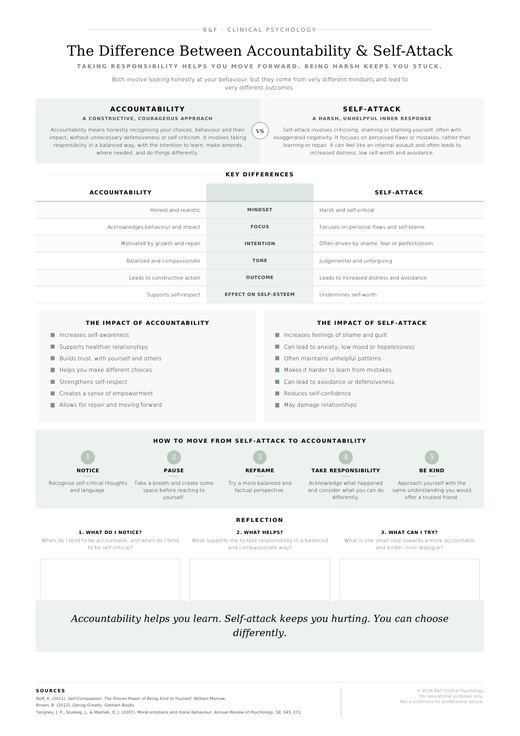
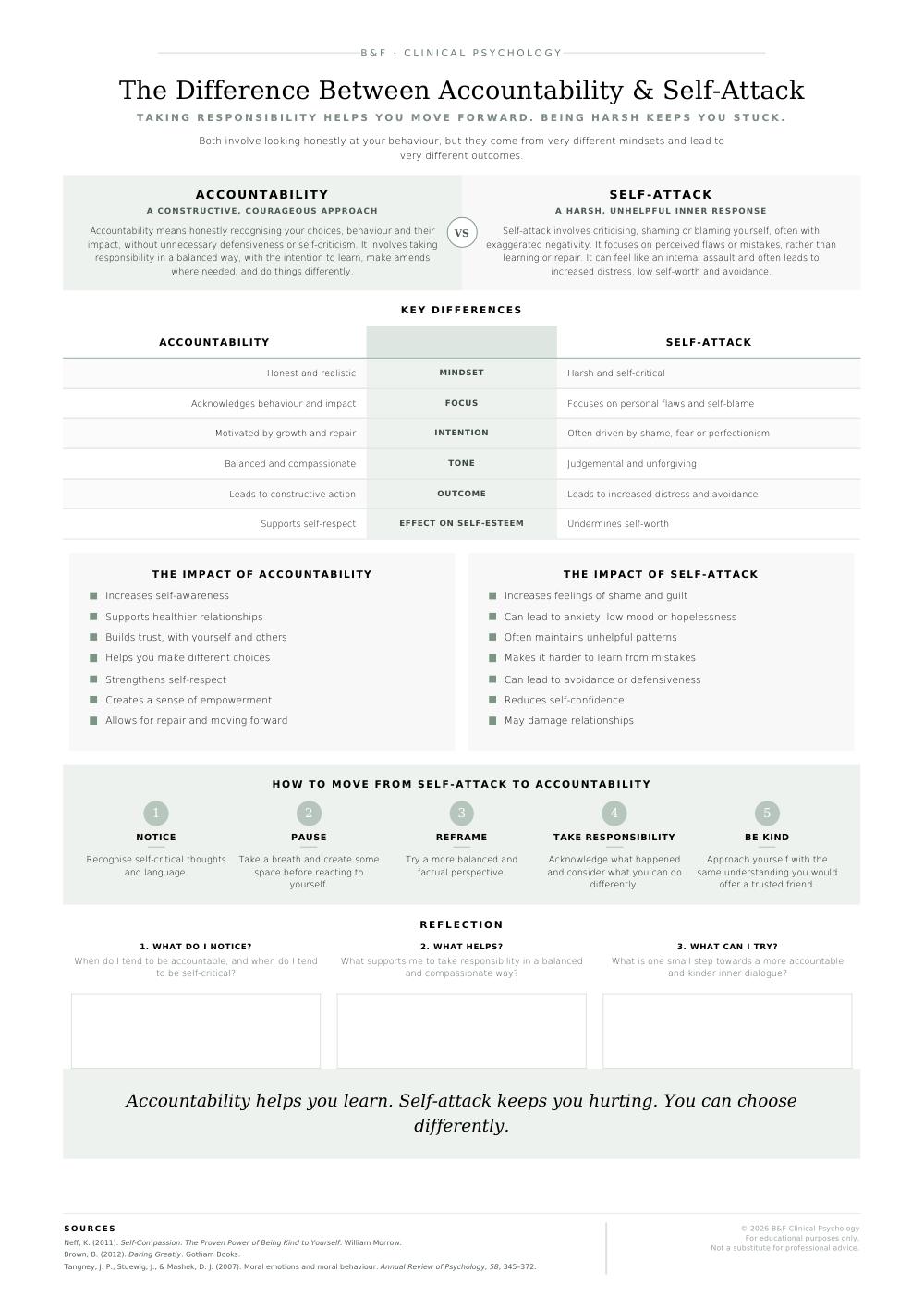
Accountability vs self-attack
Taking responsibility moves you forward. Being harsh keeps you stuck. Telling them apart.
-
 Preview
Learn
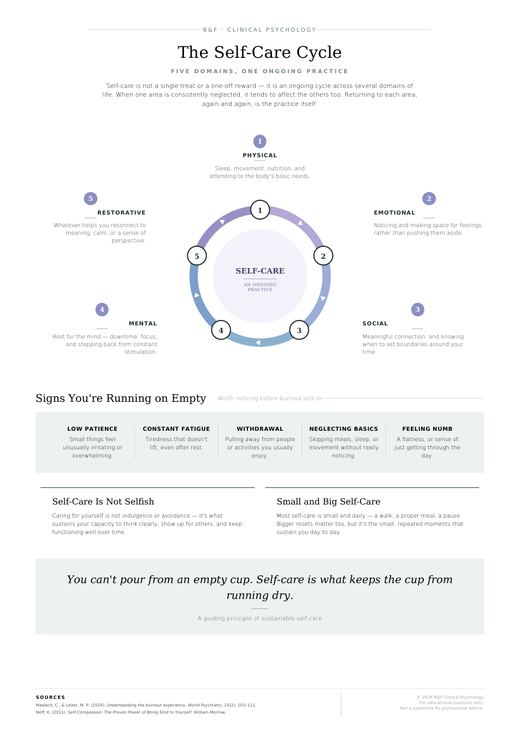
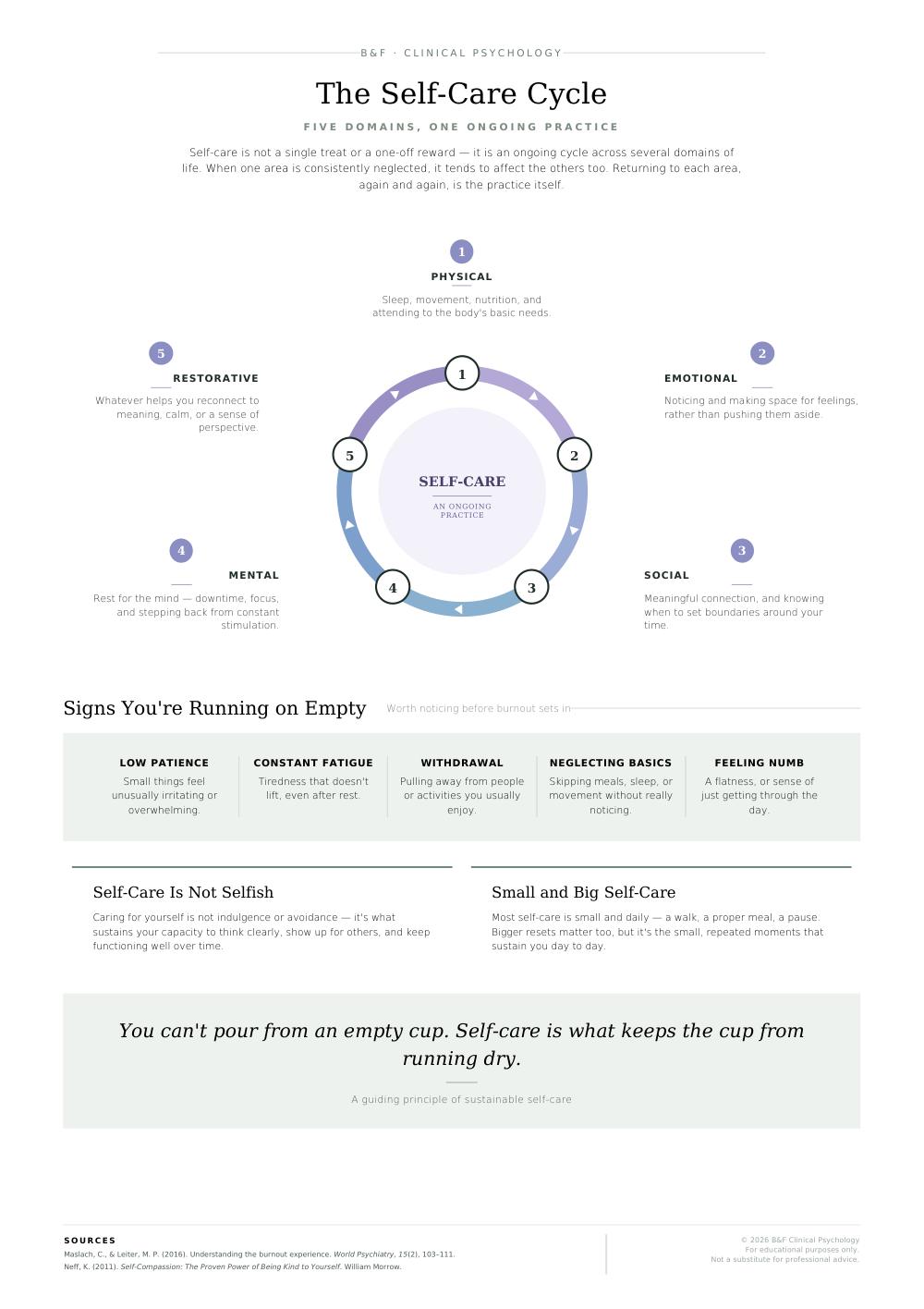
The self-care cycle
Five domains of self-care as an ongoing practice, not a one-off treat.
-
 Preview
Learn
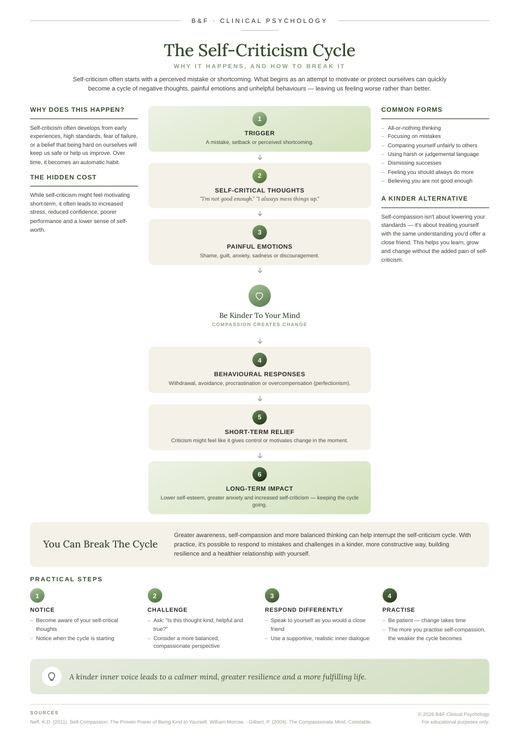
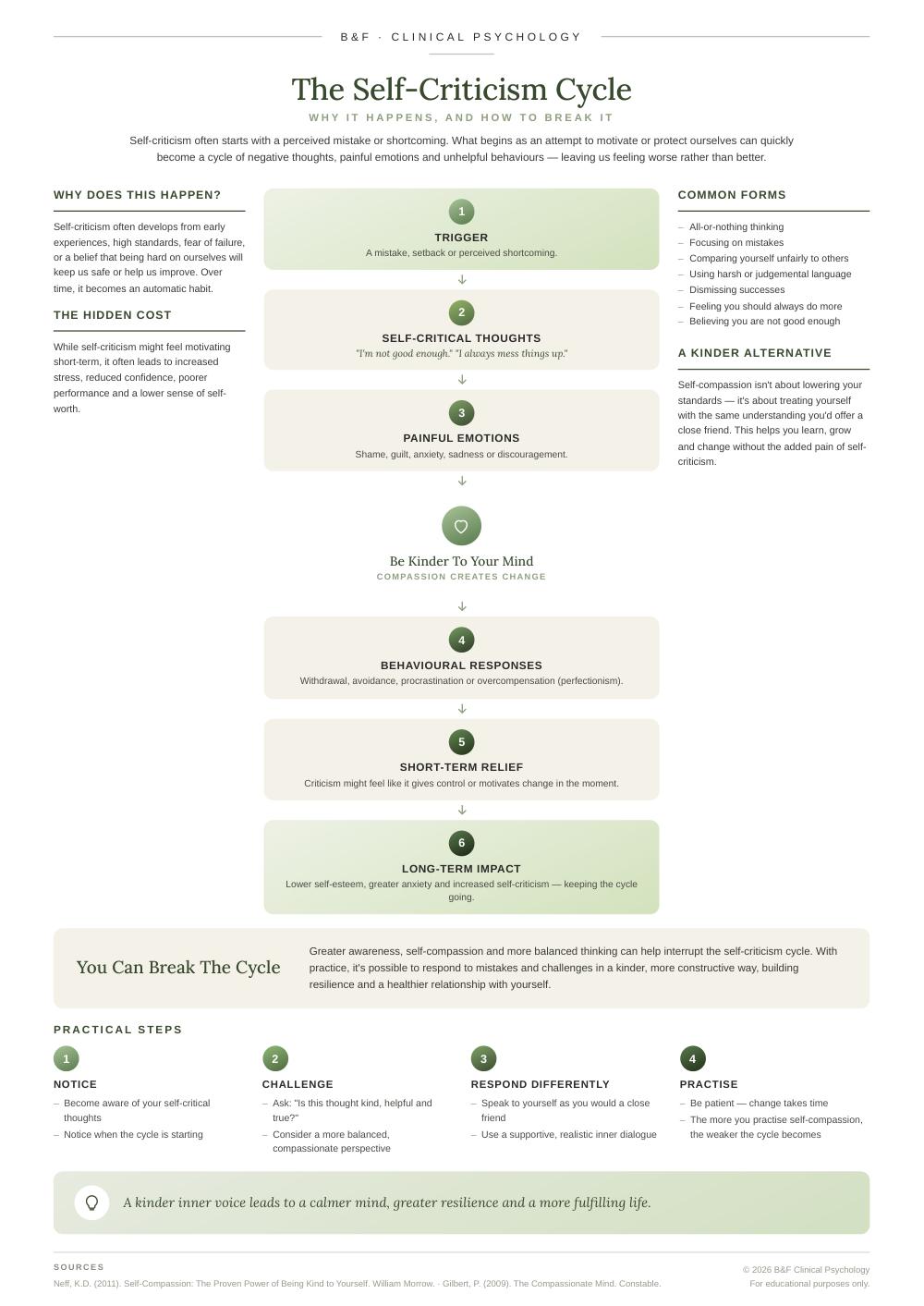
The self-criticism cycle
Why a perceived mistake so often turns into a spiral, and where to break it.
-
 Preview
Reflect
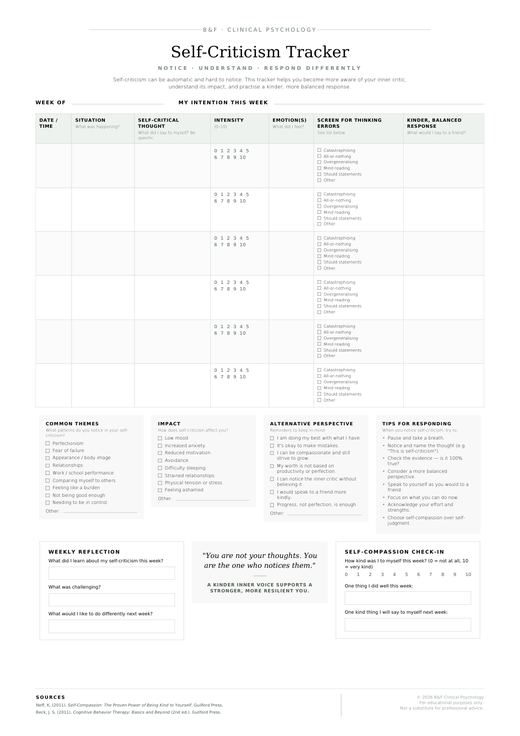
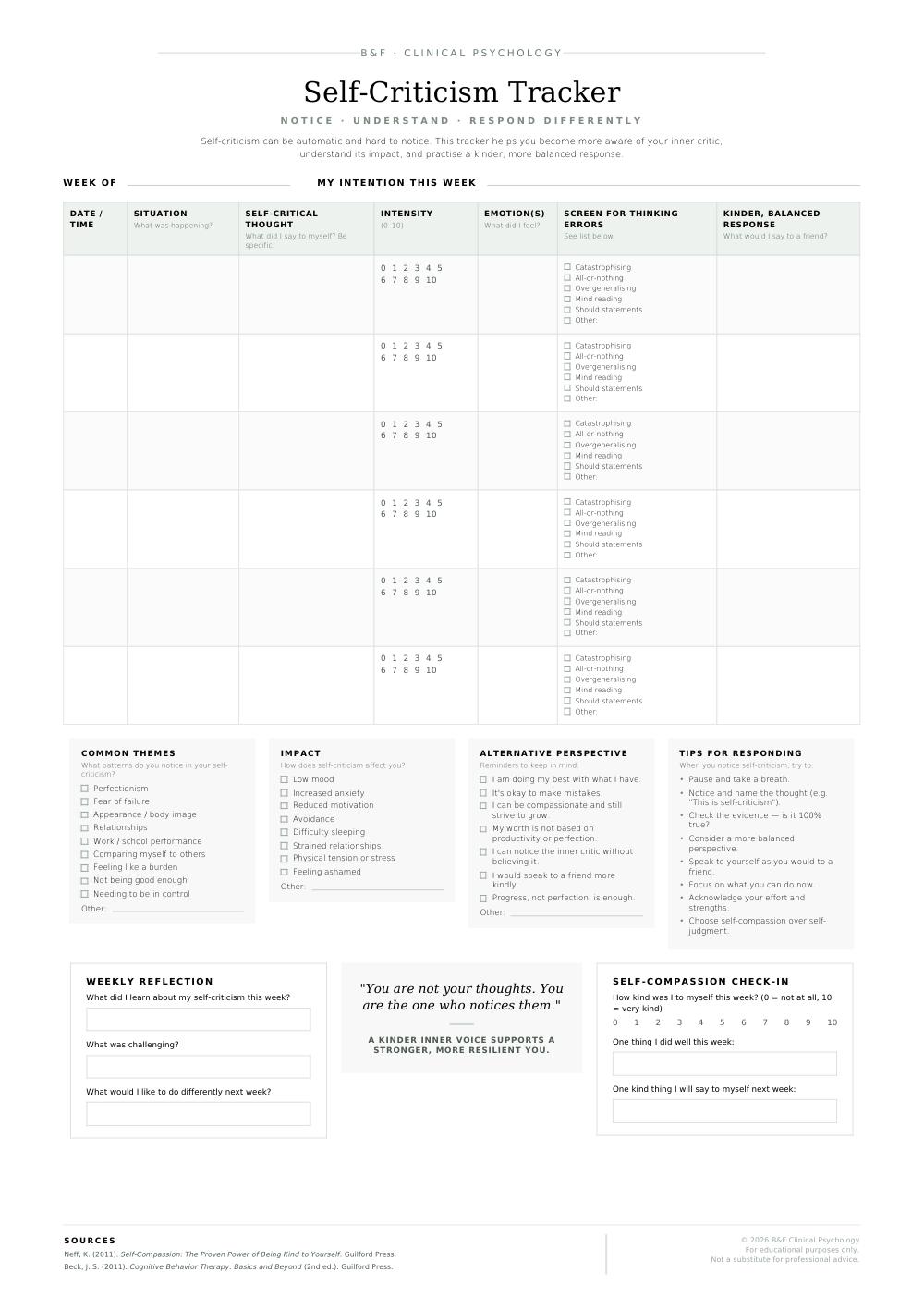
Self-criticism tracker
Catch self-criticism as it happens, understand what sets it off, and respond differently.
-
 Preview
Learn
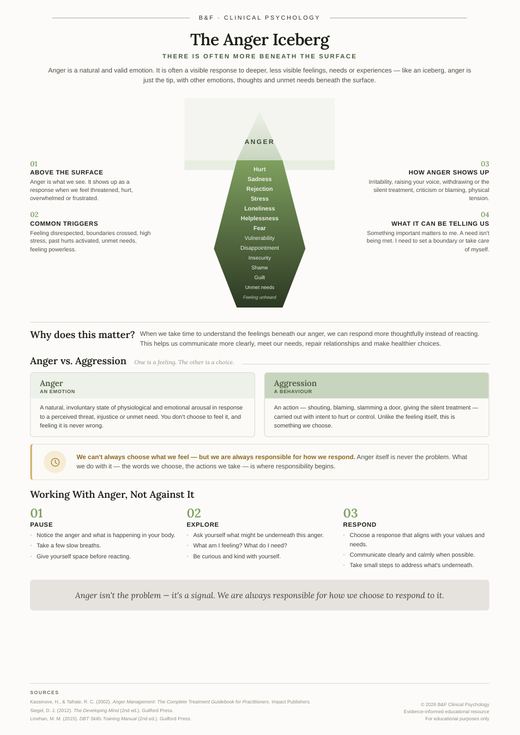
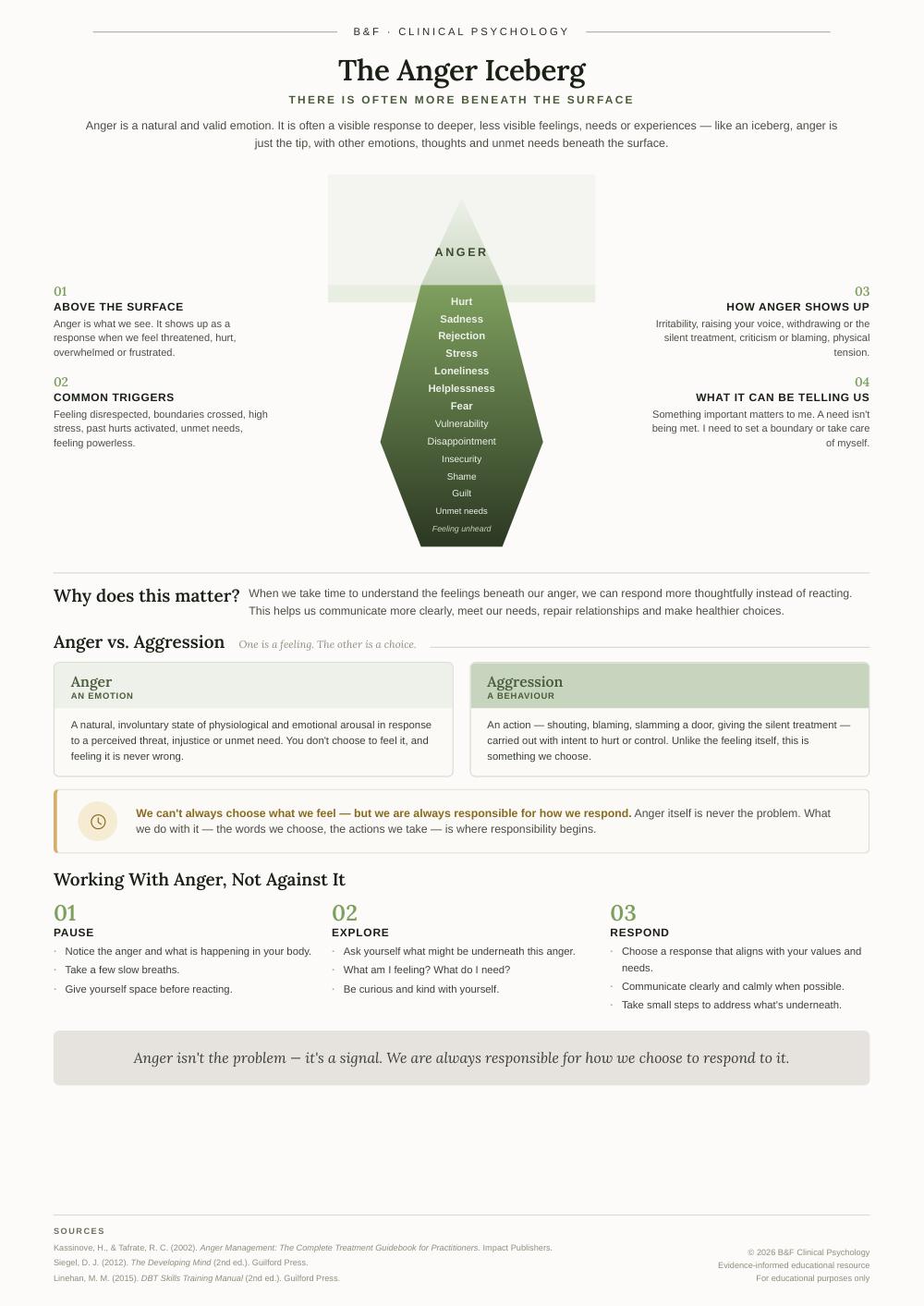
The anger iceberg
Anger is the part above the surface. What usually sits beneath it.
-
 Preview
Learn
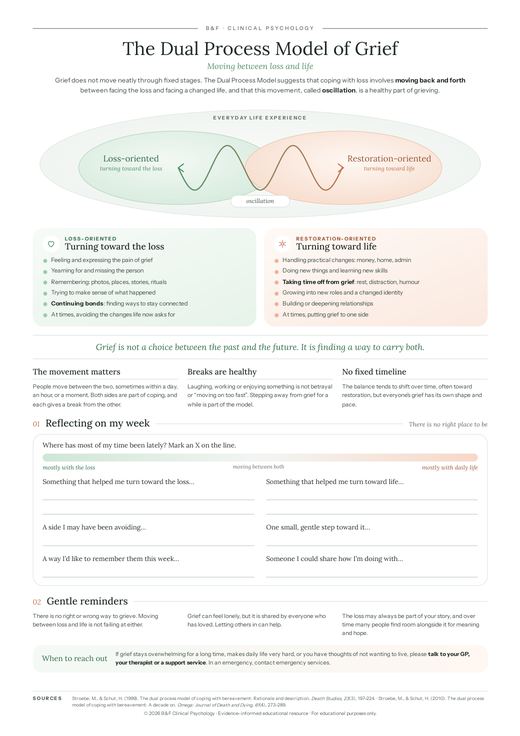
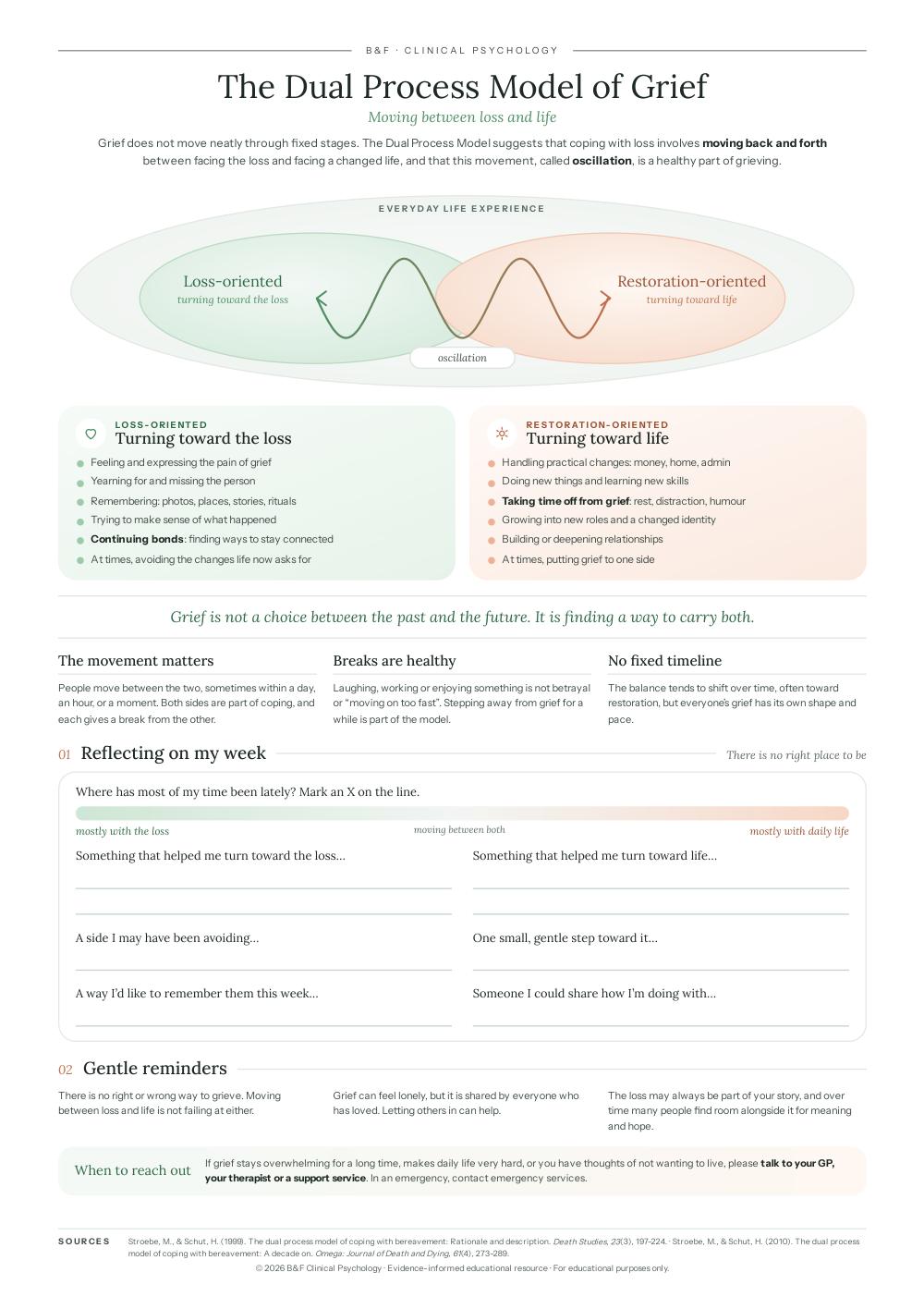
The dual process model of grief
Coping with loss means moving between facing the loss and facing a changed life, and that is healthy.
-
 Preview
Reflect
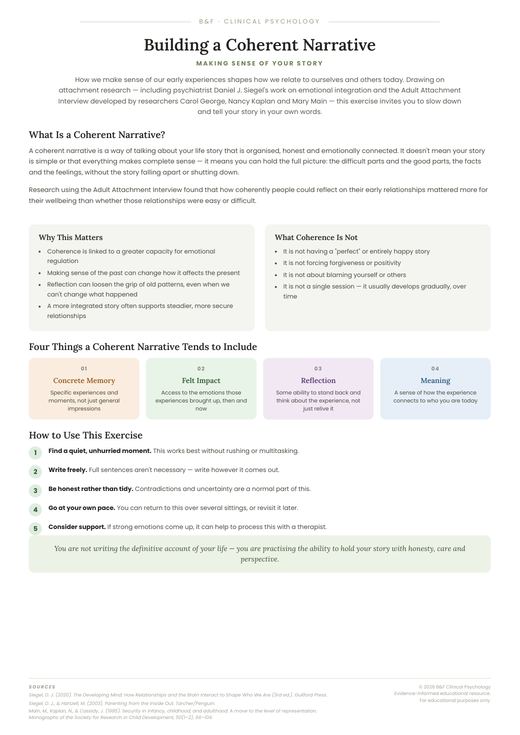
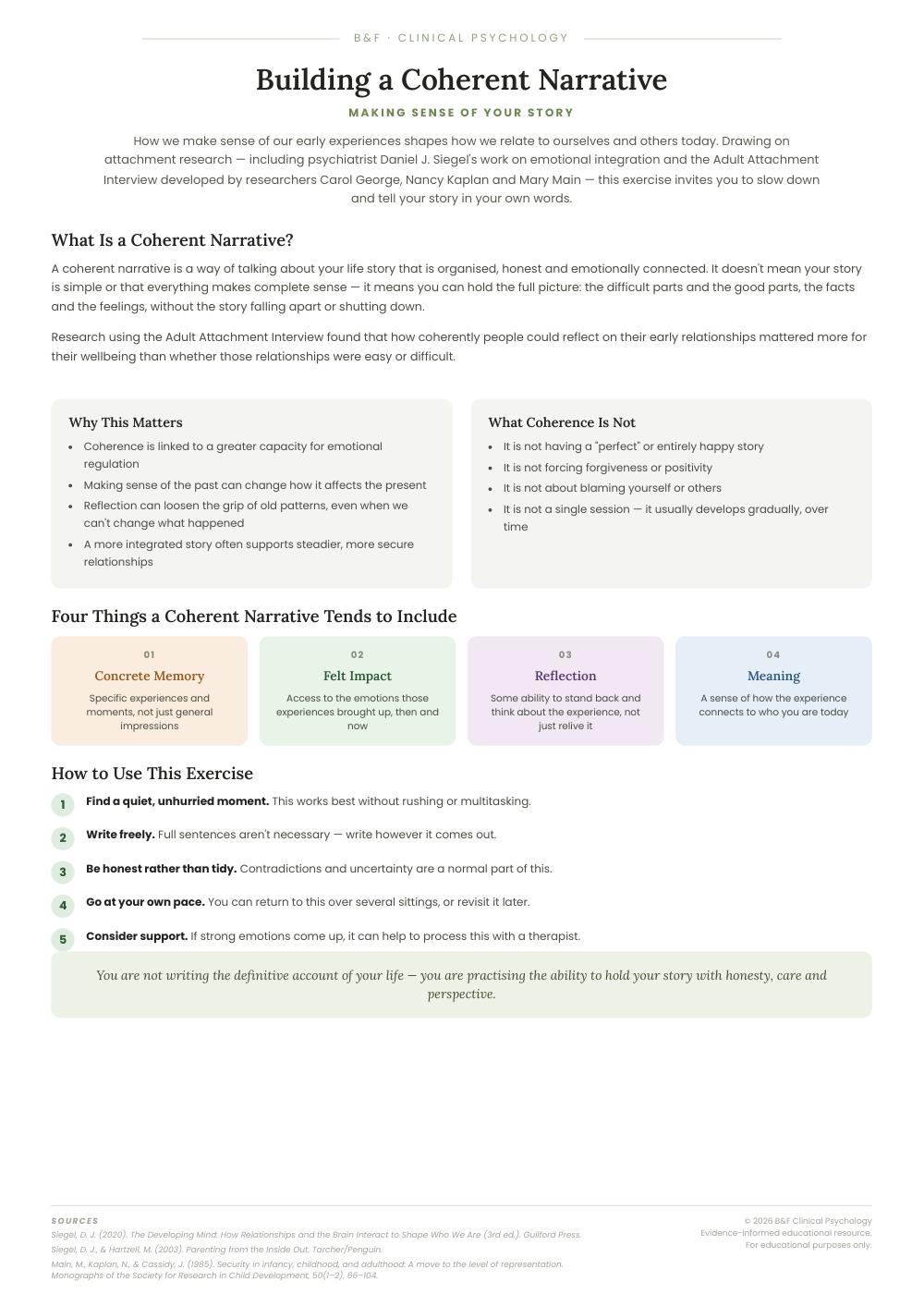
Building a coherent narrative
Drawing on attachment research, an exercise for telling your own story in a way that holds the full picture.
-
 Preview
Learn
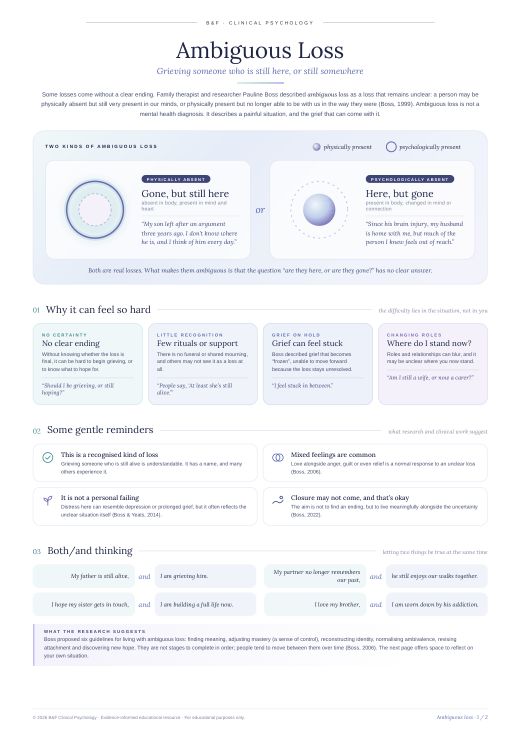
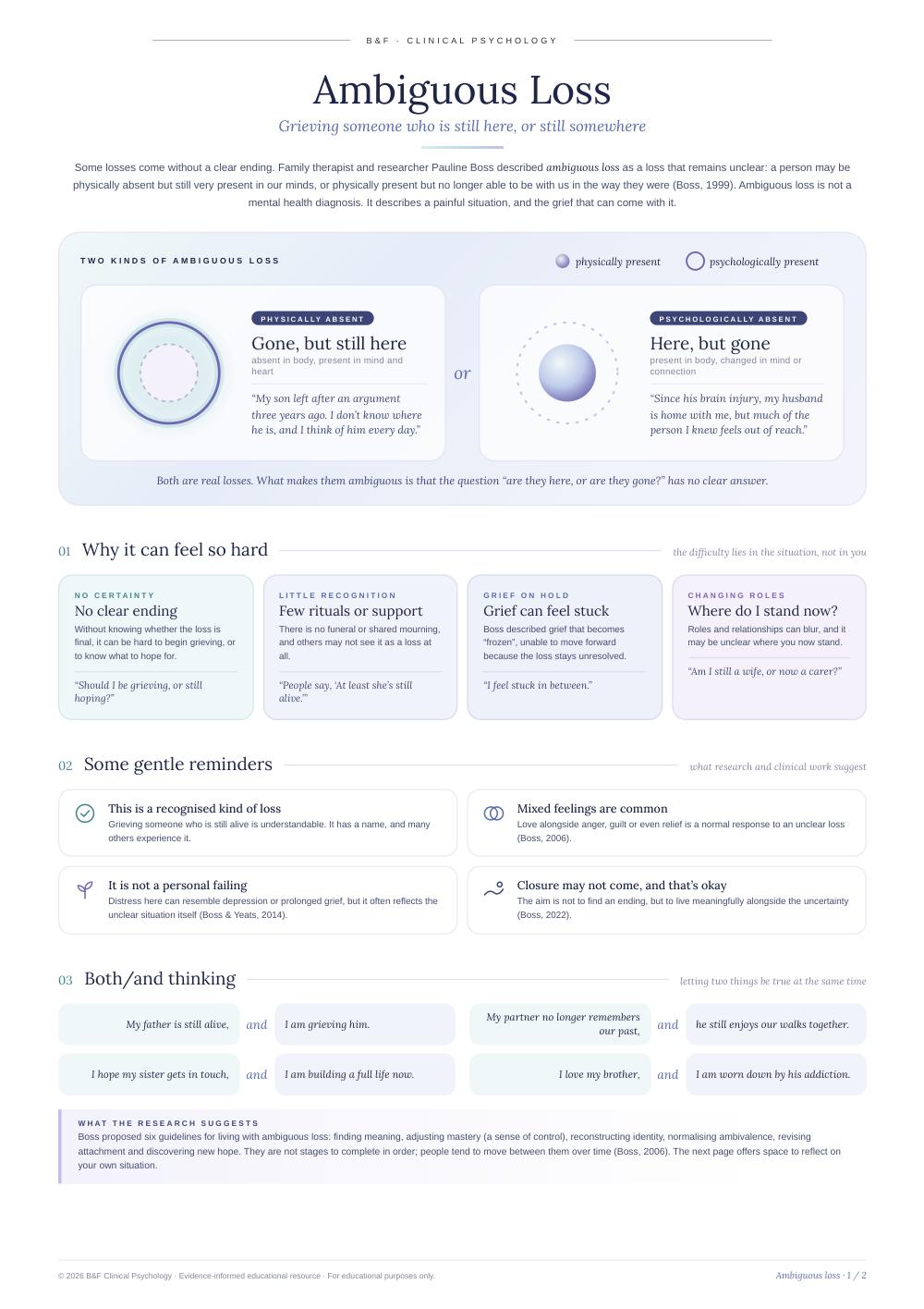
Ambiguous loss
Grieving someone who is still here, or still somewhere: a loss without a clear ending.
-
 Preview
Learn
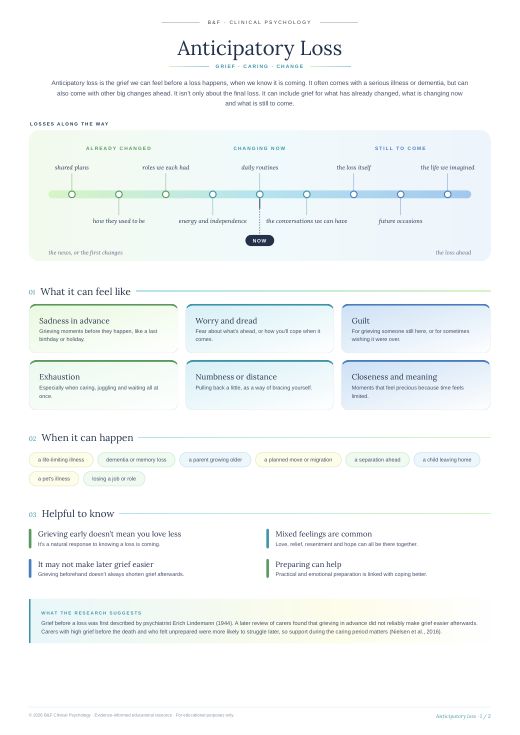
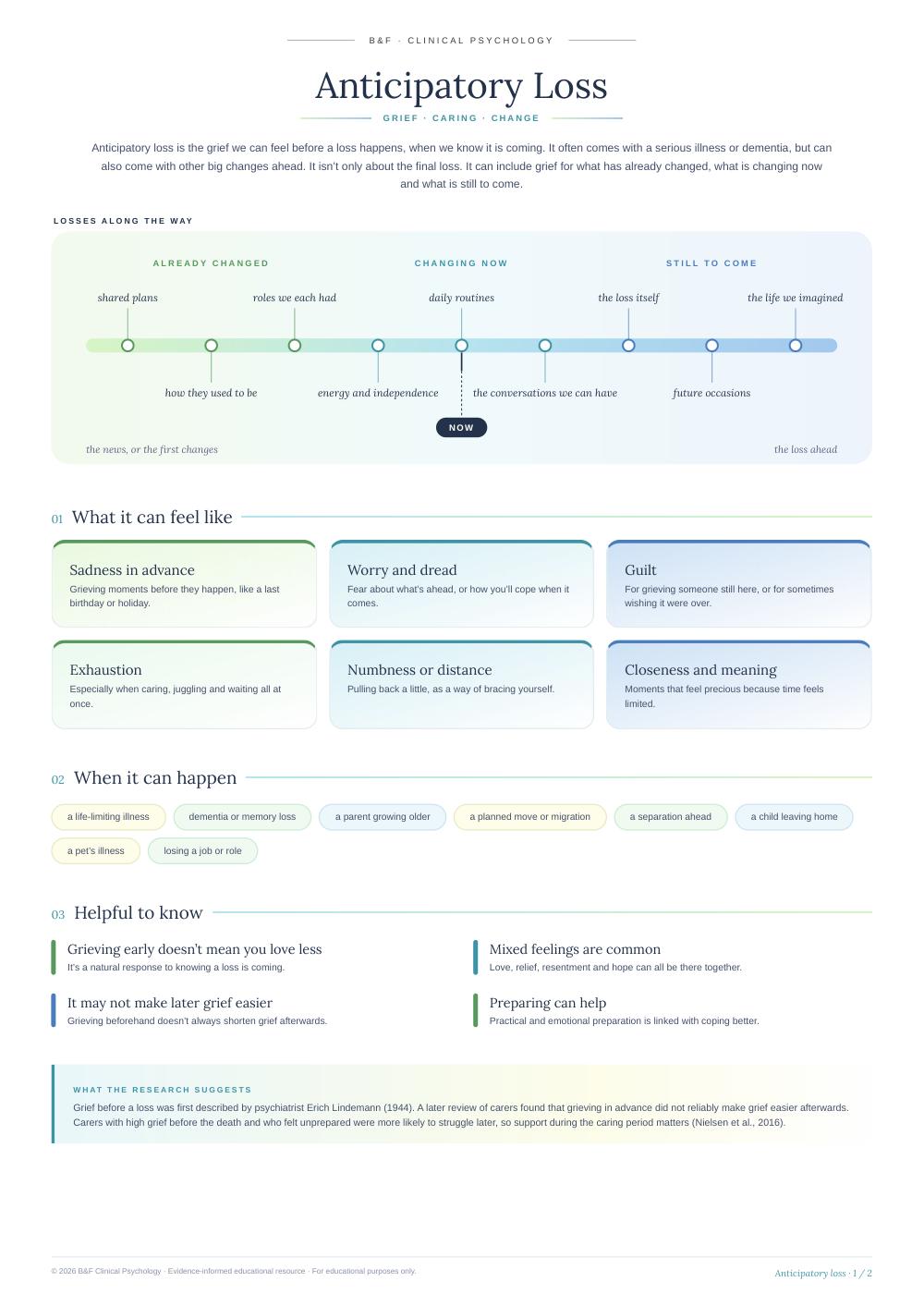
Anticipatory loss
The grief that can come before a loss, when we know it is on its way.
-
 Preview
Reflect
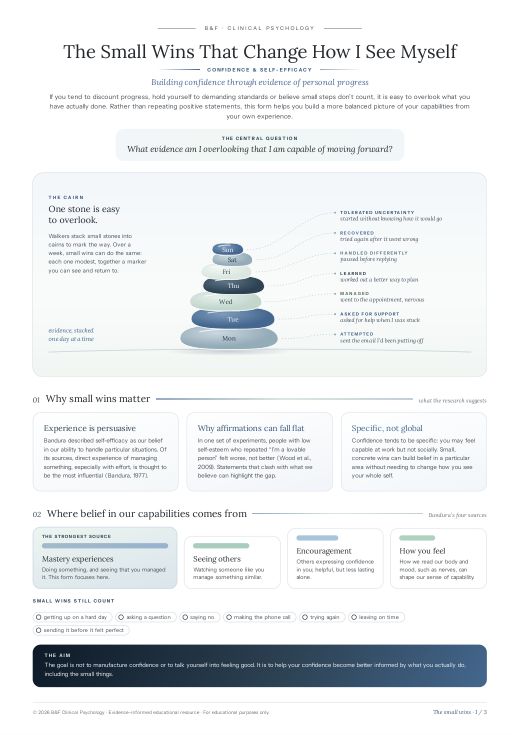
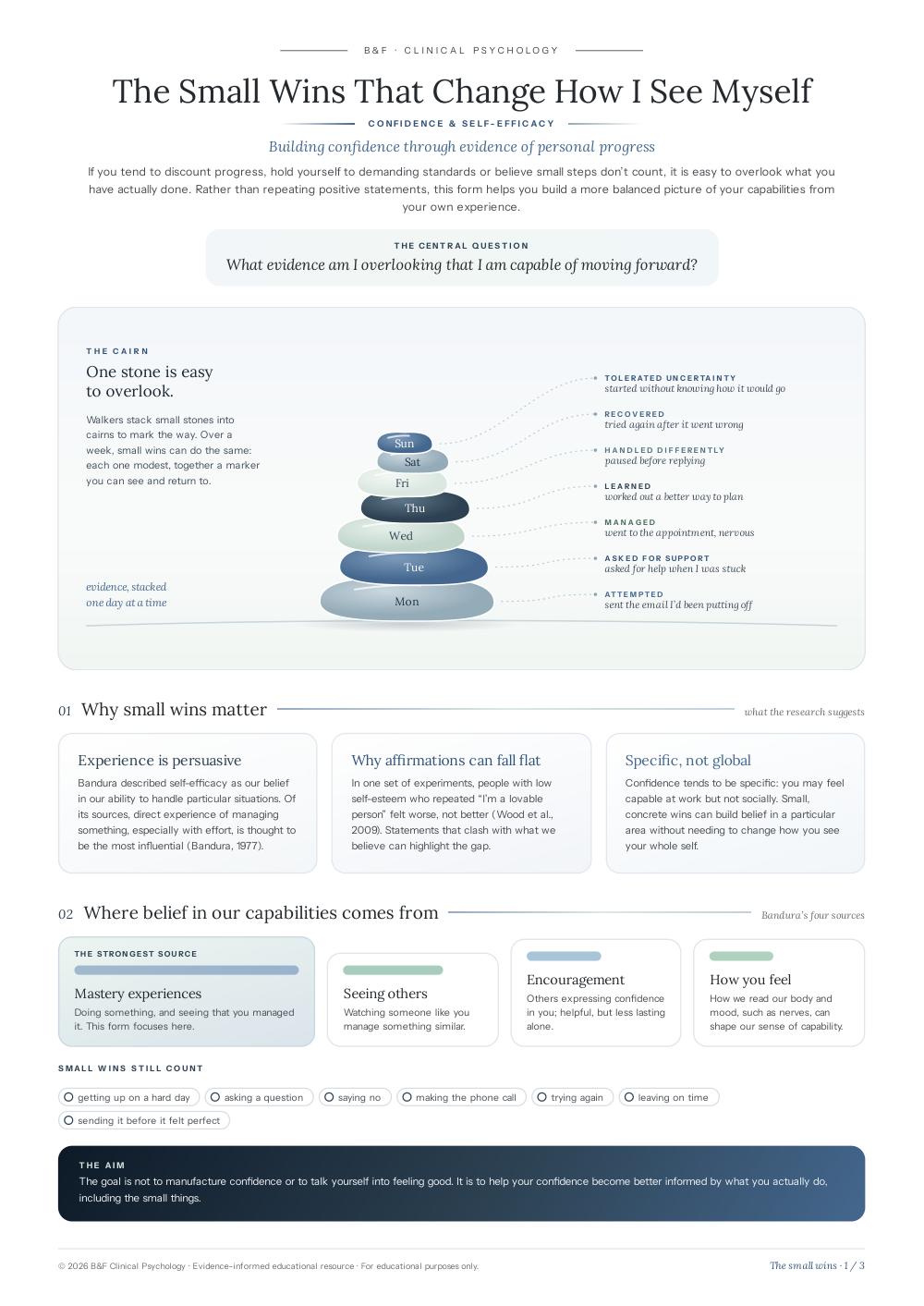
The small wins that change how I see myself
Build confidence by collecting evidence of your own progress, however small.
-
 Preview
Reflect
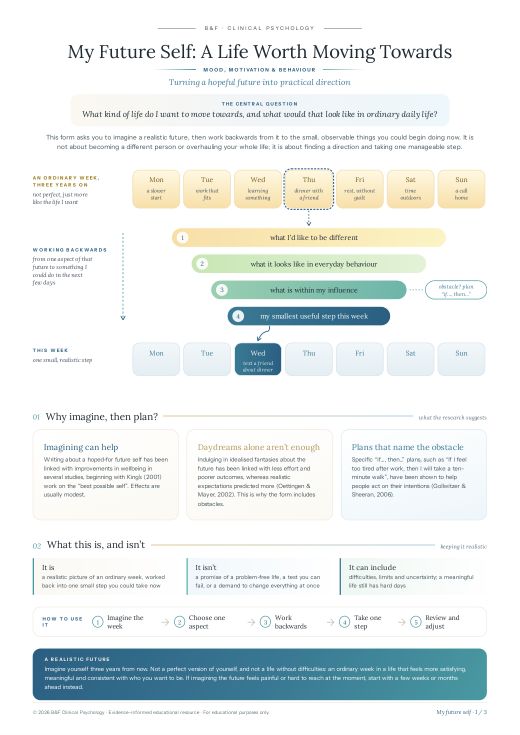
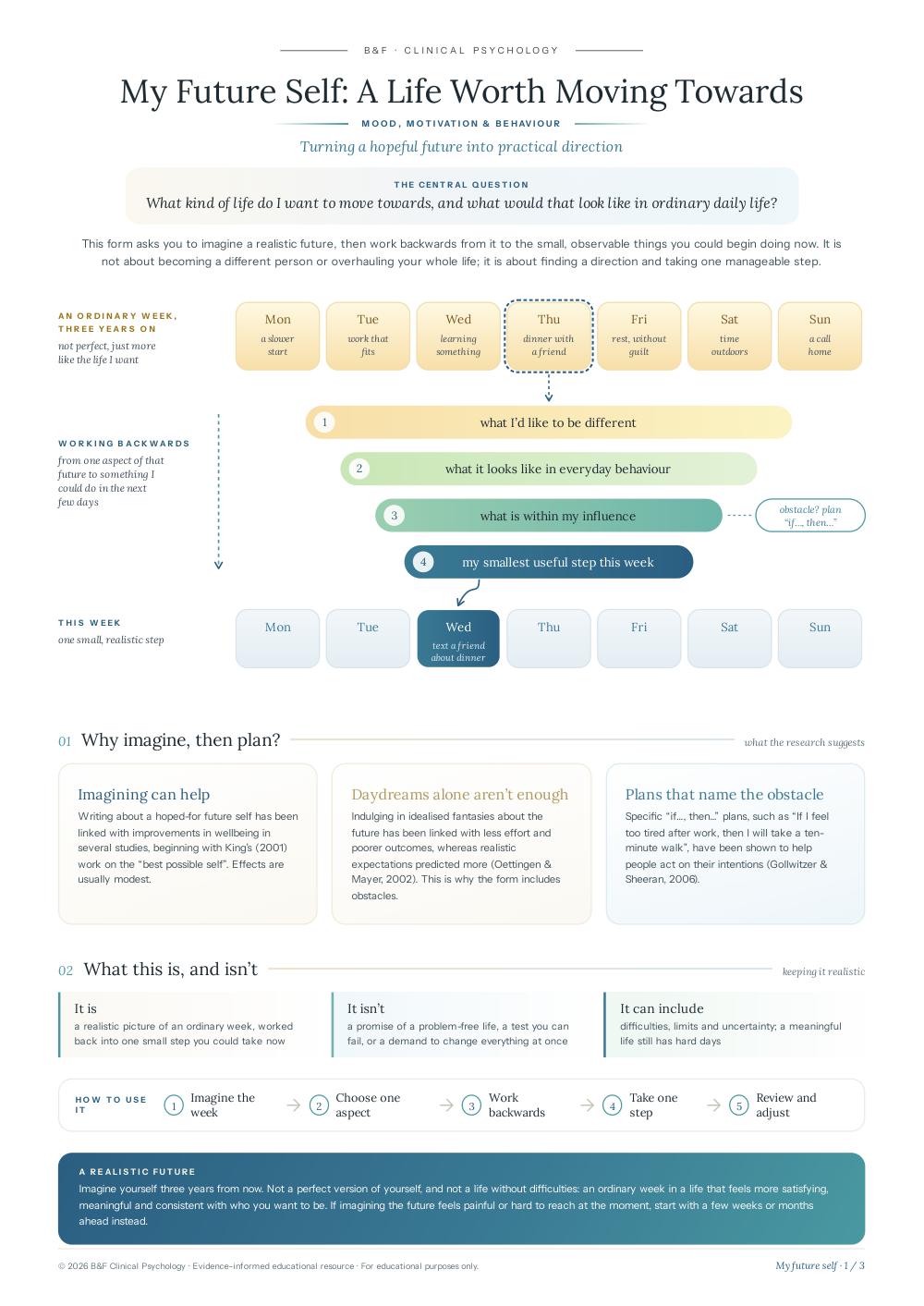
My future self: a life worth moving towards
Turn a hopeful picture of the future into practical next steps.
-
 Preview
Reflect
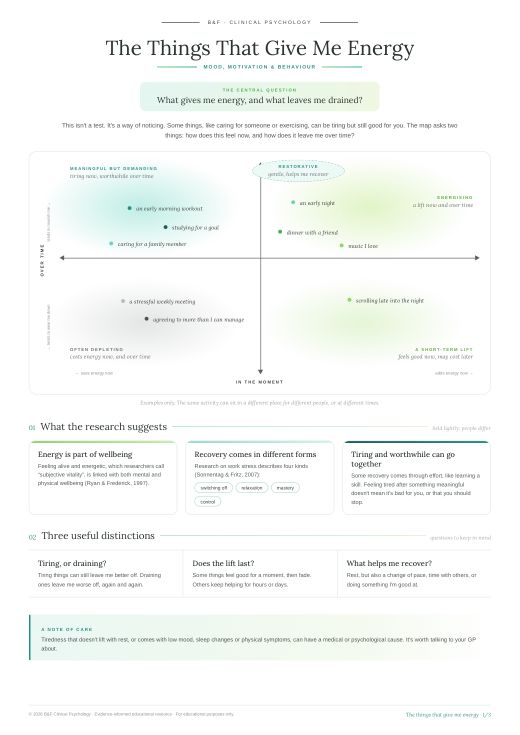
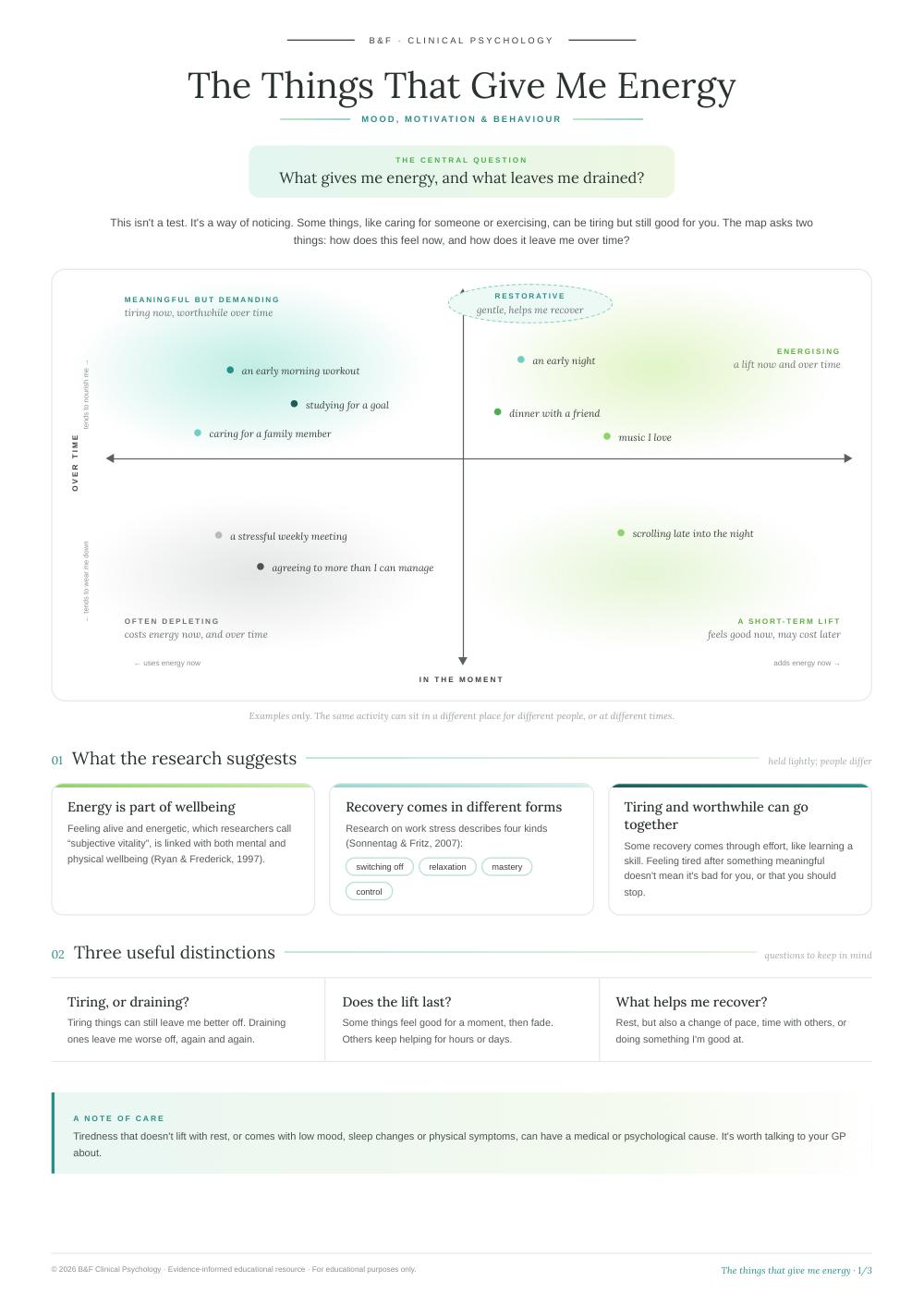
The things that give me energy
Notice what fills you up and what drains you, so you can choose more of what helps.
Important Information: These resources are provided for general education and self-reflection. They do not replace individual psychological assessment, diagnosis, professional advice or therapy. Accessing, downloading or using these resources does not establish a psychologist–client relationship with Barnardt & Fleming Clinical Psychology or constitute psychological consultation or treatment. These resources may not be suitable for every individual or circumstance. If you are uncertain about their suitability, please consult a qualified healthcare professional. If you are in crisis, feel unsafe, or may harm yourself or someone else, please contact your local emergency services or go to the nearest emergency department.